Why has portraiture remained such an enduring art form? I believe it is because creating a portrait goes beyond capturing a likeness—it reveals a presence. The process, at its best, becomes a meeting point between artist and subject, where observation and emotion converge into something quietly profound. For nearly three decades, Portrait Society of America’s International Portrait Competition has upheld this tradition, championing artists who move beyond just technical mastery to create work that resonates on a human level. With a $50,000 grand prize and a reputation for excellence, the competition has become the Oscars of portraiture.
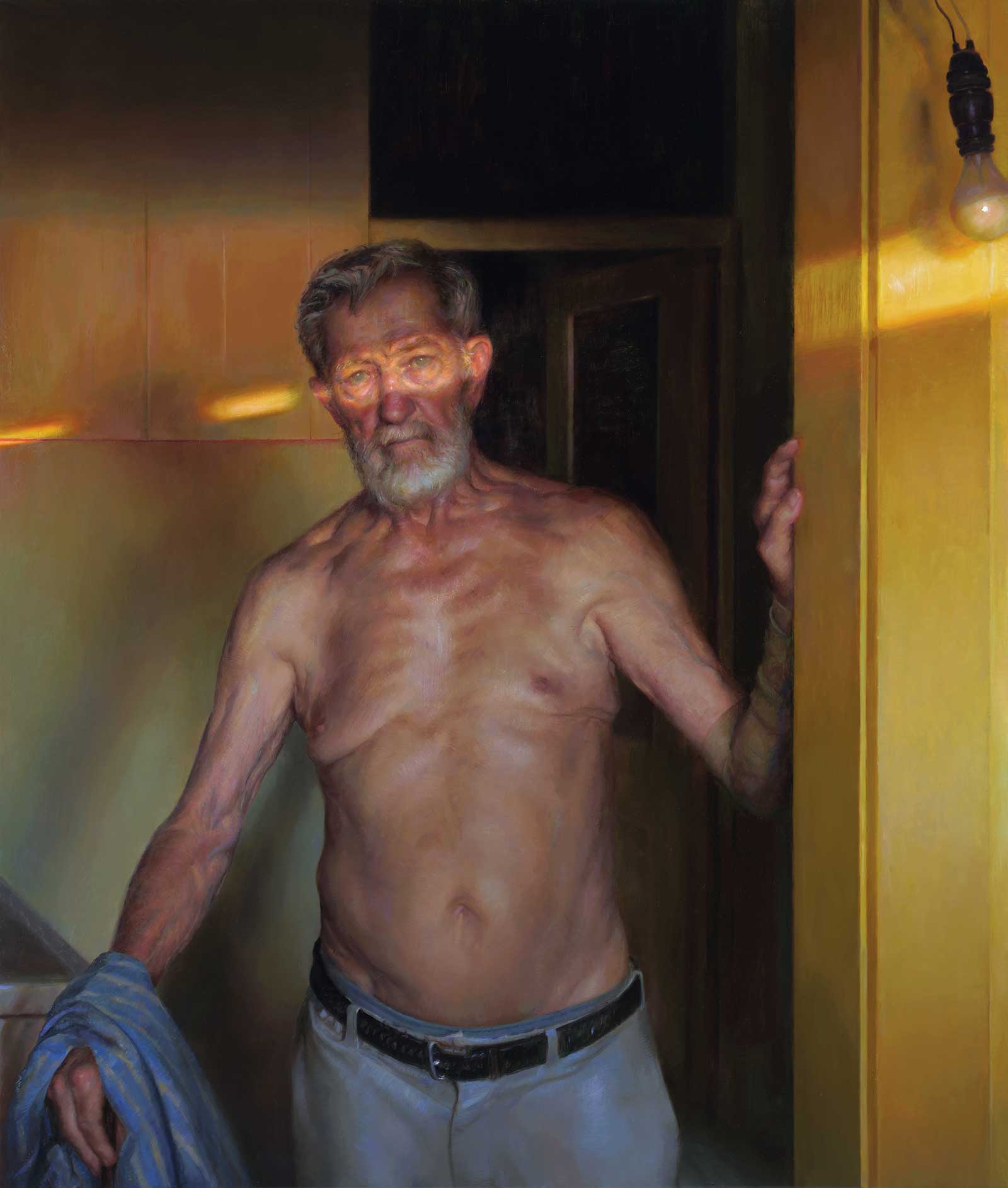 William Rorick Grand Prize Winner: Rose Frantzen, Last Light, oil, 52 x 44 in.
 This year, the jurors reviewed nearly 3,000 entries and selected 19 finalists who brought their original artwork to the annual Art of the Portrait conference for display, final judging and the gala awards presentation. The exhibition was more than a display of extraordinary technical mastery; it unfolded as a collection of deeply personal narratives. In speaking with the finalists, a unifying thread emerged: these works are far more than images. They are expressions of devotion, moments of vulnerability, and enduring acts of attention shaped by a lifelong commitment to the art of seeing.
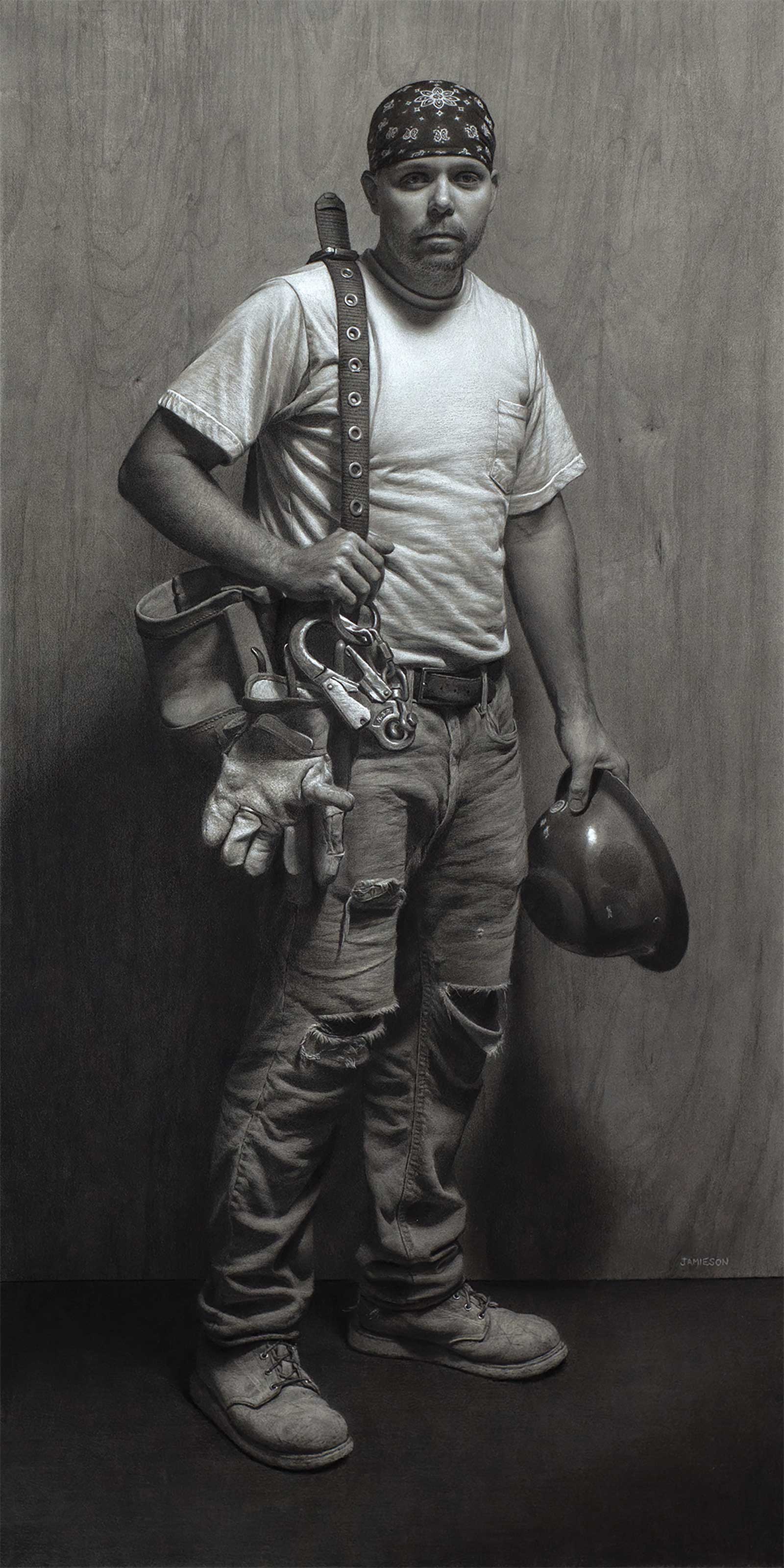
3rd Place: David Jamieson, Iron Man—Portrait of Anthony Adcock, graphite, pastel, charcoal and ink wash on paper, 48 x 24 in.
In a time when we are constantly surrounded by images, portraiture still holds a unique place in how we represent the human form. It slows things down. It asks us to really look. More than anything, it creates a connection between artist and subject, past and present, training and intuition. Across a wide range of contemporary painters and draftsmen, one idea continues to surface: portraiture is not just about capturing a likeness, but about the work behind it—physical, emotional and passed down through generations.
For seven of the finalists, Anthony Adcock, David Jamieson, Scott Burdick, Olena Burykina, Matteo Caloiaro, Oliver Sin and grand prize winner Rose Frantzen, their work is inseparable from their lives, shaping not only what they create, but why they create it. Even though their works differ in both style and circumstance, they converge around a central idea: that the act of making a portrait is itself a form of construction. Like building a structure, it requires a foundation, a process and a respect for what lies beneath the surface.
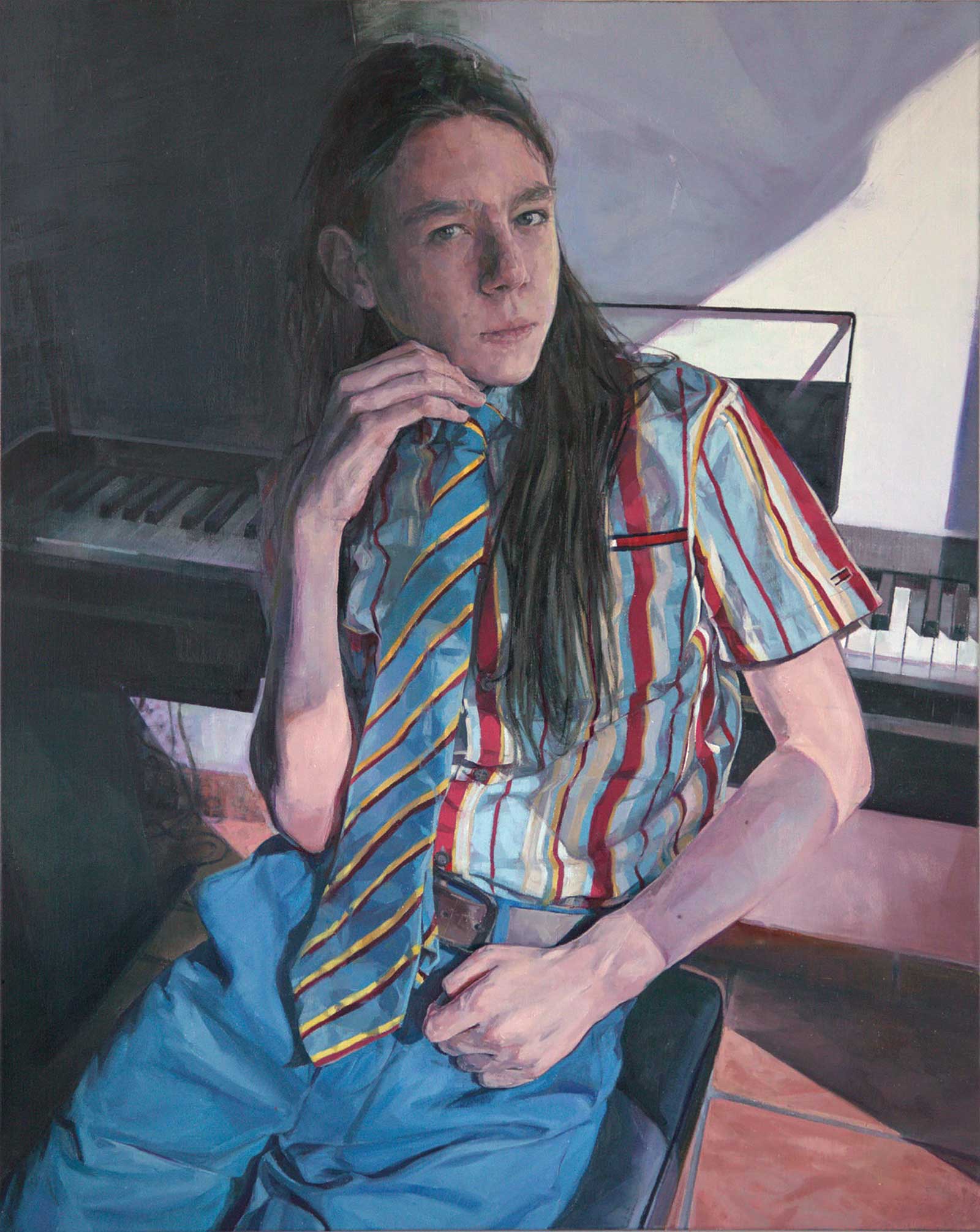
4th Place: Olena Burykina, Dynamic Gaze, oil, 30 x 24 in.
For Adcock, the idea of construction is not symbolic; it is literal. His portrait Beginning, a drawing of his former professor David Jamieson, represents a turning point in his practice. Known for work that straddles hyperrealism and sculptural minimalism, and often inspired by construction materials, Adcock finds himself returning to the basics: drawing. Jamieson’s teaching emphasized the importance of beginnings: the careful, methodical laying of groundwork that determines everything that follows. Adcock likens this to a job site, where each decision must anticipate future revisions and additions. The drawing becomes more than a tribute; it is a reaffirmation of process, a recognition that no matter how far an artist travels, the foundation remains essential.
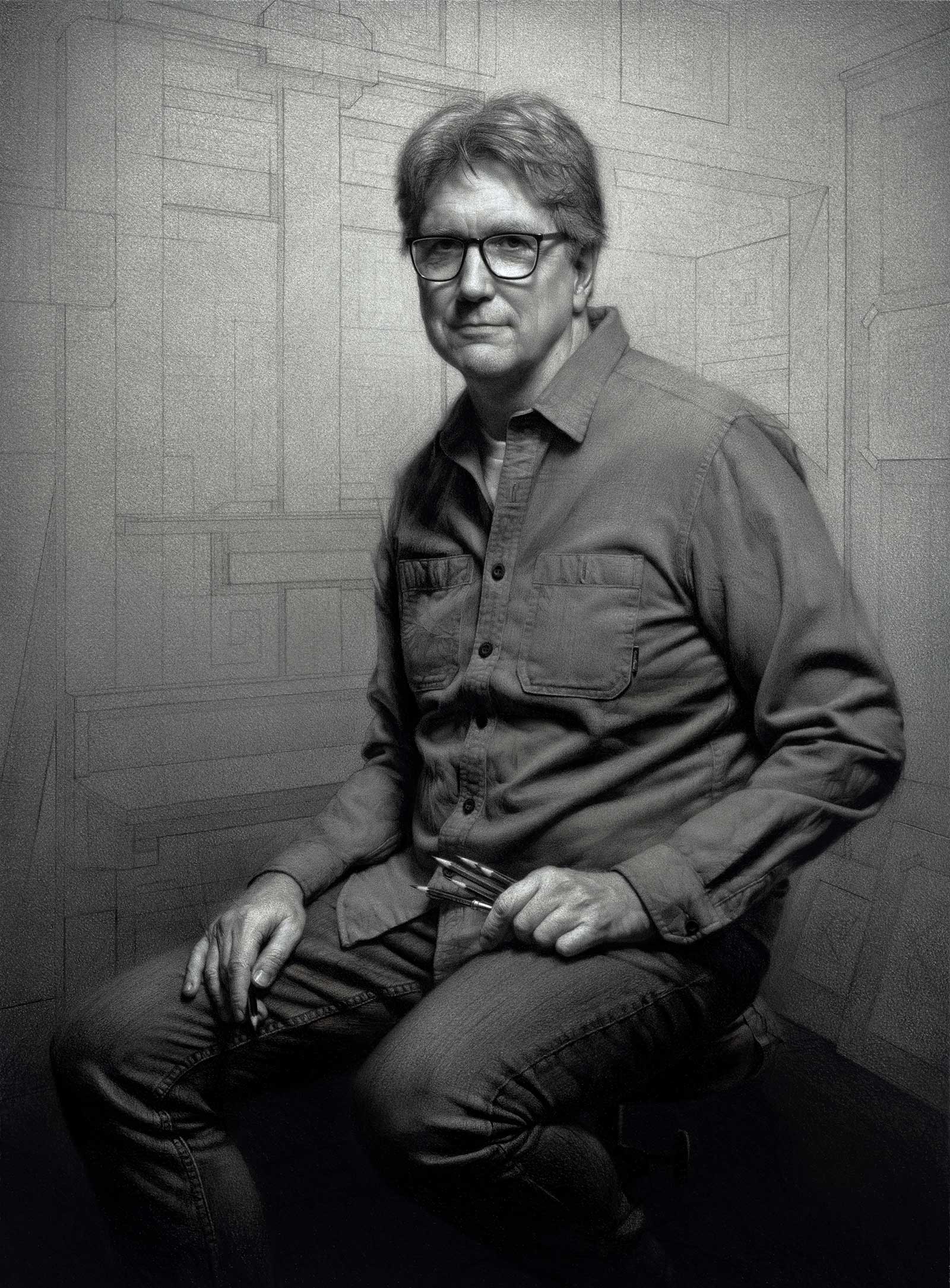
2nd Honor Award: Anthony Adcock, Beginning—Portrait of David Jamieson, charcoal, graphite and white chalk on paper toned with in, 28 x 20½ in.
Jamieson himself embodies this philosophy. His portrait of Adcock reverses the roles, depicting the artist as both builder and creator. With tools of ironwork slung across his body, Adcock stands as a figure rooted in labor, his artistic identity inseparable from his blue-collar experience. Jamieson’s approach to teaching and painting merges scientific observation with poetic ambiguity, emphasizing that representation is both rigorous and open-ended. Together, their works form a dialogue about lineage. The teacher shapes the student, who in turn reflects the teacher. The act of drawing becomes a shared language, passed down and continually reinterpreted.
If Adcock and Jamieson focus on the discipline of beginning, Burdick’s Solaris Rising speaks to the necessity of beginning again. Painted while recovering from a life-threatening health crisis, the work carries an emotional weight that transcends its subject. The portrait of Bella, a young girl poised between childhood and adulthood, becomes a symbol of hope, of a generation tasked with building a future from the remnants of the past. Burdick’s return to his studio transformed painting into an act of perseverance. Each brushstroke marked a step toward regaining his strength and clarity. The work’s quiet luminosity reflects that journey, balancing fragility with optimism. In this way, portraiture becomes a form of rebuilding, not just of skill, but of self.
Burykina’s journey offers another perspective on resilience, one shaped by migration and reinvention. Trained in Ukraine with a rigorous classical foundation, she later relocated to the United States where she rebuilt her career as a full-time painter. Her portrait Dynamic Gaze,inspired by her nephew, captures a vivid moment of youthful energy. The composition pulses with light and movement, yet it is grounded in the discipline of her architectural training. Structure, balance and proportion underpin the spontaneity of the image. Burykina’s path reflects a broader theme: the adaptability required to sustain a life in art. Her transition from architecture to portraiture mirrors the very act she depicts, constructing something enduring from shifting conditions.
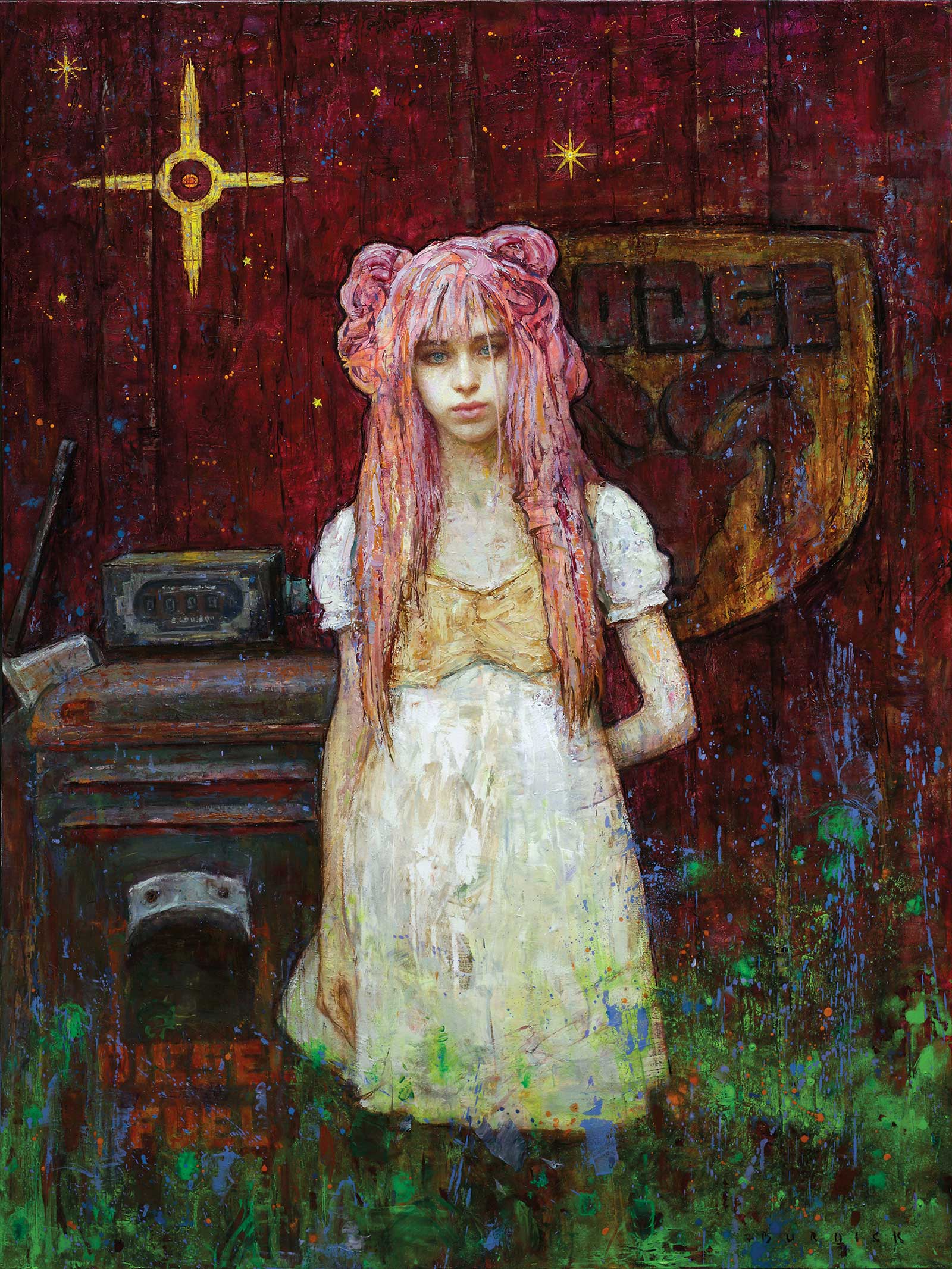 Exceptional Merit: Scott Burdick, Solaris Rising, oil, 48 x 36 in.
Caloiaro’s portrait of his neighbor Andreas brings the theme of labor into sharp focus. Andreas, a Greek immigrant and lifelong restaurateur, embodies the values of consistency, discipline and generosity. Even in his eighties, Andreas maintained a relentless work ethic, driving long distances, tending properties and supporting those around him. Caloiaro’s portrait captures not just his likeness but his presence as a man shaped by decades of effort. This attention to lived experience aligns with Caloiaro’s own development as an artist. Influenced by both classical masters and contemporary narrative traditions, he approaches portraiture as a means of honoring the stories embedded in everyday lives. In doing so, he elevates labor from background detail to central subject.
Sin’s work shifts the focus from labor to perception. His portrait, Juan, was inspired by an encounter with a man experiencing homelessness and challenges the viewer to confront the quiet humanity often overlooked in daily life. Rather than dramatizing hardship, Sin emphasizes dignity. Every mark becomes an act of recognition and a refusal to reduce the subject to circumstance. The drawing insists on presence and on the idea that every individual carries a story worthy of attention.
Sin’s philosophy underscores a crucial aspect of portraiture: the responsibility to see. In a culture of fleeting images, his work asks for pause, for empathy and for a deeper engagement with the human condition.
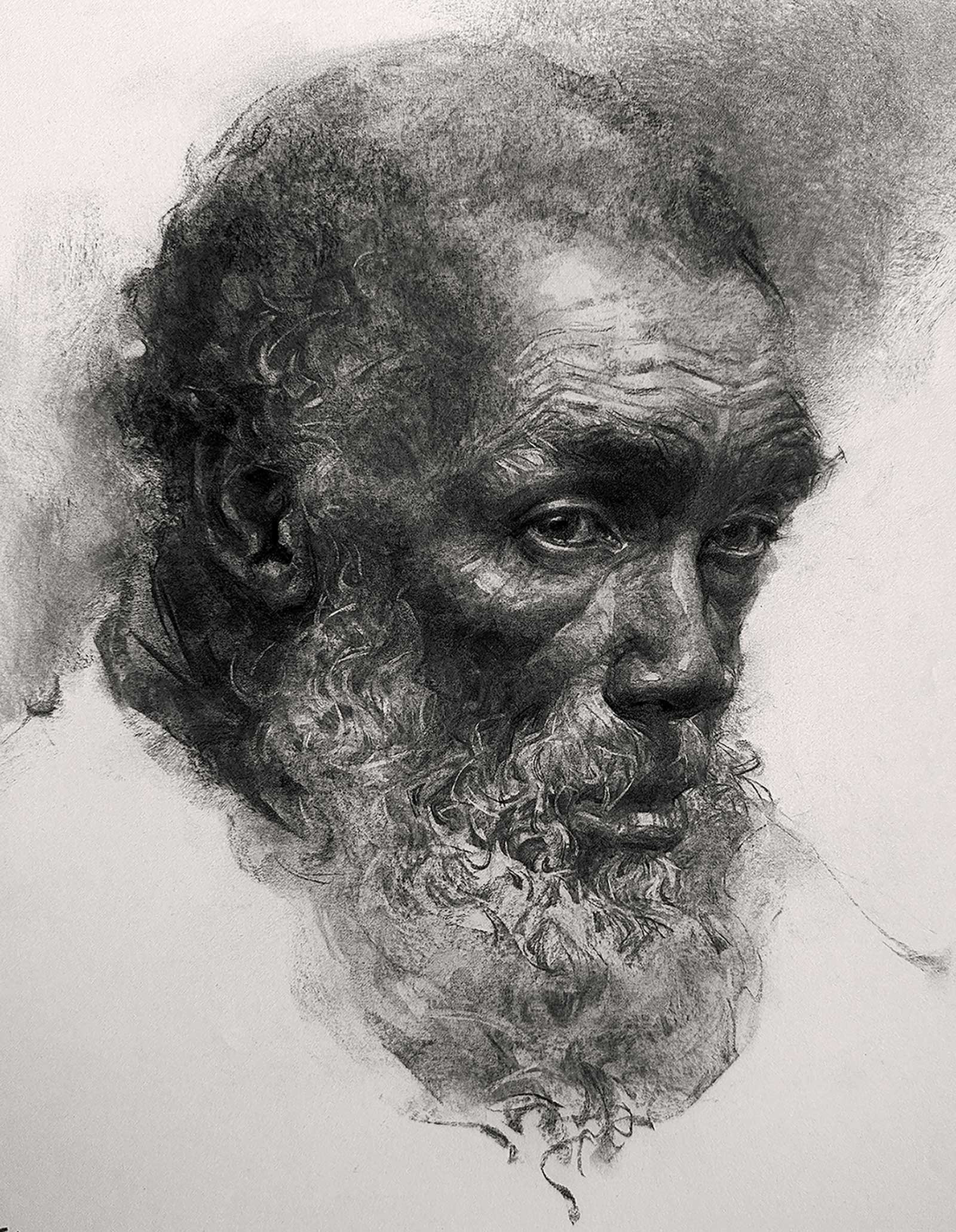
Exceptional Merit: Oliver Sin, Juan, vine charcoal, 17 x 14 in.
If the preceding artists explore construction through labor and resilience, Frantzen’s Last Light confronts what happens at the edge of that construction, when a life, like a day, approaches its end. As the grand prize winner, Frantzen brings a profound emotional depth to the conversation. Her painting depicts an aging figure stepping forward from darkness, wounded yet upright, caught in a moment that feels suspended between endings and beginnings. The light that meets him is ambiguous: is it a final illumination or the start of something beyond?
The subject, Chuck Aucoin, lived a life marked by transformation: monk, husband, father, widower, and, late in life, an art model. Frantzen worked with him extensively before his passing, and Last Light becomes both a tribute to him and a meditation on mortality. What distinguishes Frantzen’s work is its ability to merge narrative with universality. While deeply personal, the painting speaks to broader questions: What does it mean to endure? To change? To reach a threshold and step beyond it?
Across these seven artists, a cohesive vision emerges. Portraiture is not static; it is an active process shaped by experience, discipline and connection. Mentorship and lineage run throughout. Adcock and Jamieson exemplify the teacher-student relationship, while Burykina and Sin extend that lineage through their own teaching. Knowledge is shared and continually redefined.
Also, resilience can appear in many forms: Burdick’s recovery, Burykina’s migration, Caloiaro’s celebration of lifelong labor and Frantzen’s meditation on mortality. Underlying everything is the act of seeing. Whether capturing a fleeting expression, a lifetime of work or the final light of a life, these artists insist on attention. They remind us that to see someone fully is an act of respect.
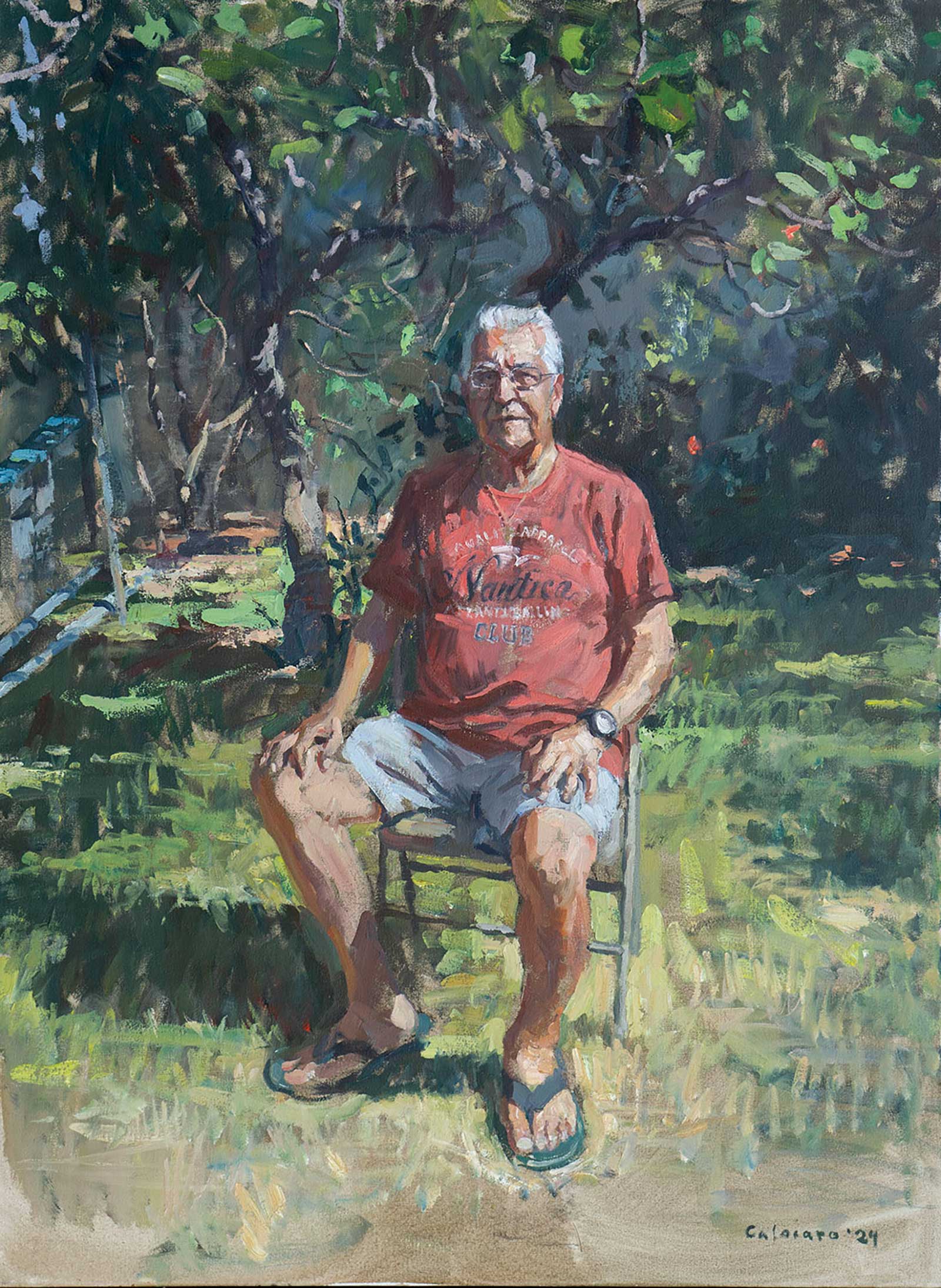
Exceptional Merit: Matteo Caloiaro, Andreas Under the Fig Tree, oil, 40 x 30 in.
In a world that often prioritizes a hurried pace, the deliberate practice of portraiture offers something different. It asks for patience. It rewards devotion. It reveals depth.
For Adcock, Jamieson, Burdick, Burykina, Caloiaro, Sin and Frantzen, this work is never finished. Each painting leads to another question, and another attempt to understand what lies beneath the surface. What they construct is not just imagery, but connection between people, across time, and through experience. It’s in that connection that portraiture finds its enduring power. —
+++
Christine Egnoski has been CEO of the Portrait Society of America since its founding in 1998. She credits the growth and success of the Portrait Society to the many artists and non-artists that donate their time and talents in a collective effort to further the visual arts.
Powered by Froala Editor