The Chinese Zodiac is an extremely important part of Chinese culture, existing as a reflection of Chinese philosophy and culture, and the belief that each human’s personality is related to the attributes of their respective zodiac animal. The horse is the seventh animal in the 12-year cycle, with each year being dedicated to a different animal. 2026, of course, marks the Year of the Horse (specifically the Fire Horse)—and with it come all sorts of celebrations of this majestic equine beast.
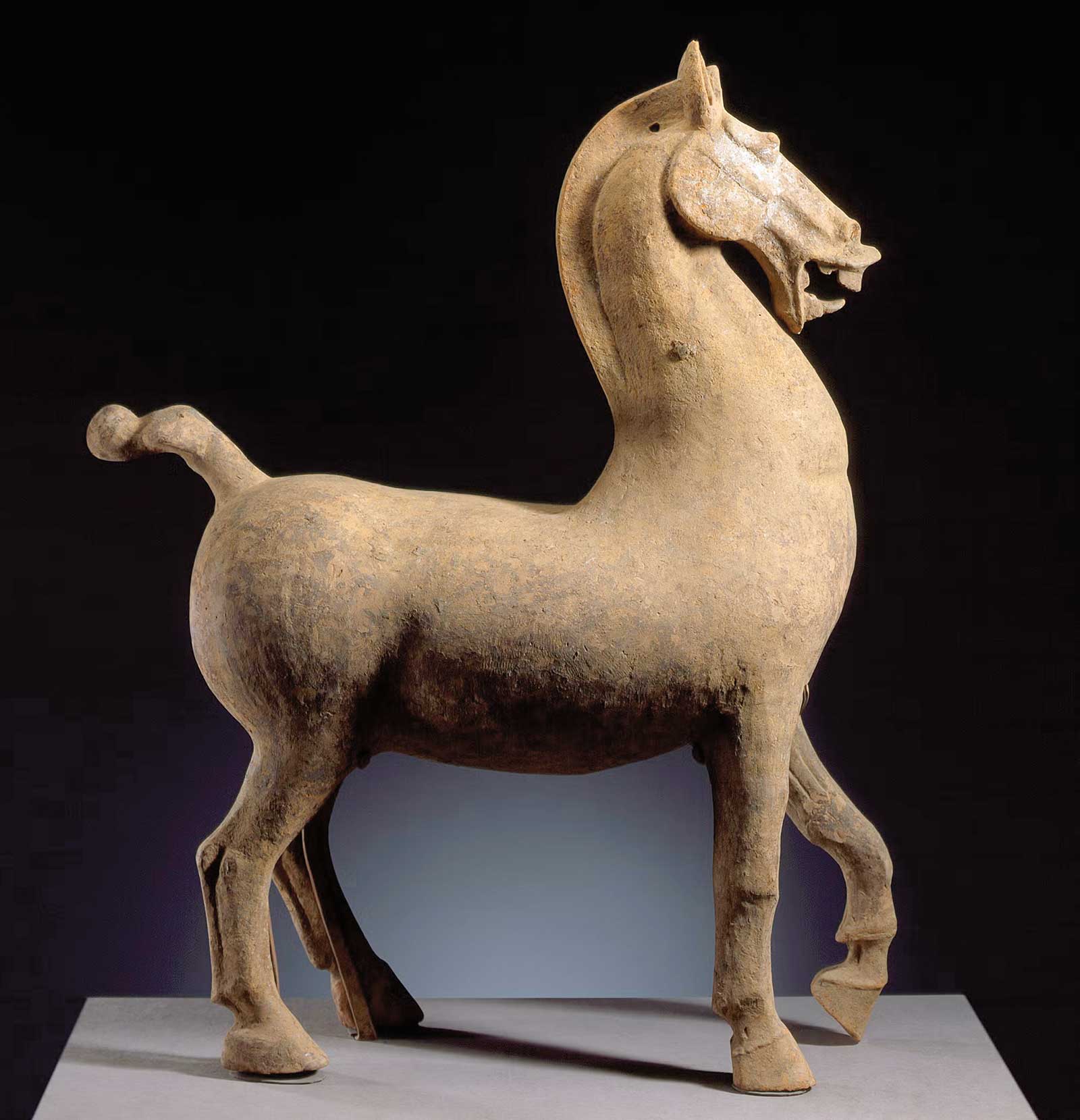
Funerary Sculpture of a Horse, China, Eastern Han Dynasty, 25-220, Los Angeles County Museum of Art, gift of Diane and Harold Keith and Jeffrey Lowden. Photo © Museum Associates/LACMA.
“According to Chinese astrology, [the] Horse is confident, agreeable, and responsible, although they also tend to dislike being reined in by others,” notes Sophie Song, of ChineseNewYear.net. “They’re fit and intelligent, adoring physical and mental exertion; they’re decisive but also easily swayed and impatient.”
Several major art institutions across the United States are celebrating ancient artwork of the horse in honor of this year’s zodiac animal. Among them is the Metropolitan Museum of Art with the exhibition Celebrating the Year of the Horse, which “explores the horse’s enduring nature and vital place in Chinese civilization…In ancient China, horse-drawn chariots transported military commanders and the social elite, while in the Tang dynasty (618–907), tall and robust horses came to embody the strength of the state and cosmopolitan spirit of the empire. In Chinese popular culture, horses are among the most celebrated animals, and in the spiritual realm they serve as noble mounts for divine guardians believed to bring joy, protection, and prosperity to the household.” The show features depictions of the horse in ceramics, glass, jade, metal and woodblock prints.
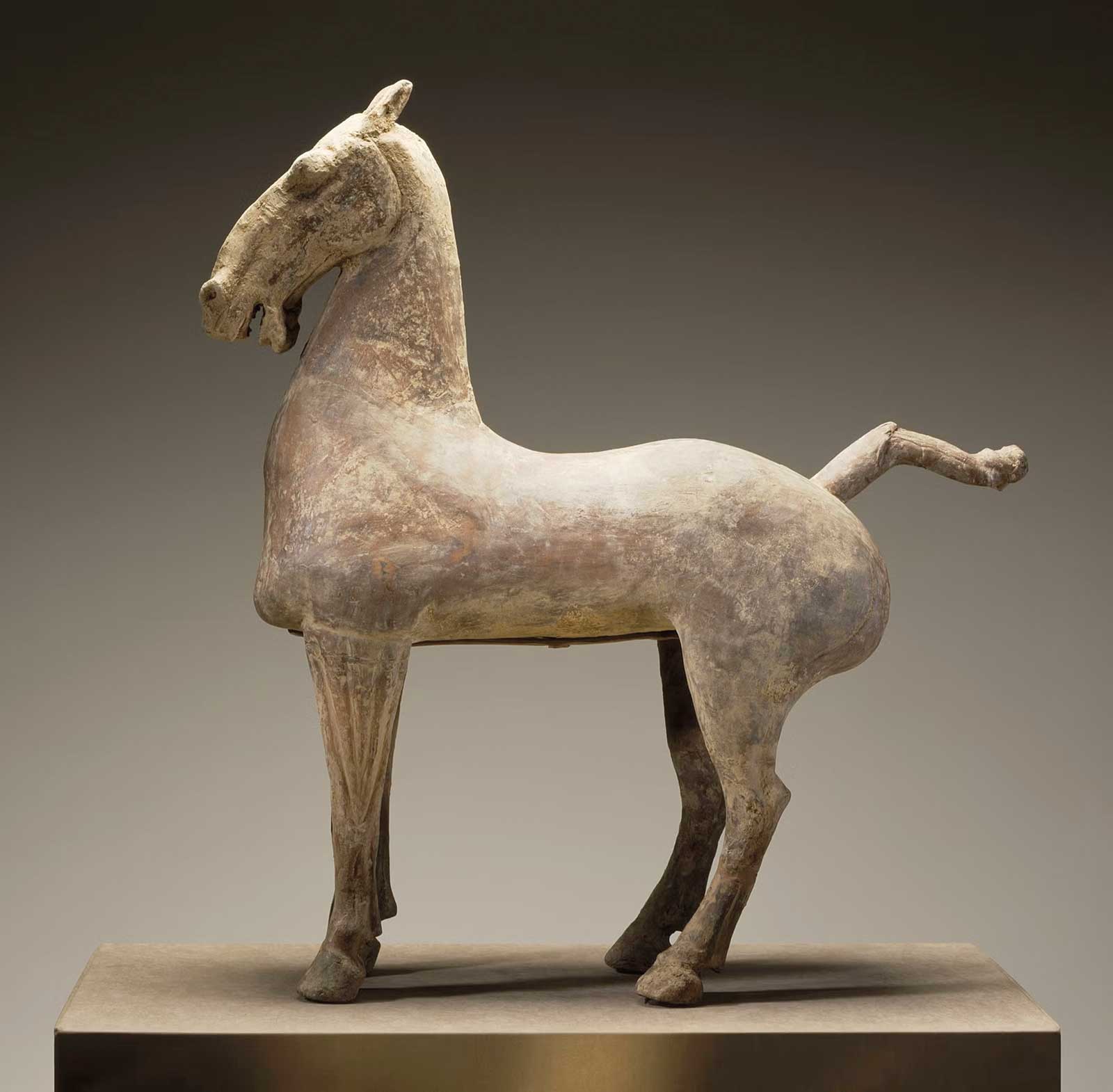
Horse, China, early Western Han Dynasty, 206-100 B.C., Los Angeles County Museum of Art, gift of Richard Brustlin. Photo © Museum Associates/LACMA.
On view through August 30, the Minneapolis Institute of Art hosts Year of the Horse: Hoofbeats through Time, honoring “the enduring power, beauty, and symbolism of horses in Chinese art and culture. Across millennia, the horse has galloped through China’s imagination—as chariot puller, zodiac sign, loyal companion, and poetic metaphor.”
From the Han Dynasty to the Qing Dynasty, horses have captivated China for centuries, just as they’ve captivated cultures across the world. It seems that as long as humans have been around, we’ve been connected to the horse.
Throughout the remainder of this special section, enjoy diving into several modern-day artists’ depictions of the horse and learn about the many ways these beloved creatures enchant their spirits.
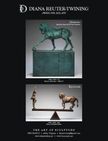
Diana Reuter-Twining, an award-winning sculptor and architect, attributes her focus on the natural world to having been raised on a family farm in Virginia and living in rural communities throughout the American West and South. Her primary training as an architect gave her the tools she needed to understand form “in the round” and to look at sculpture from the ground up.
Many of her pieces are driven from a concept established at the sculpture’s base. Equipoise and Maestro are two examples of this. The golden section is etched on the base of the sculpture Maestro, thus reinforcing the concept of divine proportion as evidenced in the build of the horse.
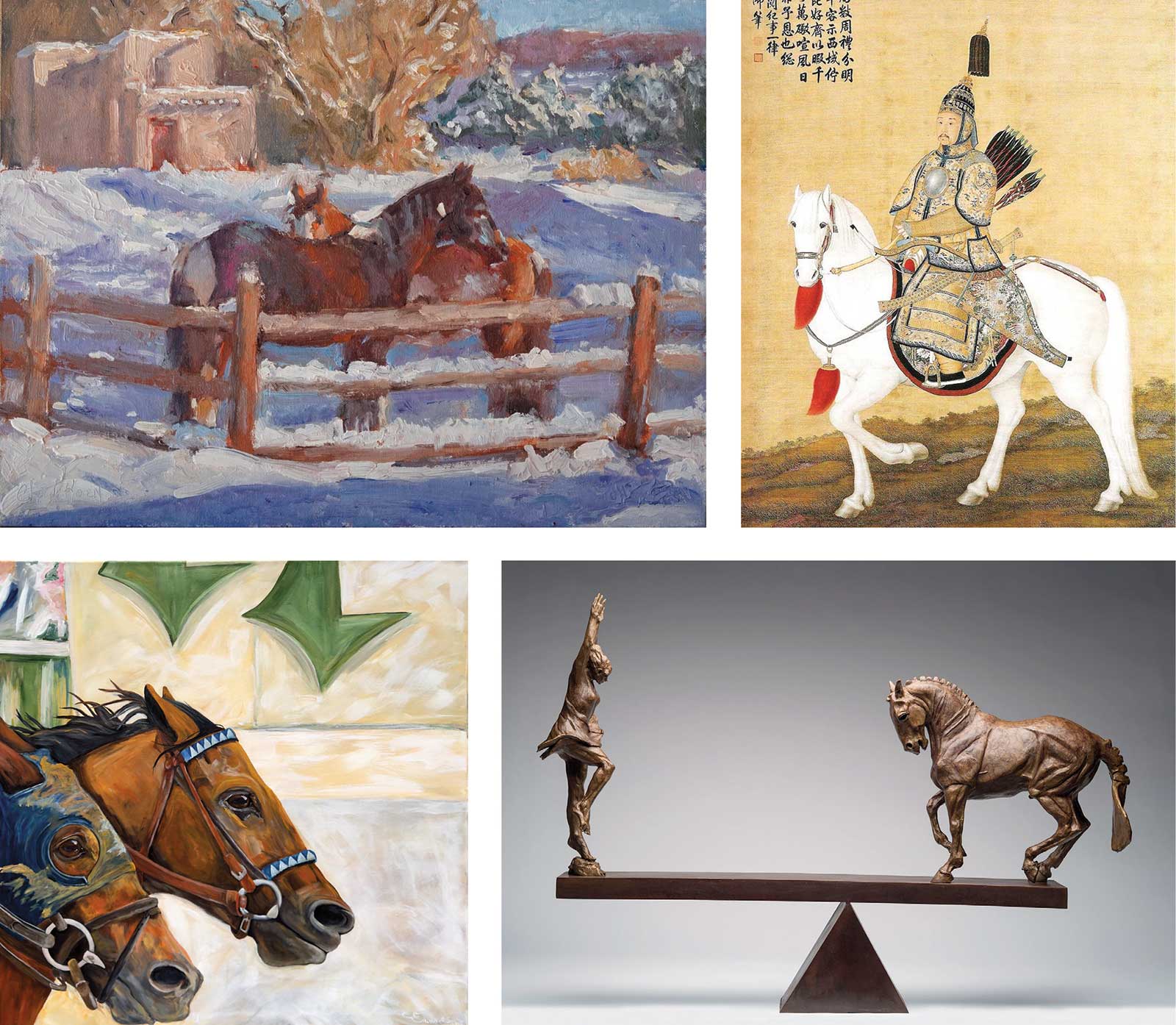
Top: American Impressionist Society, Dreaming of a White Christmas, oil 12 x 16 in., by Cheryl Koen. Armoured Kangxi Emperor, Qing Dynasty. Public Domain. Bottom: Jeanie Edwards, By a Nose, acrylic on gallery-wrapped canvas, 30 x 30 in. Diana Reuter-Twining, Equipoise, bronze on stainless steel plate, 39 x 48 x 10 in.
In Equipoise, Reuter-Twining uses a horse and ballet dancer balancing on a beam, at the exact moment the two achieve a perfect state of equilibrium or “equipoise.” The fulcrum is placed off center and is reinforced by the beam bending with the horse’s weight.
Reuter-Twining studies Sir Alfred Munnings’ palette and technique in her sculpture, After Munnings.Like many of Munnings’ paintings, the rider in Reuter-Twining’s sculpture approaches the composition boldly from the edge of the picture plane. By using a patina which fades from a dark blue to a bright yellow, she explores how Munnings may have achieved the sense of suspended animation he is famous for.
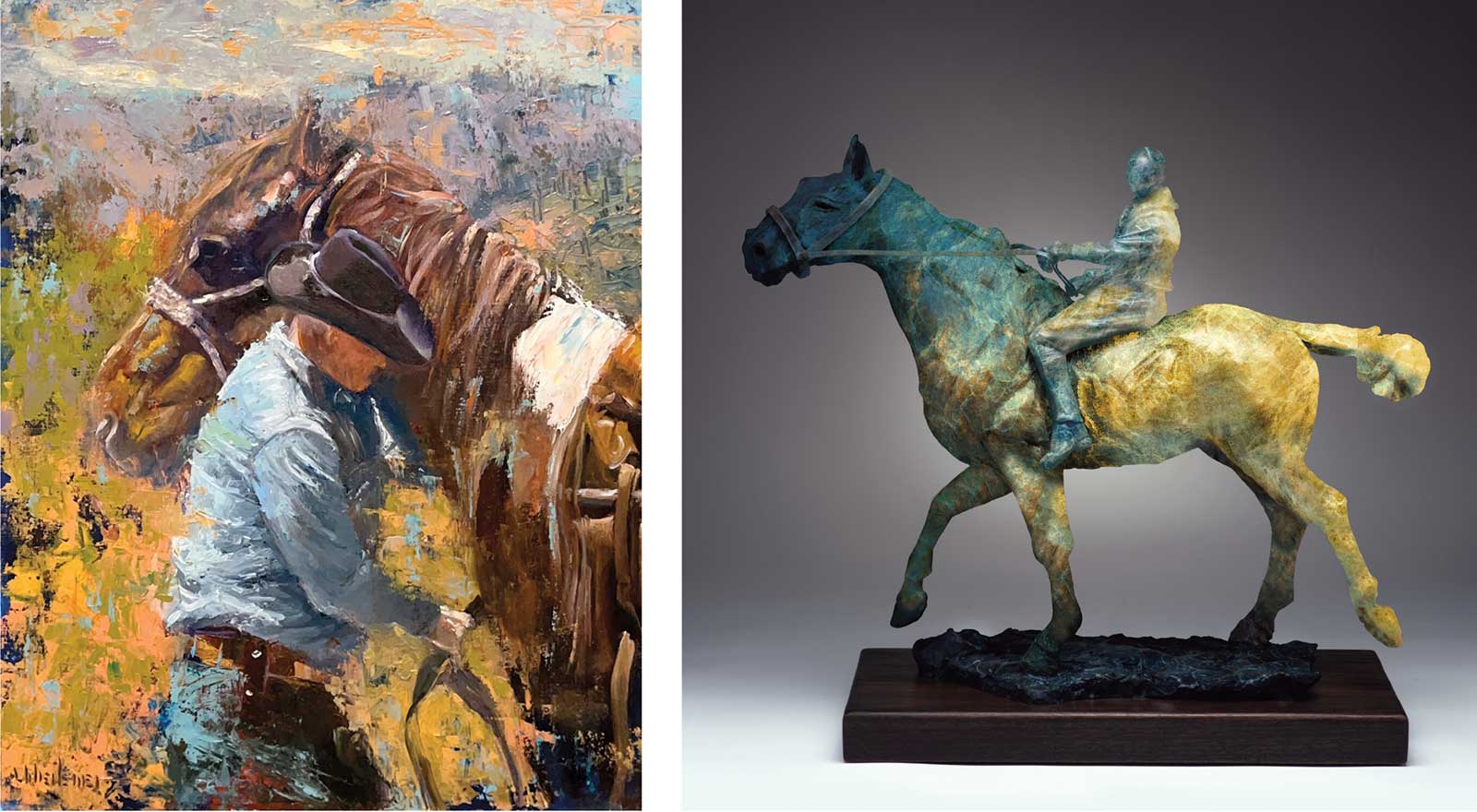
Left: American Impressionist Society, Work Friends Revisited, oil, 14 x 11 in., by Leah Wiedemer. Diana Reuter-Twining, After Munnings, bronze, 19 x 26 x 13 in.
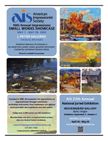
“Painting horses is about more than depicting an animal, it is about capturing motion, spirit and the relationship between horse and human. When an artist chooses the horse as a subject, they are drawn to its form and the juxtaposition between power and grace,” says Liz Ahrens, executive director of the American Impressionist Society. “Horses often provide symbolism of many disparate themes including the wilderness, farm, ranch, racing and cavalry. Impressionism provides the artist a style to convey a variety of painting of a horse with the influence of light, sound, smell, environment and contrast. The artist studies anatomy, but more importantly studies energy—the moment just before a gallop, the quiet breath of a resting mare, the tension of a turning head. Emotion is apparent in the passion the artist brings to the equine painting. A painting provides more than an image of a horse as it can take the viewer deep into the scene in which the artist found themselves with the animal.”
American Impressionist Societymembers who depict the equine form include Dennis Boyd, Cheryl Koen, Leah Wiedemer, among many others.
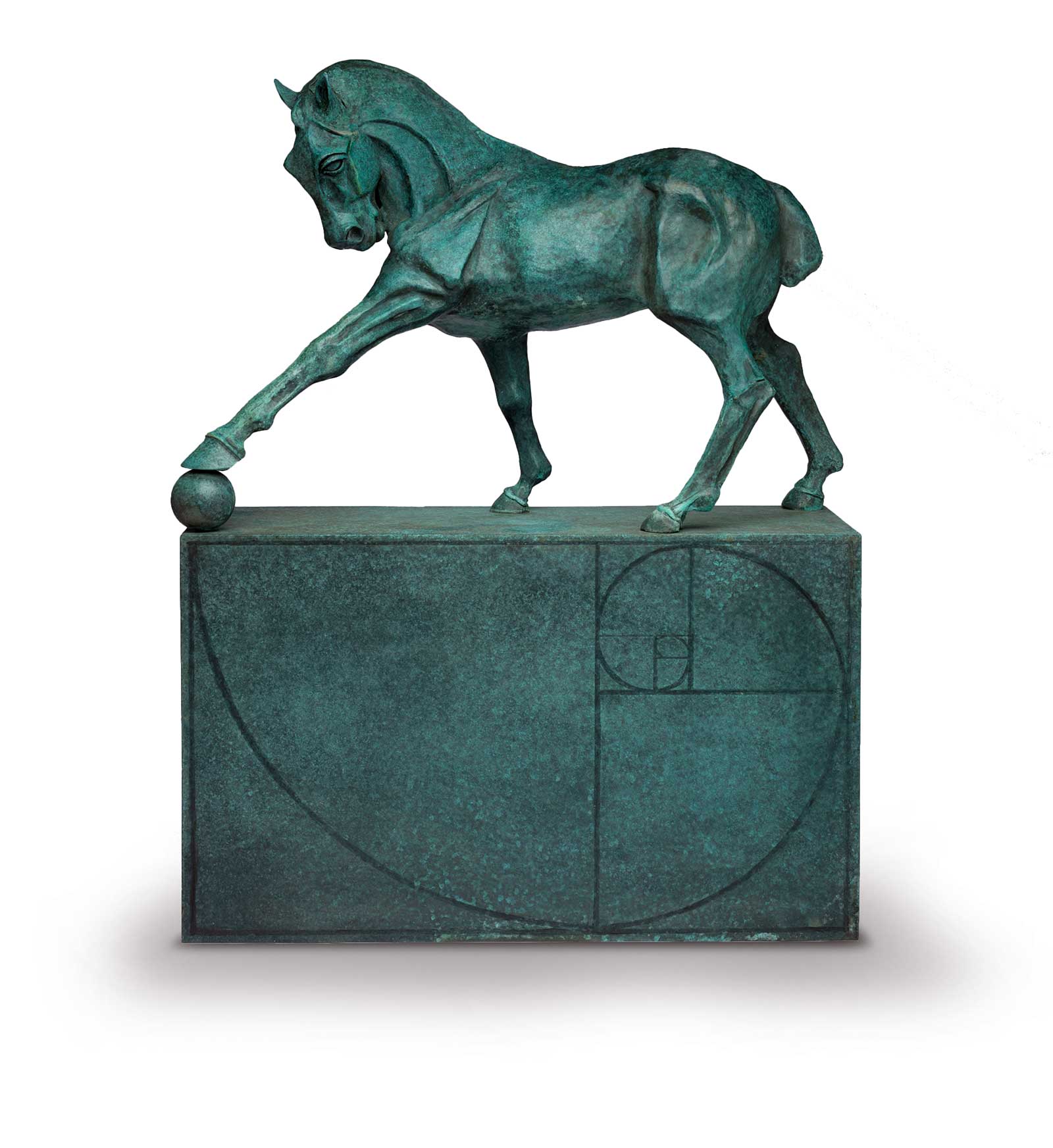
Diana Reuter-Twining, Maestro, bronze on etched stainless steel base, 26 x 20 x 7 in.
Among the myriad elements of horses that people are enthralled by, Jeanie Edwards of Jeanie Edwards Fine Art is most encaptured by the eyes. “For me, every portrait begins and ends with the eye. It is the first mark I make on a blank canvas, because until the gaze is fixed, the animal isn’t truly there,” she says. “People often ask why I’m so meticulous with a single iris or the curve of a lid, but the answer is simple: you can tell everything you need to know about a creature by looking into its eyes. The eyes are more than just anatomy, they are a direct, unfiltered link to the soul. They carry the weight of the wild—the quiet patience of a predator, the gentle vigilance of the prey, and a primal wisdom that predates language. When I capture that specific glint of light or the depth of a pupil, I am capturing a heartbeat. It’s an immediate connection that transcends the barrier between human and beast. Once the eyes are alive, the rest of the body—the fur, the muscle, the bone—simply follows to support that spirit.”
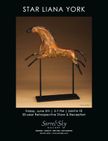
A black Morgan with more spirit than the Forest Service could handle introduced artist Star Liana Yorkto the horse as both a companion and as an aesthetic object. A high school student at the time, York purchased the animal for $250, including all its tack. From that day forward, she has been intrigued by the fluidity of line and mass of horse anatomy and by the animal’s fiery instincts held in delicate balance by the rider.
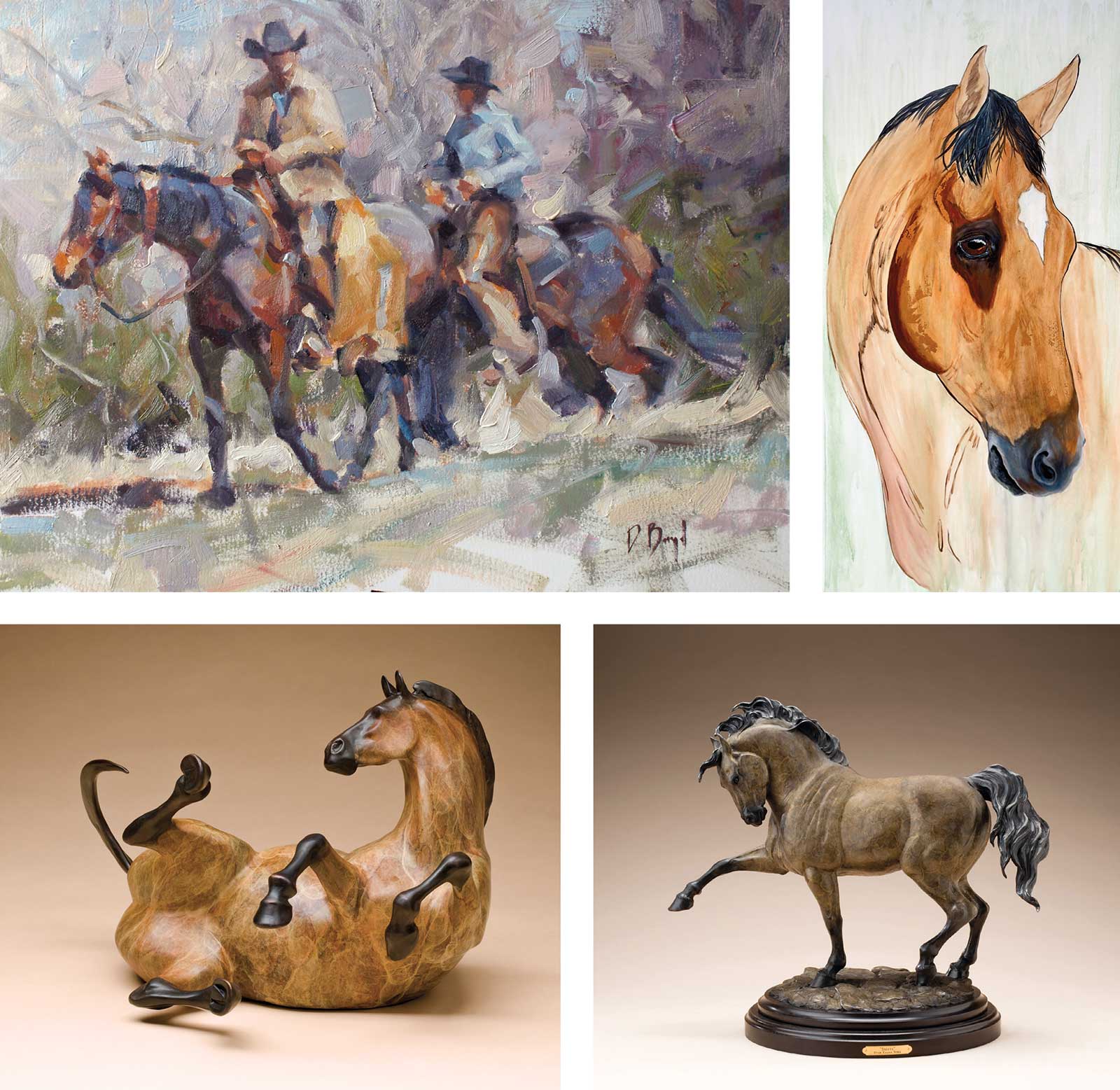
Top: American Impressionist Society, Riding For The Brand, oil, 12 x 16 in., by Dennis Boyd. Jeanie Edwards, Lasting Impressions, Barbaro, acrylic and gold leaf on gallery-wrapped canvas, 48 x 24 in. Bottom: Star Liana York, Rocksie, bronze, 15 x 19 x 9 in. Star Liana York, Salute, bronze, 26 x 9 x 15 in.
Over the past several decades, York’s subjects have evolved in style and content, digging ever deeper into the universal rhythms that unite us with earth elements and animal spirits. Her tabletop and life-size equine bronzes divide into two distinct bodies of work—stylized, simplified animals inspired by paintings on the walls of Horseshoe Canyon and other ancient caves, and more detailed representations of horses inspired by traditional Western history and sketches of horses from the Renaissance era. York continues to create the sense of internal/external intensity of the equine spirit, and the bond of trust joining ancestral memories between humans and equines, expressed once again when the artist releases her emotions in clay.
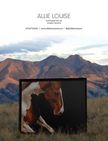
Self-taught artist Allie Louise creates photorealistic art with soft pastels in both color and black and white, in hopes of bringing a new light to the medium. Her approach is observational and detail-driven, with an emphasis on expression, composition, mark-making and subtle emotional gestures as the foundation of the storytelling from piece to piece. Soft pastel allows her to work with a high degree of realism while preserving the visible marks of the medium. Texture, layered color and quiet imperfections are intentional, helping the work feel artistic, timeless and grounded. She finds peace in the thousands of tedious pastel marks that make her work what it is. She also works in colored pencil and charcoal to achieve the same portfolio efforts.
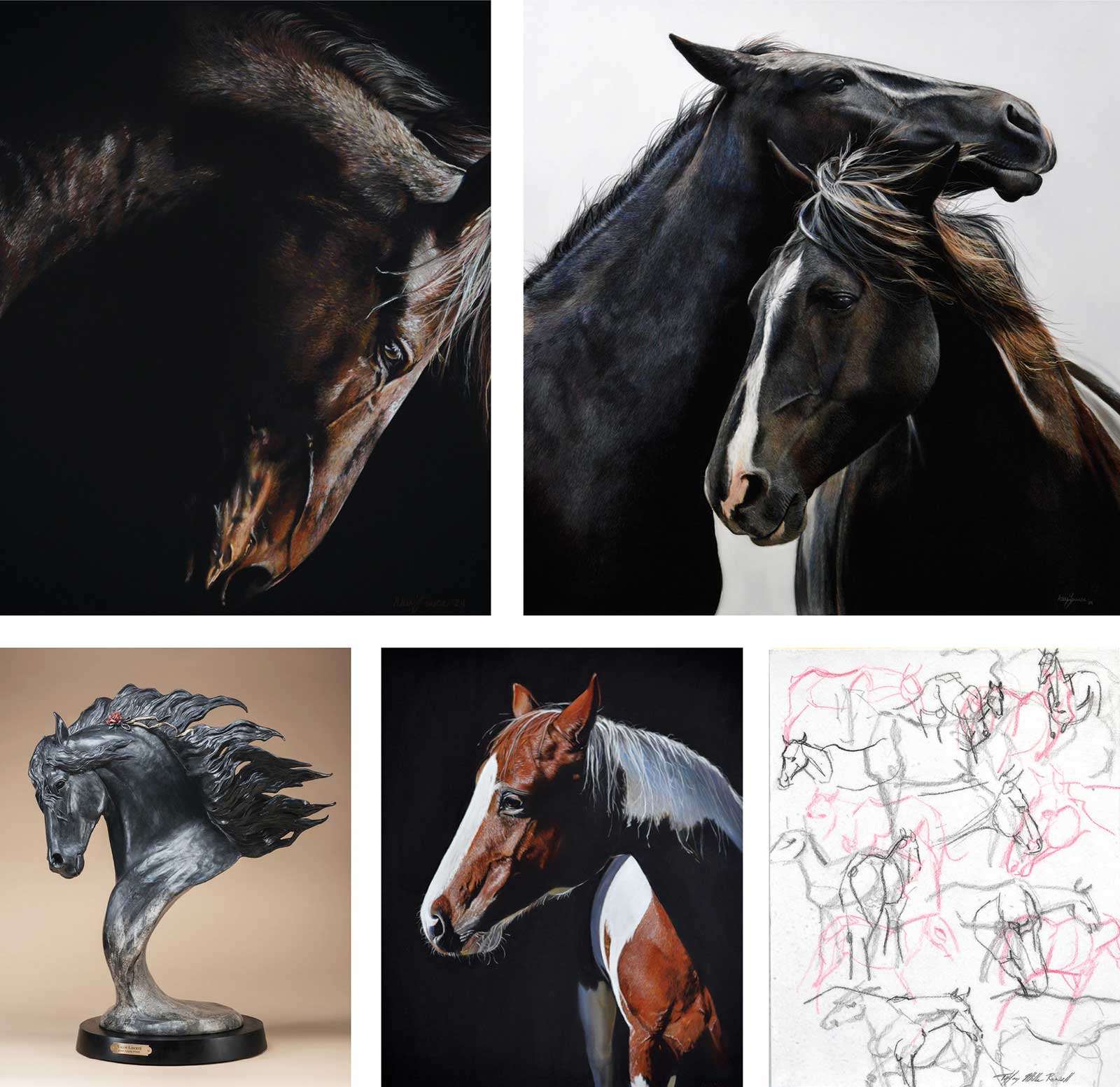
Top: Allie Louise, Dark Horse, soft pastel, 20 x 16 in. Allie Louise, Heart and Soul, soft pastel, 48 x 48 in. Bottom: Star Liana York, Valor, bronze, 28 x 24 x 18 in. Allie Louise, Handsome Jack, soft pastel, 16 x 20 in. Tiffany Miller Russell, Essence of Horse: Black & Pink #2, colored pencil and Mars Lumograph on panel, 8 x 10 in.
“Looking past the obvious, close observation and engagement of the subject is my process,” says Louise. “Though my pieces are meant to look like photos at first glance, I am proud that up close, the viewer is able to see the hundreds of thousands of tedious pastel marks. My goal is to inspire those who see my work to look more carefully at the detail in the things around them.”
Tiffany Miller Russell’s Essence of Horse series is part of a new series exploring movement, anatomy and mark-making through layered quick gesture sketches. “The typical paper sculpture work I’m known for is detailed and structured, conceived with a clear plan of action that will see me through to final completion. In contrast, these gesture drawings are unplanned, so I must respond to the piece as it unfolds in front of me. Different themes and tools bring out their own moods, and the joy of adapting in the moment pushes my limitations in a new direction.”
Miller Russell continues, “Changing direction and stepping away from work that has a track record of success can be terrifying as an artist, but it shows a great deal of commitment to their personal development. Don’t be afraid to follow them on the journey. Experimentation is a powerful tool of growth, and every experience builds on another.” Miller Russell is a Signature Member of the Society of Animal Artists.
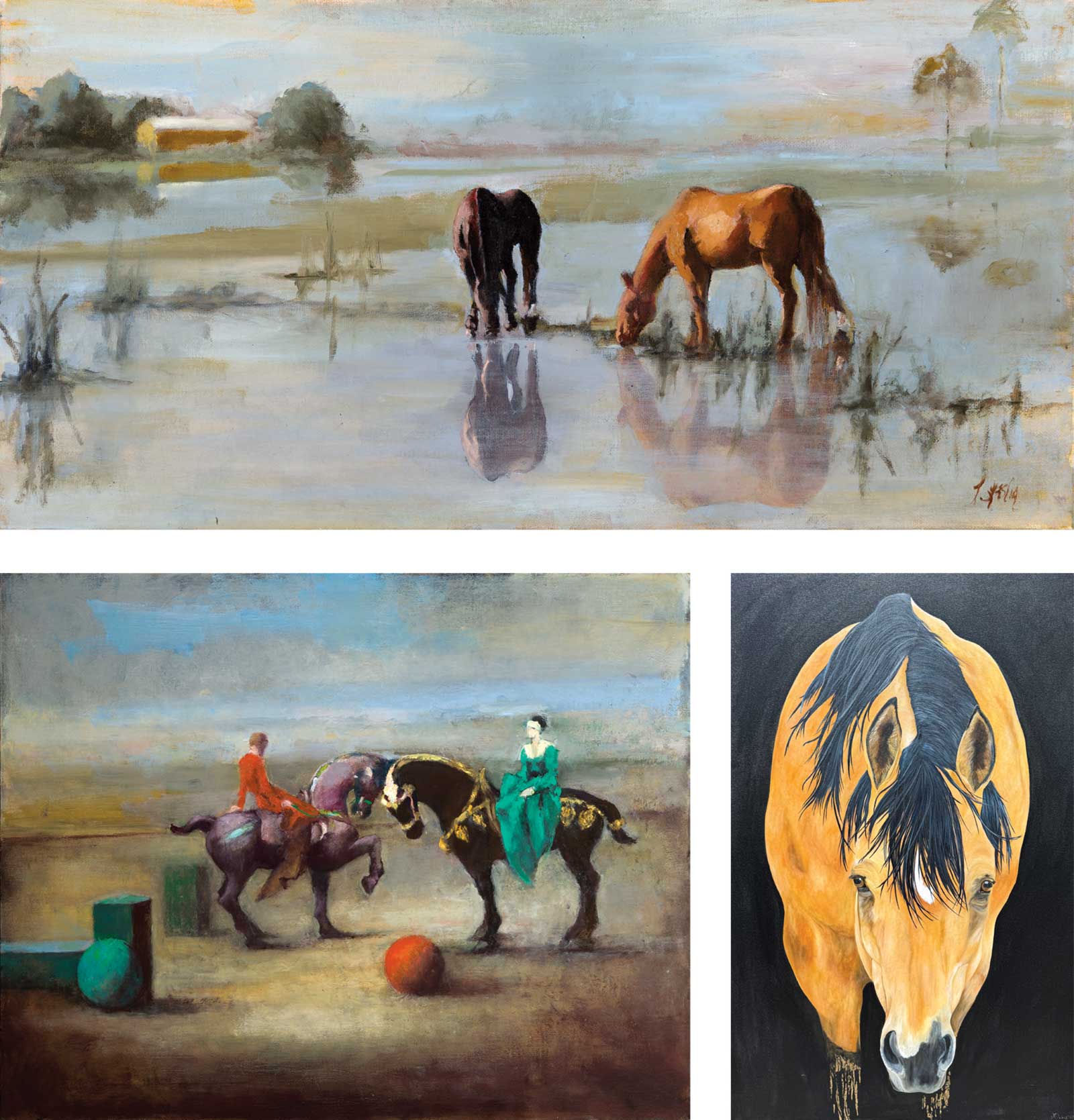
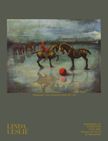
Top: Linda Leslie, Company, oil on panel, 12 x 24 in. Bottom: Linda Leslie, Study For Messenger, oil on panel, 16 x 20 in. Jeanie Edwards, Into the Ether, acrylic on gallery-wrapped canvas, 70 x 36 in.
“Inspiration for the heart of the wild horse comes from a lifetime of love and admiration,” says Linda Leslie, who started riding at a young age as a member of the Pony Club. “Women have had a long time unique and intimate relationship with the horse. I owned a beautiful black quarter horse named Black Jam when I lived in Santa Fe, New Mexico. I rode Black Jam through the arroyos, and felt a precious sense of freedom.” Leslie has been studying oil painting her entire life, and is passionate about painting people, horses and other animals. “The horse represents beauty and grace,” she says. “I strive to bring some of that into the world.” —
Featured Artists & Galleries
Allie Louise
Livingston, MT (870) 573-0040
www.allielouiseart.com
IG: allielouiseart
American Impressionist Society
(231) 881-7685
www.americanimpressionistsociety.org
Diana Reuter-Twining
(803) 824-9123
www.bronzed.net
Jeanie Edwards
Highlands, NC
(828) 526-2933
jeanie@jedwardsfineart.com
www.jedwardsfineart.com
FB: Jeanie Edwards Fine Art
IG: jeanieedwardsfineart
Linda Leslie
725 W. Alder, Suite 13 Missoula, MT 59802
(505) 690-7008
www.lindaleslieart.com
Star Liana York
Abiquiu, NM
www.staryorksculpture.com
Tiffany Miller Russell
missraptor@deadraccoon.com
www.wildlifeinpaper.com
Powered by Froala Editor