Brian Haberlin is a superhero in the comic book universe. Writer, illustrator, producer and innovator, he revolutionized the industry by developing most of the modern methods of comic book production today. He is best known for his pioneering use of augmented reality in conjunction with story books, his unique digital style and as the co-creator of the award-winning Witchbladeseries, among others.
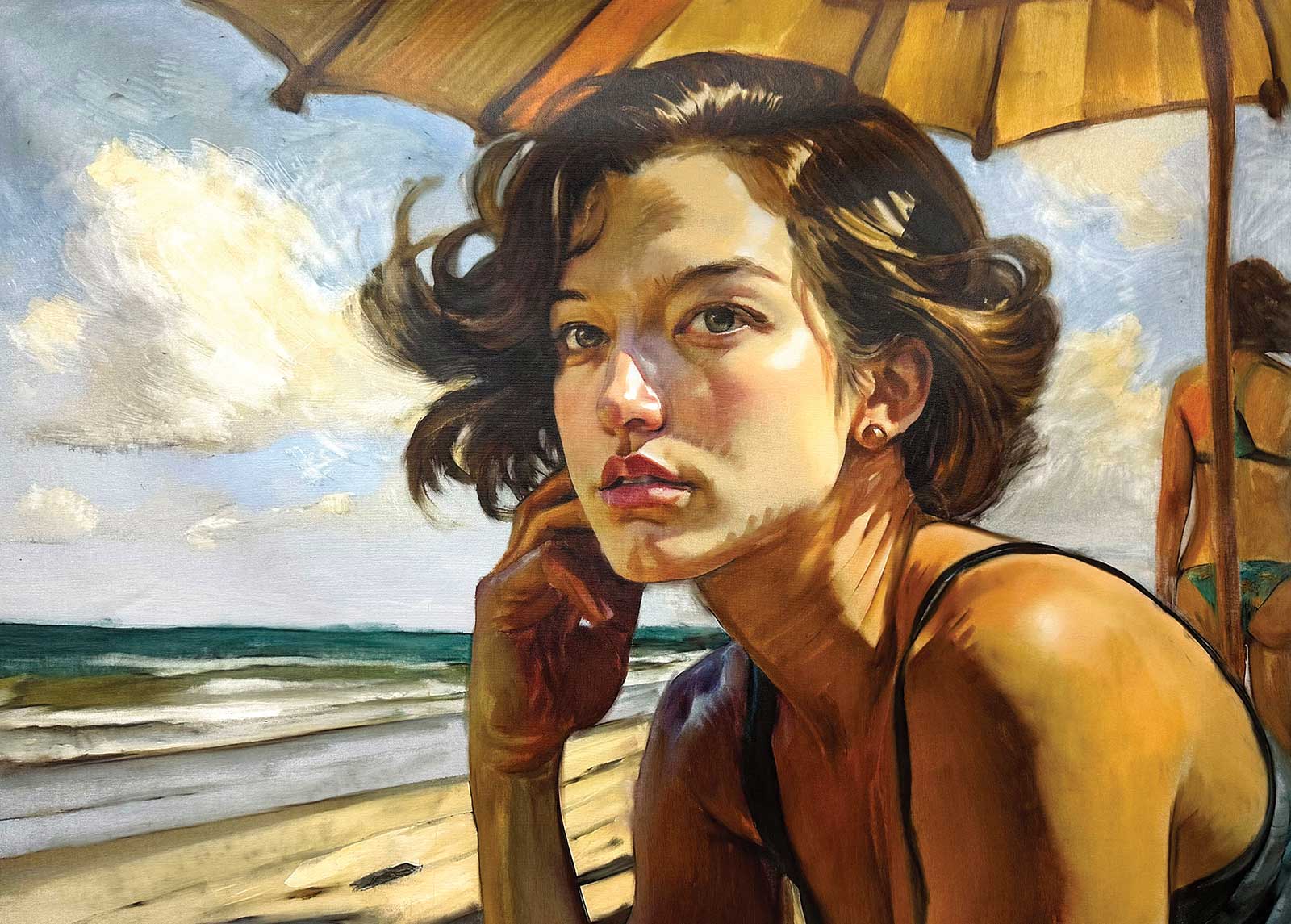 Salt in the Air, oil and acrylic on canvas, 33 x 45 in.
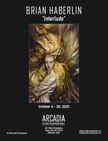
Best known, for now. While still highly active in the world of comic books, today Haberlin is funneling more of his seemingly boundless—and boundaryless—creativity into (digital-free) fine art. A selection of his latest work will be on display at Arcadia Contemporary in New York from October 4 through 26.
With retirement on the horizon, Haberlin made a conscious effort to devote more time to painting about five years ago, but he’s been an artist since the very beginning. He remembers creating an egg tempera painting of a California poppy when he was 5, and grabbing scraps of wood from a nearby construction site to hammer together a frame before he took it door to door to sell.
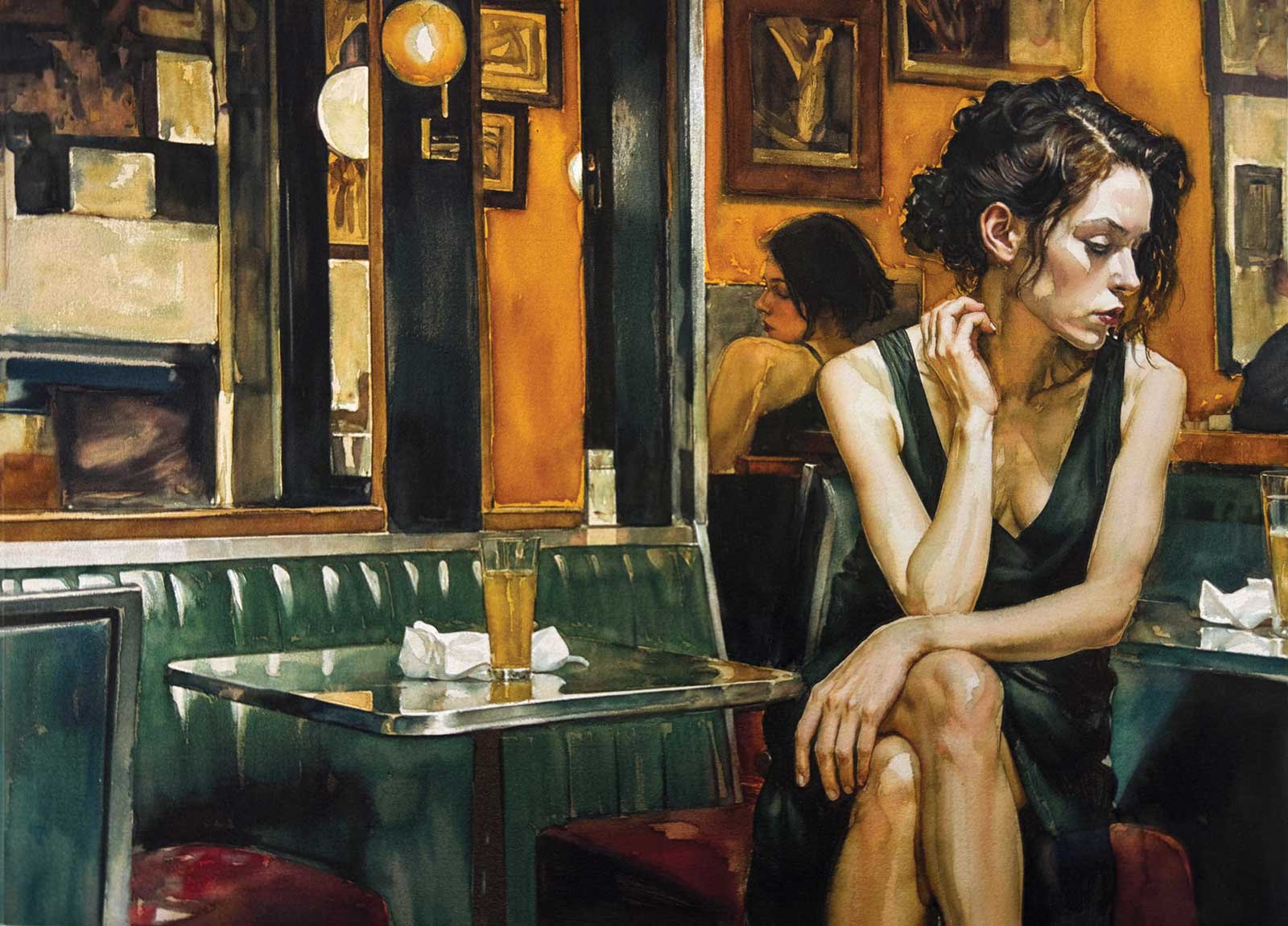
Don’t Tell Me, watercolor on panel, 11½ x 15 in.
He began with oils primarily, and now works across mediums, including acrylics and watercolors, which he applies to Arches oil paper, something he says “would drive most watercolorists crazy.”
“It allows the pigments to sit up more on the paper and you can move them around more, like oils,” he explains. “You get these happy accidents—you can’t reproduce that, even in digital art. It’s just wonderful when you get those analog effects.”
His work developing visual narratives for comic books does inform his paintings, which he views as individual panels from a story. “It’s that moment when you’re not sure if she’s going to kiss you or punch you in the next few seconds,” he says. “I like that people will want to know what happens next. It draws people into the narrative and the best part is, it’s a narrative of their own creation—which you can’t beat because they came up with it themselves. It’s not me telling them the story; it’s the story they brought to the painting.”
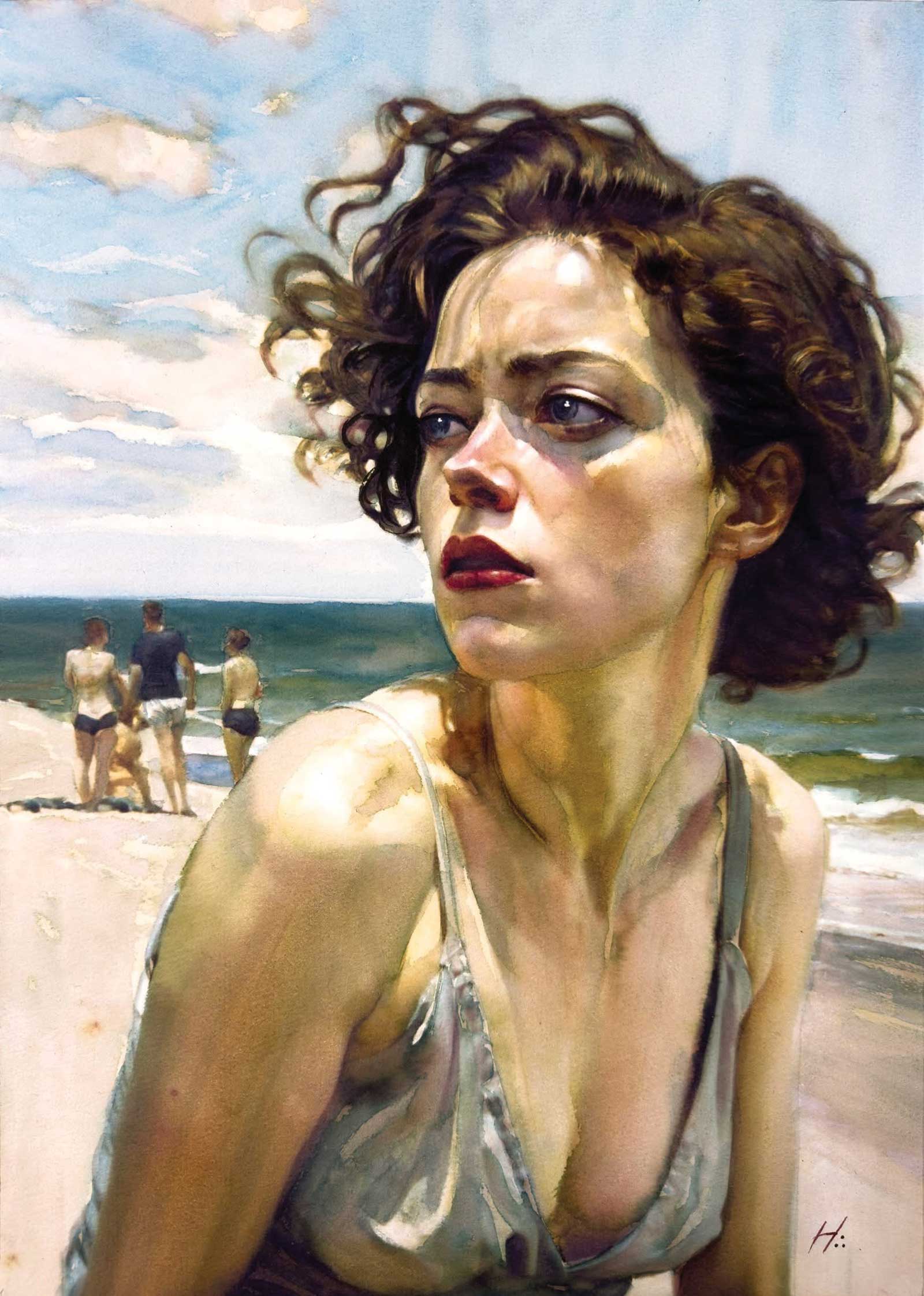
On the Horizon, watercolor on paper, 19 x 13 in.
Most of Haberlin’s subjects are women, rendered as dramatically as their inscrutable gazes. A gifted painter of interior scenes, one of his signature compositional devices is including paintings within paintings, as in The Other Side of Silence. While Haberlin is introducing some more male figures into his paintings, he said he tends to paint women because most of the artists he admired in his youth—pin-up artists like George Petty and Alberto Vargas, as well as Alphonse Mucha, Gustav Klimt, Egon Schiele—did the same. It’s also just what he likes to paint.
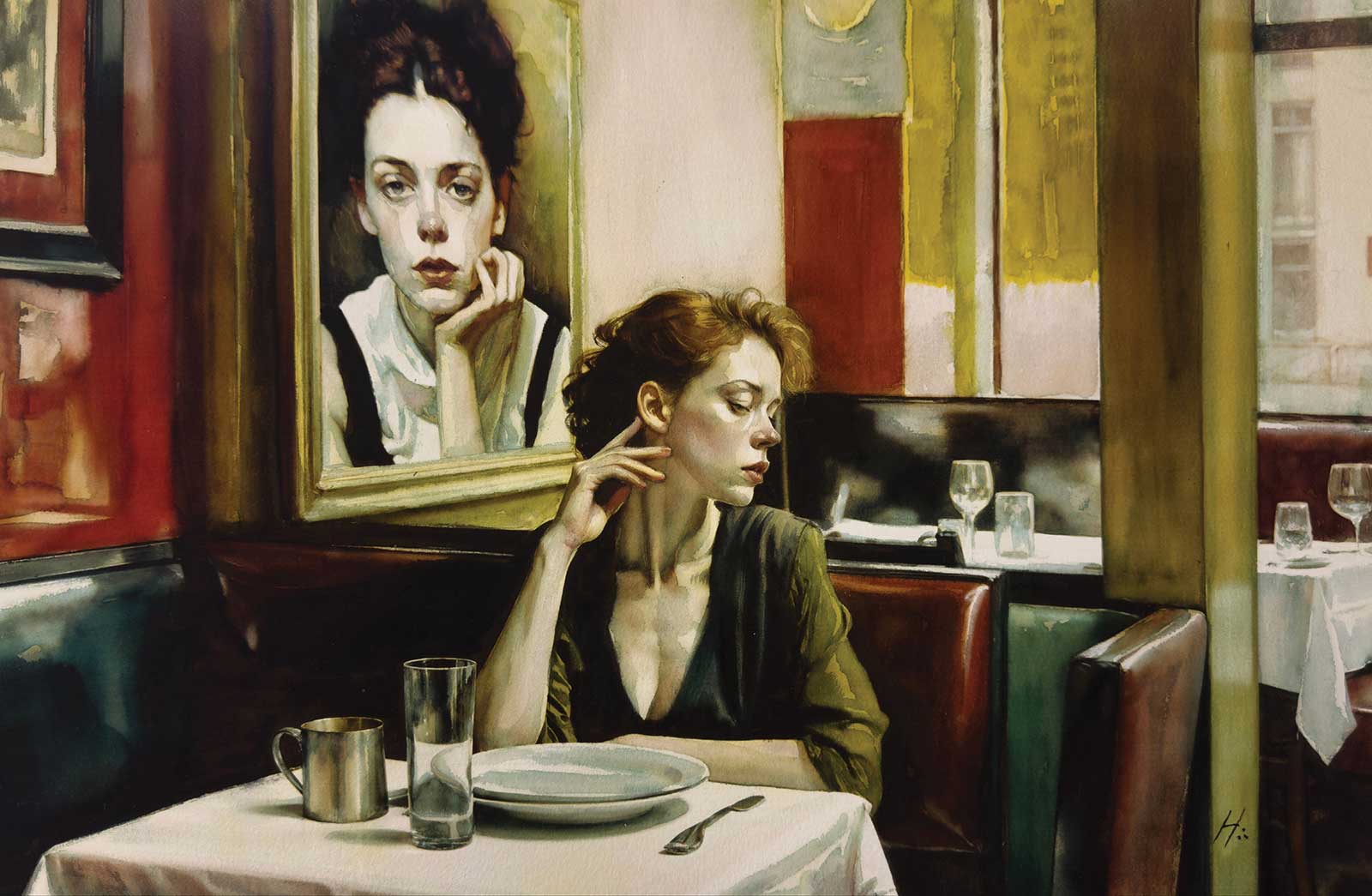
The Other Side of Silence, watercolor on panel, 13 x 20 in.
“There’s a great story about Peter Frampton…he made a live album that became the biggest live album to date,” says Haberlin. “He made a follow-up album and it bombed. He said the problem was he kept going back to the album that did so well, and trying to analyze why people liked it, rather than just doing his thing. Do what makes you happy, what resonates with you, and that’s what will come through the work.”
A book of Haberlin’s paintings titled Oil and Water is due to be released this fall. —
Arcadia Contemporary 421 W. Broadway • New York, NY 10012 • (646) 861-3941 www.arcadiacontemporary.com
Powered by Froala Editor