Amy Werntz is quick to share that she has always had an unusual preoccupation with time, the passage of it, and a fear of being forgotten and what will happen to the things she holds dear when it runs out. A sensitive artist, Werntz has poured these themes into her paintings, which often depict the elderly, creating a body of work that recently earned her the coveted $50,000 Bennett Prize, after being a finalist once before.
Despite her fixation on the arc of life, death and what comes after, Werntz seems surprisingly at ease with the aging process, something she attributes to having close relationships with her grandparents throughout her life. As a result, she sees the accumulation of years and the marks it leaves on our bodies as beautiful and worthy of celebration.
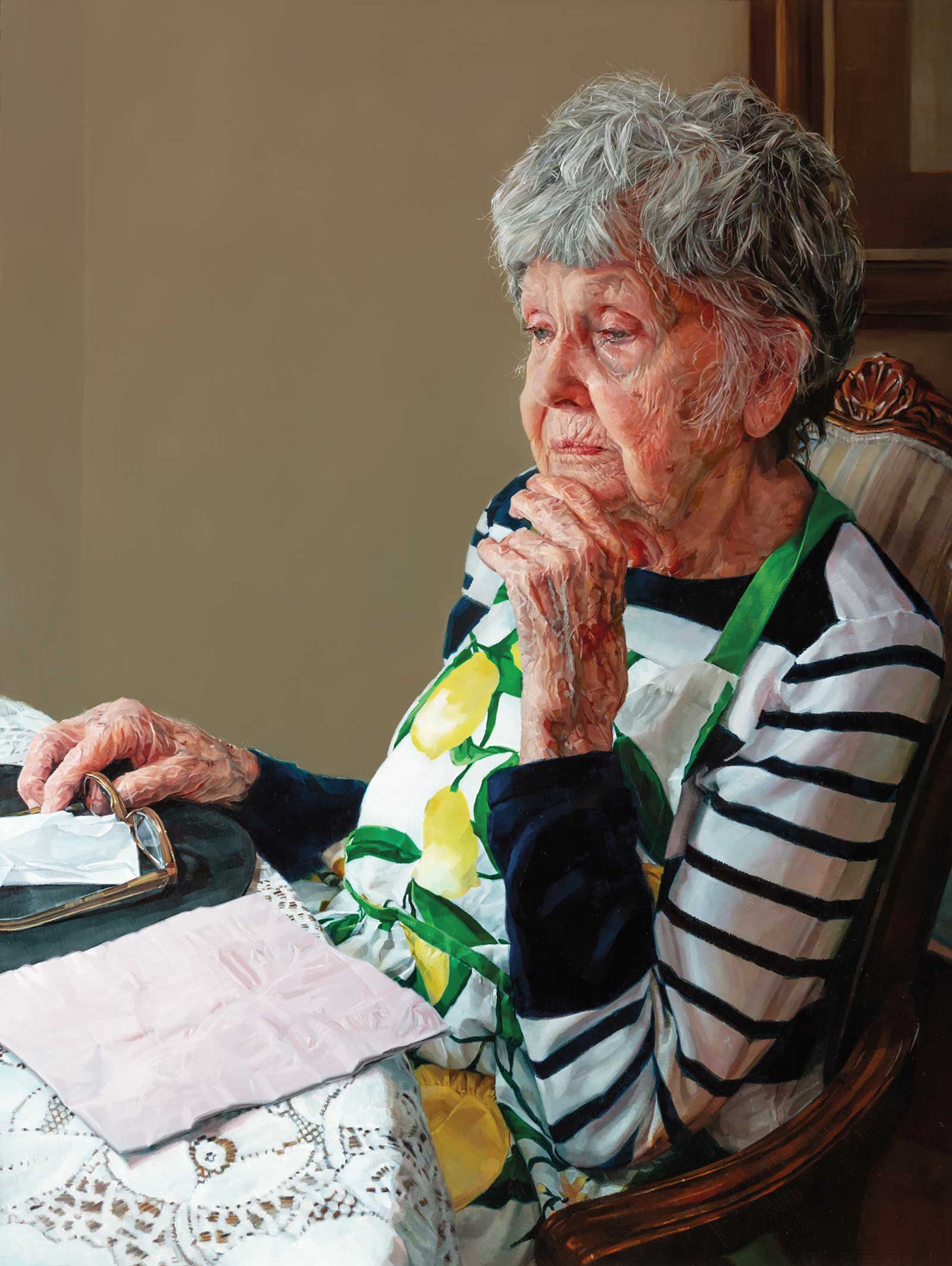 Carlyla, 2024, oil on panel, 24 x 18 in.“As far as pure subject matter goes, they’re fun to paint, the patterns in the skin…but on another level it’s really about our culture’s negative perception of aging,” says Werntz. “I think it’s important to get the work out there, and for people to see that in art because old people can be so overlooked. In my mind they’re beautiful and it’s just another way to look at beauty.”
For some people, Werntz’s paintings of older subjects are triggering. “The only negative responses I ever get about the work is from older women,” shares Werntz, adding that she lives in Dallas, which “might be one of the plastic surgery capitals of the world.” She recounts receiving a somewhat nasty email from a woman in her upper 70s. “She said she wasn’t accepting aging well and how she finds all of these people so ugly…and why don’t I make them smile rather than look so grim.
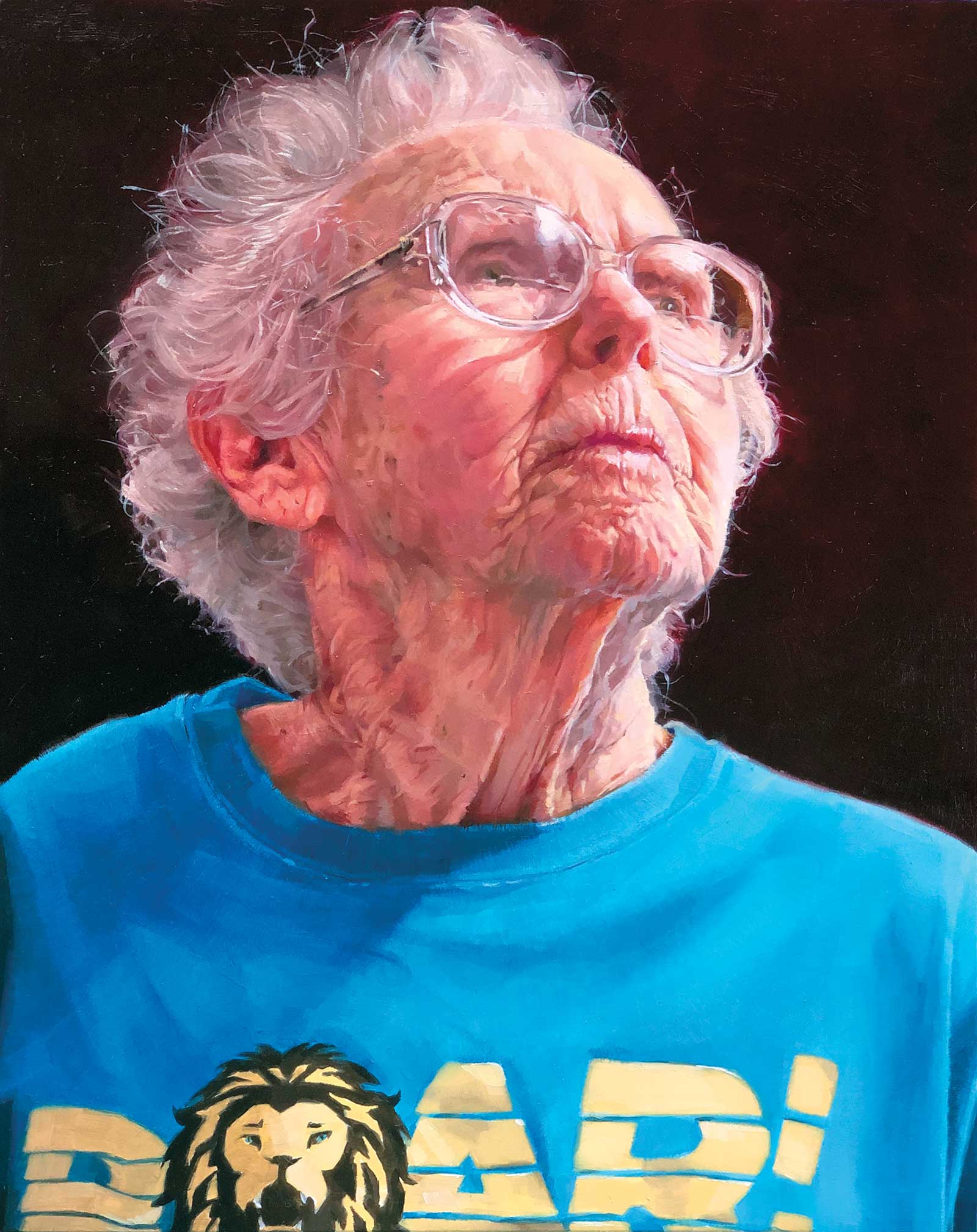 Nadean, 2022, oil on panel, 10 x 8 in.
“Hopefully, we’re all going to age, right?” Werntz continues. “The way people interpret the work is interesting and says a lot about them. A lot of people see strength and the beauty of the lives they’ve lived…hopefully it makes people think about their own relationship with aging.”
Her paintings also address and help Werntz process her fear of being forgotten after she’s gone. She recalls the transitionary piece that marked a dramatic shift in her work in 2017 from highly graphic portraits of glamorous women to the style and subjects of her portraits today.
“One of the last paintings I did before I made this shift was [inspired] by an old yearbook from the 1920s I found at an estate sale,” Werntz shares. “There was this black-and-white photo of group of kids who looked like they had just been in a school play, and they all looked so proud. None of them were alive anymore and here they were existing in this yearbook. The picture is holding this moment in time. It’s a sign to the world that [they] were here, that [they] existed. If I paint these people, in some small way it’s a way for them to continue to live on. Even if they don’t ever see it themselves, other people will.”
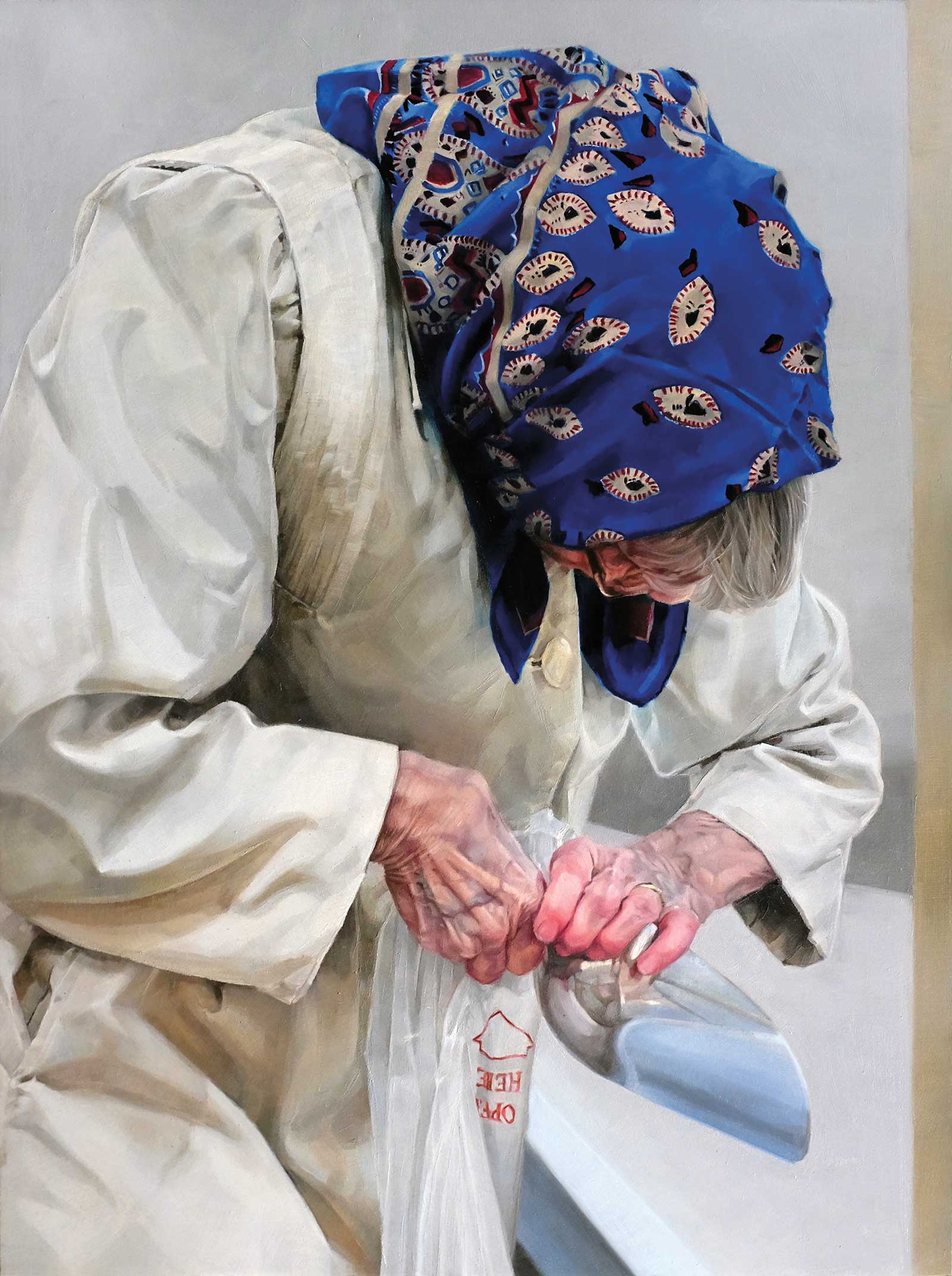
Blue Scarf 2, 2020, oil on ACM, 16 x 12 in.
People often ask Werntz if she goes to nursing homes to gather reference material, a question she finds somewhat offensive. “To me that’s invasive and taking advantage of people. It seems exploitative to go there for that purpose,” she says. Werntz has gotten some images from senior living centers, but only when she was there intentionally, visiting her father-in-law, or her grandmother. During a visit on her grandmother’s 97th birthday, Werntz took photos for the portrait Carlyla.
“My grandma was gorgeous and glamorous and is still beautiful,” says Werntz. “I like painting her…I can’t usually get that close to people so it's a little more intimate. She was a pianist and has these wonderful hands. I think that’s why her fingers bend the way that they do.”
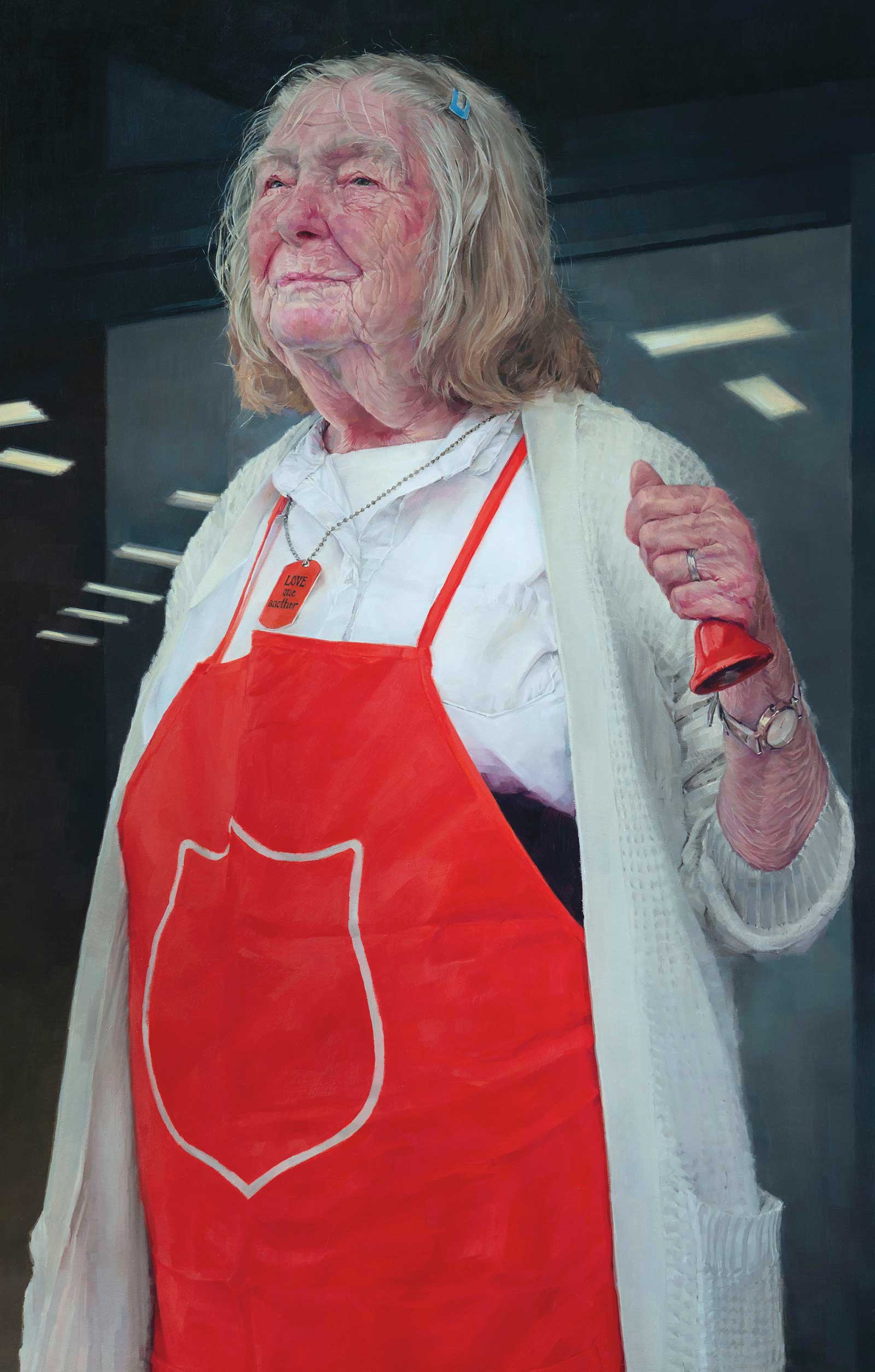
The Bell Ringer, 2023, oil on panel, 27 x 17 in.
Adding yet another layer to Werntz’s work, the artist prefers to find and photograph her subjects out in the world—grocery shopping, eating out, or at a lively event like the annual quilting show she attends, to underscore their vitality, and that these people are out living rich lives. When a posture, expression, lighting, an outfit or, her favorite, when their hands are near their face, she shoots surreptitiously from her hip. Since she can’t look through the lens, sometimes her subjects don’t end up in the frame. “It’s from a different angle—the perspective is always upward gazing at the person, but I think it gives it an interesting kind of reverence that is just an outcome of the process.”
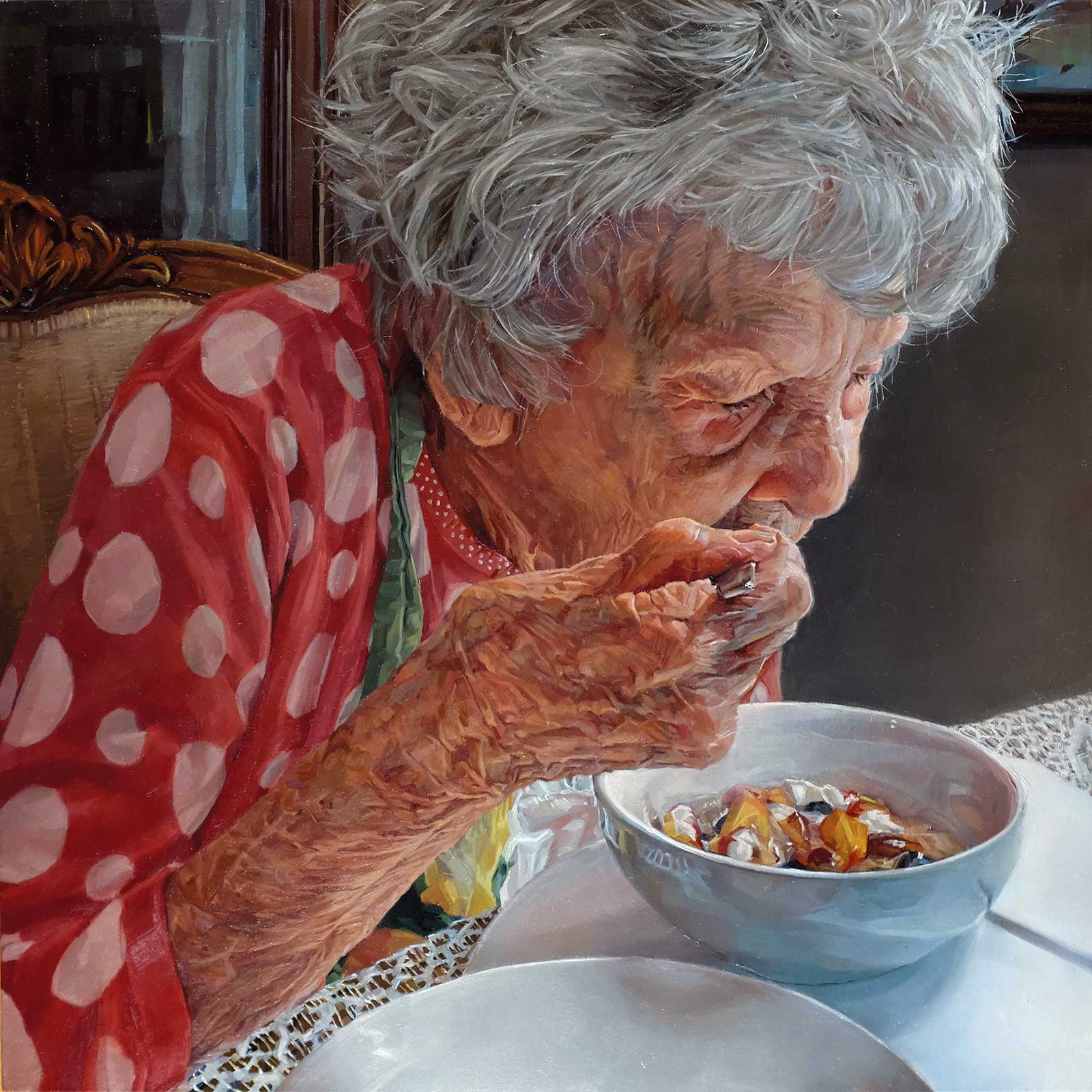
Breakfast, 2025, oil on panel, 12 x 12 in.
Werntz also accepts commissions. When we spoke she was creating a self-portrait for a collector who commissions self-portraits of the artists whose work he collects. “It’s funny, my family said I made myself look a lot older than I do…the self-portrait is always kind of a struggle because it’s hard to know what you really look like.”
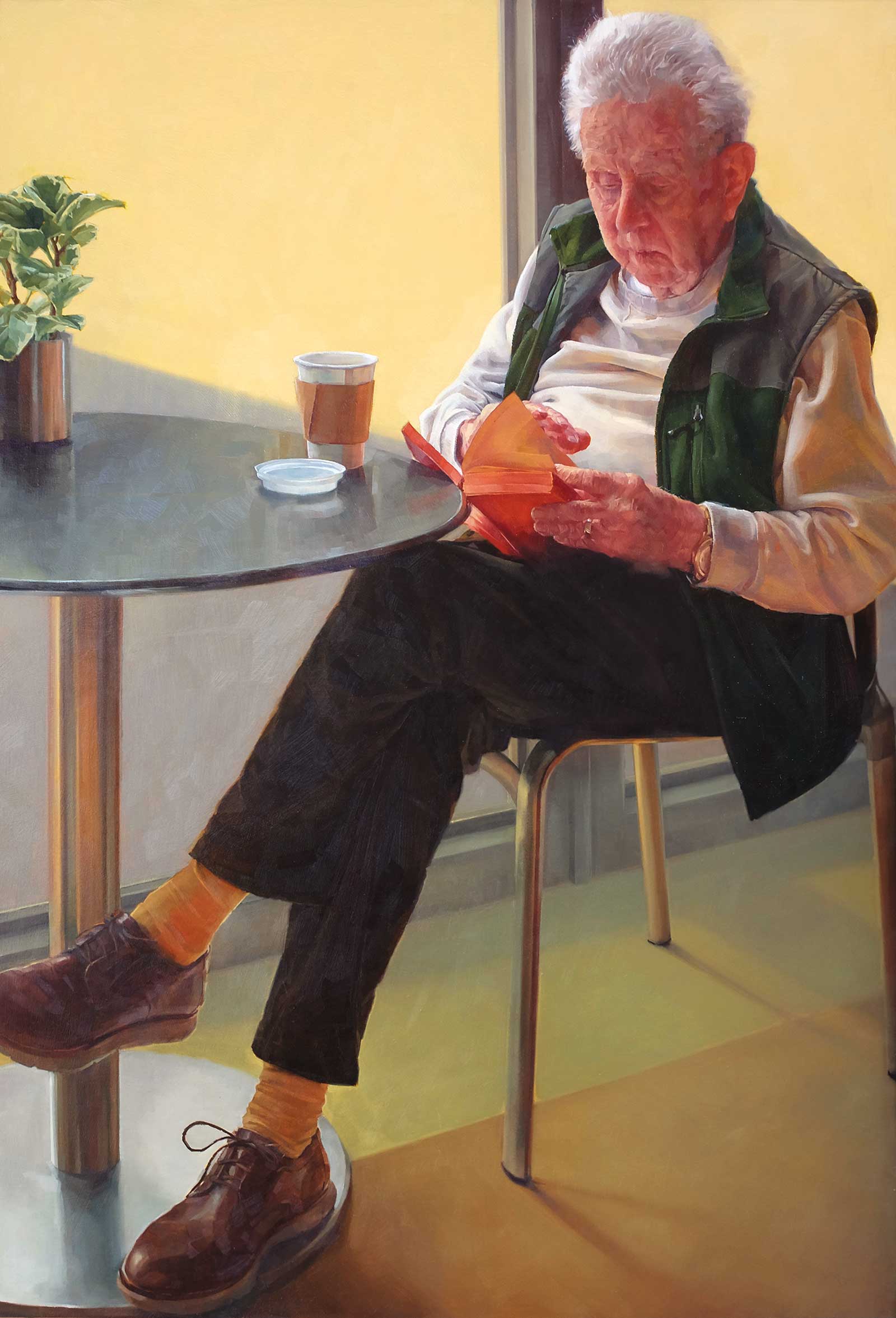
Kimbell Man, 2022. oil on ACM, 29¾ x 20½ in.
One of her most poignant commission experiences resulted in the piece Nadean. A man from a small town about an hour outside of Dallas, came to one of Werntz’s shows and wanted to commission a portrait to honor an 88-year-old woman who had lived in the community for her entire life. He invited Werntz to come along on a visit to get some candid photos of her without Nadean knowing what they were for.
“She was almost 90 years old, still growing 75 percent of her food herself. She still drives a tractor around her property. She was just an amazing lady,” says Werntz. “The man who wanted me to paint her said, ‘She lives in the light.’ She’s such a positive and upbeat person. It was fantastic that she happened to have on this ‘roar’ T-shirt.”
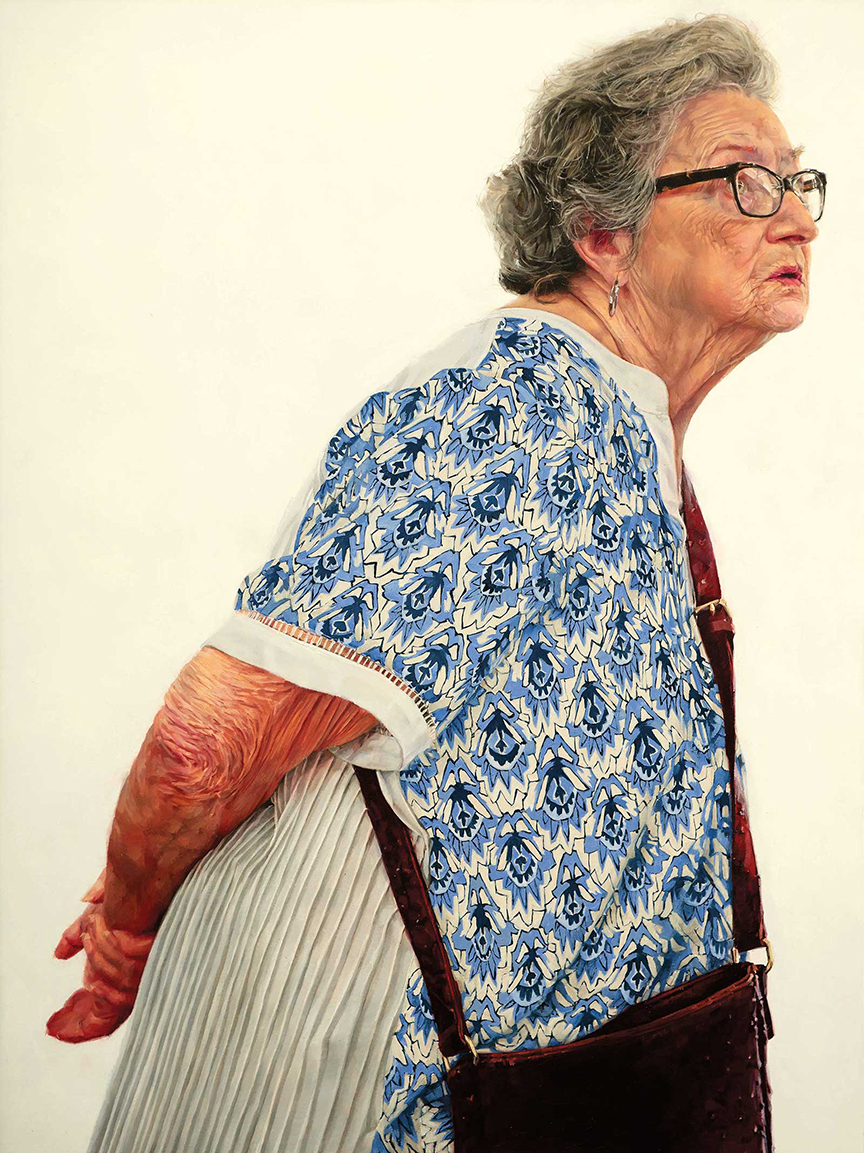
QE III, 2021, oil on panel, 24 x 18 in.
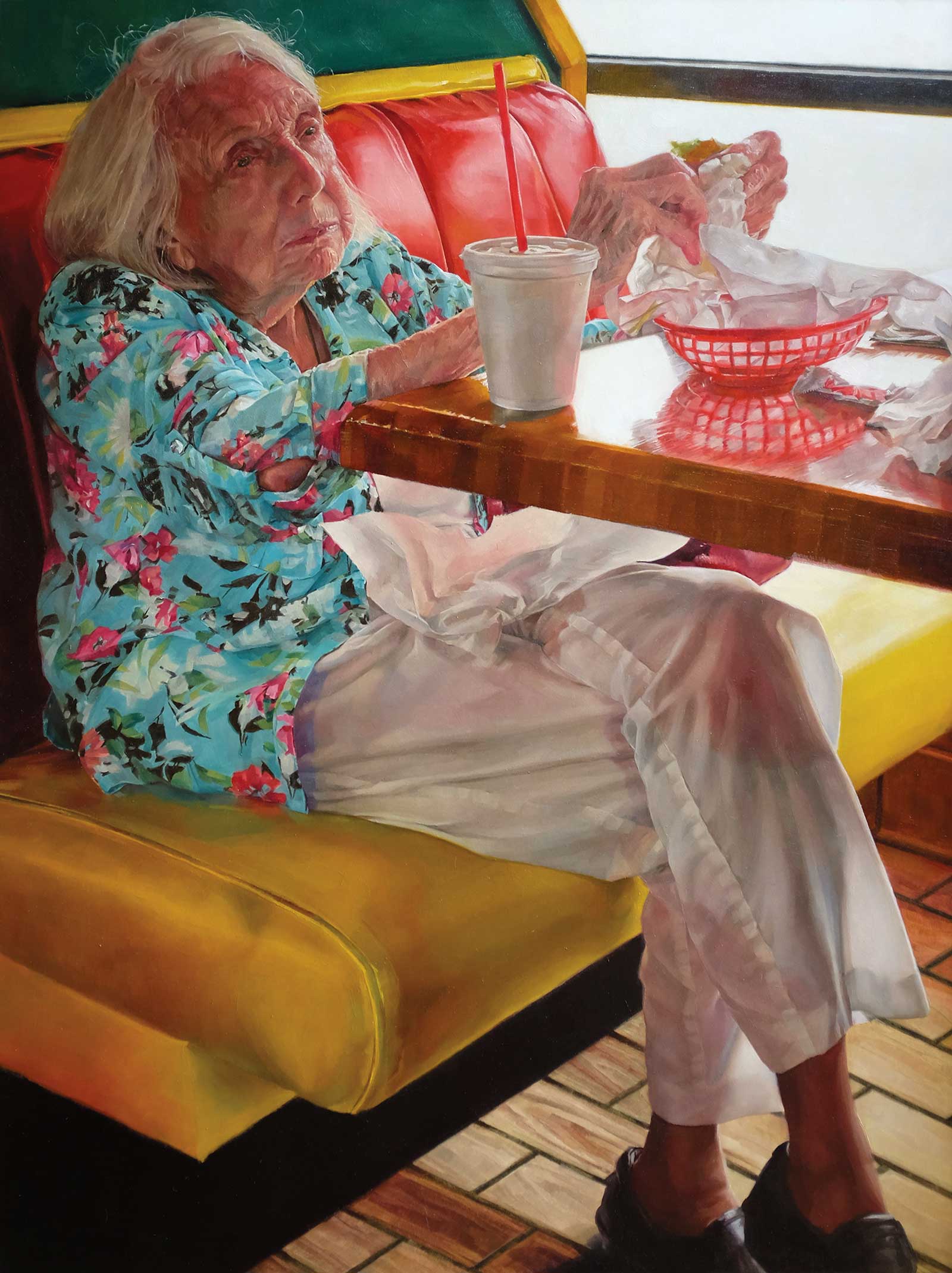 Lunch, 2021, oil on panel, 24 x 18 in.
Werntz had taken around 400 photos, and it was in the last few images that she found the perfect one. “The way she’s looking up and how the light was hitting her face...,” explains Werntz. Nadean had no idea about the portrait until Werntz was invited to present it to her on her birthday. “I have found out about some of the people I’ve painted, and they’re all these really strong women with these amazing stories," says Werntz. "Something must come through that they exude that’s drawing me toward them.”
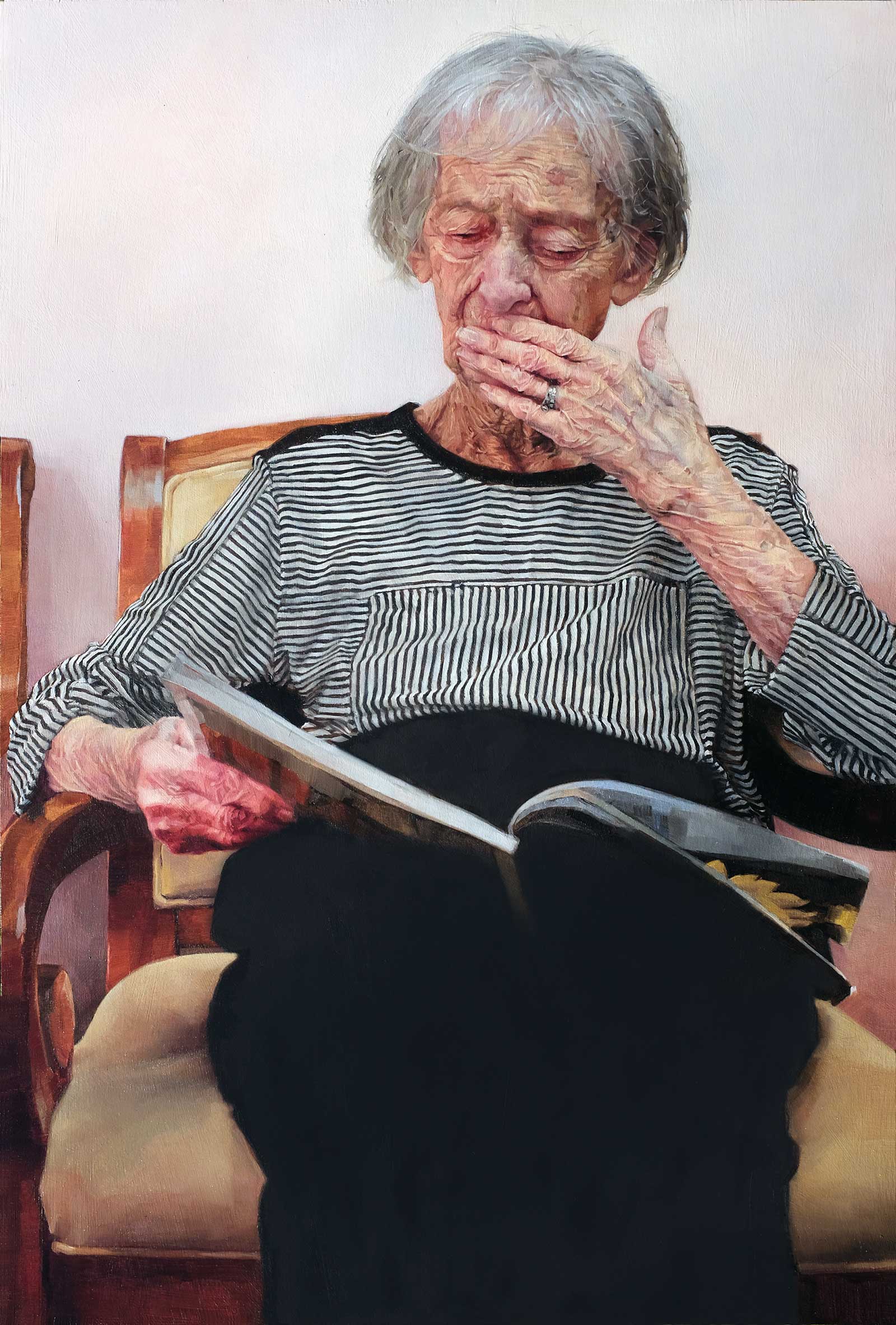 Ruby Mae, 2024, oil on panel, 23¾ x 16 in.
When Amy and I spoke, mere days after she was awarded the Bennett Prize, she was still catching her breath and processing the news, having walked a tightrope of emotion between staying positive and not getting her hopes up leading up to the award ceremony. She did say her first order of business was to renovate her detached garage into a proper studio. Above all, she is excited to have more time to paint, to explore some new creative ideas that have been percolating, and get her work out in front of more eyes.
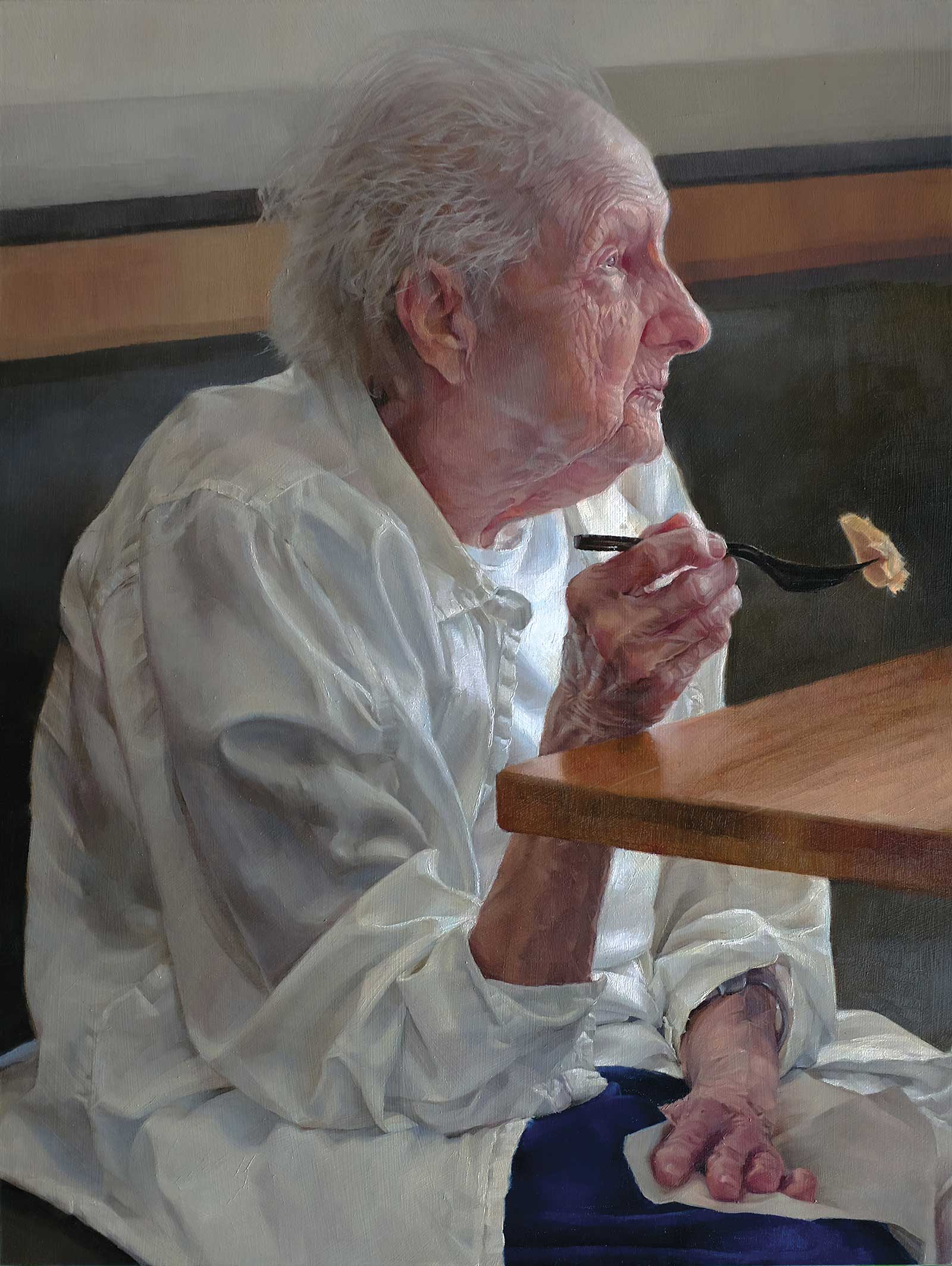 Cafe, 2021, oil on ACM, 16 x 12 in.
As far as why Werntz was selected as this year’s recipient in such a talented group of finalists, Steven Bennett says, “Amy Werntz is a perfect winner of the Bennett Prize. She is an exceedingly capable woman figurative painter who renders her women subjects with style and grace as she focuses on another neglected constituency: the elderly, who are so frequently left out of our lives as well as our art. Instead of chasing the young and the new, she pursues the old and the wise with empathy and kindness, something that makes her work unique.”
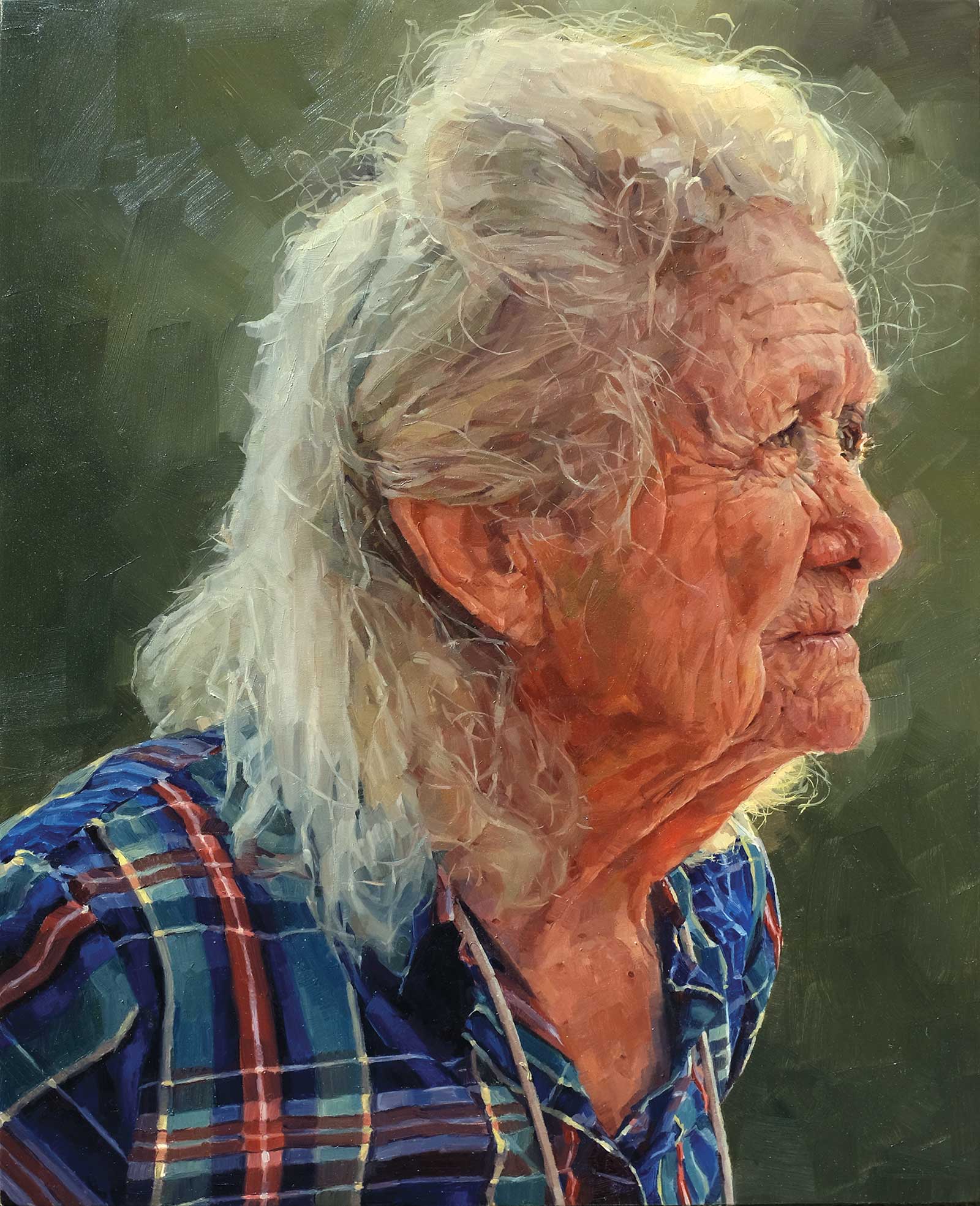
Estate Sale, 2025, oil on panel, 2025, 10 x 8 in.
Werntz’s paintings, along with works by the other 2025 finalists, is currently on view in The Bennett Prize: Rising Voices 4 through August 24 at the Muskegon Museum of Art, in Muskegon, Michigan. —
Powered by Froala Editor