Portraiture is a unique art form that transcends mere representation, capturing the essence of a subject while fostering a deep connection between artist and sitter. Recently, John Borowicz shared his reflections on a meaningful commission and the broader journey of portrait painting, shedding light on the profound impact of this timeless practice.
The commission to paint Michael Huerta, the 17th administrator of the Federal Aviation Administration, was facilitated by Ann Fader of Portrait Consultants. Upon meeting Huerta, Borowicz was immediately struck by his dignity, intelligence and humility. “I knew then and there what had to come across in this portrait beyond a simple likeness,” he shares. He explains that there is often a barrier between painter and sitter—a metaphorical mask shaped by power, status, or the sitter’s desire to convey a specific image. However, Huerta wore no such mask. “He shared wonderful stories about his personal journey, his family, his time with the FAA, what his father would have thought about his portrait being painted and his symbolic choice of a purple tie—sitting impartially between red and blue,” Borowicz explains.
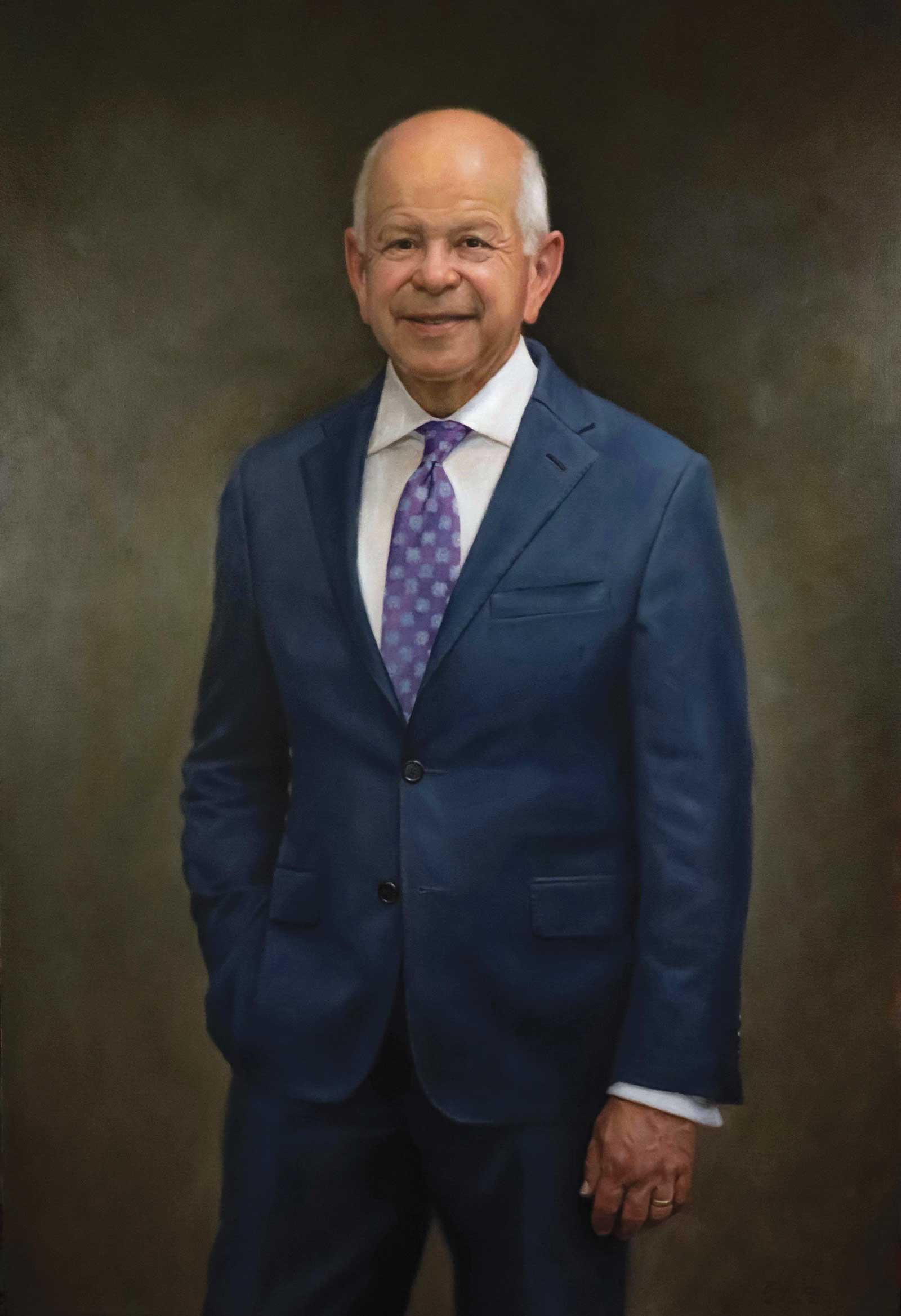
John Borowicz, Michael Huerta, 17th administrator of the Federal Aviation Administration, oil on linen, 44 x 30"
Mr. Huerta’s openness and authenticity allowed the portrait to transcend a mere picture and become a collaboration. “Together, we strived to achieve a living image—a painting befitting the remarkable qualities of the subject,” Borowicz says. In addition to Huerta’s portrait, Borowicz recently completed a portrait of David Anderson, the outgoing president of St. Olaf College in Minnesota. His current projects include a deeply personal portrait of his parents and sizable paintings of cows set against the picturesque Massachusetts landscape.
Borowicz is also embarking on an ambitious series of portraits featuring individuals connected to his hometown of New Bedford, Massachusetts, that will honor historical figures, such as Frederick Douglass, Albert Bierstadt, Albert Pinkham Ryder and Herman Melville, as well as contemporary residents who continue to shape the city’s vibrant identity.
Reflecting on the nature of portraiture, Borowicz emphasizes its potential to operate at the highest level of artistic expression. “Through the vehicle of portraiture, painting has the opportunity to operate close to its full potential,” he says. “When it is imbued with palpable and psychological energy, a portrait delivers an undeniable, if not profound, impact.”
According to Borowicz, a successful portrait creates a web of identity and empathy, linking the viewer with the subject and the painter. This tangible, energetic connection pushes us toward an understanding of what it means to be, to see and to be seen. “Establishing this tangible, energetic connection between people is the ultimate purpose of my work,” he adds. “It is undoubtedly a mysterious enterprise where the target is illusive and the practice is demanding and humbling, but one worthy of full commitment.”
Borowicz’s reflections offer a powerful reminder that portraiture is not just about capturing a likeness but about fostering connection, empathy and understanding. Through authenticity, collaboration and dedication, a portrait can transcend the canvas, becoming a living testament to the subject’s story and spirit. —
Powered by Froala Editor