To be considered a master, one must demonstrate a high level of expertise, which usually requires many years of experience. Artist Carol Marine is widely known as a master of the modern still life and, through her innovative approach to the genre and the warranted recognition she has achieved, has earned her place in American Art Collector’s Contemporary Masters series. Marine is the author of the popular book Daily Painting: Paint Small and Often to Become a More Creative, Productive, and Successful Artist, has created an online gallery sales platform for artists, and teaches sold-out workshops around the globe. Marine continues to impress the art world with her recognizable style characterized by her brilliant handling of light, values and edge work.
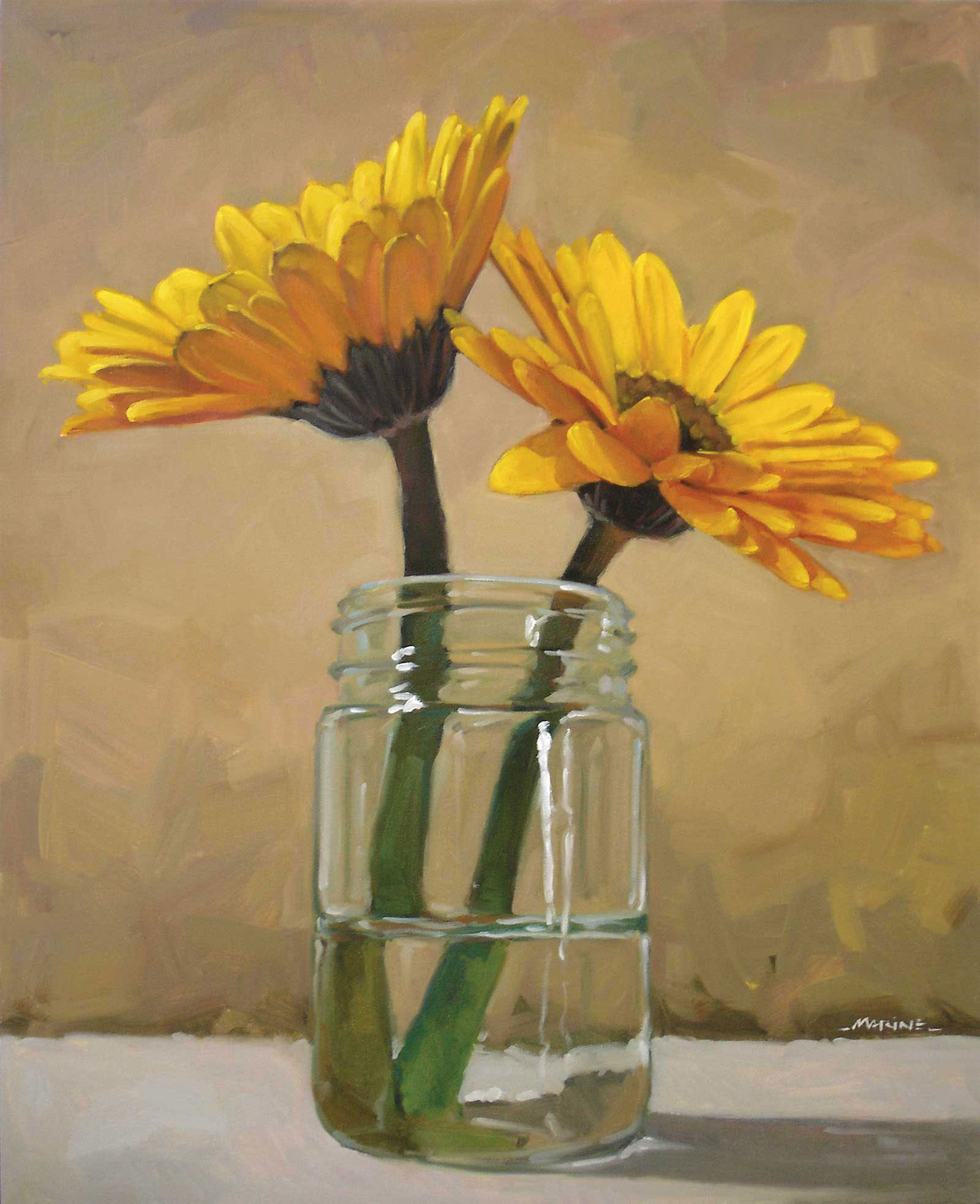
Two Yellow Flowers, 2006, oil on canvas, 38 x 31”. Private collection.
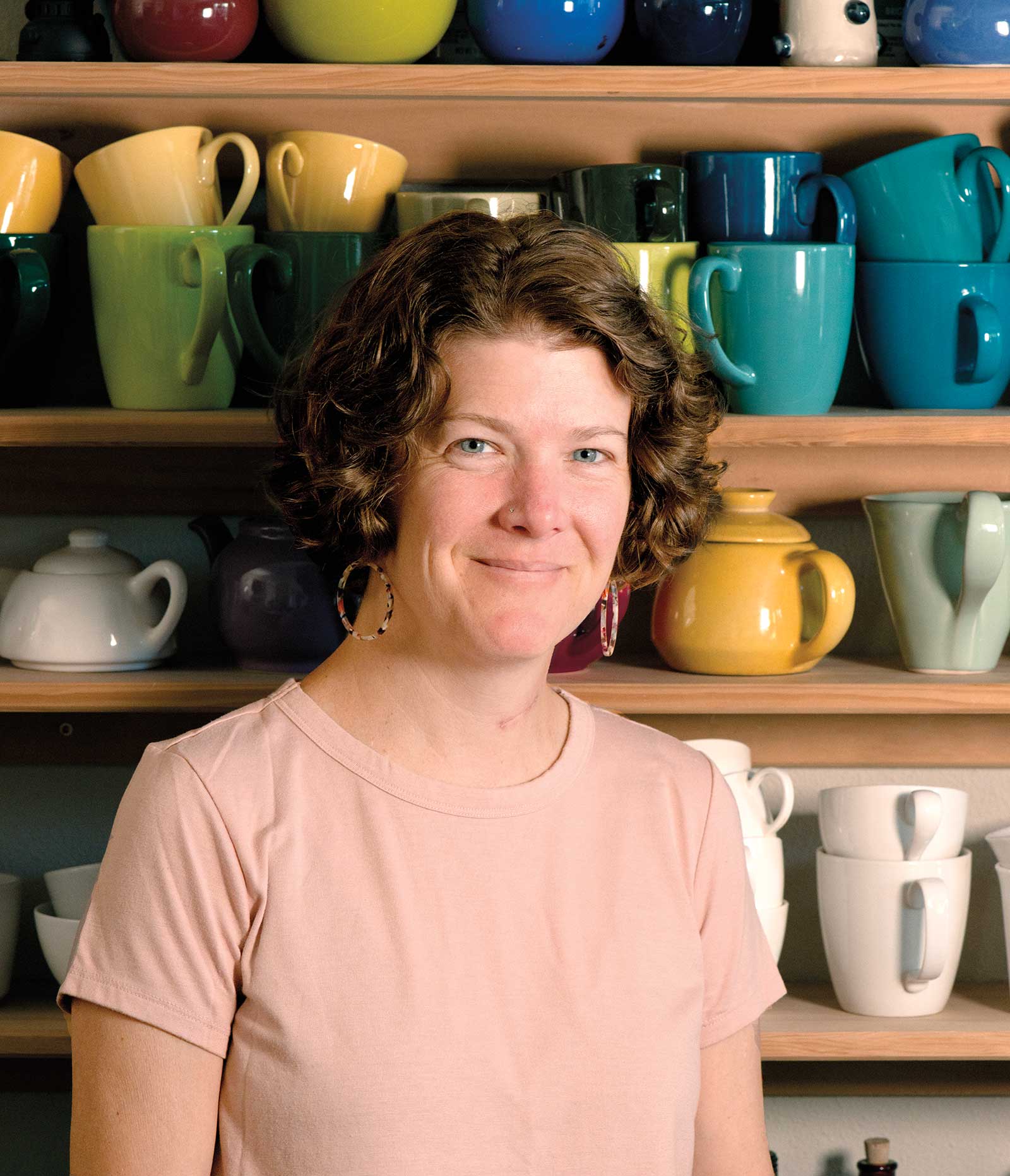
Artist Carol Marine.
The Budding Artist
Marine grew up with three siblings in a small town in Texas with parents who were both creative, self-employed and already running their own businesses. At an early age her parents told her to, “Do what you love. You may never be rich, but you’ll be happy.” In school when everyone in class was asked what they wanted to be when they grew up, everyone answered for her—“artist!” Marine eventually graduated with a fine art degree from the University of Texas at Austin.
She recalls taking her first oil painting class and “falling in love” but, like many of the larger art schools at the time, the classical art instruction she was hoping for, was severely lacking. “My professors were largely absent, and when they did speak it was to emphasize making a personal statement with our work. We were not graded on effort or skill.”
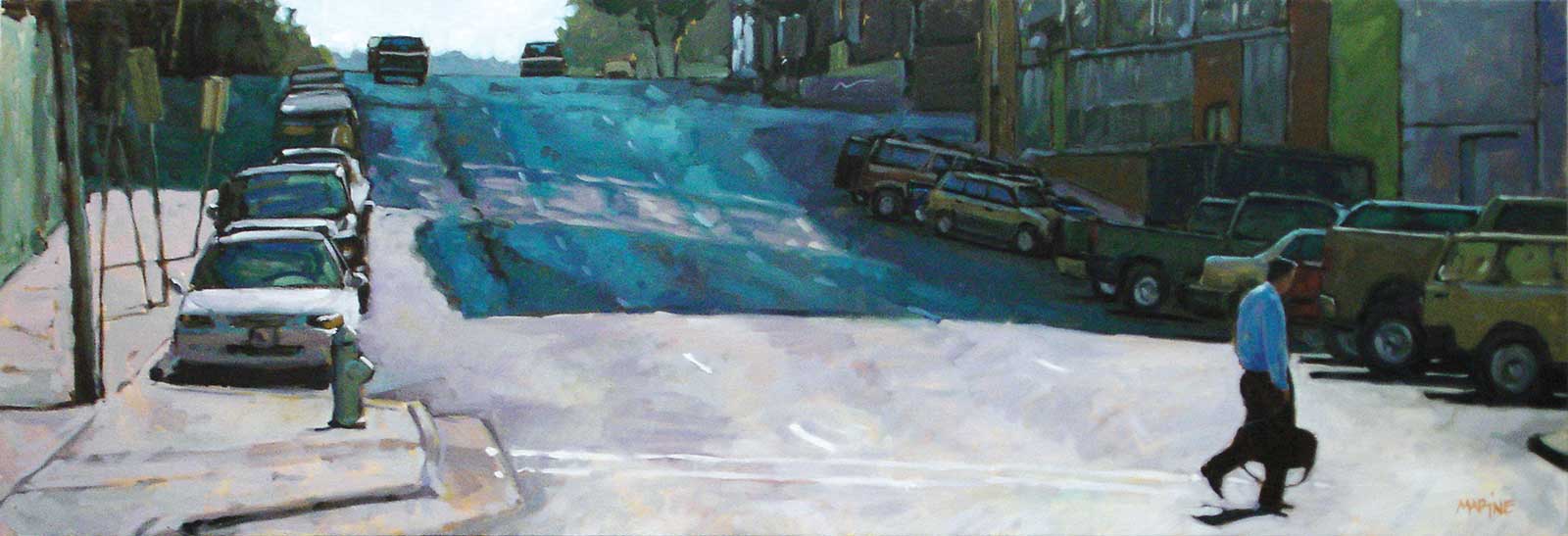
Blue Monday, 2004, oil on canvas, 15 x 44”. Private collection.
During her last year at university she met her husband, who encouraged her to quit her part-time jobs and focus solely on painting. Marine, who considers herself self-taught, began to experiment and study the masters. She started pouring over art magazines, copying masters, and painting anytime she could. She recalls her brave moment when she felt accomplished enough to start showing her work. “I walked into my favorite gallery in Austin, Wally Workman Gallery, and showed Wally my paintings. She dryly said she’d take a few. The day I dropped them off, she called me as I was driving home to say she’d sold one and was excited about my future! That was when I finally felt like an artist.”
After a few years, it was time to start a family. Carol and her husband adopted a son, and when he was a little more than 1 year old, she knew she needed to figure out how to continue her painting career and be a mother at the same time. This is when she discovered “daily painting,” the practice of completing one small painting a day and putting them up for sale online. She already had an affinity for still life, and the subjects were readily available in her home.
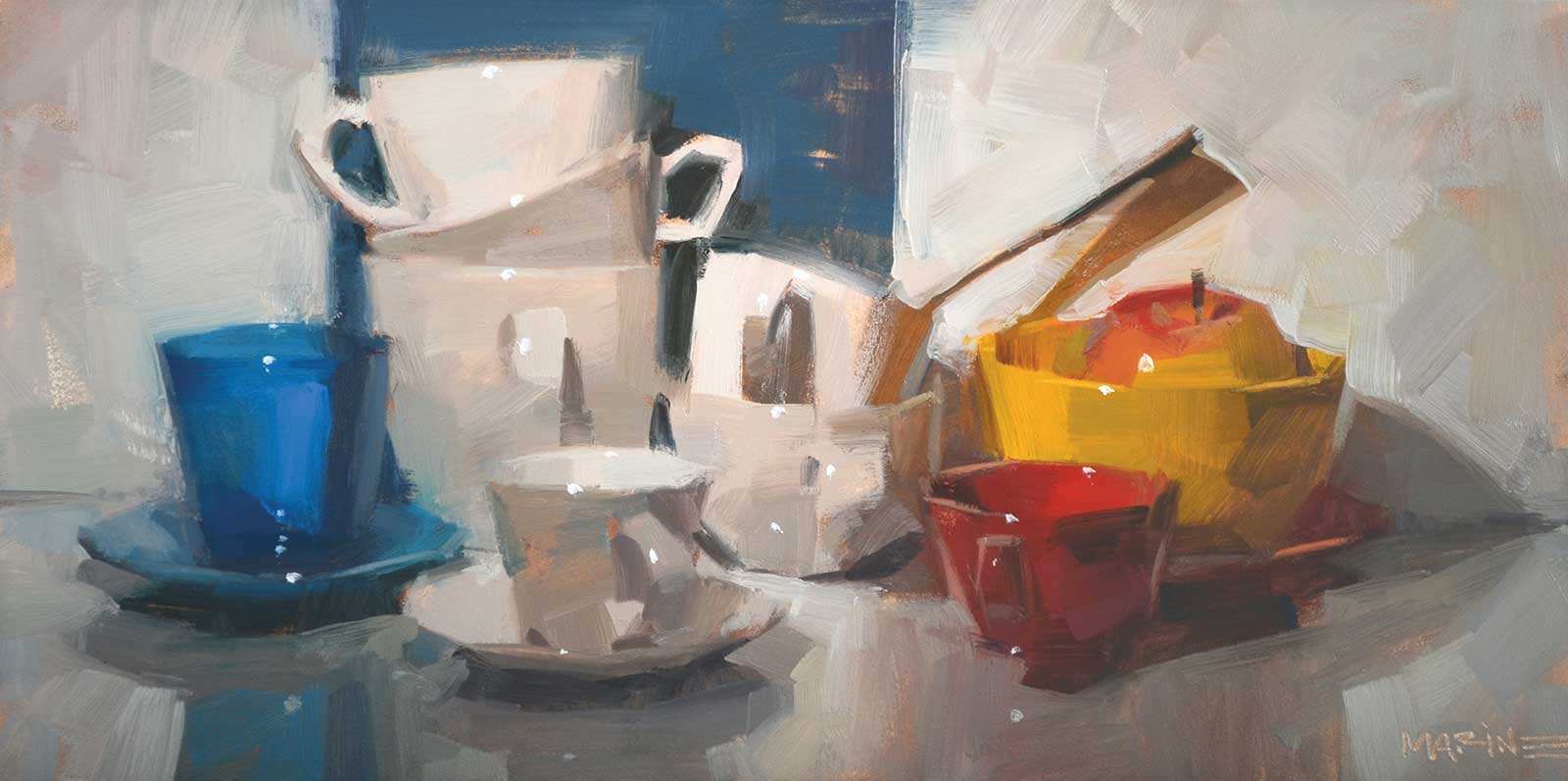
Primary Companions, 2021, oil on panel, 6 x 12”. Private collection.
“It was with these paintings that I finally developed a style of my own,” says Marine. “I discovered that I could apply all of the little ‘a-ha’ moments I had more easily if I was doing a lot of small, quick paintings, as opposed to large ones that took a while to complete. I grew rapidly and the paintings started selling. Quickly, I was making more [money] than I had ever made from galleries. I also started getting invitations to teach, which was exhilarating!,” she says. Marine’s career was blossoming.
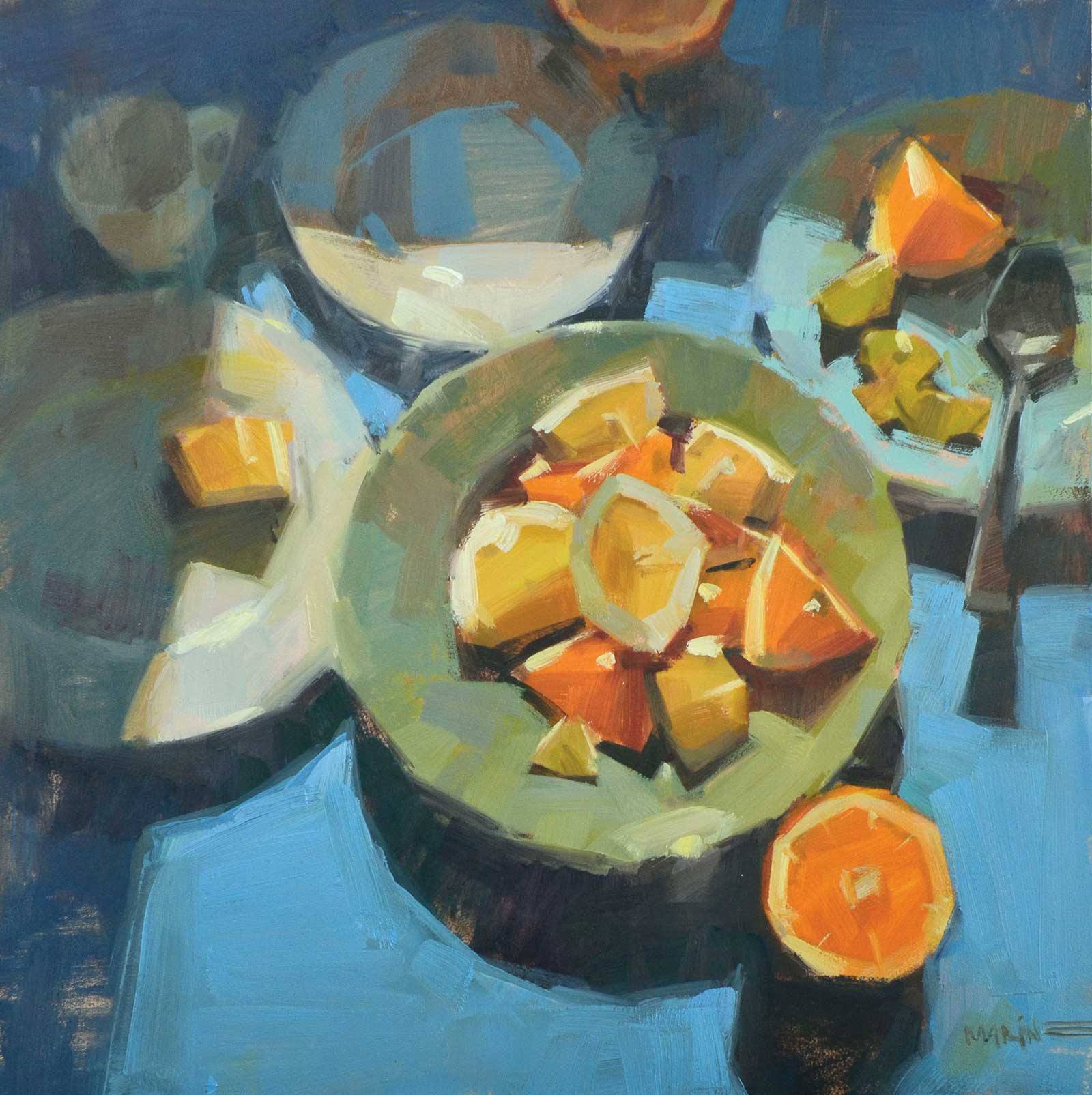
A Sunny Breakfast, 2024, oil on panel, 12 x 12”
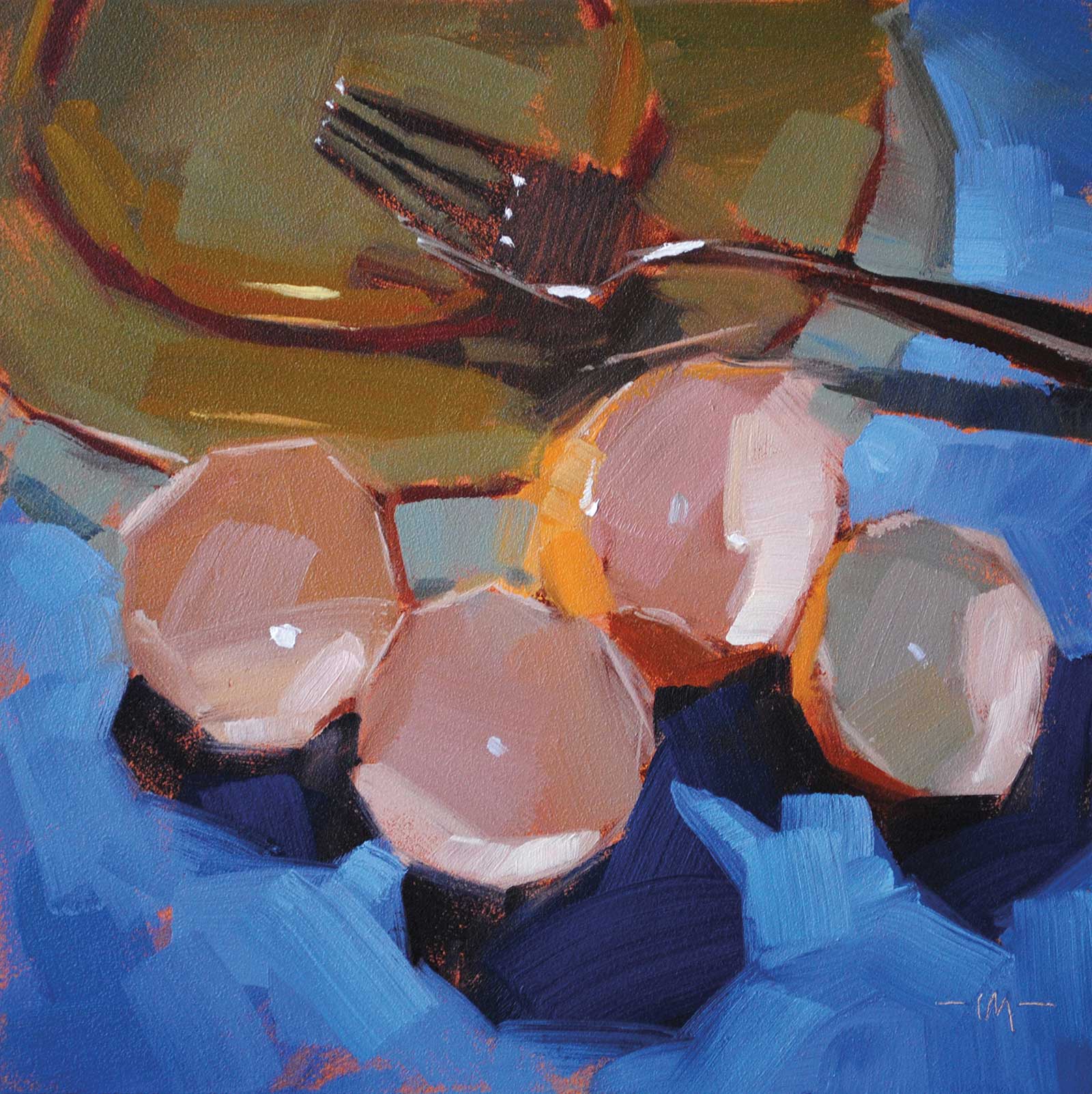
Take a Bow, 2010, oil on panel, 6 x 6”. Private collection.
Subjects and Style
In the beginning, Marine focused on drawing and painting portraits, but soon discovered she didn’t enjoy the collaborative nature of painting commissions, so she turned to her second love, still life. “I loved the bright colors of fruit and the transparency of glass, and was exhilarated by the idea of taking a stick with hairs on the end and some goopy colors and creating the ‘illusion’ of these objects with a minimal number of marks.”
When asked to categorize her work, she says, “I don’t really like to put my work in a genre. For me, it’s just what and how I want to paint. But if I must, the best I have come up with is ‘painterly realism.’ Her style has evolved from a tighter, slightly more academic technique, as in her 2006 painting Two Yellow Flowers, to looser and more abstract works. “I love the quote, ‘Paint a poem rather than a dissertation,’” says Marine. Lately she has been experimenting with some new mediums, including gouache, acrylic, watercolor and soft pastels, but she always returns to her oils.
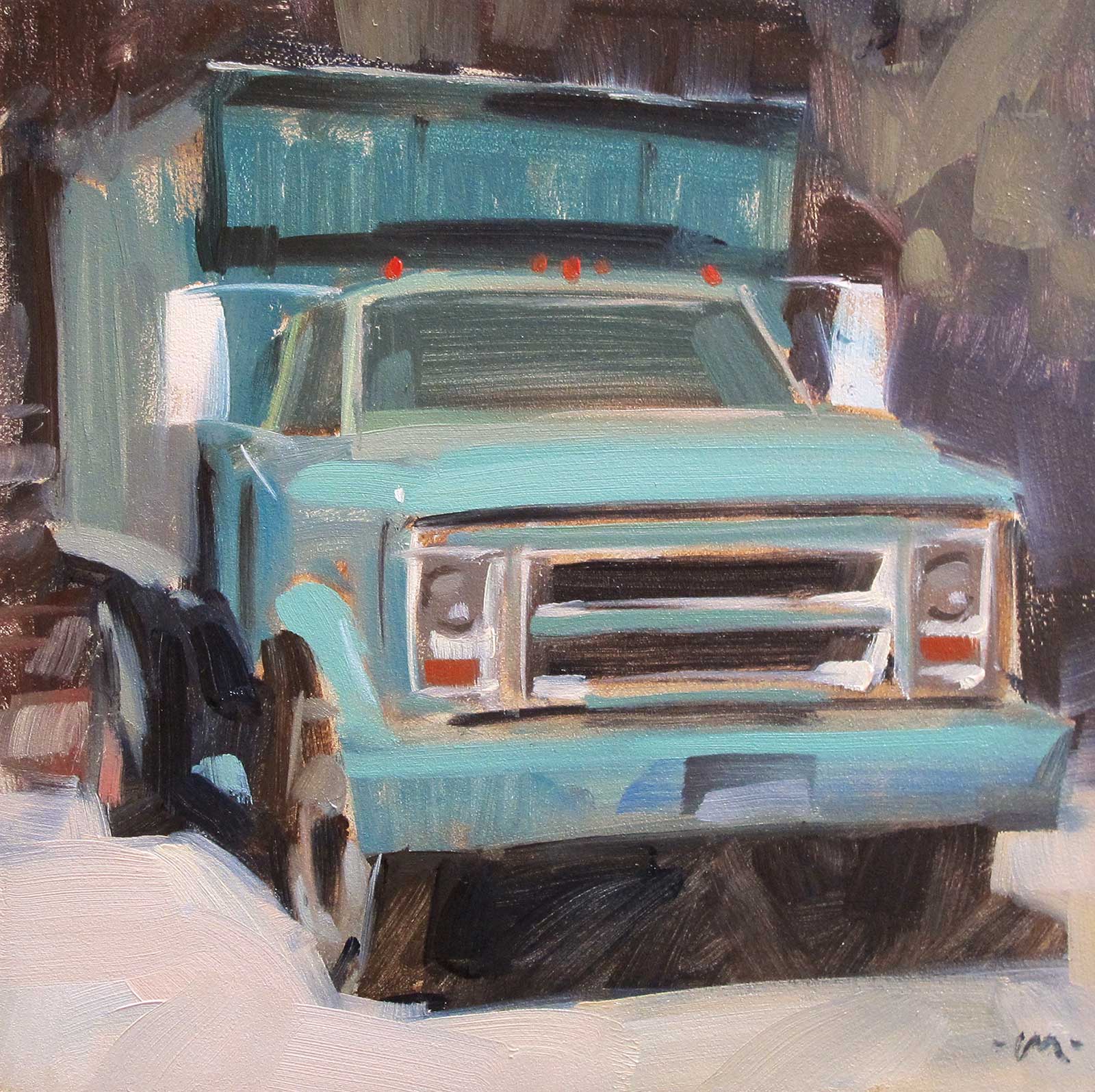
Work Truck, 2013, oil on panel, 6 x 6”. Private collection.
In A Sunny Breakfast, Marine’s iconic style comes through. The painting is realistically rendered with recognizable plates, orange slices and spoons, but in Marine’s hands the painting transcends a mere still life. The blue and orange color harmonies, and the way edges of her objects blend into the object next to it, result in a more modern, abstract work. Marine’s masterful use of light and shadow adds a three-dimensional aspect to the forms. The viewer can bounce back and forth between realism and abstraction, and can therefore enjoy the work on many levels.
When asked about her inspiration and vision, Marine replies, “I am a very visual person. I love road trips because everything outside the window is a visual smorgasbord. But I see beauty everywhere I look, even in the very mundane. I particularly love the colors and effects from natural light and shadow. Often those moments in real life are fleeting, which is why I tend to prefer still life in the studio, so I have more time with specific lighting to study and capture it. I also love the wide variety of colors in still life, and the fact that I can choose how to arrange them.”
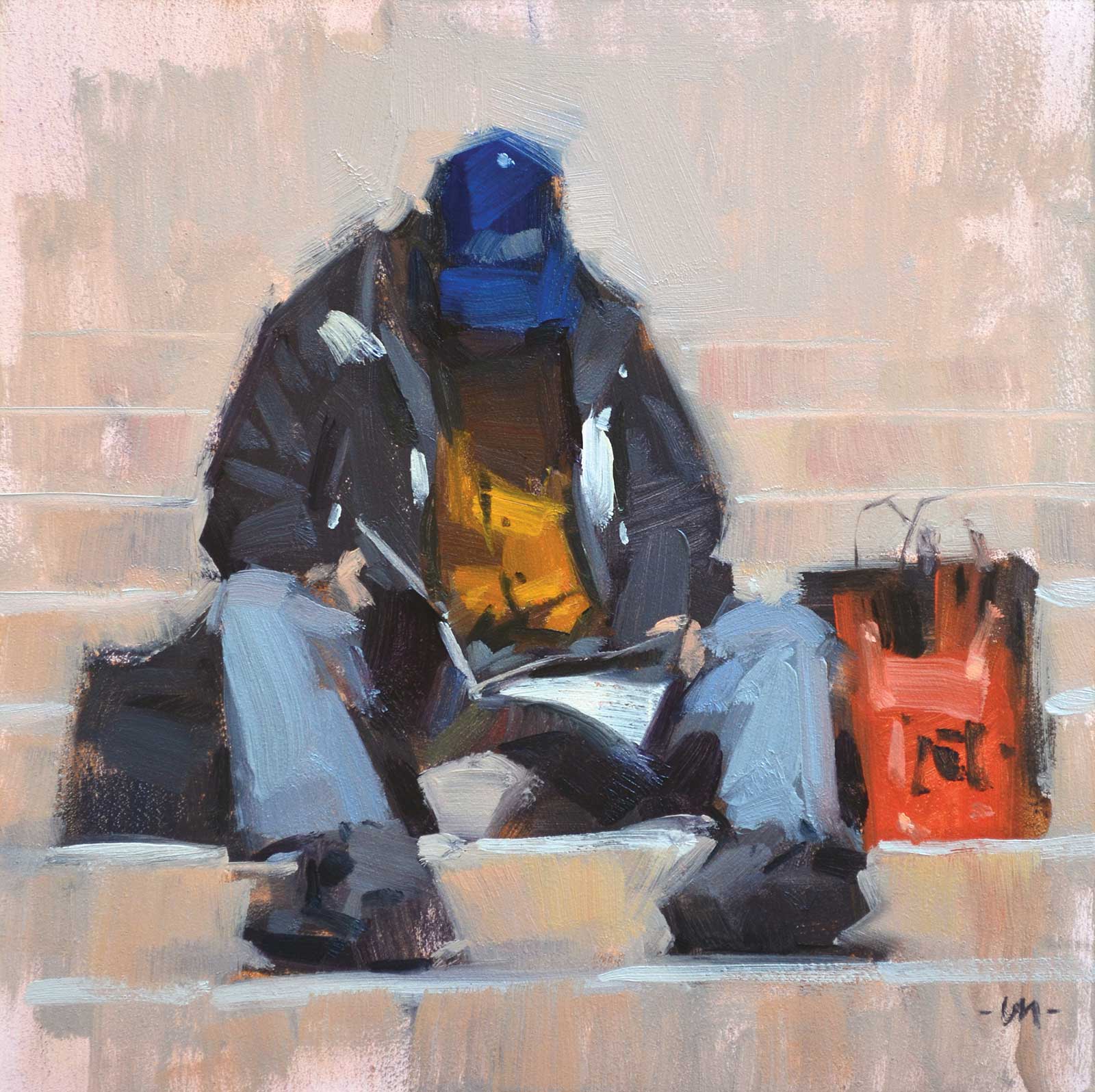
Catching Up, 2017, oil on panel, 6 x 6”. Private collection.
Daily Painting and Teaching
Marine explains that joining the daily painting movement was the best thing she ever did for her art career and that by completing a small work every day (or nearly every day), her skills improved exponentially. She was soon asked to teach some week-long workshops and became such a popular teacher that she started to have to turn down offers. “I have learned a ton by teaching,” she says. “I would say mostly
I learned how to teach. I taught all the stuff I wished I had learned in school, and came up with fun exercises that drilled in the points I was making.”
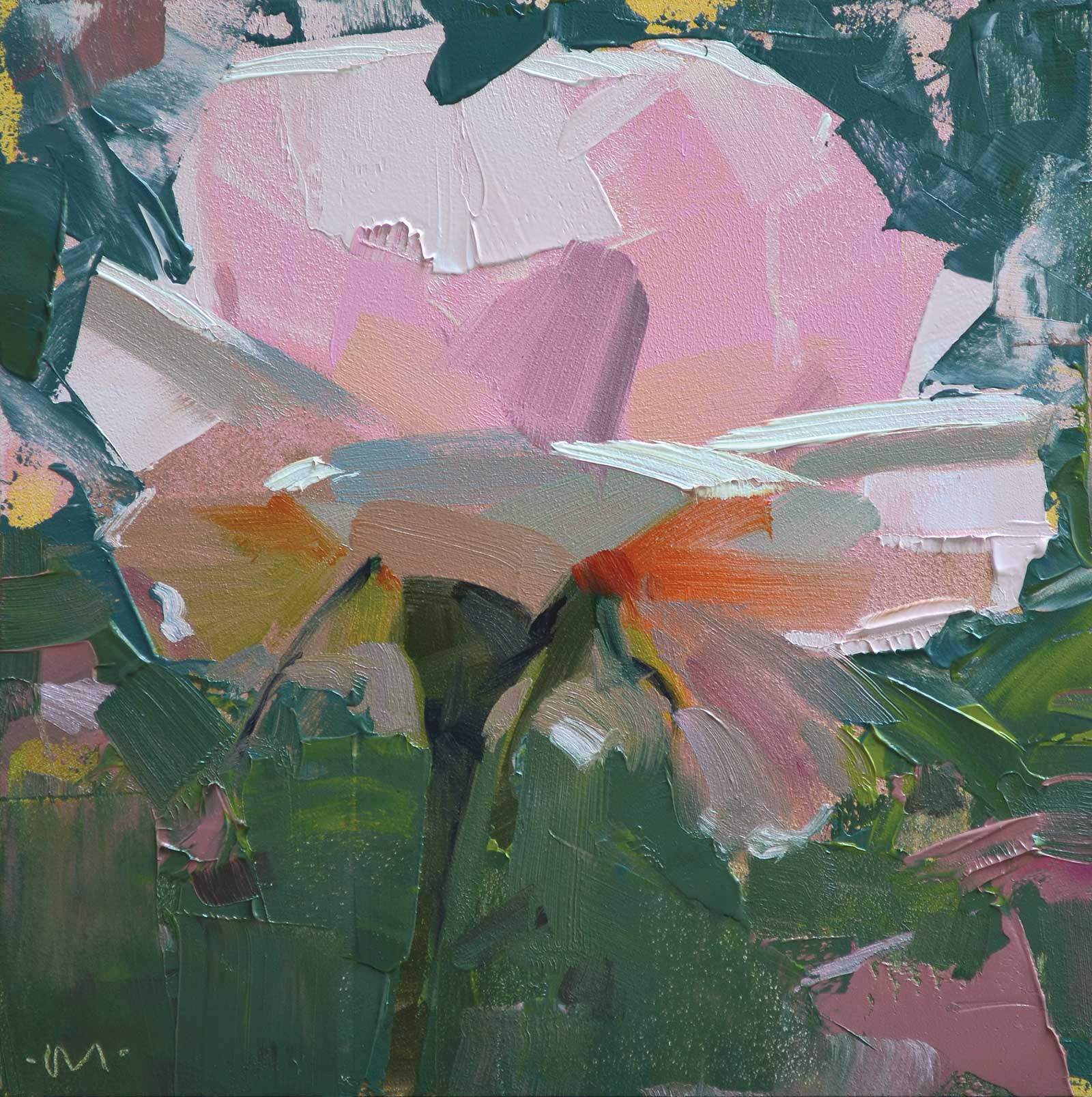
Underbelly Rose, 2018, oil on panel, 6 x 6”. Private collection.
Soon her students started asking Marine to write a book, but after researching publishing options, she decided to create a series of online tutorials instead called ArtBytes, which are still available on her website. When Random House publishing approached her with a book offer, Marine decided to take it, knowing it would allow her to reach a broader audience. Her 2014 how-to book Daily Painting encourages artists to paint small and often, and has become very popular.
“When I first got into daily painting, I was so excited about it that I told all my art friends, and they started doing it too,” Marine shares. “My amazing programmer husband created a simple website for 12 of us to post our art in one place at DailyPaintworks.com, and we pooled our money to advertise it. Every artist has their own ‘gallery,’ which is essentially a website that is super easy to use and customize, with no limits on how much art you can post.” The site has since grown, and is now open to the public.
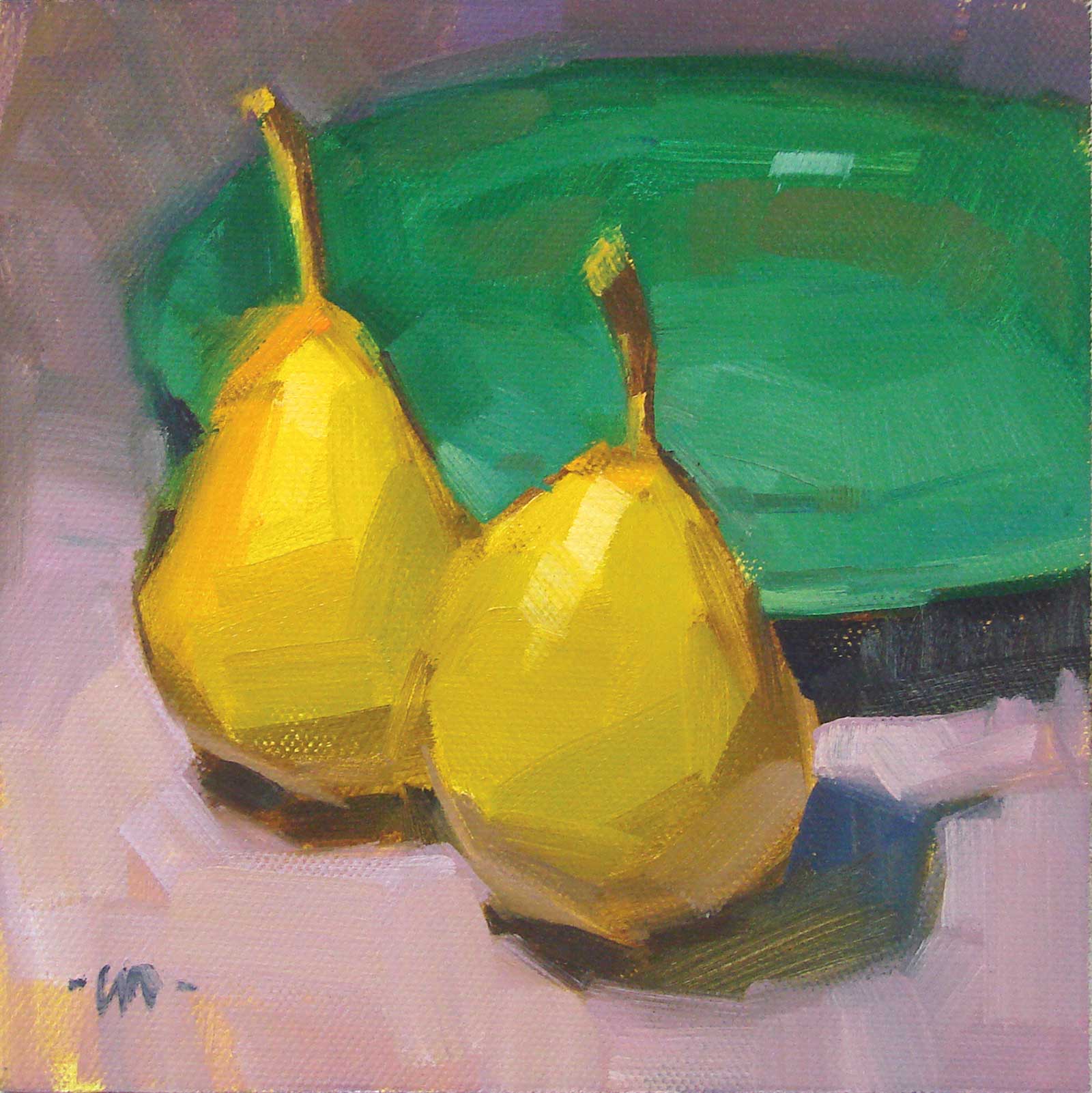
Getting On, 2008, oil on panel, 6 x 6”. Private collection.
Achievements and Struggles
Marine has taken a different path than many of today’s master artists. She hasn’t chased after galleries or entered large shows or contests to gain acclaim. She has been able to make a living through painting sales, teaching, her book and ArtBytes tutorials. “I haven’t entered many shows in my life, but I’m very proud of my teaching career and my book,” she says. “I’m proud that I have created art that people want to buy. My goal was to make money doing the thing I love, and I’ve done that. Which I think it’s really hard to do with art.”
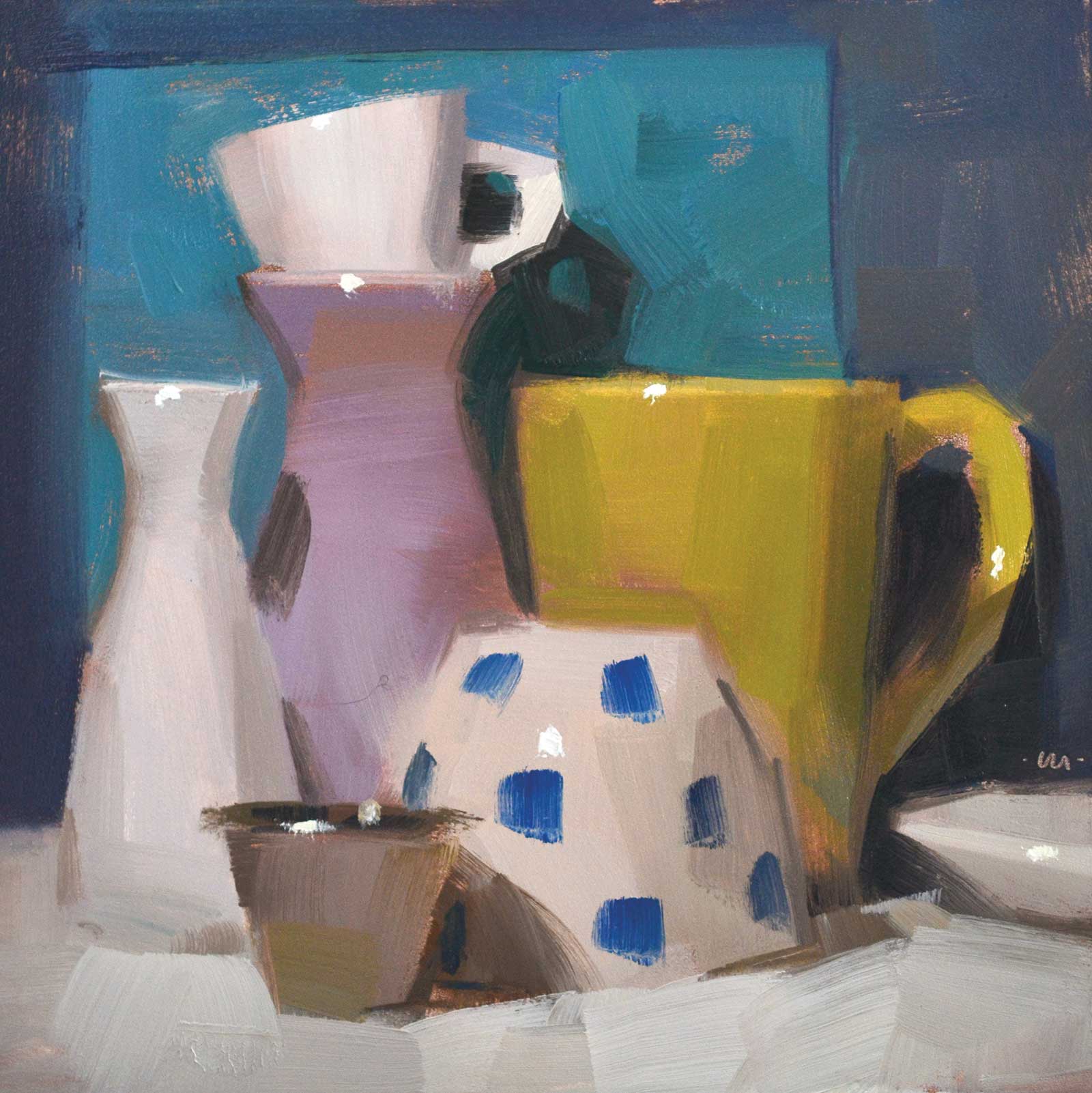
Holding it Together, 2024, oil on panel, 6 x 6”. Private collection.
When asked about any struggles she has faced on the path to become a fine artist, Marine mentions the difficult emotional aspect of it all. “For a long time, I thought painting was a job with a capital J and that I needed to be on a schedule, eight hours a day, five days a week. I kept getting burned out until I realized that a creative job is different. We creatives need to manage our world, and while sometimes that means giving ourselves deadlines and pushing past fear, it can also mean taking breaks to refuel, or simply playing and experimenting in ways that we know probably won’t be marketable. Finding the balance between work and play is a constant struggle for me because nothing ever stays the same. But the more I work at it the quicker I can notice trends and start rebalancing.” In addition, Marine has gone through some difficult physical health challenges, but her creative time at the easel and joy she finds in painting has helped her through. Marine leaves us with these poignant and inspirational thoughts: “The biggest things I’ve learned are these: Number one, painting every day is the only way to get good at it. Number two, be sure to experiment, because if you always do what you always do, you’re always going to get what you always get. And lastly…find time to play.” —
Powered by Froala Editor