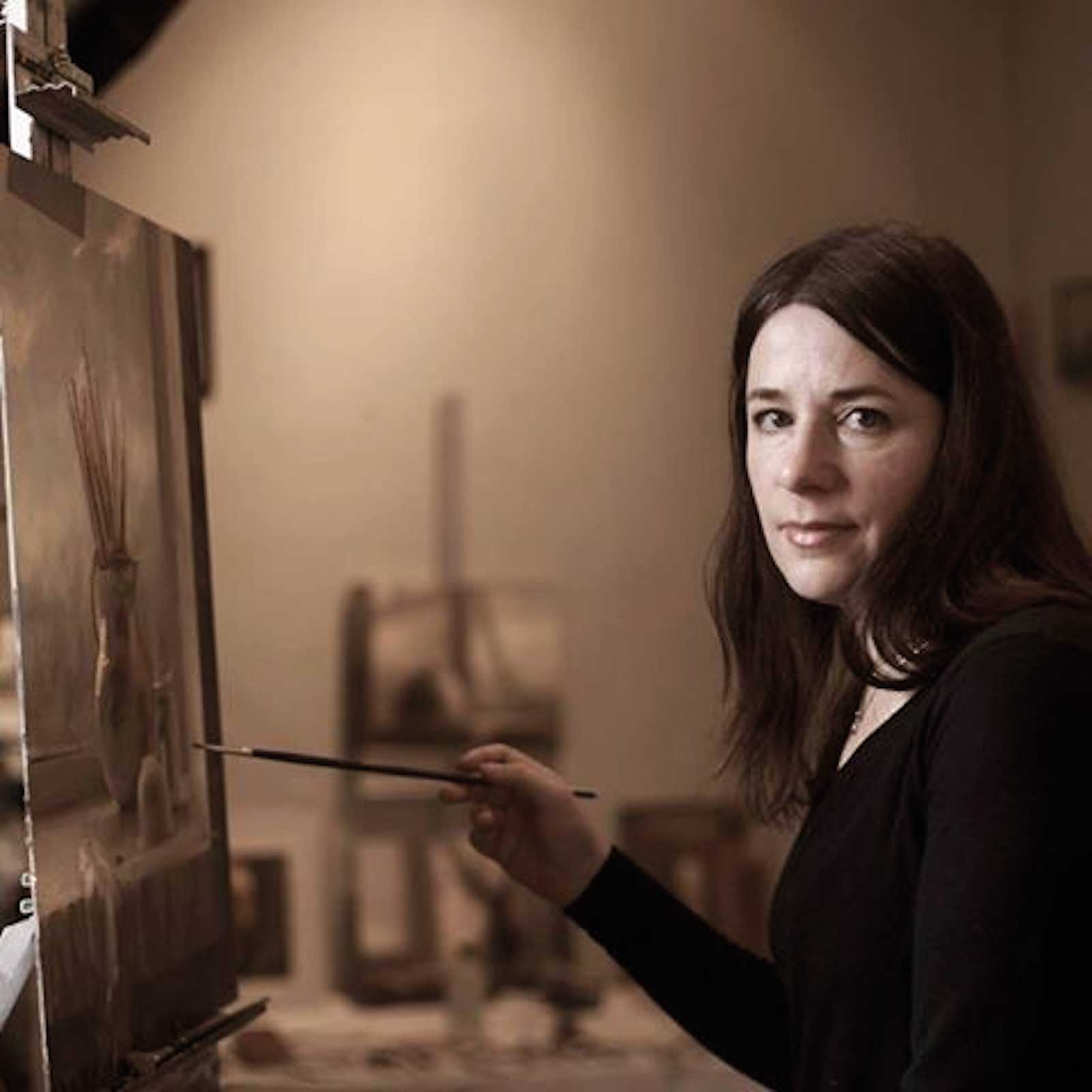
The artist in her studio.
Standing out among the leading American classical realist artists of today is highly accomplished artist and author, Juliette Aristides. A gifted artist, a renowned author of multiple books on drawing and painting, a rigorous, caring instructor in the classical atelier genre, and a mother of three, Aristides has certainly made an impressive mark on the art world. She has established herself among the great painters of our time with work appearing in museums that include Washington’s Maryhill Museum of Art, Gordon College’s Gallery at Barrington Center for the Arts in Massachusetts, Customs House Museum and Cultural Center in Tennessee, and Pennsylvania’s Reading Public Museum. Her talents not only reside in her skillful use of charcoal and brush, but in the way she is able to articulate the concepts of fine art. This combination of advanced technical skills, along with her ability to convey it, places Aristides firmly among today’s contemporary masters.
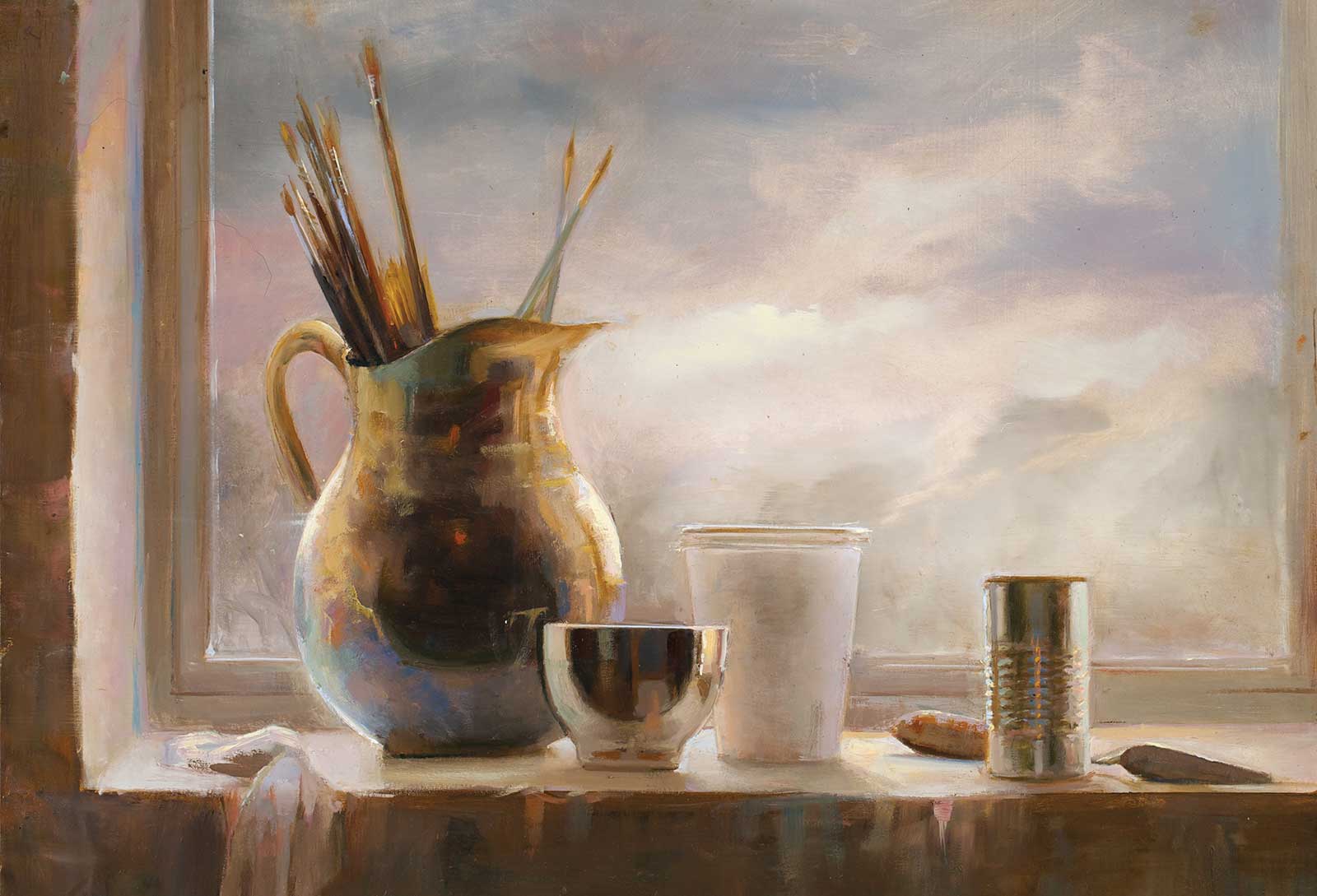
Back Light (detail), 2020, oil on panel, 16 x 24". Private collection.
Youth
Aristides was born in Cape Town, South Africa. Her family immigrated to the United States, settling in rural Reading, Pennsylvania. Her parents enjoyed art, travel and had a library of books, where Aristides would often find herself. An introvert as a child, she would disappear into the woods with books, pencil and paper and soon found her love of quietly looking, drawing and thinking. These skills would later prove useful as a realist figure artist. In high school she was already known as an artist, a defiant outsider—who actually failed her art class. Recognizing her artistic talent at a young age, her family took her to artist studios and shows. Her grandmother, a hobby artist, was also an influence. “I imagine it was against this loose constellation of influences that I formed a mental picture of an artist,” she says.Hoping to attend professional art school, she dropped out of college and soon began studies at the Barnstone Studios in Coplay, Pennsylvania. “Myron Barnstone was a fierce teacher who discouraged more than encouraged, but he loved art and was a rigorous teacher,” Aristides recalls. “He smoked and would look over his bifocals to drill you into focus. It was intimidating as a teenager, but I respected him and he was devoted to the principles of art and spent many years there.”
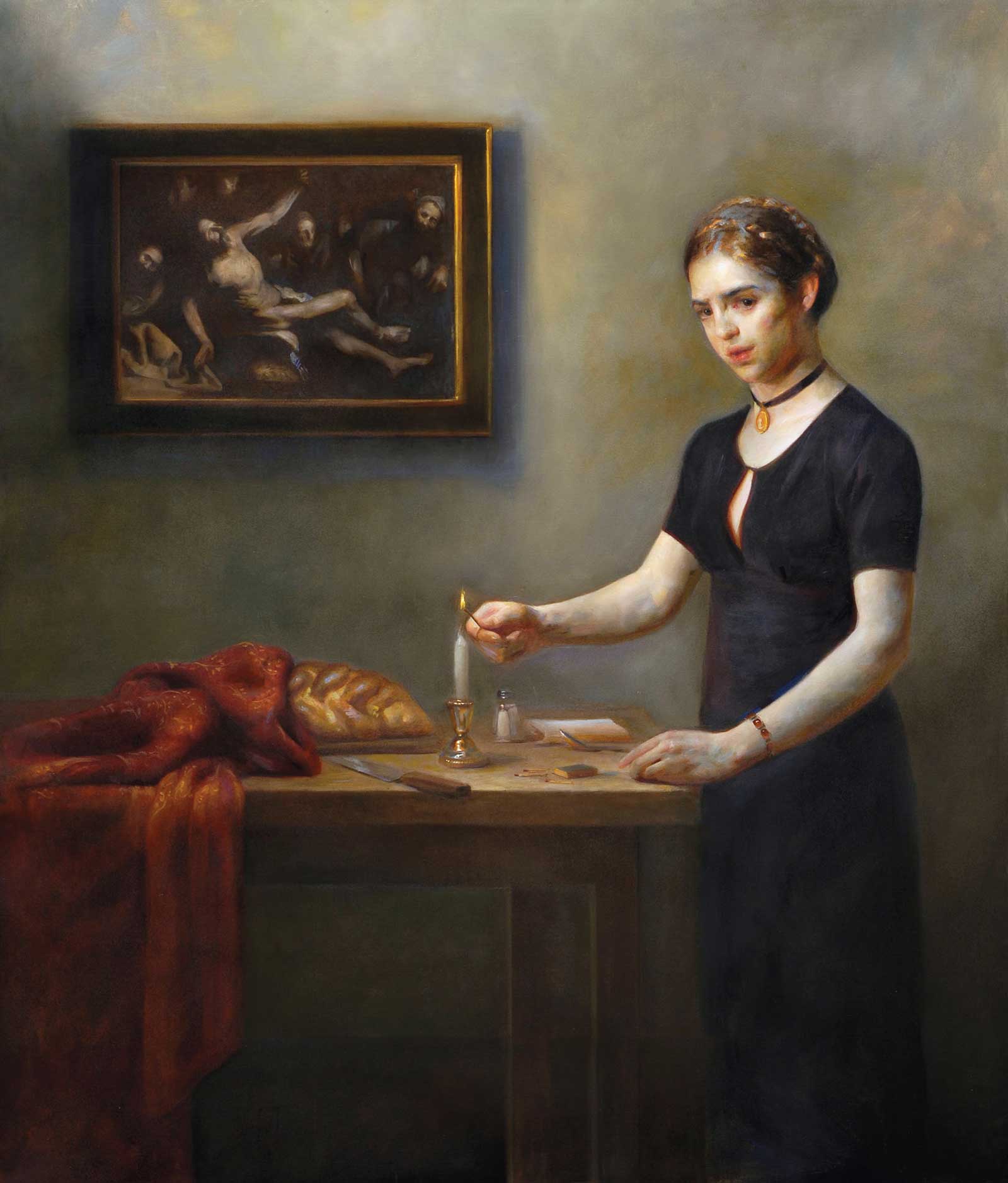
Sabbath, oil on linen, 40 x 30”. Private collection.
Afterwards, she studied cast drawing at the Pennsylvania Academy of Fine Art, attended the Atelier Lack to learn the 19th century methods, and then went to New York City to study at the National Academy of Fine Art with Jacob Collins. “He was an inspiration,” Aristides says. “He invited a small group of us to work with him at the studio on the top floor of his brownstone in Brooklyn that later became the genesis Water Street Atelier and then Grand Central Atelier.” Soon she found herself living in Seattle and, at 28 years old, opened the Aristides Atelier, the first fine art atelier in Washington State.
From Student to Professional
While still a student Aristides started showing her work in juried shows, but in her final years with Collins, John Pence Gallery in San Francisco invited her to show alongside many artists she admired. “I recommend artists not wait too long to show their work because it can take many years to get momentum,” she advises. “Take a risk exhibiting early so that when you are truly ready you have built a resume and exhibition experience.”
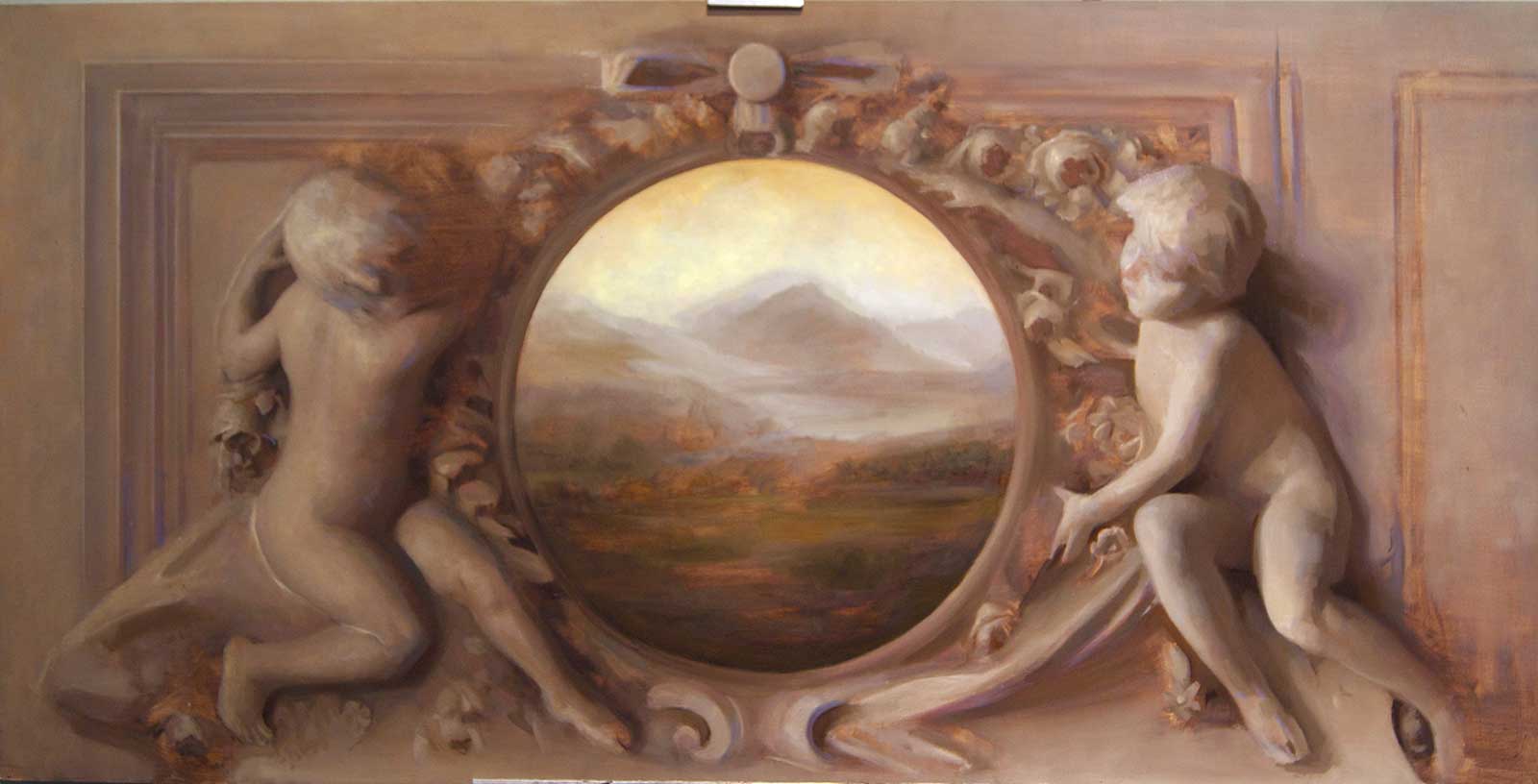
Portal, 2015, oil on panel, 23 x 42”. Courtesy LeQuire Gallery.
Aristides’ first solo museum show, Observations, at the Reading Public Museum was a momentous occasion for the artist. “It was redemptive to have [my work] in the place where I grew up,” she says. “I had often felt like an outsider in the art world, which was tipped away from classical figuration at the time. This exhibition gave me a new framework to view my past and my trajectory.”
In an artist’s early career, galleries and collectors are crucial for support and the encouragement to keep painting. For Aristides, that collector was Kathy Lopez, who encouraged her in addition to her shows at Pence Gallery. And her current collaboration with LeQuire Gallery in Nashville, Tennessee, with director Elizabeth Cave is especially rewarding. There, she is experimenting with varied themes, taking chances and pushing the envelope.
Subjects and Style
As with many artists, Aristides is inspired by the essence of beauty in all things, but the figure remains her passion. “I was classically trained in life drawing before mastering painting,” she says. “Through those years I developed a deep love for the attributes of drawing, which are tone, form and composition.” Her main mediums are charcoal and oils, but she also paints on copper, works in silverpoint and inks on a variety of fine papers.
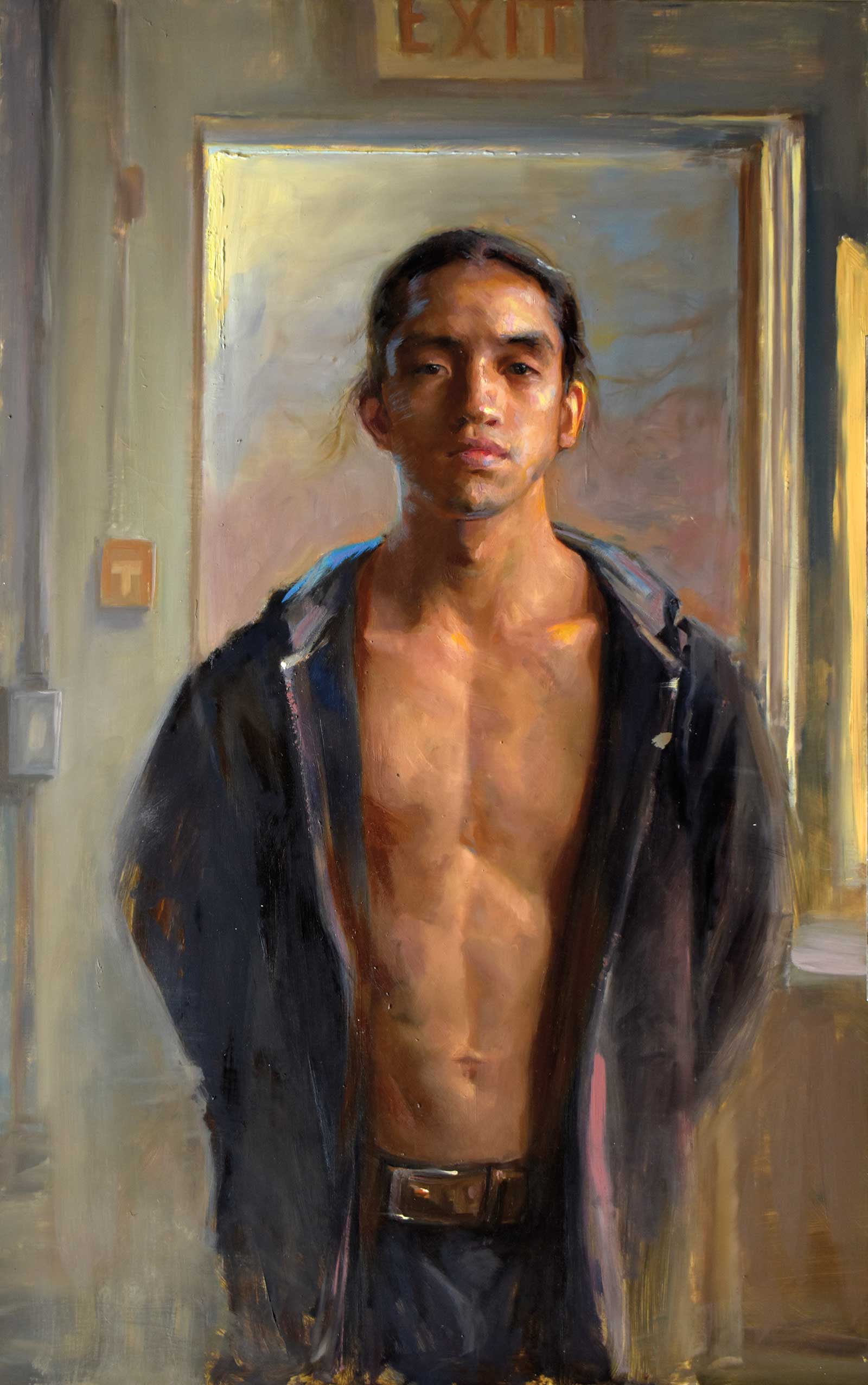
Henry, 2019, oil on panel, 30 x 20”
“Light is the true subject of art,” she continues. “It is abstract and changes throughout the day. Light hitting walls, flowers, doorways…it is what inspires me to paint.” Aristides’ style has become freer over the years. She used to build up studies and underpaintings in grisaille; today her method is looser. She has shifted her focus to value and expression within realism, realizing that people respond to art first through emotional experience. “How you treat the values in a drawing, the edge work and moments of ambiguity can carry a strong sense of emotion,” she says. “I have been inspired by travel, literature and painters. When you think about it, both the forms of art and writing are in the service of expression and representation.”
When asked to categorize her style, Aristides speaks of the popular genre term “classical realism,” a term coined by Richard Lack, the father of the modern Atelier movement, that refers to the mash-up of the historical art movements of classicism and realism, and painting everyday life. She says, “Perhaps the term I am most comfortable with is ‘realist,’ however most of today’s realist painters give a nod to Romanticism.”
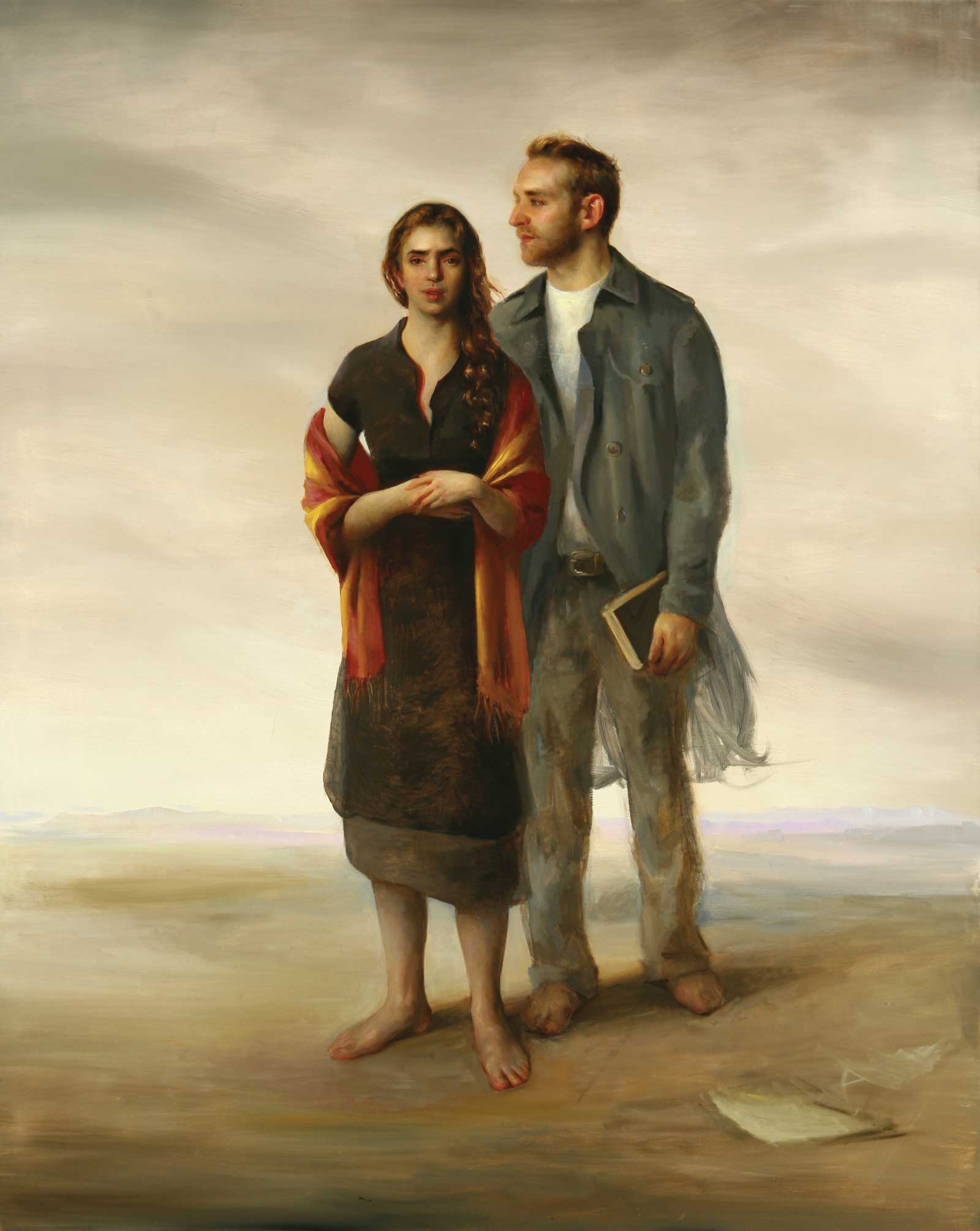
The Poets, 2009, oil on canvas, 72 x 42”. Courtesy LeQuire Gallery.
Her style often uses a muted, tonal palette with classical realist techniques, blending similar values side by side to create soft transitions on the skin. These soft blended areas contrast with the visually dry brushwork, adding dynamic dimensions to her paintings. In her most recent work, Idyll, Aristides painted abstract shapes in the foreground and employed multiple mediums, resulting in an exciting combination of refined realism and bold shapes.
Teacher and Author
As mentioned, Aristides also shines for her deep artistic knowledge, authorship and teaching abilities. She has become a world-renowned educator, both through her Atelier school and her collection of published art books.
Aristides has run her popular fine art Atelier for 24 years, first in person and now online. “I started the Aristides Atelier in Seattle with the goal of creating an art monastery of sorts,” she says. “Students could go as deep as they wished, working from life in the mornings and still life in the afternoons. We follow a traditional Atelier program with drawing the first year, grisaille and temperature painting the second year, then full color the third year. The final year was a thesis study where students created a personal body of work pulling together all they learned. Many of my students have also gone on to be excellent teachers.” Bringing the program online has allowed her to reach a broader audience, working with teachers, lecturers and students from around the globe.
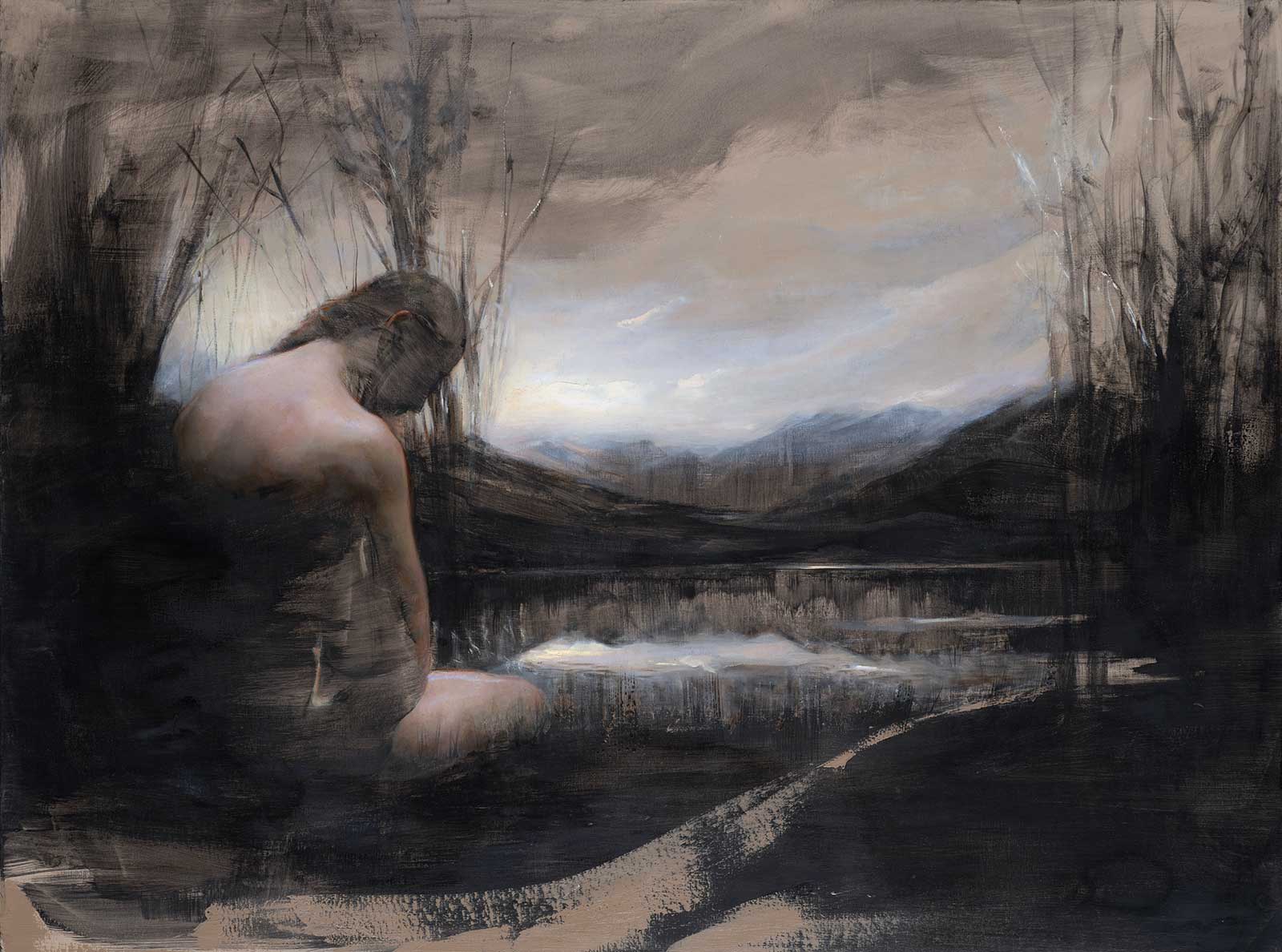
Idyll, 2024, charcoal and oil on canvas, 20 x 30”. Courtesy LeQuire Gallery.
Aristides is the author of six educational fine art books that celebrate and teach fine art. “I was trying to solve several problems with the six books,” she shares. “At the time they came out, no one was sure if realist art was going to survive. The art world supported abstraction and modernism, and classical art culture was fading into history. The explosion of fine art skills and training available today were unimaginable even 20 years ago. My goals with the first two books were to record and preserve hard-won methods of artist training,” she continues. “The bringing together of contemporary and past masters which was a deliberate attempt to have the great painters of our times seen as a continuation of art history.” Aristides is influenced by many Old Masters, such as Jusepe de Ribera and Jules Bastien-Lepage, whose work she shows side-by-side with contemporary masters such as Steven Assael, her former teacher Collins ,and many more. The second two books bring people into the into the Atelier. It provides a map of training and practical techniques for the artist. The last two books are for people who want to learn to draw. They are hardback sketchbooks designed with exercises for readers to follow along. They lead readers through the fundamentals of drawing to experience what it’s like to see the world differently. Her upcoming book, The Inner Life of the Artist, emphasizes the thinking, feeling and inspirational sides of the artist, and includes essays on different ways of seeing.
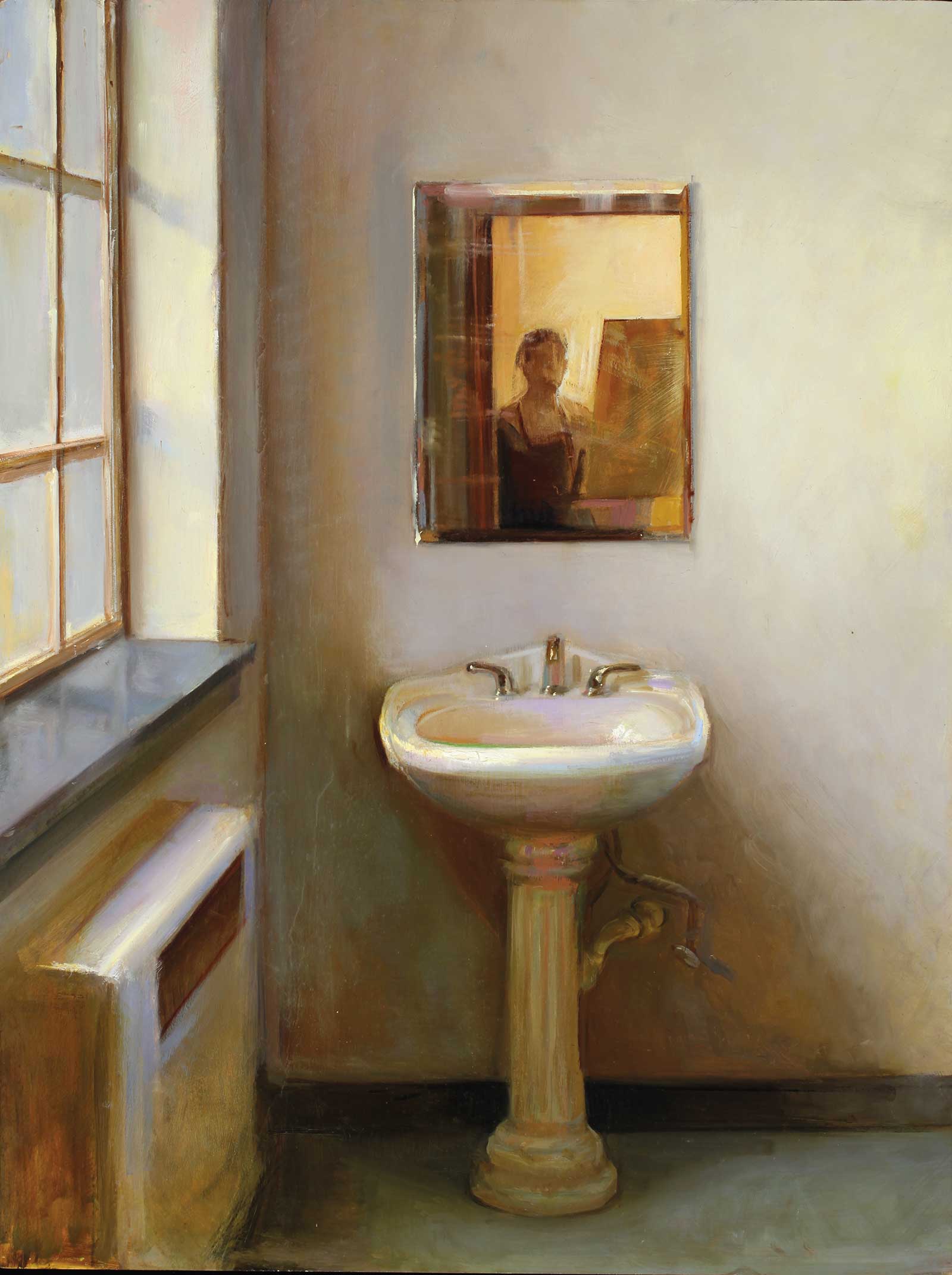
Sink, 2019, oil on panel, 24 x 18”. Private collection.
Persona
While exhibiting in museums and galleries, writing books and teaching art, Aristides has also raised three children, underscoring her work ethic and commitment to the world of art. “There aren’t a lot of role models for women pursuing this kind of life with kids,” she shares. “There are also gender inequalities that make it harder for women artists. Basically anyone who spends decades as a painter has learned the hard task of how to pick themselves up when they fall and reinvent themselves, many, many times over.”
Indeed, the life of an artist is intense, and running her own business amidst raising children makes Aristides’ achievements even more impressive. She notes, “I think some accomplishments feel so good because it offers a bird’s-eye view of a lifetime faithful to one path. I am very pleased and grateful to have had the opportunity in my life to pursue this course. I have made many meaningful friendships with artists, and I never stop growing and learning.” —
Powered by Froala Editor