

Joseph Keiffer often says that he learned far more about fine art by working in the art market—first at Sotheby’s and then at Doyle Auctions—and through his own powers of observation than he did studying at the New York Studio School in the 1970s, a time when asserting one’s artistic identity without any formal training was all the rage.
“I kind of concluded that things were going haywire and believed then—and still believe—if you’re going to communicate things with visual art, then it’s a language, and it has a vocabulary, a structure and grammar, over which one should have control.”

Somes Sound, oil on canvas, 24 x 48"
Keiffer’s father was a painter and his mother, a writer. They would live abroad whenever they had the means, exposing Keiffer to extended stays in Mexico, Rome, Spain and Paris from as young as 18 months.
It was in Paris when he was 17, where his creative impulse took hold. “That’s when the painting thing took over,” he says. “It just started to happen and I couldn’t stop it. They were abstract, color swatches, different weird ideas and aggregations of colors. I considered them beautiful and quite surreal.”
At Brandeis University, studio classes were limited, so Keiffer decided to major in art history and philosophy, which would redirect his focus from the abstract to the representational, especially his introduction to theories of meaning.
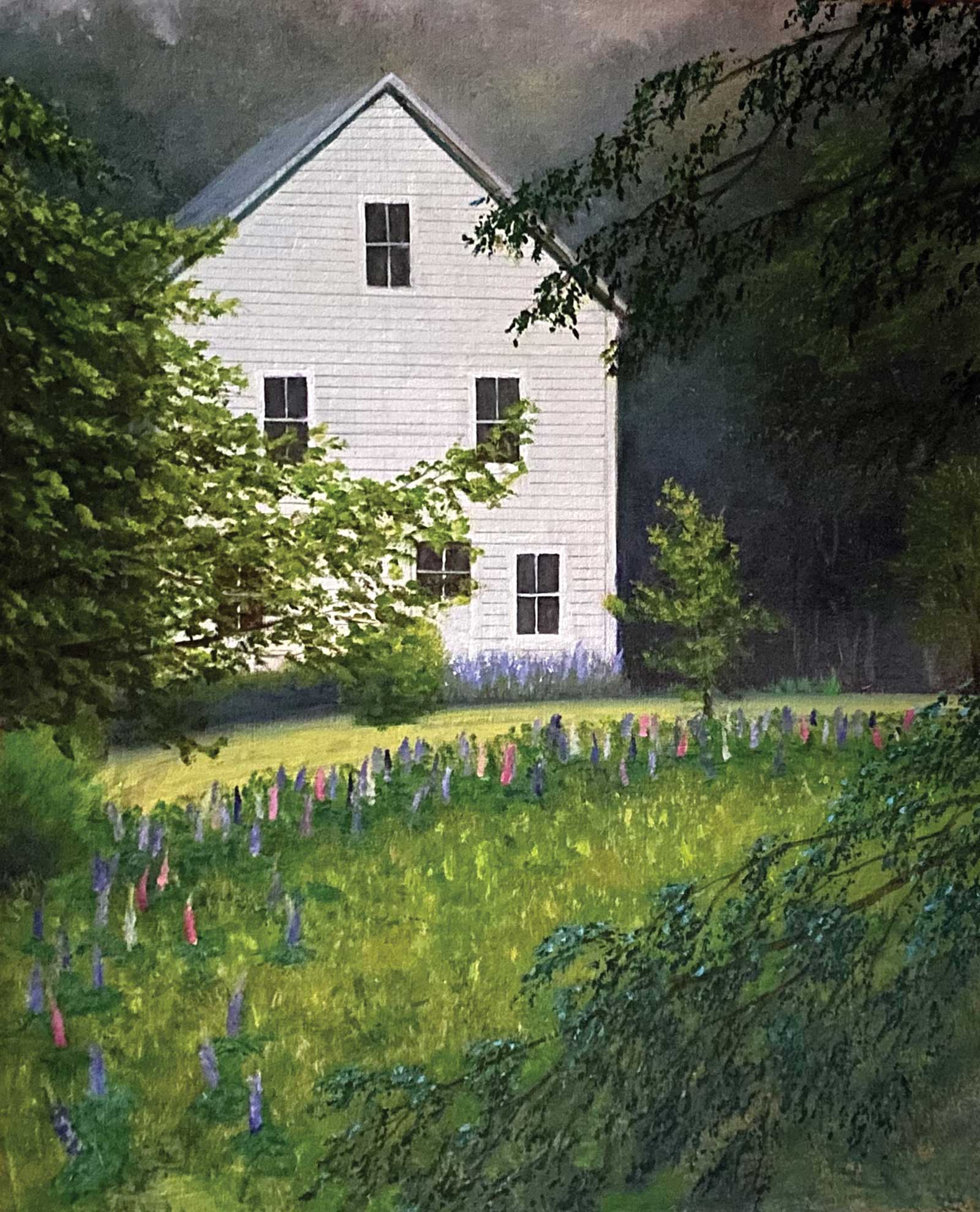
A Little Fog, oil on canvas, 20 x 16"
“My thinking was, if a work of art is going to be something that communicates to others, it ought to be intelligible to a third party,” he says. “Let’s say you have a bottle over there. You have to agree, and I have to agree, it’s a bottle. It’s between you, me and the bottle. For you to understand what I’m painting about, you have to know what it’s a picture of.”
After two years at Brandeis, Keiffer decided to take a year off and attend the New York Studio School, where his point of view was further solidified.
He says, “Between my introduction to philosophy and my disenchantment with my studio school and its lack of a coherent curriculum and teaching the basics of how to put a painting together, I became a realist. It’s that simple. And it was the last thing the faculty wanted us to do.”
After finishing up his degree at Brandeis, Keiffer took a course at Sotheby’s in London, then went to work for the auction house in New York, where he has lived since 1976.

A Field of Daises and Wheat, oil on canvas, 28 x 30"
“My father insisted you could not make a living as a painter,” Keiffer recounts. “He didn’t have much of an idea of how the business gets done. He was quite hopeless about making a living—that is why I went to Sotheby’s. It was a revelation. It gave me a sense of connoisseurship and the realistic truth about what the business is. A lot of artists don’t have that. It was like a graduate program in its own way.”
Today, Keiffer, an art historian, collector and fine artist, splits his time between the City and the Catskills—appropriate for someone whose initial landscape inclinations were largely influenced by the Hudson River School artists.
In addition to landscapes inspired by Upstate New York, Maine and abroad, Keiffer paints still lifes and interiors, a selection of which will be featured in a solo exhibition at Courthouse Gallery Fine Art from August 9 through September 6, with an artist reception on August 12 from 5 to 7 p.m.
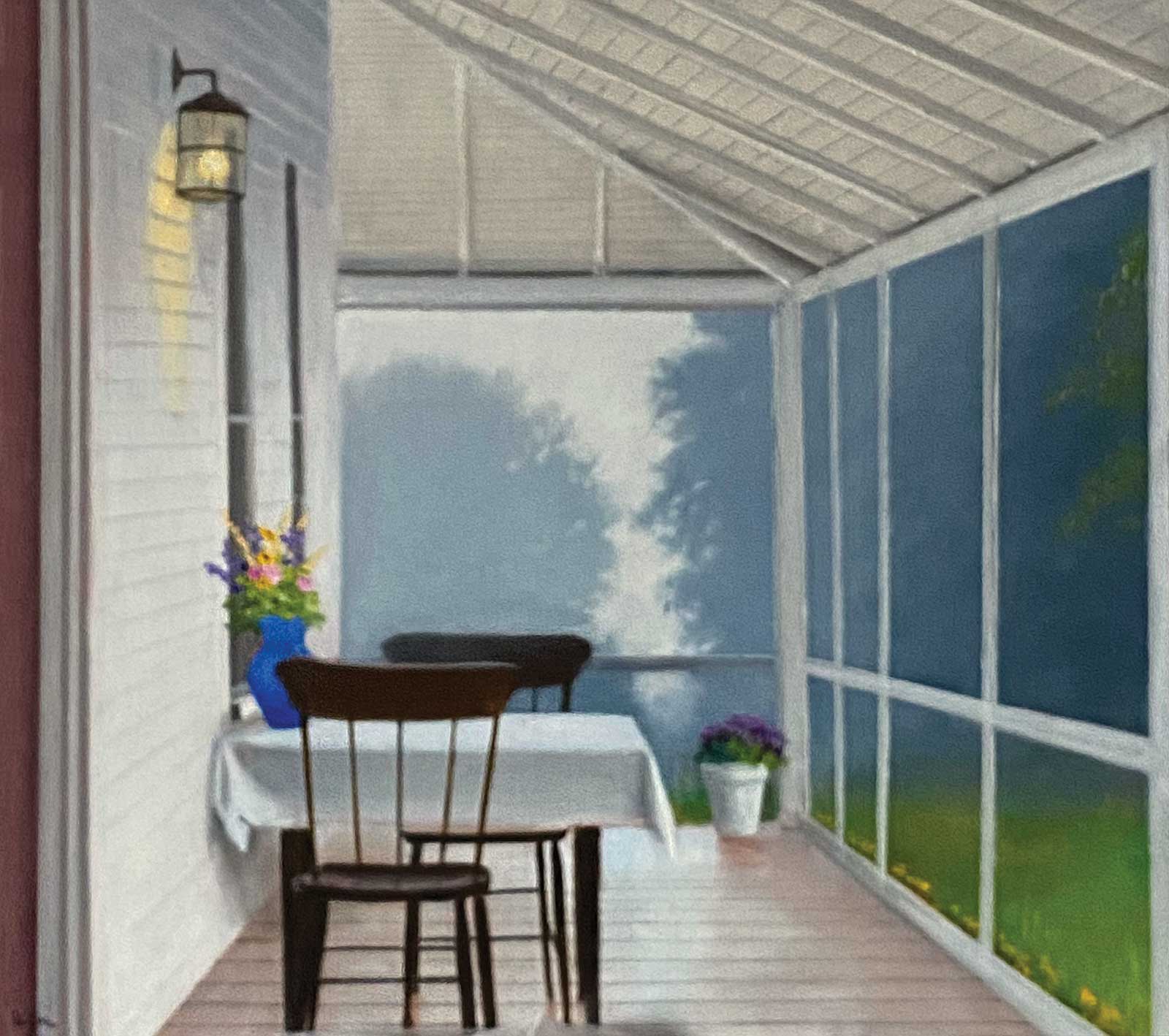
Foggy Morning, Oakland House, oil on canvas, 19 x 20"
A Field of Daises and Wheat is a scene in Normandy, France, whose beauty he only fully realized when he looked past the laundry on the clothesline he was painting as the sun was setting. Sommes Sound depicts an iconic Maine vista while the state’s austere architecture, purple lupines and gradations of green inspired A Little Fog.
“Whether the painting finds me or I find it, there’s an abstract impulse, a particular resonance and harmony within a variety of colors,” he says. “My ideas come from something I think of as beautiful and that I want to make a painting that re-presents that beauty…this is always going to be a series of colors that somehow speak to each other and speak to me—that could be a group of objects, a landscape or an interior. But it always originates with some color sense that excites me.” —
Courthouse Gallery Fine Art 6 Court Street Ellsworth, ME 04605 • (207) 667-6611 www.courthousegallery.com
Powered by Froala Editor