Growing up in England during the 1950s and ’60s steam locomotives were omnipresent and, as they did for many of his peers, captivated a young Peter Mosse.
“They were very much a part of the day-to-day, and they had an enormous appeal to young people,” recalls Mosse. “I liked the railroad environment, the activity, the iconography, and the romance of travel trains represented. I never grew out of it but I never dreamt it would grow into an art collection of this size—or take over my life.”
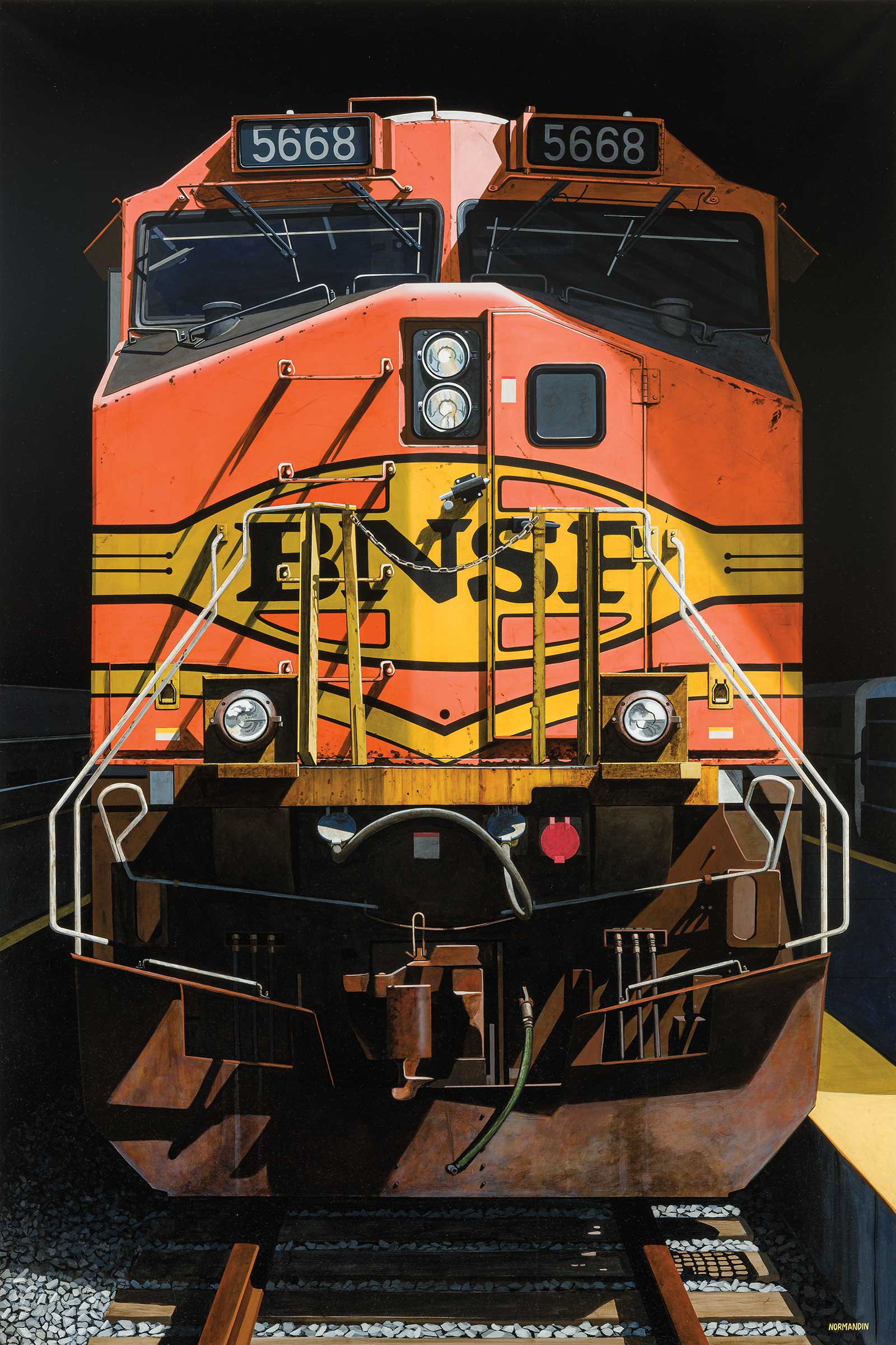
Adam Normandin, Almost There, 2017, oil and acrylic on linen, 60 x 40"
In the early 1980s, by then living in New York City, Mosse walked by an antique shop and was taken by a painting of an early-1900s British steam locomotive in the window and couldn’t shake it.
“I was very shy but got up the courage to go back and inquire about it,” says Mosse. “Several days later I realized I could actually buy that painting. It never occurred to me until that moment that I was someone who would purchase a painting.”
Since then, Mosse has amassed roughly 250 works of train art, a collection he and his wife Christine have recently promised in its entirety to the Center for Railroad Photography & Art (CRP&A) in Madison, Wisconsin. In celebration of the gift, Hirschl & Adler Galleries has mounted a show of 22 of those paintings in the first showing of railroad art in New York City in more than 50 years, and likely the very first of a single private collection.
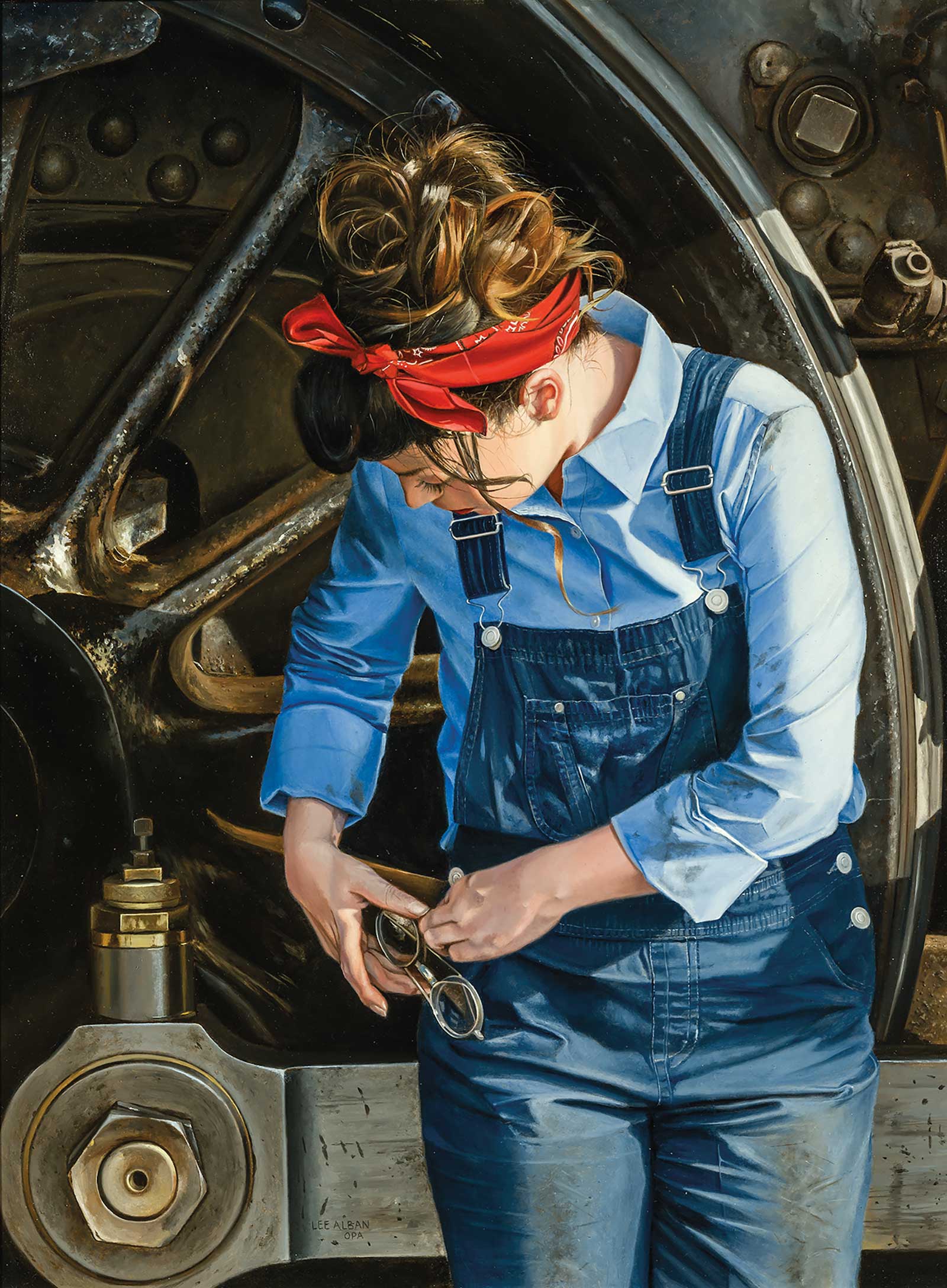
Lee Alban, Goggles, oil on panel, 24 x 18"
Eric Baumgartner, senior vice president of Hirschl & Adler and a fellow railroad enthusiast, curated the exhibition. “It was a challenge to select a representative set of works—less than 10 percent of the whole—that would sum up both the extraordinary breadth of the collection and 40 years of collecting,” says Baumgartner. “The Mosse Collection is remarkable for its diversity in historical era, location, artistic style and subject. I wanted to be sure to maintain that diversity in our selection. I think we succeeded.”
Cultivating a collection defined by diversity has been a conscious effort on Mosse’s part and is one of the reasons he wants to preserve it as a single collection. He explains, “I collect solely by the subject of railroads and interpreting that as broadly as possible without any restrictions on period or style or country of origin. If it were to be split up, it would lose one of its most important elements.”
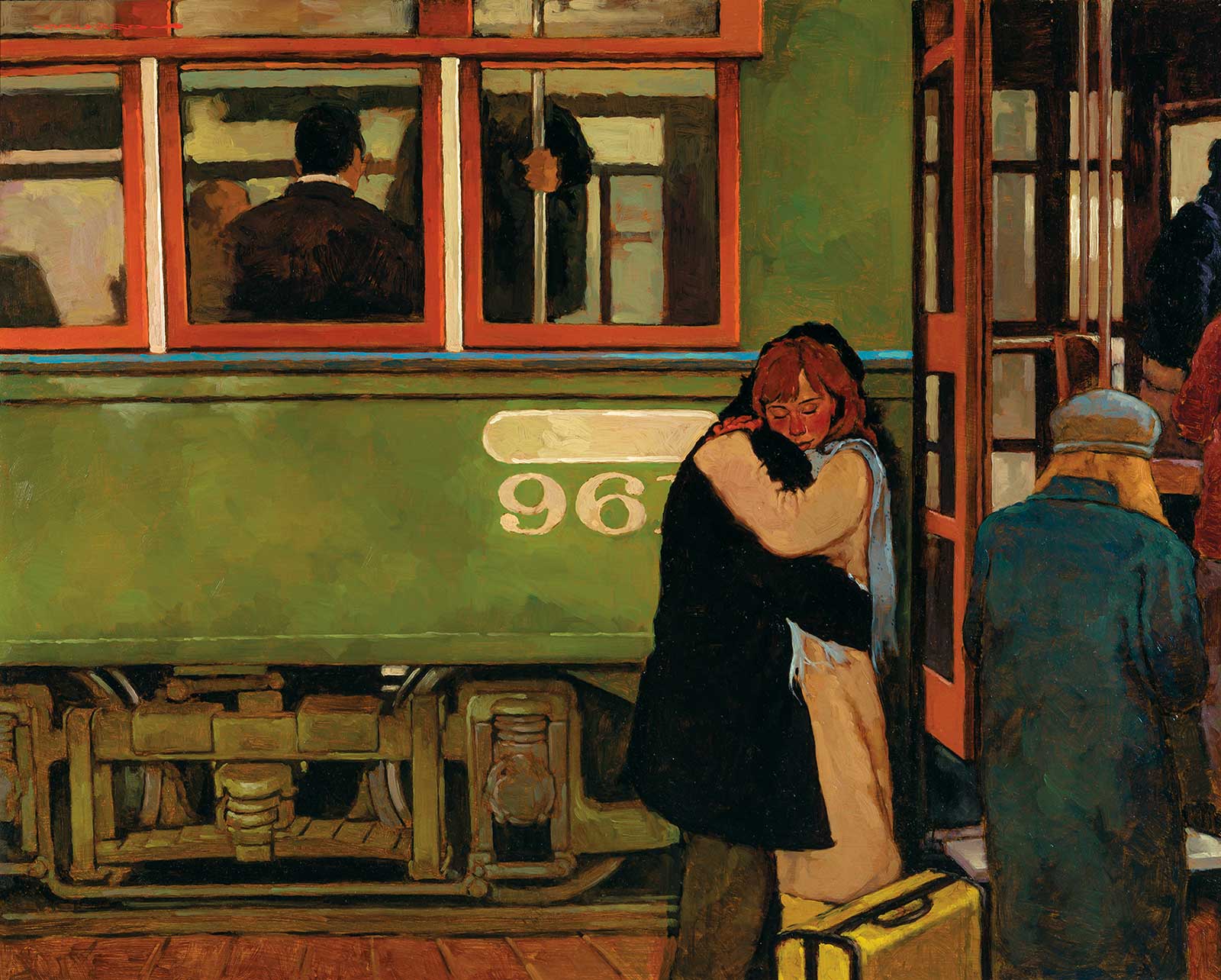
Joseph Lorusso, A Last Goodbye, 2004, oil on board, 24 x 30"
Featuring historic, Western, Native American art and contemporary realism, the eclectic nature of the collection persists within each subgenre. One of Joseph Lorusso’s timeless, emotionally-charged scenes, A Last Goodbye, depicts a young couple embracing on a train platform, reluctant to part ways. In typical Lorusso fashion, the artist leaves the narrative interpretation up to the viewer. The interior of a 1930s London tube train is the subject of Peter Insole’s painting Green and Gold to Golders Green. Historically accurate from the advertisements on the walls to the crushed cigarette butts on the floor, and rendered with hyper-realistic precision, Mosse relays that people have asked why, in the midst of all these paintings, does he have a photograph?
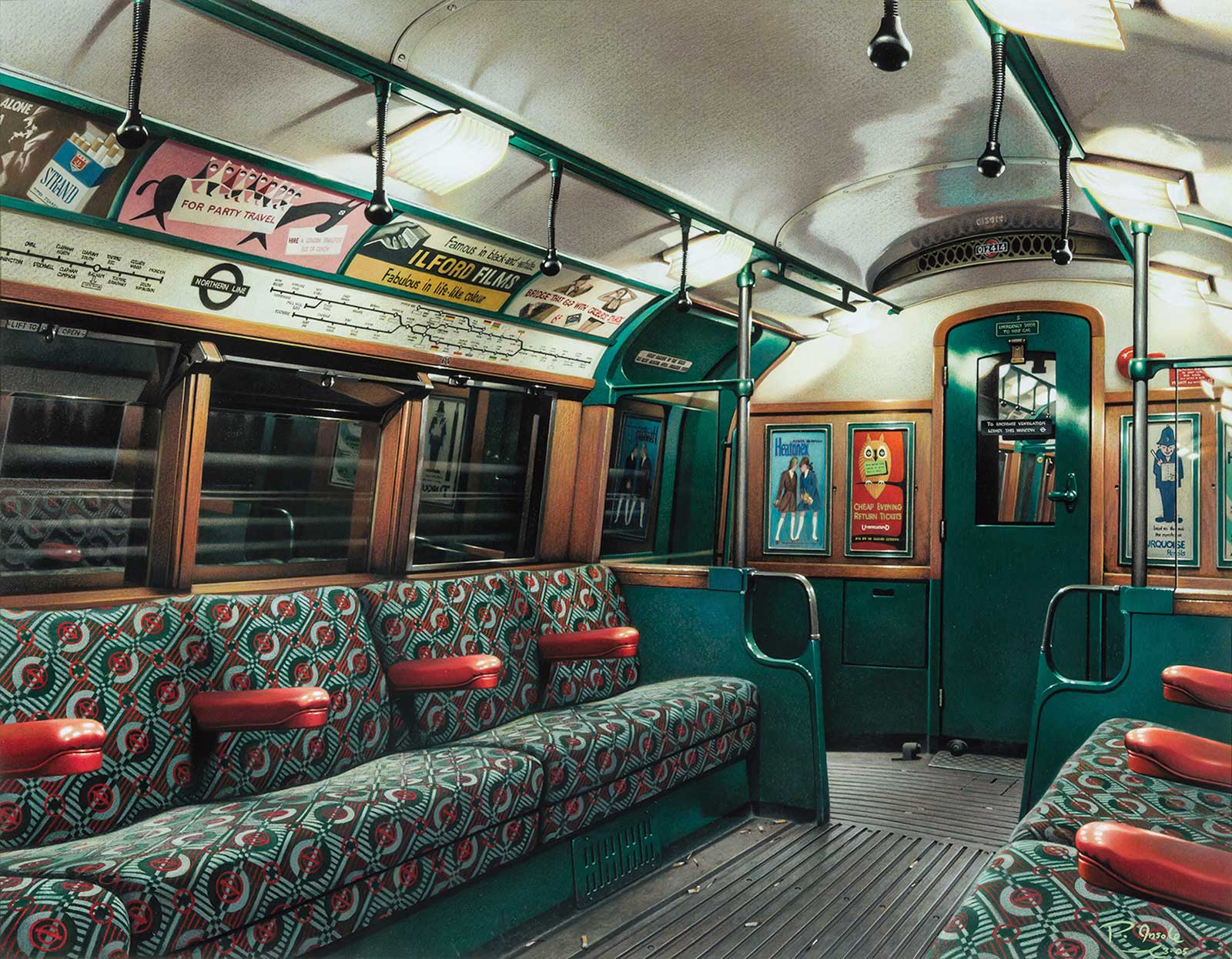
Peter Insole, Green and Gold to Golders Green, 2006, gouache and crayon, 13½ x 17½"
The Mosse Collection will be transferred to the CRP&A gradually over time, lessening the blow of saying farewell to so many beloved paintings all at once.
“I always miss good paintings when they go, but I really get the most satisfaction when they go to the best possible home,” says Mosse. “And I have total confidence that the center will be very good stewards of the collection far into the future.”
The Art of Trains is on view through August 23. —
Hirschl & Adler Galleries 41 E. 57th Street, 9th floor • New York, NY 10022 (212) 535-8810 • www.hirschlandadler.com
Powered by Froala Editor