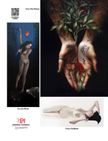
A true artist through and through, the highly revered painter Quang Ho has earned his place among the masters of our time with his distinctive mélange of highly skilled realism and emotionally charged, colorful strokes of abstraction. His remarkable paintings are technically sophisticated yet playful, refined yet loose—a winning combination that has gained him much recognition. His mastery lies not only in striking this difficult balance, but also in his sense of composition and color which play an important role in the overall look of his works. Adept in all subjects including still life, landscape and the figure, Ho is not bound to a single genre, but views painting as capturing a moment, or the light dappling on a figure in the landscape, and conveying the “visual excitement” that appeals to him as an artist.
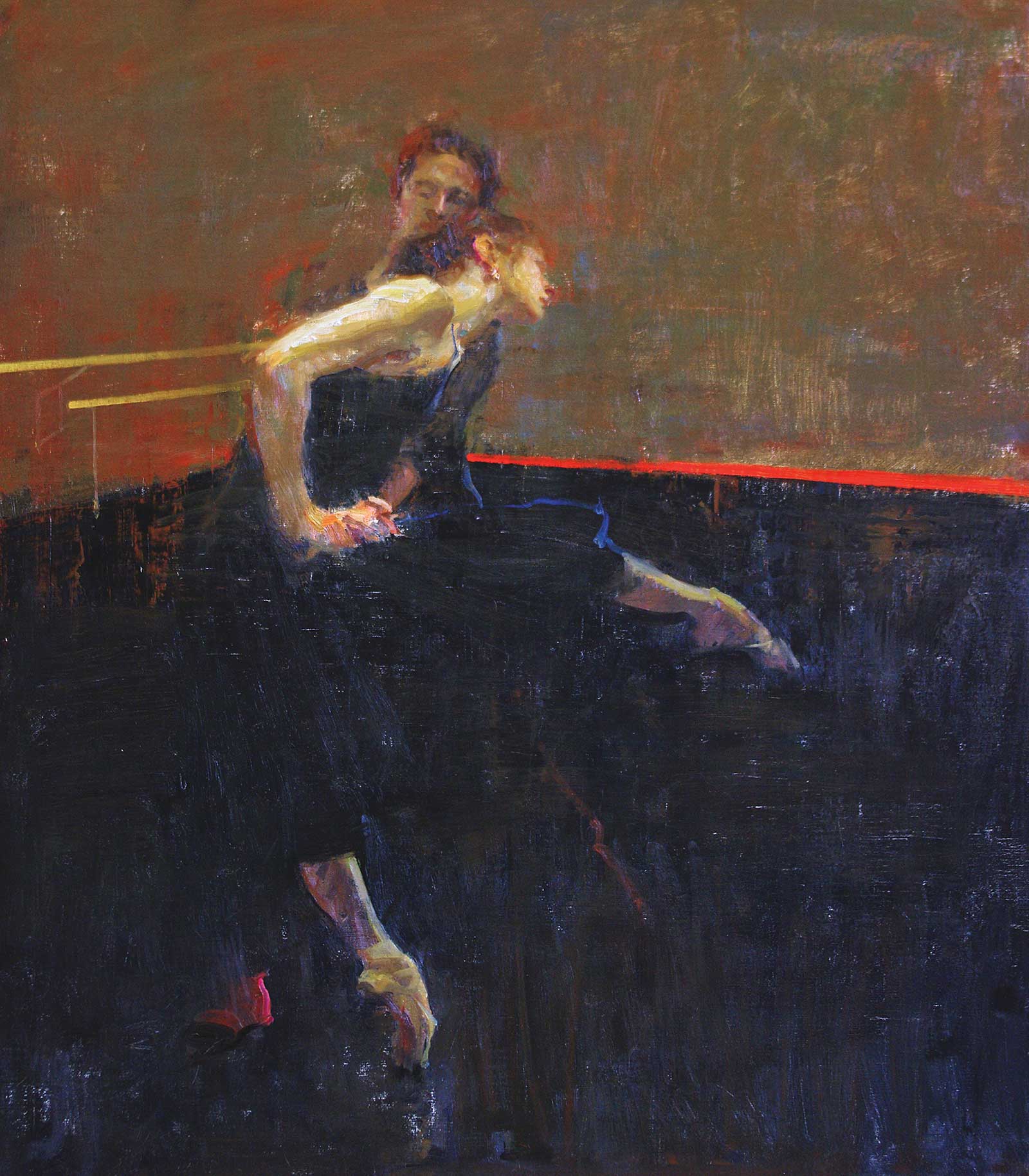
Two Dancers, 1993, oil on canvas, 36 x 32"
His ability to work in many different genres and mediums—from oil to watercolor, wood working and painting on silk—gives him the freedom to best capture what he sees, experimenting with these mediums in order to best express his innate creativity. Ho has won numerous awards, holds “master” status in the top art organizations in America, and has exhibited in fine art museums throughout the world. He will be featured in a joint show with Scott Christensen titled Two Perspectives at the Museum of Western Art in Kerrville, Texas, from July 20 through September 21.
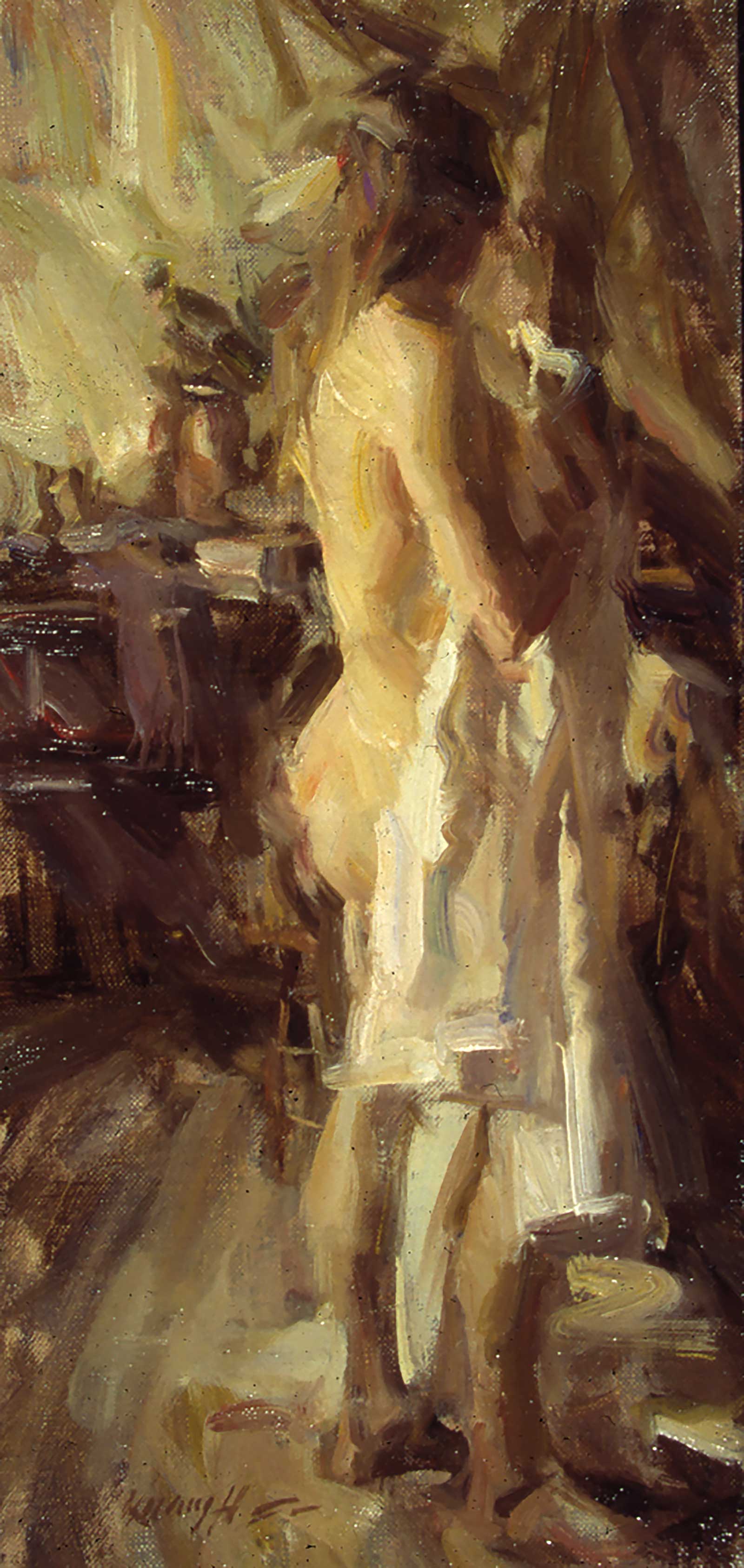
Standing Figure, 1988, oil on canvas, 16 x 8"
An Atypical Youth
Ho was born in Hue, Vietnam, in 1963. His earliest memories are of the war, and although he was only about 4 and did not truly understand the significance of what was going on around him, it greatly impacted his life. His father was captured as a prisoner of war in 1975 and, at the age of 12, Ho, his mother and his six siblings immigrated to the United States only one day before Saigon fell to the communist forces. In 1982, his mother passed away as a result of a car accident, leaving Ho in charge as the oldest sibling. A Dutch-American couple living in Denver had been their sponsors, helping his mother and the children acclimate to life in America. Ho calls them his guardian angels to this day. He had always loved drawing and, in the stable environment they provided, was encouraged to follow his creative talent.
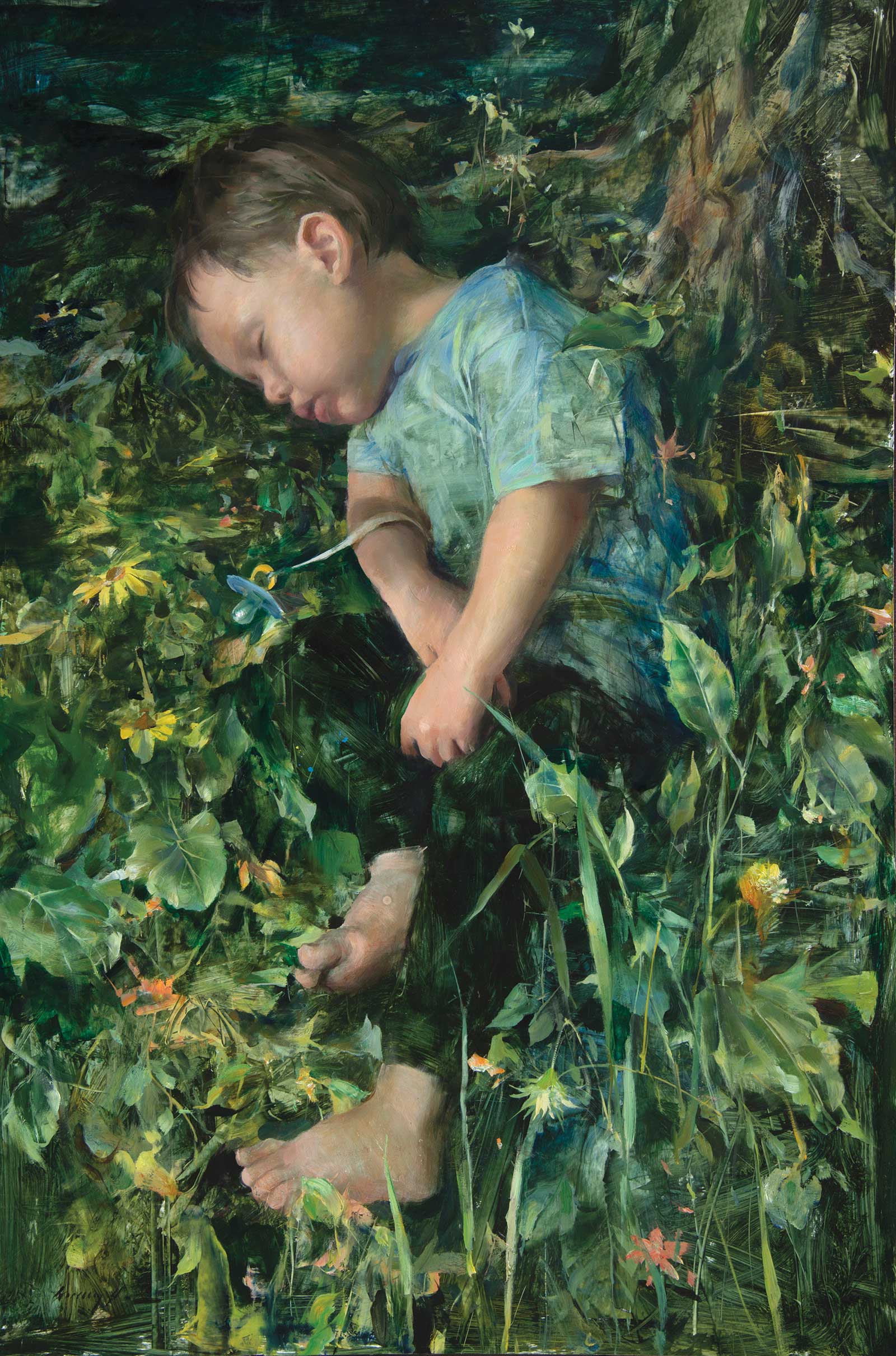
Liam’s Dream, 2023-2024, oil on linen, 36 x 34"
At 16, he had his first one-man show at Tomorrow’s Masters gallery in Denver, an incredible opportunity for a young man. “Most of the works were pencil drawings and pen and inks around $100, but we sold much of the show, and it was more money than I could imagine,” recalls Quang. “I had been working for minimum wage at $3.50 an hour, washing dishes and sweeping classroom floors in between soccer, homework and being the editor of the school newspaper.” He soon received a scholarship to attend the Colorado Institute of Art, where he studied under artist René Bruhin. “As luck would have it, the greatest mentor I could ever have hoped for was the director of the life drawing program there,” says Ho. “Although I was top of the class in drawing, [Bruhin] demonstrated to me after a year into the program that I knew nothing about painting. That started me down the path of discovering what painting really meant far above just the ability to draw.” Graduating in 1985 with the Best Portfolio Award, Ho was on his way to becoming a professional illustrator, and later a fine artist. Despite the enormous success he was to achieve, Ho has always remained generous, kind and aware of his humble beginnings.
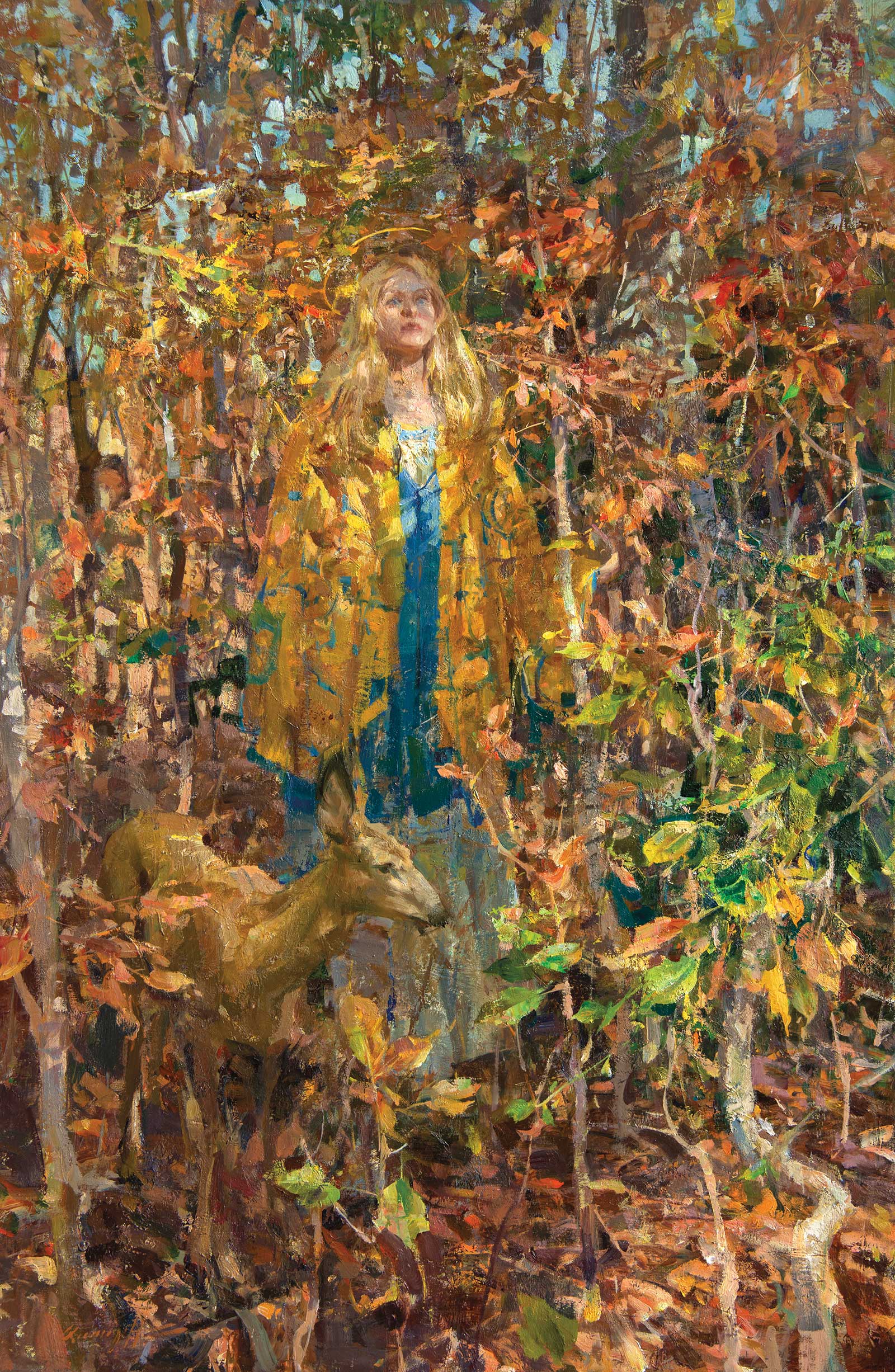
Autumnal, 2023, oil on linen, 36 x 24"
Fearless
The artist spent five years working as an illustrator, having his art featured in the Illustrators Annual and later at the Museum of American Illustrations. He explains how he dove, without fear, into the world of art. “I had no preconceptions, no thoughts of failures nor success. Thinking back, that was the key, that I somehow had no fear of success or failure. It was quite innocent actually. Someone told me that artists are a dime a dozen but it didn’t matter to me, nor did how much money I could make, or should make. I never considered a backup plan in case things didn’t work out. I felt, I suppose, that whatever I made as an artist I would just live within those means.”His free time was spent painting and drawing. Eventually he had a body of work and was asked by a local gallery to be in their holiday exhibit. He was already gaining recognition for his natural and increasingly refined talent, rare at such a young age and a dream for any artist.
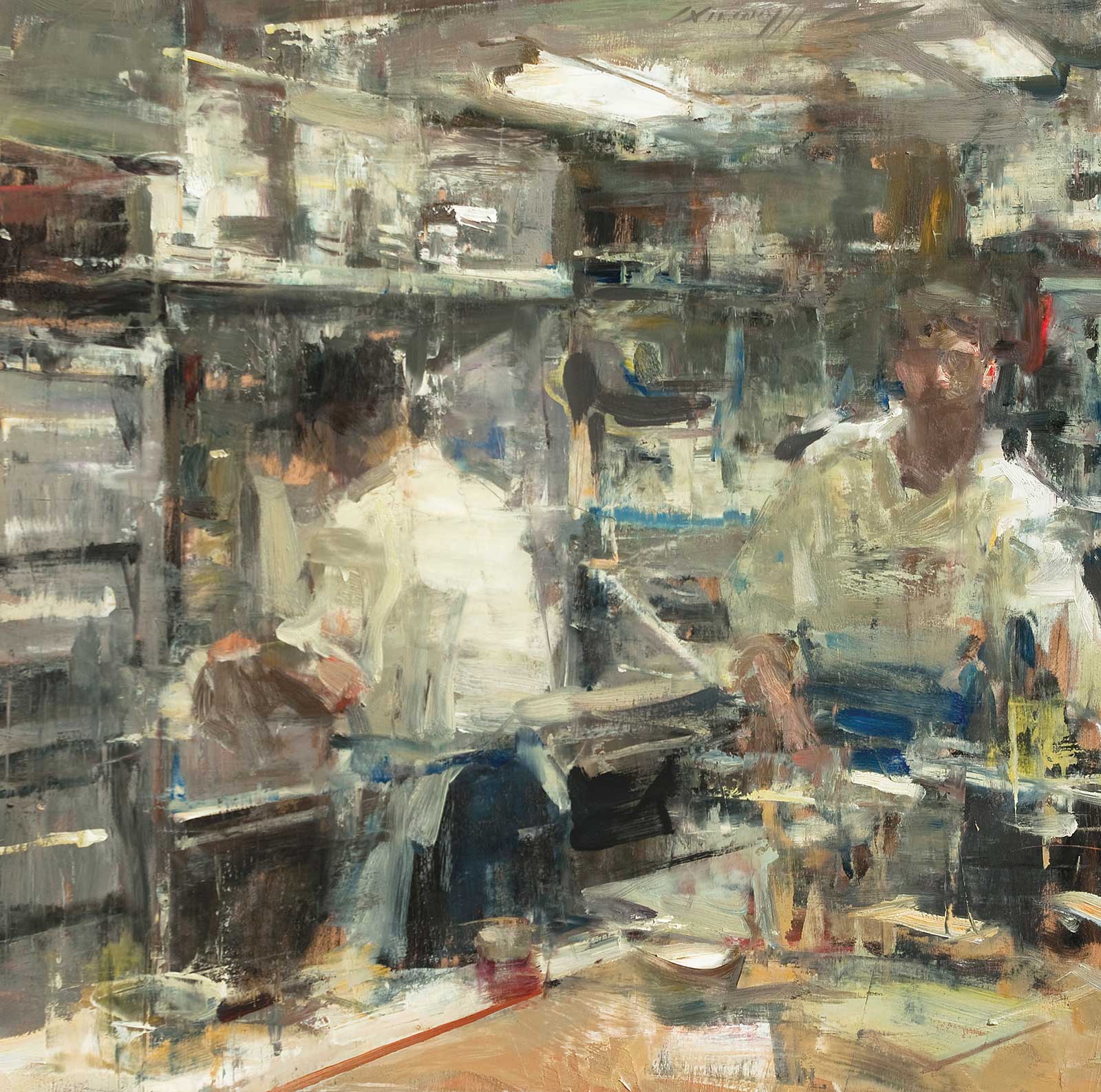
Mizuna Kitchen, 2009, oil on canvas, 20 x 20"
Ho’s career took off swiftly. In 1991, he was featured in Southwest Art magazine and the Denver Post published an article about his life, both of which helped him reach new collectors and expand his clientele beyond Colorado.
“I was approached by Saks Gallery in [Denver’s Cherry Creek neighborhood] to have a solo show,” he says. “The show was a smashing success as we sold over 30 paintings. The success continued so, soon after, I felt I would rather be painting than continue with illustrations so I made the transition quite smoothly around 1991.” Ho was about 25 when he decided to pursue painting full time and he felt fortunate to live in an area that could support his talent.
Despite all the amazing opportunities that came knocking on his door, he was able to remain free in his mind and create without expectations. “My circumstances growing up made me grateful for any kind of success whatsoever, and it was never important to me to reach for the biggest galleries or successes,” he says. “Those were ideas I simply did not carry around. The freedom to paint without restrictions of any kind was most important me.”
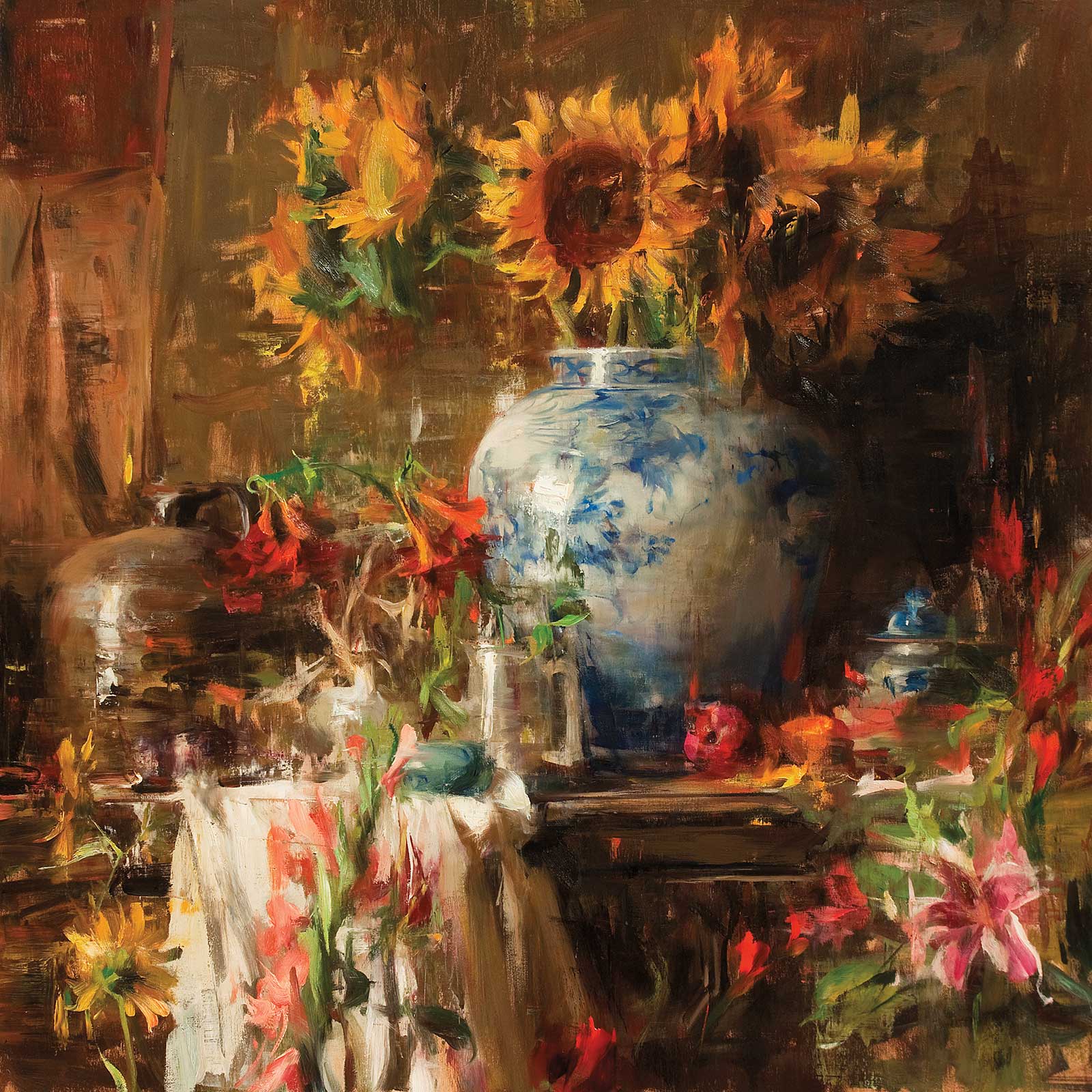
Summer Arrangement, 2009, oil on canvas, 36 x 36"
Subjects
Ho is a virtuoso and able to paint anything, but he views his subjects more as abstract shapes rather than what it actually is. “Ironically, one of the things that give my paintings strength is based entirely on the abstract principles,” he says. “I don’t see things representationally or choose a particular subject...I see the world as shapes, values, colors, textures, and lines...these are all abstract elements. Only when we give names to what we see do they become objects. Whatever moves me intellectually and emotionally is my subject matter. It could be something aesthetically beautiful, or it could be something as simple as wondering what would happen if I used one unusual color next to another unexpected color.”
His paintings are rarely narrative in nature or contain a specific message but are rather a universal exploration of harmony and beauty. “I’ve never been moved by a story in a painting, only by the elements that came together in a painting to make a harmonious whole, which successfully conveyed what the artist was moved by,” he says. “The subject matter in my paintings has changed over the years as my understanding of the world has changed.”
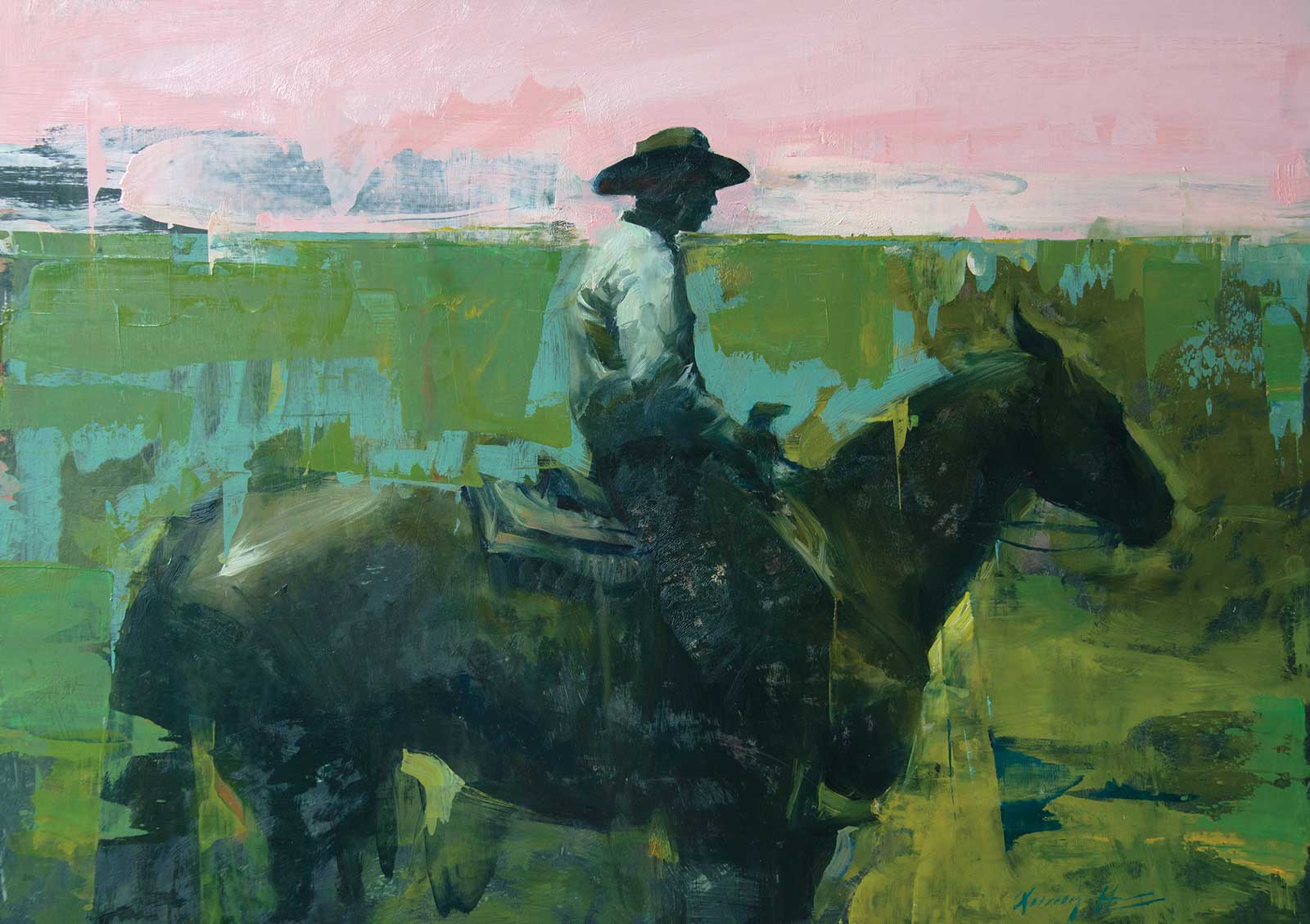
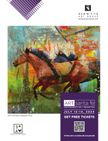
Rider on Green, 2023-24, oil on Yupo paper on panel, 17 x 23"
Style
It’s not easy to label Quang's work, nor would he be content with just one description of it but, when pressed to choose, he says perhaps “expressionist” fits his style best. “It doesn’t matter if I work vigorously expressive or realistically, the flow of the eye through the painting, how it rests, how it moves, how it stops is very important to me,” he explains. “It is about rhythm and movement. Even a quiet painting, like a Vermeer, can be very expressive.”
His style reveals itself in his process. It starts with a faint impulse to explore an idea. “My ‘figure in the forest’ series started with a thought: ‘I wonder what would happen if I painted a figure in nature, so that the elements all melt together like wax?’ It took many years before I finally painted one painting that achieved that result. I wanted the painting By Mountain Streamto be so thick and layered that to stand next to it you could experience it in a tactile manner.”
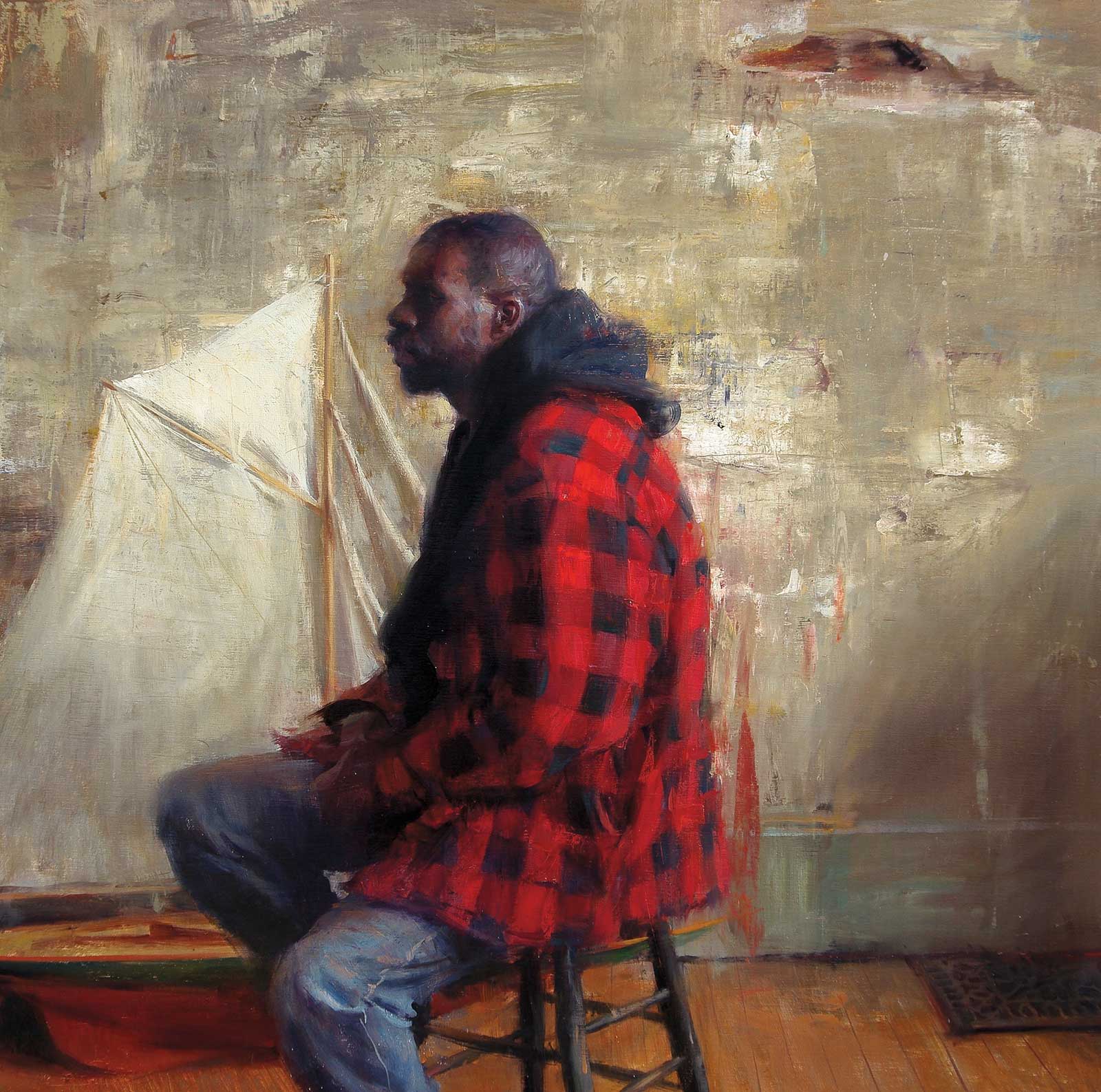
By the Ohio River, Portrait of Jack Watson, 2010, oil on canvas, 36 x 36"
Ho almost never starts a painting with line drawings. Instead, he masses in shapes and makes them more detailed as he works from the general to specific. “Drawing is nothing more than the description of shapes but lines tend to be restrictive for me. I see masses of shapes and note that lights, darks and medium values are the thing that gives unity to the big picture, then the details know which context to align to and recognizable forms take shape.” One painting he was particularly satisfied with is Summer Arrangement from a 2009 solo show in Denver. “There are few paintings that occasionally will paint themselves,” he says. “Every note was just right and full of life.”
Philosophy and Vision
Quang Ho’s success lies not only in his technical mastery of mediums but in his overall philosophy on creating art. “I see the entire history of painting broken into eight different visual approaches or categories which include every type of art from Renaissance to Rembrandt, the Impressionists to Japanese woodblock prints, to Van Gogh, Picasso, the abstract expressionists,” he says. “When I paint, there is always an awareness of this art history—all the movements, philosophies and styles of the artists who paved the way before me. I might look at Japanese work for design and shapes, to Rembrandt for light logic and texture, to Van Gogh for design, color and pattern, etc. Each has something to teach us and incorporate in our own work. There are so many great works being done today. The internet further unites us and shows us in real time what is being done. We are being fed by each other and we’re being pushed along by each other. It’s great.”
When asked to talk about a recent painting of his son Liam, Ho says, “In Liam’s Dream I am breaking into imaginative painting and don’t know where it will lead me exactly, but it has opened new windows for certain. I am combining both formalism and abstraction. This is our son, Liam, napping in my studio while I paint. I’ve just nestled him into an imaginary landscape.”
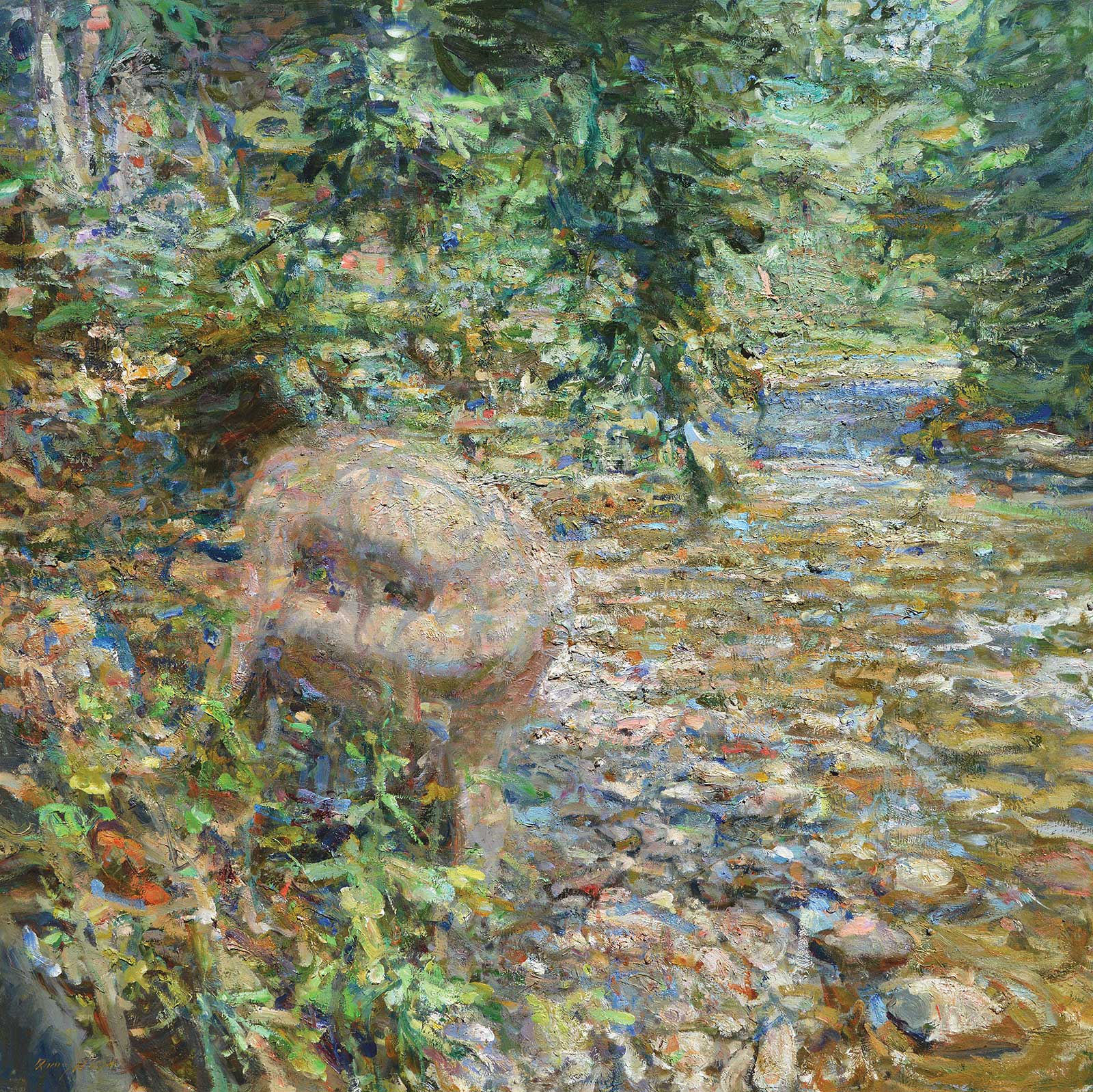
By Mountain Stream, 2017, oil on panel, 60 x 60"
It is this clever mix of abstraction and realism that makes Ho’s work stand out and difficult to imitate by others—even himself. It’s about being there in the moment with your subject, combining years of knowledge, technical experience with paint, and then adding your emotions. Quang has achieved Master status in the American Impressionist Society, received awards from the Portrait Society of America, and has been featured in many publications, and prestigious gallery and museum exhibitions. He has produced a number of teaching DVDs, and lectures and teaches workshops around the world. He is currently working on a book about his philosophy and work. He lives and works in Pennsylvania with his talented artist wife Adrienne Stein and their young son Liam.
When asked how he would best like to be known, he humbly replies, “I don’t know, maybe as the artist who did his best at trying to follow the call to explore the depths of great painting.” —
Powered by Froala Editor