For centuries artists have captured the nude form. Both creating and observing the human form unclothed and unbound can often lead to a far deeper understanding of the human condition. In its raw and natural state, there is nothing to hide behind. There’s only truth and connection.
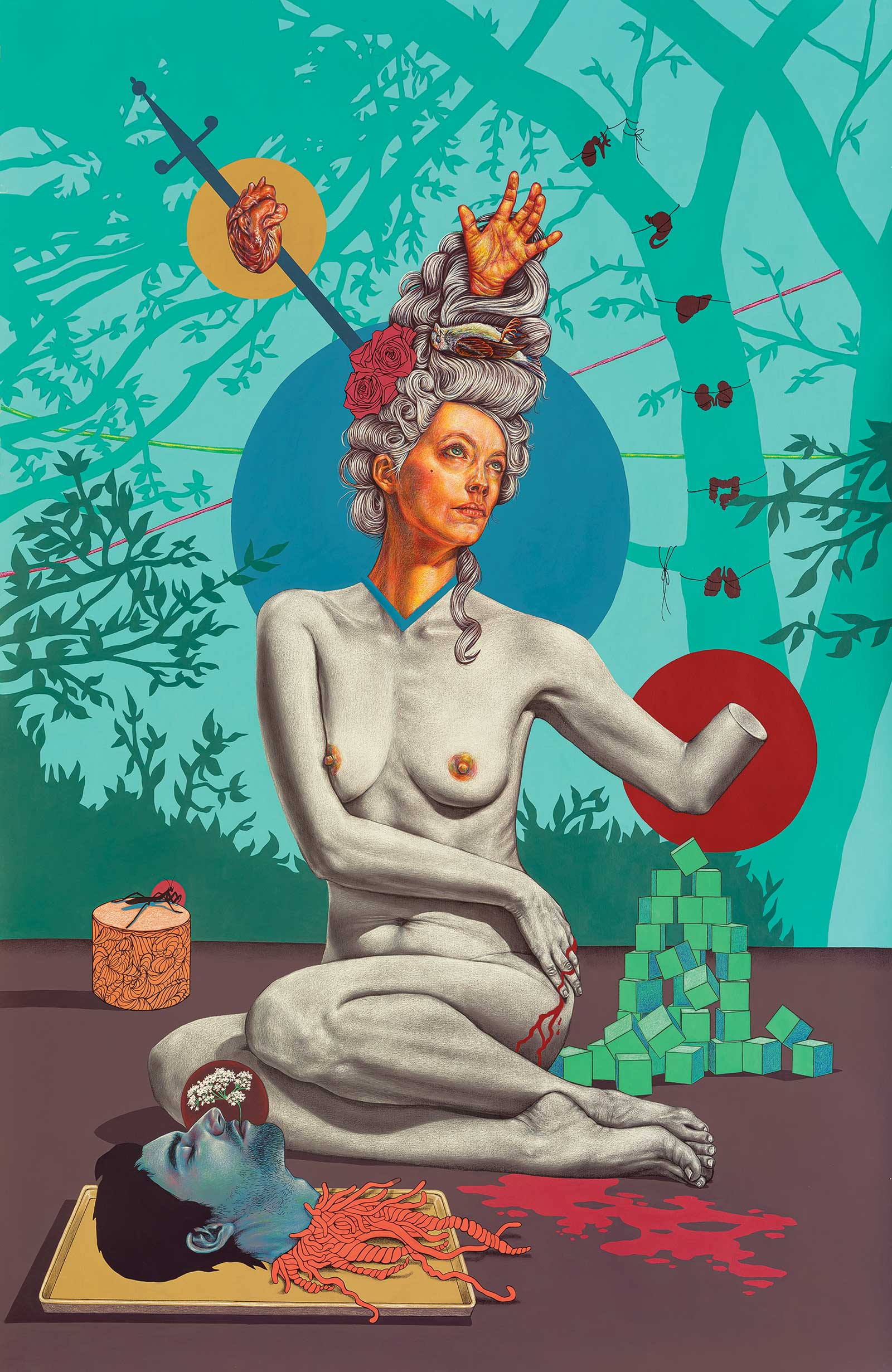
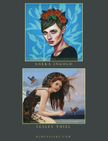
Aneka Ingold, Devil’s Bread, mixed media on paper, 72 x 48"
“The human form is like a blank slate where I can play, think out ideas and let out my emotions. It’s an endlessly fascinating place to get lost in, never knowing exactly where I will end up,” says artist Matt Talbert, who paints expressive figurative works with a balance of intuition and technical skill. “The goal is to connect with my subject, often times resulting in a painting that is just as much about me as it is about them. I think it’s this raw human connection that makes painting the nude so relatable across time.”
He speaks of the deeply personal and powerful experience of witnessing another person in an unguarded state. And equally personal is the experience of the person being witnessed. This vulnerability as human beings is what universally connects us all—and the idea that our stories, thoughts and emotions are all completely separate from others is a myth.
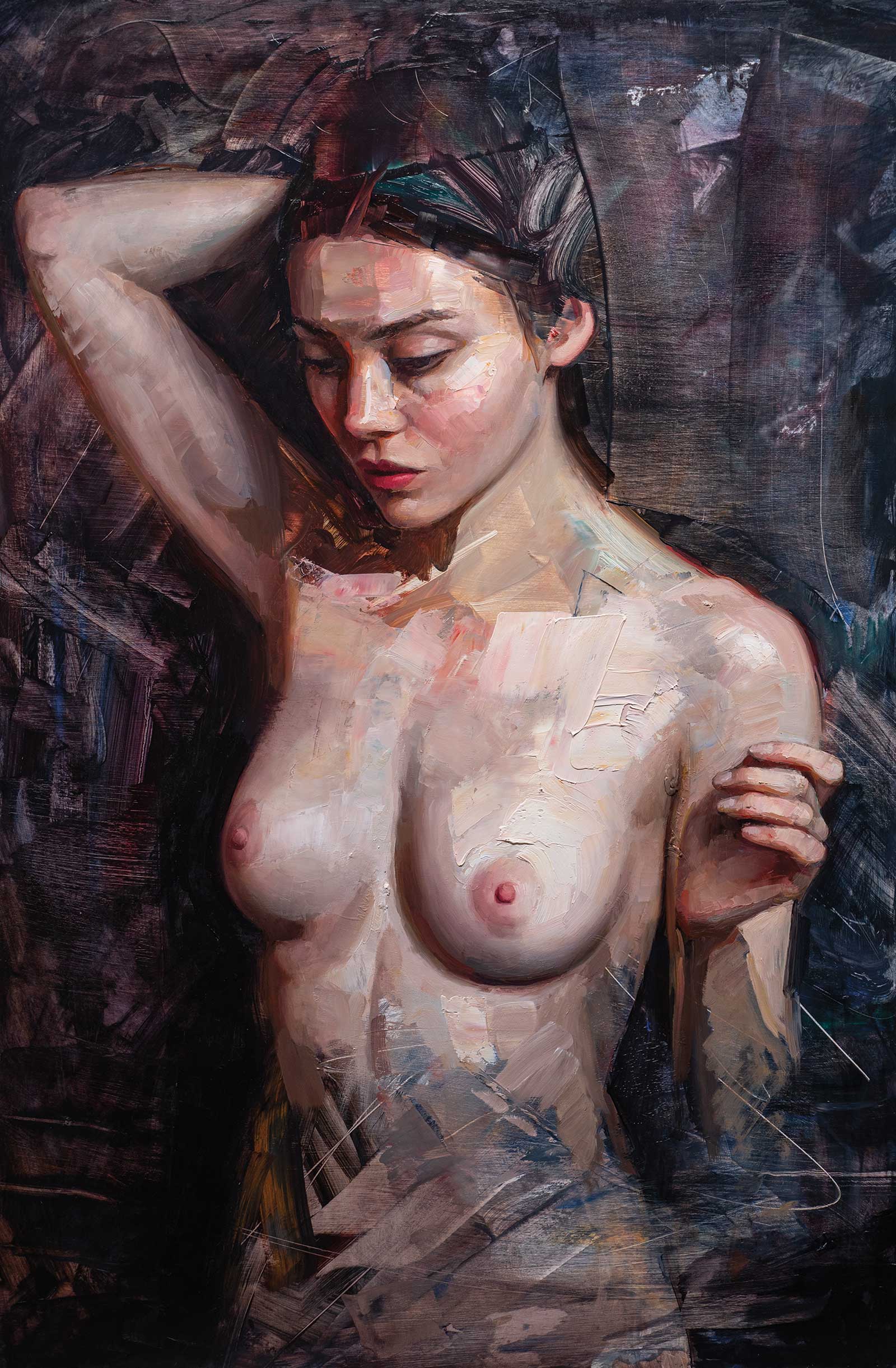
Matt Talbert, Body and Soul, oil on panel, 36 x 24"
“Everyone is connected by the reality of living in these temporary bodies,” Talbert says. “It reminds us of our strengths and weaknesses, youth and age and how fragile this whole thing is.”
Another highly intuitive artist, Aneka Ingold, collects imagery from books and magazines as inspiration for her unique depictions of the female perspective. “I think when analyzing the female nude in art it’s important to ask what the artist’s role is in whatever they create,” says Ingold.
As a woman who paints women, Ingold discusses the exploration of self, identity and autonomy.
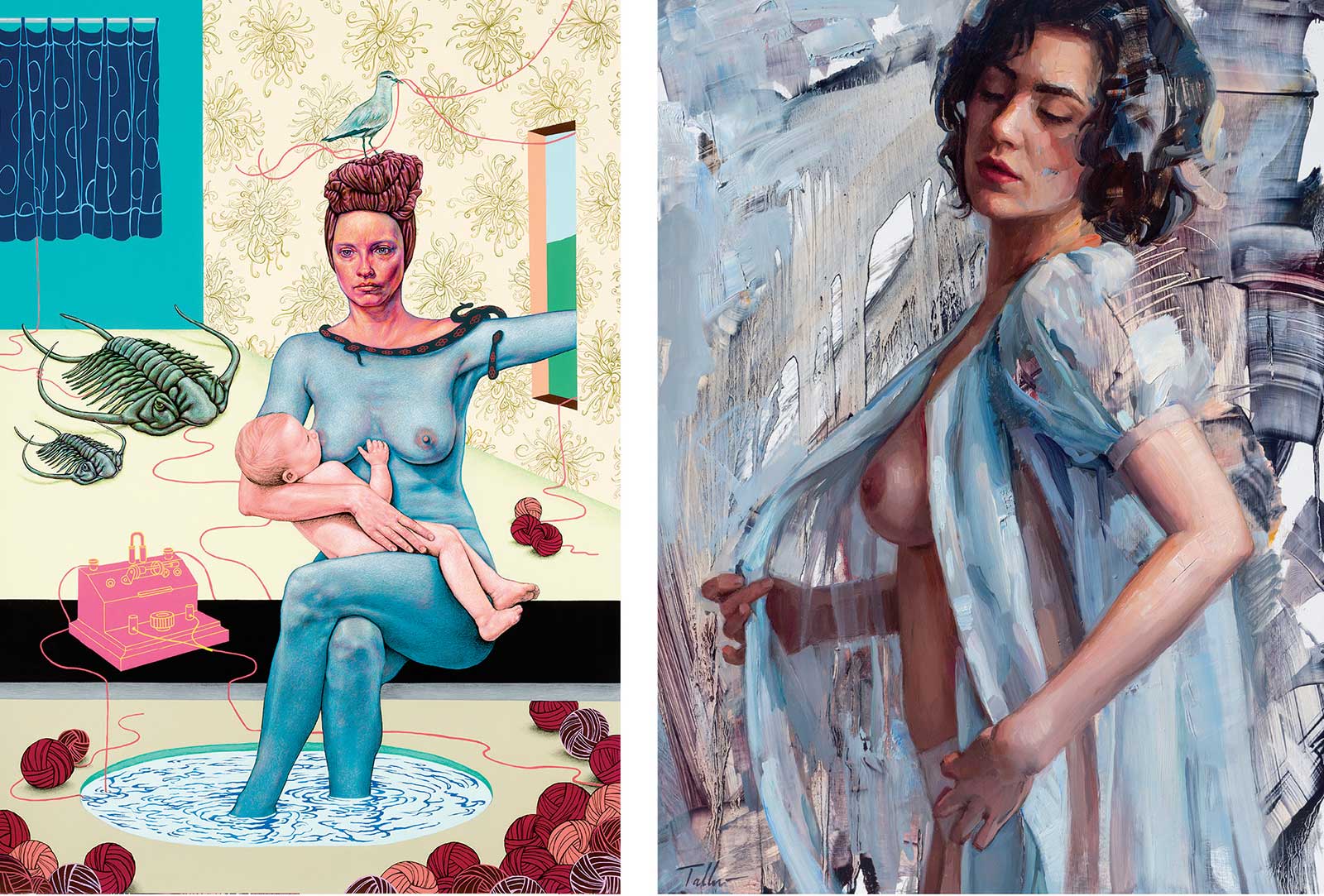
Aneka Ingold, Postpartum, mixed media on paper, 72 x 48"; Matt Talbert, Blue Orchid, oil on panel, 24 x 18"
“[My paintings are often] very personal self-portraits that display both physical and emotional turmoil as a catharsis and way of knowing and accepting the body in a way that only a woman could have firsthand experience with,” she says. “I often render the flesh in colors that are not natural, such as blue or gray, that allude to the abject. It is a questioning of both my own mortality and sensuality as a woman. When I tell my stories through the depiction of the female nude, it is a way for me to process in my most vulnerable state, bare and naked, revealing much more than skin, and yet it is also a way to ascertain control of my bodily autonomy. The art world needs to continue to acknowledge how important it is that women share their uniquely female perspectives on their own bodies in order for women to have their voice in society.”
Throughout the pages of this collector’s focus are yet more depictions of the nude form, offering opportunities to connect with the human experience in powerful ways.
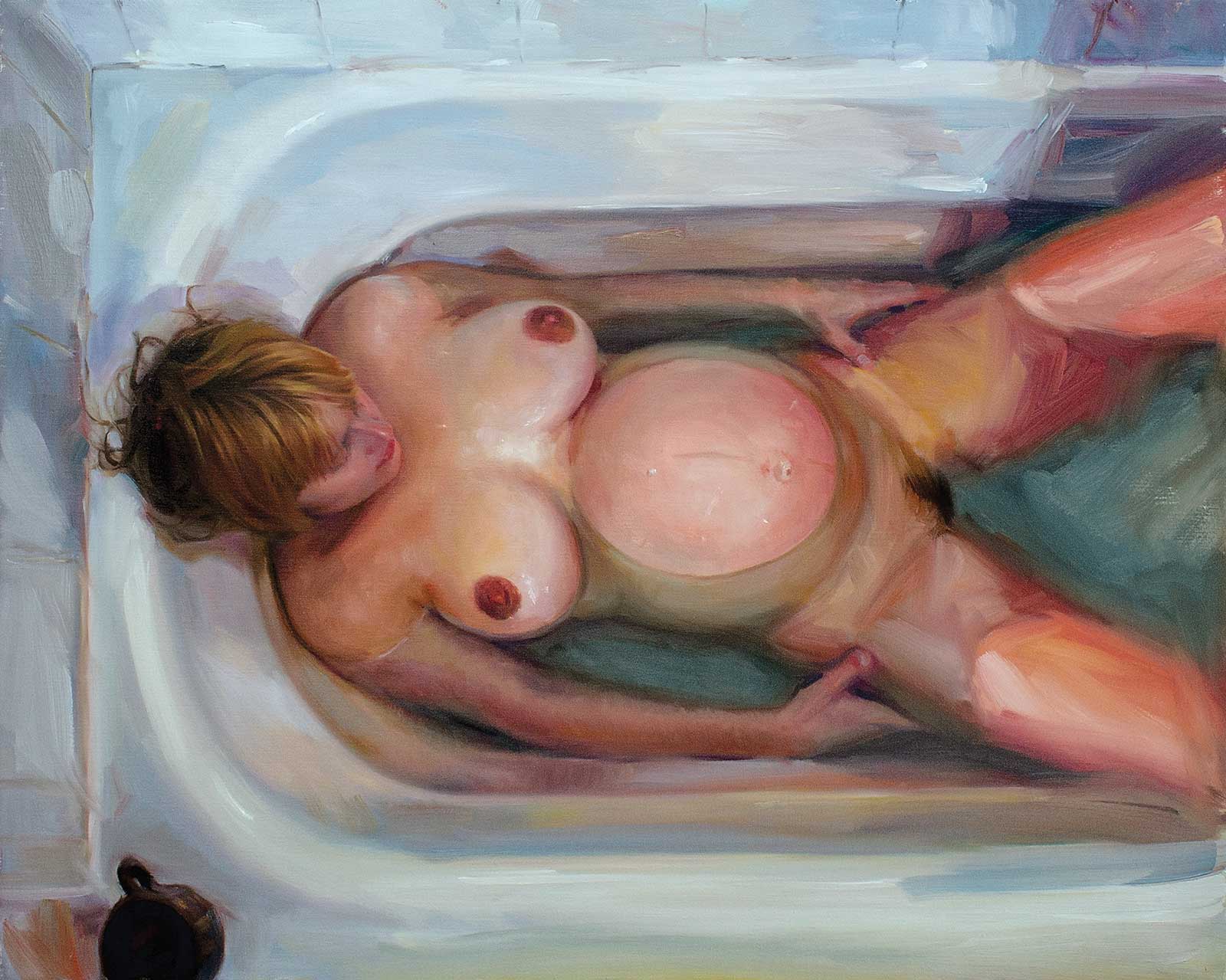
33 Contemporary, Venus, oil on linen, 30 x 40", by Ricky Mujica.
Represented by 33 Contemporary in partnership with PoetsArtists, are three impressive artists working with themes surrounding the nude form. For her piece Sitting Pretty, artist Kimberly Dow explains that it’s a “visual dialogue on the intricacies of vulnerability, connection and the unspoken poetry within intimate relationships. In this composition, I invite viewers to witness a moment of quiet surrender and shared contentment between two figures, navigating the delicate balance between exposure and concealment.”
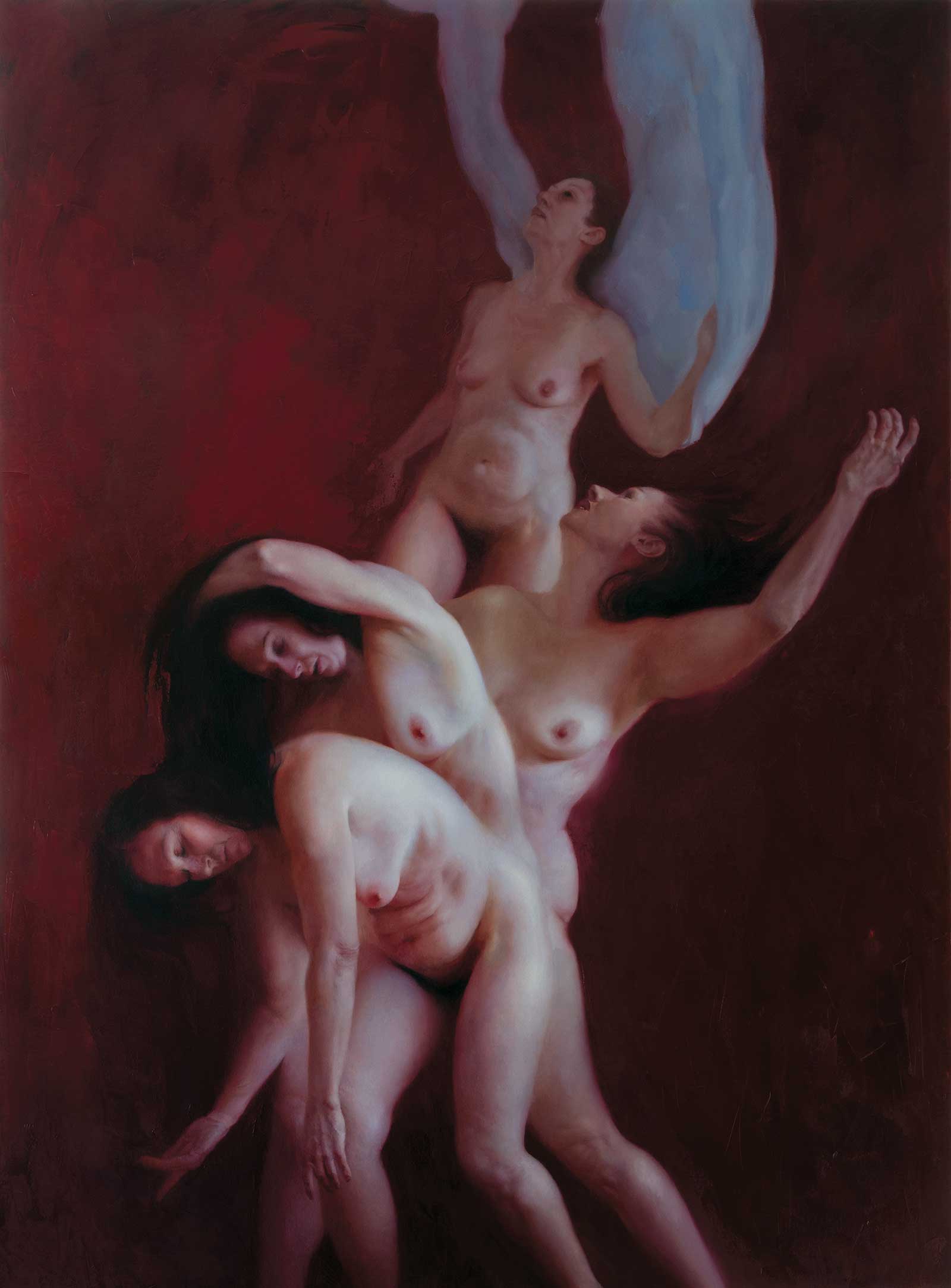
33 Contemporary, Rose Red, oil on canvas, 44 x 60", by Anna Cyan
Artist Ricky Mujica features works like Venus, the “powerful moment just before new life begins,” he notes. “The scene is set in a simple bathtub, where an expectant mother waits calmly as her water has just broken. This quiet moment captures the anticipation and strength of a woman about to give birth. The title, Venus, links to the goddess who was born from sea foam, symbolizing beauty and love. It is a reimagining of the goddess’s birth through the lens of modern motherhood.”
Anna Cyan shares that she paints because “I want to say something about the glory and terror of being alive. I paint people because I am in love with their frailty and beauty. I paint nudes because the best way to talk about all these things is to show the bodies we live in, the collision between mind and flesh…The physicality of human bodies and how they express what animates them, will always fascinate me—every curve and every fold.” We see Cyan’s vision come to life in dream-like works such as Rose Red.
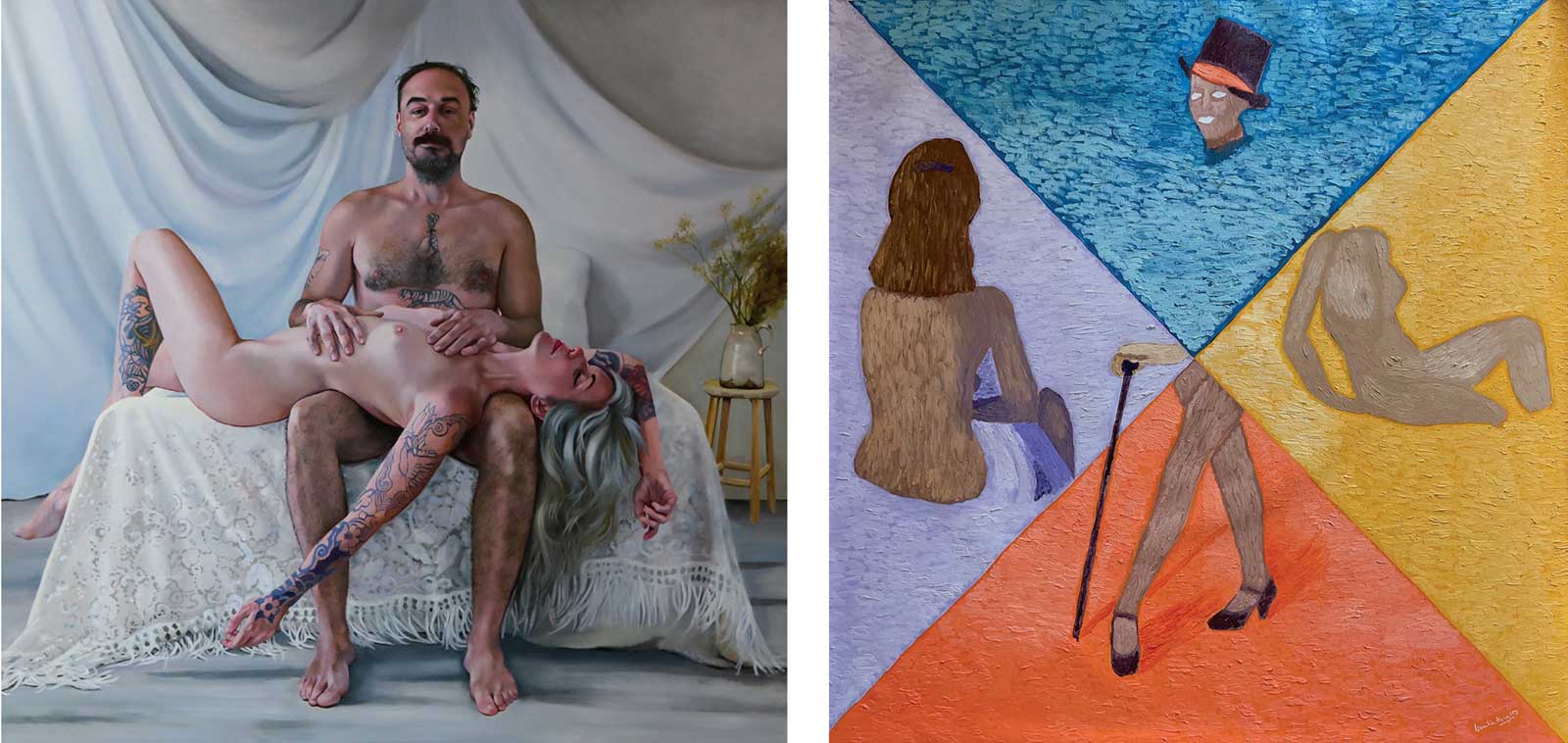
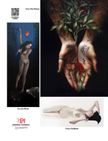
33 Contemporary, Sitting Pretty, oil on panel, 42 x 40", by Kimberly Dow; Cecilia Anastos, Chagalí - The Invisible Woman, oil on canvas, 36 x 36"
Artist Cecilia Anastos uses oil or acrylic on canvas, paper or wood, to achieve her landscapes, cityscapes and surreal-impressionist representations of women. “Brightly colored and uplifting, my paintings tell stories that touch the relationship of sentient beings with nature, and the tribulations of women throughout history,” the artist explains. “Some of these landscapes and cities will disappear due to climate change. I want to leave a legacy of what they used to look like.”
An example of Anastos’s nude work is found in Chagalí - The Invisible Woman, featuring her surrealist vision incorporating fragments of the female body. —
Featured Artists & Galleries
33 Contemporary
Zhou B Art Center, 4th Floor 1029 W. 35th Street Chicago, IL 60609
www.33contemporary.com
www.poetsandartists.com
Aneka Ingold
www.anekaingold.com
Cecilia Anastos
Ramona, CA
cecilia@ceciliaanastos.com
www.ceciliaanastos.com
Matt Talbert
www.talbertart.com
Powered by Froala Editor