Encaustic is an ancient painting medium comprised of heat-fused layers of beeswax, resin and pigment. From the Greek word encaustikos, which means “to burn in or fuse,” the Greeks used it to weatherproof their ships as early as the 5th century BCE. They soon began adding pigment to decorate vessels used in trade and war.
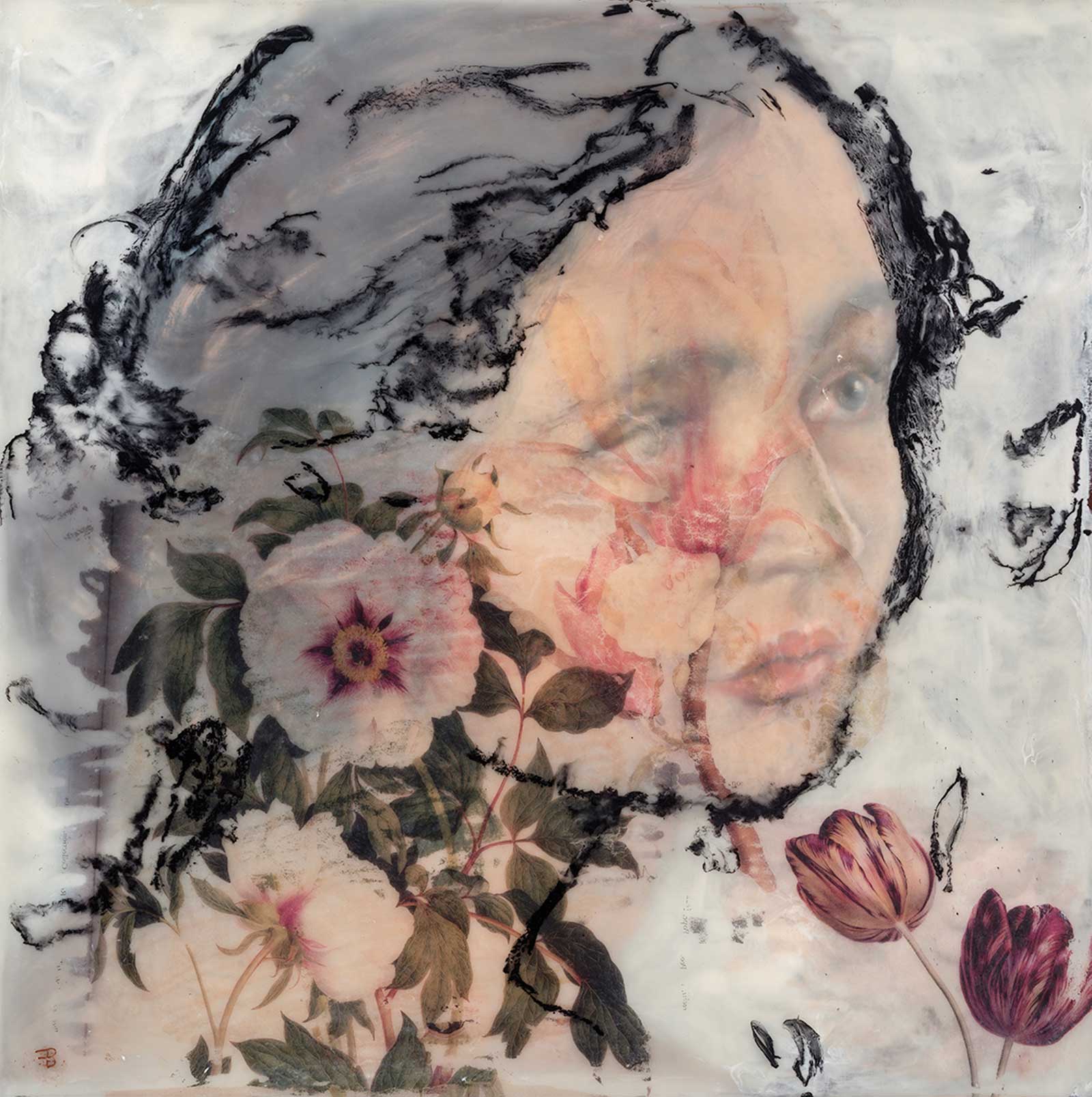
Francisco Benitez, Flora, encaustic on panel, 16 x 16"
In the first century, during Roman imperial rule, the Greek elites who settled in the Fayum region of Egypt adopted the local custom of honoring the dead with a funerary portrait. They were usually rendered in tempera or encaustic on wood, which was then affixed to the wrappings over the mummified person’s face. Using highly advanced techniques to create astonishingly lifelike renderings of the deceased, the custom merged the Egyptian mummy portrait tradition with Greco-Roman portraiture.
It was a book about these funerary works, The Mysterious Fayum Portraitsby Greek artist and historian Euphrosyne Doxiadis, that enthralled Francisco Benitez with encaustic. Although he had experimented with the medium in art school, at the time he couldn’t fathom how to apply it to figurative work. Years later, he decided to explore encaustic further and found a way to reconstruct the working methods of the ancients using modern-day equivalents of the tools.
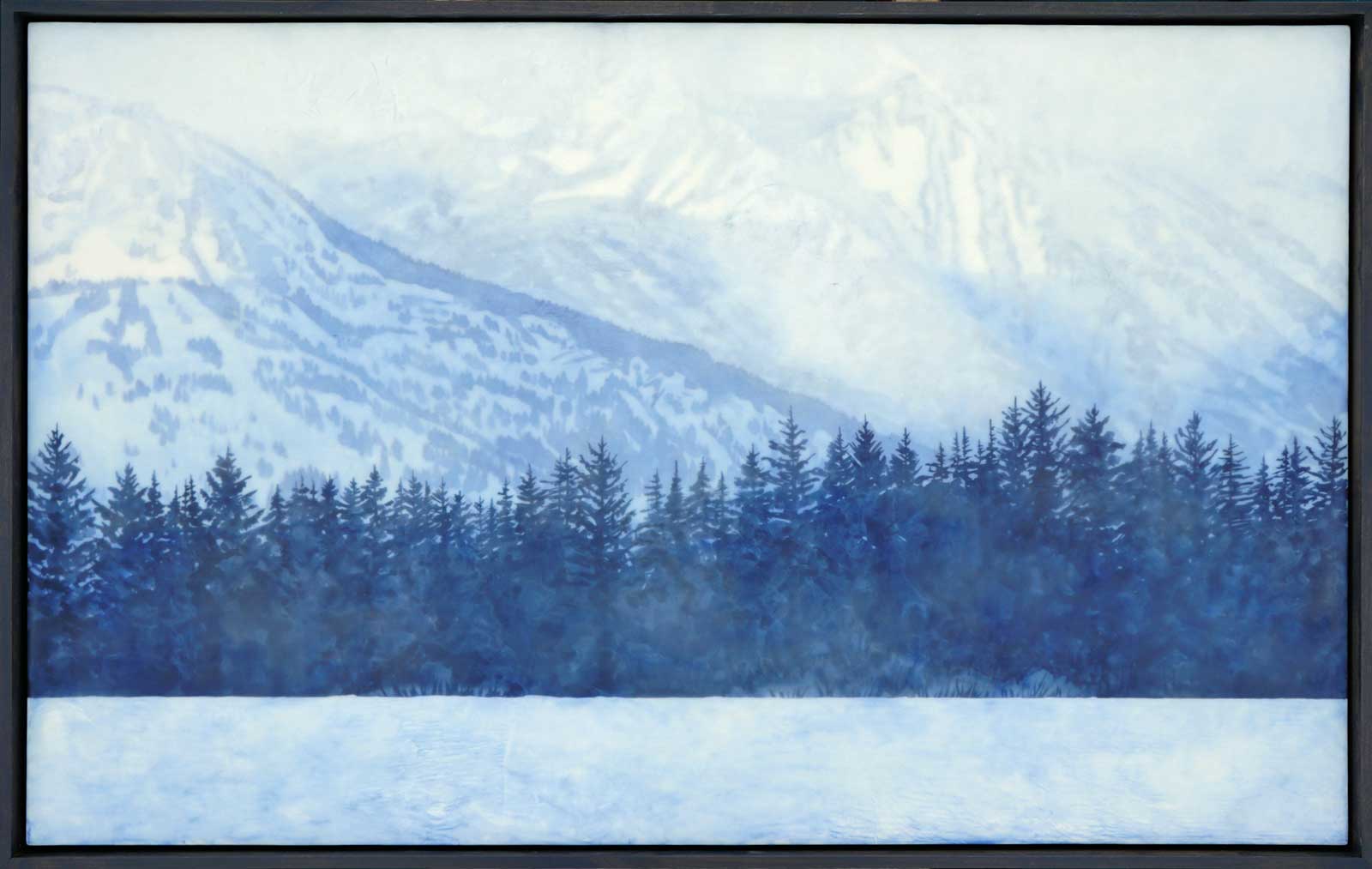
Bridgette Meinhold, It’s Good to see You, encaustic, 25 x 40"
“It changed my life,” says Benitez. “I became so obsessed that I abandoned oil painting altogether at one point. It is a medium which never ceases to surprise—as well as you might think you know it. It’s profoundly mysterious and compelling.”
Benitez works in many mediums, turning to encaustics for their visceral, expressionist quality, and their luminous depths. He uses a classic form of encaustic composed of purified beeswax and damar resin, and works in the four-color palette used by the ancients: white (titanium and calcium carbonate), yellow ocher, red earth and vine black.
He uses a heat gun, a modern-day equivalent of the “vas ferrum,” a red-hot iron ancient artists would use to soften the encaustics, and contemporary versions of other ancient heating tools. Also true to tradition, Benitez often prepares his wood panels with colored rabbit-skin glue, and uses hog-hair bristle brushes to apply the molten wax to the surface, manipulating it with the help of the heat gun.
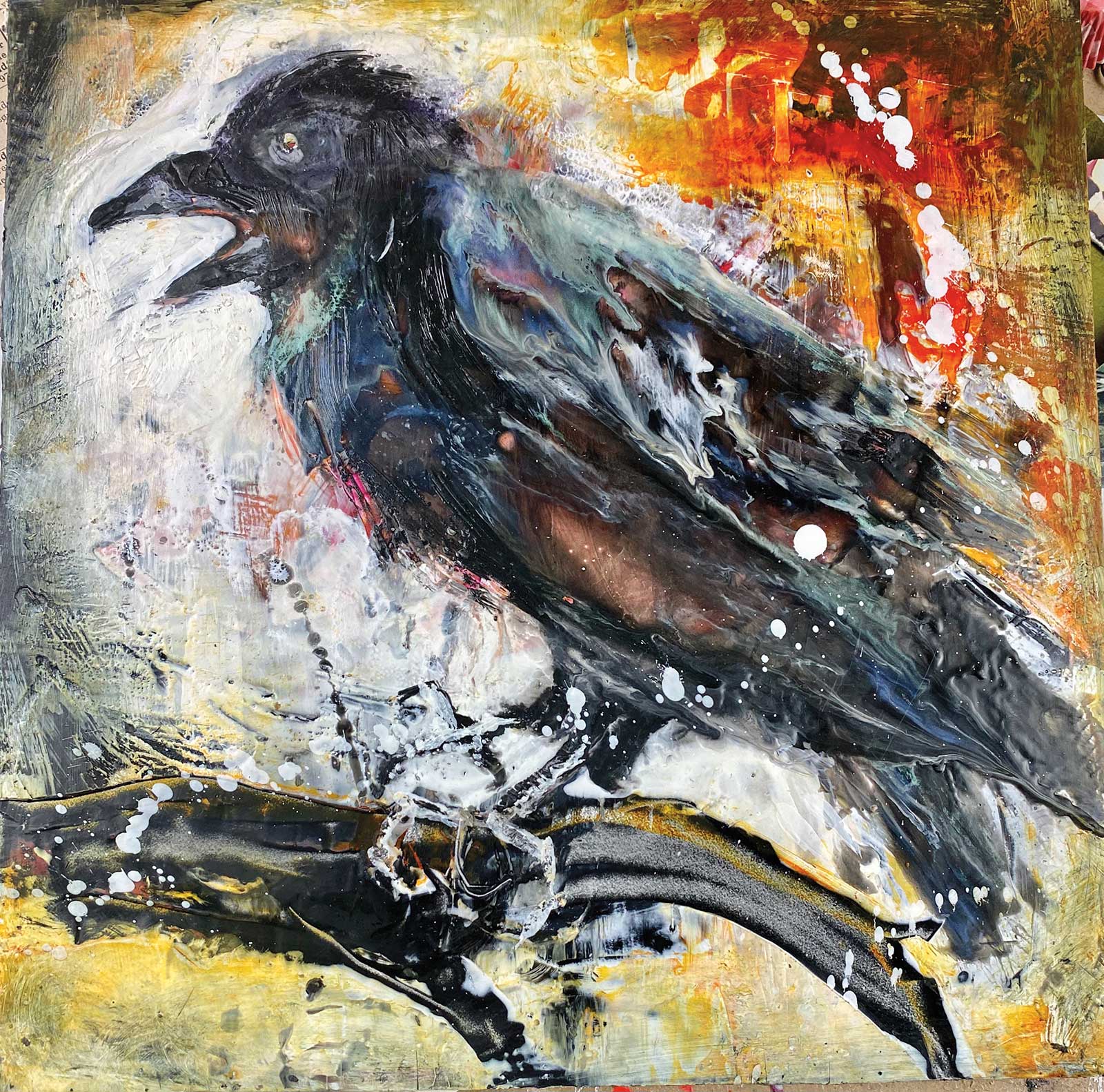
Lora Murphy, Sentinel, encaustic, 12 x 12"
“Ever since I began painting, I was always intrigued with historical techniques,” says Benitez. “When I was working in oils as an art student, I was obsessed with tapping into the secrets of the Old Masters, both regarding materials and techniques. When I saw the Fayum portraits, it led me on a trajectory whereby I discovered the legacy of the ancient Greek and Egyptian artists, which has been erased by the sands of time, and which we are still recovering. Working with such an ancient technique connects us to the larger arc of history and humanity’s inextricable relationship with materials and visual expression.”
Benitez has always been a figurative painter, and encaustics provided a way to continue that pursuit in connection with a past that stretches far further back in time than oil painting. Lucilleis a portrait of his French niece. “I wanted to convey some of the abstract, gestural qualities you see in the Fayum portraits juxtaposed with tighter modeling and psychological intensity in the face. It is very much like a Fayum portrait in its hieratic forwardness, and in the geometric framing of the face. But I wanted it to be utterly contemporary.”
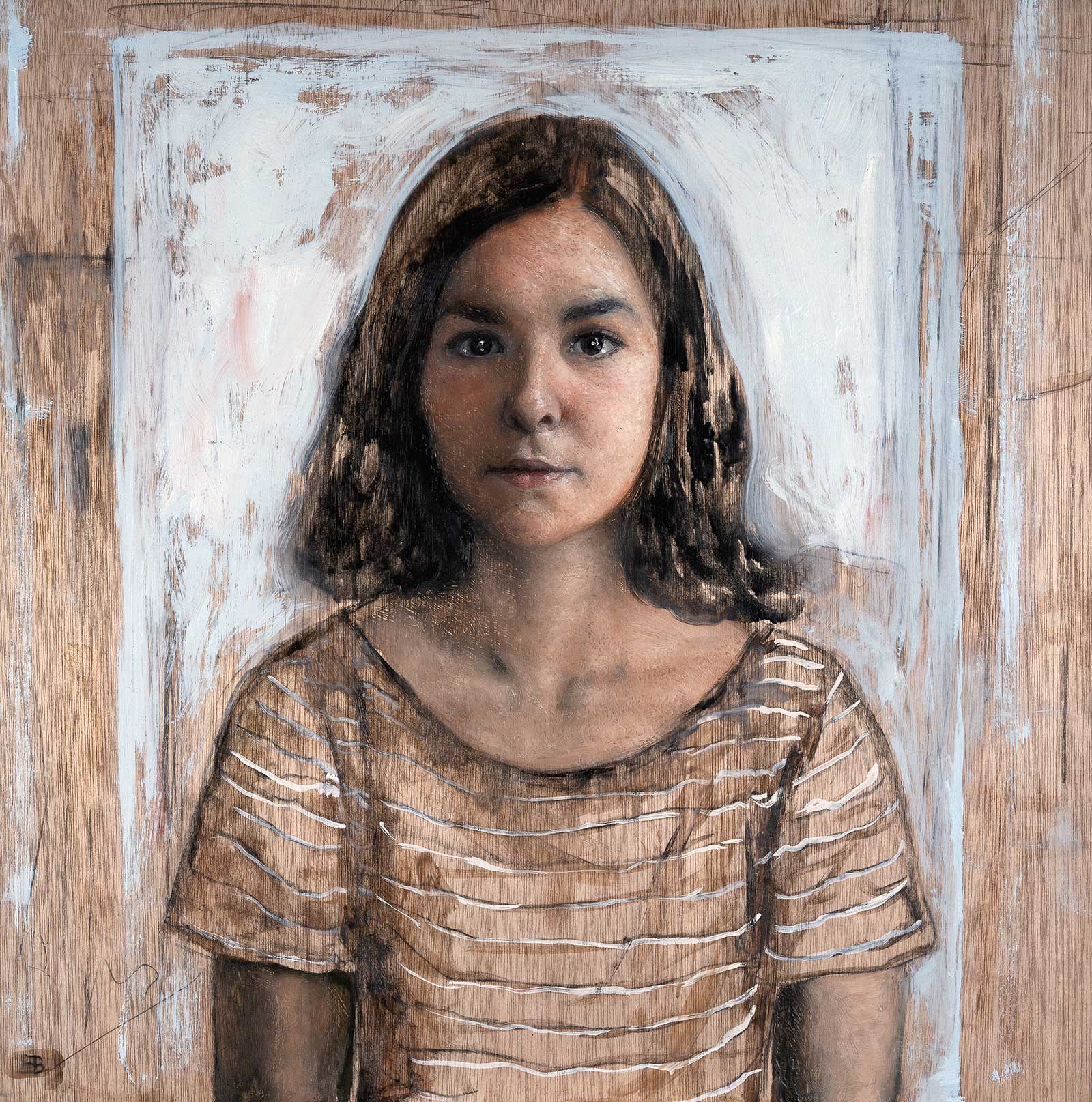
Francisco Benitez, Lucille, encaustic on panel, 24 x 24"
Trained as an oil painter, Lora Murphy taught herself how to use encaustic from a book because there weren’t any workshops or classes available in her native Ireland. Today, she has filled that void, teaching workshops abroad and in the United States. “Working with the encaustic medium remains captivating due to its unique textural possibilities and the depth it adds to each piece of artwork,” she says. “The process of heating and layering wax imbues the work with a rich, luminous, tactile quality that cannot be achieved with other mediums. Moreover, the unpredictability of wax allows for a play of light and color that continually inspires experimentation and discovery. Each piece is not just painted but sculpted and crafted, making the creative process deeply immersive and endlessly variable.”
Like all artists who work in the medium, Murphy notes the unparalleled luminosity of encaustic paint, due to its highly refractive properties, and a depth and richness that is impossible to find in any other medium. They also emphasize that these qualities do not translate in images of encaustic paintings—like all art, but perhaps this medium especially, it needs to be experienced in person. “The magic of encaustic is that it lends itself to so many styles of painting,” says Murphy. “I am a very painterly artist and I see my process as pure painting but my paint just happens to be hot.” She mixes her colors directly on the hot surface and fuses them with an iron or a torch.

Bridgette Meinhold, Mine Forever, encaustic, 46 x 48"
“The ancient origins of the encaustic medium add a particularly fascinating layer of depth to working with it,” adds Murphy. “Knowing that this technique dates back to antiquity, notably used by Greek and Roman artists, working in Egypt. for portraits and panel paintings, creates a profound connection to history. This sense of continuity from the past brings an added dimension to the creative process, as it feels like participating in a long, storied tradition of craftsmanship and expression. Moreover, the durability that made encaustic paintings endure for millennia highlights the medium’s timeless quality, inspiring confidence that the art created today can similarly withstand the test of time.”
Murphy has always been drawn to painting the human figure in general and the face in particular. “The ability to build up, carve away, or layer translucent waxes allows for a dynamic expression of human forms and emotions,” she says. “The tactile nature of encaustic painting can make figurative works feel more intimate and personal, as the texture adds a physicality that echoes the visceral experience of human interaction.” Magdalene is Murphy’s response to the stories of the young women incarcerated in the Magdalene Laundries in Ireland. “The medium became a powerful means of transforming the feelings of helplessness and anguish at the plight of these women and an attempt to give life to their stories,” she explains.
The myths and legends of Ireland are recurring themes in Murphy’s work and reappear in Vigilant,one in her series of ravens, which in Celtic lore are often seen as powerful and mystical creatures, and symbols of transformation and change. “Encaustic…allows artists to delve deeply into their chosen themes, enhancing both the process of creation and the impact of the final piece,” she says. “The medium itself encourages a blend of precision and spontaneity, which can be particularly evocative when exploring the complex narratives of natural or human landscapes. Encaustic seems to be the perfect vehicle to describe these characteristics.”
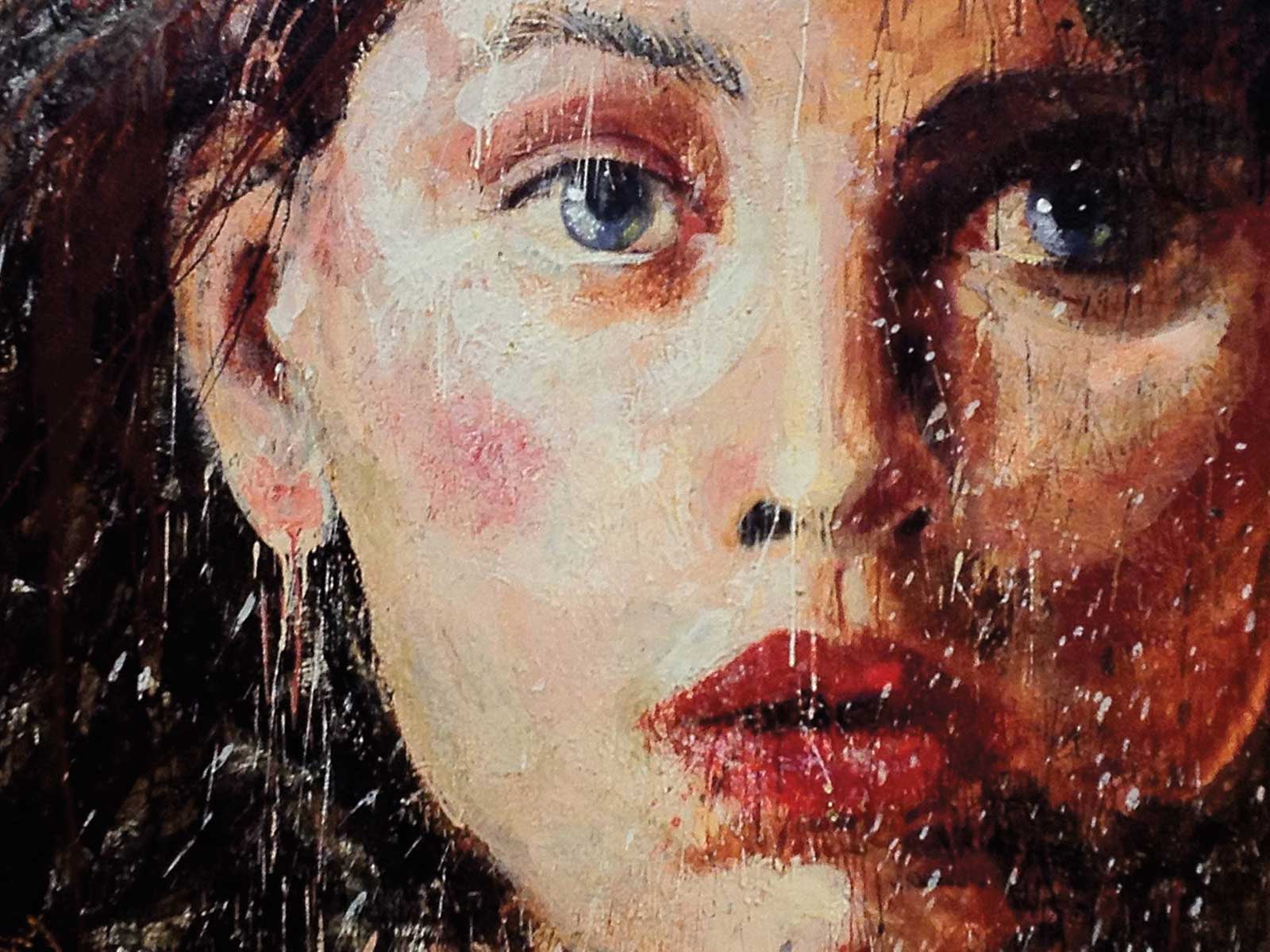
Lora Murphy, Magdalene, encaustic 48 x 36"
Bridgette Meinhold lives in an A-frame cabin at 8,600 feet outside of Park City, Utah. Drawing from her intimate immersion in the natural world, Meinhold creates ethereal, atmospheric landscapes of the Mountain West. She first saw encaustic paintings in 2009 and was intrigued by the materials. She took an encaustic workshop soon after and fell in love with the medium’s possibilities.
She paints a base layer of encaustic on wood panel and then use pigment sticks for color, and casein paint to create the mountains and the trees. When dry, she adds as many as 25 layers of encaustic wax overtop, using a torch and scraping tools to make each layer smooth, while building atmospheric depth.
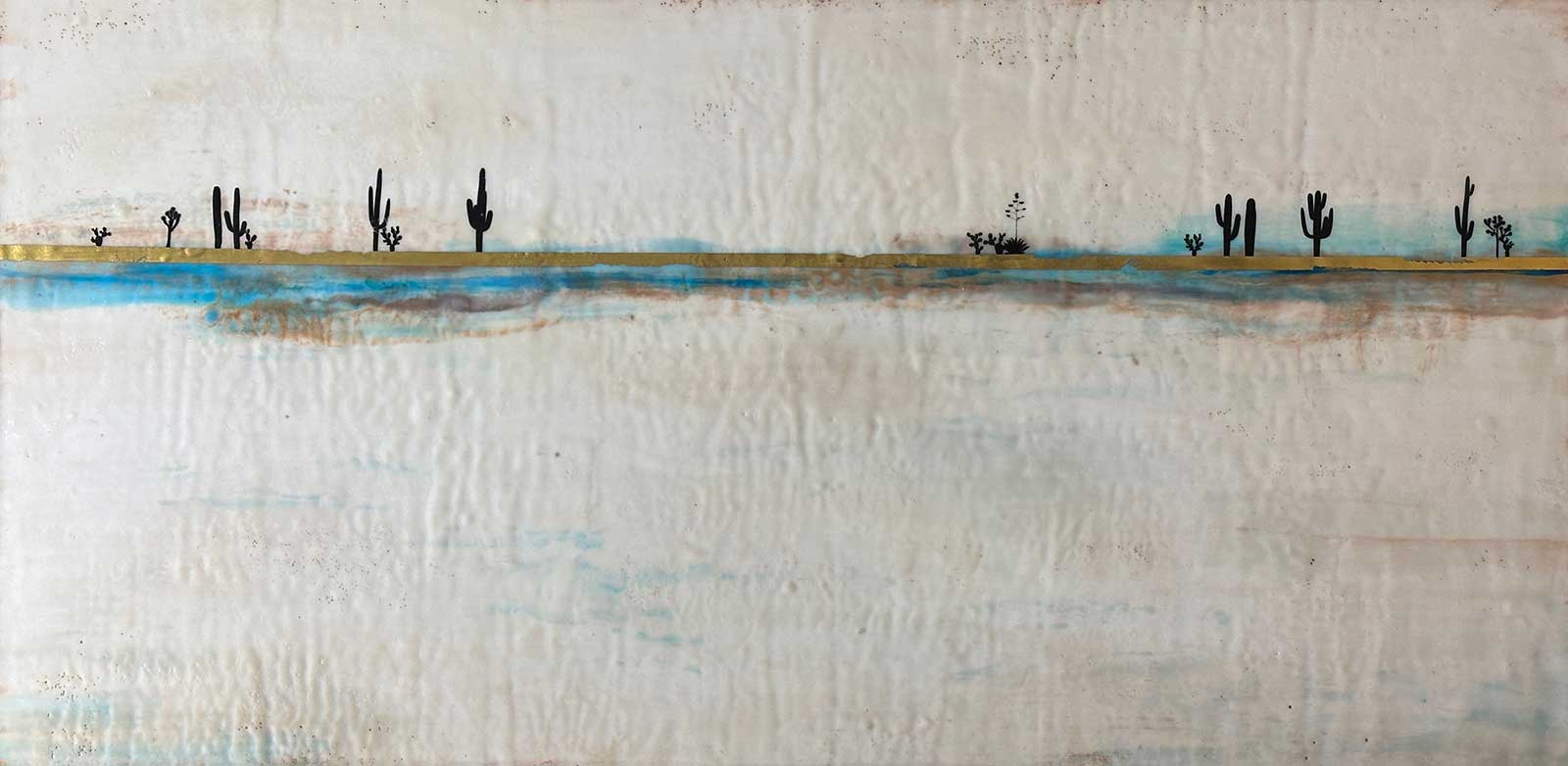
Shari Lyon, Clean Aire, encaustic, 24 x 28"
She appreciates the medium’s ancient roots which speaks to its durability, but likes encaustic more for its inherent qualities than its history.
“I can’t create this kind of depth with any other material,” she says. “I appreciate the fact that, how I work with encaustic, there is no going back, only moving forward. Once something is created in wax, I can’t fix or change it, so I have to keep going. My process has taught me to not be too precious, to let go of perfectionism, and to keep painting. As I am painting landscapes, I feel that there is no need to be perfect anyway as the natural world is organic and perfectly imperfect, so I am glad to have a process that won’t allow me to worry about achieving any sense of perfection.”
Shari Lyon is another artist who applies the medium of encaustic to landscapes, and whose intrigue with the medium is in large part connected to its history. When Lyon sees Fayum portraits in museums today, she feels connected to that history as well.
“About 11 years ago I saw an encaustic piece in a gallery and it brought me to tears,” she says. “I find so much joy and satisfaction in working with such an ancient technique. Carrying on the tradition in my little way. Encaustic has a dreamy, ethereal quality about it that is hard to duplicate in any other medium. It’s very organic—and smells great. I love working with the softness of the wax, it can be so smooth, or so textured…and let’s be real, who doesn’t love playing with fire?”
Trees, their symbolism and imagery, are the main source of Lyon’s inspiration. “Trees are stoic, grounded, healing and lasting; they are a calming and meaningful subject,” she says. “Trees, with their deep roots and reaching branches, symbolize the strength, nurturing qualities and wisdom often associated with the feminine. I like to call my paintings ‘dreamscapes’ instead of landscapes. Inspired by myths, legends and the natural world, my work is a visual exploration of the symbolic significance of trees. Though Coastal and Heaven’s Gate are very different, my work is all a story of the tree.” —
Powered by Froala Editor