Some of the most renowned historic American artists worked in pastels, although they might be more closely associated with a different medium. While Mary Cassatt (1844-1926) may conjure images of impressionistic oil paintings with loose, feathery brushwork, she was also an avid pastelist.
Most artists of the era made pastel sketches as preparation for paintings but Cassatt saw them as finished works, and included them in her exhibitions. Her richly-worked, dynamic pastel Mother in Purple Holding her Child—which fetched $560,000 in a 2020 auction at Sotheby's—is a prime example of Cassatt’s style and signature subject matter. Dated circa 1914, this pastel is among the very last works that Cassatt created. After recovering from grief over her lost brother and ill health, there was only a brief period when she worked again, before giving up art-making for good.
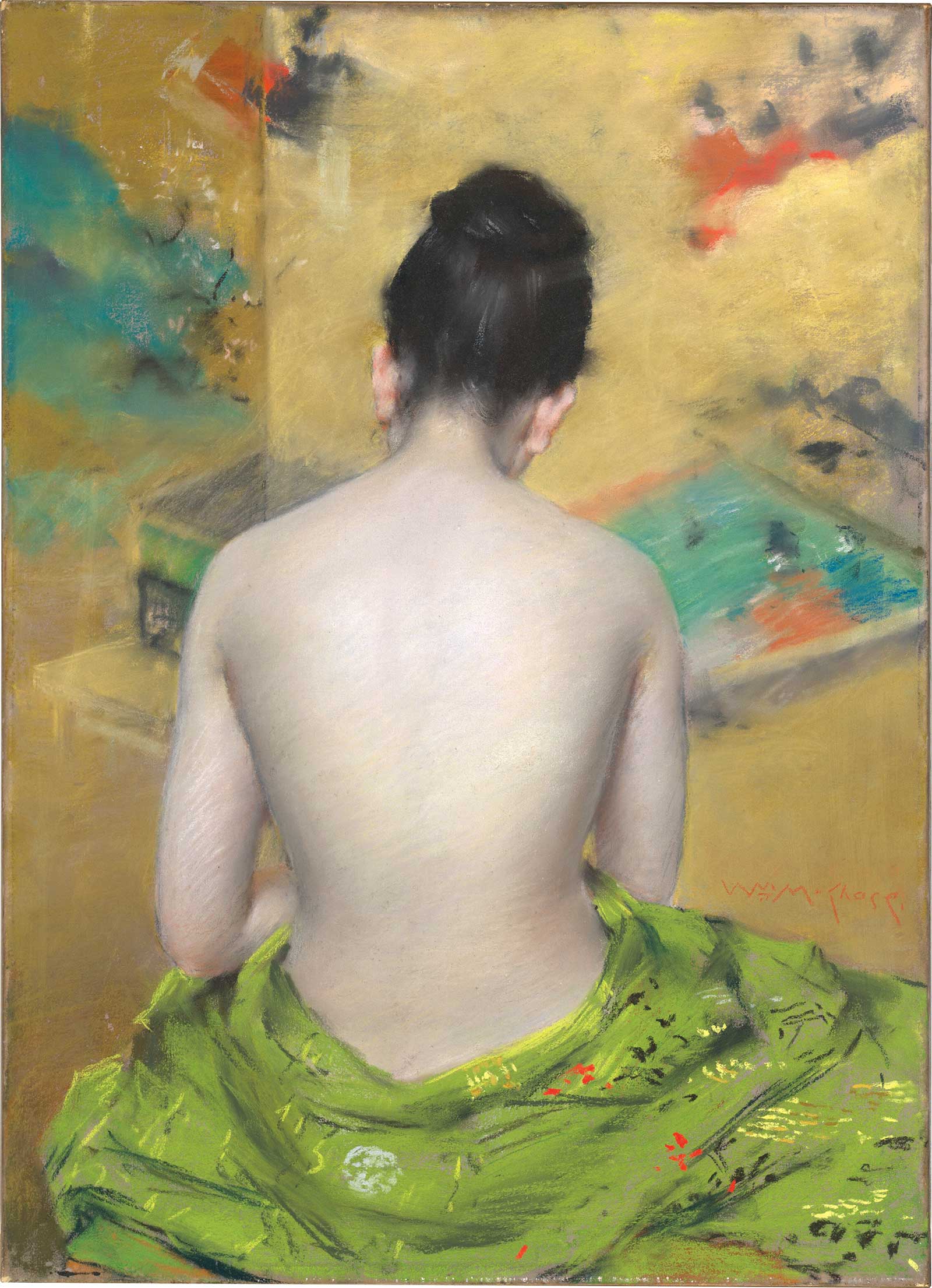
National Gallery of Art, Study of Flesh Color and Gold, 1888, pastel on paper coated with mauve-gray grit (on strainer), 18 x 13”, gift of Raymond J. and Margaret Horowitz, by William Merritt Chase (1849-1916).
Despite her failing health, Cassatt’s final pastels garnered great praise and the artist herself felt they were among her best work, “more freely handled and more brilliant in color,” as she is quoted writing in E.J. Bullard’s book Mary Cassatt, Oils and Pastels.
In her last productive years as an artist, Cassatt worked exclusively in pastel because they weren’t as physically taxing as oils, and she found their soft, velvety qualities especially suitable for portraits of children. Her final pieces are distinguished by ever brighter colors (such as the vivid blue of the mother’s dress in Mother in Purple Holding her Child) and fiercely energetic brushstrokes.
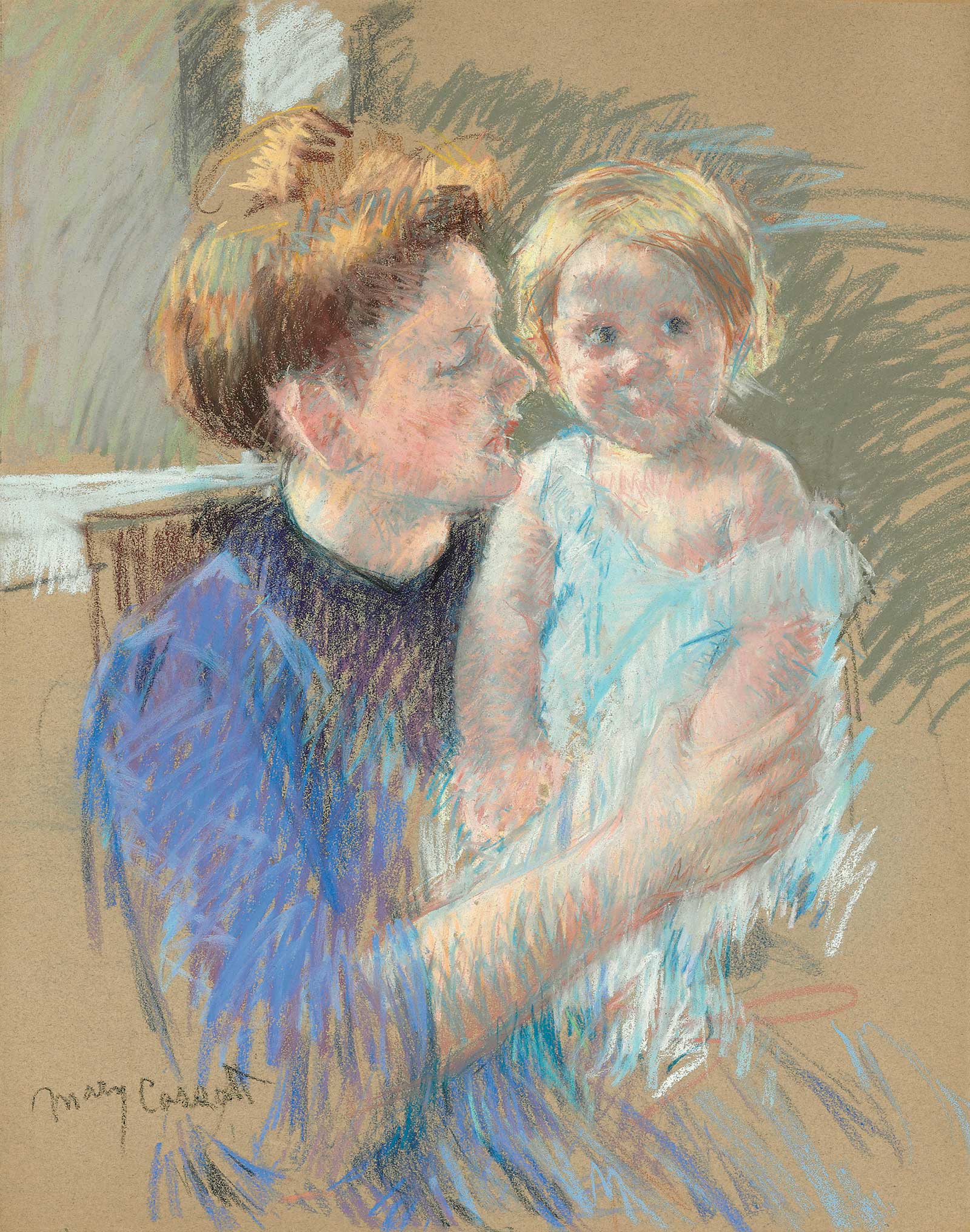
Mary Cassatt (1844-1926), Mother in Purple Holding her Child, ca. 1914, pastel on buff paper laid down on board, 28¼ x 22¼”, signed lower left: ‘Mary Cassatt’ . Photo courtesy Sotheby's.
Cassatt’s contemporary William Merritt Chase (1849-1916), well-known as an oil painter, was unsurpassed in his mastery of pastels as well. “In his adept hands, pastel’s chalky matter rivaled the authority of oil paint, though with greater receptivity to light and an unmatched velvety texture,” notes the National Gallery of Art, which houses Study of Flesh Color and Gold, 1888, a dense pastel exhibiting elements of the Japanese aesthetic that was fashionable at the time. Chase was also responsible for founding the Society of American Painters in Pastel in 1882, which counted John Henry Twachtman, Childe Hassam and Robert Reid among their member artists.
New York City-based artist Ken Goshen provides an example of a contemporary application of pastels with Moore, a piece from his Challahseries. His paintings bring together classical techniques and contemporary outlooks, striving to bridge the gap between tradition and progress.
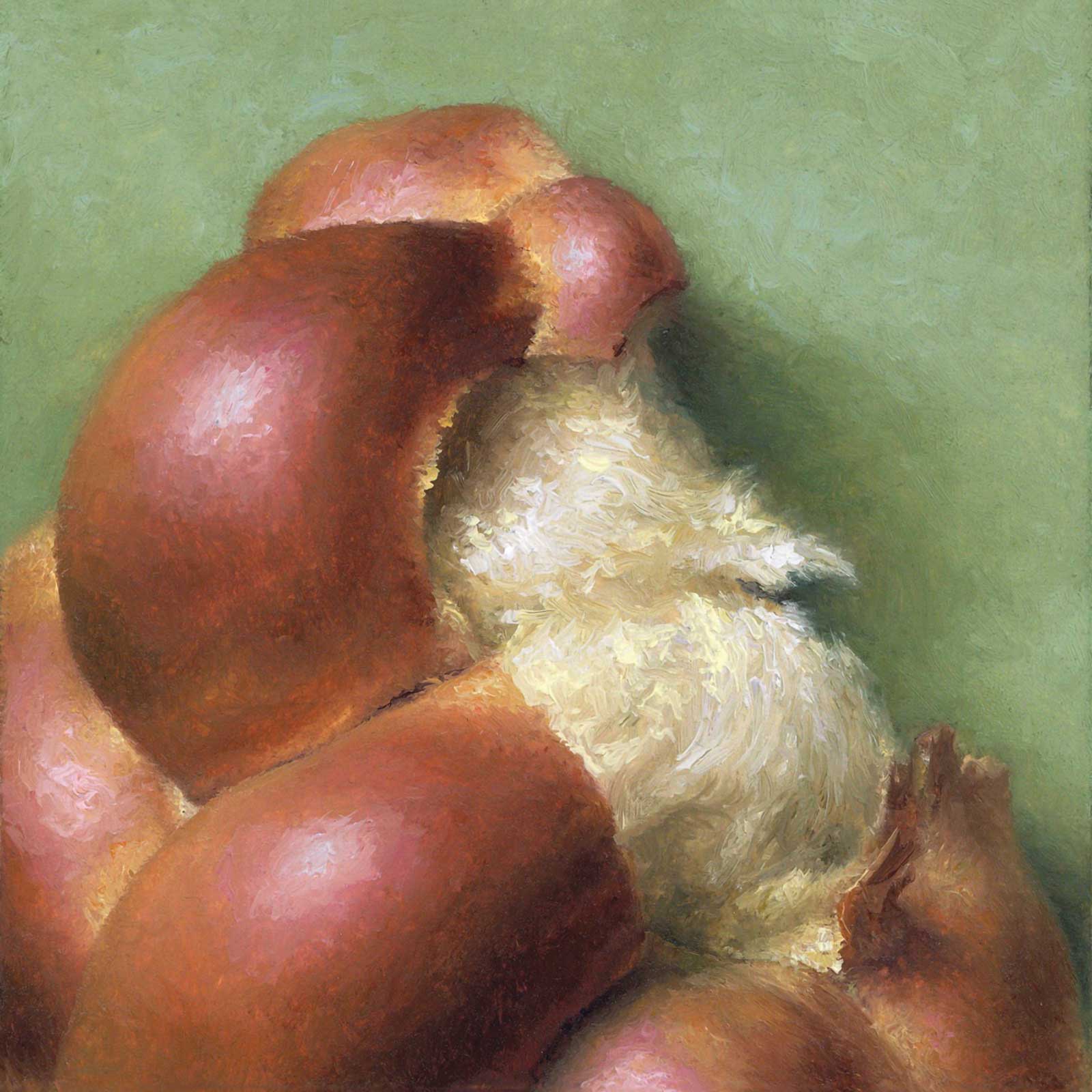
Ken Goshen, Moore, 2019, oil on paper, 8 x 8”. Private collection.
Today, many other contemporary artists and galleries, along with societies and art events dedicated to pastels, are keeping the medium alive and vibrant as ever.
In the remainder of this section, you will learn more about this versatile, enduring medium, top pastel artists, as well as the galleries and shows where you can find their work.
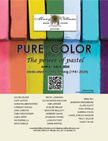
After hosting numerous national pastel groups, Mary Williams realized her gallery Mary Williams Fine Arts, in Boulder, Colorado, had never mounted a pastel show featuring their own strong group of pastelists—until now. The juried exhibition PURE COLOR! will open June 6 and remain on view through July 6. Among the gallery’s featured artists are talented pastelists Kim Lordier, Mike Ray, Maryann Mullett and many others. “We will also proudly feature 10 nationally recognized ‘guest artists’ from around the country,” says Williams. In all, 26 top-notch artists will be represented in the show.
“Pastel is a rich and strong medium that has truly come into the spotlight during my 40-year tenure as an art dealer,” says Williams. “I have watched these men and women hone their skills over these many years and the quality has never been higher within this discipline. I encourage everyone to consider adding pastels to your collection.”
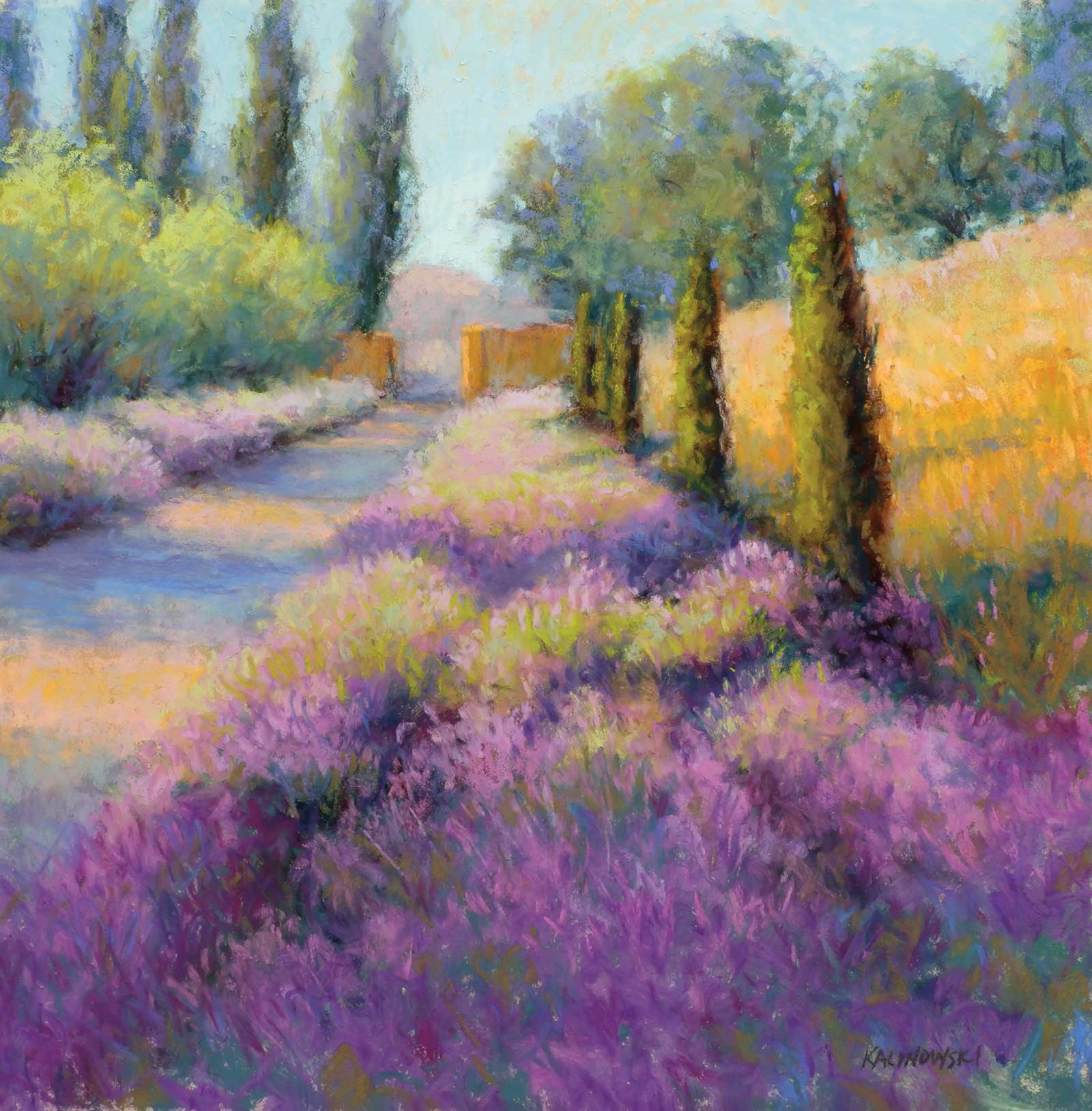
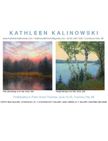
Kathleen Kalinowski, Lavender Day, pastel on paper, 12 x 12”
Kathleen Kalinowski is a contemporary impressionist painter captivated by the light, atmosphere and colors of the landscape. She started her fine art career more than 30 years ago, using pastel as her first medium. “Pastel is a convenient medium to use while learning the elements of painting the landscape while raising a young family,” says Kalinowski. She immediately fell in love with pastel, learning to apply the dry medium in soft layers, giving her work a luminous, impressionistic quality. In 1997, she helped to establish the Great Lakes Pastel Society, making her a charter member and the current vice president. “The mission of the society is to promote awareness for the medium and to provide artists with professional growth and exhibit opportunities,” she says. “Over the years, the pastel medium has exploded with popularity. The vibrant, pure pigment draws in collectors offering another exciting medium to add to their art collections.”
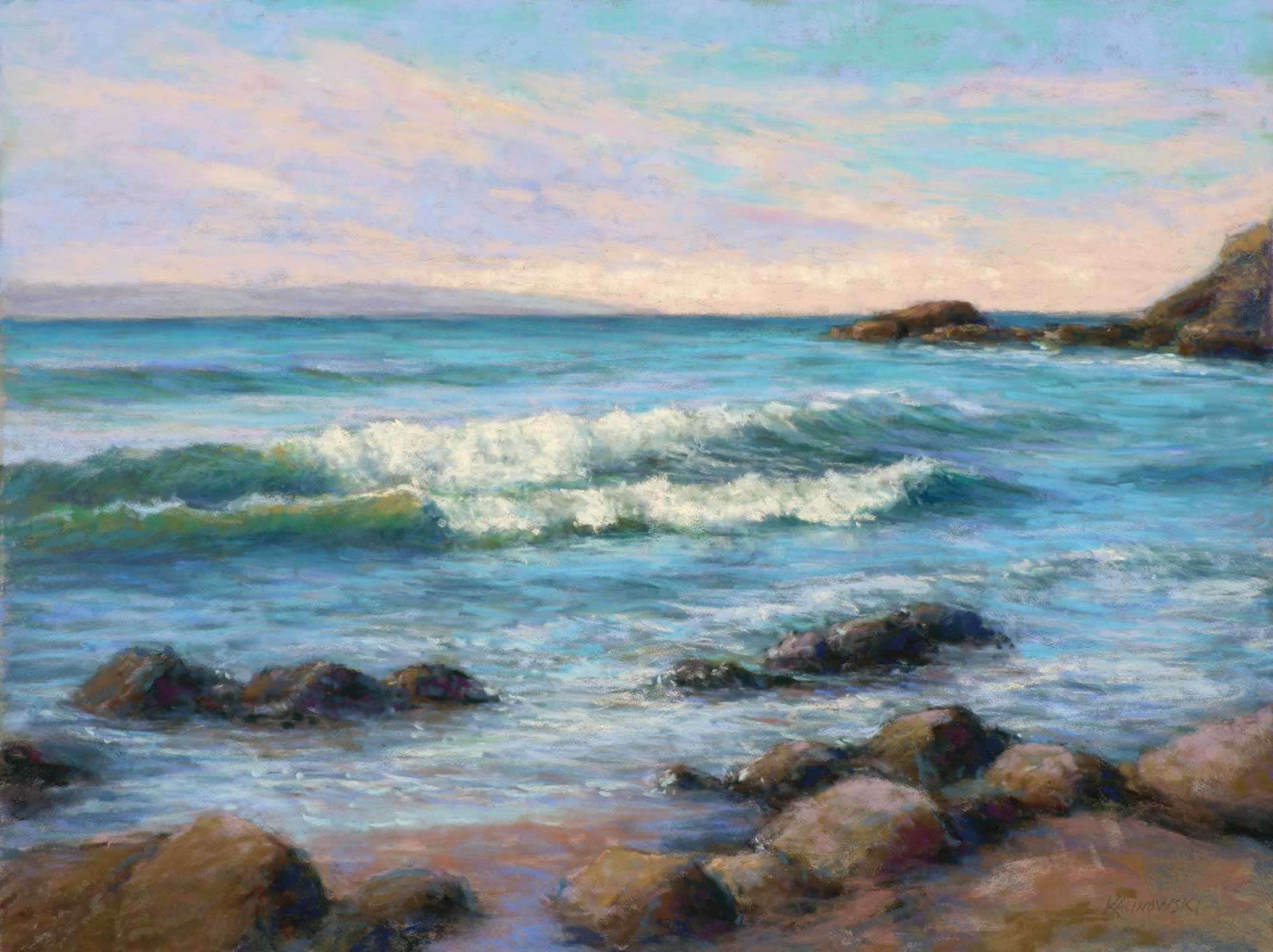
Kathleen Kalinowski, Rocky Shore, pastel on paper, 12 x 16”
“The landscape is changing. The family farm is disappearing and factory farms are the replacement,” says artist Roberta Condon. “Soon wooden barns and pastured animals will be a vision of the past, documented only by photographs lovingly preserved in family albums and by artists driven to capture these scenes.” Condon grew up in Northern Illinois on farmland kept in the family for generations. “I had to witness it be subdivided and sold to housing developers in my teens and eventually lost the original homestead later in life,” she says. Her American Pastoral series, two examples from which are featured here, documents these disappearing scenes. Twenty-six of these paintings, as well as her book about the loss of the family farm, are in the permanent collection of Barton College as a historical document. “These images are seen through the eye of an artist with a loving relationship to the land,” she adds.
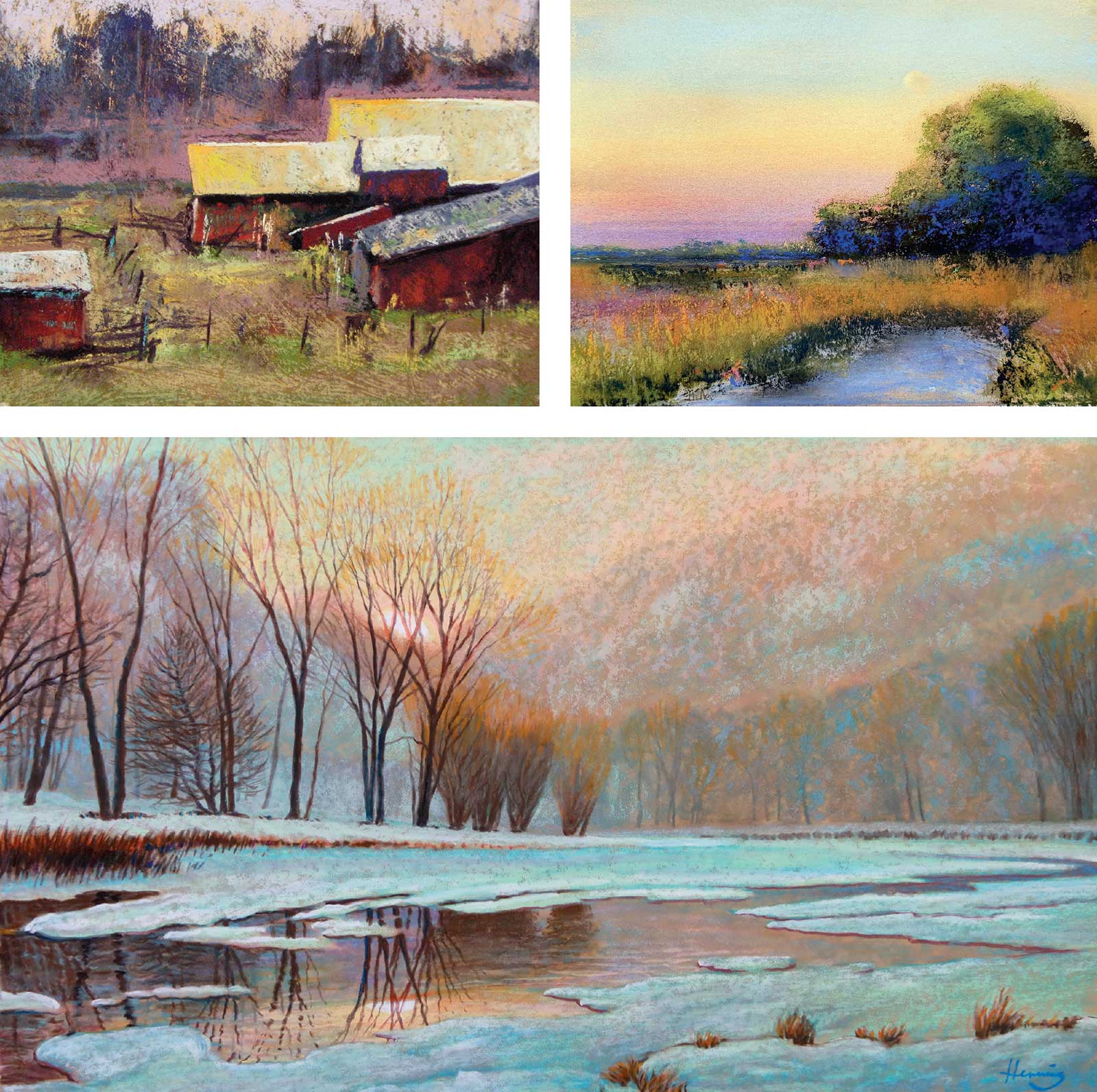
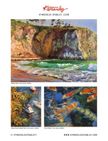
Top: Mary Williams Fine Art, Places I Remember, pastel, 9 x 12”, by Mike Ray; Mary Williams Fine Art, Salt Marsh, pastel, 9 x 12” by Eveline Miller. Bottom: Stephen Henning, Spring Thaw, oil pastel, 18 x 30”
Artist Stephen Henning is inspired by natural landscapes and unspoiled wilderness. “I strive to create uplifting impressionist images that bring a sense of being closer to nature and help make the spaces where we live and work more soothing, calm and joyful,” he says. His advice for collectors is to research what is available in your price range, and “get to know the artist and what inspires them to create. Above all follow your heart and don’t let others talk you into buying something you’re not sure of.”
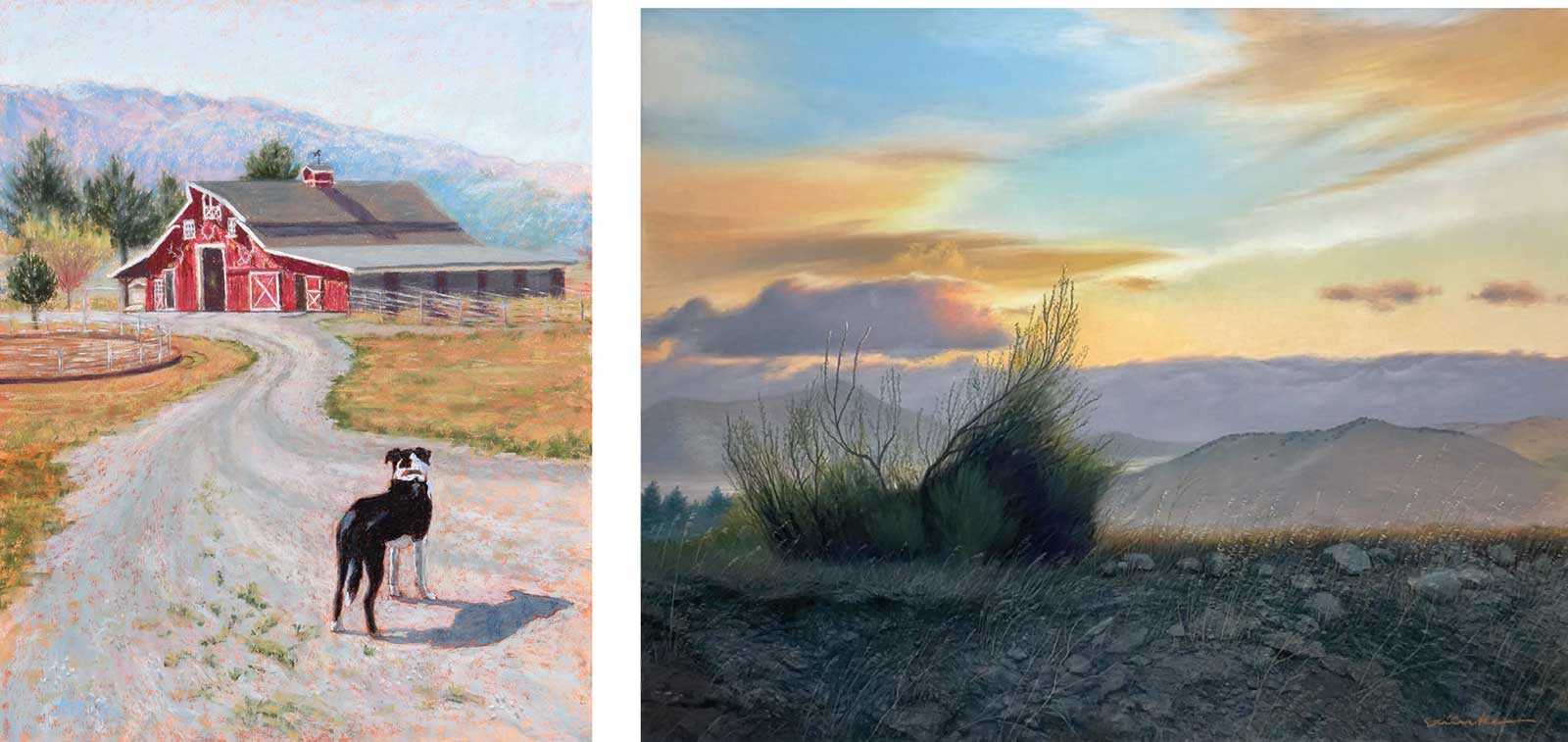
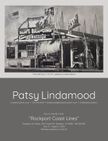
Tehachapi Arts Commission, Home Sweet Home, pastel, 20 x 16” by Lynn Attig. Courtesy of the Tehachapi Arts Commission.; Tehachapi Arts Commission, Tehachapi Dawn, pastel, 16 x 20”, by Otto Sturcke. Courtesy of the Tehachapi Arts Commission.
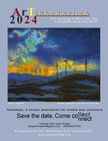
Over the last four years, Tehachapi, California, located in the Kern County mountains, has become a destination for plein air artists from across the country. In May, 50 nationally known artists attended the Art 2024 Tehachapi paint-out sponsored by the Tehachapi Arts Commission, many for the fourth time. They spent several days painting and sketching Tehachapi’s picturesque downtown, scenic vistas, ranches, wild horses and vineyards. Their finished work was submitted and juried into the Art 2024 Tehachapi show to be held in Tehachapi from July 19 through July 21.
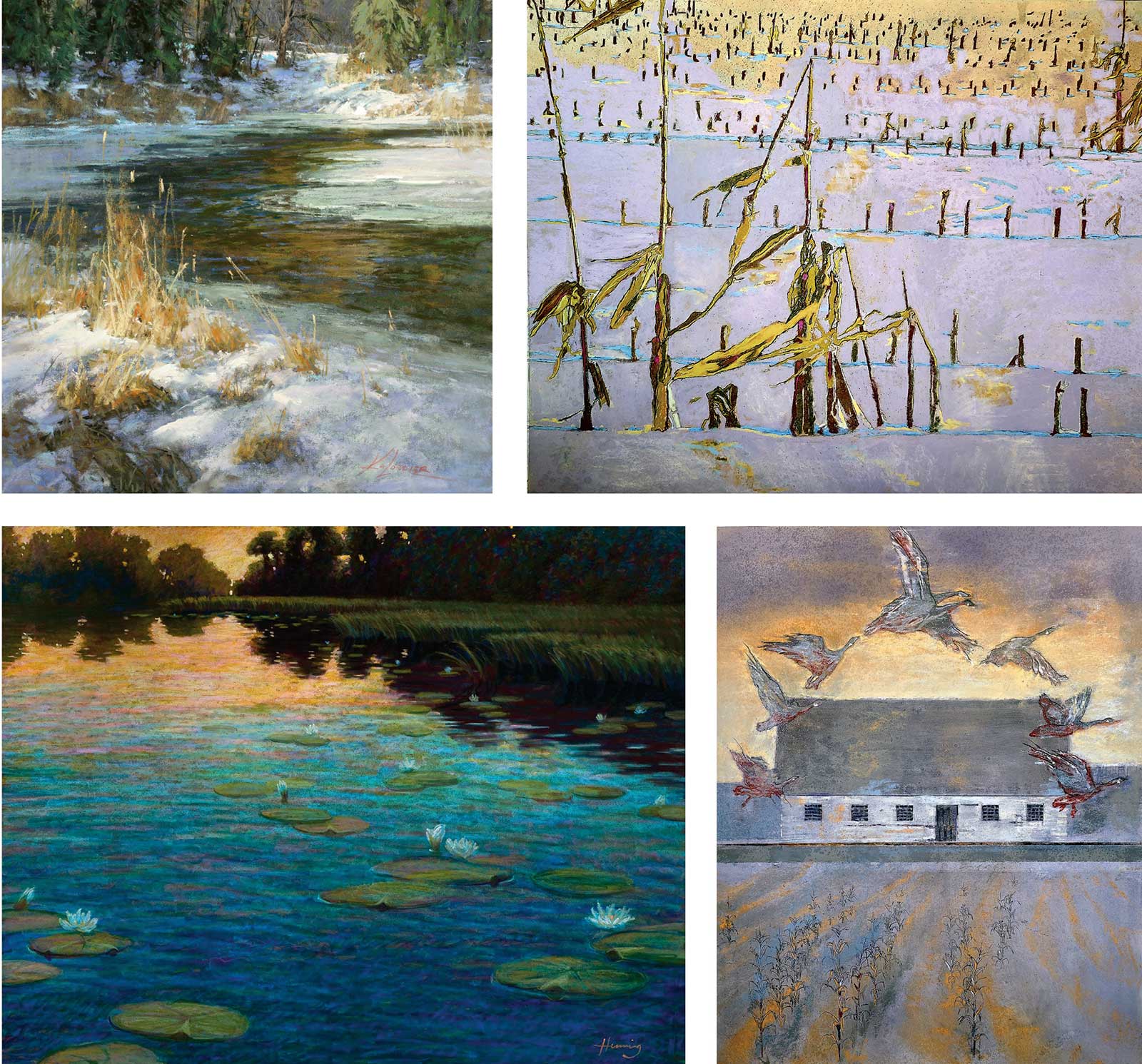
Top: Mary Williams Fine Art, Like Glitter and Gold, pastel, 16 x 16”, by Kim Lordier; Roberta Condon, Remnants of Harvest, pastel, 32 x 40” . Bottom: Stephen Henning, Evening in Glendalough, oil pastel, 29 x 39”; Roberta Condon, A Halo of Geese, pastel, 40 x 32”
Two well-known pastel artists are among those returning in 2024. Lynn Attig, co-founder and board member of the Pastel Society of Southern California, spent her childhood in Washington, sketching while watching her horse. In 2014, the family moved to California’s Central Coast where Attig’s first solo pastel show, The Still Wild West, was a resounding success. She started her pastel Home Sweet Home during the Art 2023 visit to the Milano Ranch. “Five herding dogs live and work among the ranchers and cattle,” says Attig. “One of the dogs, named Parker, was exceptionally friendly with the visiting artists. In a sweet moment, I caught Parker looking wistfully up the road toward the red barn on the homestead and just had to paint it.”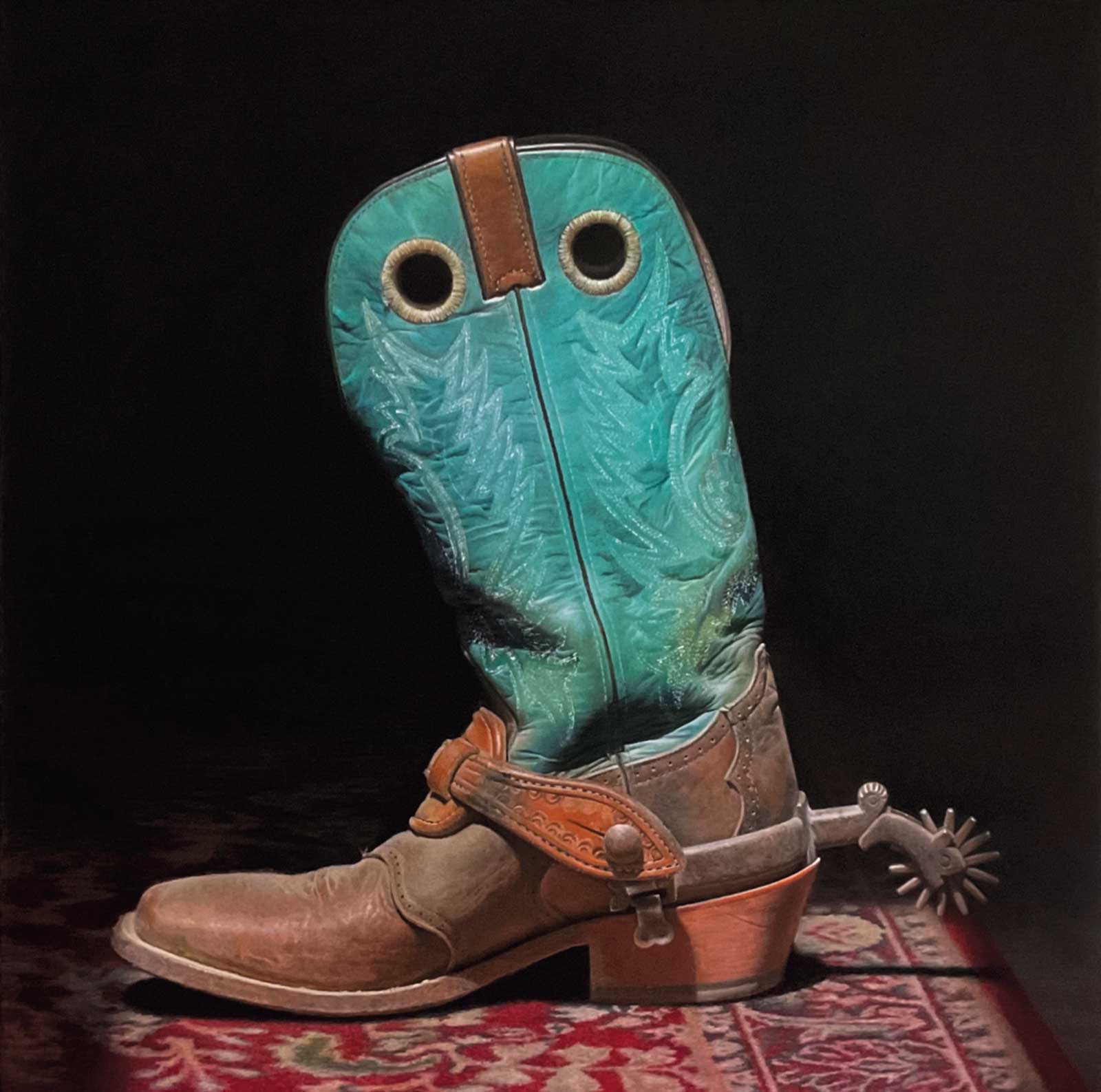
Tehachapi Arts Commission, The Milano Boot, pastel on board, 18 x 18” by Otto Sturcke. Courtesy of the Tehachapi Arts Commission.
Pastel artist Otto Sturke has participated in Art Tehachapi since its inception. He has been named a master pastelist by the Pastel Society of America and won Best of Show at Art 2021 Tehachapi with his pastel still life Camelias. At the 2023 show, he was awarded Best Still Life for The Milano Boot. At the Milano Ranch, Sturcke noted a few pair of boots in the barn. “Tempted to paint several of them, I decided to render a portrait of one boot and capture its character in the natural morning light softly flooding the room,” he recalls. “The complementary colors of the boot neutralized by the years of dust and wear made for a memorable subject.” Tickets and more information about Art 2024 Tehachapi are available at www.artstehachapi.org. —
Featured Artists & Galleries
Kathleen Kalinowski
Comstock Park, MI
kalinowskifineart@gmail.com
www.kathleenkalinowski.com
Ken Goshen
www.kengoshen.com
Mary Williams Fine Arts
5311 Western Avenue, Unit 112
Boulder, CO 80301
(303) 938-1588
www.marywilliamsfinearts.com
Roberta Condon
www.robertacondon.com
Stephen Henning
22399-A Oak Hill Road NW
Evansville, MN 56326
(218) 948-2288
stephen@stephenhenningfineart.com
www.stephenhenningfineart.com
Tehachapi Arts Commission
Dwight and Laura Dreyer
(626) 945-3753
dreyerfinearts@gmail.com
www.artstehachapi.org
Powered by Froala Editor