For millennia humans and horses have been linked. They’ve been our great companions through war and crusades, through the advent of agriculture, through times of joy and leisure. Horses were thought to have first been domesticated around 3500 BCE, likely in southern Russia and Kazakhstan, and later brought to the ancient Near East about 1,200 years later. “The adoption of the horse was one of the single most important discoveries for early human societies. Horses and other animals were used to pull wheeled vehicles, chariots, carts and wagons and horses were increasingly used for riding in the Near East from at least [circa] 2000 BC onwards,” according to the British Museum. In the United States, it wasn’t until the early 20th century that people gradually transitioned from horse-drawn carriages to automobiles as their primary form of transportation. As one of the first domesticated animals in the world (perhaps the first), we’ve had a fair amount of time to form a bond with these beasts, because the connection between humankind and horses isn’t purely utilitarian—far from it. To this very day, all kinds of people—ranchers, cowboys, cowgirls, farmers, schoolchildren, office workers—ride, care for and work with horses for the sheer joy of it. For the love of their horses.
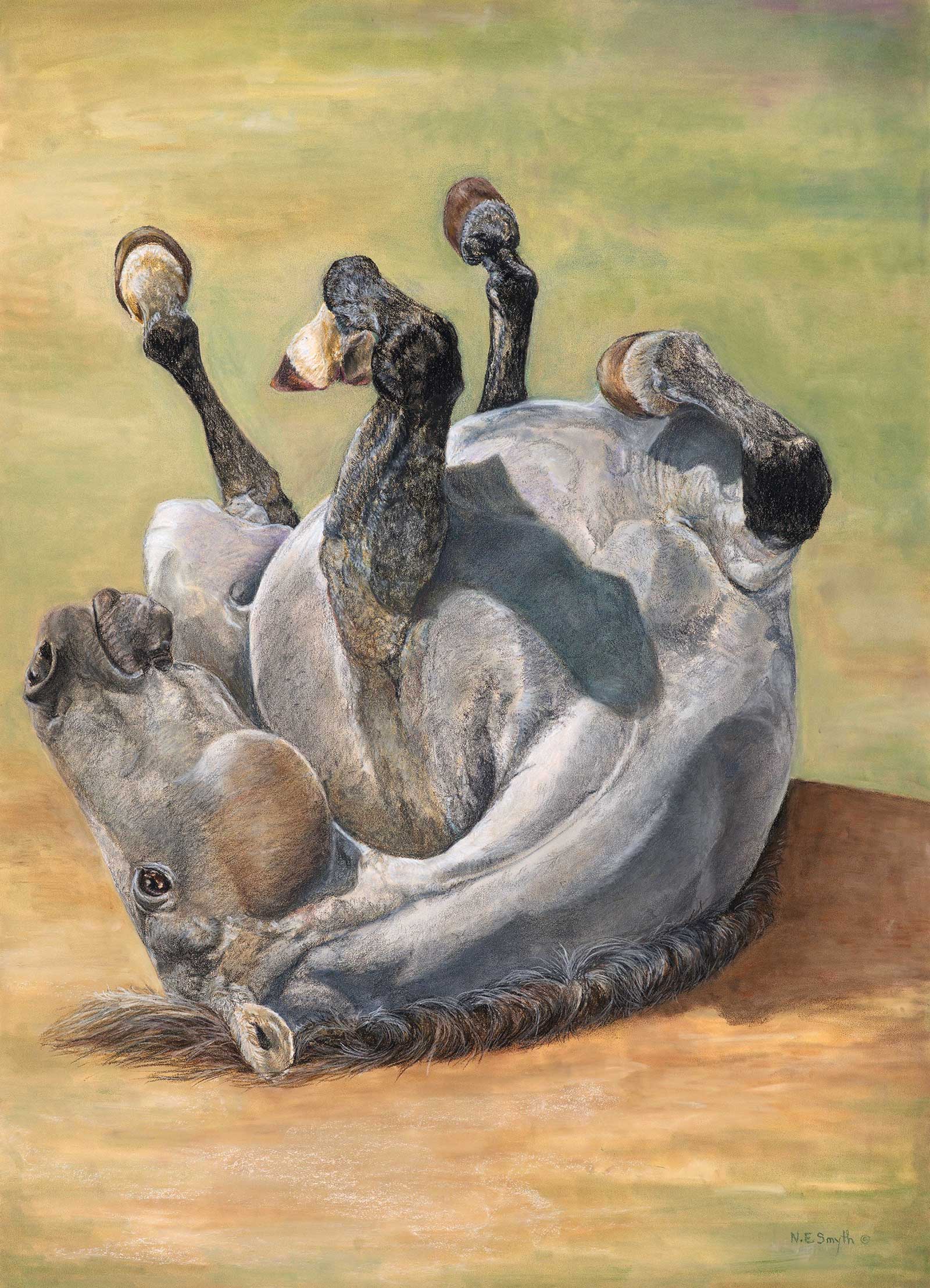
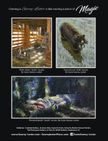
Nancy Smyth, The After Bath, pastel, 37 x 29”
So, of course, it’s no wonder that through the centuries, we’ve seen depictions of horses over and over again in art. We see them in the earliest murals thousands of years ago, in the artwork of the great Renaissance painters like Leonardo da Vinci and Raphael, in 19th- and 20th-century sporting art, all the way up to modern day artists. Military art throughout the ages often depicted the horse as well—in the tumultuous heat of cavalry battles and as the trusty steeds of medieval knights. And undoubtedly one of the most challenging aspects of capturing the horse rests with getting the anatomy just right. It’s a feat that takes years of technical practice and close observation of these unique creatures. Painted around 1635, Spanish master Diego Velázquez’s A White Horse (or Caballo Blanco) deftly captures the weight, force and precise musculature of the equine form, as well as the purity and nobility associated with white horses. The piece is also massive, measuring about 10 by 8 feet, further contributing to its grandiosity. Another excellent depiction of an ivory horse is Albert Bierstadt’s White Horse and Sunset, a detailed study over a completed landscape that celebrates the romanticism of this dignified animal.
To this day, our bond with horses continues to run deep. It will likely also come as no surprise that many present-day artists who paint equine art have horses of their own or have been around horses for most of their lives.
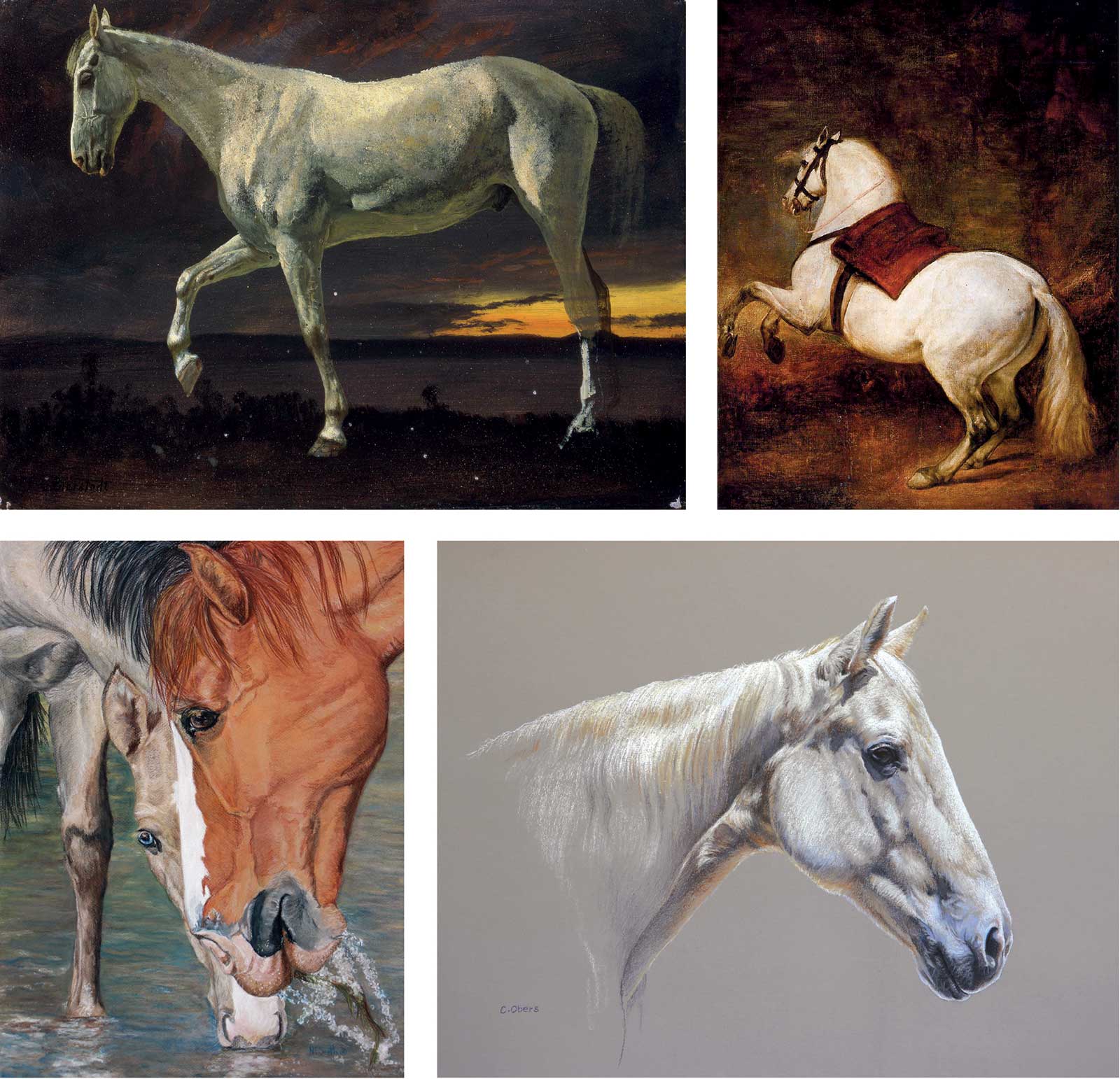
TOP: Albert Bierstadt (1830-1902), White Horse and Sunset, ca. 1863, oil on cardboard, 11½ x 15½”. Public domain; Diego Velázquez (1599-1660), A White Horse, ca. 1634-35, oil on canvas, 120 x 96½”. Public domain. BOTTOM: Nancy Smyth, Salt River Grazing, watercolor, 20 x 16”; Christine Obers, Blue, pastel, 11 x 14”
Continue reading through the pages of this special section to learn more from artists working today who are captivated by the beauty and spirit of the horse.
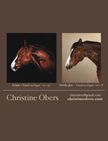
California artist Christine Obershas spent many decades drawing and painting horses. Her lifelong experience with caring for and showing horses is evident in her work. “Horses are social animals with behavior and hierarchies similar to our own,” she says. “I admire their strength and conversely their timid nature. I am fascinated by this dichotomy. Power and fear are relevant in our own society. It is my thought that it is less that horses’ behaviors mirror ours, but more that our behaviors mirror theirs. It is from this point of view that I examine the individual character of each subject I paint. In my portraits of horses, I believe we perceive something of ourselves.” Obers’ commissioned portraits and paintings of horses have won numerous international awards and can be found in private collections across the United States and Canada.
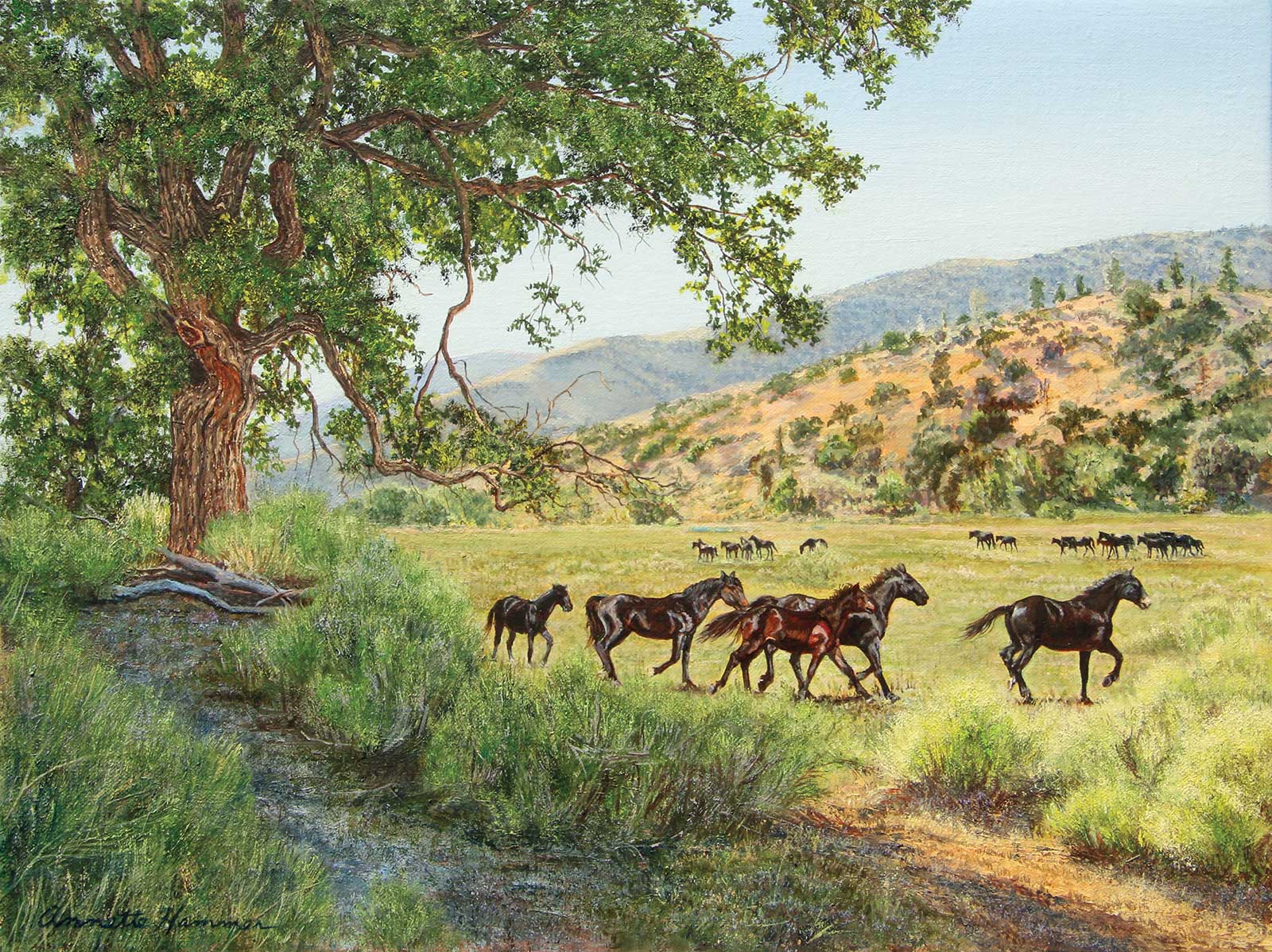
Tehachapi Arts Commission, Mustang Valley, oil, 12 x 16”, by Annette Hammer.
Nearly 50 nationally-recognized plein air artists will flock to Tehachapi, California, this May for the Art 2024 Tehachapi paint-out sponsored by the Tehachapi Arts Commission. And as a creature that has inspired artists for centuries, the art of the horse will be especially prevalent during the annual spring event.
Returning for the fourth year is Annette Hammer,whose love of landscape painting came from traveling with her father, an agriculture teacher, in the San Joaquin Valley and from visiting the western states and national parks. “One of the highlights of the May paint-out in Tehachapi is the [chance] to see the wild mustangs,” she says of her oil Mustang Valley. “The yearlings travel down the valley and back, getting a drink from the blue watering troughs and running to stretch their legs.”
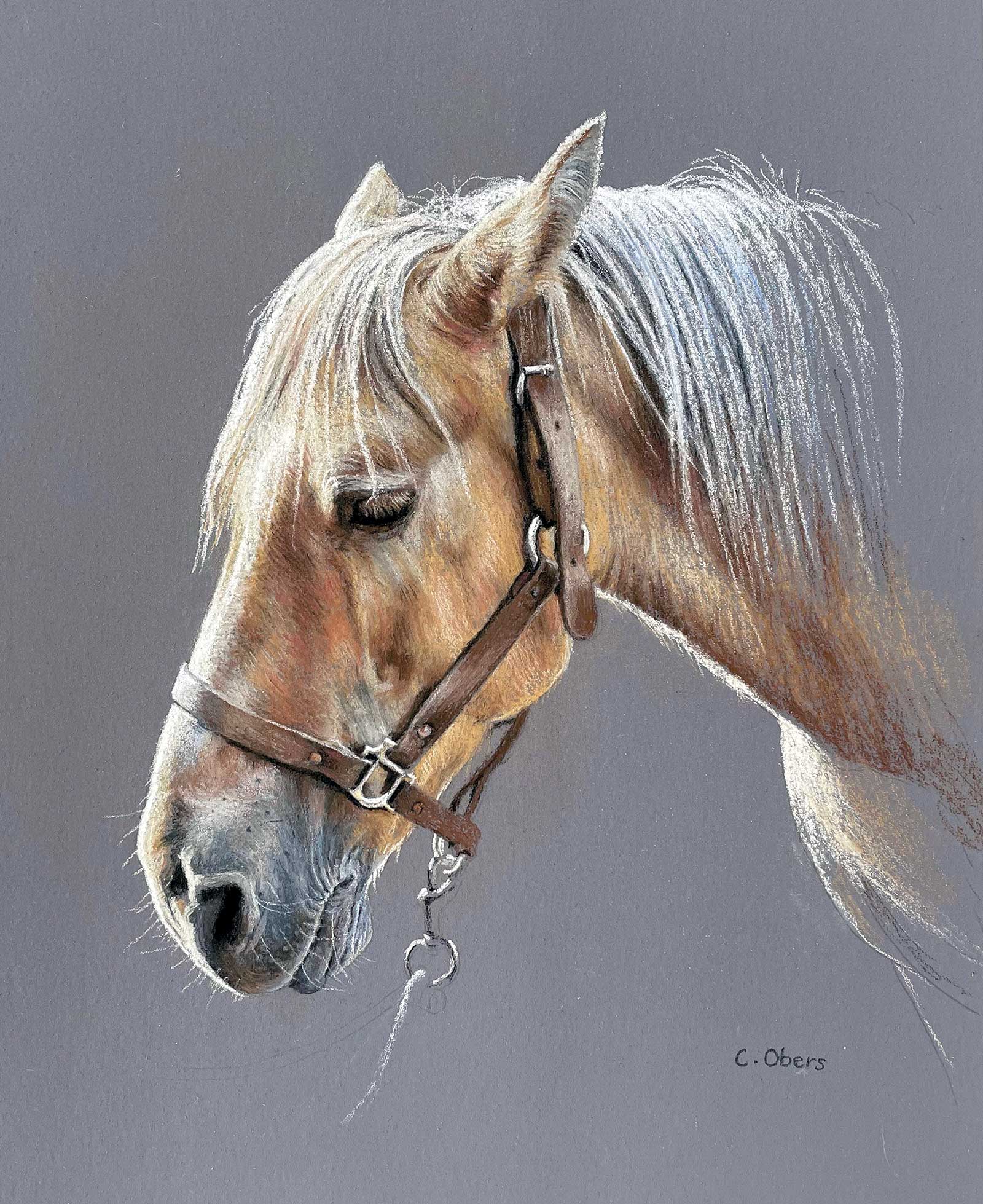
Christine Obers, Ruby, pastel, 10 x 8”
Another participating artist, Chuck Kovacic brings an oil titled On Patrol, depicting two riders on horseback. “One of the charming aspects of life in a rural community is the ability to have access to endless trails and the horses to explore them with,” he says.
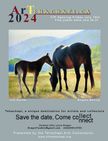
Pastelist Otto Sturcke won Best of Show at Art 2021 Tehachapi with his pastel still life Camellias and Best Still Life in 2023 for The Milano Boot. Influenced by the Dutch Masters, Sturcke seeks to impart his admiration for the classical through his use of light, shadow and texture. Of his piece in the 2024 event, Morgan’s Morning,Sturcke says, “Brimming with morning light, a mare and foal share a tranquil moment that I found endearing. The color contrast between their beautiful coats and the background made for an intriguing subject to capture in soft pastel.”
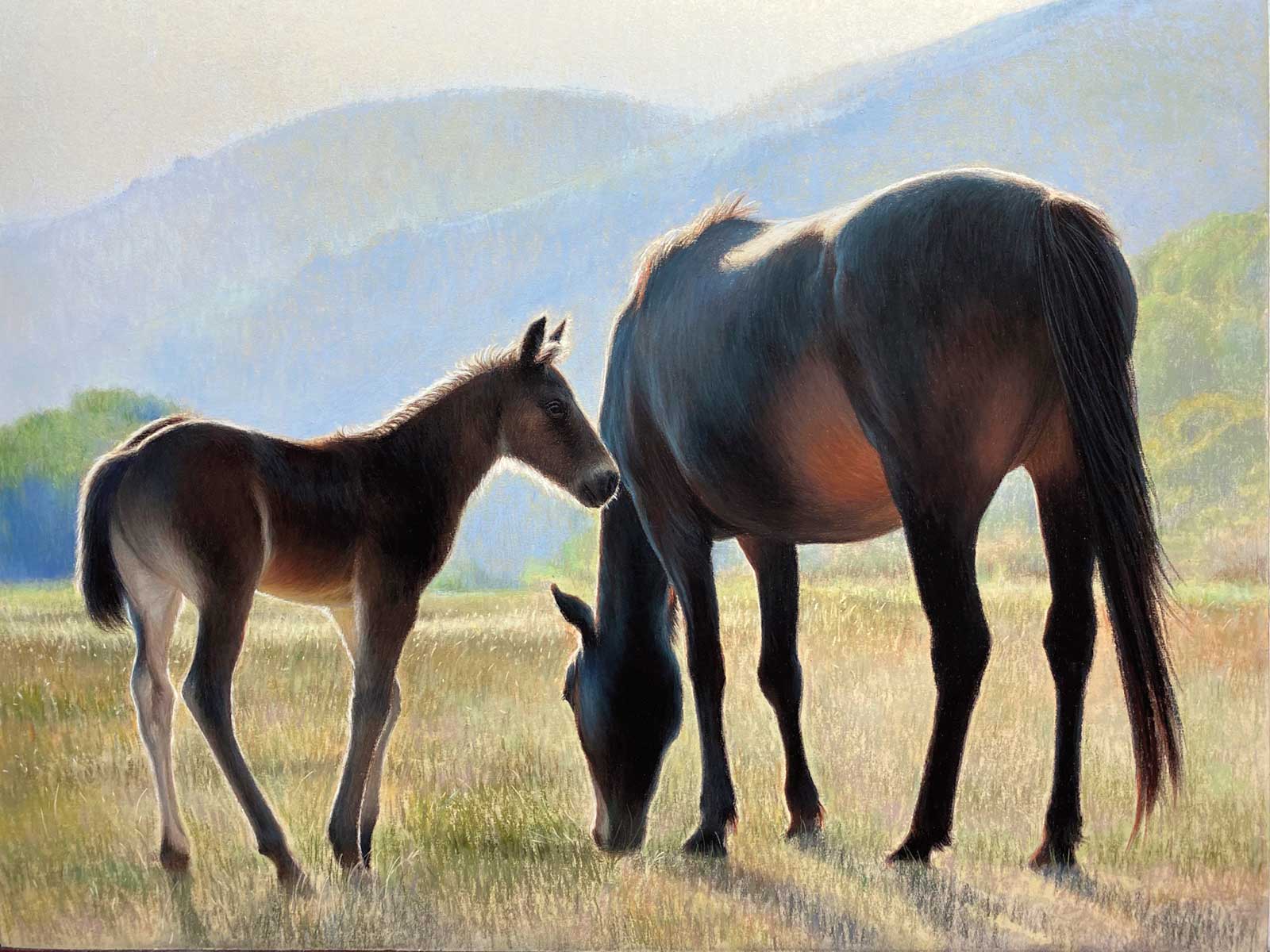
Tehachapi Arts Commission, Morgan’s Morning, pastel on board, 16 x 20”, by Otto Sturcke
Nancy Smyth has loved animals since childhood, especially horses and dogs, which are the primary focus of her artwork. “The constant challenge to not only convey their beauty but the essence of their souls is my driving force for creating art,” she says. When starting a new piece, Smyth’s top priority is capturing the uniqueness of the animal for the enjoyment of her audience. “It is important for the artwork to not only convey a realistic rendering of subject matter,” she says, “but enable the art to reach down deep inside the viewer and touch them in such a way that it will create a memorable and special experience.”
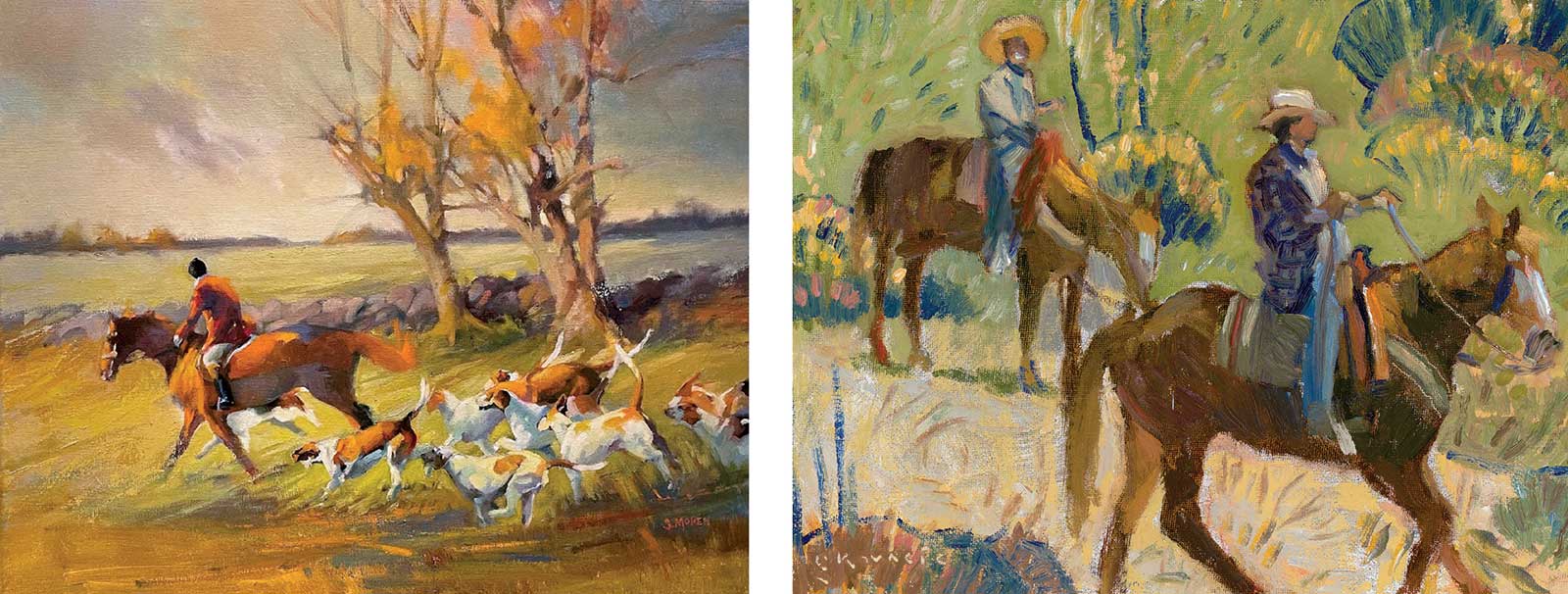
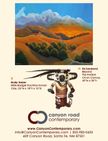
Sally Moren, The Dusk Spinners, oil on canvas, 16 x 20” ; Tehachapi Arts Commission, On Patrol, oil, 9 x 12”, by Chuck Kovacic.
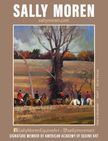
Painting is how artist Sally Moren shares her emotional connection to the rural landscape and her lifelong love of horses. Her work captures the essence and the many moods of the equine world, with a special focus on the sport of foxhunting. All of her paintings depict real people, horses and actual hunting country. Landscapes are also an important part of her storytelling style. “I get swept up by these beautiful old farms, with their ancestral trees and pastoral views. They exude an endurance and untouched beauty that begs to be painted, whether it’s a snowy cornfield or a stand of sycamores,” she says. Her autumn painting The Dusk Spinners depicts a horseback rider and hounds racing against the sunset. —
Featured Artists & Galleries
Christine Obers
Mariposa, CA, (209) 878-7109
www.christineobers.com
Nancy Smyth
(201) 394-4040
nancysmythart@gmail.com
www.nancysmythfineart.com
Sally Moren
www.sallymoren.com
Tehachapi Arts Commission
Art 2024 Tehachapi
Dwight and Laura Dreyer
(626) 945-3753
dreyerfinearts@gmail.com
www.artstehachapi.org
Powered by Froala Editor