Visual art has served as a collective memory of society since the beginning of human history. Today, it has the power to both influence and act as a mirror of the societal, cultural and political climate of the day. If art is a reflection of contemporary society, what does the increased abstraction of traditional realism indicate about the world we live in and its impact on our experience of it?
Through the works of nearly 20 international artists, an exhibition curated by author John Seed in collaboration with Principle Gallery director Clint Mansell, provides a visual record of how artists are responding to today’s reality through paint.
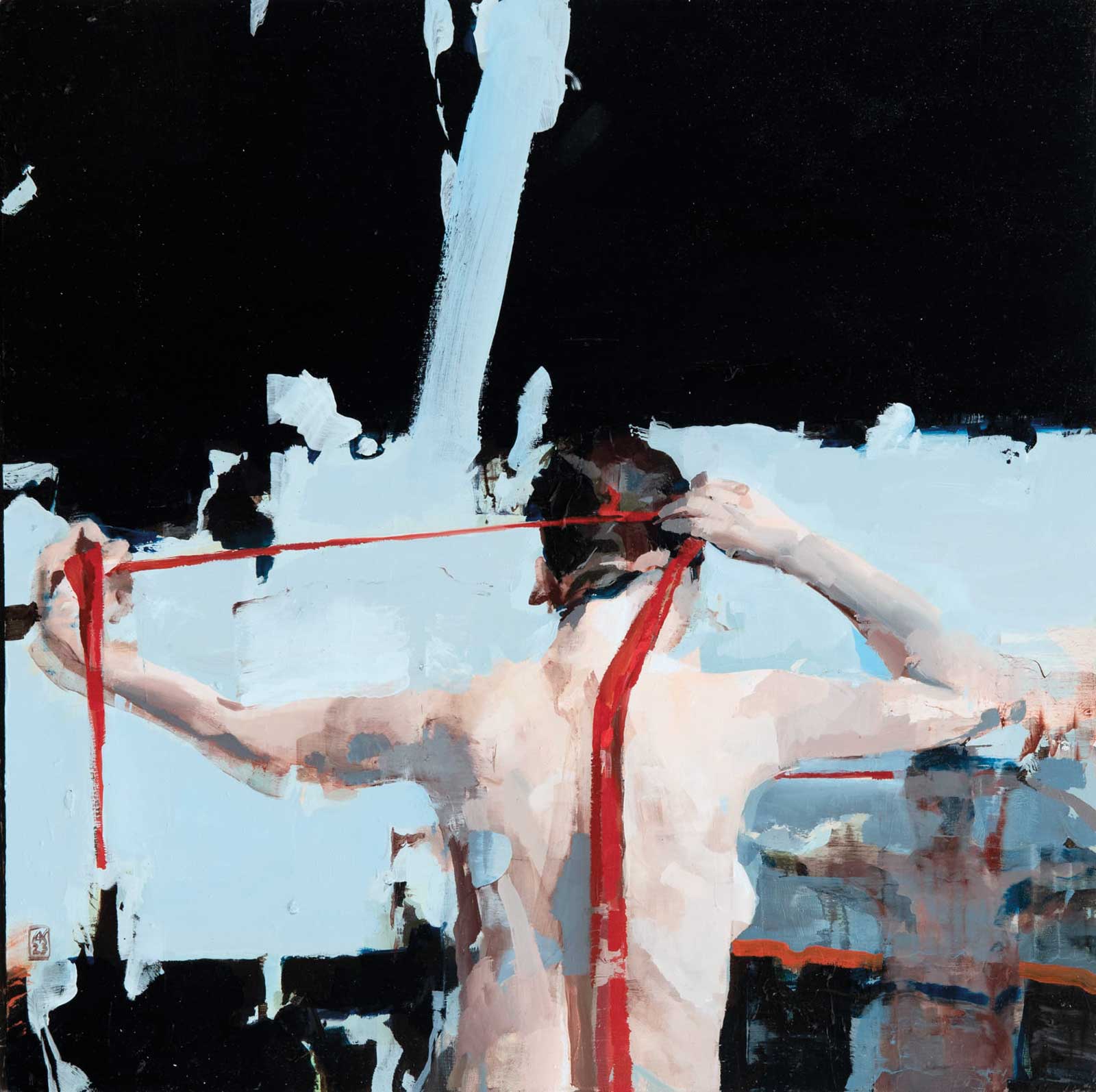
Alex Kanevsky, Red Band, 2023, oil on wood, 18 x 18". Courtesy of Hollis Taggart
The show, which opens at Principle Gallery’s Alexandria, Virginia, location on February 23 and runs through March 18, features a selection of artists from Seed’s books Disrupted Realism: Paintings for a Distracted World, and the newly released sequel More Disruption: Representational Art in Flux.
Artists in the show include Mia Bergeron, Anne Harris, Alex Kanevsky, Stanka Kordic, Aiden Kringen, J. Louis, Nick Runge, Caroline Westerhout, Megan Aline, Ben Ashton, Alla Bartoshchuk, Casey Baugh, Martin Campos, Joshua Flint, Edwige Fouvry, Johnny Morant and Timothy Robert Smith.
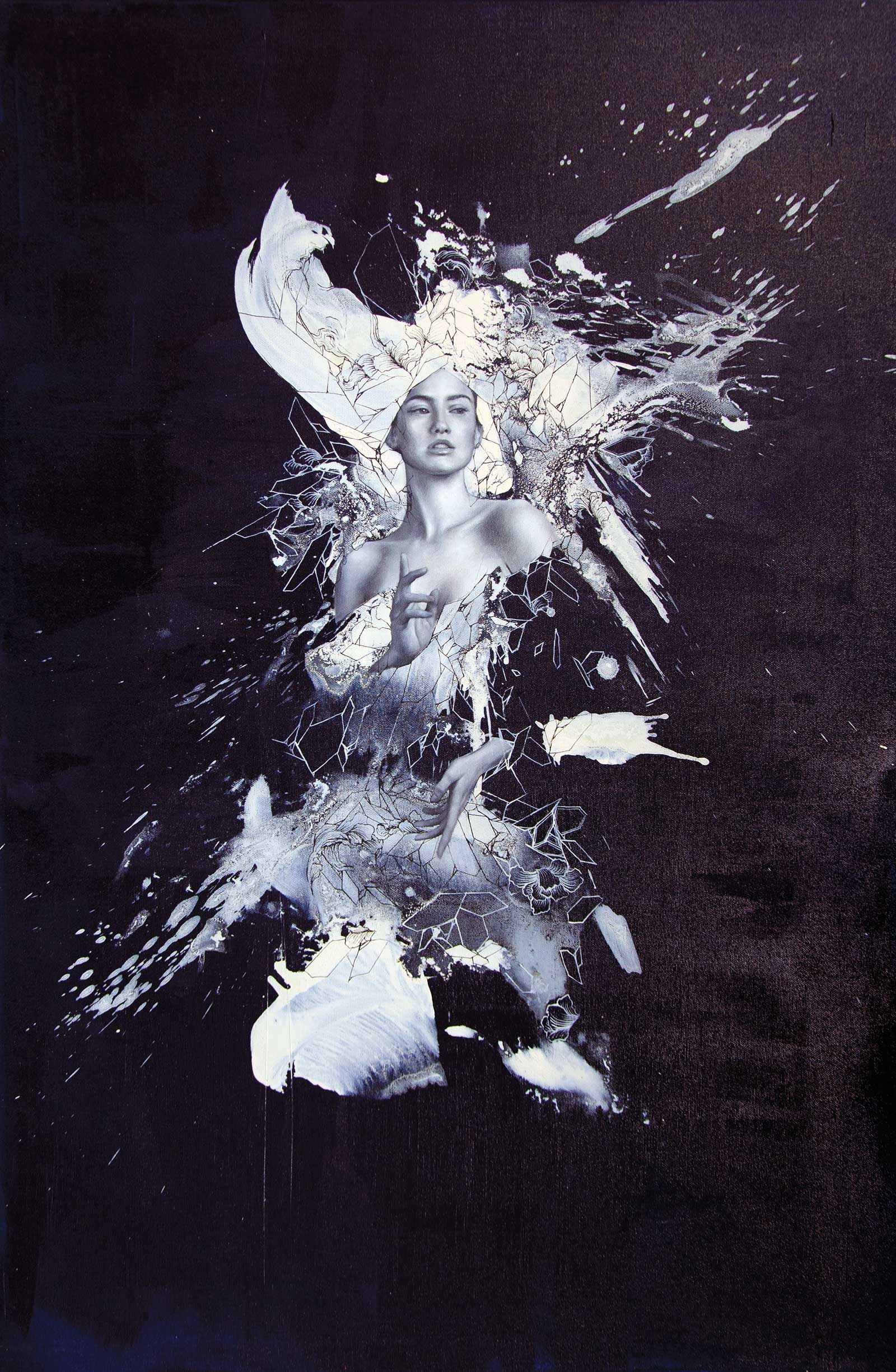
Aiden Kringen, Lazuli 3, 2023, oil and acrylic on canvas, 50 x 31"
In his first book, Seed, who coined the term “Disrupted Realism,” says his focus was on variations in the formal aspects of the art. “I was looking at how the idea of realism was being re-shaped by the addition of subjective elements—including abstraction and web imagery—into a myriad of individual styles filtered through the perceptions of inventive artists.” This definition broadened as he developed the second book. “I began to see how the events and socio-political context of each artist’s life has shaped their aesthetics and subjects. It became clear that many themes of social disruption—including racial injustice, climate change, war and inequality—are increasingly being woven into Disrupted Realism.”
Seed references Aiden Kringen’s painting Lazuli 3,in which a tightly rendered figure of model-caliber beauty is breaking through a fractal-like background—as an example of a work that is formally disrupted. He cites Alla Bartoshchuk’s recent paintings, “which use transparency, multiple figures and overlays to express the disconnection Alla feels while living life in the United States as war rages in her native Ukraine,” as both formally and socially disrupted.
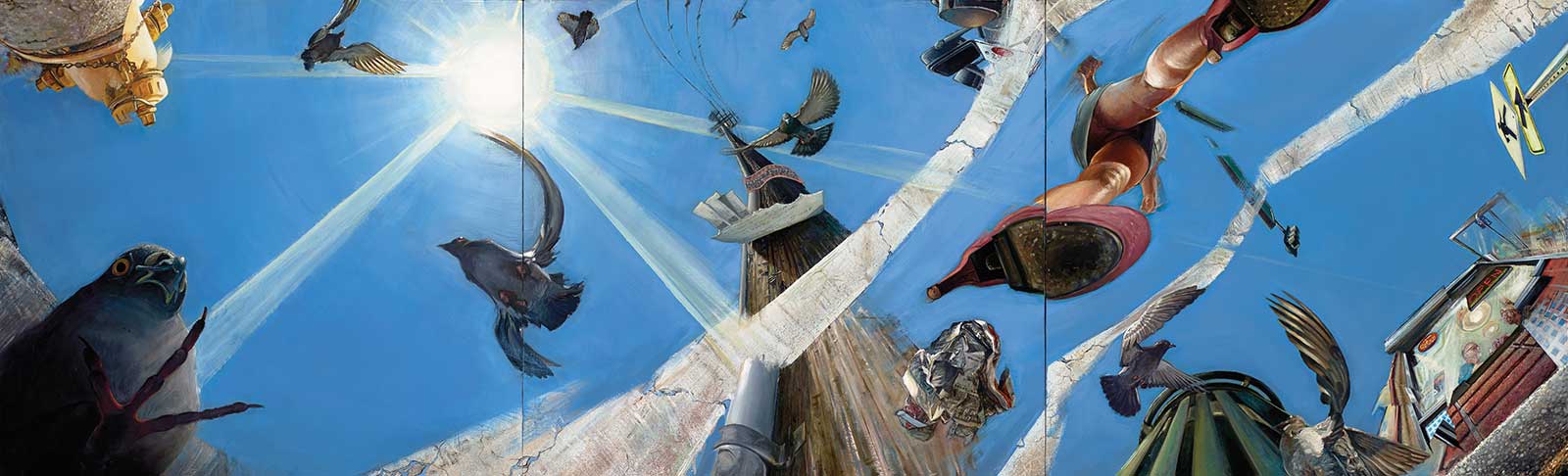
Timothy Robert Smith, Upside Downtown LA (triptych), 2015, oil on panel, 22 x 72"
Bartoshchuk’s paintings also exhibit surreal qualities, as do other pieces in the show like Joshua Flint’s Facets of Speech, which depicts a couple intimately communing on a bench, their heads ensconced inside a single translucent bag.
“It is an exploration and questioning into what we hold close, how that can affect us, and in what ways,” Flint says of the piece. “Communing with the unknown is perhaps a more common occurrence…The lone bird, a carrier of messages between the spirit world and the material world, could be seen as symbolic of this mystery, or maybe its bearing witness to that exchange.”
For Flint, introducing elements of abstraction into works of realism causes “an interplay between the materiality of the paint and image which opens up the dialogue around what is being represented. How the abstract passages interact with the recognizable imagery reminds a viewer that it is only paint and not reality—it’s a way to break the illusion.”
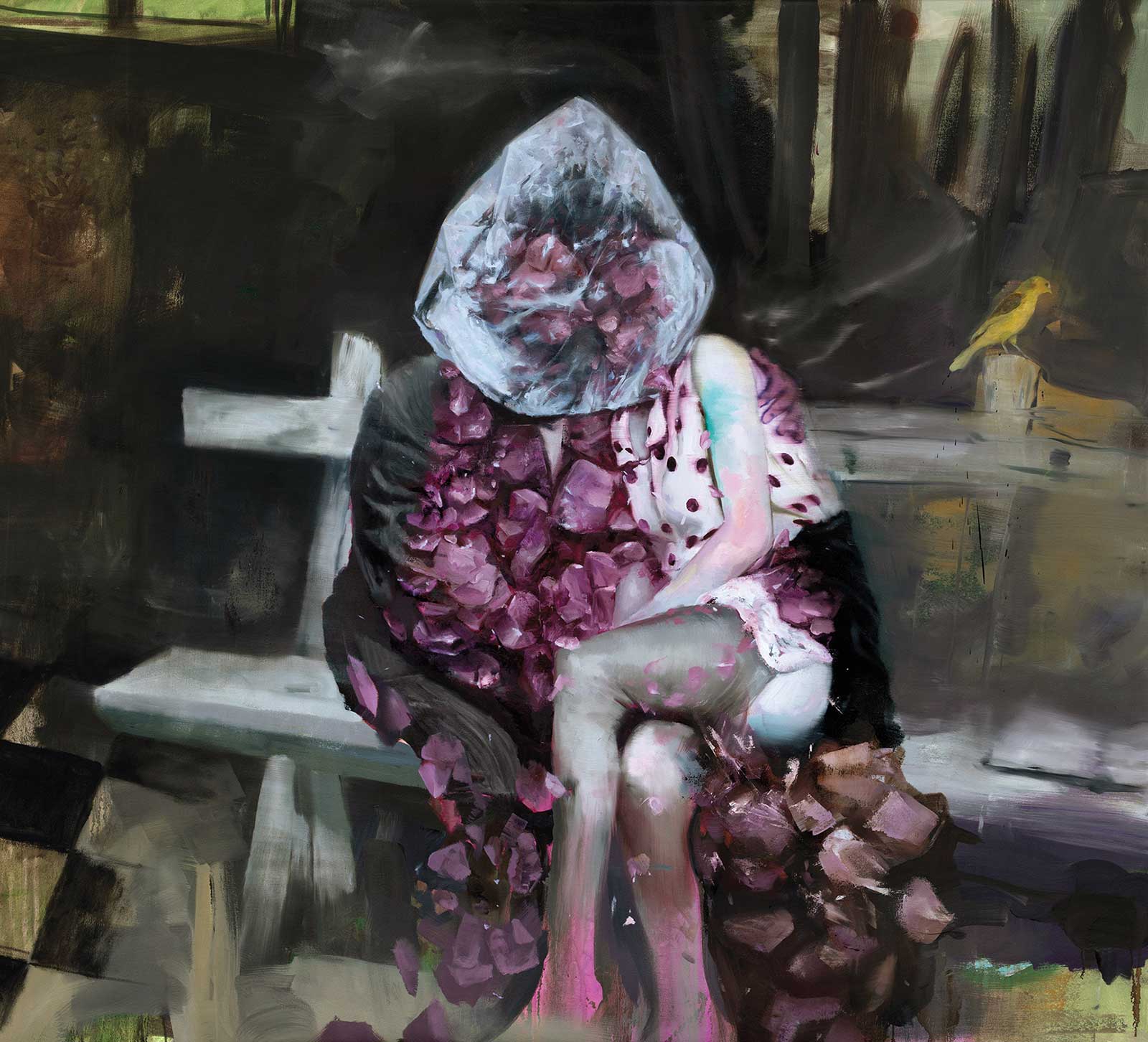
Joshua Flint, Facets of Speech, 2020, oil on canvas, 58 x 63"
Artist Timothy Robert Smith provides an unexpected visual experience in Upside Downtown Los Angeles, a worm’s eye view of a street scene as seen from below through a transparent ground. “It suggests a voyeuristic, fly-on-the-wall view, but from more of an astral, infinite place,” says Smith. “It’s almost as if the viewer has surpassed the limitations of physical existence to become a part of everythingness—or nothingness.”
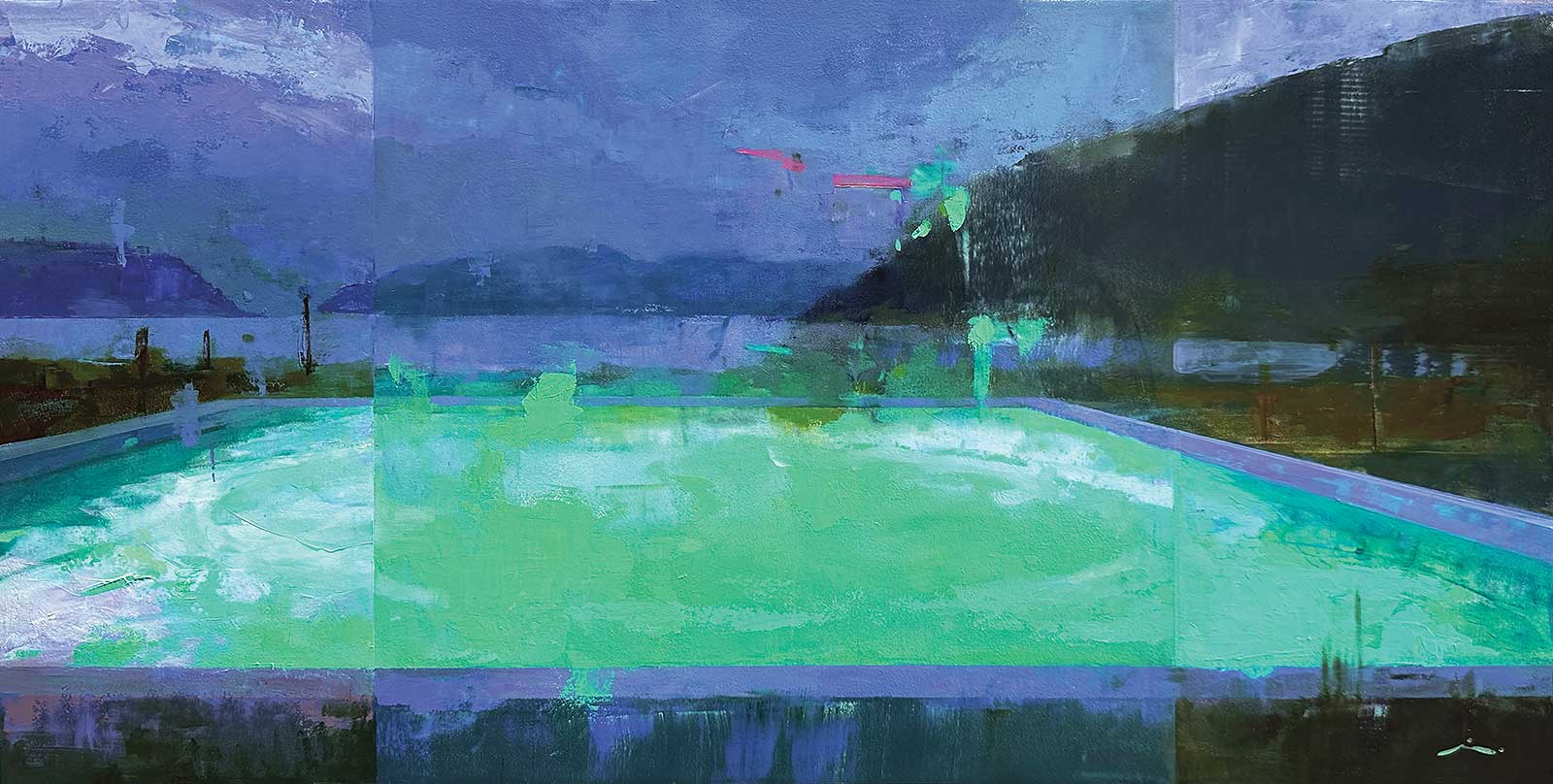
Mia Bergeron, Intangible, 2023, oil on panel, 12 x 24"
For Smith, disrupted realism is about exploring the psychology of perception—observing physical reality from outside the box. “The disruption in my work occurs by expanding the boundaries of space into multiple dimensions,” he says. “The viewer is looking through a lens that transcends our human concept of vision. The point-of-view is happening everywhere simultaneously, surrounding the scene from all angles. Adding distortions is extremely relatable in today’s world, because of our constant state of uncertainty about the future of civilization.”
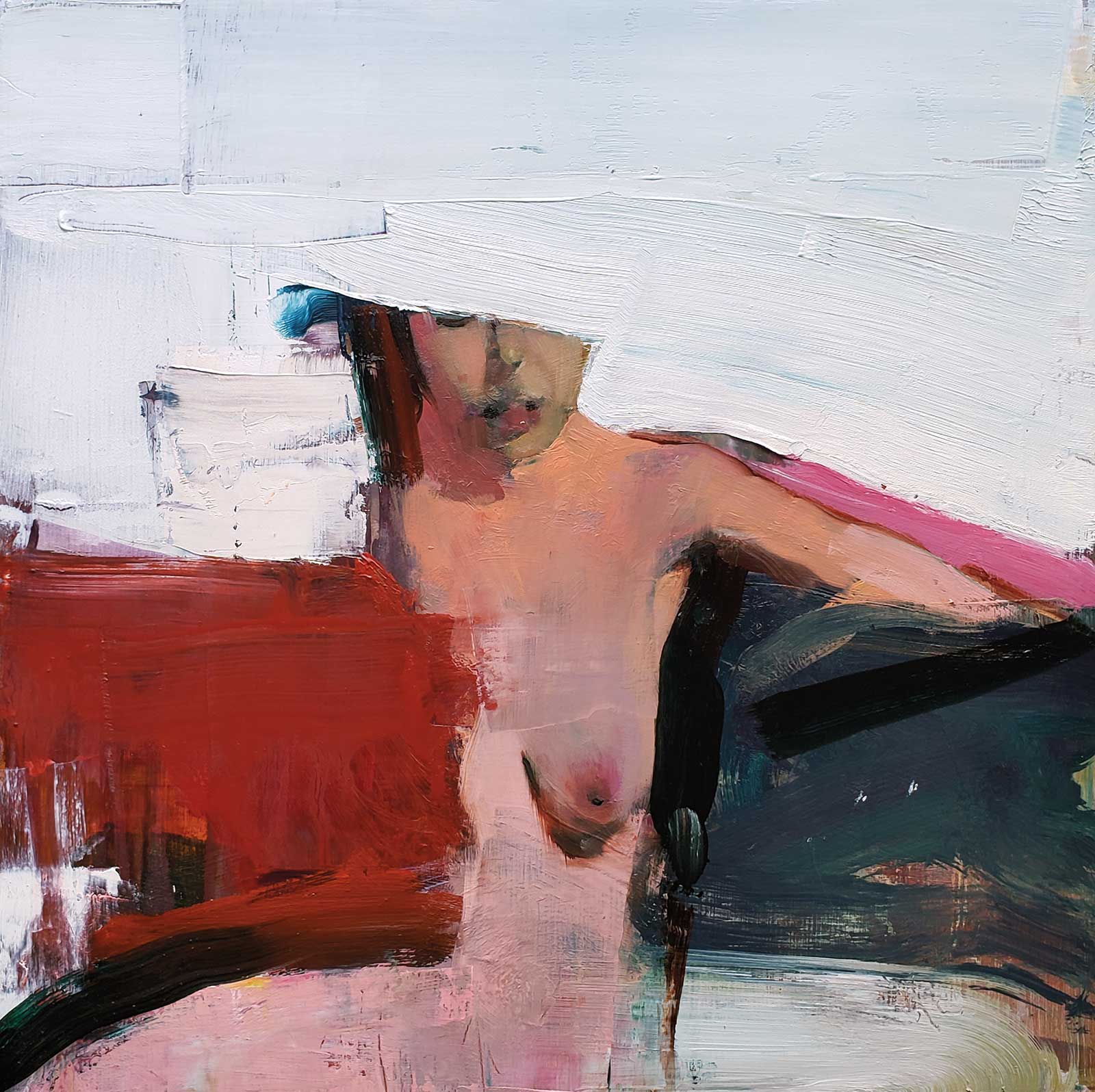
Martin Campos, Tidal, 2023, oil on canvas, 12 x 12"
Mia Bergeron’s work also explores themes of multidimensionality but more in terms of our various selves. “It seems to me that Disrupted Realism is an expression mirroring the multiple lives many of us lead today,” says Bergeron, whose largely abstract work Intangibleis her visual interpretation of the moment our focus begins to fade but our attention has not yet fixated on something else. “Like most Americans I have an entire imaginary existence online: curated, limited and often a small fraction of who I am,” she continues. “We are constantly bumping into and encouraging these other ‘selves’ through social media, biased news and now the introduction of AI. We are living in two places constantly. Our minds often spend more time away from our bodies than in them. If the goal of realism is to show the power, beauty or curiosity of what is directly in front of us, then realism being disrupted is actually a more honest view of what each of us are living every day.”
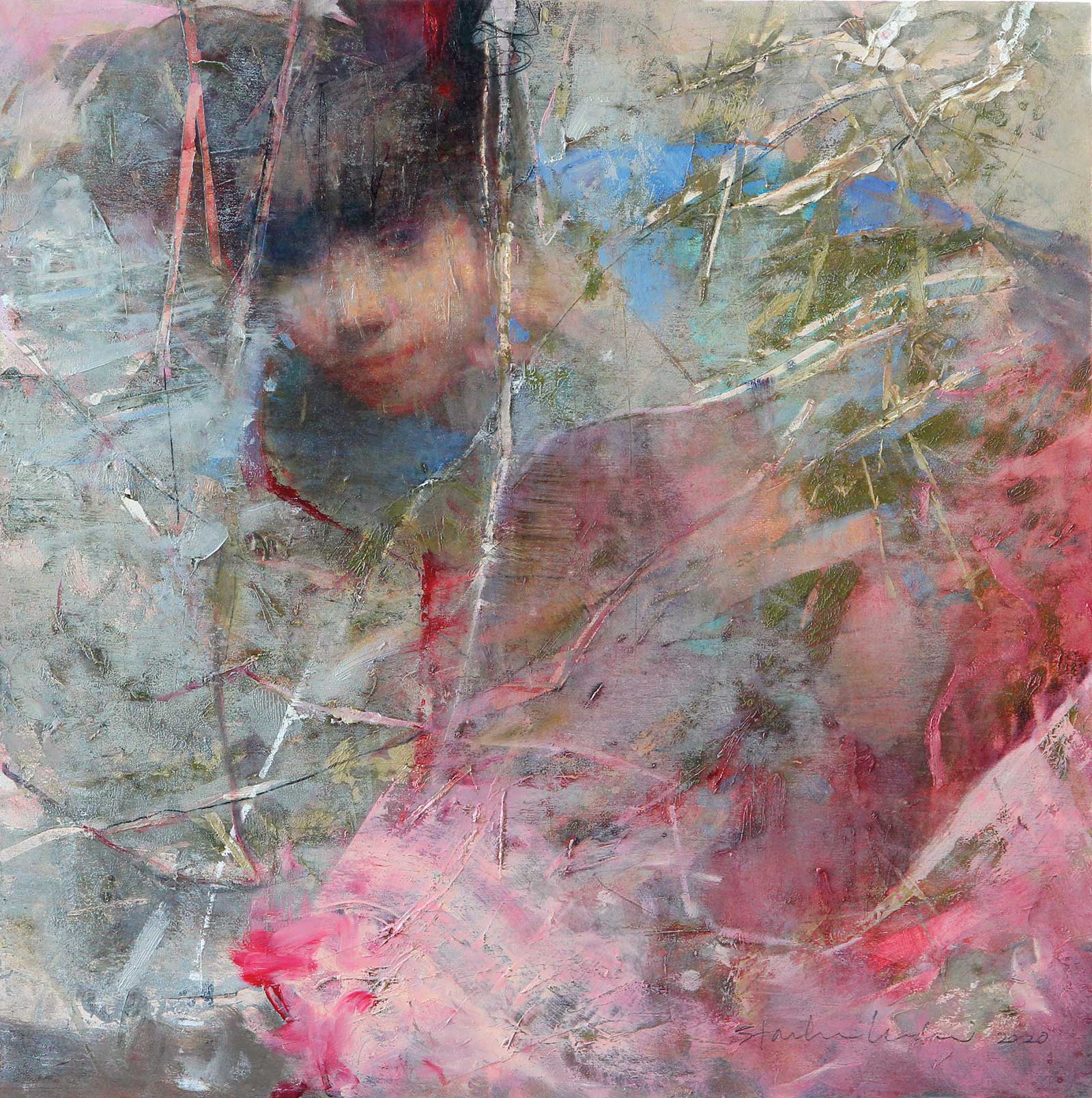
Stanka Kordic, No Separation, 2023, oil on panel 24 x 24"
Stanka Kordic’s piece No Separation,in which a girl glimpses out through a textural, foreground of smudge, line and stroke, is exemplary of the artist’s commitment to balancing realism with the abstract. “For me, realism is the inspiration and the foundation,” says Kordic, adding that the emergence of abstract elements in her work was a gradual, organic process. “I simply became more and more interested in intuitively moving with the paint, and observing what that could add to the conversation, instead of it always being a faithful rendering of an image,” she explains. “This process has afforded me a kind of specifically focused attention on not only what I am painting, but how I am feeling doing it. Each layer is a different experience that I allow to exist on the panel, which creates the final tapestry of the work.”
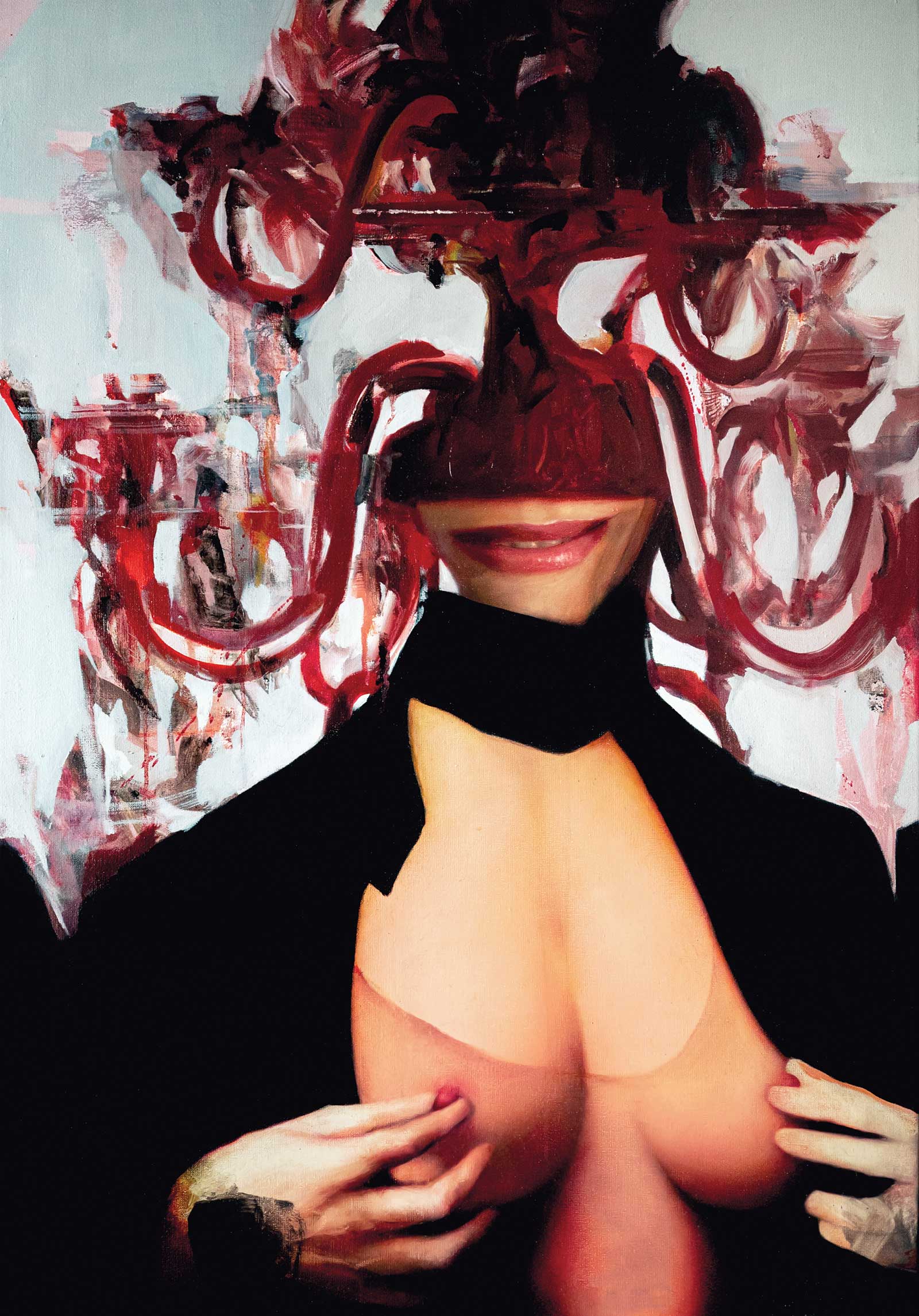
Caroline Westerhout, Muse Post Mortem: The Afterparty, 2021, oil on canvas, 39½ x 27½"
Martin Campos shies away from calling Disrupted Realism a style but sees it rather as “a natural fact of being for artists that want to push further than the surface due to the intimate and direct communication with the stimulus. The term to me means to get away from what my point of reference is showing me in a literal way and going deeper into the true viscerality of what’s really there.”
Alex Kanevsky also never thought of himself as a part of a specific art movement. “But we all are living in this time and place, so something about it makes people want to disrupt what used to be smooth,” he concedes. “But when you are painting it is better not to analyze your own choices. One just wants to respond to the world with the sense of wonder and openhanded acceptance of its mysteries. One hopes to paint with clarity, but not at the expense of mystery.”
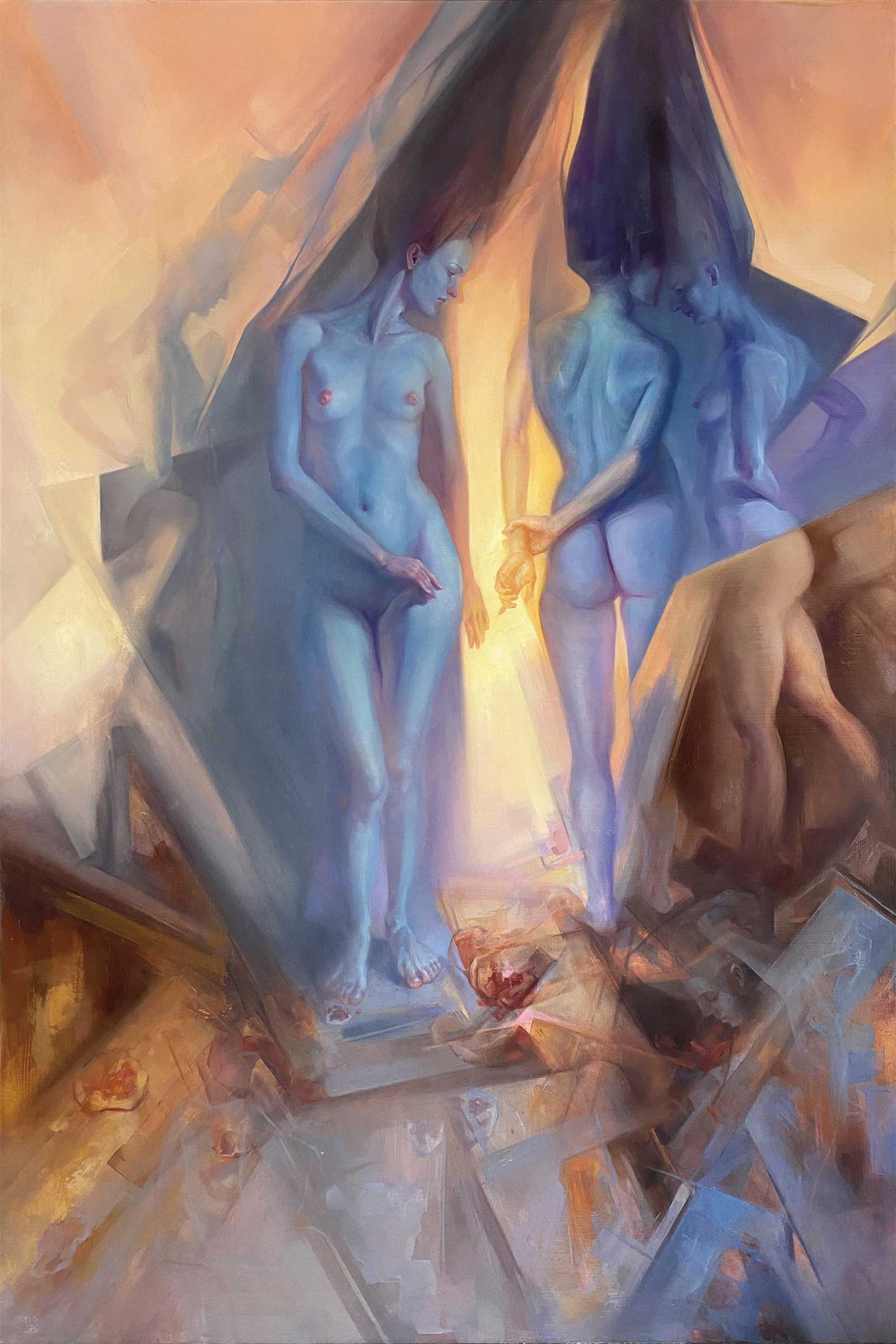
Alla Bartoshchuk, Touch, 2020, oil on panel, 32 x 48"
In Seed’s view, these artists and others who are creating in a relatable aesthetic are, in a sense, redefining representational art as we know it. “They have done so by opening up their art to a myriad of new possibilities and created hybrid styles,” he says. “A biologist will tell you that hybridization is essential for the creation of new species and, in a similar way, the creation of hybrid styles is essential in the creation of new art. Each artist in my books, and in this show, has contributed something of themself to the evolution of representational art and has made it more vital and relevant in the process.”
More Disruption opens with a reception on February 23, from 6 to 8:30 p.m. —
More Disruption
When: February 23-March 18, 2024
Where: Principle Gallery , 208 King Street, Alexandria, VA 22314
Information: (703) 739-9326, www.principlegallery.com
Powered by Froala Editor