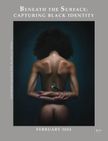
Beginning February 1 at RJD Gallery in Romeo, Michigan, is Beneath the Surface: Capturing Black Identity, which will feature a grouping of paintings that show Black figures depicted by four artists: Phillip Thomas, Alex Bostic, Grant Gilsdorf and Jhina Alvarado.
“The nuanced layers of Black identity are rich in vibrancy and diversity. Beneath the surface lies a unique narrative of both the artist and the subject, and can be filled with joy, sorrow, resilience, turbulence or triumph, sometimes within the same artwork,” says Joi Jackson Perle, RJD’s gallery director. “Recognizing and honoring Black history through art pays homage to the past while celebrating the present and future.”
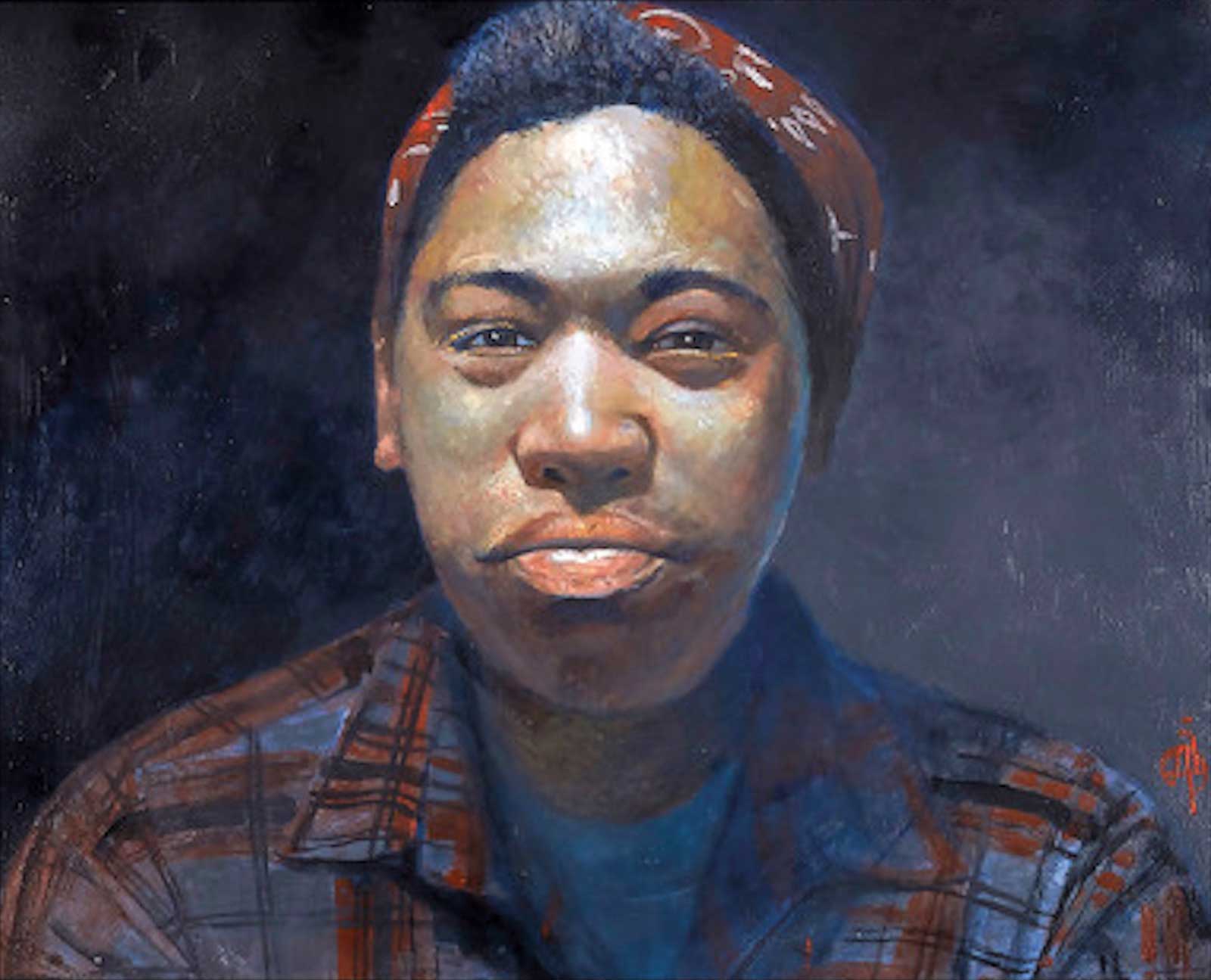
Alex Bostic, Milayla, casein on canvas, 14 x 14"
One of the works is Milayla by Bostic, who paints a portrait of a Black figure peering out from the painting. The face is relaxed and calm, but the eyes seem to scan the viewer quietly. Bostic grew up in Brooklyn, New York, and today lives in Mississippi, where he routinely paints figures and scenes that exemplify the Black experience in America. “Beneath the Surface: Capturing Black Identity is to me a very important show…that tells the audience that there’s more to Black art than what they see in the surface. When we create it we create art that means something to us more passionately than what you’re seeing,” Bostic says. “I always take a subject to paint that I’m familiar with that relates to my identity as a Black person and this is what it means to me to create these images of African Americans that, in normal cases, would not have their pictures painted if it wasn’t for me to take an interest in it.”
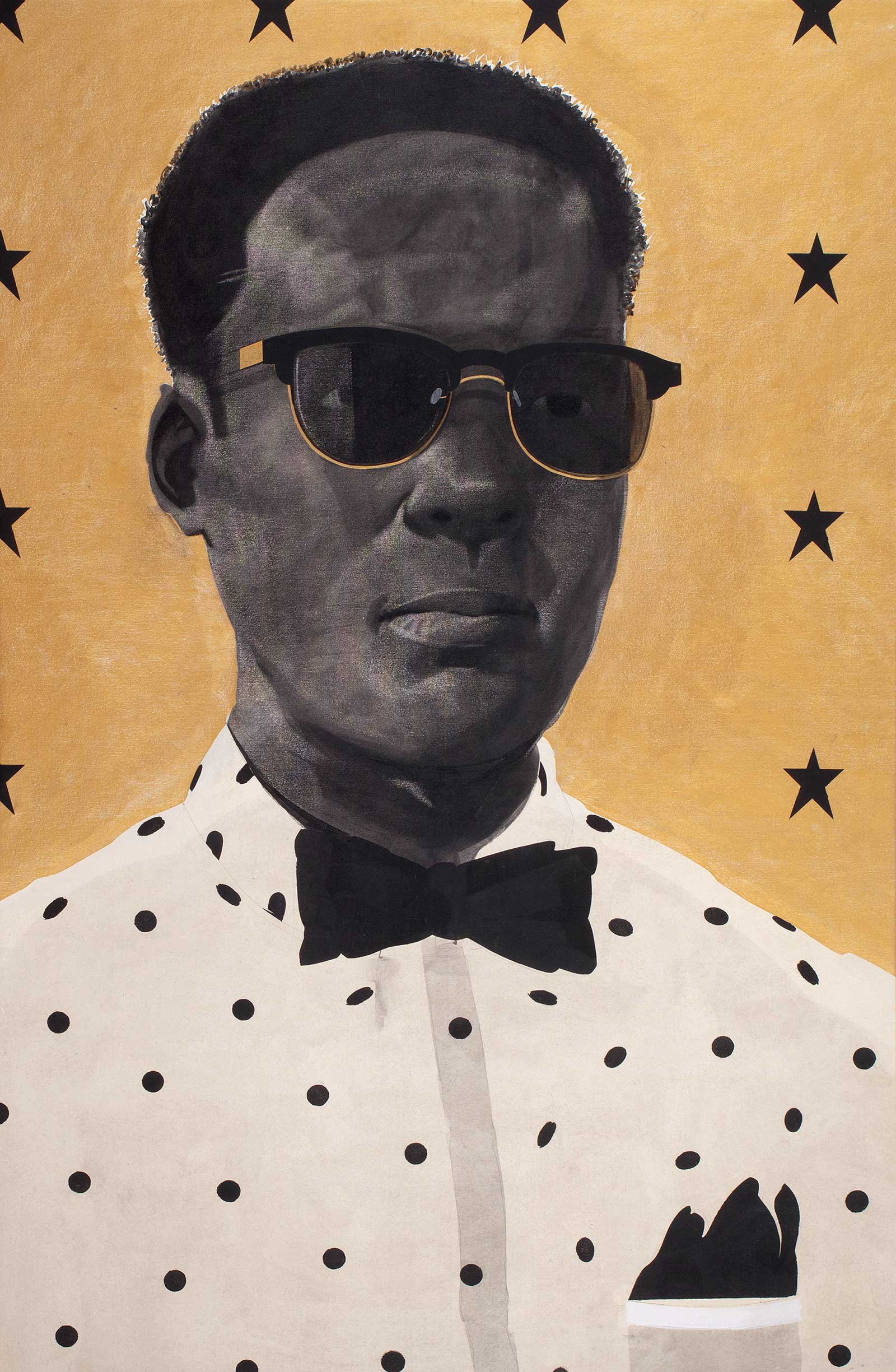
Phillip Thomas, Tie, oil on canvas, 74½ x 49"
The artist adds that he links a lot of his work to his race, his history and his people. “[It] relates to everything—food, clothing, style, music—it is part of my identity and I like to convey that in my heart, my peace,” he says. “Milayla was created…from somebody that I’m familiar with, which is one of my students that I did a portrait of to demonstrate to my class how to do a portrait step by step. The piece wound up being successful mainly because I used only primary colors plus black and white to execute the painting. It was a challenge from a friend of mine named Robin Pendleton to use casein paint to create the image and this is what you see.”
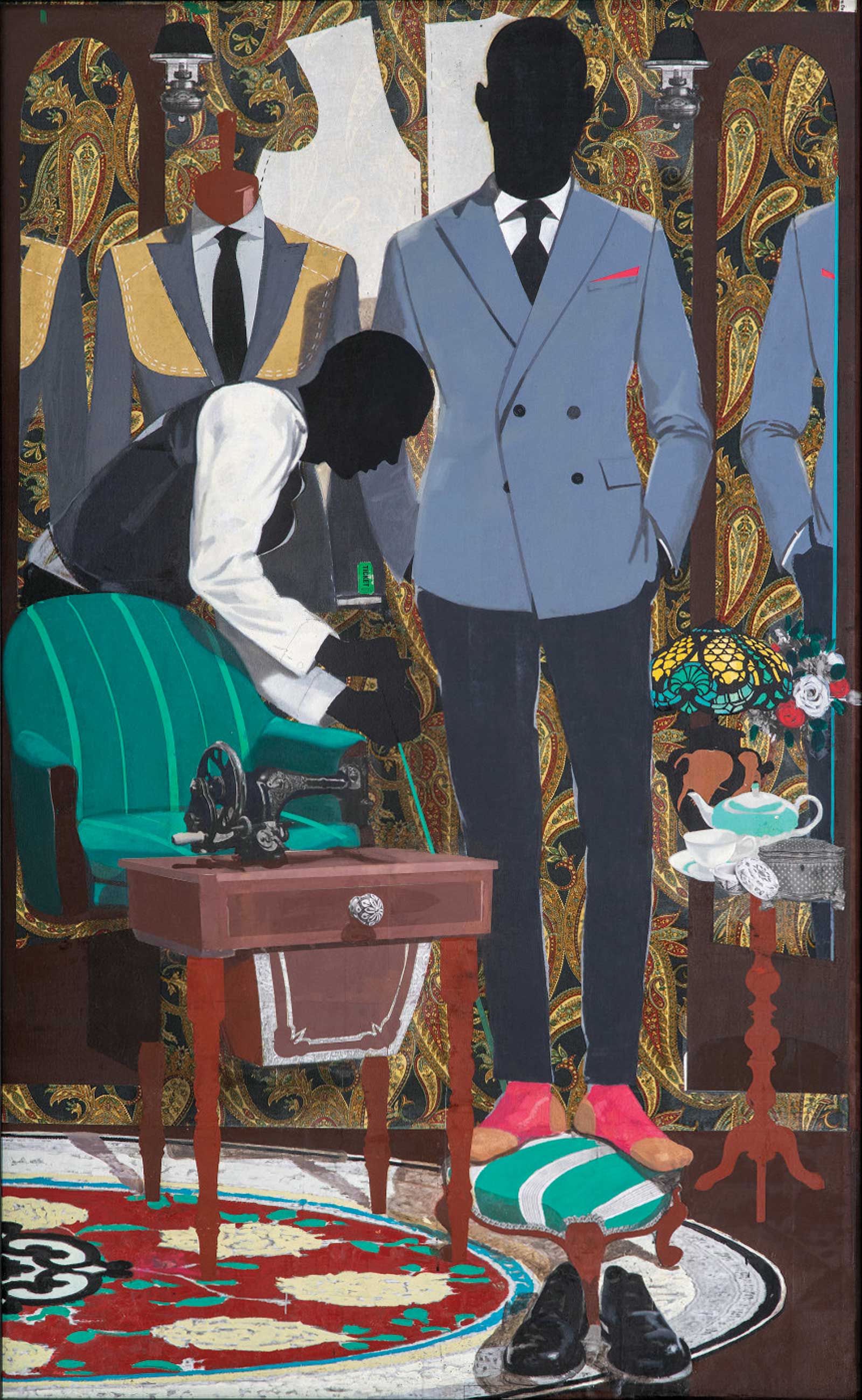
Phillip Thomas, Tailor, mixed media on canvas, 86 x 53½"
Thomas will have several works in the show, including Tie and Tailor, both of which draw attention to fashion elements present in his works. The artist, who was born in Jamaica and later studied art in New York City, uses art to express who he is, but also larger ideas about the world. “For me, a painting can function as a tool to interrogate whatever subject matter by employing the human figure as symbols for larger ideas and concepts,” Thomas says. “This is one of the ways art has made the worst of subjects approachable, understandable and, ultimately, changeable. Works that tackle meaningful concepts possess the ability to affect how we see those subjects and the ways in which we interact with those concepts. The artist must take care in delivering these ideas with patience and understanding and the viewer must also be responsible in how they interact with these narratives. We all share a responsibility in managing our shared experience, and through these discussions one can achieve an even deeper understanding of the problems we face and their enormous and unending complexity.”
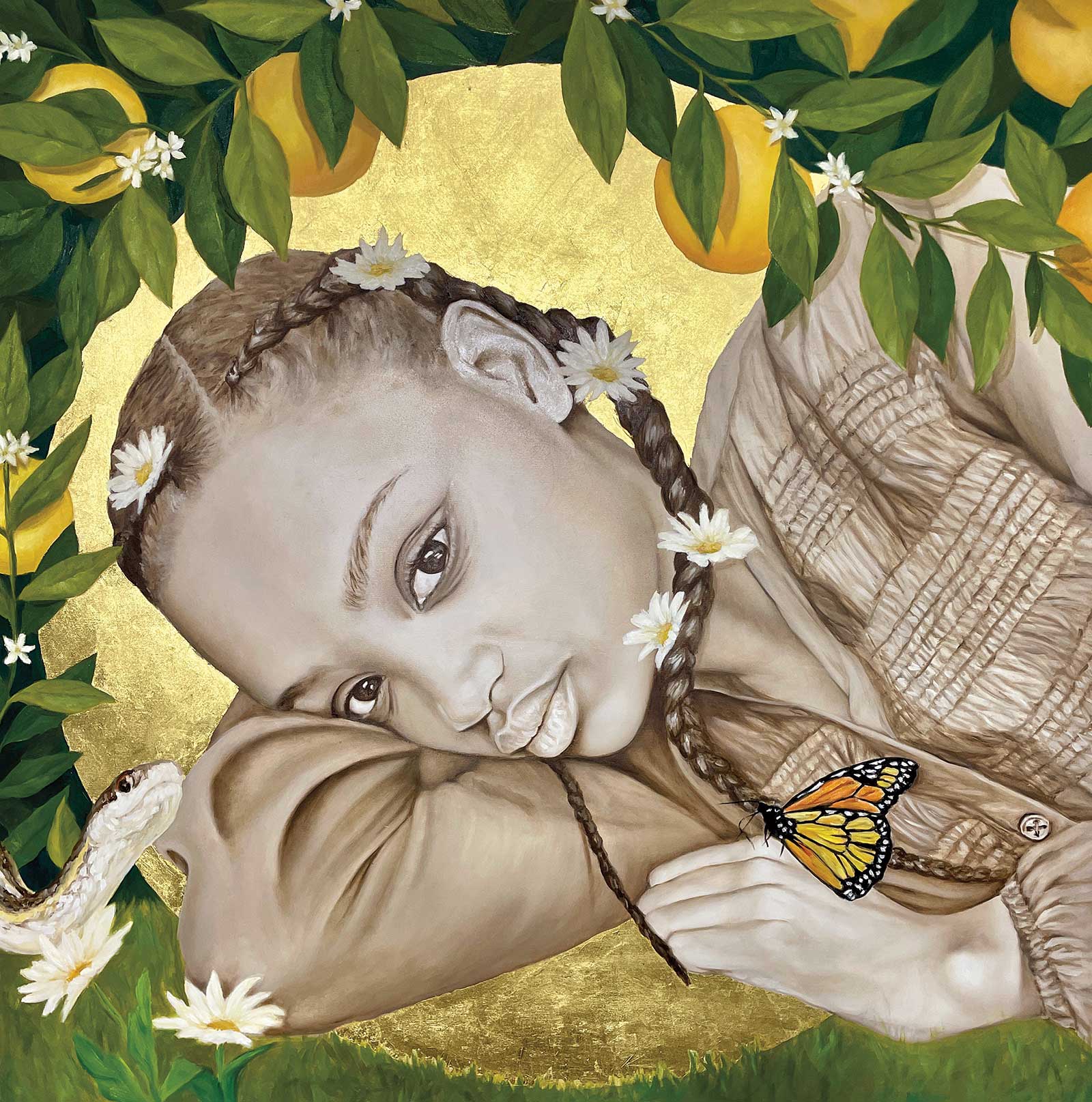
Jhina Alvarado, Ella, oil and 22k gold leaf on wood panel, 30 x 30"
The idea that these subjects, including race, must be handled delicately is one shared by Alvarado, whose painting Ella will be in the show. The artist identifies as Korean and Mexican, but has Black children, so she approaches the subject from a different perspective. She is particularly concerned with how Black children, especially teens, are treated by society. “Black children are over-policed, under-protected and pushed out by a society that does not recognize that they are still children. If we redefine how we see Black people, we can invest in raising Black children safely so they can reach their full potential,” Alvarado says. “This is just the tip of the iceberg of what is beneath the surface. I paint my children and the girls and women in my community because I want people to see more than the stereotypes. I want my children to see that Black people are more than what society tells them they are. There is so much more beneath the surface and my art is a great way of showing my children that they are worthy of being portrayed in art and can be anyone they want to be.”
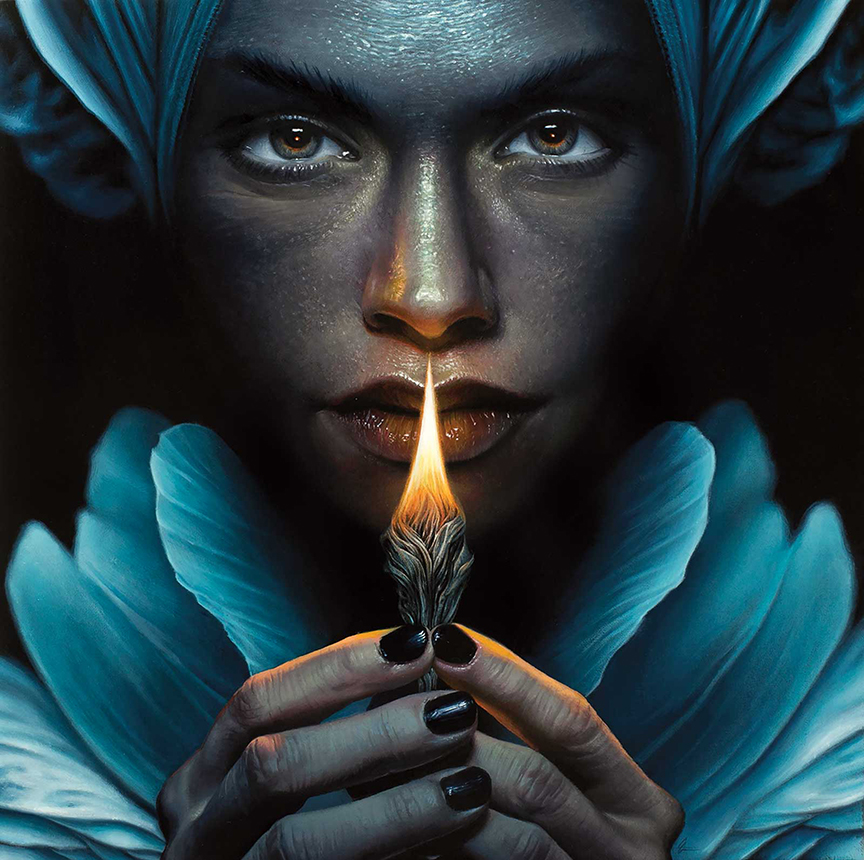
Grant Gilsdorf, Keep a Little Light Burning, oil on linen, 14 x 14"
In describing Ella, Alvarado indicates she was a student from her algebra class. “She was always very quiet and hardly spoke up in class. She is a beautiful girl who I could tell had so much depth to her and I wanted to capture that in a painting,” the artist says. “She says so much with her eyes and yet leaves so much hidden, as if she has a secret. There is an innocence about her and yet a knowledge about the hidden and not-so-hidden dangers that could change her life in a moment.”
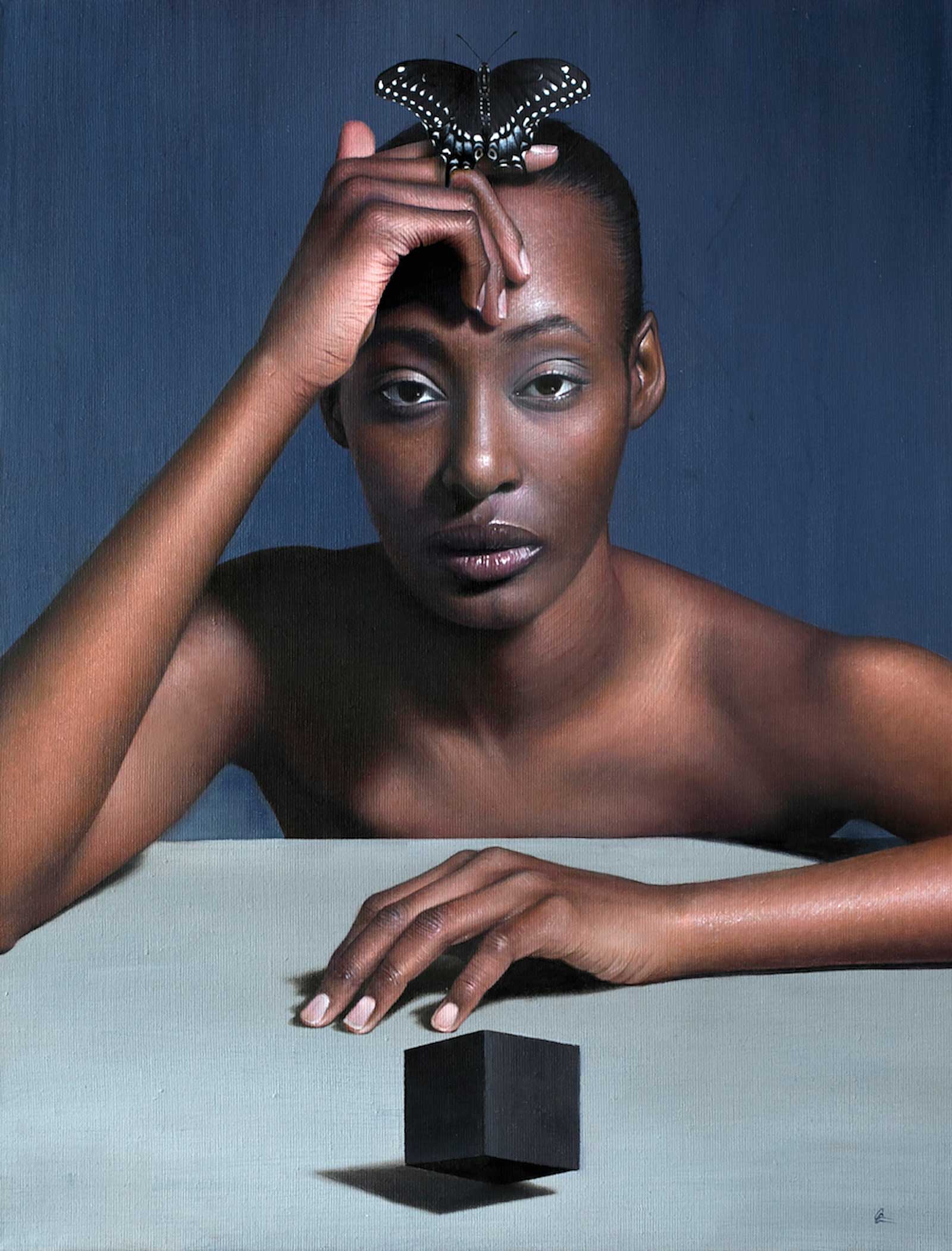
Grant Gilsdorf, Balanced, oil on linen, 24 x 18"
For Gilsdorf, who is not Black but paints many Black subjects, he acknowledges he can’t fully capture Black identity in a painting. “But I do know that every opportunity to consider new perspectives or to encounter people who look different than you should be taken,” he says. “I hope this show provides said opportunity, and both celebrates and lends appreciation toward a topic that has historically been left out of the art world.”
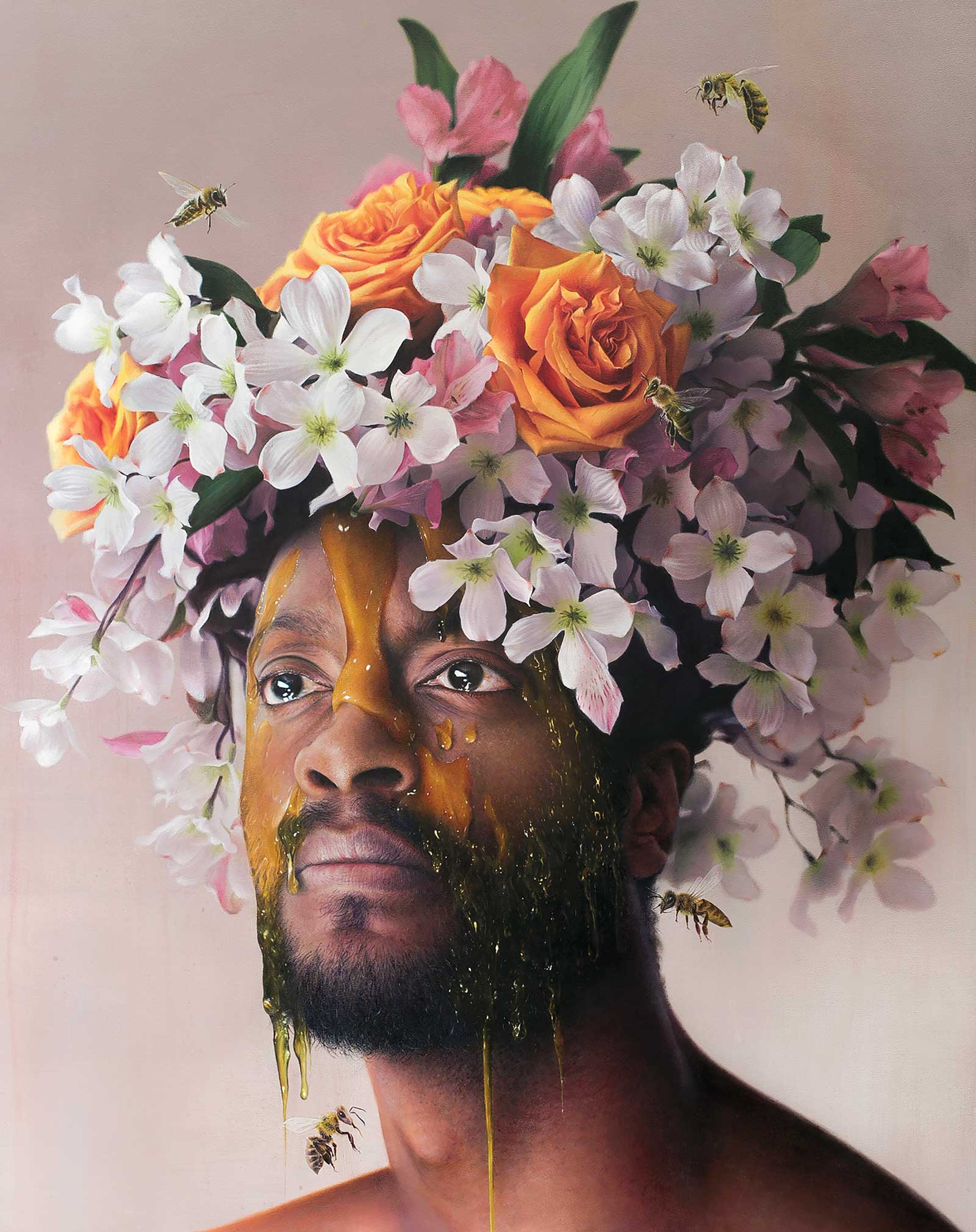
Grant Gilsdorf, Bee-Lieve in the Mission, oil on ACM, 24 x 30"
Of Gilsdorf’s works in the show, one includes Balanced, showing a Black woman with a butterfly near her head and a cube that seems to be levitating off the table in front of her. He says that shows like this one are good for art collectors, because it urges them to think outside of their own perspectives. “A viewer can’t help but bring their own lived experiences to the table when looking at art. Those viewers come from a variety of backgrounds. Many are part of communities where Black culture is woven into the identity of the city, but others may come from places with little to no diversity at all,” Gilsdorf says. “Art can punch through all of those boundaries, and deliver a thought or a theme directly to the viewer. Suddenly, the geographic limitations of the viewer are stripped away, and they are offered a moment of private reflection with the art. That piece contains the power to change perspectives, or at the very least, allow exposure to new thoughts. To avoid the inclusion of Black faces or Black voices in art would be a tragedy.” —
RJD Gallery 227 N. Main Street • Romeo, MI 48065 • (586) 281-3613 • www.rjdgallery.com
Powered by Froala Editor