Sending art to the moon is not a new phenomenon. The Moon Museum, a small ceramic tile inscribed with drawings by the likes of Andy Warhol, Robert Rauschenberg and Claes Oldenburg, hitched a ride to the lunar surface with Apollo 12 in 1969. The sculpture Fallen Astronautjoined the first space art object in 1971, followed by two phonographic records containing a spectrum of audio from the sounds of whales to Chuck Berry’s hit “Johnny B. Goode” in 1972.
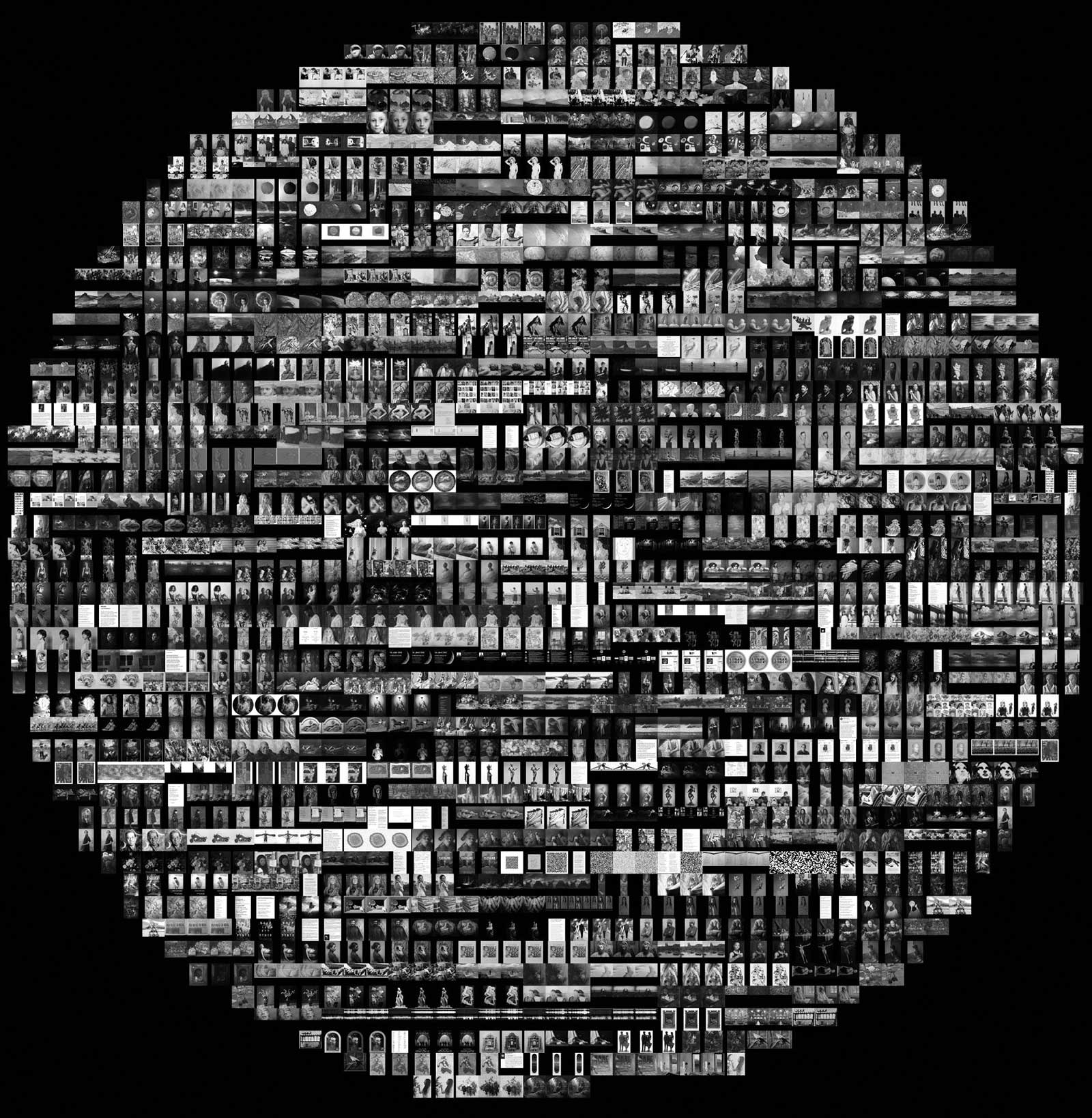
Micrograph of a nickel-based NanoFiche disc the size of a dime containing art images. Photo courtesy Lunar Codex.
With today’s growing interest in space exploration and opportunities for commercial travel opening up since NASA passed the manufacturing of lunar landers to private companies like Space X and United Launch Alliance, sending a time capsule of art to the moon is not only viable for big name artists like Jeff Koons and Sacha Jafri, but an imminent reality for more than 30,000 artists, writers, musicians and filmmakers from around the world.
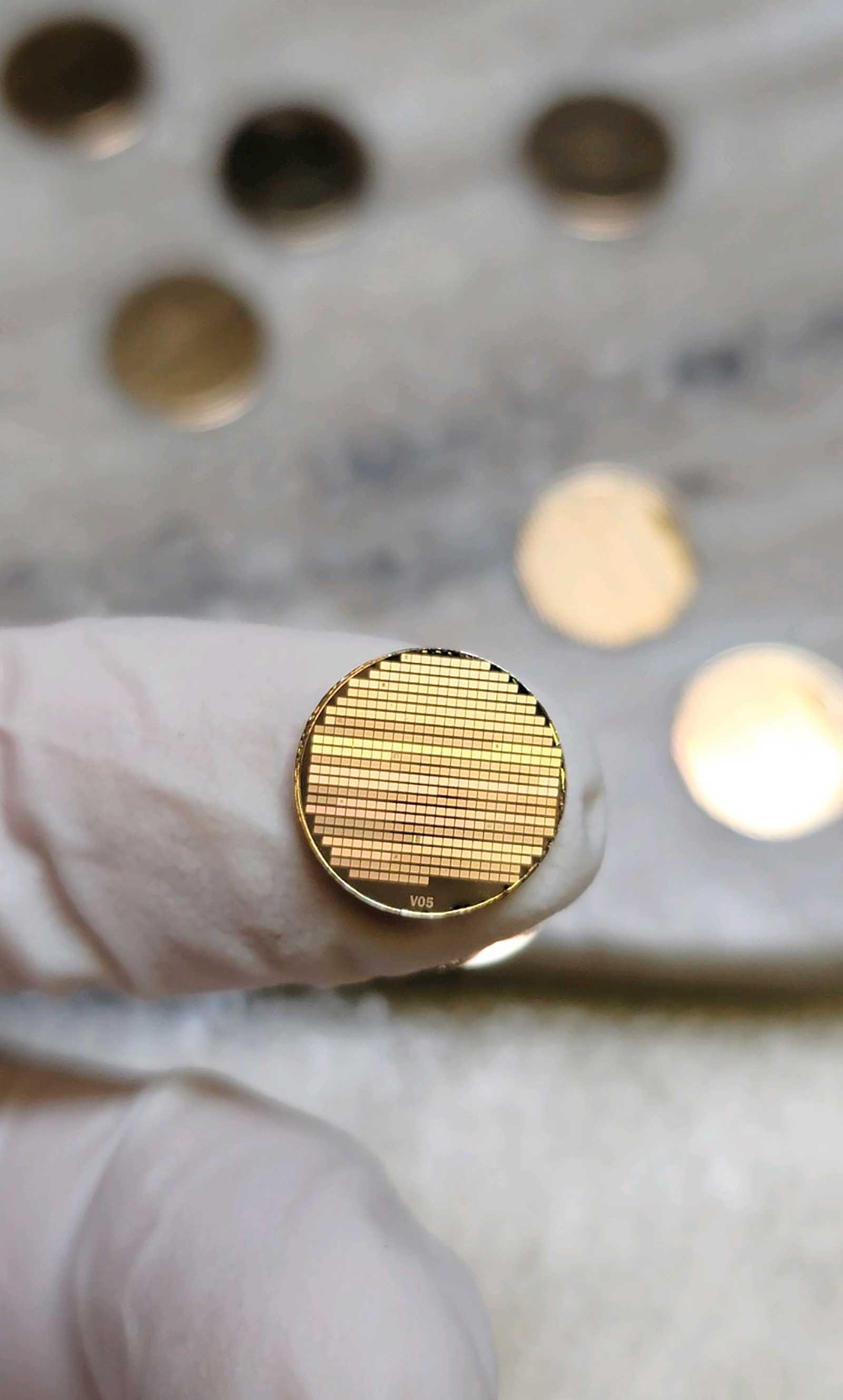
Dime-sized nickel NanoFiche able to hold 500 art images. Photo courtesy Lunar Codex.
The Lunar Codex is the brainchild of semi-retired physicist, poet and art patron Samuel Peralta, who began exploring the idea of sending his own literary work to space in 2020.
“One of the ‘aha’ moments was when I realized if I couldn’t afford to travel to the moon myself, maybe I could afford to send a part of me—my soul, my art, my writing—and that would be just as good,” says Peralta. “It’s almost a desire for immortality—if you put a piece of your soul out there, it lives on forever. And when you look up at the moon it has been transformed because it holds part of your essence.”
Soon after came the lockdowns and with it, the closure of art venues of all kinds. “I have a wide circle of friends in the arts and an atmosphere of depression pervaded the art scene at the time,” says Peralta.
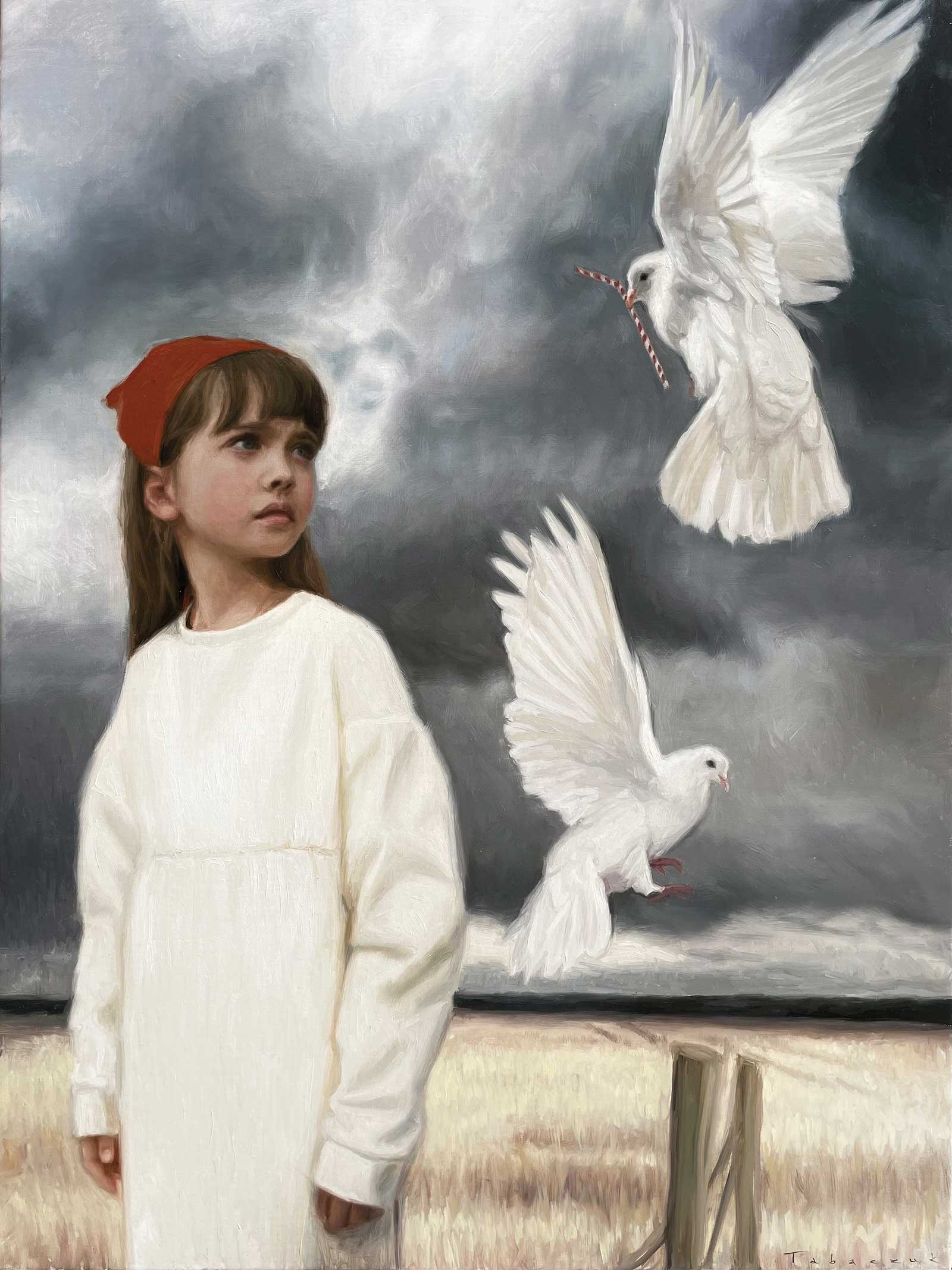
Kesja Tabaczuk, Plastic Straw, 2016, oil on canvas, 47 x 35½”
Meanwhile, Peralta was finding great joy in placing his first lunar payload aboard the Artemis 1 Mission where, in 2022, it would finally blast off, orbit the moon and return to Earth—a flight expedition Peralta considers the prelude to the forthcoming landing missions. “I thought, 'wouldn’t it be amazing if I could spread that joy to other artists?',” he relays. Peralta has been an avid art collector for more than 30 years. He and his wife Alice, who live in Ontario, Canada, are particularly fond of narrative contemporary realism. Well-connected in the art world, all of the work in the Codex was selected by professional gallerists, curators, collectors, editors, anthologists and publishers.
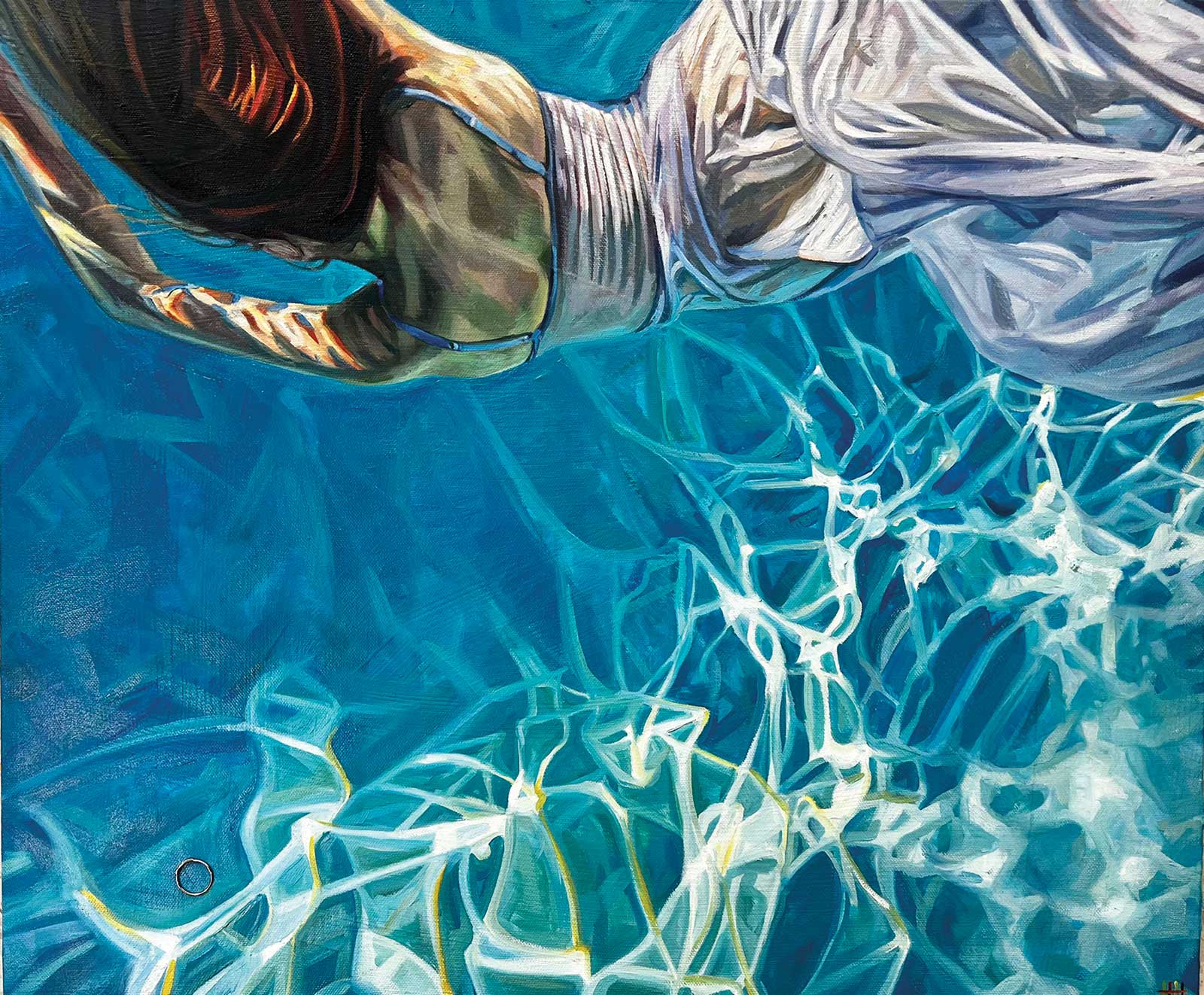
Heather Horton, A Ring of Bright Water, 2023, oil on canvas, 20 x 24”. Photo courtesy the artist.
Heather Horton is one of the first artists whose paintings Peralta started collecting and the only one, in addition to himself and his mother—who is still painting and exhibiting at 90—whose work is represented in every payload.
“I think the Lunar Codex project is one of the most innovative concepts I’ve ever heard about, let alone been involved in,” says Horton. “If anyone was going to conceive of such an idea, it would be Sam, as he is both an artist and a scientist. It’s very important culturally, artistically and for interstellar posterity as well. I think it’s as bold and novel as it is quietly beautiful. I can already imagine the capsules with its Lunar Codex contents, settled in its stillness on the lunar surface for much longer than all of us will be here.”

Heather Brunetti, Pearl, 2020, oil on canvas, 40 x 30”. Photo courtesy the artist.
Partnering with a semiconductor lab, the Lunar Codex uses a variety of digital and analog technology to minimize the media in many formats to anticipate unforeseen changes in technology and potential damage. Although predominantly using digital means, nickel-based NanoFiche chips the size of a dime contain miniature images that only require a microscope to view. Able to store 150,000 pages of text or photos on a single 8.5-by-11-inch sheet, it is currently the highest density storage media in the world.
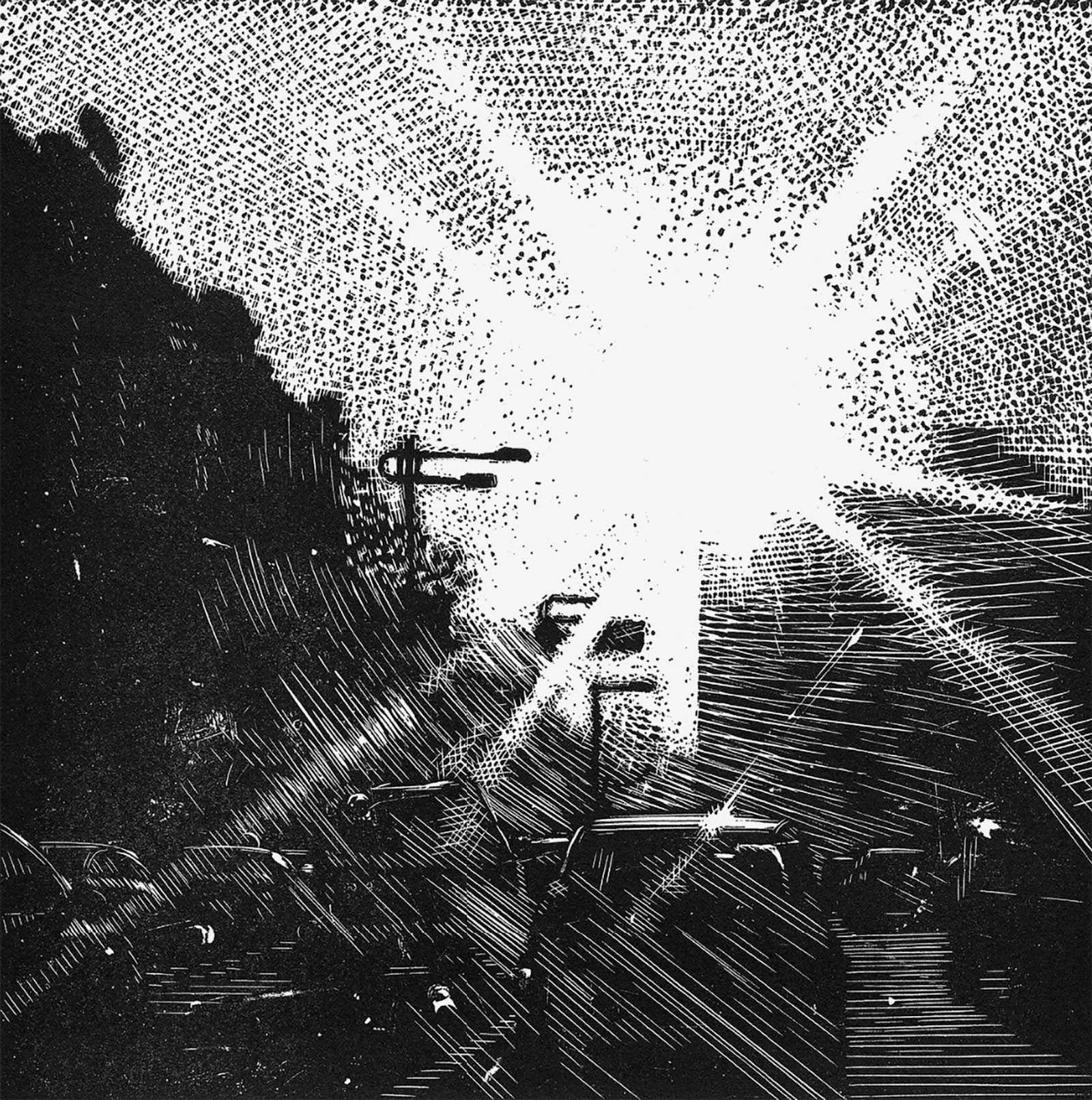
Olesya Dzhurayeva, I will Remember, 2020, linocut, 7½ x 5½”. Photo courtesy the artist.
“Without understanding it could be done, this probably wouldn’t have happened,” says Peralta. “The unique part of what I bring is that I have one foot in the arts and one foot in the sciences—that is what made this possible.”
The time capsules were packed into a DHL MoonBox canister which is then physically bolted to the framework of the Peregrine Lander, which will remain on the moon’s surface and act as a marker for the capsules.
Peralta, the son of an archaeologist, imagines future humans discovering the Lunar Codex, not extra-terrestrials. “They’ll learn about our society today in the same way that when we unearth Greek or Egyptian art, or the Mayan and Aztec ruins, we infer what their society was like and what they considered to be beautiful. It gives an insight into how they lived and how they thought,” he says. “Art tells the story of the human condition and how it relates to today. Future archaeologists will relate our creative past to their own. It will give their own culture context in light of our world.
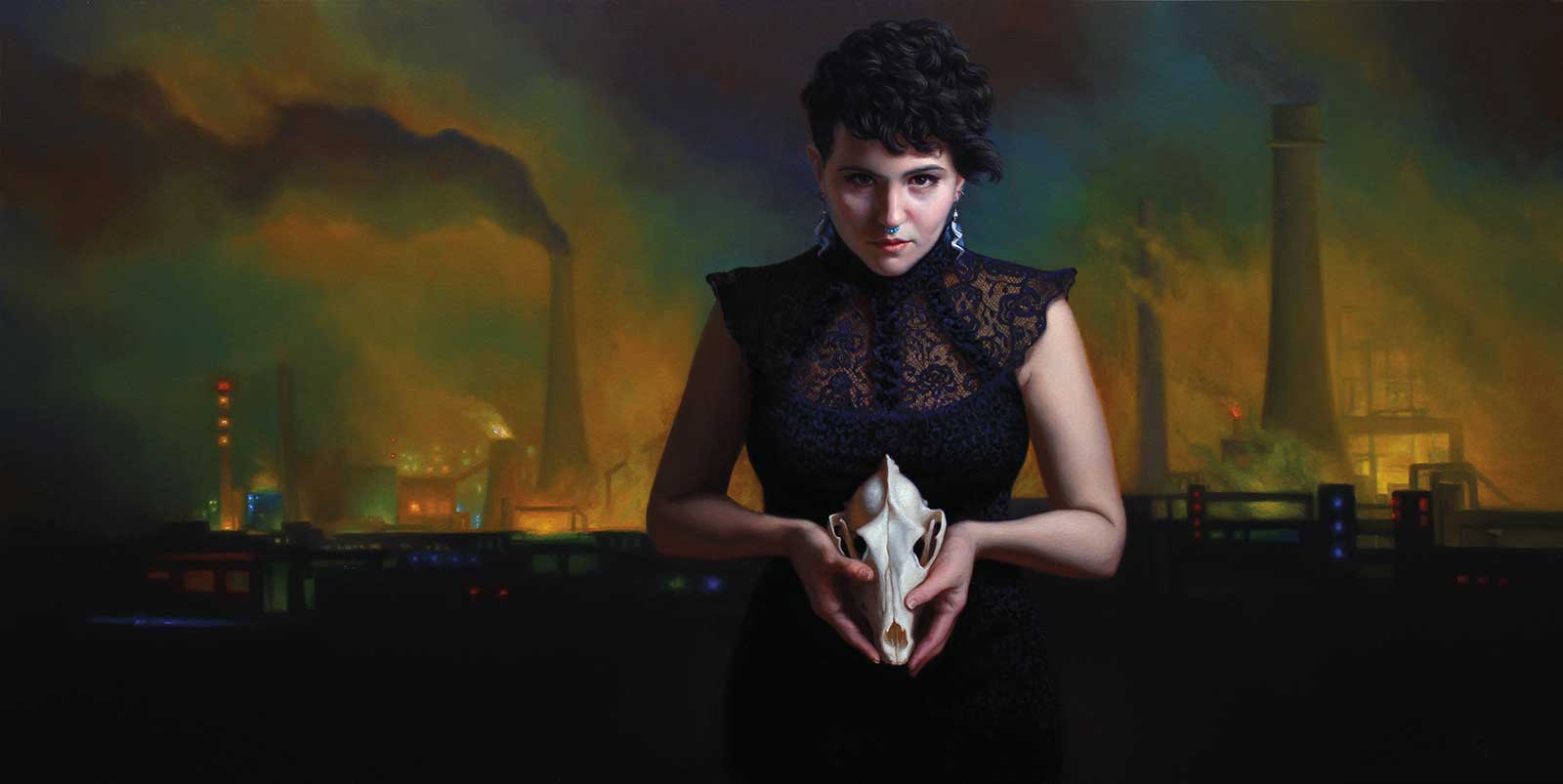
Brianna Lee, A Cautionary Tale, 2018, oil on panel, 15 x 30”. Photo courtesy the artist.
“The context of the time we live in is pandemics, war, climate upheaval, economic problems…” continues Peralta. “But during this time when we have so many challenges in civilization—despite all this, humans still have the ability to dream and find beauty in their world.”
Many challenges facing the planet threaten the survival of contemporary culture—the Codex includes poetry from the Pacific Islands whose residents fear that rising oceans will overtake their country. There are pieces by Olesya Dzhurnayeva, an artist working in Ukraine whose life and work came under siege; and a piece by Norval Morrisseau, an Ojibwe artist widely regarded as the grandfather of contemporary Indigenous art in Canada. There are interviews with U.S. poet laureates from the past 25 years and a selection of stories by novelist Andy Weir.
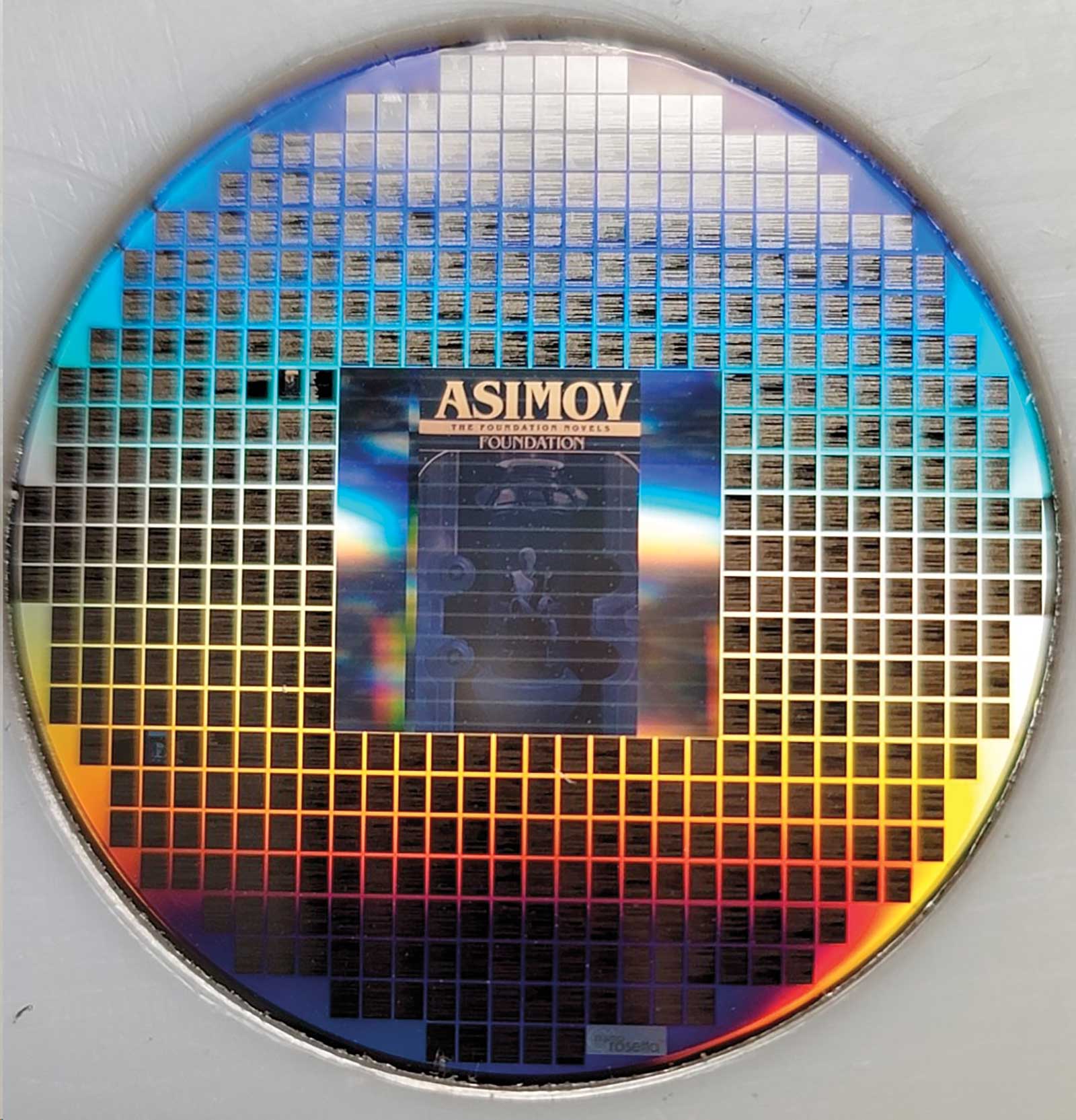
Quarter-sized nickel NanoFiche containting Isaac Asimov’s Foundation. Photo courtesy Lunar Codex.
Alas, “space is messy,” says Peralta. The payload aboard Peregrine Mission 1 was loaded in 2021 and the launch has been delayed three times since.
The first U.S. launch to the surface of the moon in 50 years, and carrying with it the first installment of the Lunar Codex, is now scheduled for December 24, 2023; with a second mission slated for January 12, 2024.
“I’ve been waiting a long time,” says Peralta. “We’re just crossing our fingers and hoping for a safe launch and safe landing.” —
Powered by Froala Editor