The history behind the still life genre is one many art enthusiasts are well aware of—originating in the Netherlands, paintings featuring rich floral and fruit scenes or complex vanitas, prompting the masses to contemplate existence through symbolic objects. Today, we see artists carrying on these traditions, while adding a contemporary flare of their very own.
The genre is often defined as subject matter that is “lacking life” or “without movement,” with the French term for still life translating to mean “dead nature.” However, anyone familiar with the floral works of Dutch painter Rachel Ruysch or Paul Cézanne’s famous works like The Baslet of Apples, can attest that the genre was, and is, anything but devoid of life.
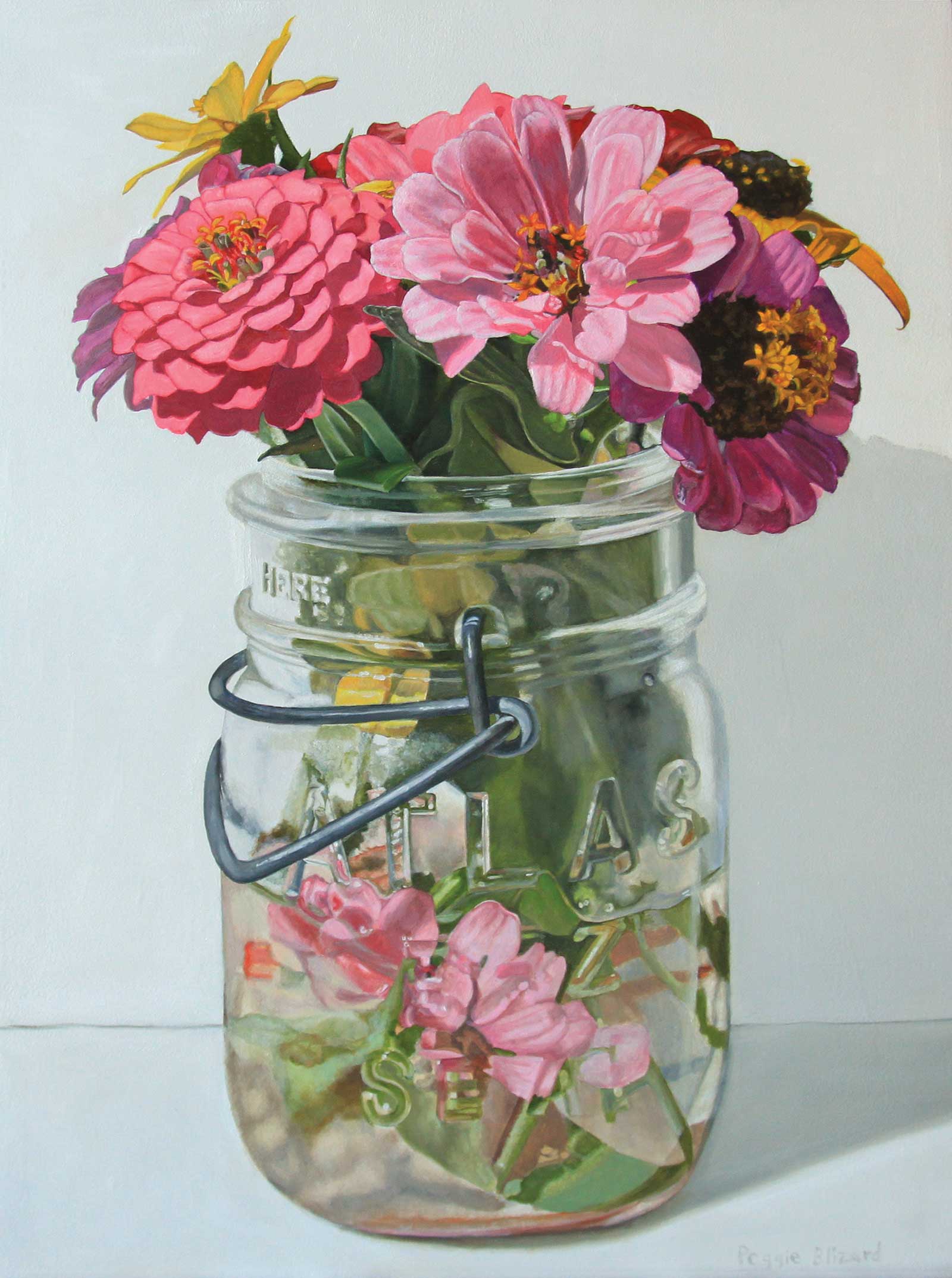
George Billis Gallery, Pink Zinnias in an Atlas EZ Seal, oil on panel, 24 x 18”, by Peggie Blizard.
In 19th-century America, William Michael Harnett (1848-1892) was pushing boundaries with trompe l’oeil in his still life subject matter and was a leading master in hyper realistic depictions in seemingly everyday objects. “His paintings of objects are as much portraiture as they are still life paintings,” remarks Maggie Adler, curator of paintings, sculpture and works on paper at the Amon Carter Museum of American Art.
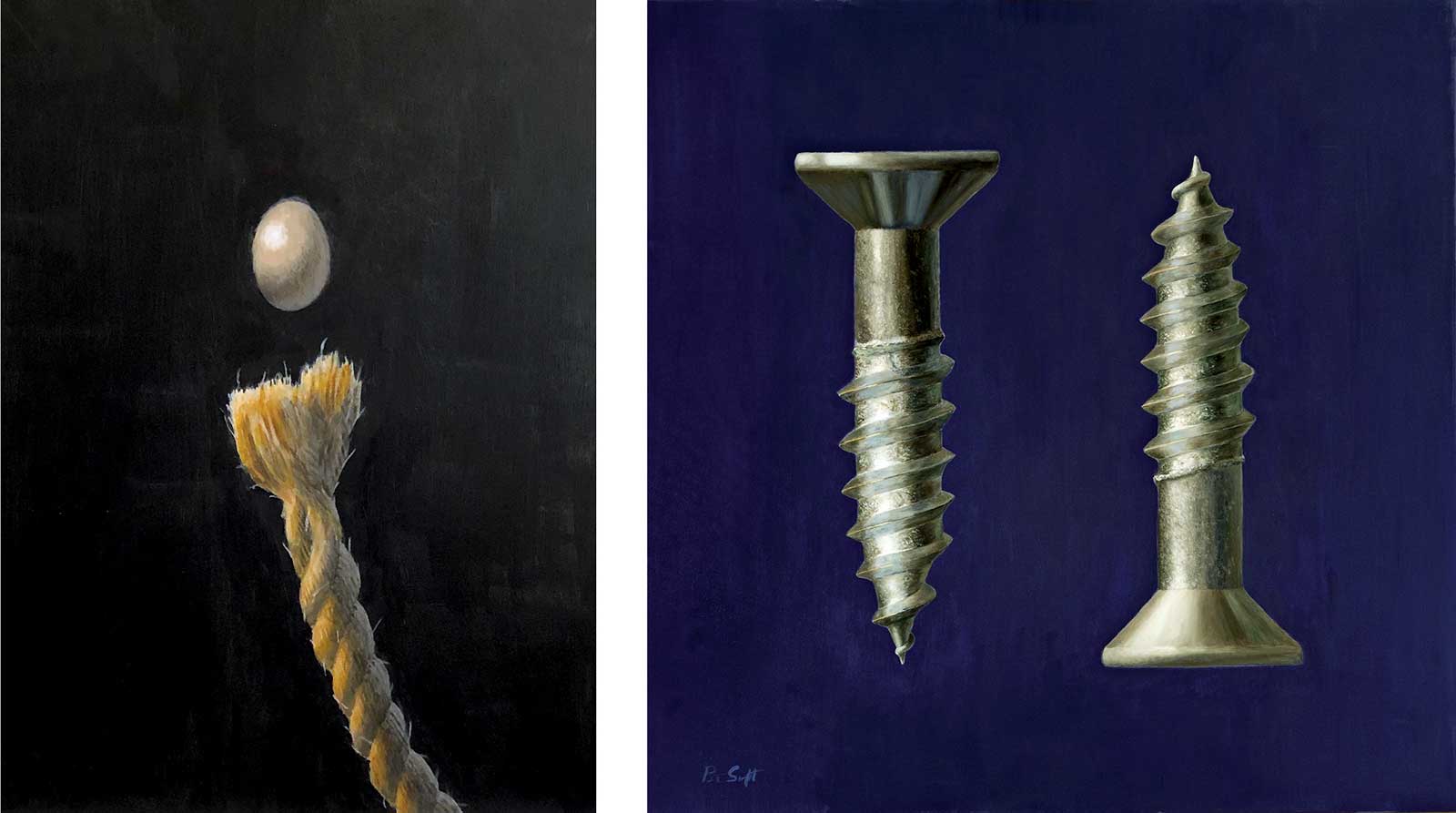
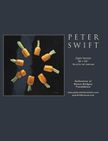
Peter Swift, Egg and Rope, acrylic on canvas, 24 x 18”; Peter Swift, Two Wood Screws, oil on canvas, 48 x 48”
“In [works like] Ease, it appears that the patron of the work has just temporarily left the room—his precariously placed cigar is still burning, absently left behind,” Adler continues. “Commissioned by Massachusetts paper magnate James Abbe, the Victorian gentleman’s library includes items that would best convey the emotional, intellectual and spiritual sides of his patron. Among the well-worn books are an aged Bible, Homer’s Iliad and William Cullen Bryant’s Popular History of the United States,identifying Abbe as a man of faith, learning and patriotic sentiment. We also see him as a man of music and a lover of beauty—as represented by the flute, violin, the cornflowers, roses and the simple, elegant palm-leaf form of a Japanese fan. Through everyday objects carefully rendered, Harnett paints the idea of a nuanced person.”
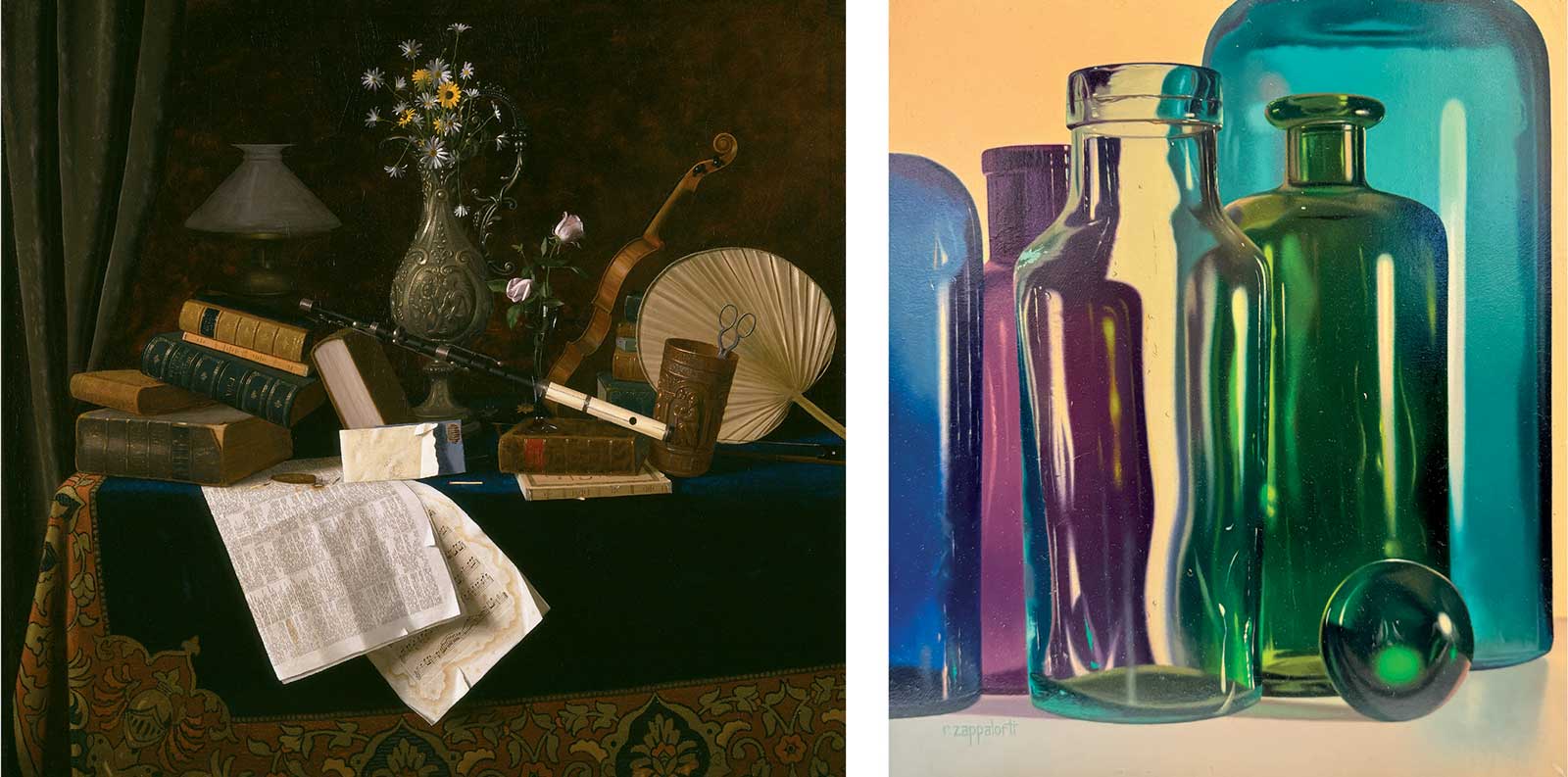
Amon Carter Museum of American Art, Ease, 1887, oil on canvas, 48 x 52¾”, by William M. Harnett (1848-1892). Courtesy of Amon Carter Museum of American Art, Fort Worth, Texas, 1972.2; Cavalier Galleries, Transparencies, oil on panel, 10 x 9”, by Robert E. Zappalorti.
We see these still life traditions carried over into the contemporary realm in works like Pink Zinnias in an Atlas EZ Seal. This colorful floral display, created by George Billis Gallery artist Peggie Blizard, incorporates what the artist considers one of the important purposes of a still life painting—communicating time visually. “The object might just sit there, but if it is skillfully rendered, hopefully, a bit of magic creeps in,” she says. “This particular piece has a softer rendering of the water. Perhaps it’s just a day or so older than usual but the flowers are still fresh and crisp. By pushing a flower or two down in the water, the color flows around the picture and creates more visual interest.”
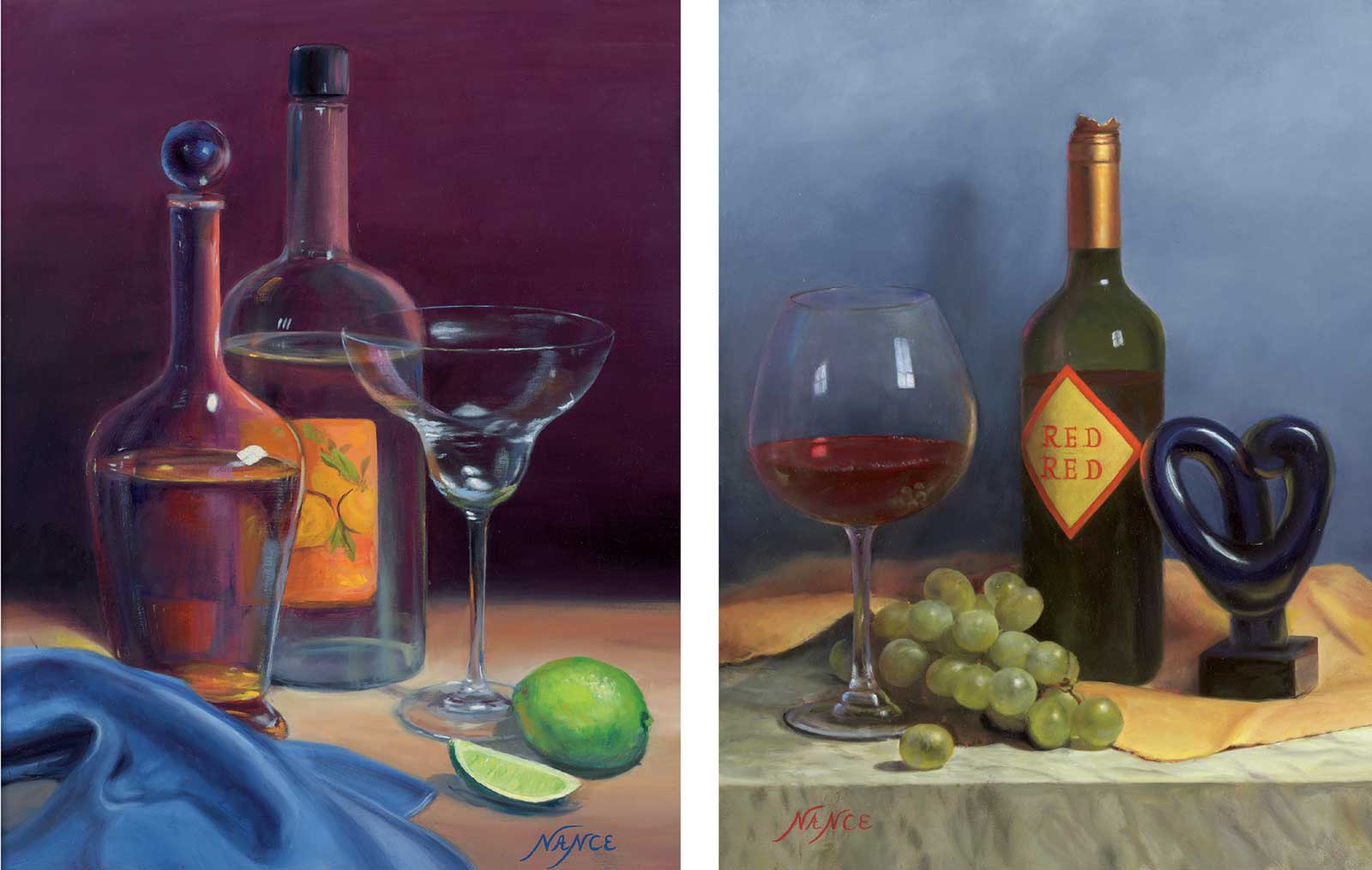
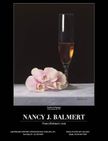
Nancy J. Balmert, Lost Shaker of Salt, oil on canvas, 18 x 14”; Nancy J. Balmert, Red Red Wine, oil on canvas, 16 x 12”
In addition, galleries and museums celebrate in and uphold the still life genre by representing and showcasing fresh contemporary works, while harkening back to the golden era, with classic scenes by the maters. Just ending in May of 2023, was the Phoenix Art Museum exhibition Still Life: Ordinary Pleasures, that explored “one of art’s most fundamental genres through paintings by Elena Climent, Georgia O’Keeffe, Pablo Picasso, Odilon Redon, Helen Torr and others,” reads the PAM website.
Prominent galleries like Cavalier Galleries based in New York City, represent astounding contemporary still life artists like Robert E. Zappalorti, and works like Transparencies,pictured here. “[He] is a master of the sharp focus still life,” notes gallery owner Ron Cavalier. “He creates compositions that revel in formal illusions—of shapes and textures, reflections and perspectives. Transparencies is an ode to color, surface and light, as well as to the joys of oil painting itself.”
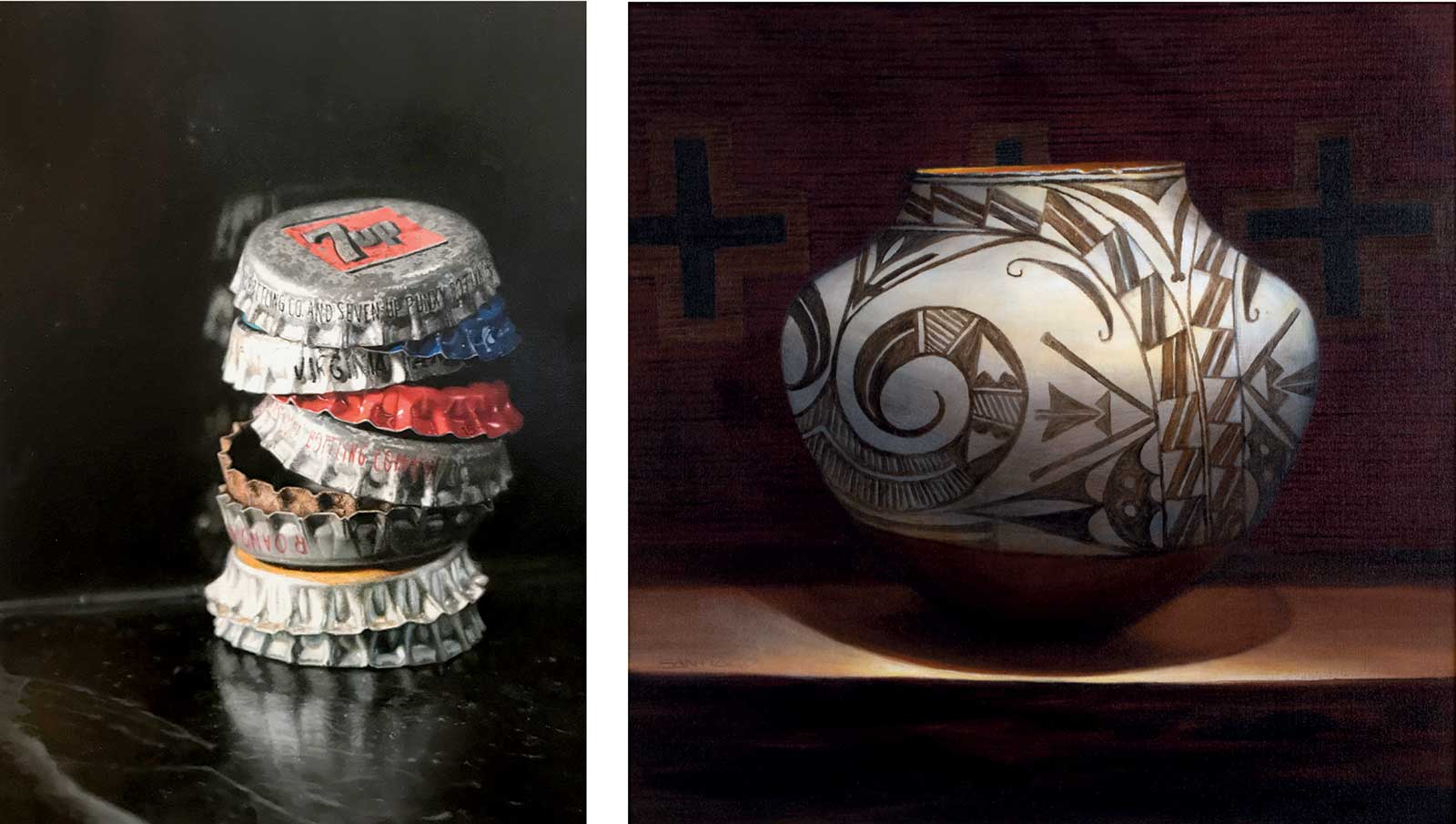
Arcadia Contemporary, Balancing Act, oil on canvas, 30 x 20”, by Michele Amatrula; Blue Rain Gallery, By Sacred Hands, oil on canvas, 24 x 24”, by Roseta Santiago.
Through the remainder of this section, you’ll hear from additional galleries and artists on the significance of the still life genre. You'll also receive tips on establishing or adding to a collection.
RJD Gallery owner, Richard Demato, shares, “Still life is real life, encapsulated within a frame that often brings forth a moment, a memory or a feeling in time. There is a passive action in still life art tied to the object depicted—one can recall pulling on a favorite pair of boots or jeans, well-worn and full of memories as in the works of Frank Oriti. The viewer can remember seeing an antique telephone or lantern, delightful curiosities as the years go by and masterfully recreated by Emily Copeland. Both artists capture the realness of things seen and felt; Oriti through his life upbringing in a Cleveland blue collar neighborhood and Copeland through her nostalgic adventures through antique shops in Canada.”
When collecting the genre, Demato says, “Art lovers who wish to bring a still life into their collection should look for subject matter that appeals to them on an emotional level, pieces that will provide them with opportunities for sustained contemplation, inspiration and enjoyment.”
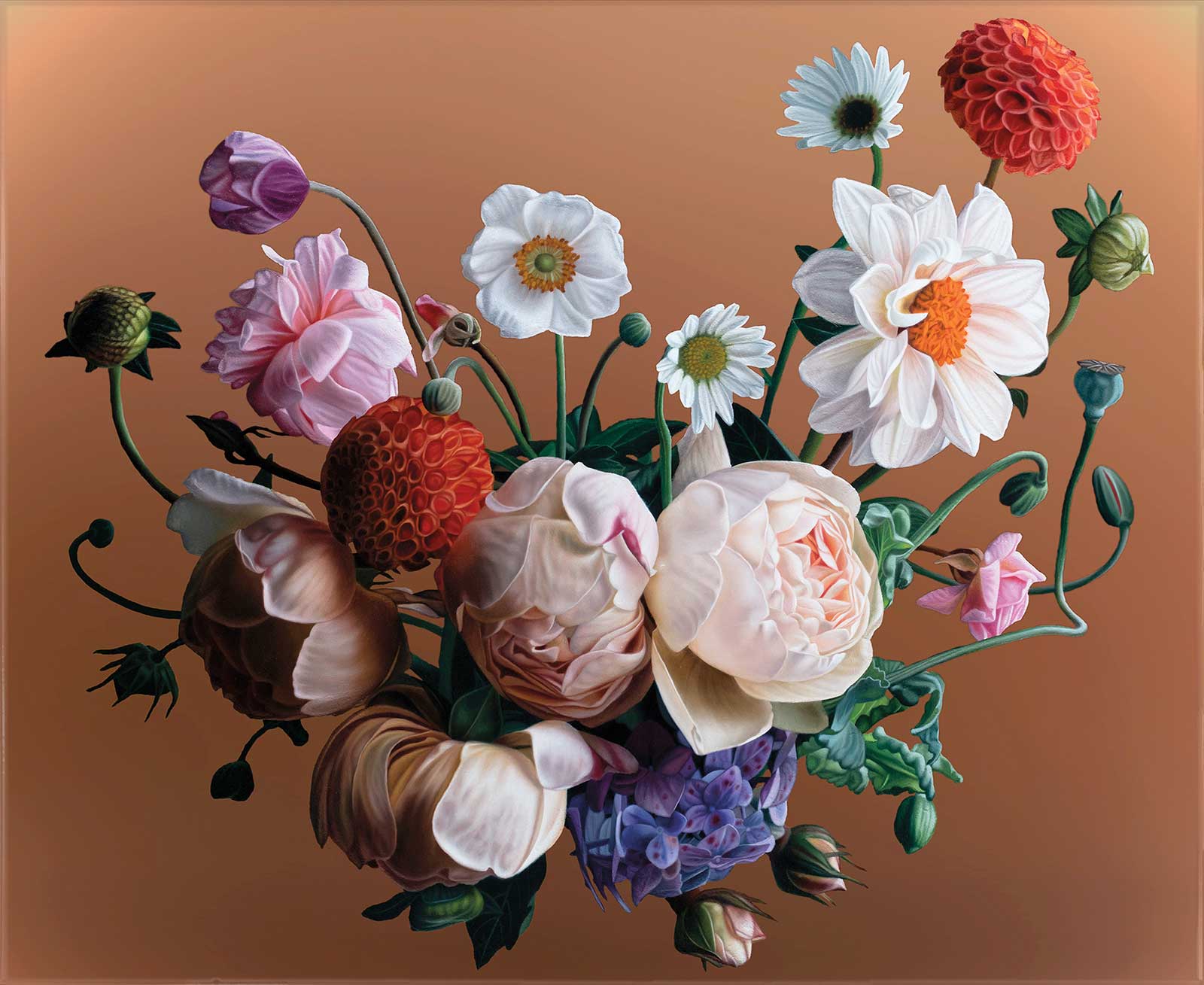
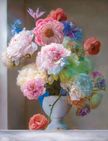
Arcadia Contemporary, Late Summer, oil on copper, 18 x 22”, by Sebastian Galloway.
Arcadia Contemporary gallery, based in New York City, “maintains its commitment to presenting virtuoso, realist works from an international array of artists who are creating genuinely unique, timeless and collectible artwork,” says owner Steve Diamant. The gallery also notes that it’s motivated to spotlight artists who, while using timeless painting and drawing techniques, [are] focused on creating imagery reflective of the contemporary world. Showcasing the best in still life is no exception. Represented artists, with works pictured here, include Sebastian Galloway’s rich floral scene titled Late Summer. Artist David Dorsey presents a highly realistic portrayal of candy in Yellow Zips, while Michele Amatrula displays a close-up of bottle caps stacked on top of each other in Balancing Act.
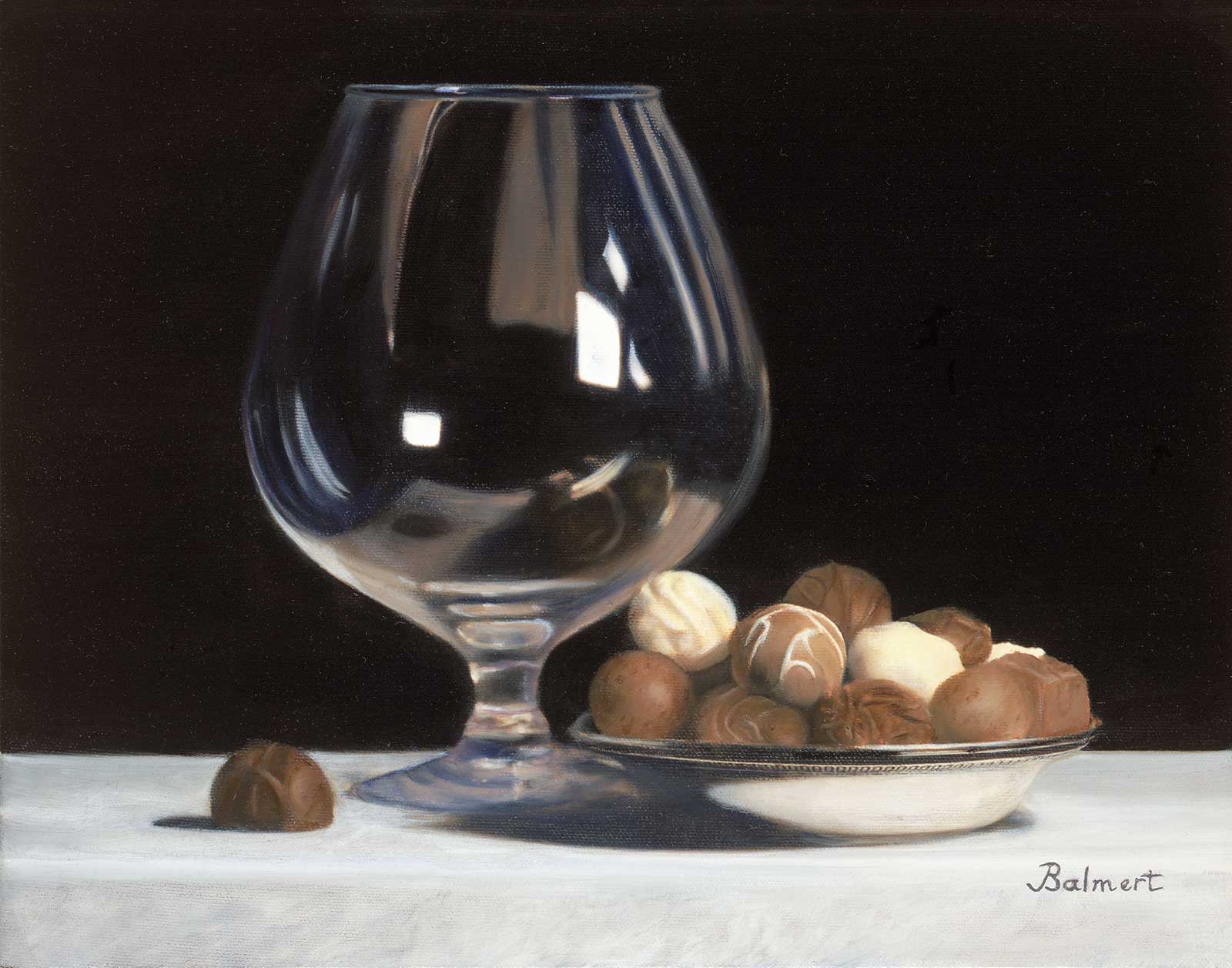
Nancy J. Balmert, Crystal and Truffles, oil on canvas, 11 x 14”
Represented by Blue Rain Gallery, with locations in Santa Fe, New Mexico, and Durango, Colorado, is Roseta Santiago—well known for her depictions of Native American figures and artifacts. “In 2000, my first paintings were still life,” she explains. “The process evolved from capturing the heartbeat of the moment to translating it onto canvas. All the objects that stirred a deep feeling within me became my subjects. I labored to convey to the viewer what I saw in them, what moved me. My storytelling captivated immediately, casting a dramatic light on the stage where I guided the viewer’s gaze. In each arrangement and object, I found a timeless quality in my paint vocabulary—not burdened by the past, but rather, illuminating a priceless treasure within a contemporary setting.”
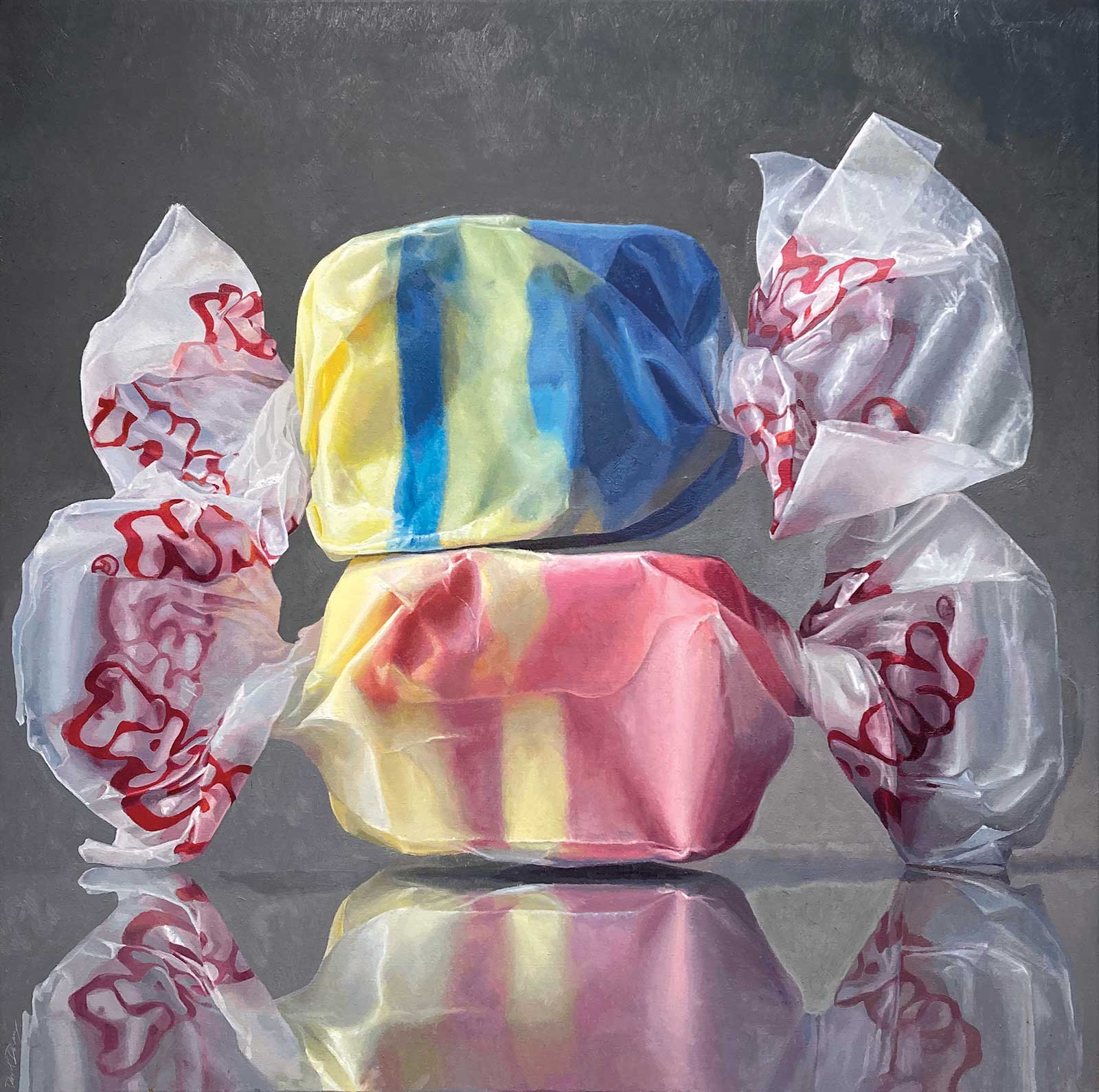
Arcadia Contemporary, Yellow Zips, oil on linen, 46 x 46”, by David Dorsey.
Santiago continues, “This narrative defines who I am and resonates with many of my collectors today. We celebrate the richness of the past while embracing the excitement of the contemporary world in which we live.”
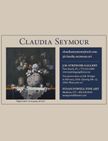
Artist Claudia Seymour shares that she really loves the genre of still life painting in both oil and pastel. “Although I do use oil paints more frequently than soft pastel, each has its advantages,” she explains. “For my two-person show at J.M. Stringer Gallery opening on February 15, however, I have focused on oils. I find it easier to stick to one medium for a series of works than to switch back and forth between the two. There is less disruption and rearrangement of the studio if I remain with one medium.” Seymour also admits that one of the most beneficial aspects of being a studio painter is the ability to control all aspects of each work: composition, lighting, size, atmosphere, “as well as the fact that everything remains basically unchanged over several days,” she says. “I treasure my props, many of which are vintage or true antiques collected over years, and I supplement them with flowers and fruit, fabrics, books and other natural objects like wood and shells.”
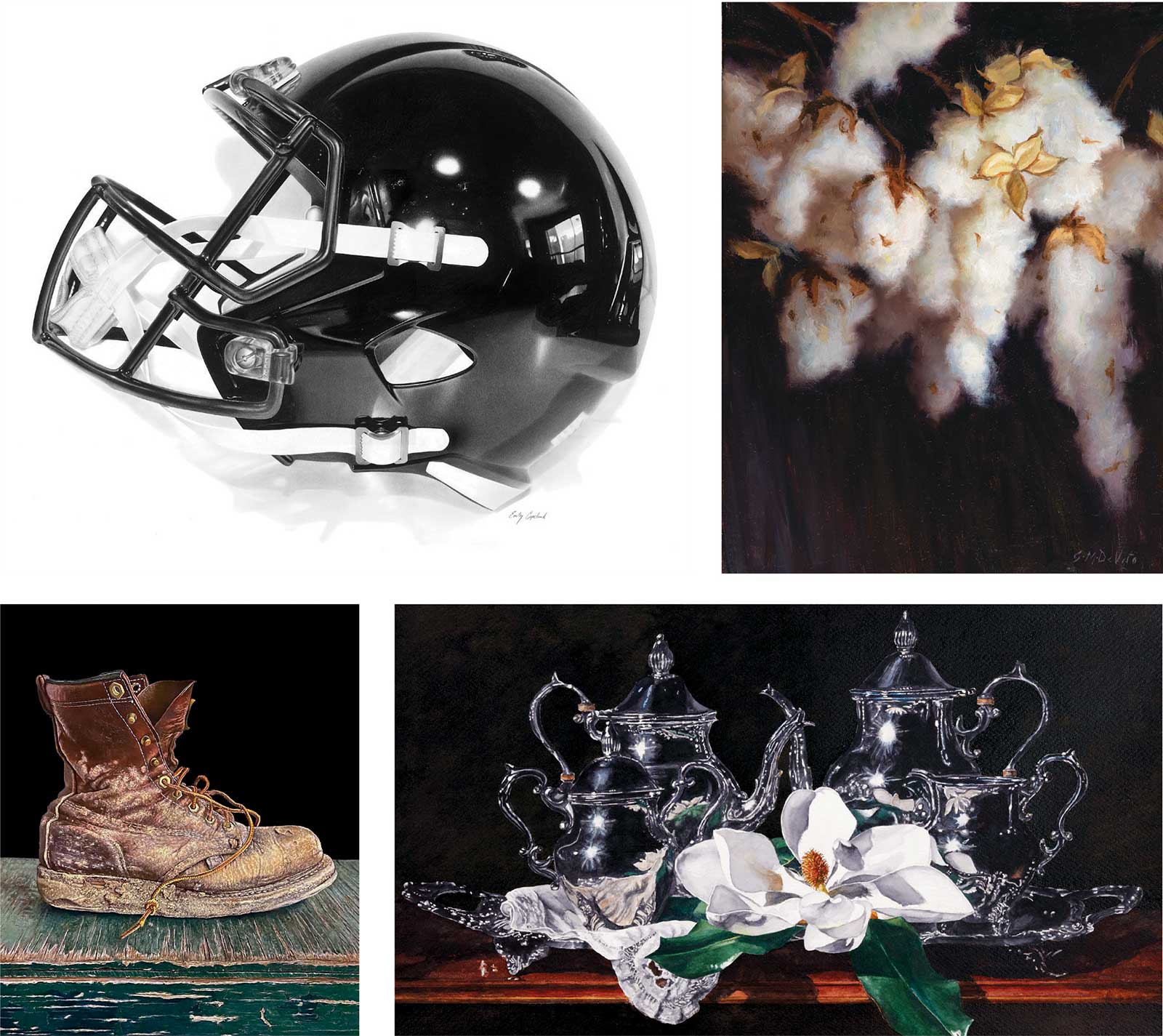
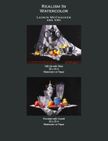
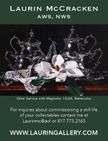
Top: RJD Gallery, Football Helmet, charcoal on Stonehenge paper, 36 x 45”, by Emily Copeland; Grace DeVito, Pendant, oil on linen, 14 x 11” Bottom: RJD Gallery, In These Boots, oil on canvas, 24 x 20”, by Frank Oriti; Laurin McCracken, Silver Service with Magnolia, watercolor on Fabriano soft press paper, 13 x 20”
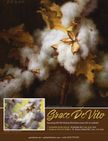
For artist Grace DeVito, 17th-century Dutch still life painters were her first inspiration. “The beauty of the set-ups fascinated me and made me want to know how they were created,” she says. “After many years of painting and chasing that ideal, I realized that it was the light that affected me most. It became the impetus and inspiration for my still life paintings because it reveals the beautiful forms and textures of the organic matter, curios and common everyday objects that I paint. It’s the drama of a chiaroscuro or the soft subtle tones of an overcast day— light sets the mood and atmosphere.”
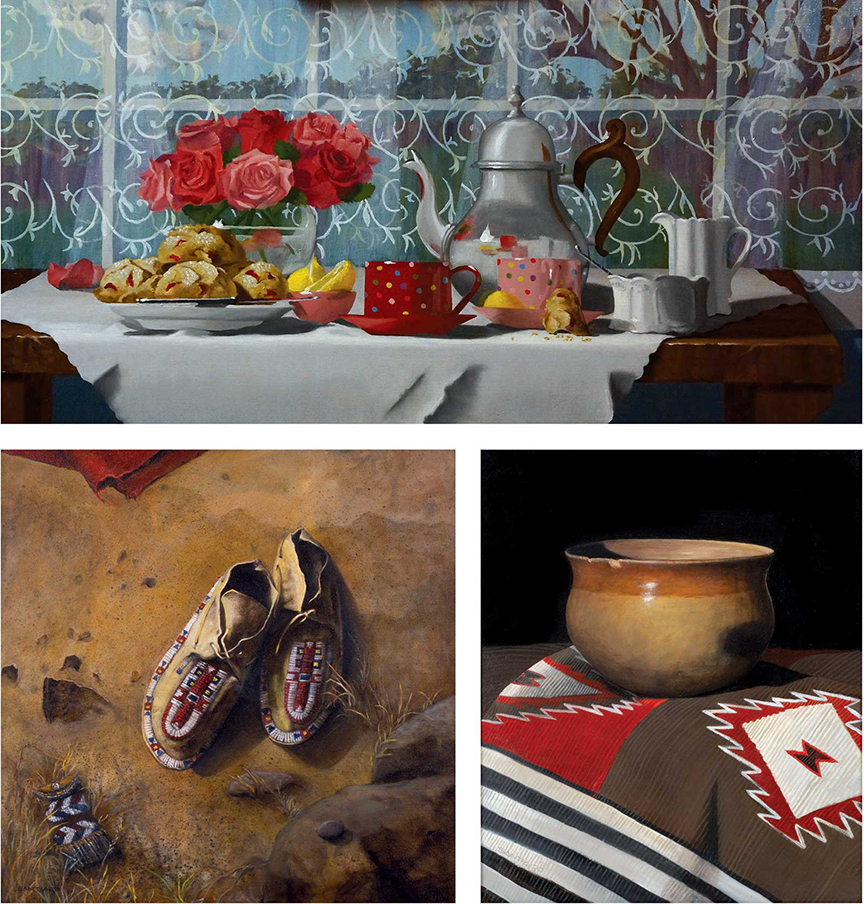
Top: Claudia Seymour, Tea for Two, oil on linen panel, 12 x 24”. Bottom: Blue Rain Gallery, Lost and Found, oil on canvas, 24 x 24”, by Roseta Santiago; Blue Rain Gallery, Pueblo Stew Bowl, oil on canvas, 24 x 20”, by Roseta Santiago.
For collectors of her work, DeVito says, “I hope that they too are inspired by the light in my paintings, and that it speaks to them. Recently a collector of mine told me how when they can’t sleep at night, they will often sit in front of their painting collection. They said it helped to calm them, that they showed beauty still mattered.”
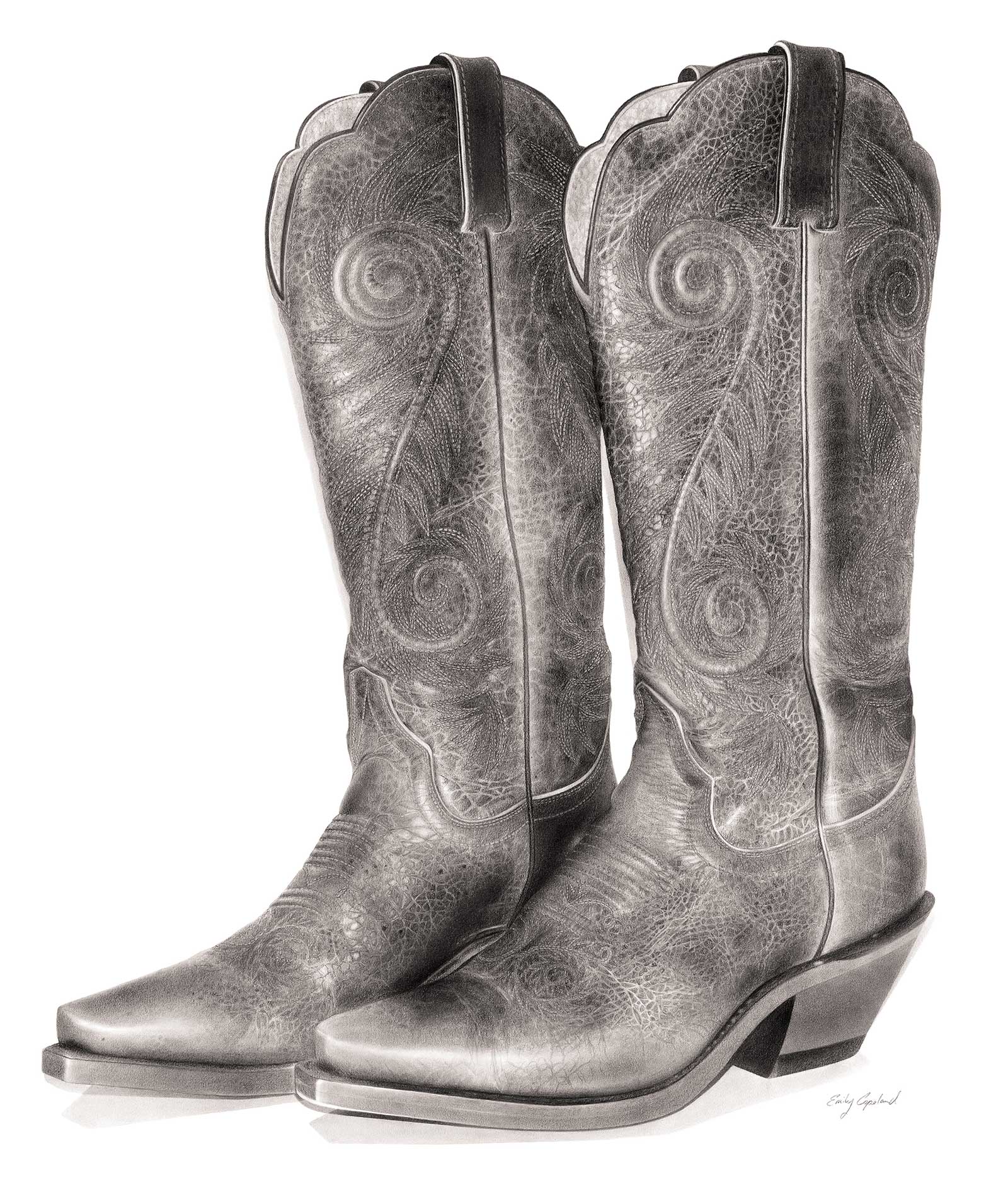
RJD Gallery, Cowboy Boots, charcoal on Stonehenge paper, 38 x 31”, by Emily Copeland.
Laurin McCracken is a realist watercolorist whose work is also largely influenced by the Dutch and Flemish still life painters of the 16th and 17th centuries. “My goal is to record the world around me with a high level of detail,” he says. “This is not a painting style that is typically associated with the medium of watercolor. Look closely at one of my paintings and you will not only see the objects in the paintings, but you will also see reflections of other objects within the very objects I paint.”
McCracken notes that collectors “should purchase paintings that touch their hearts. The value of a painting is how you relate to it over time. If it has value for you, the chances are that it will have value later in the art market. Look for quality in the technique that produced the art as well as the subject.”
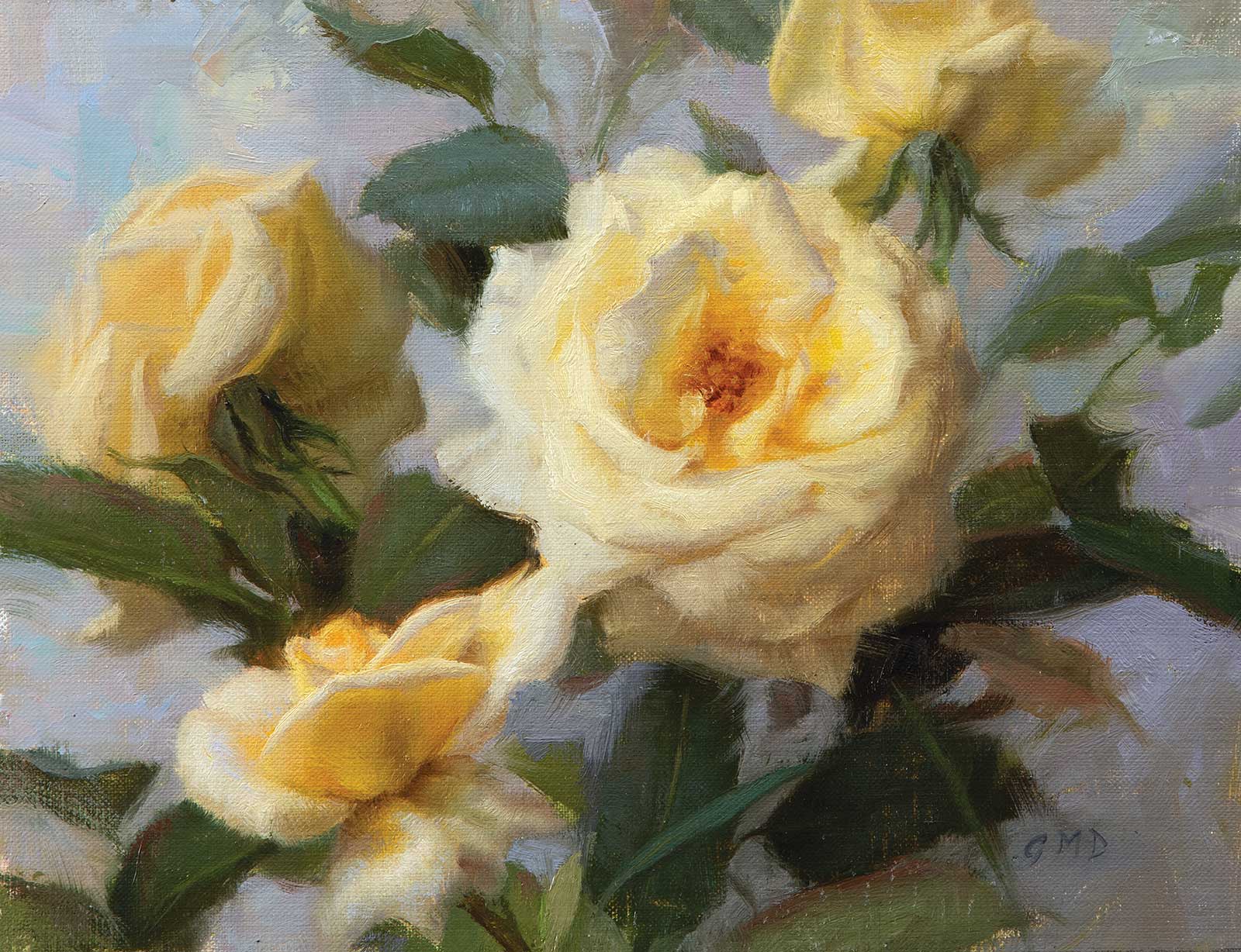
Grace DeVito, Yellow Roses, oil on linen, 12 x 12”
While Nancy J. Balmert is best known for her large florals, she takes great pride in producing still life paintings that feature glass and perishable items like truffles, champagne or small flowers, as they demand patience and technical execution. “On the other hand, for a change of pace, I’ve had fun creating what I call ‘lyrical paintings,’” Balmert says. “These are a form of still life based on popular songs. First, I find a song that I like with a title that has the elements to create a still life painting, such as a ring or a bottle of wine, and then I add in several other elements that are found in the lyrics. As you might imagine, there are not a lot of popular tunes that contain the combination. But when I do, I’ll play the song while I’m painting and take delight when someone sees the painting, figures out the tune and starts singing it, too. As to the songs, look at my paintings and see if you can’t figure it out before you read the name of the painting. That’s part of the fun!”
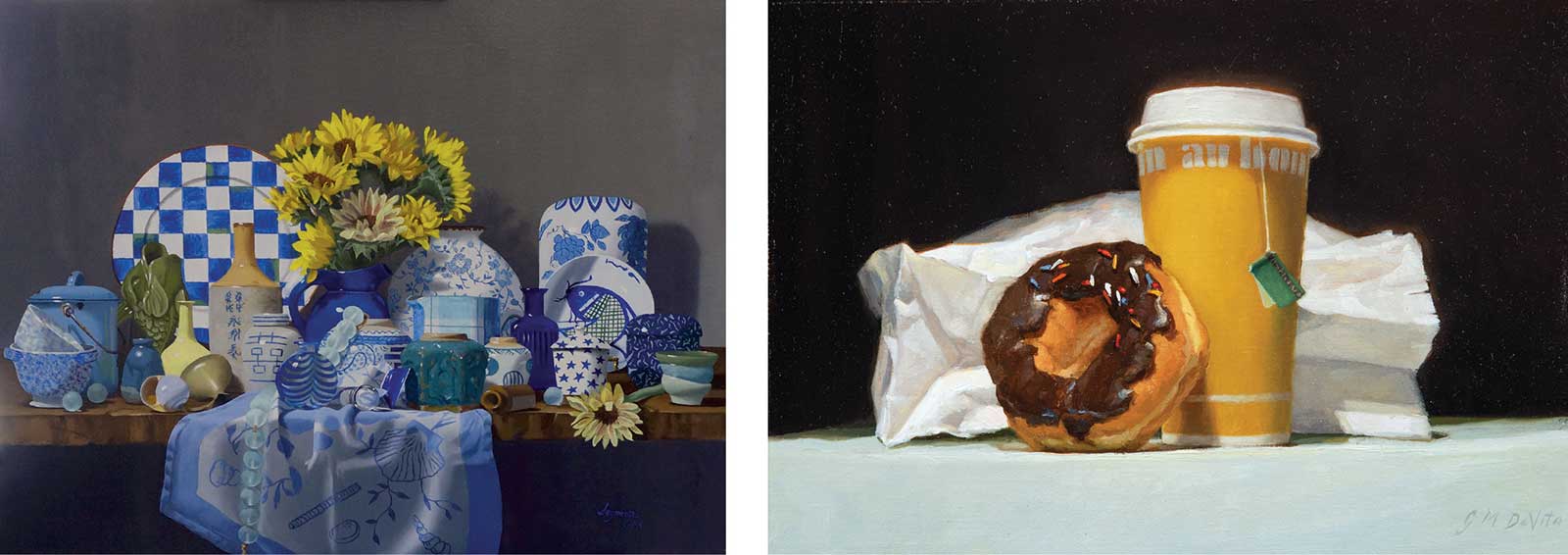
Claudia Seymour, Seaglass Beads, oil on linen panel, 18 x 24”; Grace DeVito, Breakfast of Champions, oil on linen, 8 x 12”
Peter Swift’s work combines both symmetrical design and classic realistic still-life painting. He has coined the phrase “symmetrical realism” to describe this type of work. “Symmetry is a fundamental, underlying principle in art,” Swift says. “However, during the past century, symmetry has been a factor for the most part only in abstract art, such as the work of Josef Albers and Frank Stella.” Swift starts with simple objects—the forgettable objects that we see every day, but usually don’t see at all. Pictured here you will find two exemplary scenes titled Two Wood Screws and Egg and Rope.
What is Swift’s advice to collectors who are interested in still life art? Look for striking designs and superb craftsmanship. —
Featured Artists & Galleries
Amon Carter Museum of American Art
3501 Camp Bowie Boulevard
Fort Worth, TX 76107
(817) 738-1933
www.cartermuseum.org
Arcadia Contemporary
421 W. Broadway, New York, NY 10012
(646) 861-3941
www.arcadiacontemporary.com
Blue Rain Gallery
544 South Guadalupe Street
Santa Fe, NM 87501
(505) 954-9902
934 Main Avenue, Unit B
Durango, CO 81301
(970) 232-2033
www.blueraingallery.com
Cavalier Galleries
530 W. 24th Street, New York, NY 10019
(212) 570-4696
www.cavaliergalleries.com
Claudia Seymour
Stamford, CT
claudiaseymour@aol.com
George Billis Gallery
116 Main Street, Westport, CT 06880
(203) 557-9130, www.georgebillis.com
Grace Mehan DeVito
(203) 979-2472
gmdevito@yahoo.com
www.gracedevito.com
Laurin McCracken
Fort Worth, TX, (817) 773-2163
laurinmc@aol.com
www.lauringallery.com
Nancy J. Balmert
www.nancybalmert.com
Peggie Blizard
www.peggieblizard.com
Peter Swift
pswift73@icloud.com
www.peterswiftartstudio.com
RJD Gallery
227 N. Main Street, Romeo, MI 48065
(586) 281-3613
art@rjdgallery.com
www.rjdgallery.com
Powered by Froala Editor
Powered by Froala Editor