
Featuring a new series of narrative paintings by Victor Grasso, and animal sculptures by Julia Levitina, Michael Quadland, Gary Weisman and Treacy Ziegler, the works in Wild Things,an exhibition opening at Stanek Gallery on January 6, explore the intersection of the animalistic and the human in unique and imaginative ways.
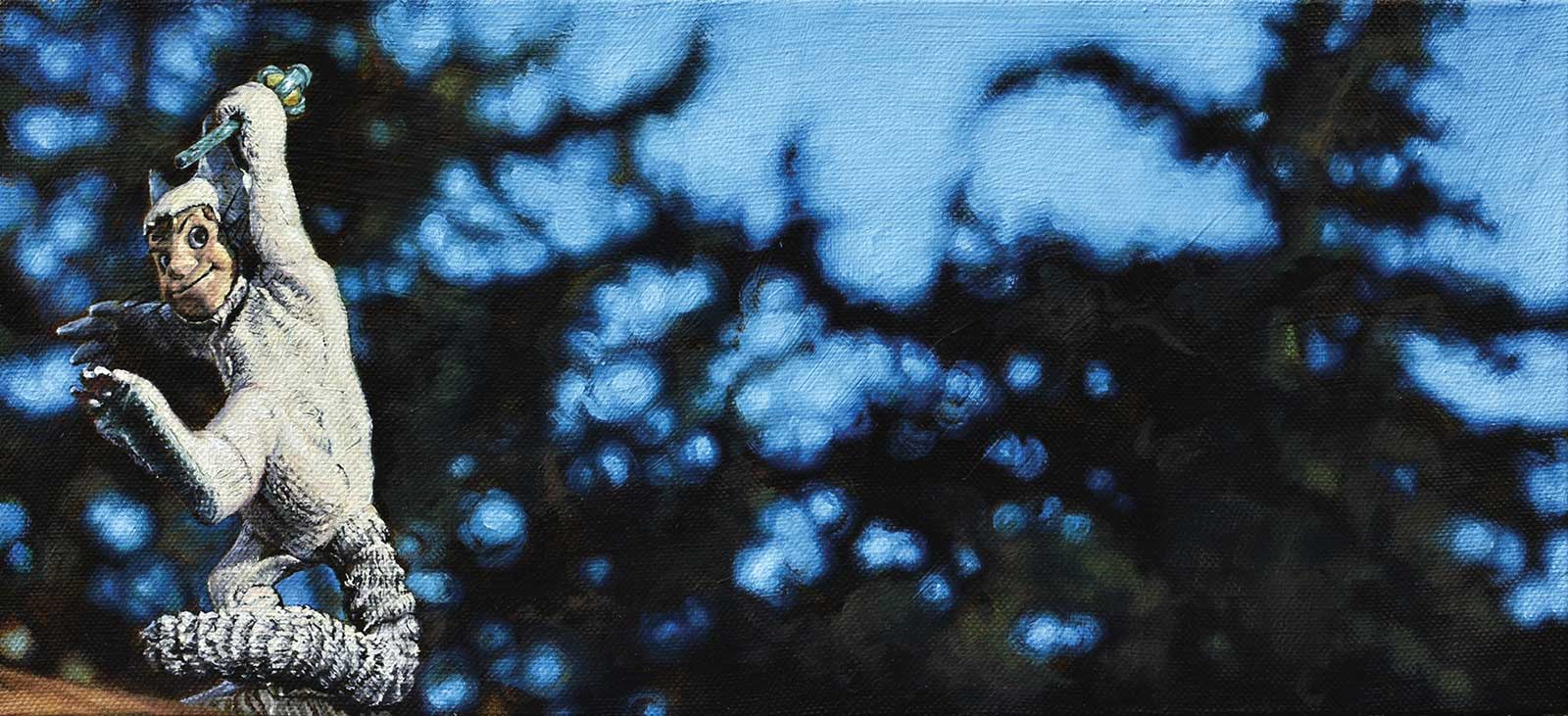 Victor Grasso, King Max, oil on linen, 8 x 17½"
For his new body of work, Grasso, the sole painter in the show, drew inspiration from Maurice Sendak’s classic children’s book Where the Wild Things Are. Each piece depicts an adolescent wearing a wolf costume, the extra pair of eyes intensifying their direct gazes, and unifying them, not only as a cohesive series but as part of a pack. The pieces reveal Grasso’s enduring Peter Pan spirit and the continuing influence of the pop culture of his youth on his work.
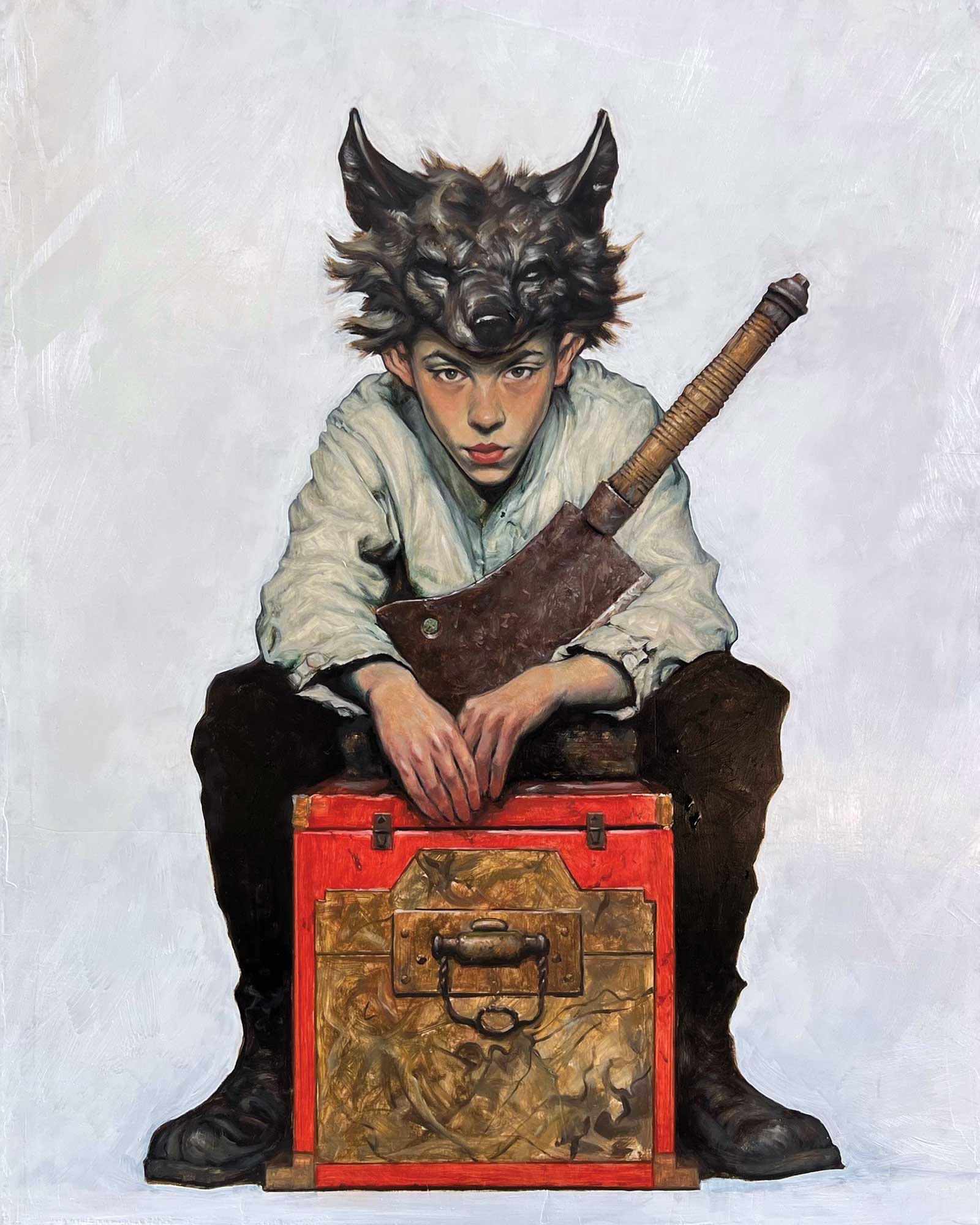
Victor Grasso, The Knight, oil on board, 16 x 20"
“It’s all an amalgam of me and my interests,” says Grasso. “It’s a mix of Where the Wild Things Are, Stand by Me, Goonies, Lost Boys, ET…those coming of age stories about young boys. As far as putting it all together, that’s what I call ‘making the gumbo’.”
Grasso has completely fleshed out the narrative for these paintings and uses symbolic imagery to add layers to the tale. For example, each painting incorporates a box. “A box is representative of so many things,” he says. “Your secrets, your treasures, your past or something you’re about to unleash or reveal. Some are protected inside it; some are on top; some are sitting next to it. Everyone wears some type of wolf hat or mask so they’re almost like a pack—a rag tag family of kids.”
As in a wolf pack there is hierarchy and, as in the coming of age tales that Grasso references, each character has a role to play. There is the girl who stirs up all kinds of shifting emotions in the boys, upon whom Grasso, loosely drawing from the archetypes in the Tarot, has bestowed names like the Jester, the Knight, the Sage and so on. If Grasso’s kids—who he considers his fiercest, most honest critics—like the work, he knows he’s on the right track. But these works aren’t only for children but appeal to the wild child in all of us.
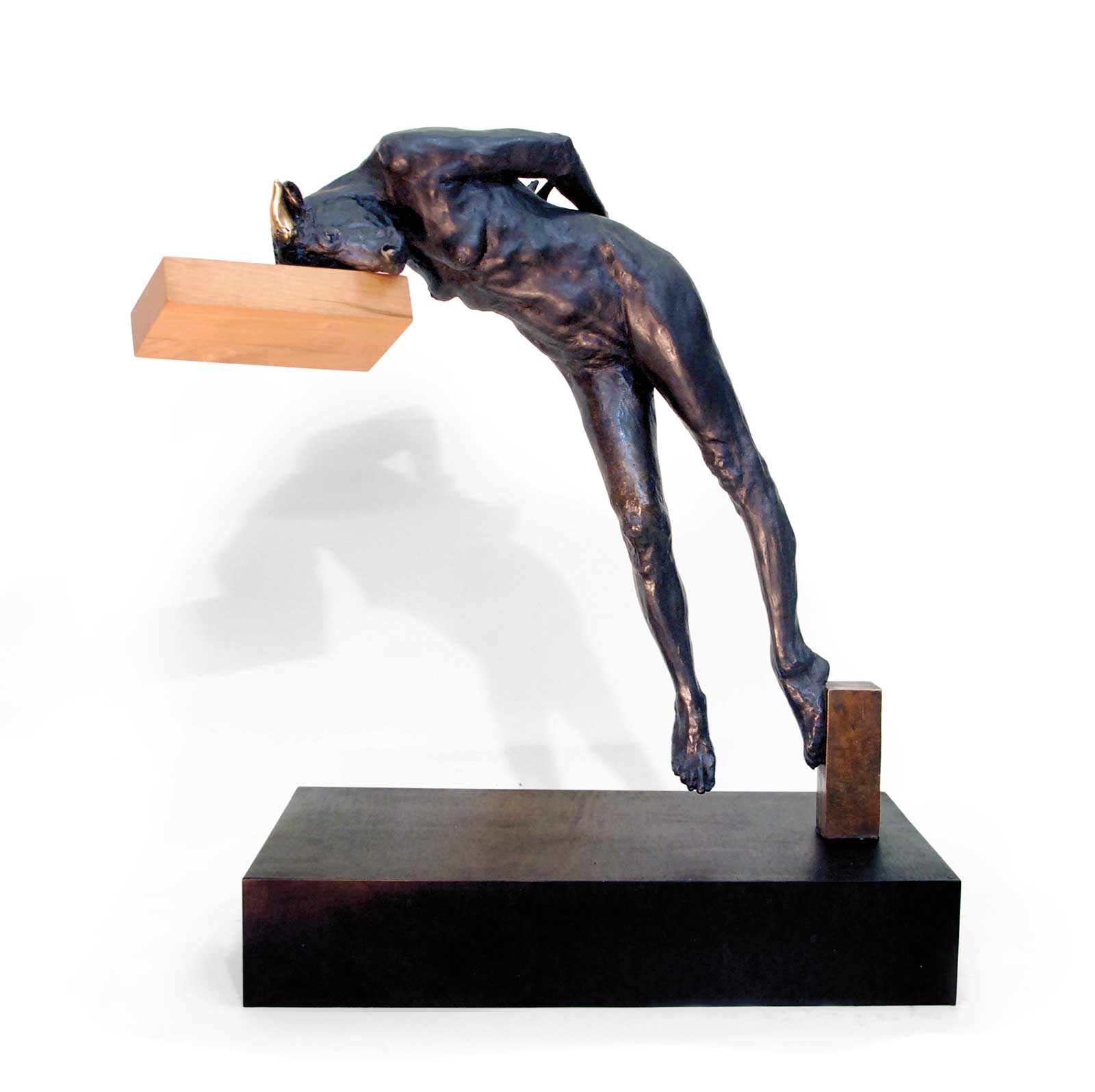
Gary Weisman, Altered Minotaur, bronze, 17 x 19 x 9"
“I’m a 46-year-old 14-year-old,” he says. “I play with my crowns everyday by myself in my own sandbox. I don’t think I’ve ever outgrown my inner child—it just takes longer to get back to normal now.”
The story Grasso tells is a vignette within the larger narrative of the exhibition. Gallery owner and director Katherine Stanek explains how she conceptualized the show as a whole. “I want the viewer to experience a rite of passage while traversing the gallery—to navigate different stages as they walk among and around the ‘wild things’.”
The four sculptors will exhibit a collection of works that represent the various transitions. The journey begins with Quadland’s playful bronze birds cast with found objects. Levitina’s Gathering depicts a bird atop a rabbit nestled on a fox curled up upon a deer astride a bear. It evokes feelings of solidarity and compassion that transcend species, as well as life’s fragility. The face of Ziegler’s cast paper sheep, which she fashioned out of letters from prisoners, contains an uncannily human expression, its eyes exuding relatable human emotions like empathy, concern and understanding. In the final passage, the show reaches its fullest expression and dramatic climax with Weisman’s powerful bronze, Altered Minotaur.
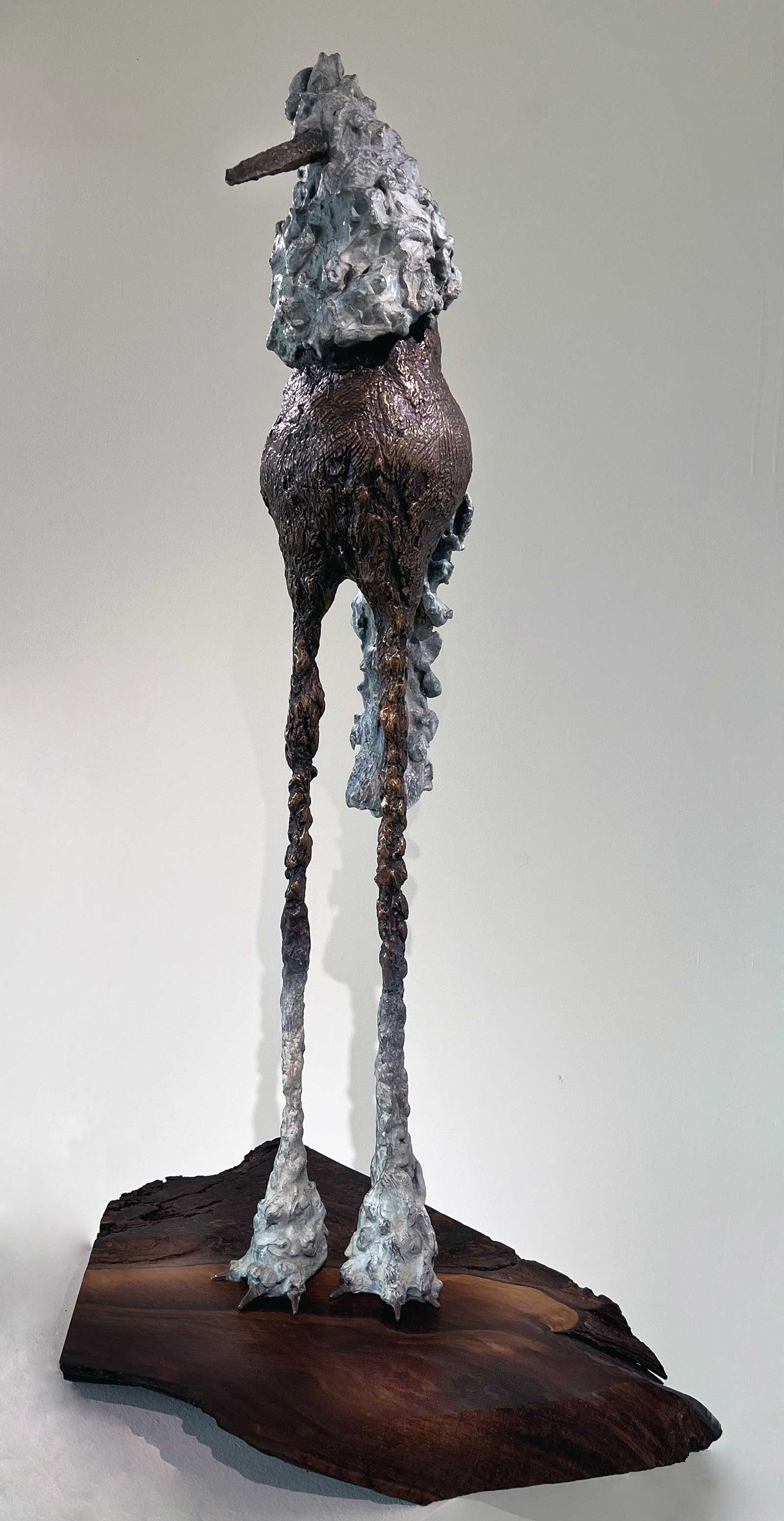
Michael Quadland, Versaille Louie, bronze, 39 x 7 x 10"
A version of the Greek myth of the Minotaur that most resonates with Weisman was written by Andrew Shalit for the literary and photography magazine The Sun. In it, the Minotaur is part woman, not man, and she is blind. True to the classical telling, when the King of Crete did not sacrifice a bull in Poseidon’s name, the god instilled lust for the animal in the king’s wife. When she gave birth to the Minotaur, it was confined to a labyrinth where it feasted on human flesh until destroyed by Theseus.
This is where the stories diverge. In Shalit’s version, the queen blinded the Minotaur because she could not bear the sight of her child’s eyes gazing out at her from the face of a bull. Then he takes us through the various stages of the Minotaur’s life—innocence and the first contact with a human being that marked the end of it and the beginning of the blood-thirsty phase she became infamous for. But, in Shalit’s version, when Theseus arrives on the scene, the plot unfolds differently, into a redemptive tale of compassion, love and the transformative power of touch.
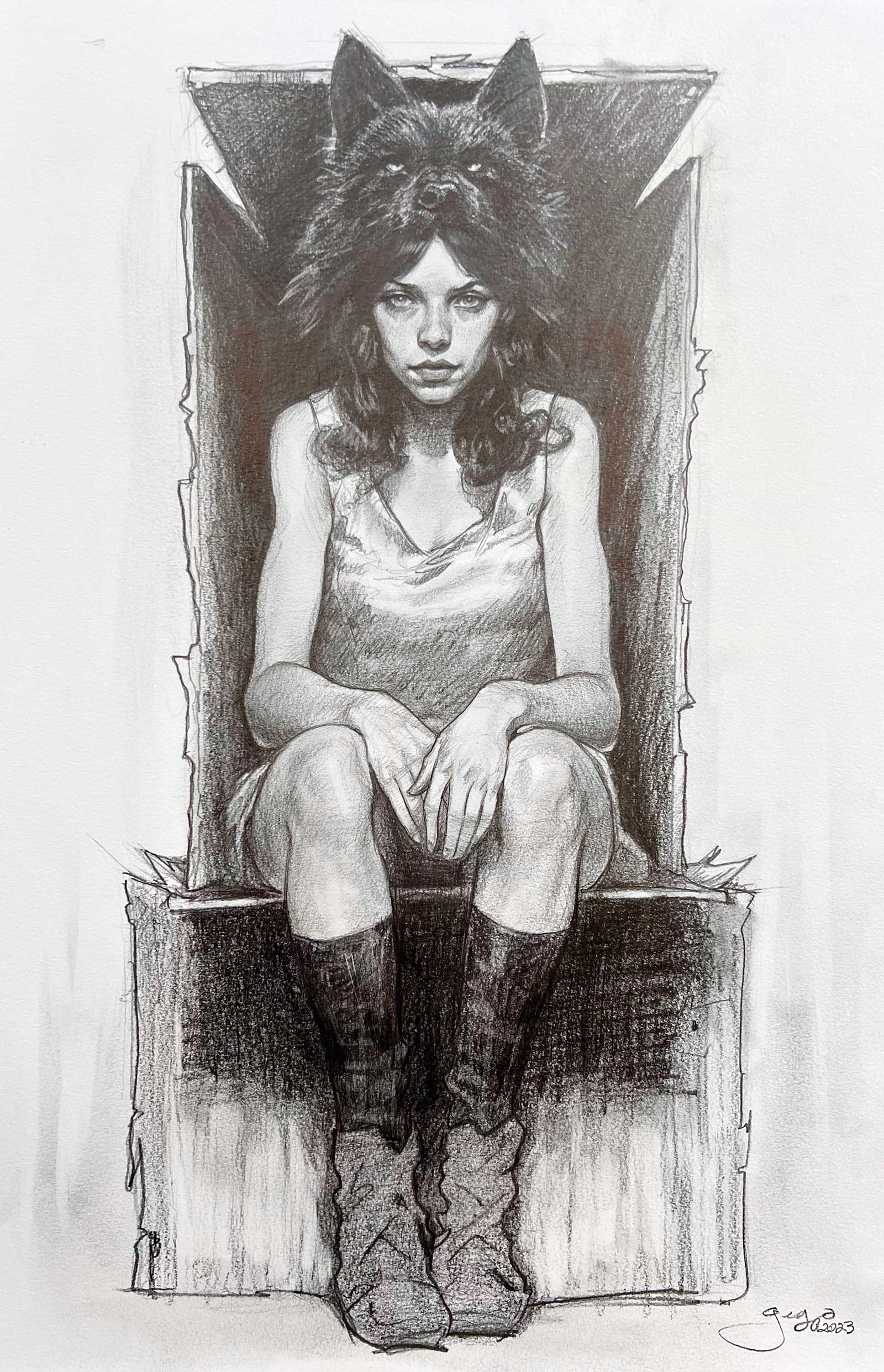
Victor Grasso, Wolf #5, graphite on paper, 14 x 17"
In Weisman’s sculptural retelling, a horned figure with the body of a dancer appears painfully bound but resigned, her head at an awkward angle on a block, the warm hues of the cherry wood adding contrast to the bronze while serving as a visual metaphor for a sacrificial altar.
Surprisingly, Weisman read Shalit’s story after completing Altered Minotaurbut says he found it to be “a backwards forwards description of the piece, all the way down to the Minotaur’s not understanding where she was or how it all evolved, and being a complete victim, and then finding herself rescued through compassionate touch—which is essentially the language I try to use when I make sculpture. Ultimately it becomes about what a sculpture is for. Through sculpture I get to participate in compassionate touch. Primarily they’re going to be about nonverbally communicating through the language of touch, then they crystallize in their specificities.”
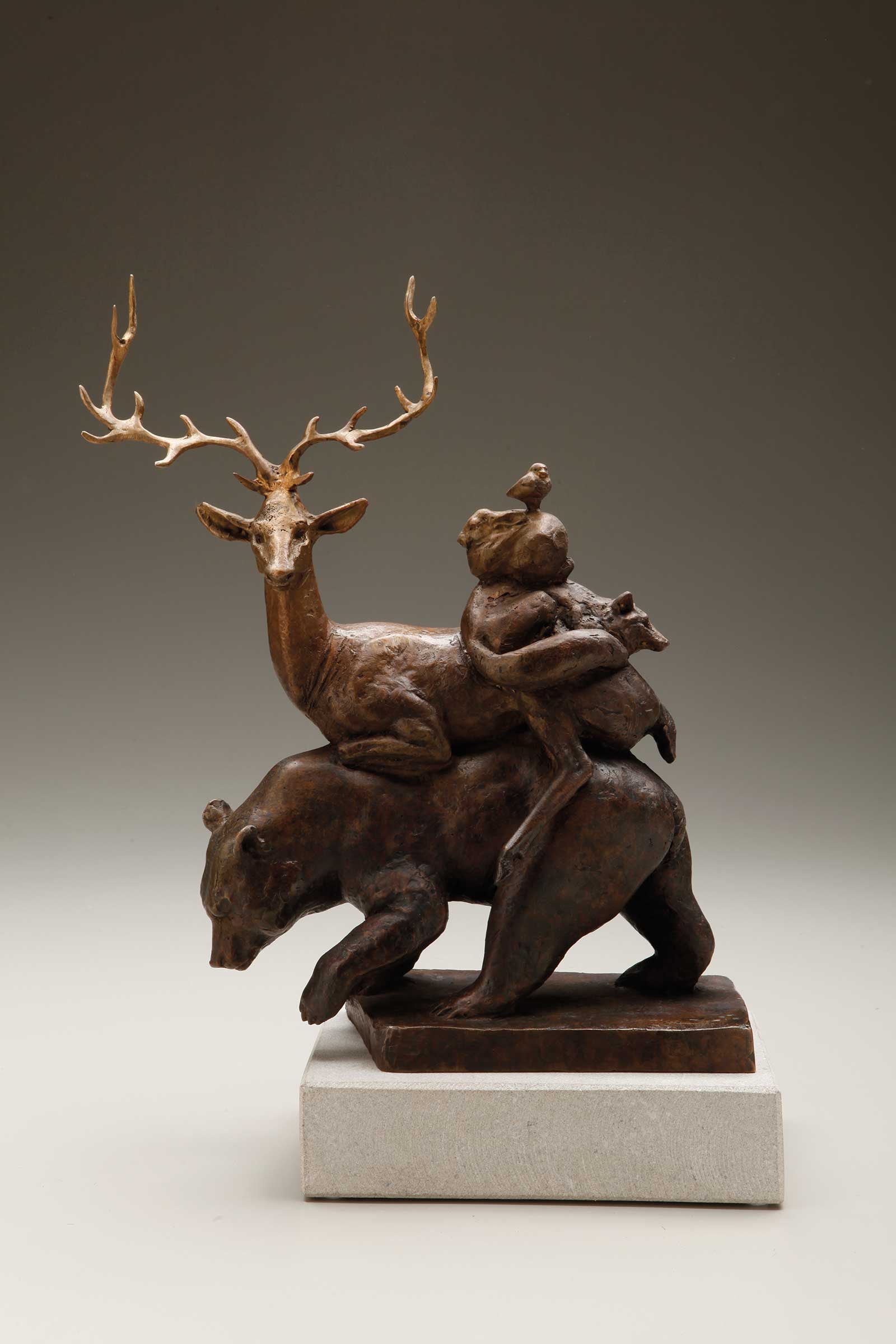 Julia Levitina, Gathering, bronze, 14½ x 7 x 10"
Weisman cares not if people can wrap their minds around how he could’ve created an embodiment of a reimagined myth before reading it.
“For me, sculpture is all time occurring at once,” says Weisman. “If we drop time instead of explain time [some of us] can see that there are those in our future that are hearing what we’re saying—in my case visually. We don’t have to subscribe to the ideology that time is sequential, especially if I’m in a place that’s all spatial.
“The fact that I came across the story afterward [suggests] as I move forward in life, I am also moving backward as a witness, so the two met. I don’t think we have to justify a concept in order to experience it—it’s just the phenomena that it is and I participate in it.”
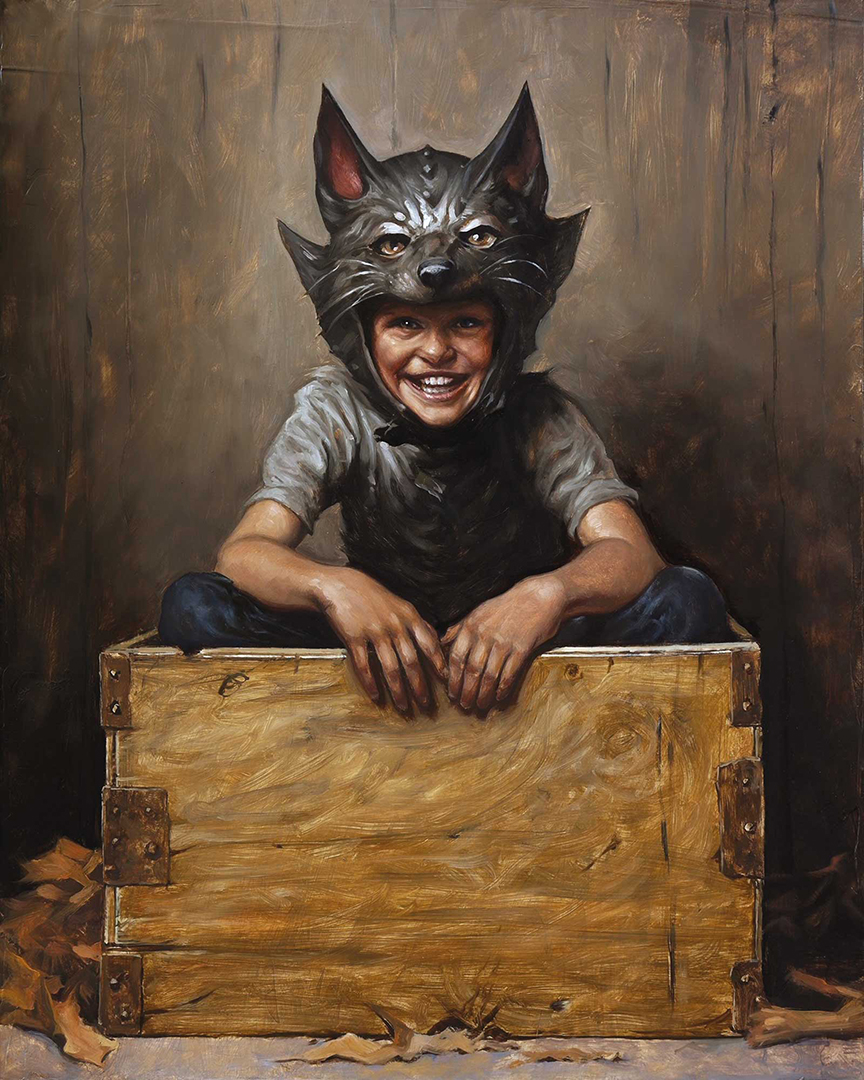
Victor Grasso, The Jester, oil on board, 20 x 16"
When pressed further on the topic of nonlinear time, Weisman said he found the idea compelling at the moment in the context of the conversation but wasn't sure he still would tomorrow.
Right now, Weisman is trying not to try—instead, settling into a place of non-effort where the world falls away and, ultimately, he does too. “Participation, the listening, the disappearing of yourself and the clay, and the honesty of process, of sincere communication…it’s all kind of mushed together,” he says. “In that place, you kind of surrender the intention of being efforting. Ideally it’s not me, not the clay, but the activity. The honesty that I have in that place would be [corrupted] by making an effort or having it be some kind of ‘should.’ The sincerity is what it’s about.”
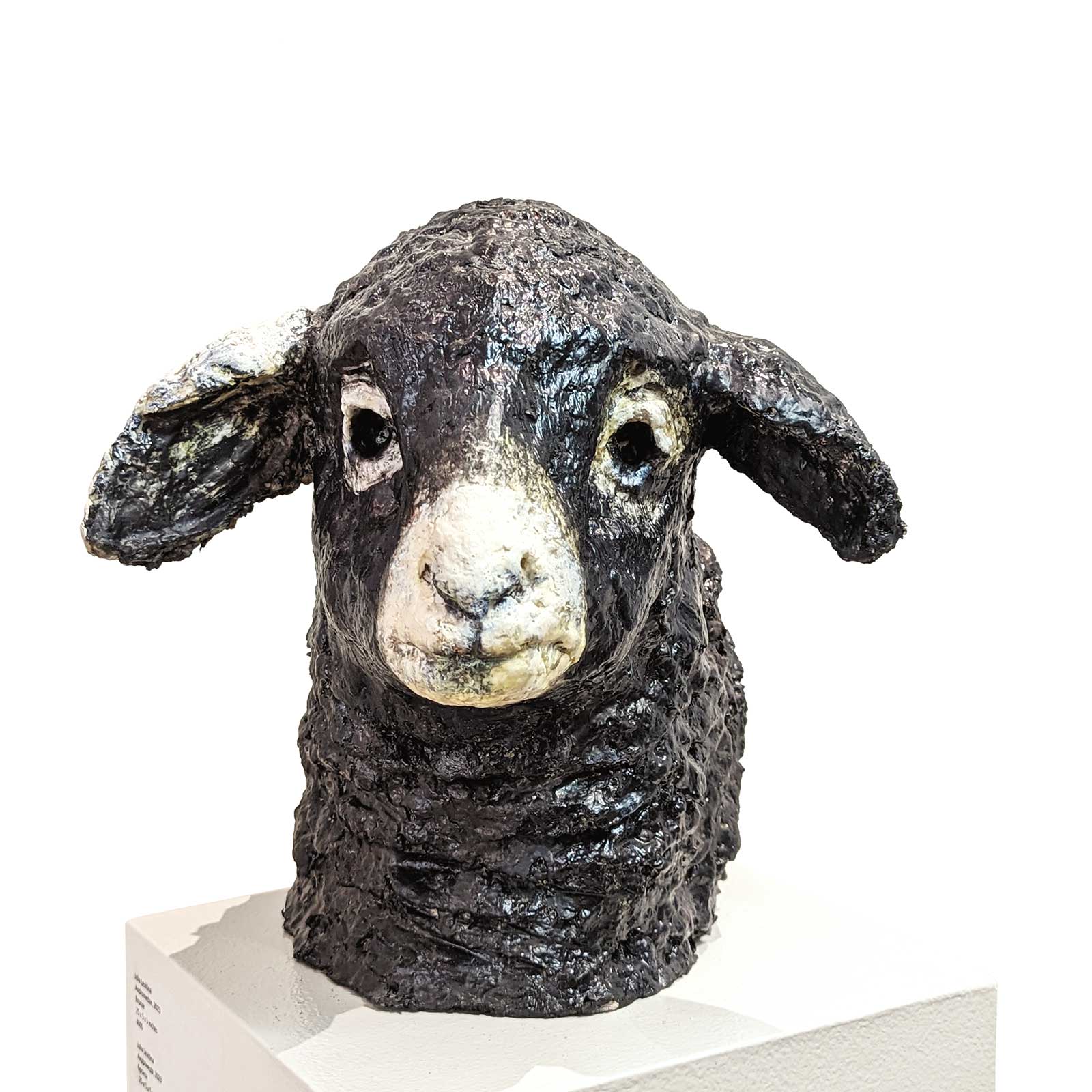
Treacy Ziegler, Hebrides 2, cast paper, 10 x 12 x 10"
Ideally, Weisman disappears. And then there’s just the story.
Wild Things will be on view at Stanek Gallery in Philadelphia from January 6 through February 24. —
Wild Things
When: January 6-February 24, 2024
Where: Stanek Gallery, 720 N. 5th Street, Philadelphia, PA 19123
(215) 908-3277, www.stanekgallery.com
Powered by Froala Editor