Collectors in love with paintings and sculptures of the nude will be delighted by two exhibits in Tennessee that show off the work of a trio of remarkable artists who have carved a place for themselves in the history of American representational art.
The Customs House Museum and Cultural Center, in Clarksville, Tennessee, will present a beautiful display of works by sculptor Alan LeQuire and draftswoman Juliette Aristides. The pair are joined by painter Richard Greathouse in a concurrent show at LeQuire Gallery in nearby Nashville. Both exhibitions run through January 28, 2024.
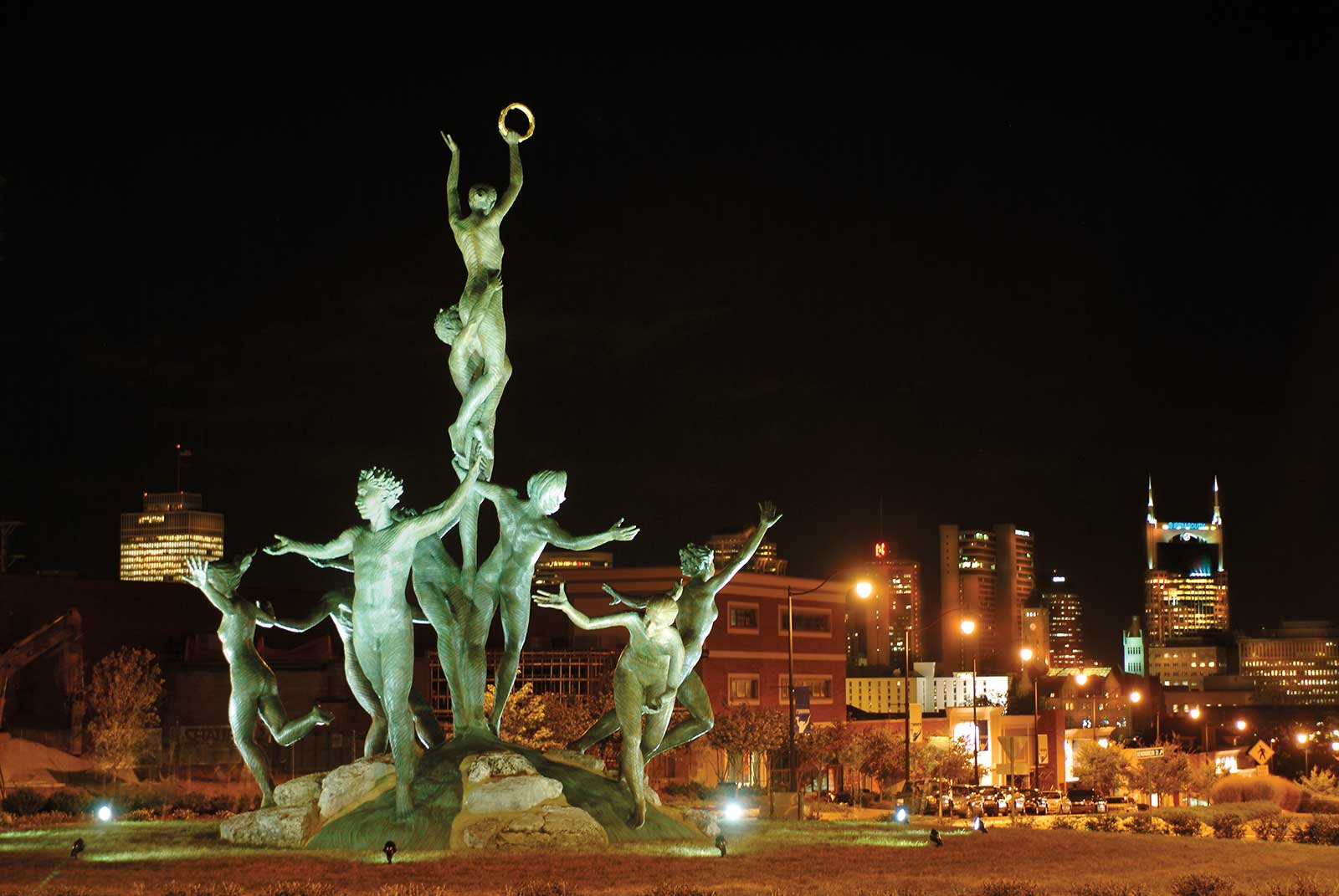
At 40 feet tall, Musica, by sculptor Alan LeQuire is one of the largest bronze figure groups in America. Unveiled in 2003, this group of nine colossal bronze figures celebrates the energy and diversity of the music industry in Nashville.
LeQuire curator Elizabeth Cave explains how the two shows evolved together, “We had an exhibition at the gallery about ten years ago of Juliette’s charcoal drawings and Alan’s gorgeous terracotta figures. The softness of those two media made the most exquisite room, so soft and lovely and elegant. It was one of my favorite exhibitions, so I pitched it to the Customs House Museum…we’re complementing the exhibition there. Juliette has sent me drawings, interiors and still lives. Richard is sending me drawings, oils, portraits and a few landscapes.”
The three artists need little introduction.
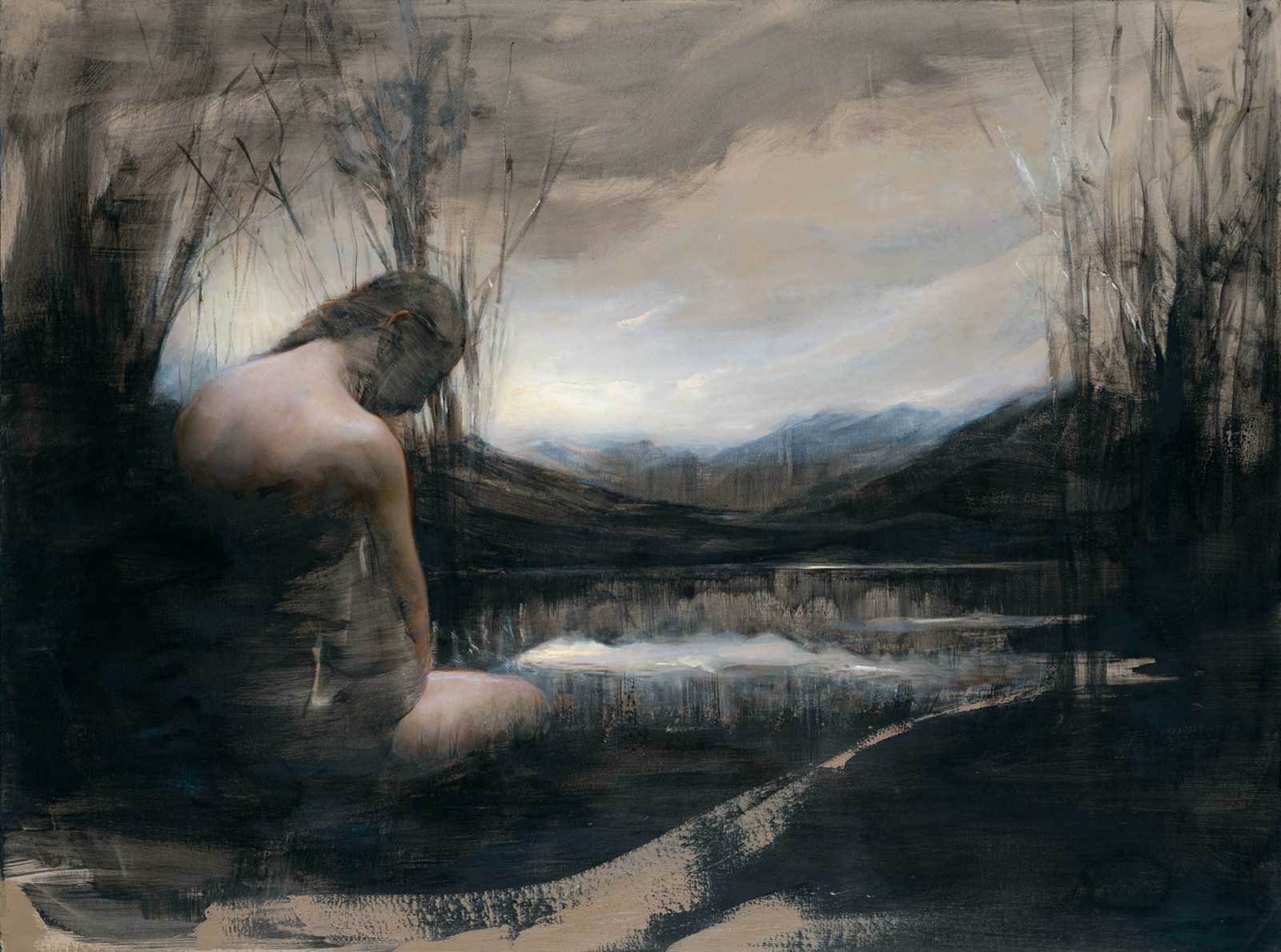
Juliette Aristides, Idyll, 2023 charcoal and oil heightened with white, sealed with wax, 30 x 40". Collection of the artist at LeQuire Gallery.
Juliette Aristides is well known as one of the leaders of the ongoing revival of skill-based training. The author of a flush of generous books about atelier drawing and painting covering the practices she teaches at her school, the Aristides Atelier at the Gage Academy of Art in Seattle, she is a major contributor to the return to rational figuration we are witnessing in 21st-century art. The open-drawings and paintings she shares in both exhibits are testimony to her remarkable skill as a draftswoman, and to her willingness to release herself into the liberating mysteries of mood and the metaphysical. She examines the human figure as a transcendent vessel of the mind, as well as flesh and bone.
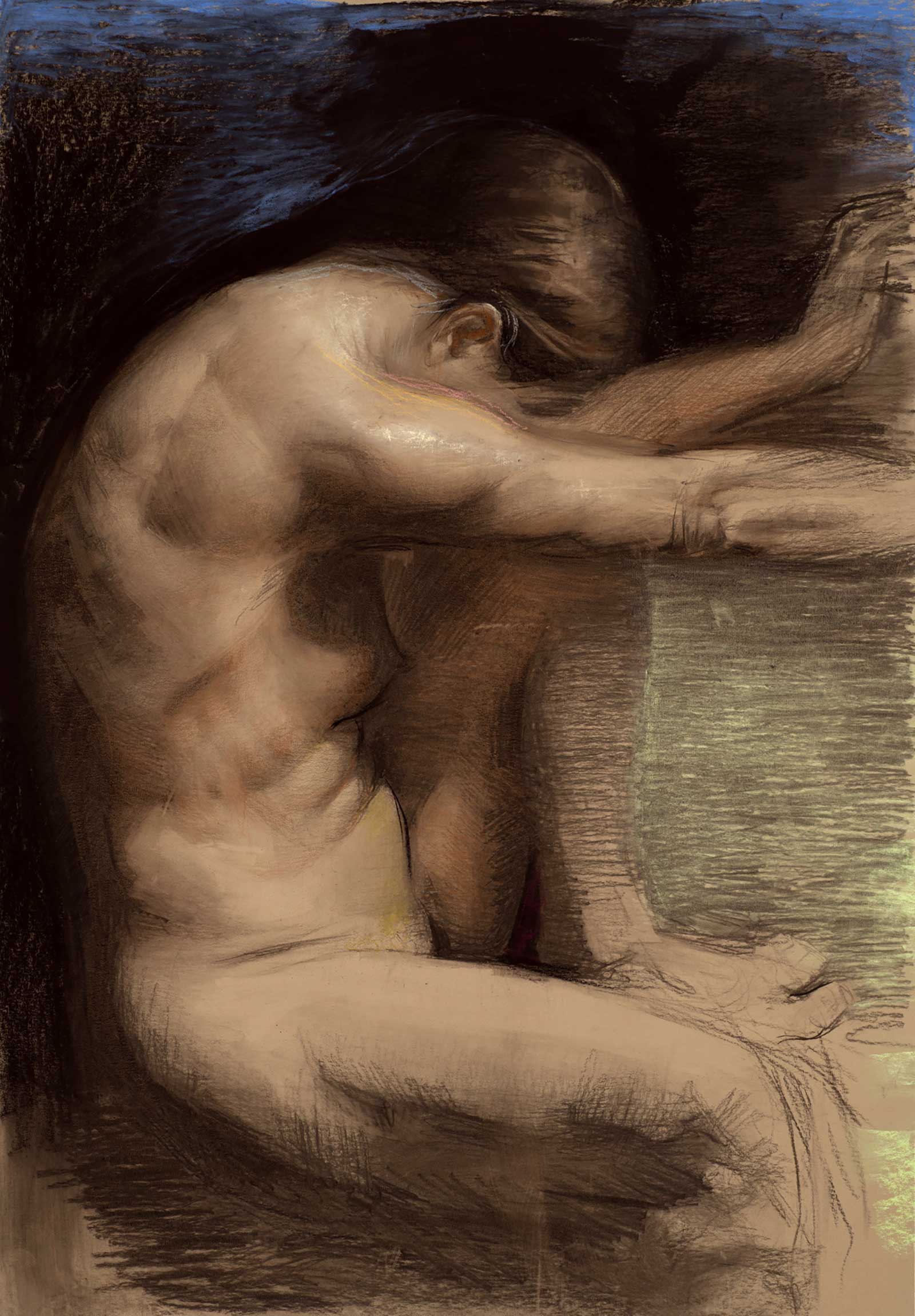
Juliette Aristides, Push, 2023, charcoal, sepia pencil and pastel on toned paper, 19 x 17". Collection of the artist at LeQuire Gallery.
Terri Jordan, curator of exhibits at the Customs House Museum, is enthusiastic about exhibiting nudes, which delighted Aristides, who commented, “We’re in such a weirdly puritanical time. It’s very odd…The body is used for sex or advertising, and apart from that it doesn’t exist. We have an insane posture toward the human body considering how dependent we are on it. In Southern states we’re hearing of people losing their jobs for showing the David.” But she remains optimistic. “Our bodies are one of the most obvious unifying elements in such a divided, tribalistic age,” she continued, “We are finite and gain knowledge and experience through our senses, when our breath goes, we go. All realist artists to some degree celebrate what it means to be human in this anti-human age...Life as an embodied being becomes atrophied if we don’t have a way to see ourselves and the fragility and the beauty of it.”
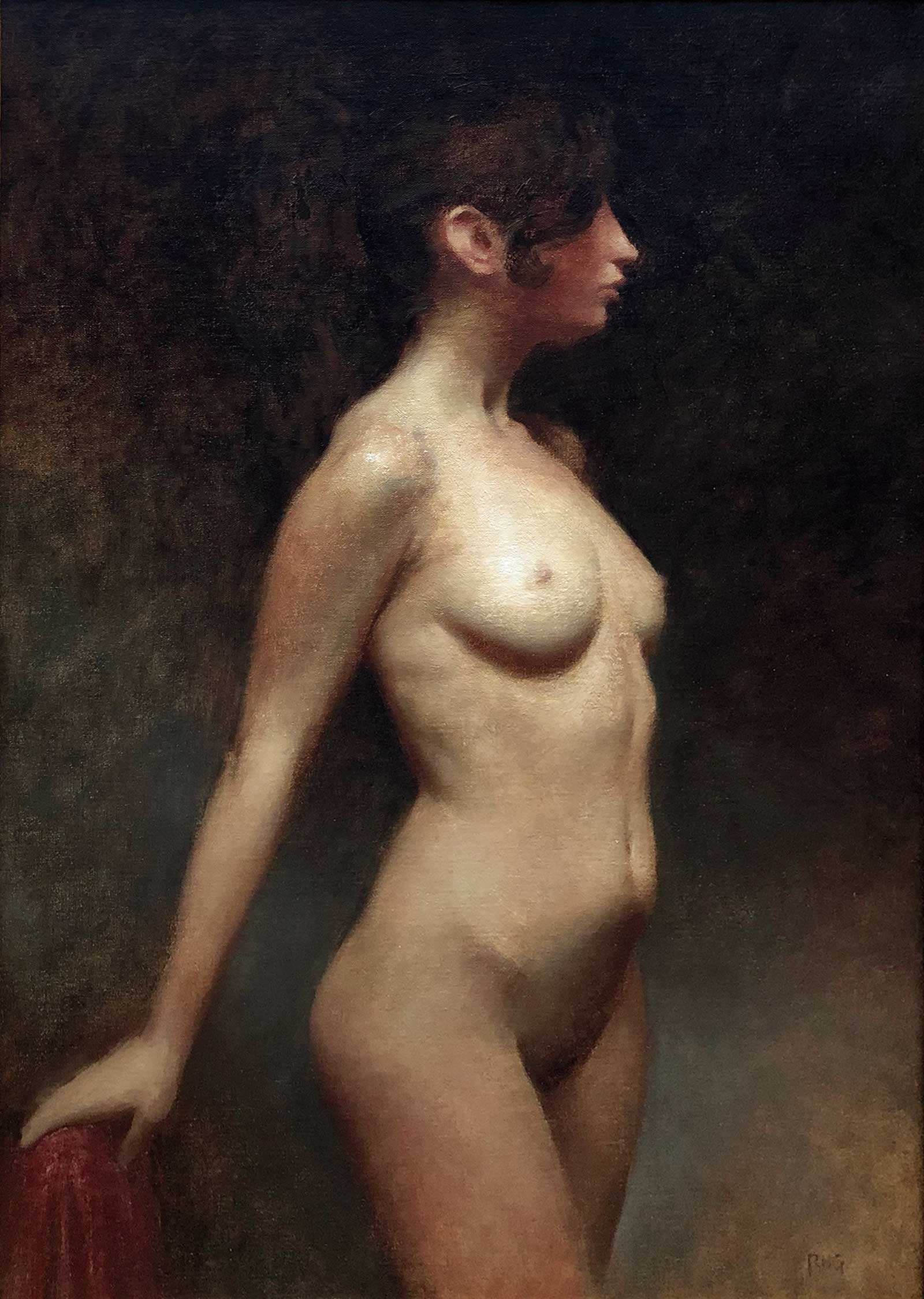
Richard Greathouse, Standing Nude, Chiara, 2018, oil on linen, 27½ x 19¾"
Aristides’ new works are mixed media drawings in charcoal and oil on wood panels. Figures emerge from darkness, edged by color, as she pulls the vulnerable bodies of her models from the shadows with the soft blends and crumbled brittleness of charcoal. The drawings are not portraits of individuals, but of all people. “It’s not about one person,” says Aristides, “when you see someone just as the beauty of form, they’re incredibly fragile and there’s a lot of empathy and common experience.” She has wandered into the mood and magic of the wooded landscapes of nearby Carkeek and Green Lake parks, yet these trees too are full of the mist and melancholy of modelled charcoal figures in Rest and Ruth Bowing, and tell stories of sympathy and sentiment for humanity, of spaces sought by free souls born of simple flesh and blood. Aristides said, “A lot of the language of great art in the past was the figure…If you go see Greco-Roman art, even a fragment of a body is the source of comfort and camaraderie and empathy, all these things get transferred.”
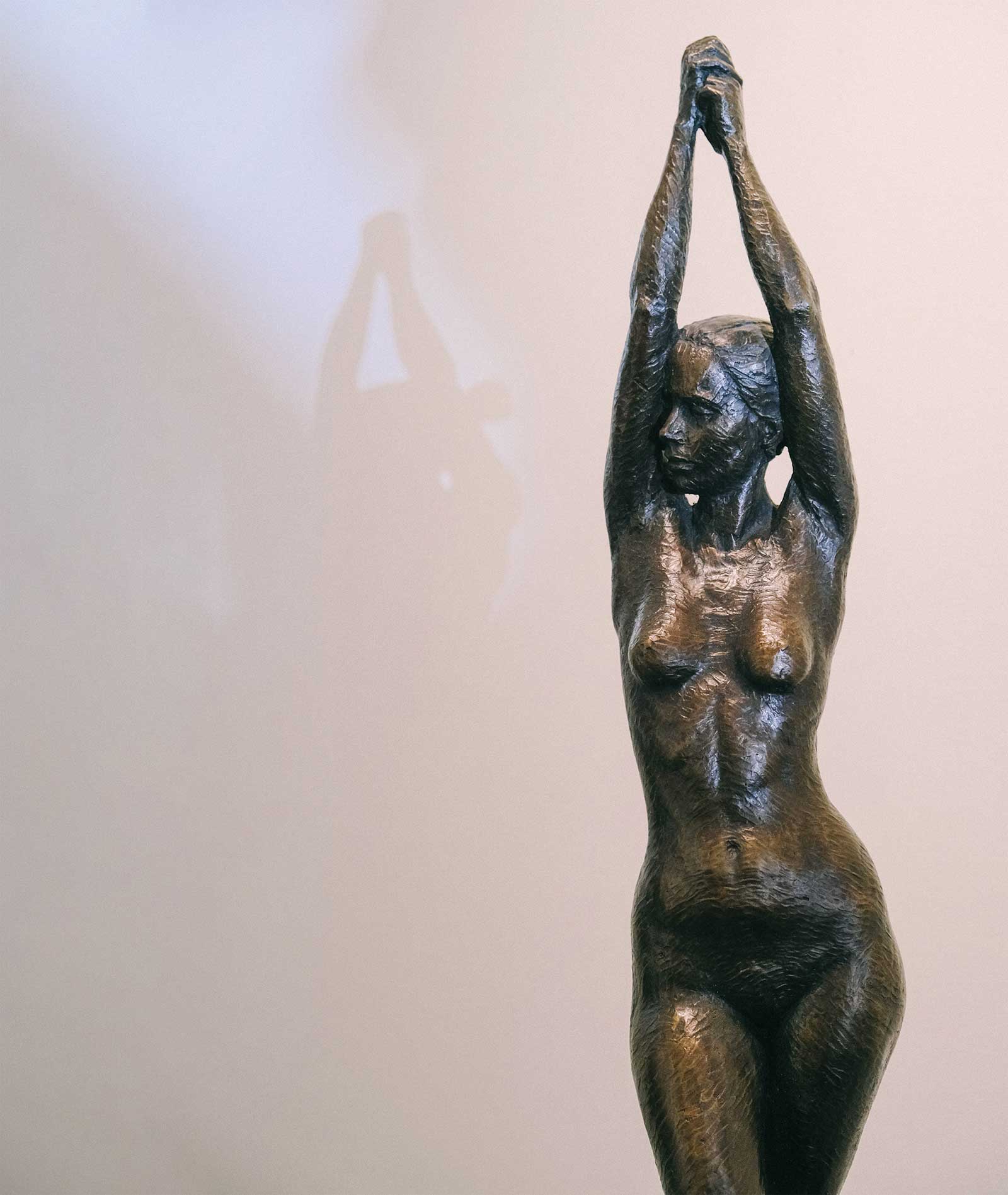
Alan LeQuire, Barbara Caryatid, bronze, ed. of 12, 27¼ x 6 x 5"
Sculptor Alan LeQuire is widely admired for his figurative public monuments. His Musica is a delightful group of nine nude male and female dancers gathered in the rhythm and insight of a circular composition impressively rising 38 feet. He too has faced his foes for presenting the naked form in public places—Musica was condemned by religious leaders when it was first installed and the bronze skin of the twice-life-size figures are occasionally covered by custom-made costumes. He has produced five monuments to the suffragettes which are exhibited in three different cities. Most impressive, though, is his recreation of an ancient Greek sculpture of unique significance. Cave emphasized the scale of his achievement, “He is internationally known and greatly respected by archaeologists for the Athena Parthenos that stands in the naos of the full-scale reconstruction of the Acropolis built in Nashville’s Centennial Park.” LeQuire’s Athena is a detailed recreation of the statue built in the 5th century by Phidias, built with meticulous care to duplicate the original goddess. “The idea is incredibly daunting," Cave says. "It’s 42-feet high! He took that project on, and it took eight years.”
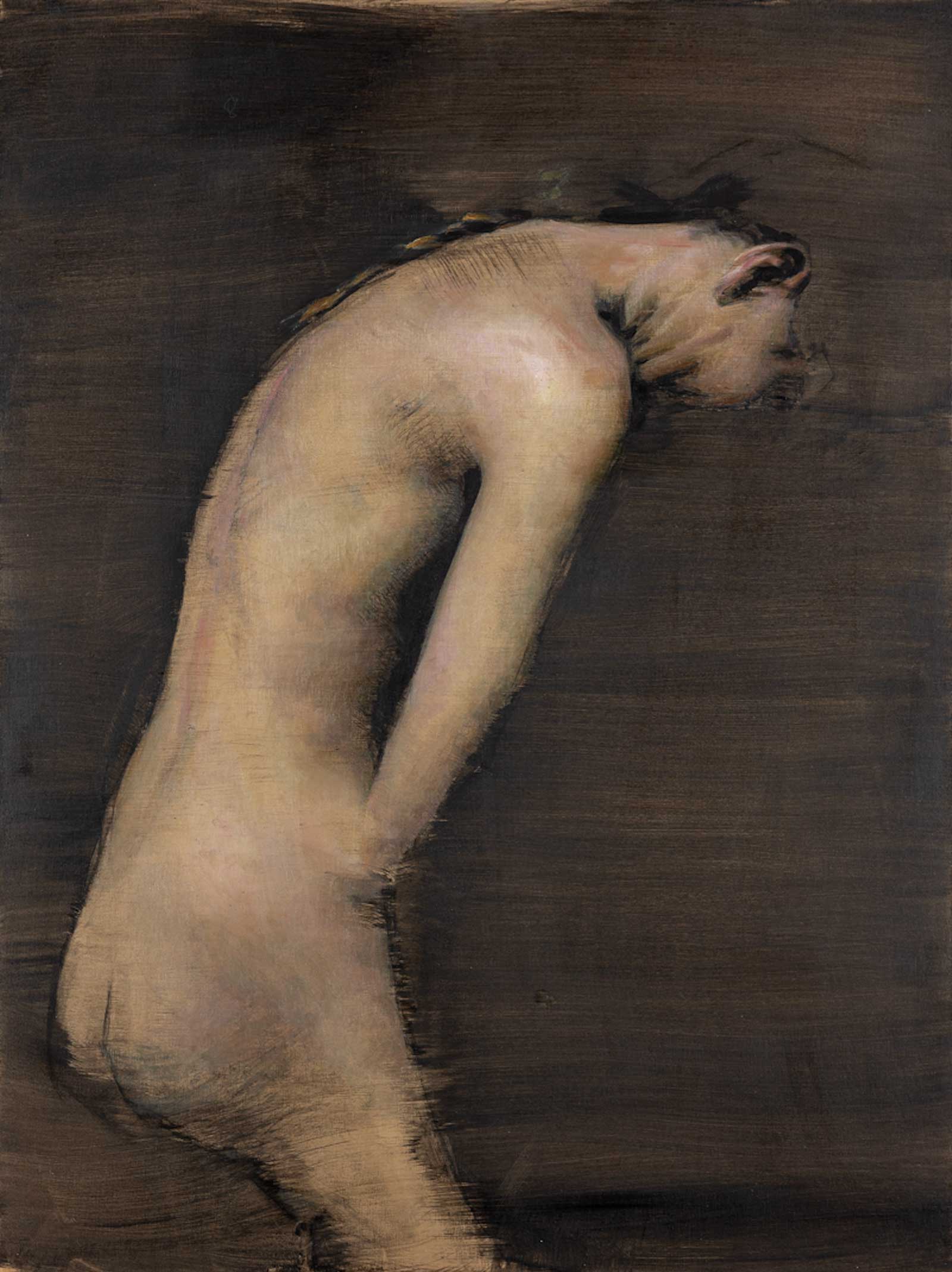
Juliette Aristides, Ruth Bowing, 2023, charcoal and oil on panel and wax varnish, 24 x 18"
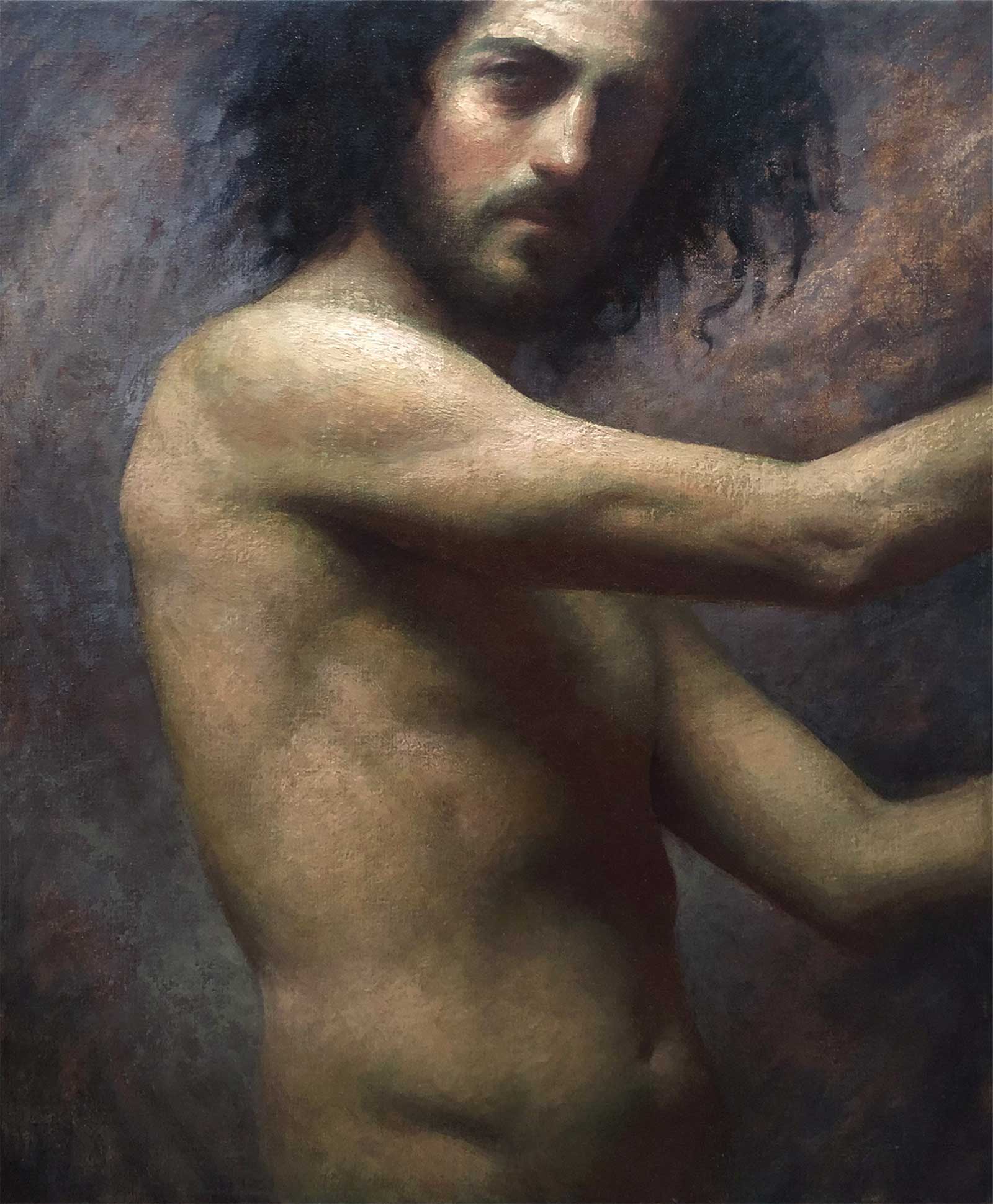
Richard Greathouse, Male Torso, Francesco, 2019, oil on linen, 23½ x 19¾"
At Customs House, LeQuire’s terracotta sculptures are paired with Aristides’ charcoal drawings, as they were a decade ago, in a harmony of light and dark, and hues of night and day, balanced against earthy blacks and loose oil glazes. LeQuire Gallery is exhibiting a series of seven bronzes and plaster casts from his series, Caryatids. Traditionally, caryatids were figurative sculptures of women used as architectural supports in the place of conventional columns, but LeQuire has liberated his figures from the burden of carrying the weight of friezes, architraves and pediments, and their arms are raised in gestures of freedom. LeQuire explains, “They’re my versions of typical classical poses. I couldn’t sculpt the models’ tattoos, but they’re a modern take on a classical idea. Everything is a study, in preparation for doing life-size or larger figures.” His caryatids are a continuation of his work with live models, made a little larger than typical studies of the human form. A labor of love, he produced the sculptures during the span of many years while working on the spectacular public commissions. The exhibit includes a broad selection of his small works in bronze, mostly figure studies that are the result of decades of the master’s teaching of anatomy and proportion, working from live models. LeQuire continues, “My studio is connected to the gallery, so in a way everything is always on display, including works in progress and figure studies that go back 10 or 20 years.”
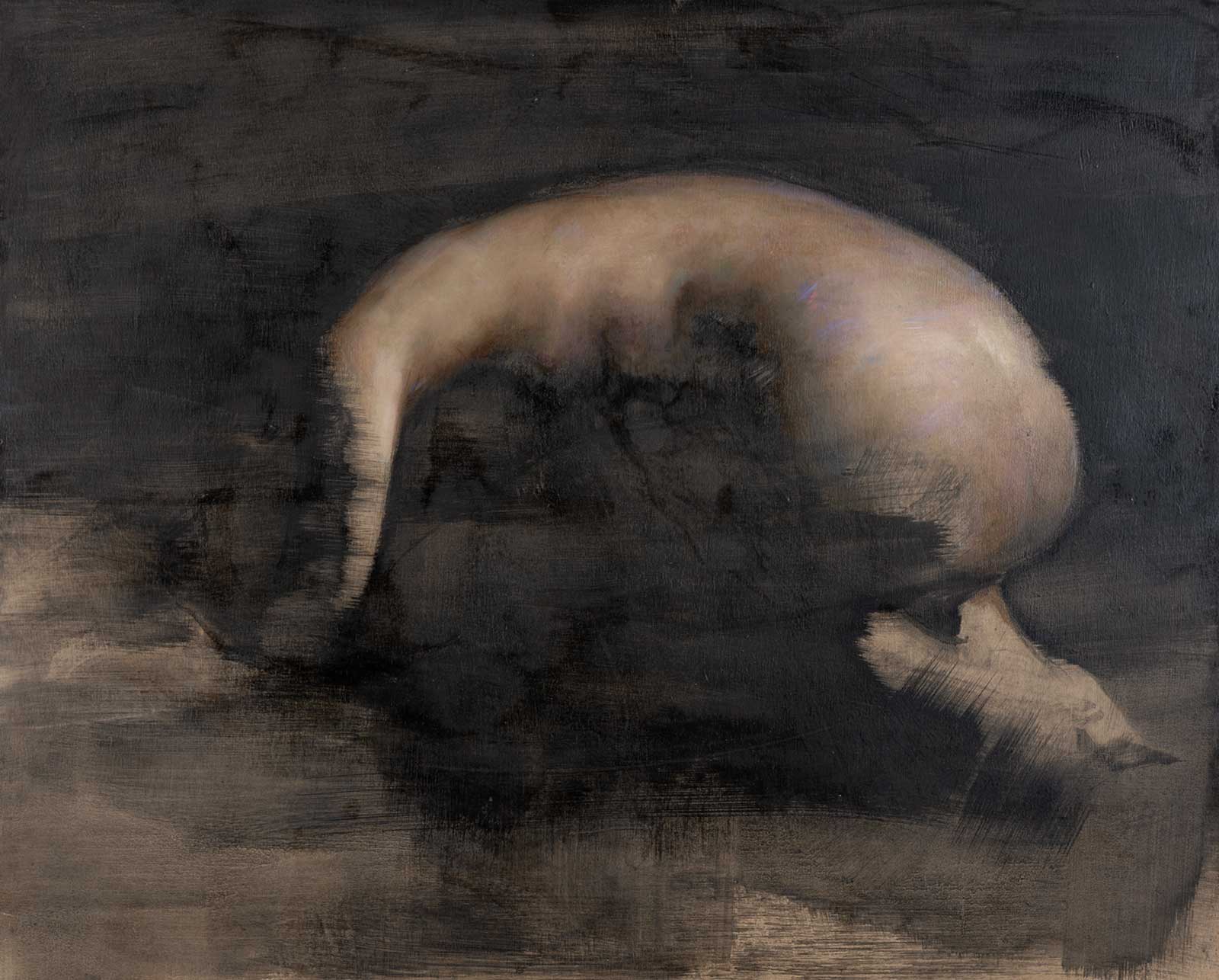
Juliette Aristides, Rest, 2023, charcoal and oil heightened with white on wooden panel, 18 x 24"
Richard Greathouse’s sensitive portraits have been exhibited in the United States, Spain and Italy. He and Aristides frequently collaborate as atelier teachers, recently at the Italy’s prestigious Florence Academy of Art, Greathouse’s alma mater. The two have an impressive following of students who attend their online atelier, and they are no strangers to success in the real world, either. Greathouse said, “We’re in our second year online. It’s been a lot of fun getting to know [Juliette] and work with her. She’s so good at bringing people in and giving the students resources that go beyond the technical aspects of painting. She’ll have guests who work for museums and experts in different fields, so that’s been fun for me. I feel like I get to grow alongside the students a bit and experience that for myself. Despite being online, it’s a well-rounded experience.”
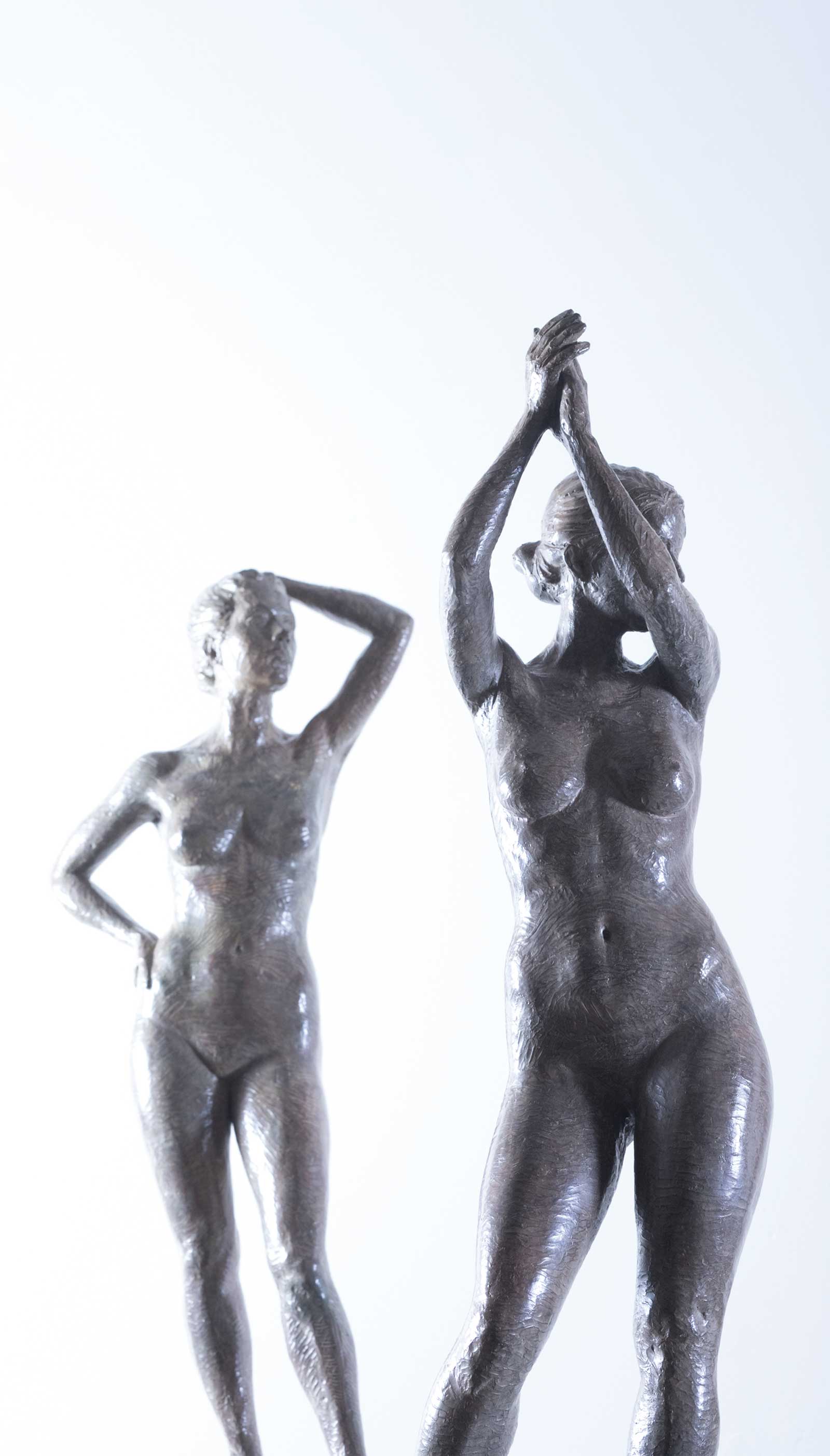
Alan LeQuire, Meagan and Emma Caryatids, bronze, ed. of 12, 23 x 6¼ x 5” and 24½ x 6¾ x 5"
Their forthcoming workshops in Nashville have sold out, attracting people from all over the United States. Greathouse says that at LeQuire Gallery, visitors will see an overview of his work, “a mixture of portrait and figure work, some still lifes, landscapes and drawings, both new and from the last couple of years.” Greathouse hopes to take advantage of all the possibilities of oil painting’s extraordinary flexibility. He continues, “I like the idea of my paintings being physical objects that need to be seen and almost touched, because they’re not done quickly, but there’s a feeling of liveliness at the end.”
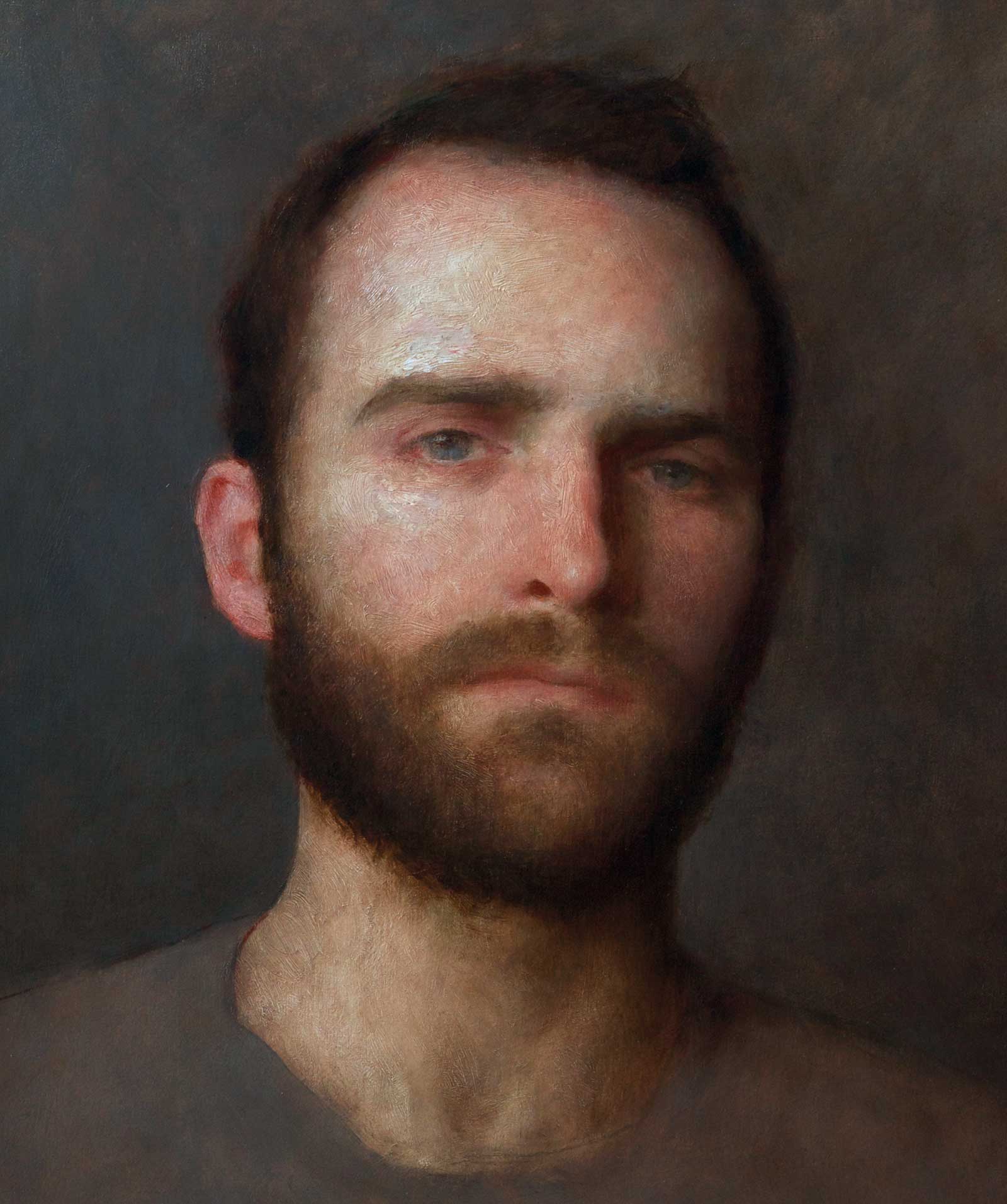
Richard Greathouse, Portrait of Alec, oil on panel, 16 x 14"
Common bonds of purpose and skill bind the three artists together. Cave says, “They’re all cut from the same cloth. They all have strong atelier background, they’re deeply rooted that way. They’re all giving back to the next generation. It’s a continuum of knowledge.” Aristides, LeQuire and Greathouse are committed to the technical in their approach to making art, secure in their pursuit of beauty as it is manifested in the human form, but this isn’t the only reason for their attention to the figure as their subject. Aristides chuckles, “We all just love the nudes.” —
Paintings and Sculpture by Juliette Aristides, Alan LeQuire and Richard Greathouse
When: Through January 28, 2024
Where: LeQuire Gallery, 4304 Charlotte Avenue, Nashville, TN 37209
Information: (615) 298-4611, www.lequiregallery.com, www.customshousemuseum.org
+++
Michael Pearce is a dynamic writer, curator, and critic, and a champion of art that emerges from popular culture and shapes the spirit of the age. He has published dozens of articles about art and artists, and is author of Kitsch, Propaganda, and the American Avant-Garde. He is Professor of Art at California Lutheran University.
Powered by Froala Editor