The idea of “emotional truth” comes from the belief that a body won’t betray what is happening to it, be it love, pain, heartache, longing or any thousands of other emotions. This is where the phrase “the eyes never lie” originates.
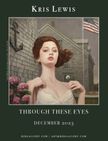
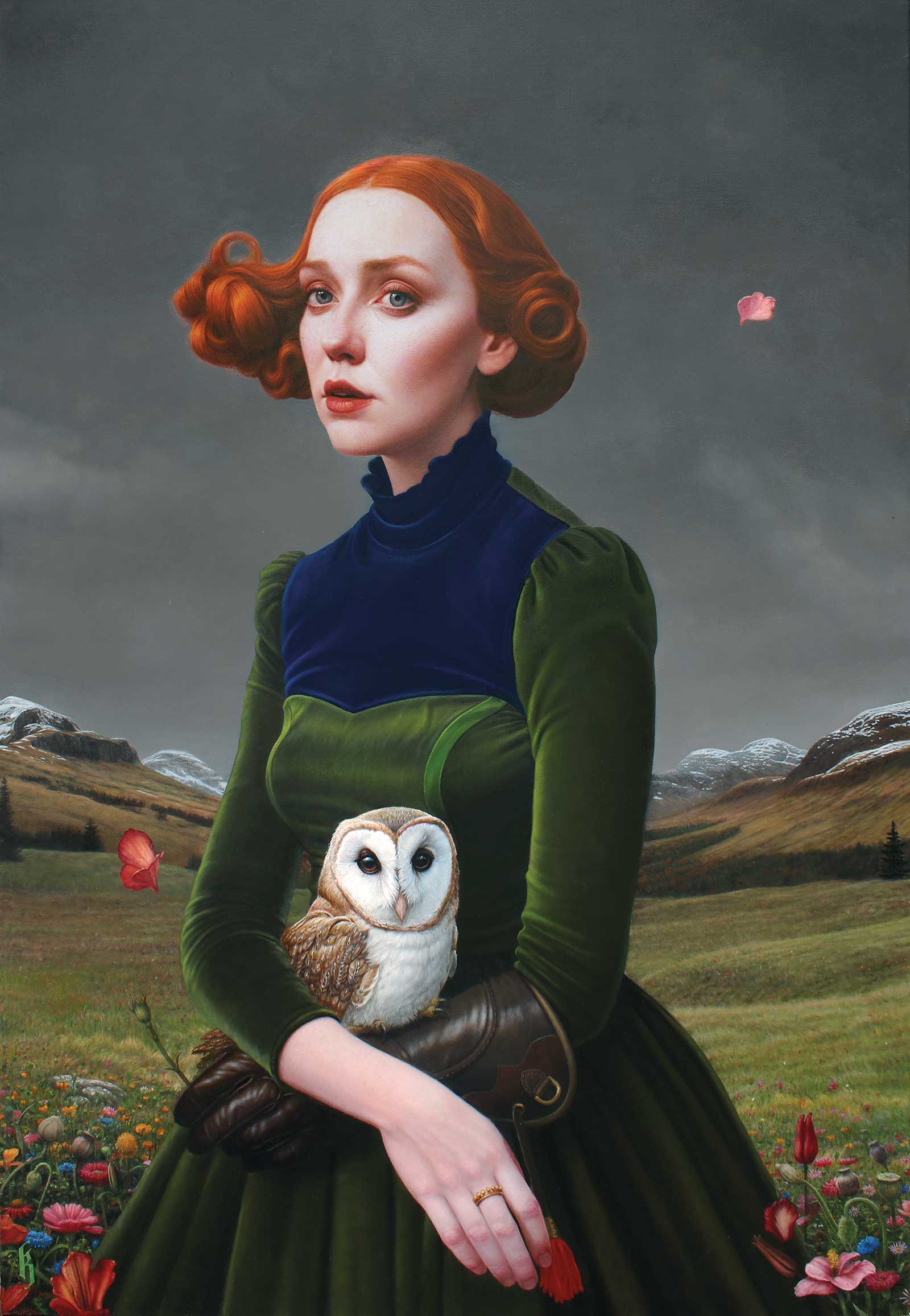 Kris Lewis, Nocturnal Reverie, oil on canvas, 36 x 24"
These complicated emotions that are telegraphed through eyes, the so-called windows to the soul, are the subject of a new three-artist show, Through These Eyes, at RJD Gallery in Romeo, Michigan, starting December 1. “The eyes do indeed tell the story but painting them requires an extraordinary talent,” says Joi Jackson Perle, RJD’s gallery director. “To illustrate inner thoughts, emotions and perception of one’s subject through their eyes is an art unto itself. To convey to the viewer those same things through the eyes is nothing short of miraculous.”
The three artists in the show are Kris Lewis, whose stately and formal portraits reveal solemn quietness within his subjects as they sit in slightly surreal settings; Yana Movchan, a Renaissance-inspired painter who finds life in complicated human and floral arrangements; and Andrei Zadorine, a Belorussian painter who draws his power from light and history, which he combines to reveal truths about his subjects.
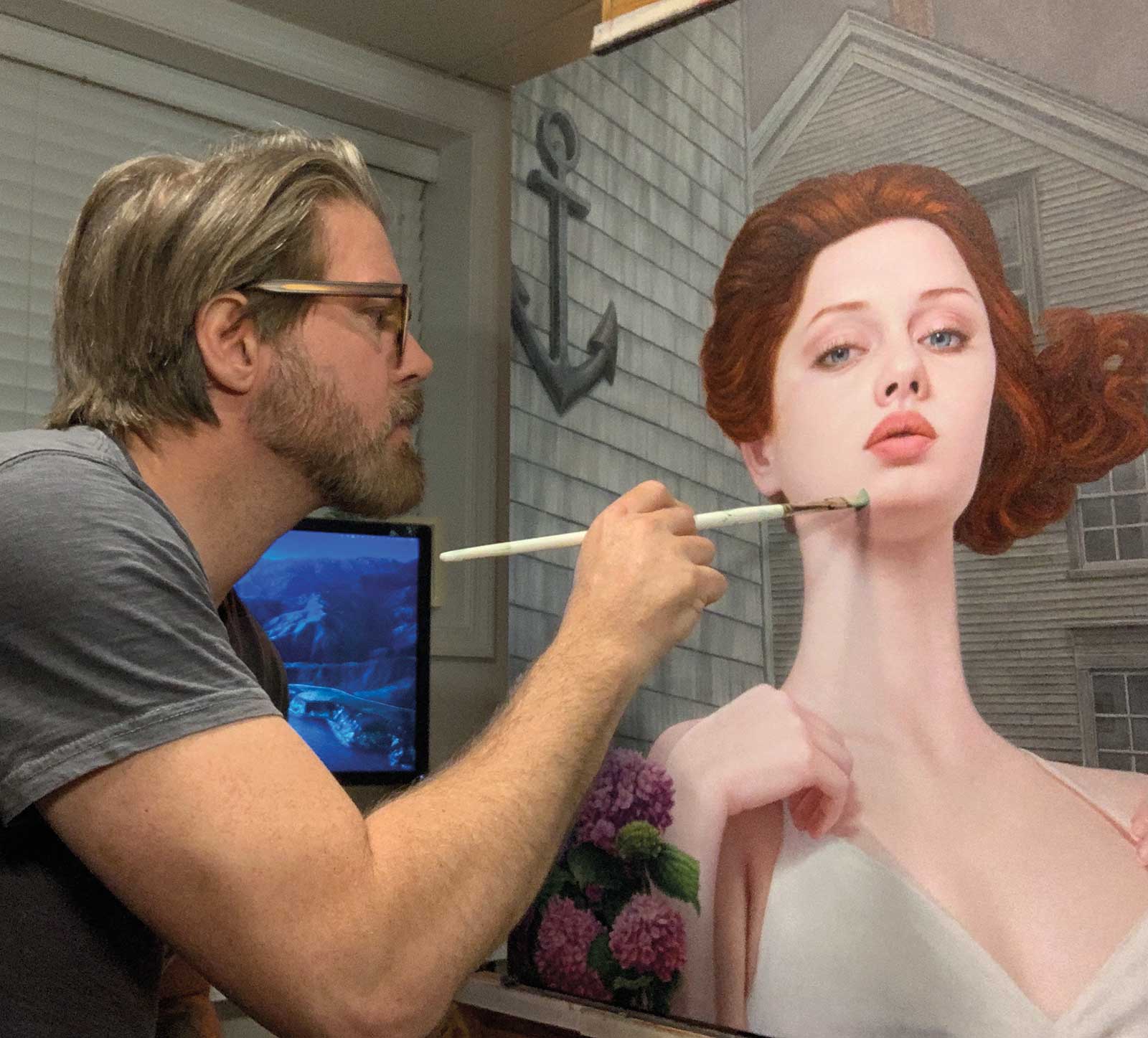
Kris Lewis in his studio working on Vernal Bloom.
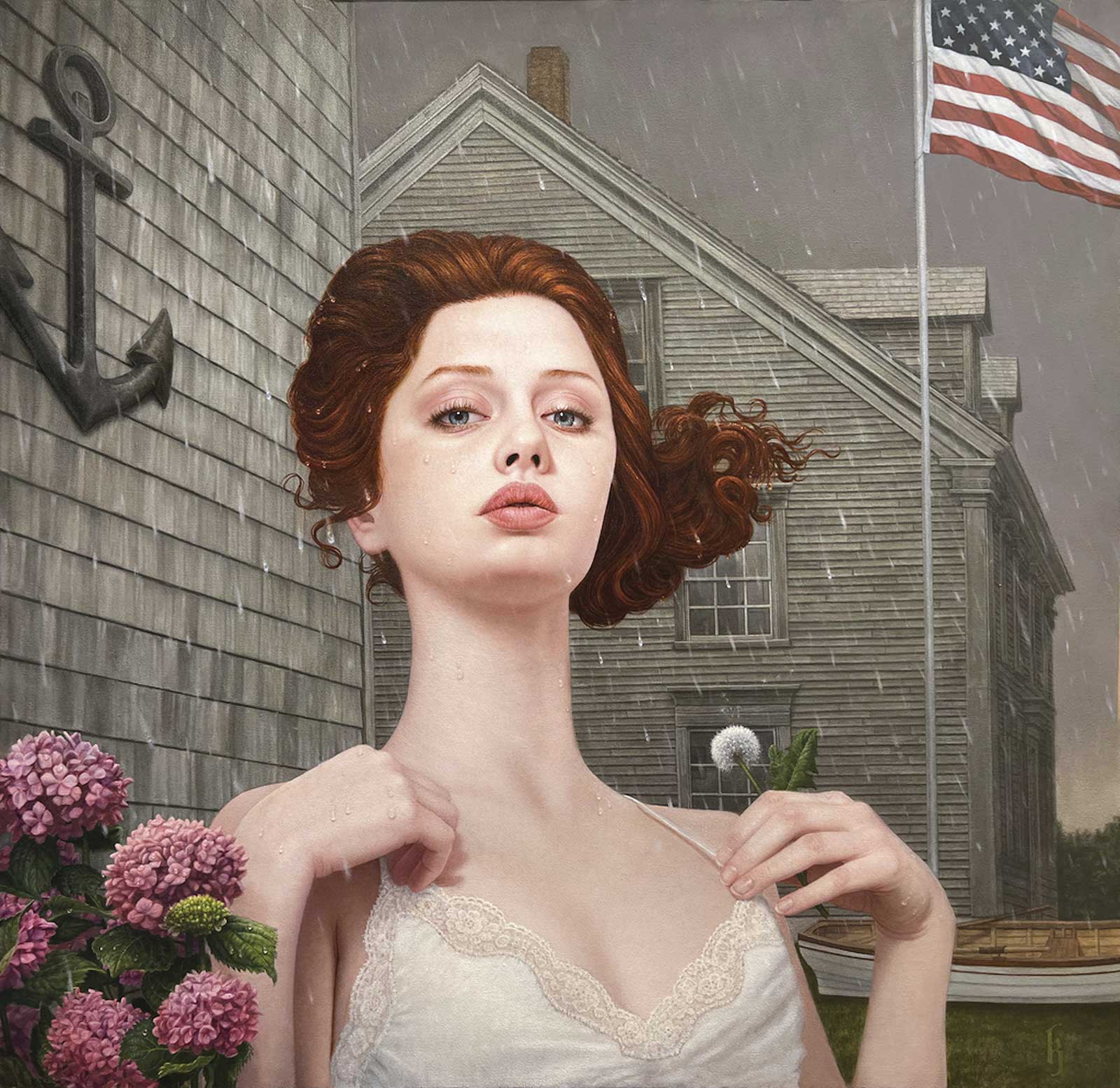
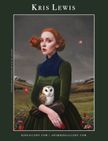
Kris Lewis, Vernal Bloom, oil on canvas, 30 x 30"
Through These Eyes will feature two new Lewis pieces, Nocturnal Reverie and Vernal Bloom, both works which show women figures in outdoor settings. “In Vernal Bloom, I wanted to capture a moment of vulnerability with my subject. I used various photos from a trip to Nantucket a few years back, but the scene isn’t tied to a particular place. I aimed for a mix of familiarity and intrigue, so viewers could connect with the emotions on their terms. The choice of weather in the painting sets a moody, dramatic atmosphere. Her expression carries both strength and vulnerability, even as she’s exposed to the elements. You can see that contrast in the dark, imposing cedar-shake house and cottage. It’s reflected in her disheveled, wind-blown hair, and the delicate lace-trimmed blouse slipping off her shoulder,” Lewis says. “The stormy sky versus the raindrops on her skin and hydrangea blooms, emphasizes the blend of fragility and resilience. Vernal Bloom, like most of my other paintings, is about exploring emotions, a mysterious setting, and the connection between human vulnerability and the timeless beauty and power of the natural world.”
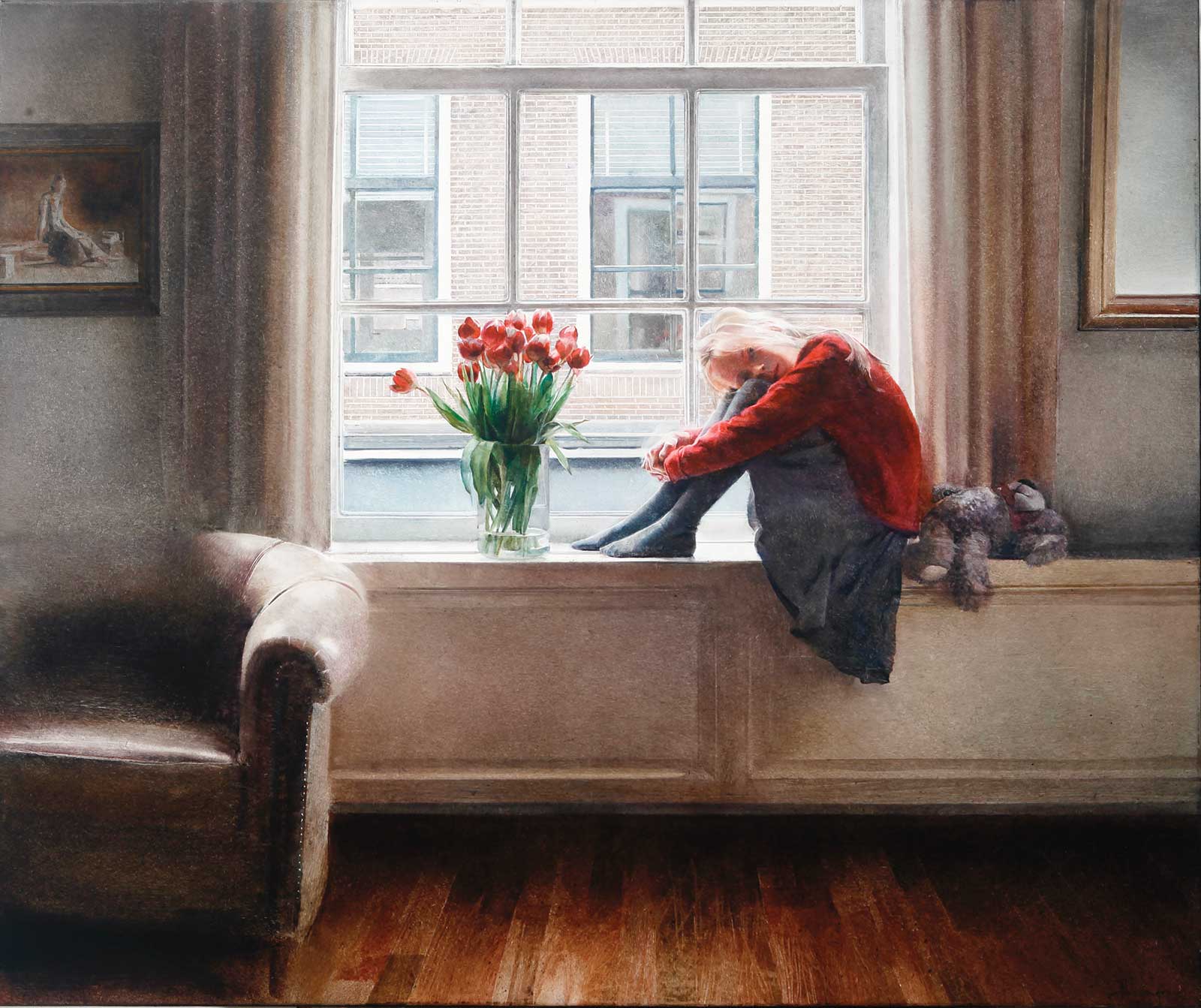
Andrei Zadorine, Red Tulips, oil on linen, 39 x 47"
Movchan will be showing Do Not Feed Your Dragon in the RJD show. The work has five figures placed carefully within a garden-like setting bursting with color. In the foreground, on a mantel or shelf, is the “dragon” of the title, which looks like an iguana with wings. “I was working on a timeless idea, which appears in everyone’s life. [It’s about] choices we have to make every day, and sometimes [they can be] very difficult choices,” Movchan says. “The most difficult choice that I represent in this painting is between dignity and finances. Most crimes come from this idea from the bottom to the top in our society. To put your soul’s needs in front of a body’s needs is very difficult. To make a very strong message more pretty, I used the beautiful texture of nature and also man-made things like material. The snake in this painting represents our dark and weak parts, which we have to battle with every day.”
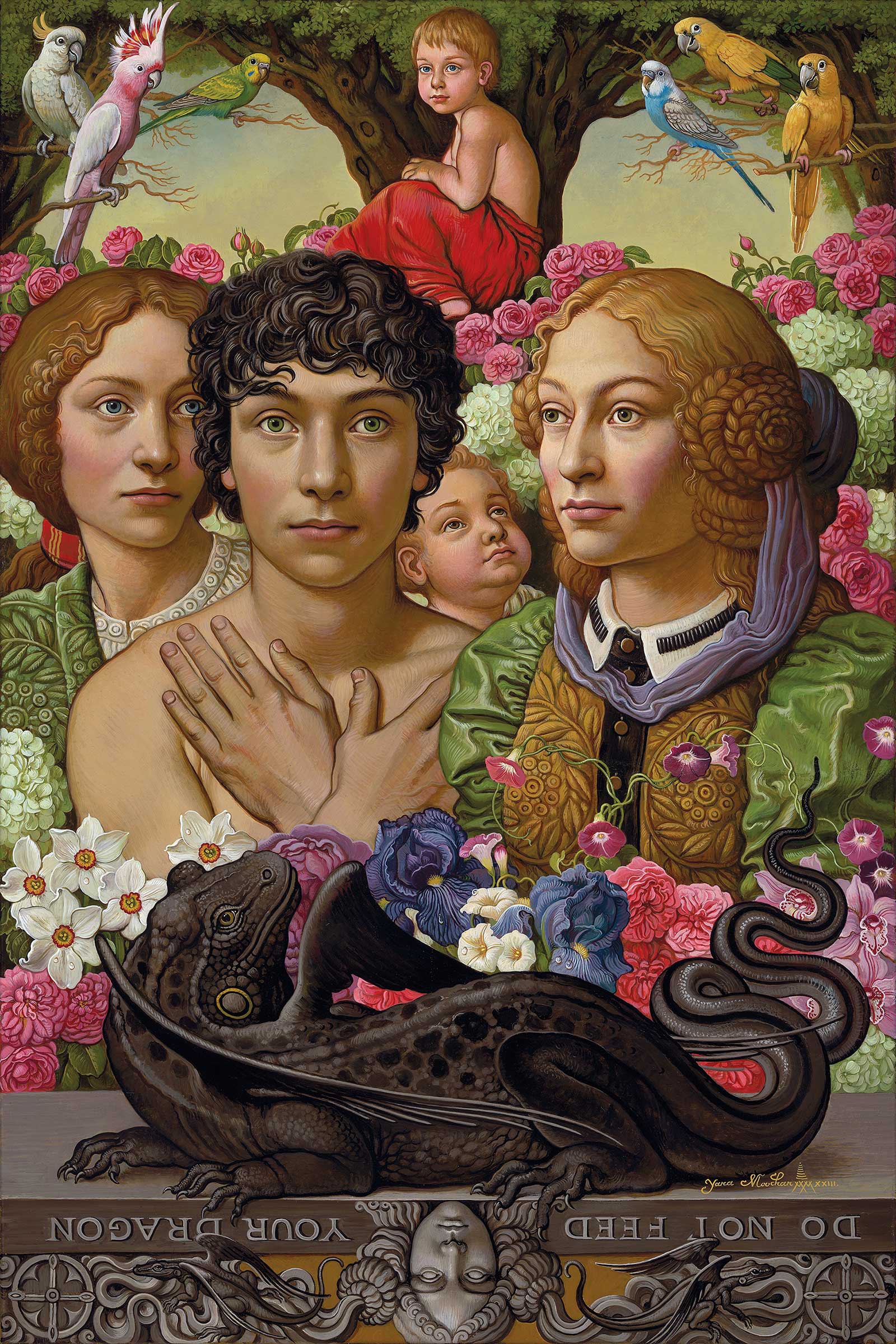
Yana Movchan, Do Not Feed Your Dragon, oil on canvas, 36 x 24"
The show will feature several new pieces from Zadorine, including the 78-inch-wide Classroom, which shows a class photo of a group of students. The clothing and state of the “picture” ties the image to the late 19th or early 20th centuries. The artist, who received a classical education in the Soviet Union, has been creating paintings based on old and historic photos since the 1990s. “In 2005, I used a photograph from an early 20th-century Northern Dutch class, sometimes reconfiguring backgrounds and relocating characters. I enjoyed painting faces that had only survived through photographs,” he says. “Another unique aspect of my artwork is that I don’t use white paint. Instead, I paint on specially primed canvas, which the critics referred to as ‘primitive Dutch painting.’ The primed canvas functions as a white background. I use glazes and paint only with transparent colors. This, I believe, emphasizes the connection with old photographs. It’s like looking into the eyes of people captured on a camera over a century ago from beneath the layers of glazes.”
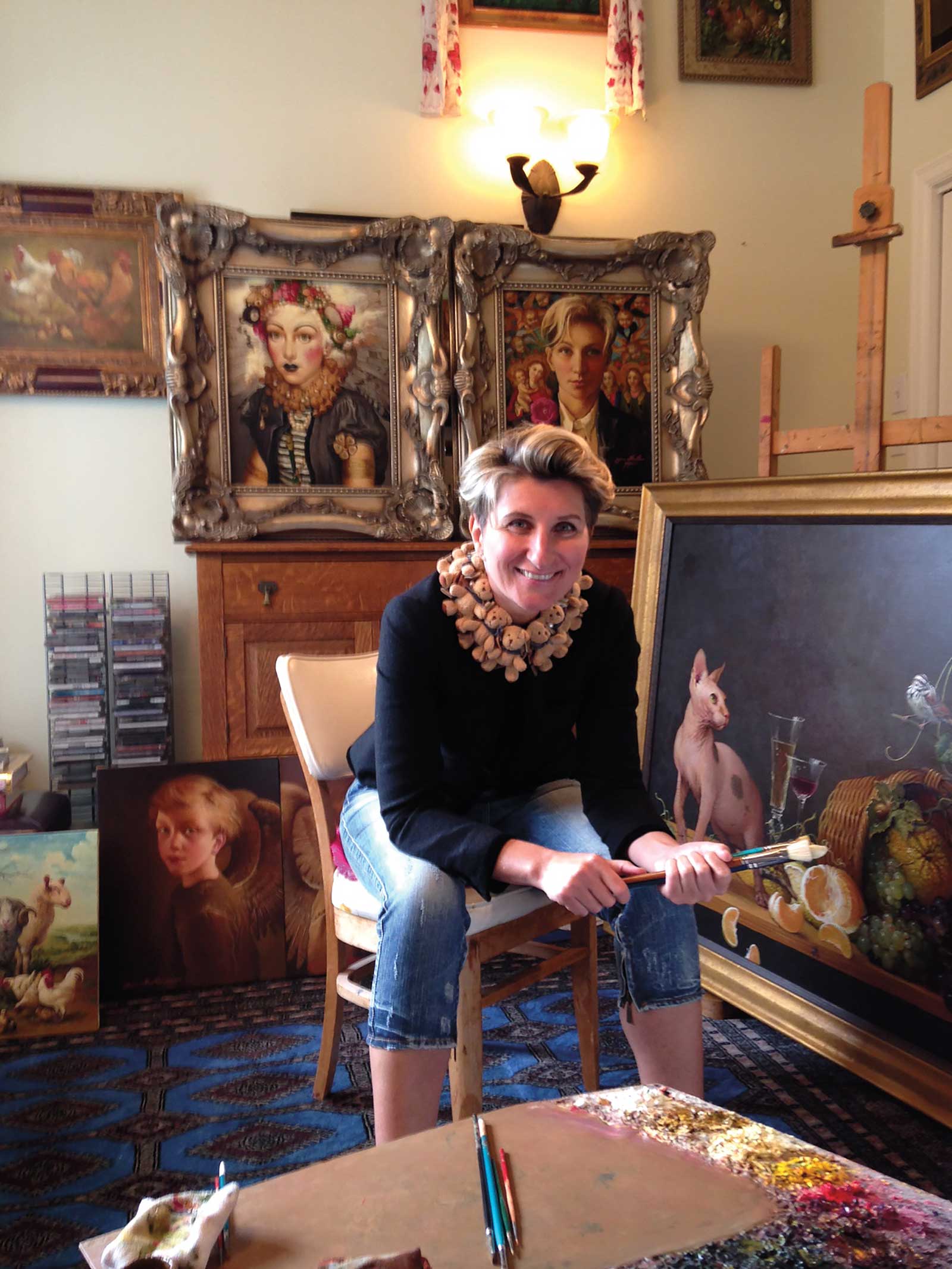
Yana Movchan in her studio.
These aspects of his work can be seen in Classroom, until they can’t. “The artwork Classroom represents a departure from my previous works, where I extensively reconfigured multi-figure images, fitting them into squares or arranging them in a line. I had never included teachers in my paintings before. In old-school photographs, there were usually several teachers, but I would omit them, trying to focus solely on the children’s faces. When painting them, you imagine the fate of each child, especially considering the twists and turns of 20th-century history,” Zadorine says.
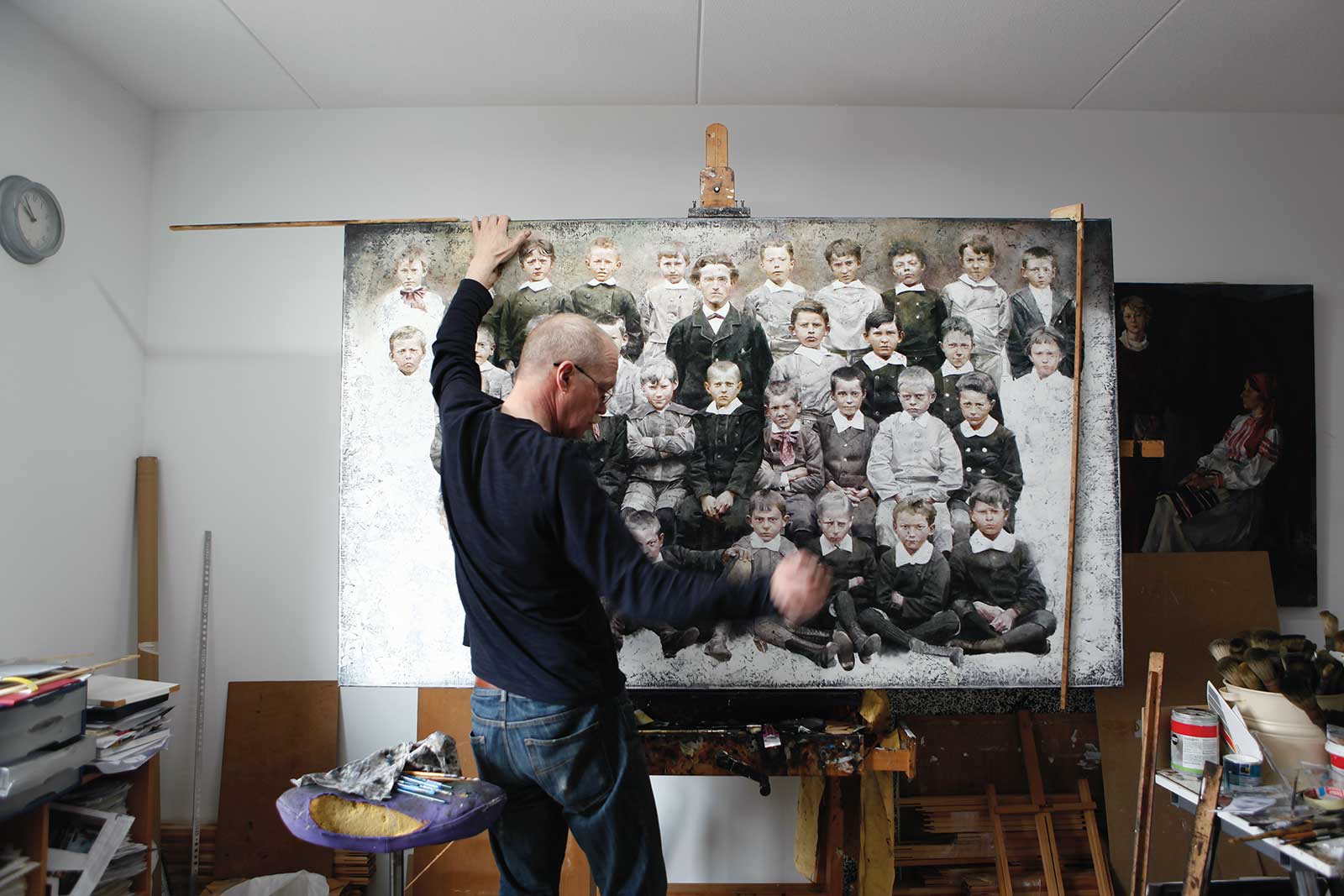
Andrei Zadorine in his studio with Classroom on the easel.
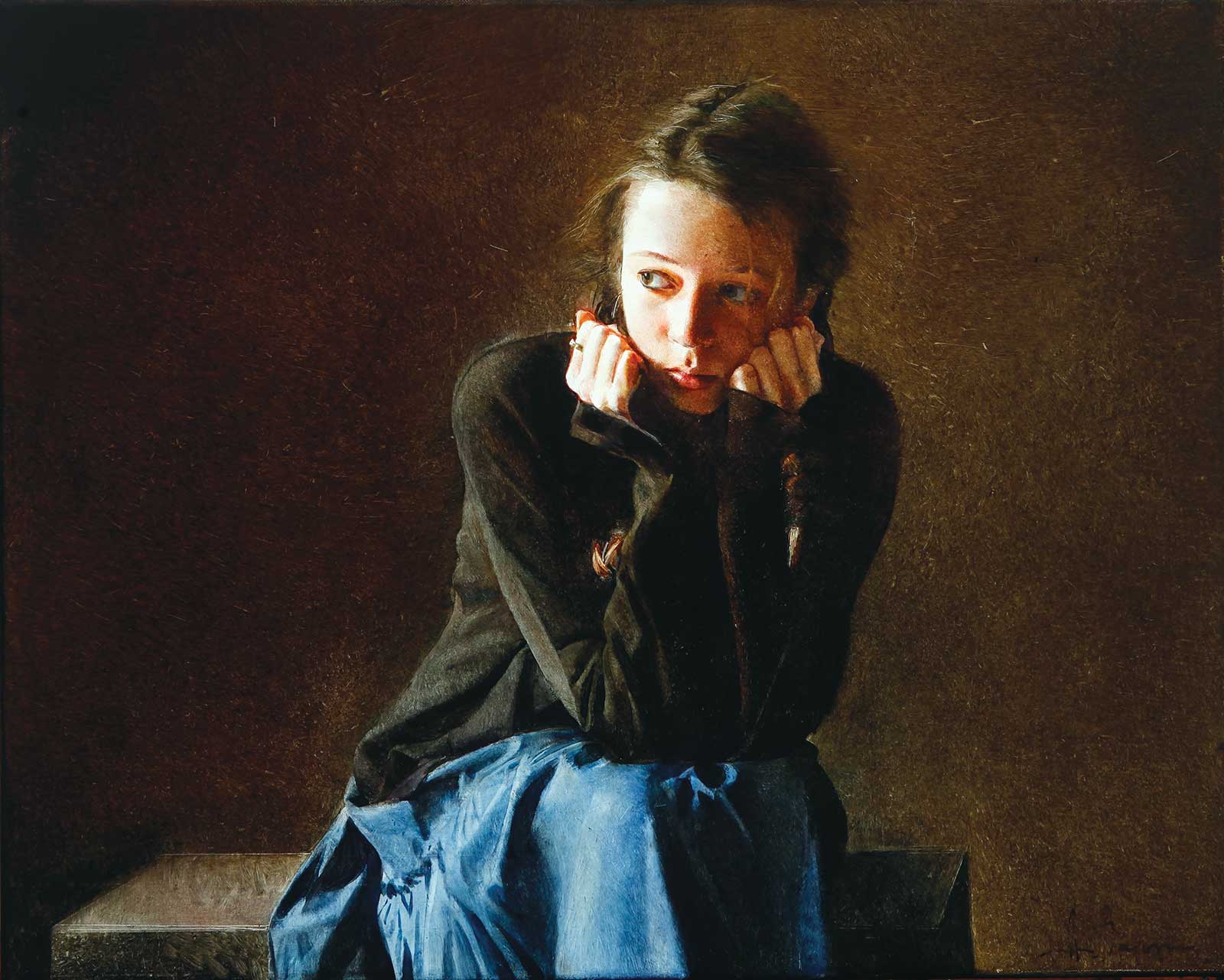
Andrei Zadorine, The Watch Within, oil on linen, 16 x 20"
In another work, Red Tulips, Zadorine visually connects a young girl in a red sweater with a vase full of red flowers. “As for the work with tulips, the main themes I’ve explored throughout my life are connected to childhood, memories of it and the feelings and sensations that, with time, become more distant from us,” the artist says. “These memories take on a more fairy tale-like and beautiful quality, evoking, as I believe, a light sense of sadness. I hope this work expresses something similar.” —
RJD Gallery 227 North Main Street • Romeo, MI 48065 • (586) 281-3613 • www.rjdgallery.com
Powered by Froala Editor