Around 5,000 years ago, the Egyptians used the pith of the papyrus plant to create a writing material that was smooth and on which ink wouldn’t blur. Papermaking began in China in the first few centuries C.E. from a purée of plant materials dried on a screen. Wood-based papers came about in the 19th century. Throughout history, artists have drawn, printed and painted on these materials.
John Whalley admires things for what they are, what they were used for and who used them. The shelves of meticulously arranged “things” in his studio are a constant inspiration for his drawings and paintings.
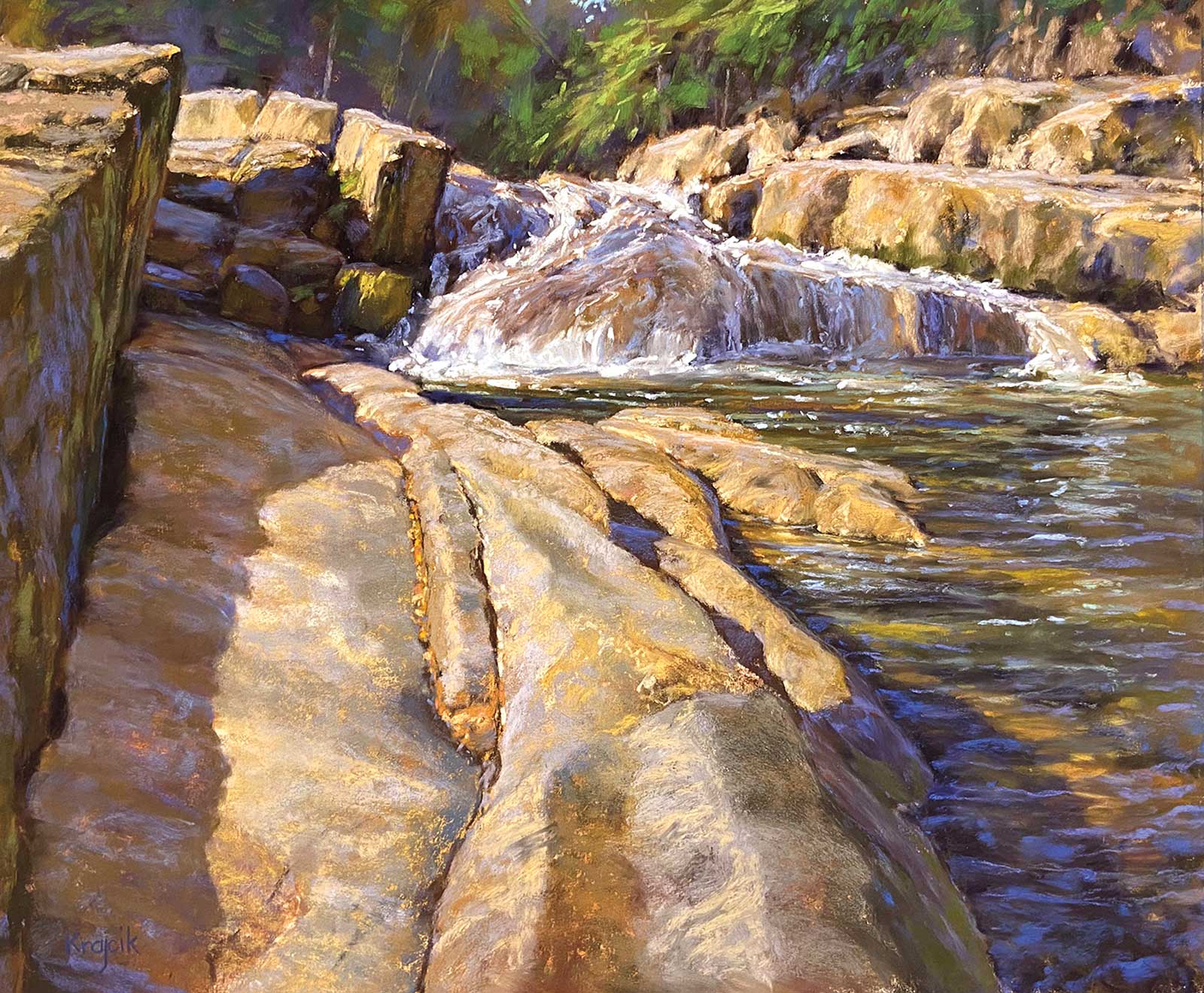
Allison Krajcik, Shaping, pastel, 18 x 20”
There are around 1,000 species of barnacles, tiny hermaphroditic sea crustaceans that, surprisingly, are related to crabs and lobsters. They attach themselves to rocks, boats and other sea life, sending out little feet to breathe and to filter plankton from the water. We usually see their dead, bleached carapaces on sea walls, docks and shells. Near his home on the coast of Maine, Whalley found a clam shell encrusted with barnacles to bring home and add to his collection of potential subjects.
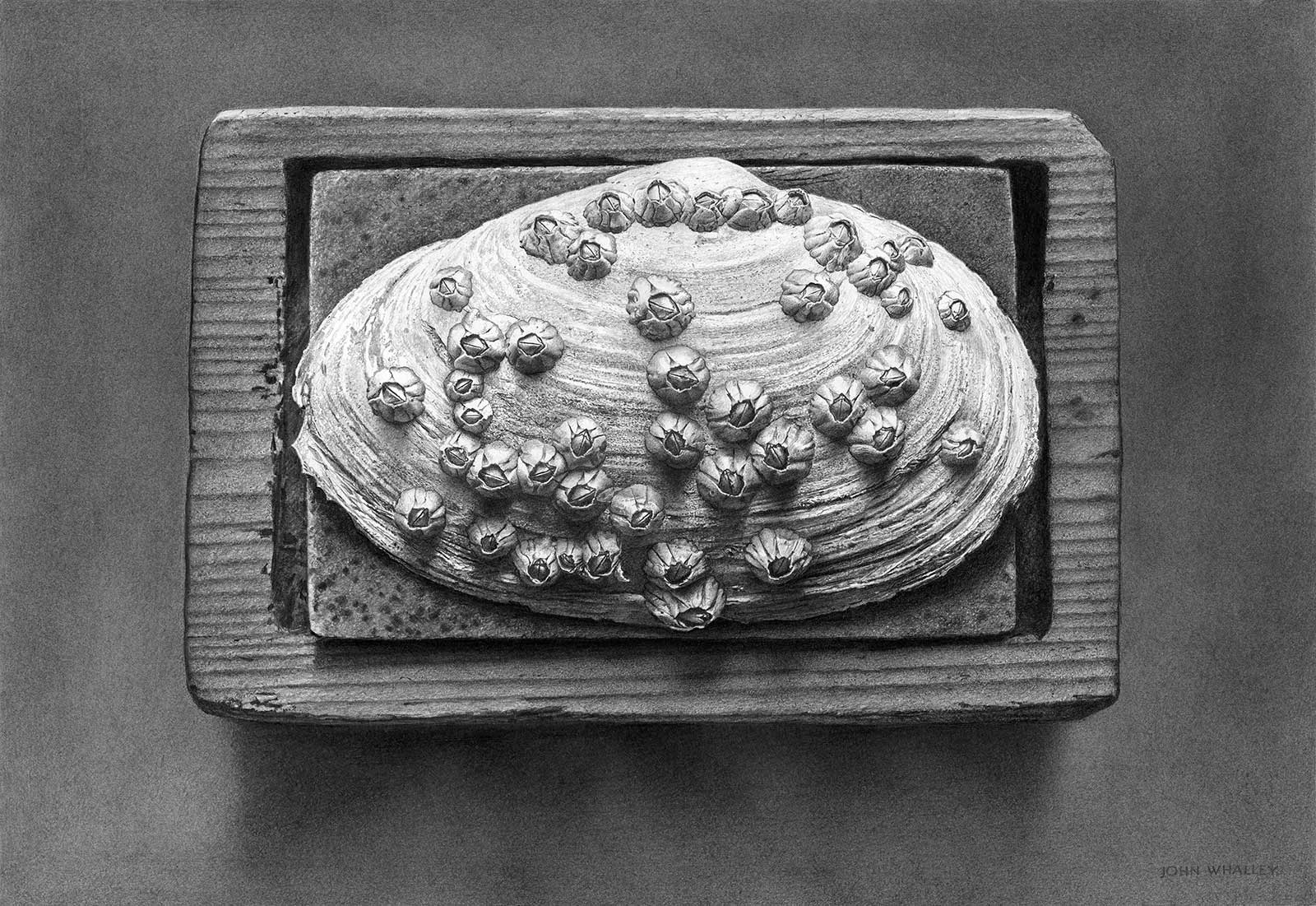
Greenhut Galleries, Hospitality, graphite on paper, 12¼ x 17¾”, by John Whalley.
His graphite on paper drawing, Hospitality, is his homage to the once-living things and to their process of growing, The rings of the clam shell and the shell plates of the barnacle indicate their growth over time, just as the rings on the piece of wood indicate its growth—wide in wet growing seasons, narrow in dry.
Whalley’s drawing is as subtle as his combination of objects. He says, “I find a more genuine joy in taking everyday ‘unbeautiful’ things, placing them in a setting and painting them in as true a way as I can, so their real beauty can be discovered by the viewer. I prefer this to taking the obviously beautiful and painting it adequately. I am after the beauty that speaks softly, is often overlooked, and yet when discovered, is a source of great pleasure.”
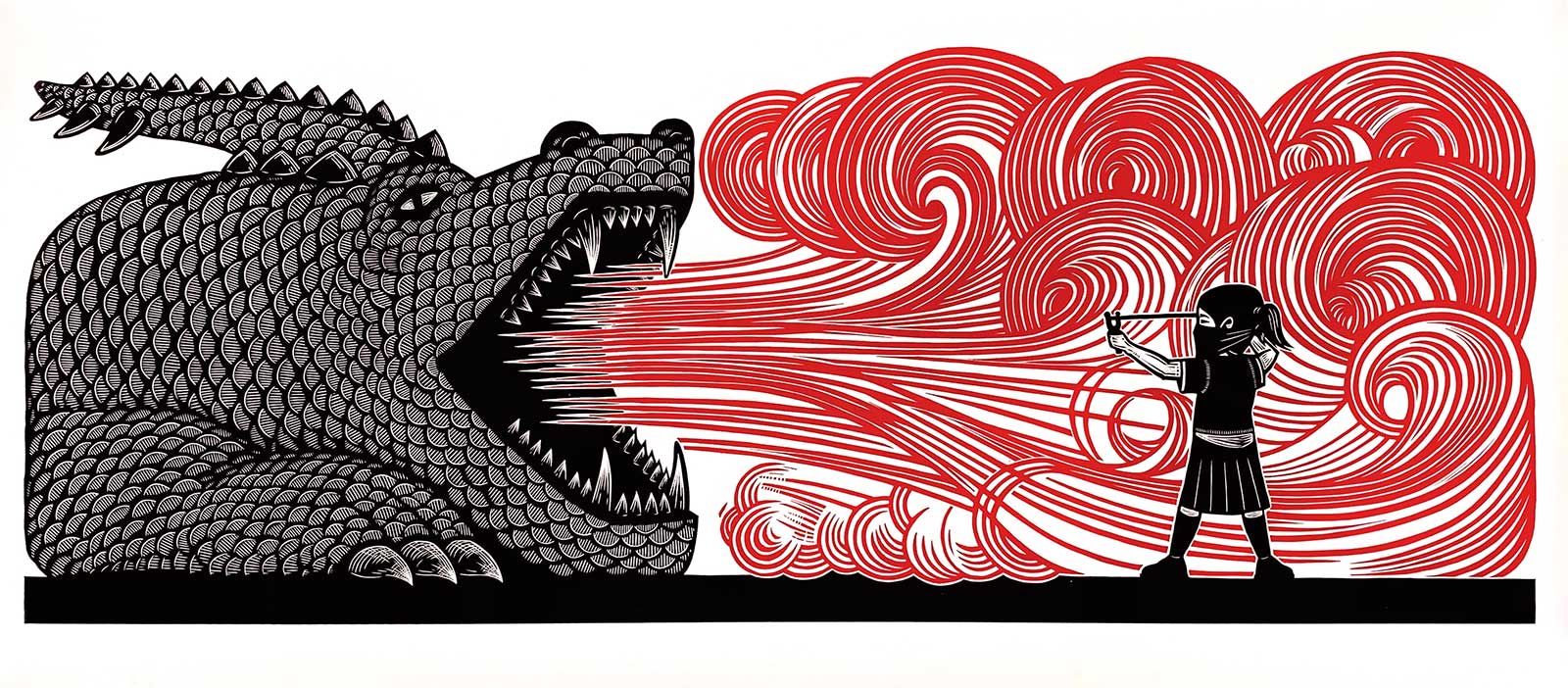
Hecho Gallery, Guerrera, two-color linocut, ed. 26 of 30, 35 x 79”, by Alberto Cruz.
Allison Krajcik grew up in rural Massachusetts and traveled across the country with her family visiting national parks. She developed a love for the landscape and with the encouragement of her high school art teacher, began to combine the two in her oil and pastel paintings.
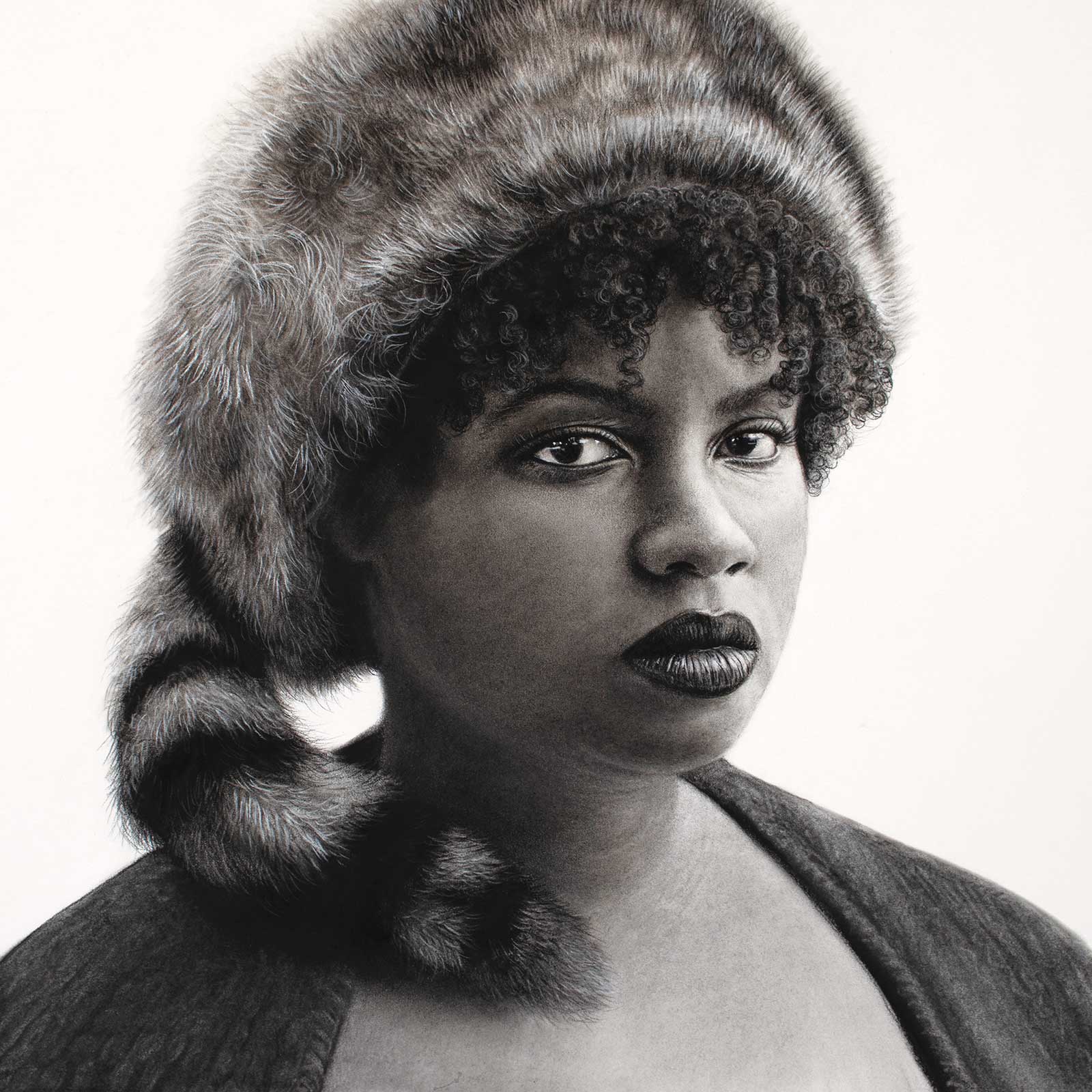
Traci Wright Martin, Huntress, charcoal and pan pastel on Stonehenge paper, 18 x 18”
She comments on her pastel painting, Shaping: “This pastel is from a plein air painting of Jackson Falls in Jackson, New Hampshire. You can get to this view of the falls by either trying your luck by crossing the stream—not always the best choice when carrying pastels—or by hiking across a bridge and down along the woodline. I like dramatic perspective, and sometimes I have to work for it. I was also drawn to this spot because it clearly depicts the power water has to wear down one of the hardest materials found in the natural landscape.” The solid granite rocks of Jackson Falls, fluid in their early life, are smoothed by eons of water flowing over them and by constant freezing and thawing of water in their cracks. Krajcik’s low point of view emphasizes the solidity of the rocks in the foreground and suggests that the flowing water is a harmless veil over the rocks.
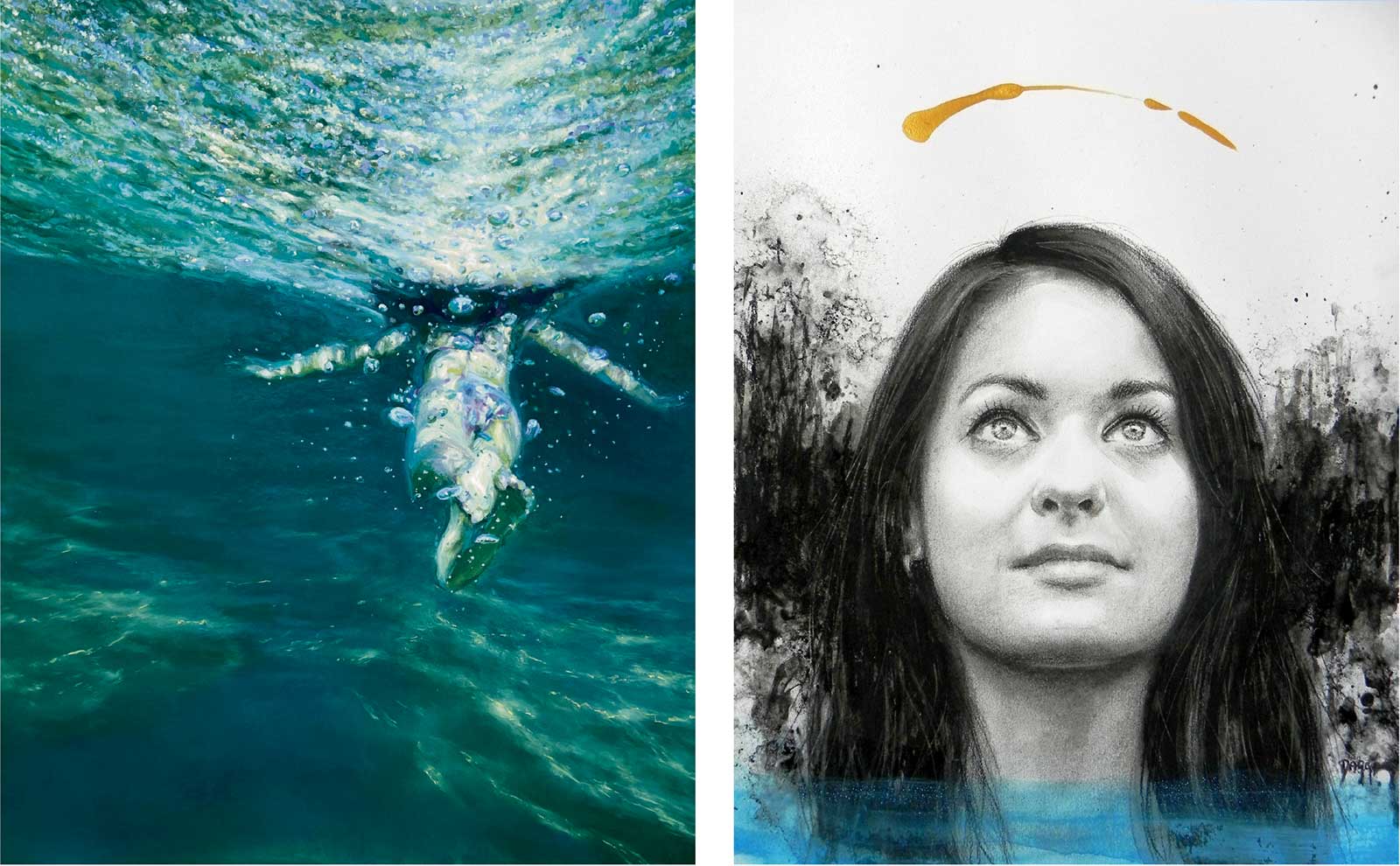
Elena Degenhardt, Levitation III, pastel on paper, 25 x 20"; Daggi Wallace, After The Storm, dry and liquid charcoal and acrylic ink on paper, 14 x 11"
Alberto Cruz says his first encounter with art came when he was 14 through a library founded by the teacher Francisco Toledo in Oaxaca, Mexico. Today Cruz follows in the master printmaker’s footsteps as the founder of Burro Press in Oaxaca.
“I’ve always made pencil drawings and it was through this discipline that I got to know engraving, a technique that creates multiples and democratizes opportunities to view the work,” he says. His simple, linear images of childhood relate to universal experiences, inviting viewers to reenter the world of the pleasures and terrors of their childhood. In Guerrera, a young girl bravely withstands the fiery breath of a dragon while she aims to do him in with her slingshot. The confrontation is presented dramatically in two colors on a sheet of paper over 6-and-a-half feet wide suggesting that confronting evil is a universal task that can be undertaken by even a fearless young warrior.
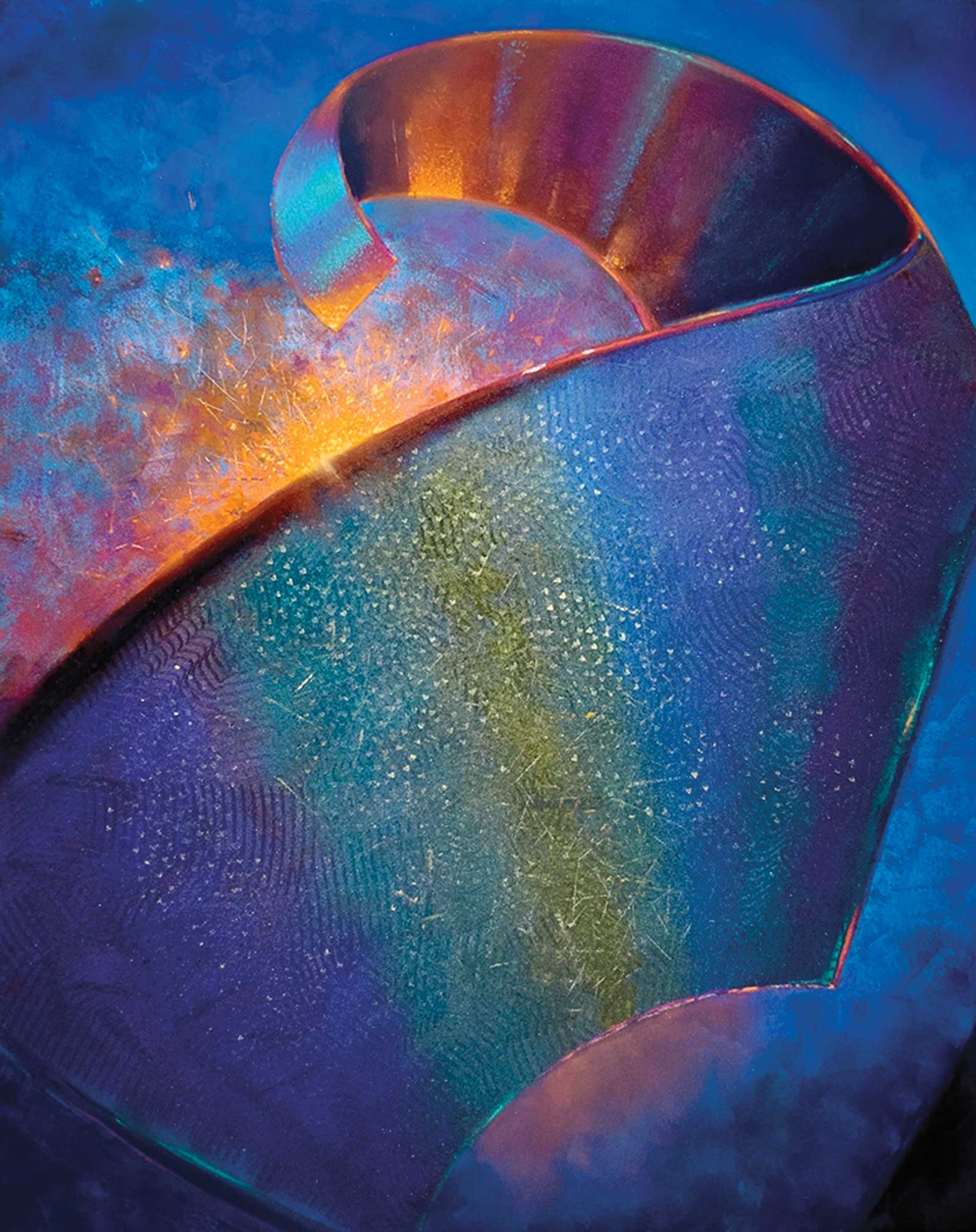
Laura Pollak, BEHIND THE CURVE, pastel on archival paper, 20 x 16"
Continue exploring the pages of this special section for even more examples of the myriad art styles and mediums that can be utilized on a paper substrate.
Artists Daggi Wallace, Elena Degenhardt and Traci Wright Martin are all represented by the Chicago-based gallery 33 Contemporary.
Wallace focuses primarily on portraying the human condition and our connection to one another. “I like to create images that tell a story with multiple layers of meaning that draw in the viewer,” says the artist. “I’m inspired by my growing up in the urban environment of Berlin where contemporary abstract work is so prevalent, but I also love traditional realism. My aim is to find my own way of combining the two and continue to try out new techniques, combining pastel with other mediums and presenting it in non-traditional ways.”
Degenhardt is an award-winning German portrait and landscape figurative artist with an impressionistic touch. Her work is deeply rooted in her life experience, exploring themes of displacement, lost and found identities, human fears, memory and time, bonds and boundaries. She works mainly in pastel, pushing traditional boundaries of this dry medium by applying wet-on-wet techniques throughout the painting process.
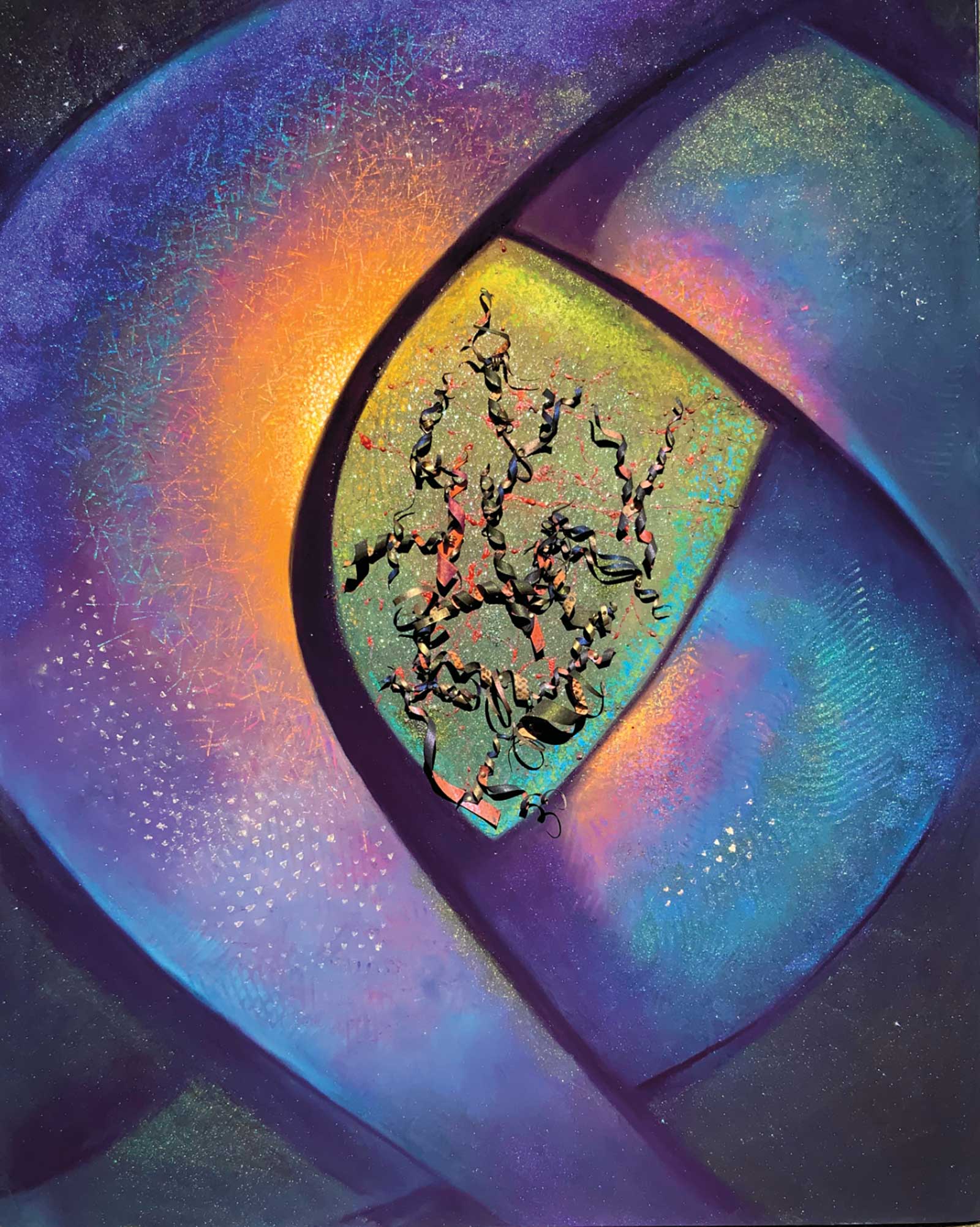
Laura Pollak, DISCORD, pastel on archival paper, 20 x 16"
Martin says, “In all my years as an artist, my subject matter always comes back to portrait and figurative work. I am fascinated by people and their individual, complex stories. It is important to me that each and every viewer sees themselves somewhere in my work. I marvel at how we are able to build community with one another, even by the smallest threads of commonality. With these ideas in mind, the overall narrative in my work weaves in and out of a conversation on identity and representation.”
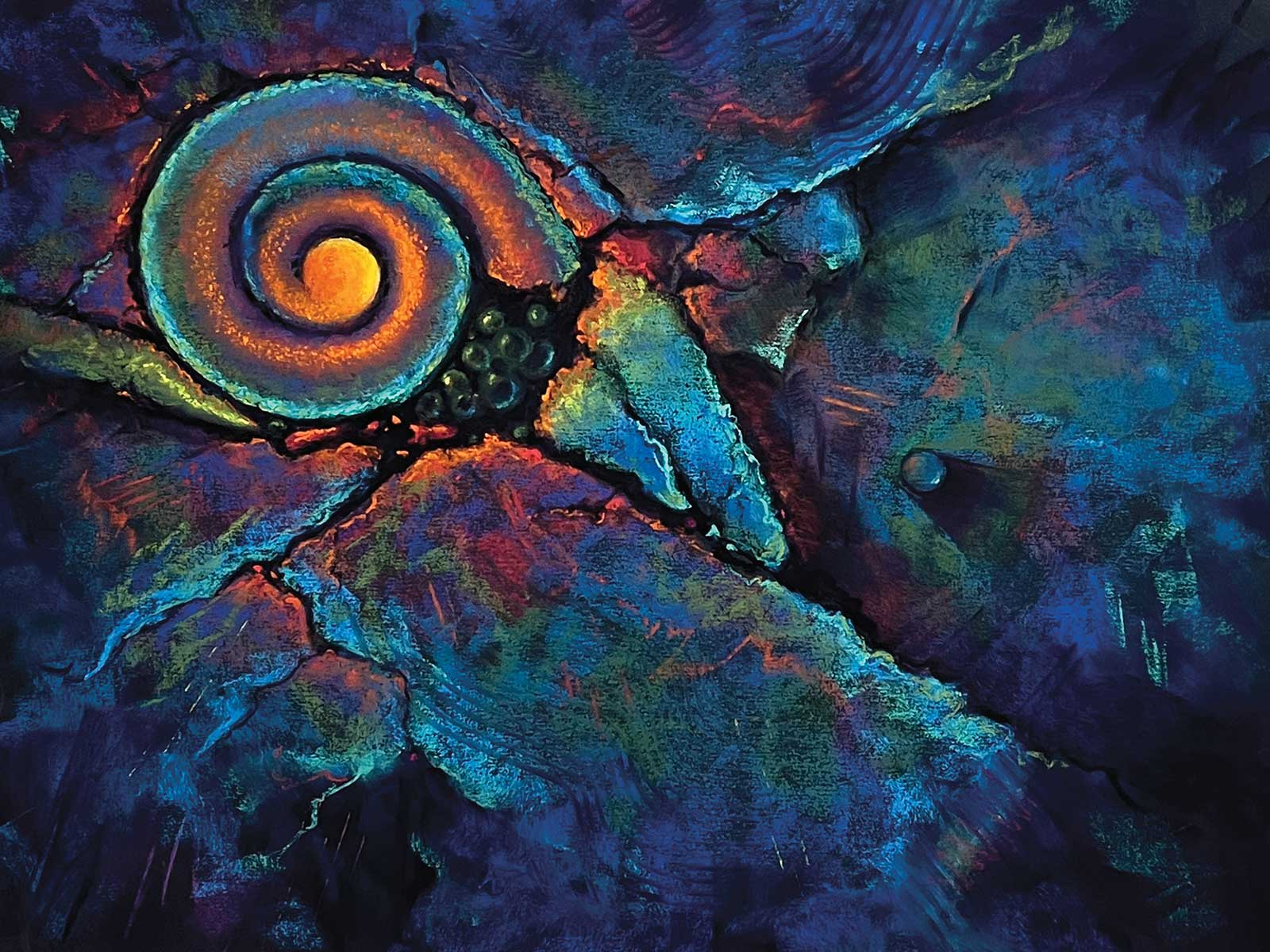
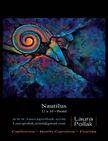
Laura Pollak, NAUTILUS, pastel on archival paper, 12 x 16"
Pastelist Laura Pollak’s works have gained global attention in curated shows, museums, private collections and publications worldwide. Her ability to create visual magic has garnered her top awards in a wide range of venues across the globe. “The medium of pastel is one of the most enduring. Contrary to some beliefs that pastels are fragile, the pure, rich pigments of pastels have been around for 20,000 years, as seen in the Caves at Lascaux,” Pollak says of her preferred medium.
“My wish is to create a joyful, visual experience by invoking light, color and movement. I hope to ignite an immediate and deep response that bonds my paintings with you, my collectors.” The artist completes her work on archival papers that are designed to last for millennia. “Investment in a pastel painting is always wise, and to purchase investment art you love, is brilliant,” she says. “It becomes a window to your world and a haven for you to enjoy over and over again all the while increasing in value!” —
Featured Artists & Galleries
33 Contemporary Gallery
Zhou B Art Center
4th Floor 1029 W. 35th Street
Chicago, IL 60609
(708) 837-4534
www.33contemporary.com
Greenhut Galleries
146 Middle Street Portland, ME 04101
(207) 772-2693
www.greenhutgalleries.com
Hecho Gallery
129 W. Palace Avenue Santa Fe, NM 87501
(505) 455-6882
www.hecho.gallery
Laura Pollak
(336) 508-4729
www.laurapollak.com
Powered by Froala Editor