While working as an illustrator in New York, Warren Chang painted from life every week with two masters of the figure, Max Ginsburg and Steven Assael. He often says, “Everything I know about painting is derived from painting from life.” He tells his students he wants to practice what he preaches and runs a regular life painting class at Pacific Grove Art Center not far from his home in Monterey, California.
He initially wanted to be a history painter in the manner of Stanley Meltzoff whose magazine illustrations, unlike those of his contemporaries, were complex painterly scenes.
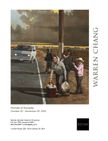
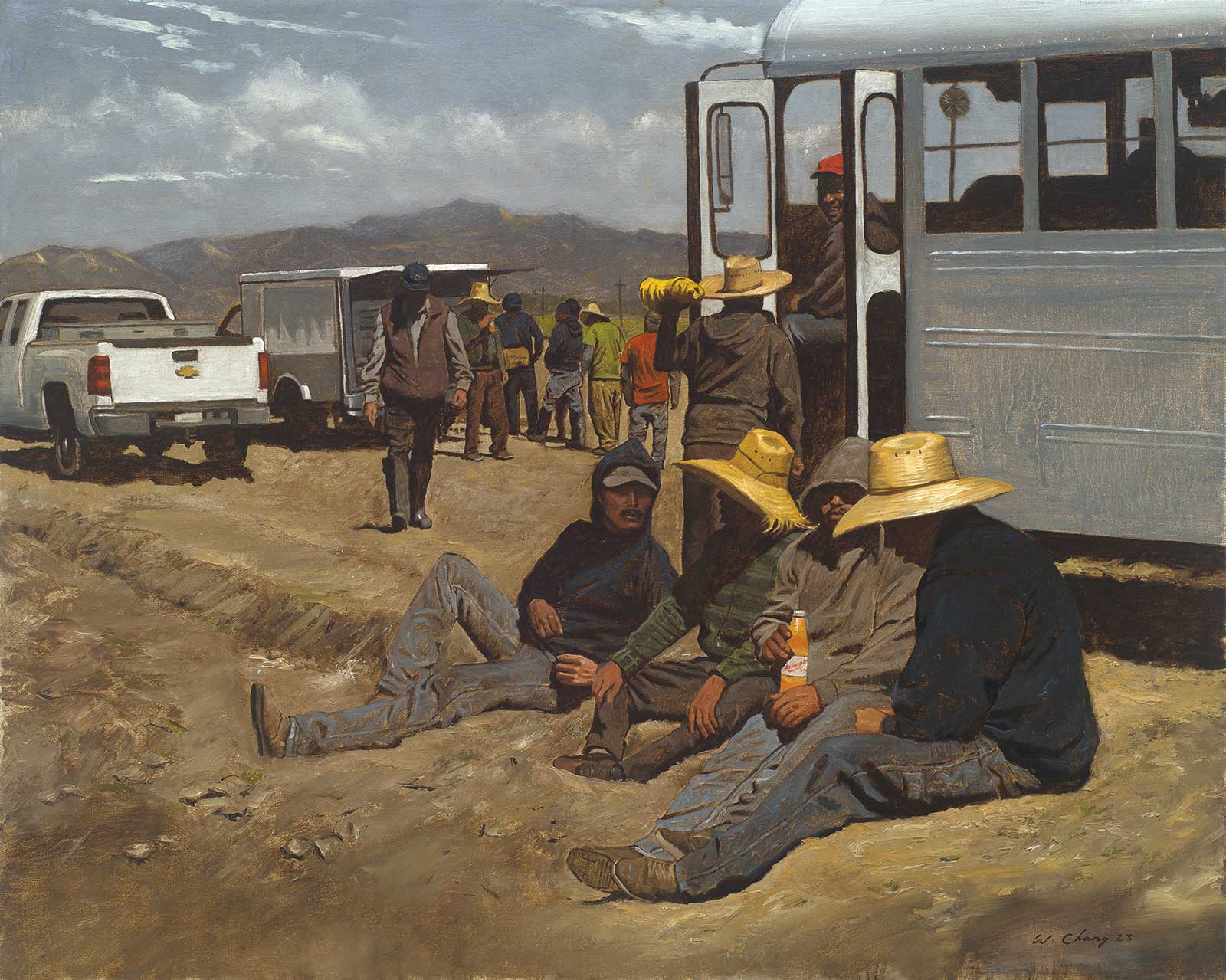 Workers on Break, oil on canvas, 24 x 30"
An avid student of art history, he admires the paintings of field workers by the 19th-century French naturalist Jean François Millet, but refers the more painterly and gritty paintings of Léon Augustin Lhermitte.
Having been brought up in Monterey, he was familiar with the field workers there, made famous by John Steinbeck in his novel, The Grapes of Wrath.
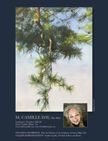
His paintings and studies of field workers will be shown in the exhibition Warren Chang: Portraits of Humanityat Winfield Gallery in Carmel-by-the-Sea, California, October 20 through November 20.
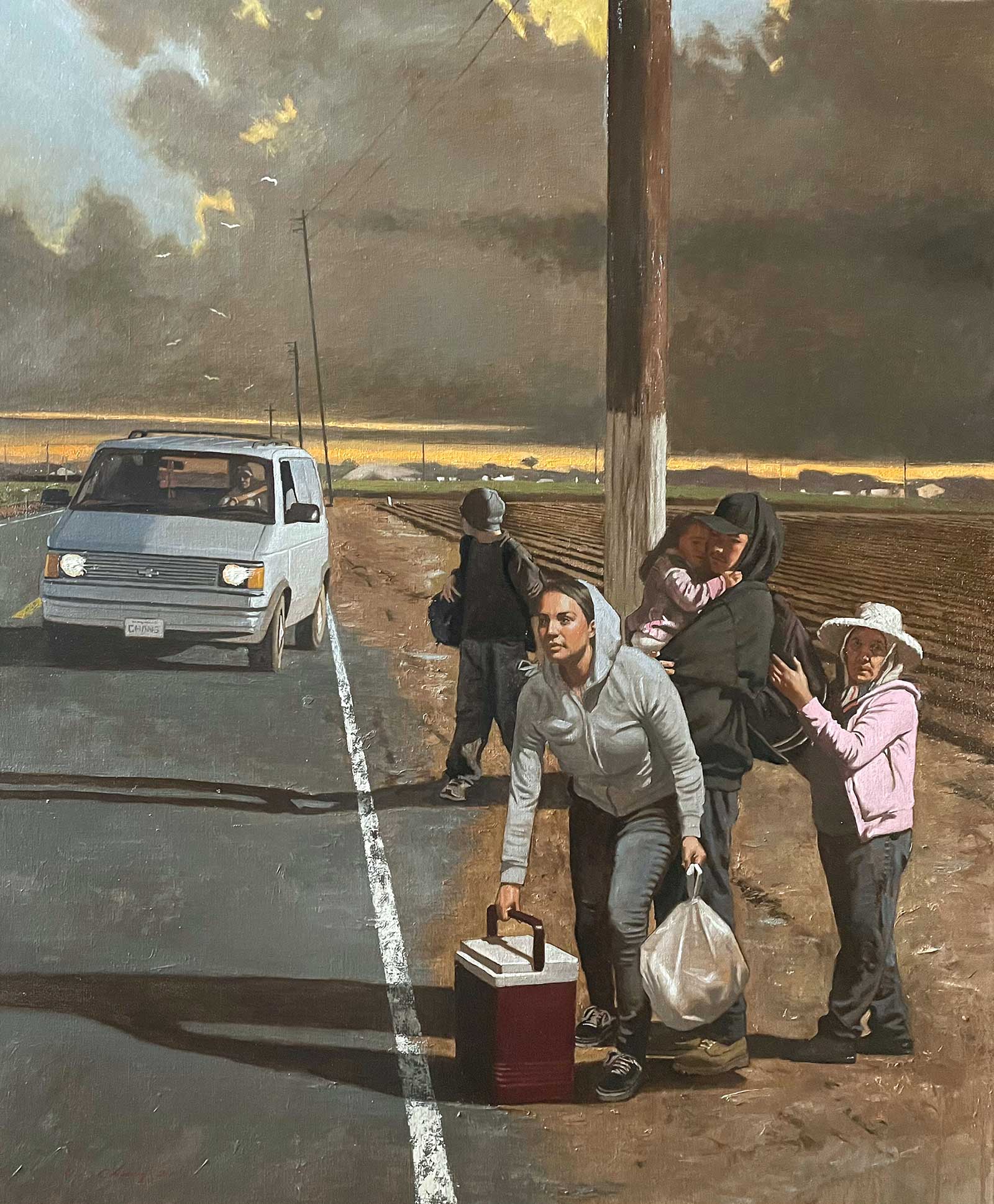
Invisible People (study), oil on panel, 10 x 8"
Chang’s complex compositions are assembled from art historical references and countless visual references he has made over 20 years. Workers on Break, for instance, pays homage to the composition in The Bright Side, a painting of Black Union soldiers in the Civil War by Winslow Homer, and incorporates five of his own references.
The result is a narrative painting which he leaves to viewers “to discover for themselves what the painting means to them. More often than not,” he says, “the viewer takes ownership of the feelings and emotions they experience far beyond I had intended.
“My whole body of work is about seeking the meaning of life, illustrating the plight of humanity in general, regardless of the subject. Here, I’m using the farmworkers as my vehicle.”
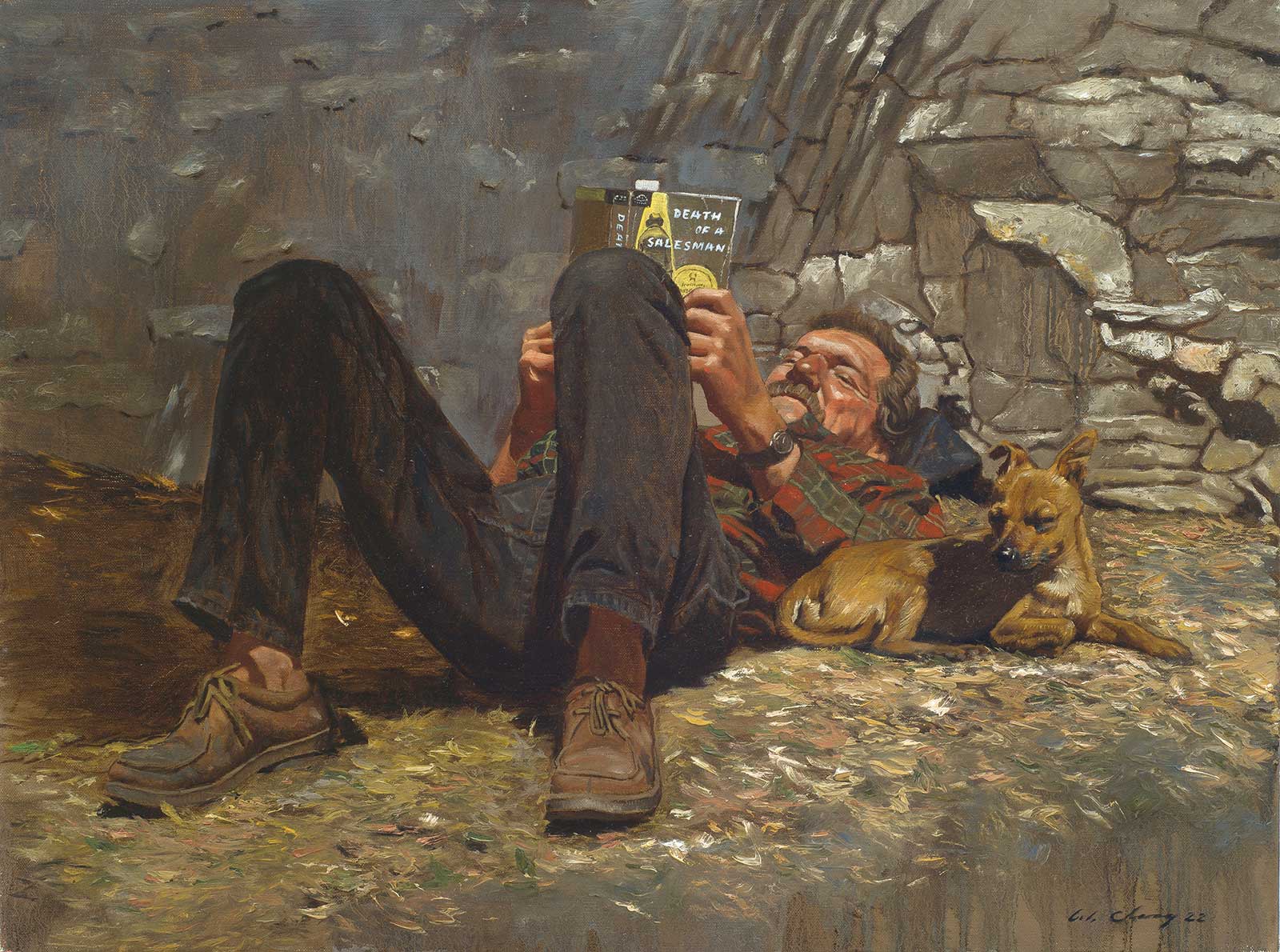
Man with Dog, oil on canvas, 18 x 24"
In 1952, Ralph Ellison published his novel, Invisible Man, a first-person narrative of a Black man in a racially divided world that doesn’t recognize him as a human being. The cover for a 1953 edition of the book was painted by James Avati, a composition in which a Black man observes a multitude of bustling white people who are oblivious to his presence.
Chang’s painting, Invisible People, depicts a multigenerational family at the edge of a recently plowed field about to board a van to take them where they live.
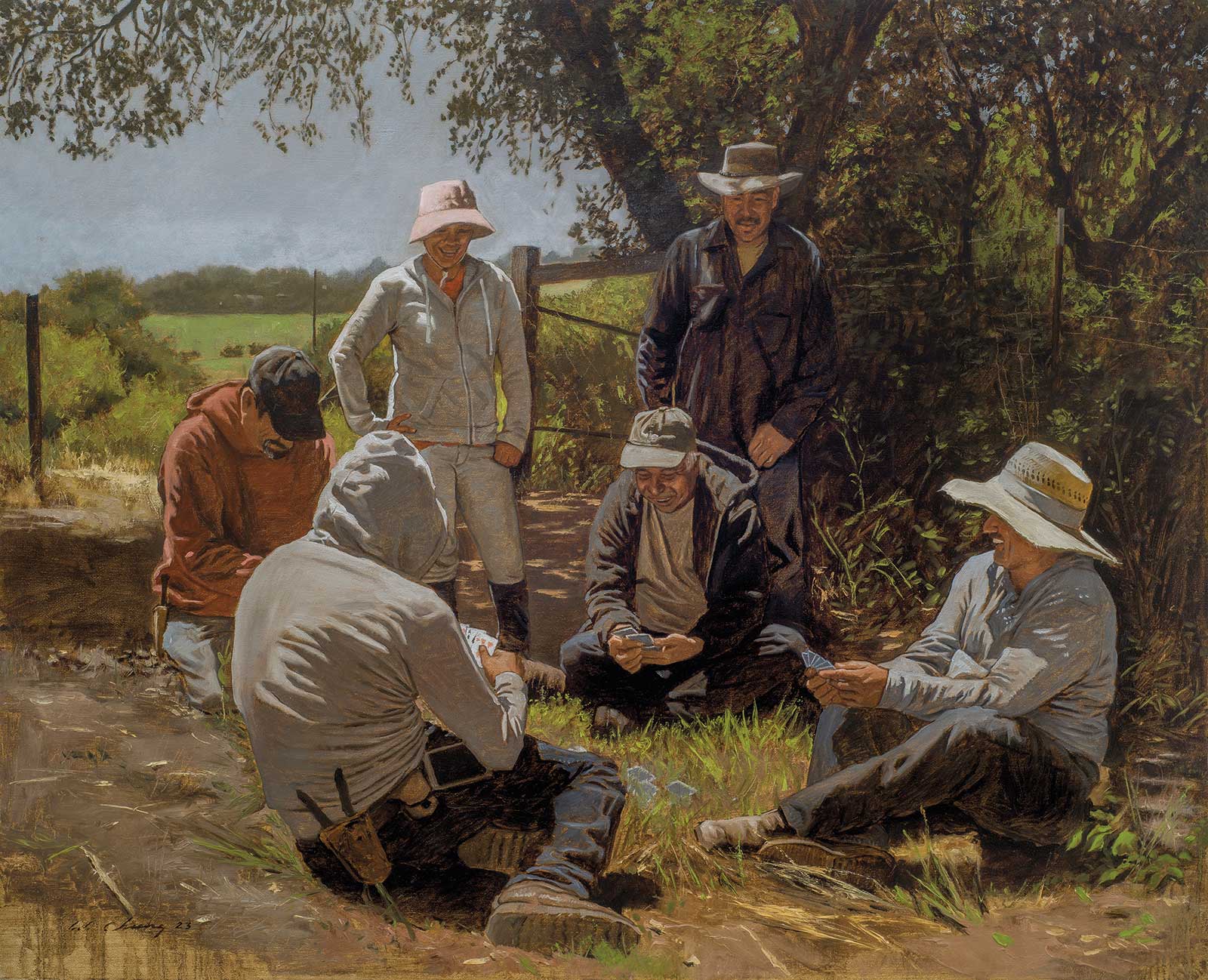
Cards, oil on canvas, 26 x 32"
When we enjoy strawberries, lettuce or tomatoes, they may have come from the fields of the Salinas Valley in Monterey County, miraculously appearing in our supermarket, devoid of the history of their planting and harvesting and the workers who made it happen. —
Winfield Gallery Dolores between Ocean and 7th Avenue • Carmel-by-the-Sea, CA 93921 (831) 624-3369 • www.winfieldgallery.com
Powered by Froala Editor