
Mood is only as limited as one’s ability to articulate the nuances of emotion. In reference to a painting, it signifies the general atmosphere, state of mind or the instinctual reaction the art evokes within the viewer. But what infuses a piece with this palpable, if ineffable, feeling? What techniques and tools are used to achieve a desired mood?
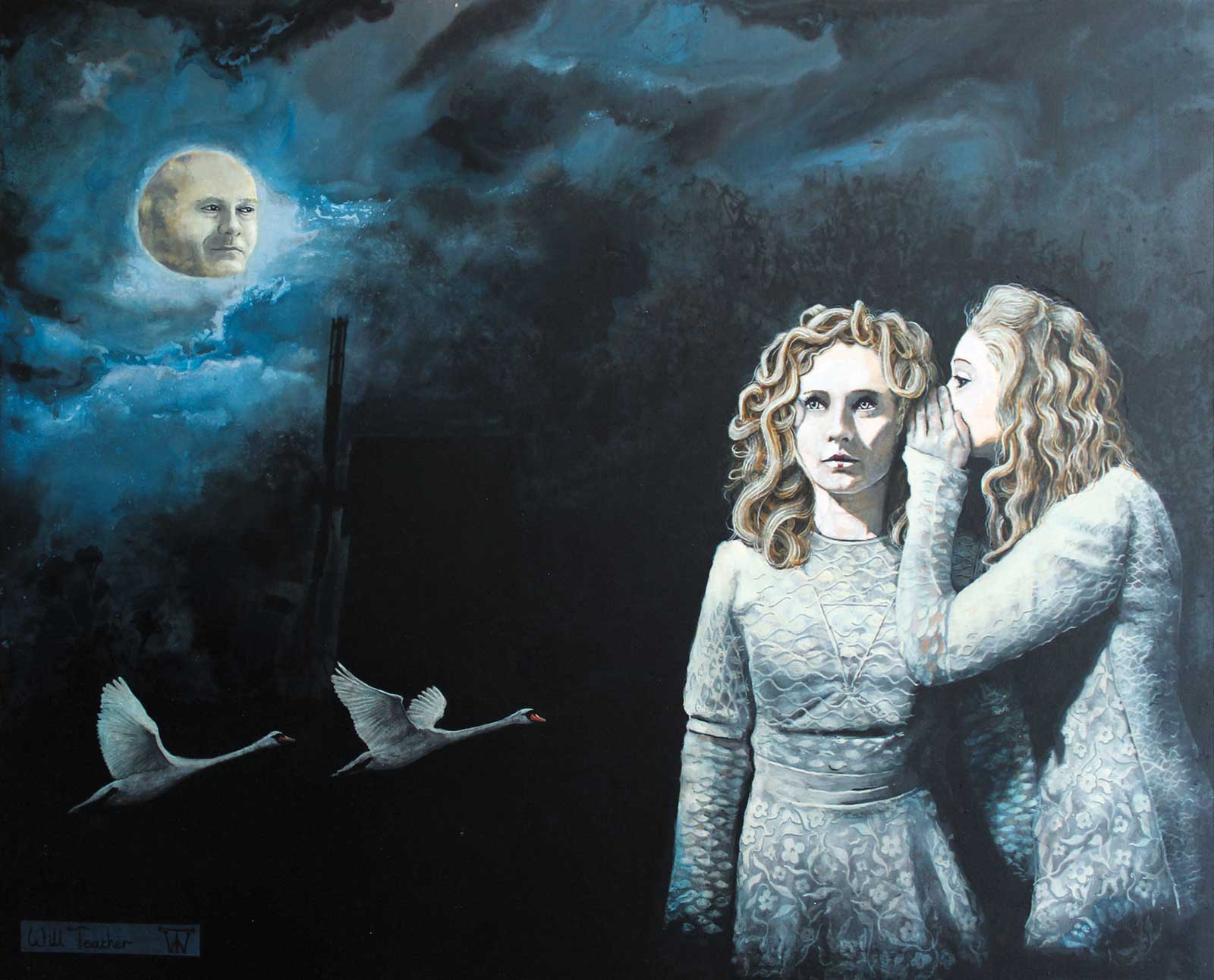
Will Teather, The Moon has Lost its Memory, acrylic on panel, 15½ x 20"
An upcoming exhibition at RJD Gallery titled Night and Day—The Art of Mood explores how light, or lack of it, sets the tone of a group of diverse paintings by several of their talented artists.
Will Teather often paints scenes that seem to emerge from the shadows. His piece The Moon Has Lost its Memory is part of the series Lunar Incantations. “I enjoy the mystery of nocturnal scenes and the way nature seems to be watching us,” says Teather.
Teather’s piece was inspired by the play Ernest and Pale Moon. “The play is quite minimal, using physical theatre to signify most props, leaving a lot of room for my later embellishment of the images,” he says, noting that he gave himself a cameo as the Man in the Moon. “I am interested in using text in a way in which it strengthens the narrative whilst still leaving the meaning open.”
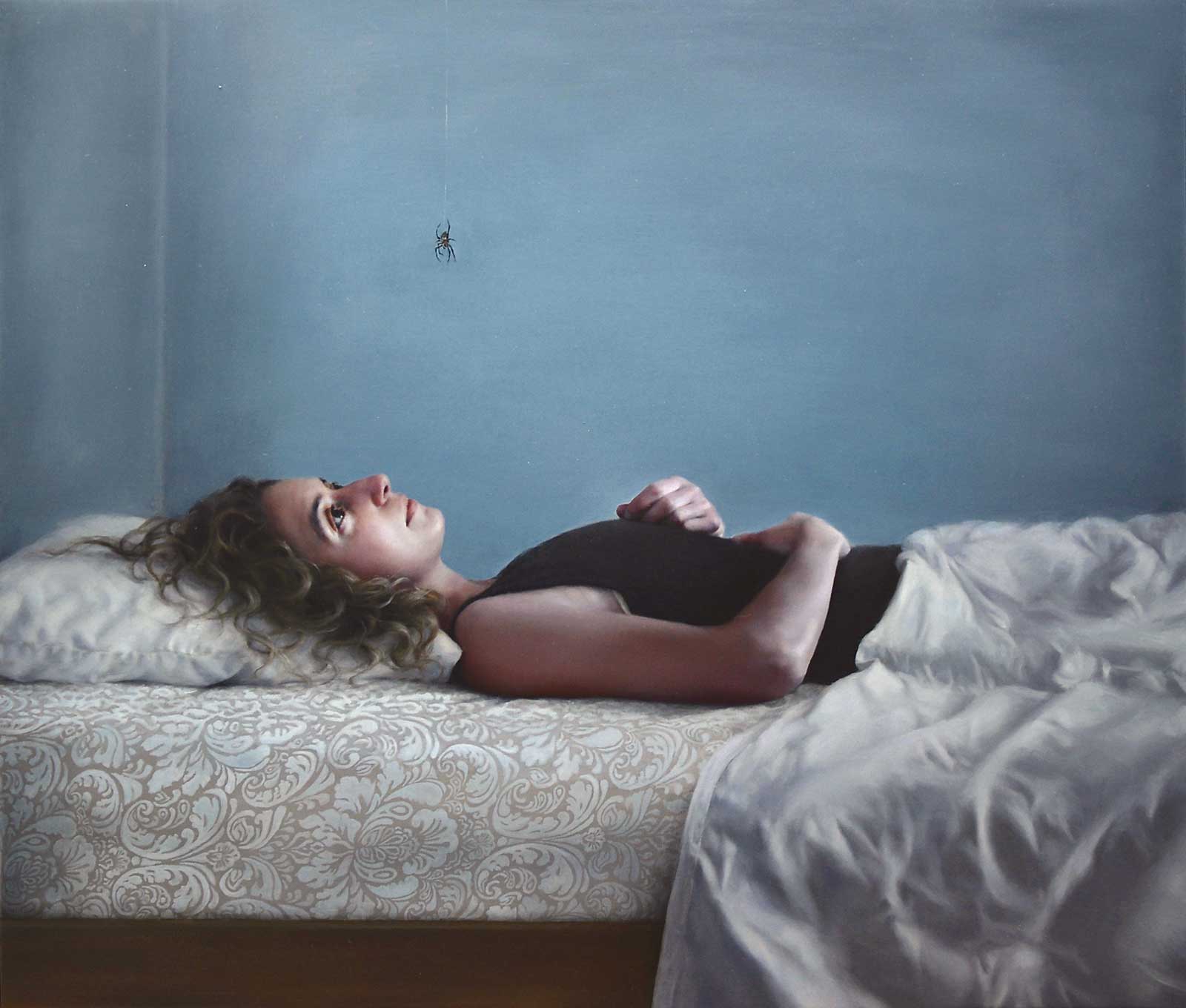
Katie O’Hagan, Suspension, oil on linen, 36 x 42"
Teather spends a lot of time on the lighting of his models and props because it is so crucial to his work. “It changes everything,” he says. “Both the way you feel and the handling of the paint. I think about the mood I want to achieve. Lighter scenes tend to be more illustrative in style, whereas layers of shadow give the chance for things to emerge from the ether.”
On the other end of the spectrum is Rachel Mosely’s Doughnut Cheerleaderwhich, with the slice of impossibly blue sky could be set during recess at high noon. However, the importance of shadow is emphasized, emblazoned across the figure’s chest, and in the artist’s deft use of it to highlight the brightness of the day.
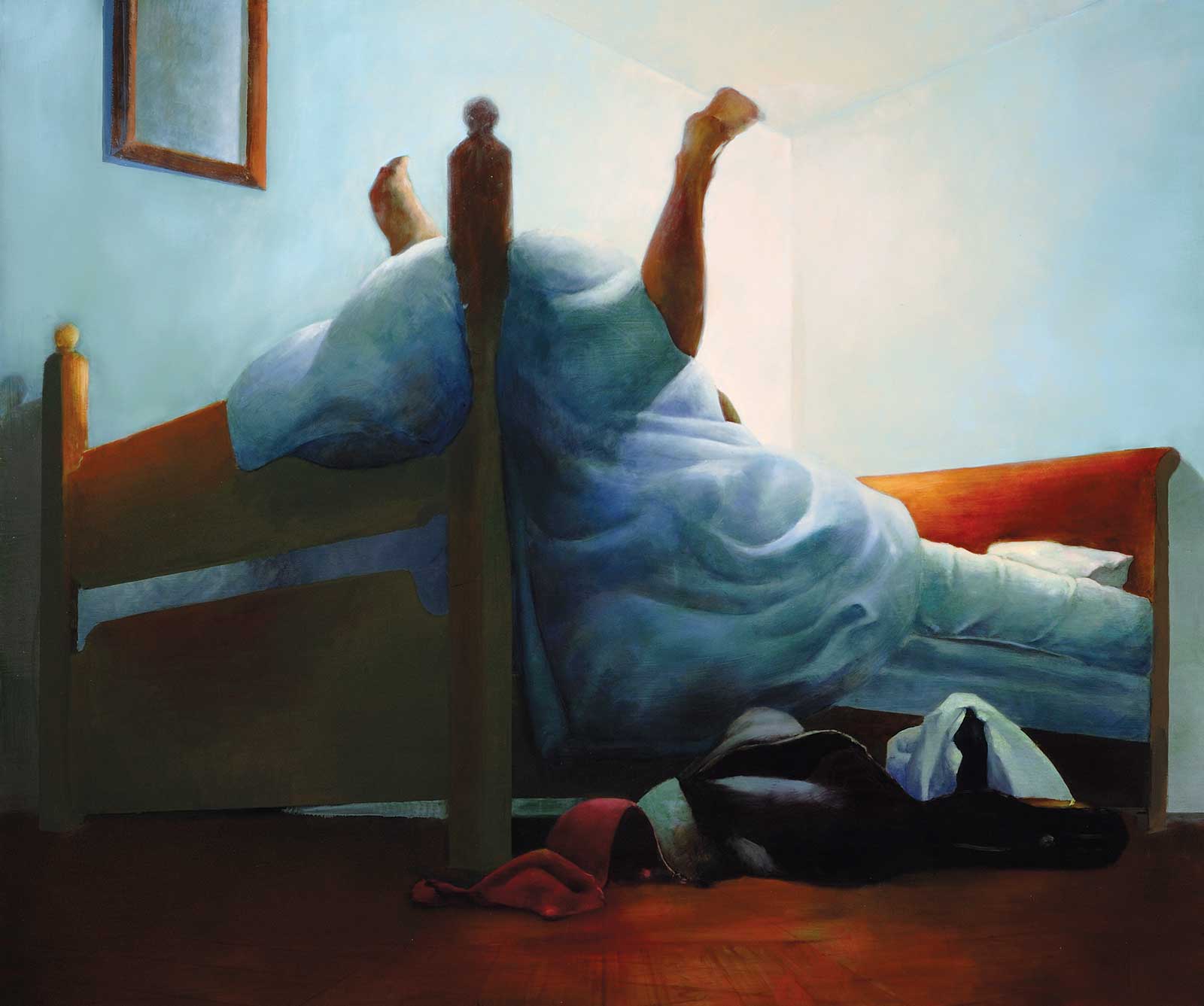
Ben Hengst, Radiant Orgasm, oil on canvas, 52 x 62"
“Doughnut Cheerleader was painted midday in bright, Las Vegas sunshine,” says Moseley. “I wanted to capture the ‘after school’ hour, around 3 p.m., to evoke a feeling we can all relate to. The model is high school aged. She’s still a child, but coming into her own and responsible for herself. I remember the feeling of the few hours after school, before my parents were home from work, where I was independent. Unsupervised walks to a convenience store for candy, or taking a ride from a friend with a fresh driver’s license felt like absolute freedom. The bright sun and cinder block wall represent a freedom walk, anyone could relate to.”
Lighting is one of the first things Moseley considers when arranging a composition. “It’s not always bold or high contrast, but it’s always present,” she says. “I certainly use it to set a mood: upbeat, somber, dramatic, etc., but I think more importantly, as a figurative artist, it’s important for rendering the best possible figure. Without light and shadow, there is no form.”
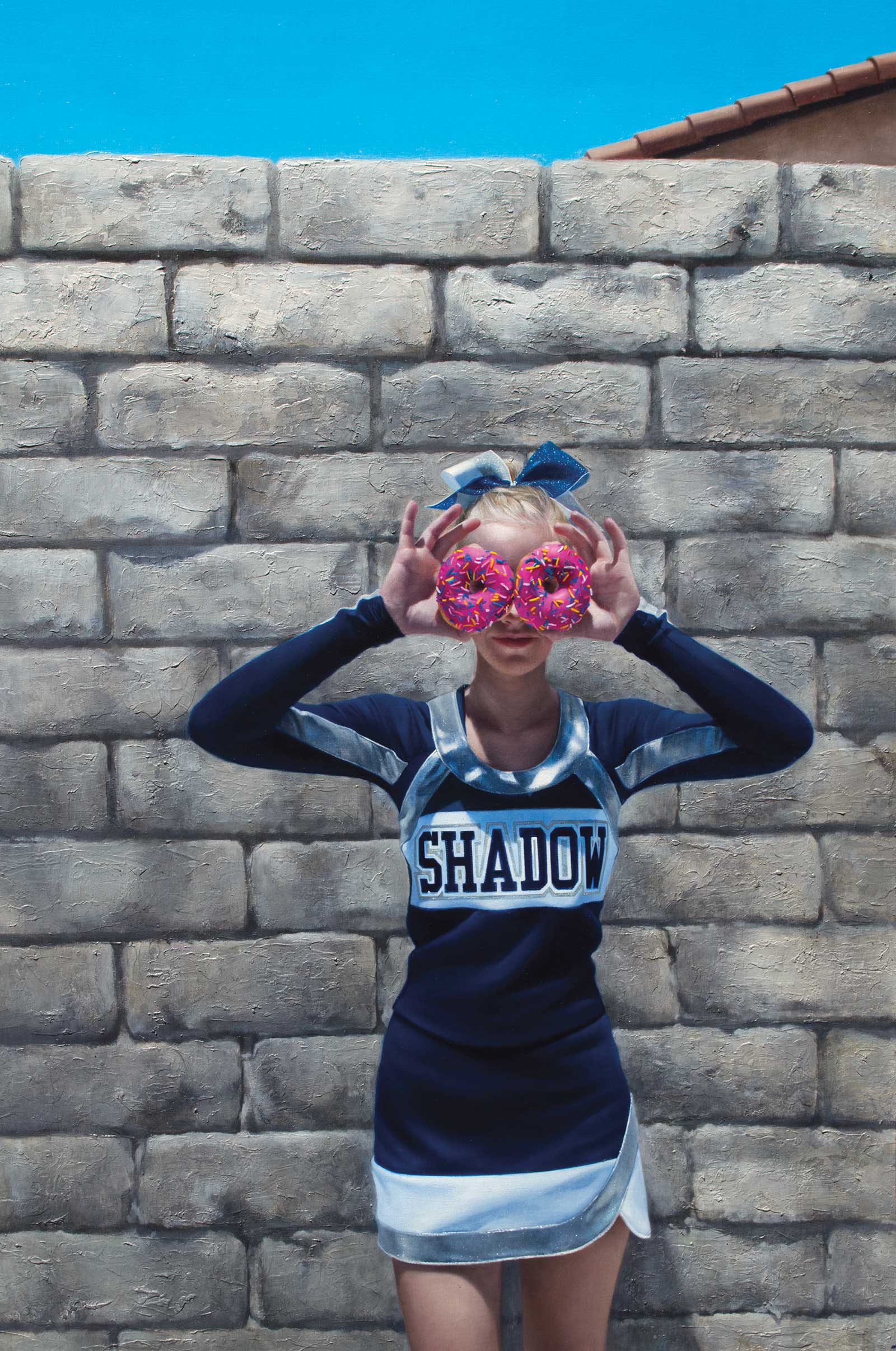
Rachel Moseley, Doughnut Cheerleader, oil on wood panel, 36 x 24"
When photographing a model she usually has a loose idea of what she wants to achieve, but sometimes an entire piece will be inspired by catching the light in a specific place or time of day. This happened to her recently when she walked by her sun room at night. She had left a string of lights on and was struck by how they illuminated the cozy sitting area. “I had never seen the room like that before and I knew immediately I needed to do a nocturne self-portrait in that space,” she says. “I obsessed about it for months and just shot the reference for it. The composition is entirely dictated by the light source.”
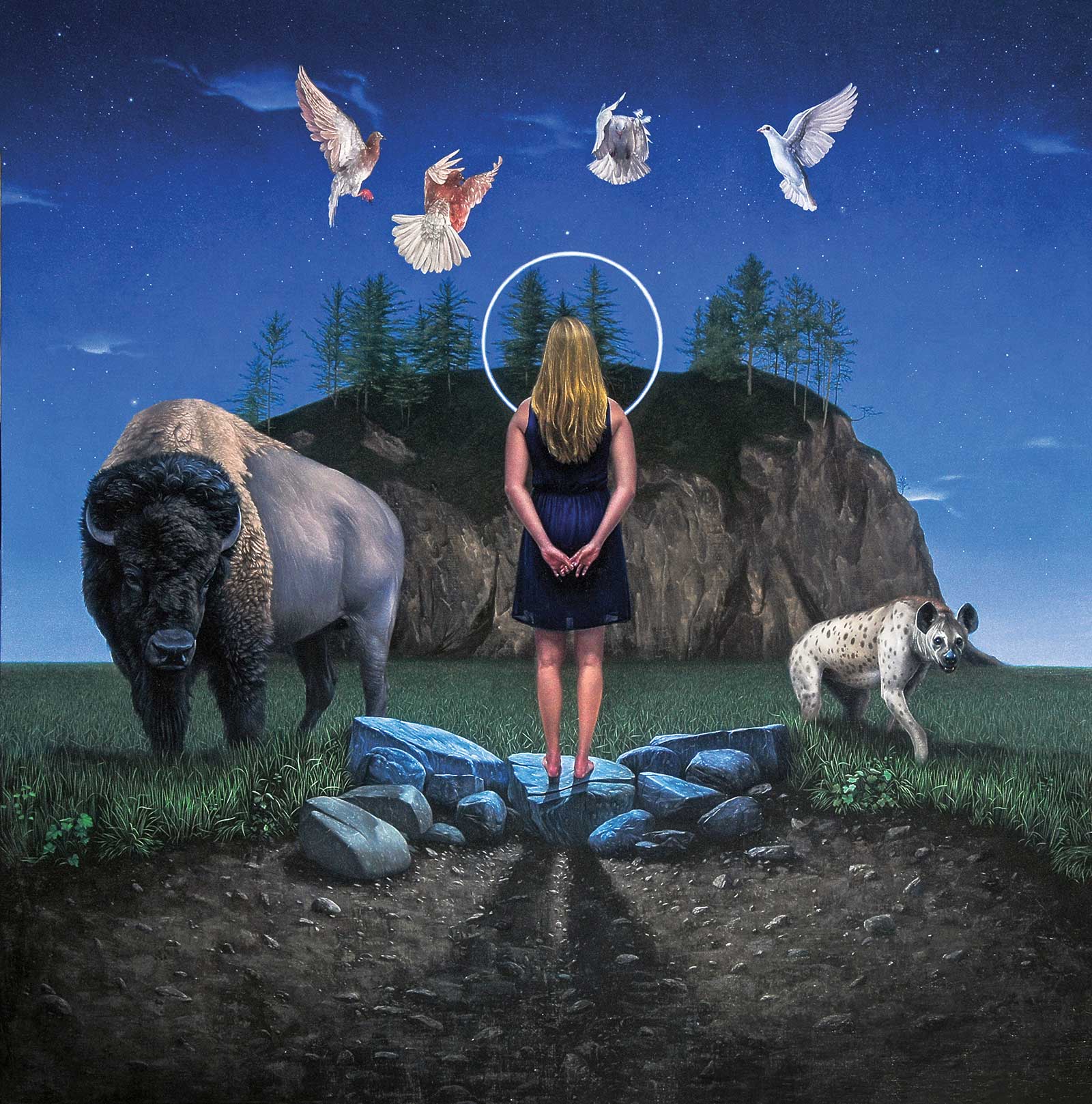
Fatih Gürbüz, Everything will be Beautiful, oil on canvas, 43 x 43"
Ben Hengst’s Radiant Orgasm is set both in and out of shadow. The bedroom scene gives the impression of a late-night tryst while the corner is bright with the glare of a bedside lamp. “Because I grew up in the theater I tend to think of the canvas as a stage upon which I place my actors and create a narrative,” Hengst says. “I am especially fond of such theatrical devices as the ‘aside’ and find great amusement in the idea that a painting can break the fourth wall. There is always an element of playfulness that runs throughout my work. It’s important not to take the world too seriously.”
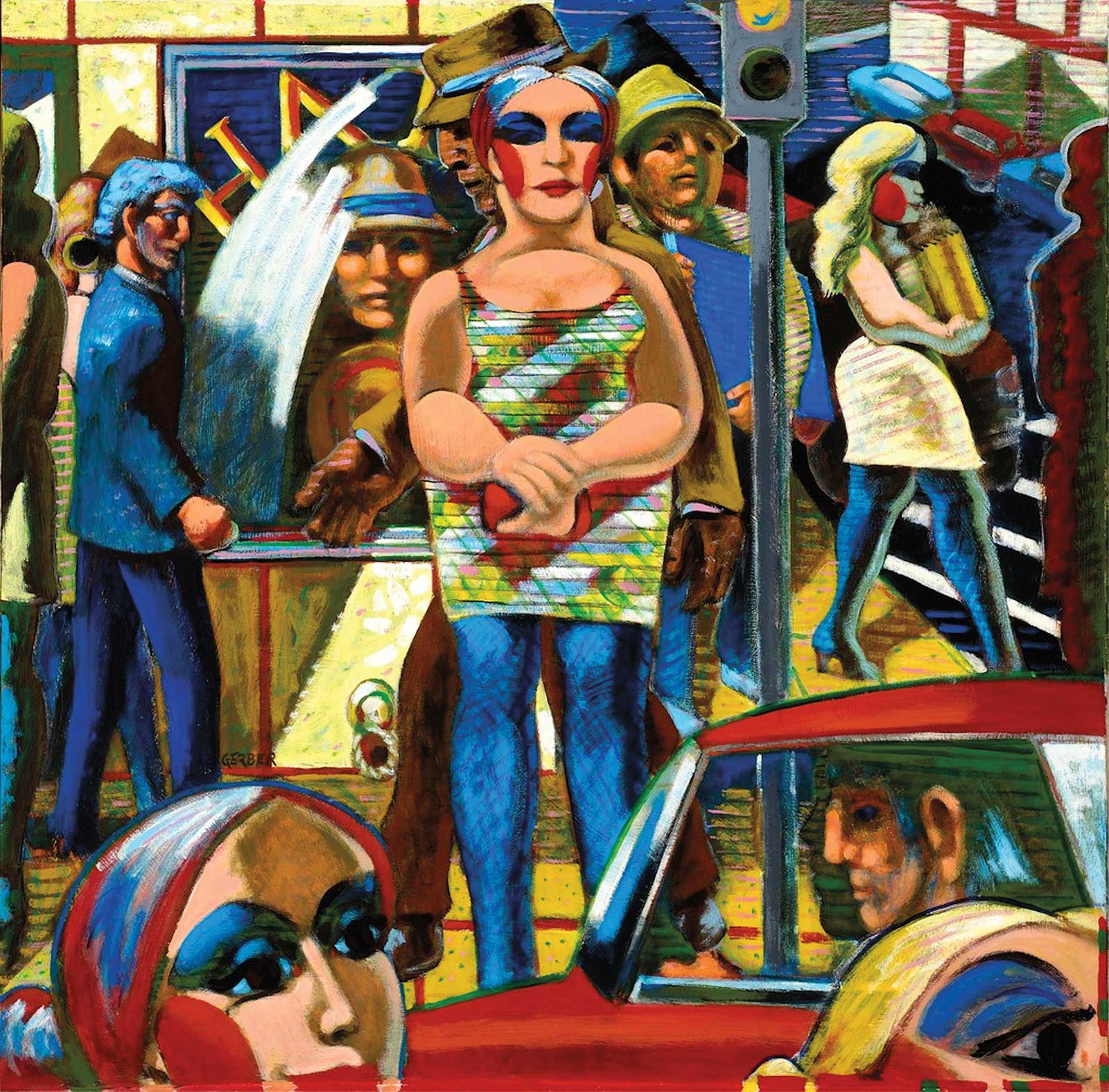
Jack Gerber, Day in the City, acrylic on canvas, 48 x 48"
Suspension by Katie O’Hagan is a literal depiction of being scared of things that lurk in the dark—in this case spiders. “I’m a bit of an arachnophobe and used to have very vivid spider dreams years ago,” shares O’Hagan. “They were at night so I only added enough light to see the subject. Luckily I don’t have those anymore so perhaps painting the nightmare did the trick!”
Also on view in the exhibit are works by Anni Crouter, Frank Oriti, Fatih Gürbüz and the late Jack Gerber.
Night and Day: The Art of Mood opens August 1 and runs through September 4. —
RJD Gallery 227 N. Main Street • Romeo, MI 48065 • (586) 281-3613 • www.rjdgallery.com
Powered by Froala Editor