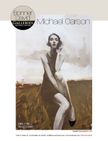
Artist Michael Carson, who began his career working as a product designer for a small gift company, has become one of the leading contemporary painters today, exhibiting at some of the top fine art galleries in America. With his popular hybrid of realism, expressionism and a hint of abstraction, his thick, nondescript backgrounds share the canvas with his vaguely representational figures. Known for his iconic, dramatic figures boasting a glamorous fashion flair, his works can be found in both private and corporate collections internationally. However, Carson is not only a painter—as in his work, there is more to discover beneath the glossy surface of this highly accomplished artist.
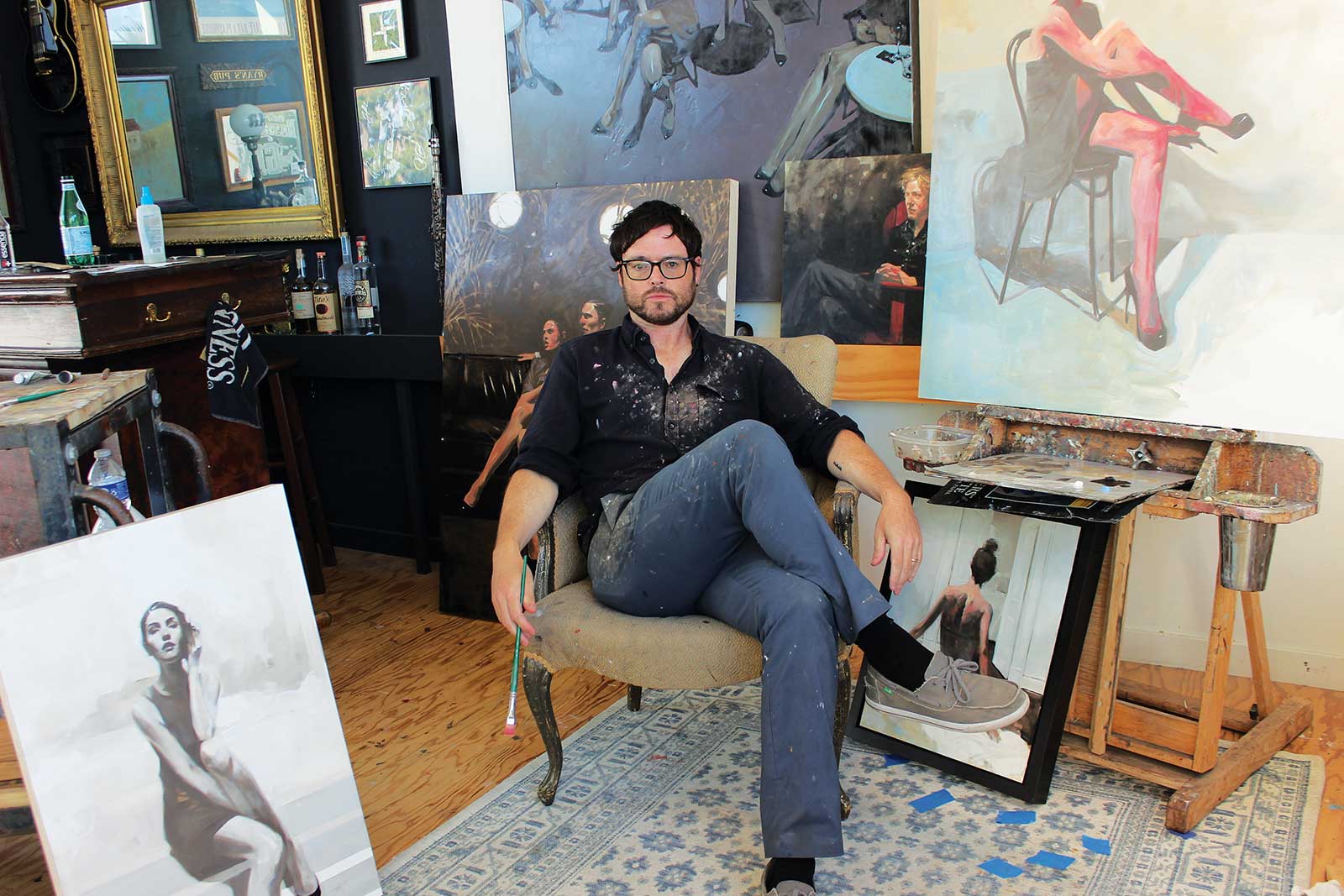
The artist in his studio
Youth
The son of a talented interior designer, Michael spent his time surrounded by design, art materials and glossy magazines such as Architectural Digest and Vogue. Born in 1972 and raised in Minneapolis, he began drawing at a very young age. “I was often drawing figures and inventing new Muppet characters, sketching up floor plans to my ideal underground lair. I always had great tools, markers and papers at my disposal from my mom.”
Singled out as a creative early on, Carson soon found himself at the Milwaukee Institute of Art and Design and furthering his studies at the Minneapolis College of Art and Design. Studying illustration, he took drawing classes and many in computer design. Surprisingly, he never took any painting classes. His first job after college was working as an illustrator and designer for a small giftware company where he stayed for seven years. “I was on the licensed products design team and I drew Winnie the Pooh and classic Disney, working with incredibly creative people,” he recalls. “I think I can still draw Pooh from memory. We got to go on amazing research trips and retreats to Asia where we would sit for days and brainstorm hundreds of ideas. If I had kept all those Post-it notes ideas and sketches, I would have the most inappropriate Disney coffee table book of all times. It was the experience I needed.”
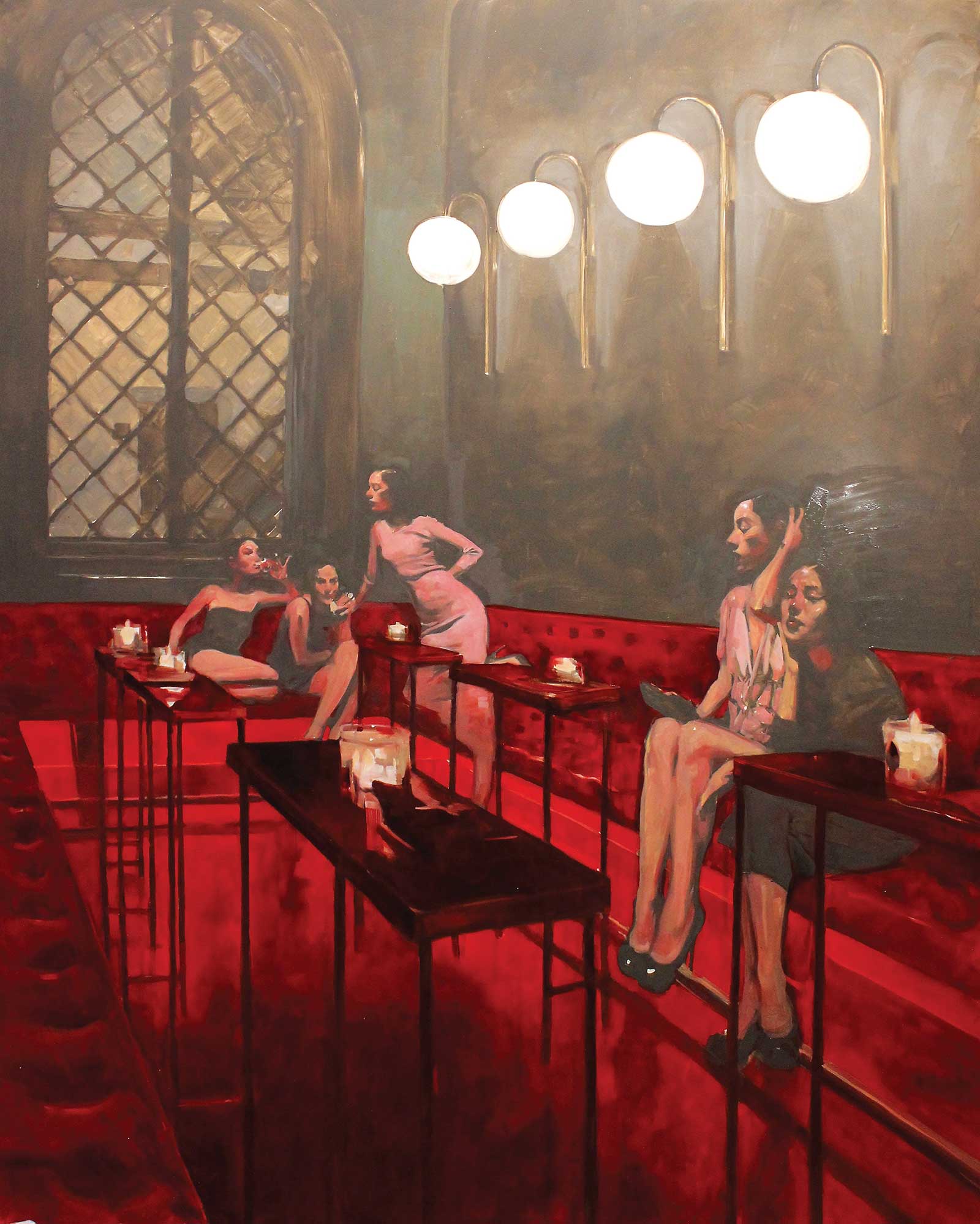
The Companion, 2021, oil on canvas, 48 x 60”. Courtesy Bonner David Galleries.
Michael says that the most influential aspect of the job was that everything had to be hand drawn from all angles—front, back and side views—and with enough visual and written information and directions for the overseas factories to get it right. With time to experiment with new materials and ideas, he also acquired his sculpting skills and learned how to render faux finishes. (It is interesting to note that today, his final paint signature is modeled after the font type he worked with while creating designs for Winnie the Pooh.)
From Product Designer To Fine Artist
With a great creative job in place, why then did Carson become a professional painter and fine artist? It started, as with many artists, with a trip to Europe. At 27, Michael found himself in the vast museums and galleries of Amsterdam. “I saw a painting and something clicked. When I got home, I set up my easel and painted Red Light Lunch Break.My first painting. This was it. I quit my job soon after because I realized this was obviously what I had been waiting for,” he says. “I knew pretty much right away I would become a painter.”
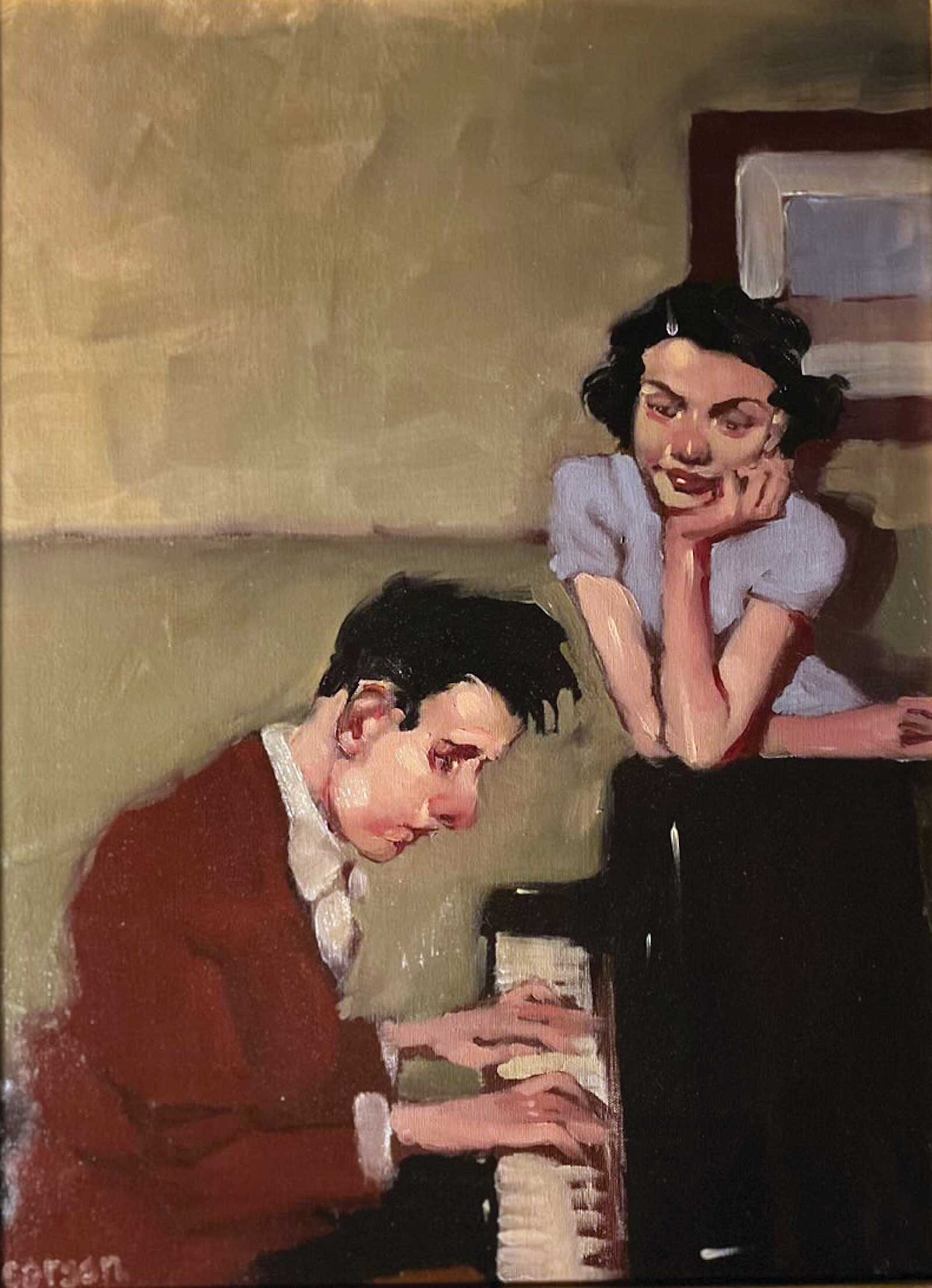
Houseparty, 2007, oil on canvas, 24 x 18”. Private collection.
With his family’s support and encouragement, Michael’s next step was to find a place to exhibit his work. As many young artists do, he started showing his work in restaurants. Up until this point he had never thought about galleries and hadn’t noticed any in his town, but soon found himself walking in to the J. Pierce Gallery in Minneapolis. This changed his life. Jeff, the gallerist, happened to have seen his work at the nearby restaurant and was interested in trying out some of Michael’s work in his gallery. Michael recalls, “He allowed me to paint in the apartment above the gallery where we discussed art. He would give brutally honest critiques and insisted that I try a workshop at the Scottdale Artists’ School where I learned so much watching the artist paint. [Meeting] that gallery owner was just one of those things you think back to and can’t believe it happened the way it did,” says Carson. “Only in retrospect did I realize I had tremendous luck and the impact it has had on my ability to paint for a living.”
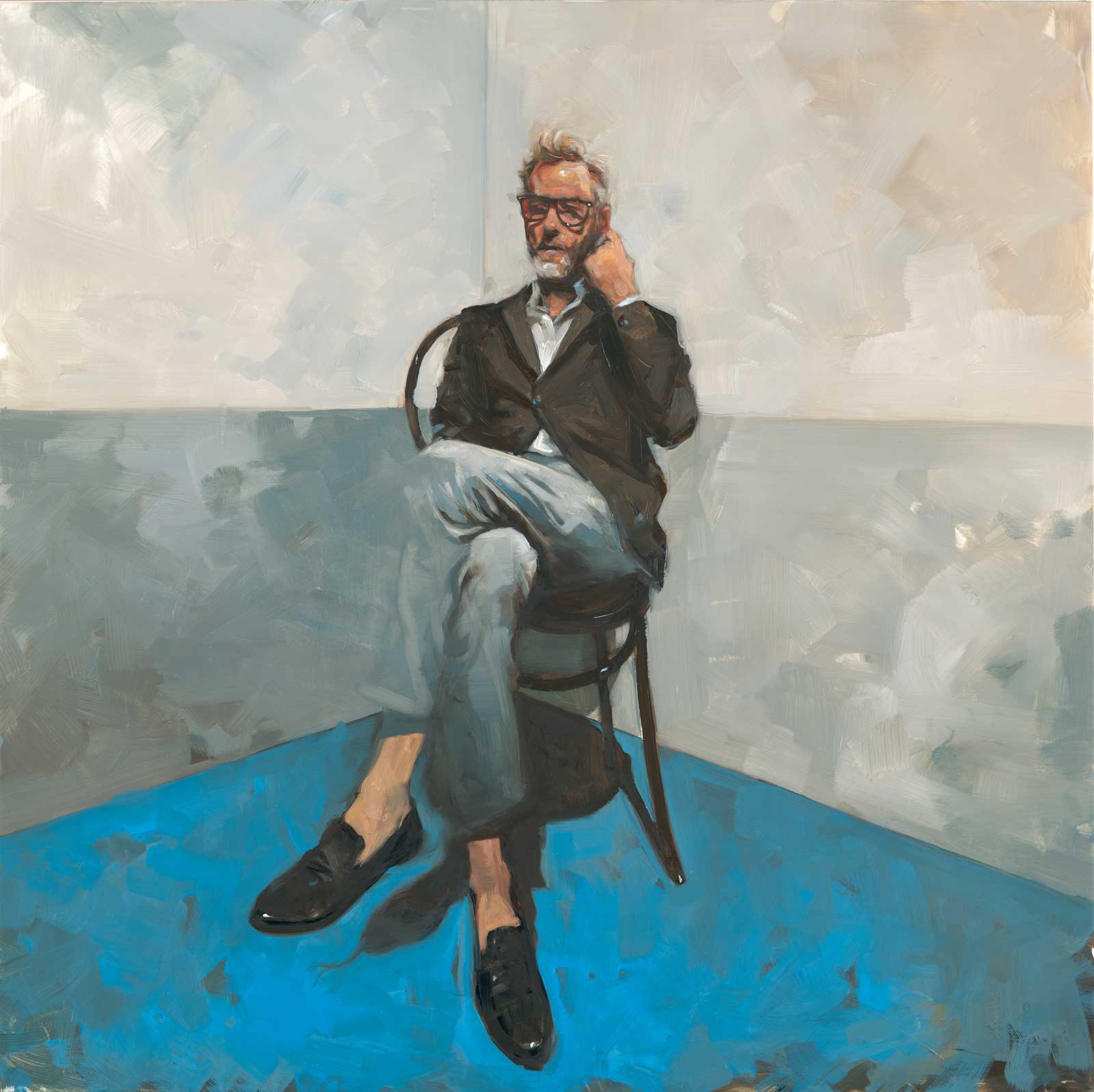
Matt, 2020, oil on panel, 20 x 20”. Private collection.
Since those early days, Michael has progressed to become an iconic artist of the 21st century from his first show at Bonner David Galleries (which still represents him more than 18 years later) to Jones & Terwilliger Galleries, having his work offered at auction, to showing in New York with Arcadia Contemporary. He has also taught classes at the Scottsdale Artists’ School and has had the opportunity to teach workshops on location in Italy. One of the most exciting moments in his career came through social media—to create an album cover for musician Matt Berninger’s Serpentine Prison. The album was later nominated for a Grammy Award and Carson had the opportunity to attend the event.
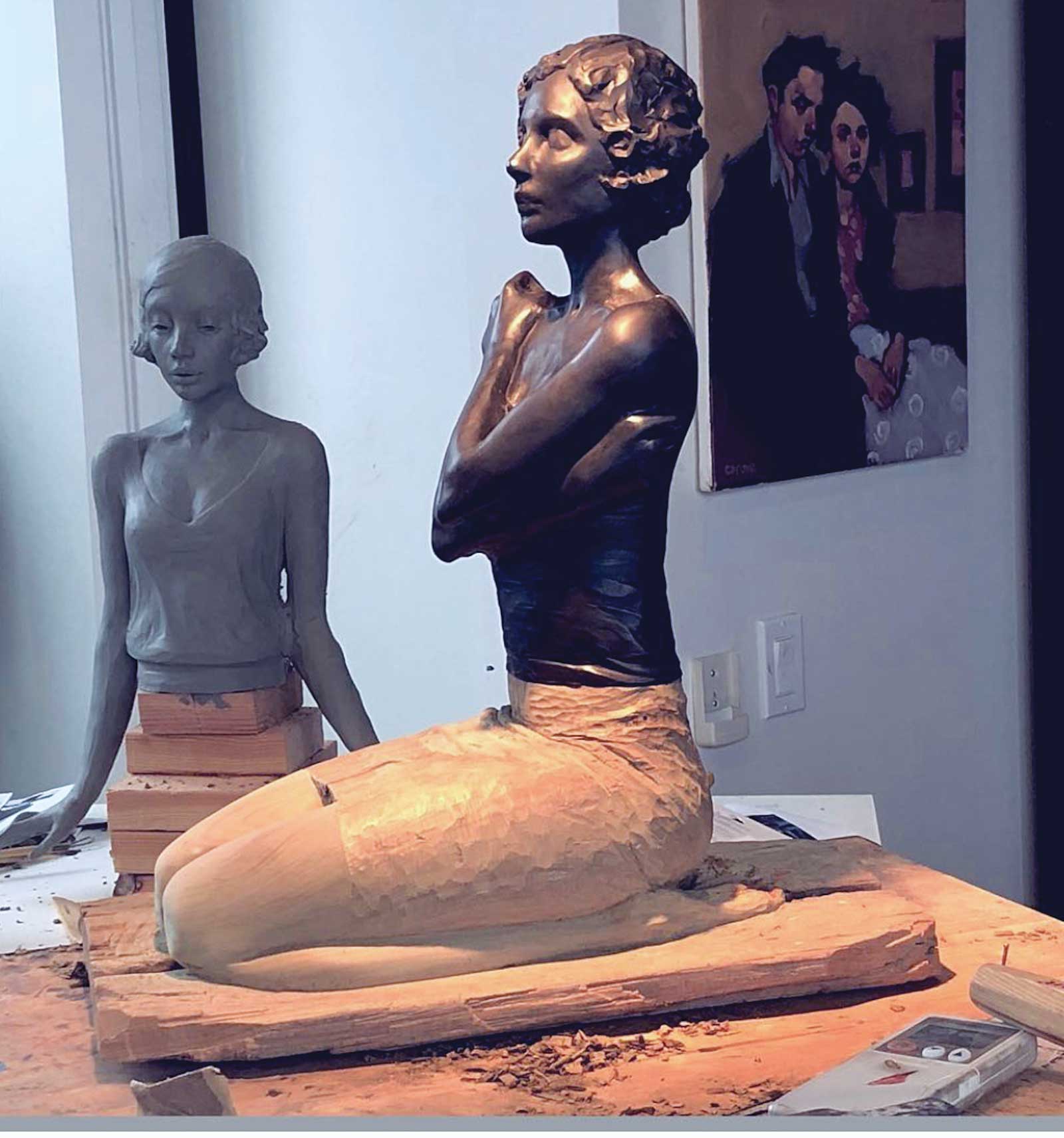
Split, 2020, wood and bronze, 24 x 18 x 15”. Courtesy Georges Bergès Gallery NYC.
On a side note, Michael is inspired by music and plays his own. “I always thought I would be a musician, which I did in my 20s, but I create my musical art for myself now with my own digital recording tools,” he shares. “I have multiple instruments and I record music a few times a week. I’ve always been a live music addict. When I had my first show in New York, I was in a little jazz club called Smalls. I was there ‘til 4 a.m. and got the buzz to try to create that feel and movement in paint. It’s like trying to paint a sunset though. It’s never as good.” In his painting Smalls, shown here, Carson aimed to capture the feeling of the band on stage with a large-scale work. He succeeds in conveying a dark mysterious night club feeling, largely void of color, brought alive through the illuminated performers and a room full of expressive poses.
Subjects
In addition to these early club scenes, Michael is known for his alluring figures and his artful inclusion of fashion and design—women standing in tall shoes, drawn from a dramatic bug’s eye view, sitting on velvet sofas or interacting in bar scenes. Michael has always been a people watcher and finds endless inspiration in the movements of a figure the interactions of a group. “I always feel inspired by the subtleties of a figure,” he says. “How one little brushstroke accidentally creates a whole different expression and mood in a piece. I love those moments when the narrative shifts because the eyebrow just changed by a 16th of an inch.”
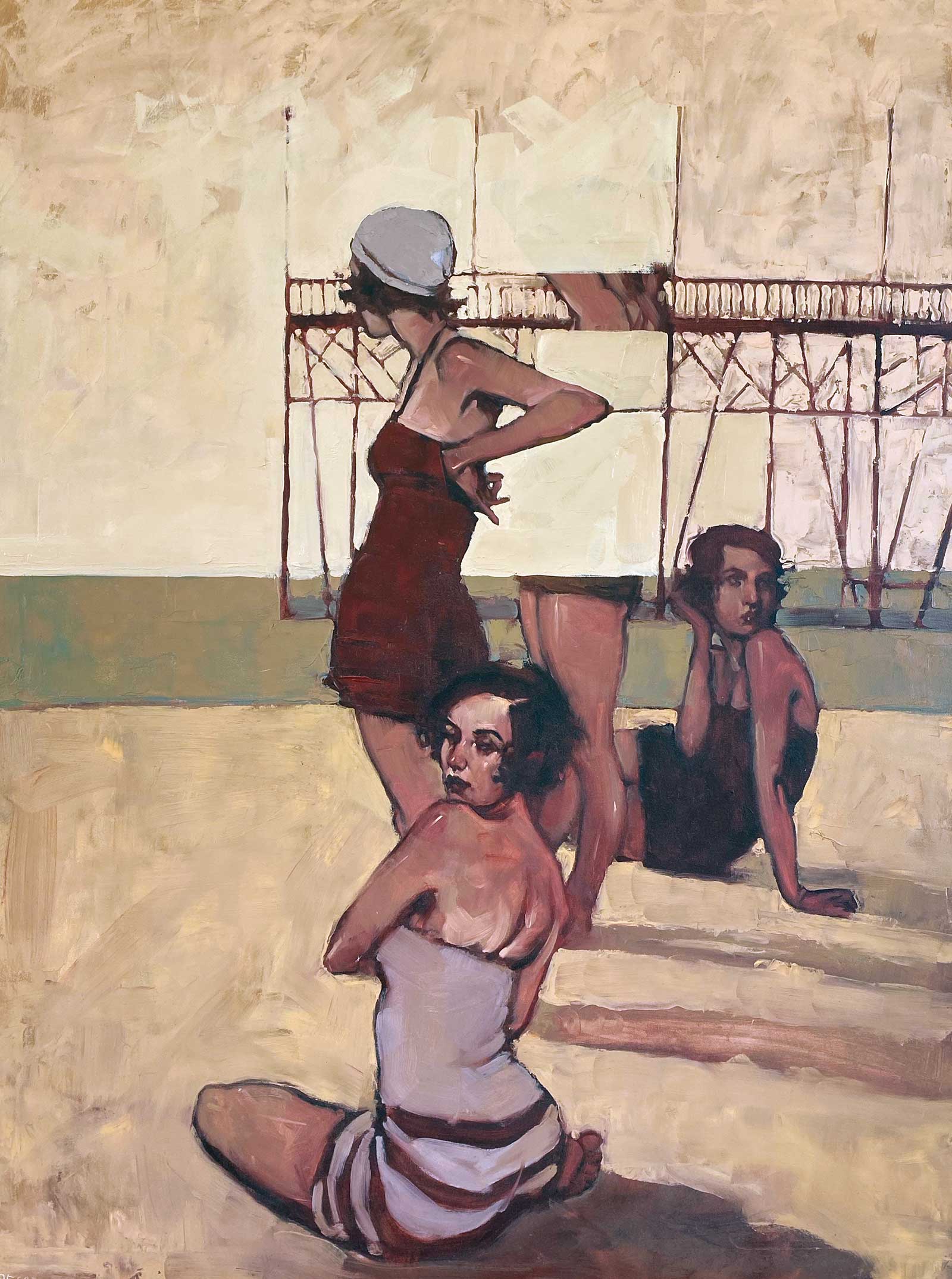
East Coast, 2010, oil on canvas, 40 x 30”. Private collection.
The artist works both from life and from photos he takes of his models. He is also inspired by poses and photos that he finds online. Carson does not paint exactly what is before him, rather he pieces together poses, bodies and ideas, creating compositions from the thousands of images he has collected over the years. “I love that freedom to design the work,” he says. “I usually I set up my photo shoots in simple outfits and whatever furniture I have and take many shots. A piece of furniture, clothing, perspective or architecture, might make me lean a certain way for the photos.” He is more satisfied with a piece of work when the narrative is minimal. He prefers that the viewer brings their own mood and ideas to his work, very much like people watching. “Most of the time they are just sitting there expressionless and doing nothing…but that can also be interesting.”
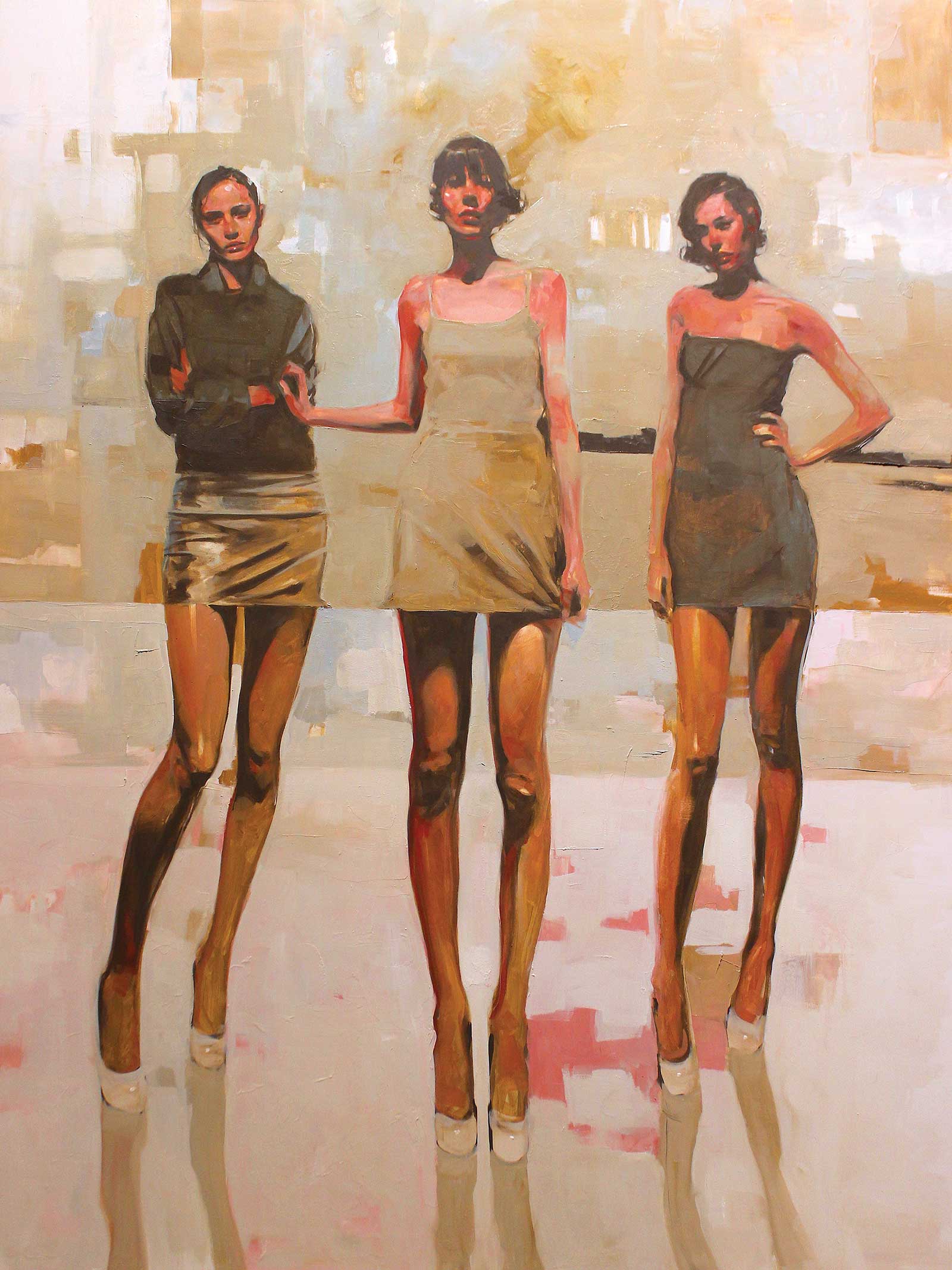
Confrontation, 2022, oil on panel, 48 x 36”. Courtesy Bonner David Galleries.
Style
Michael says he loathes having to talk about his style and genre, and leaves it up to the critics. Although his works have been called impressionistic, in my opinion he crosses genres from realism to expressionism to abstraction, and the work is more of a hybrid style than one that can be neatly categorized. As in Ali the Dancer, we can see how he creates a ghostlike disappearing effect on the model’s hair, leaving it undefined. He takes pleasure in changing the focus, utilizing a combination of sharp and blurred edges to achieve greater depth. This helps lead the viewer’s eye around the work to enjoy the painterly skill as well as the subject.
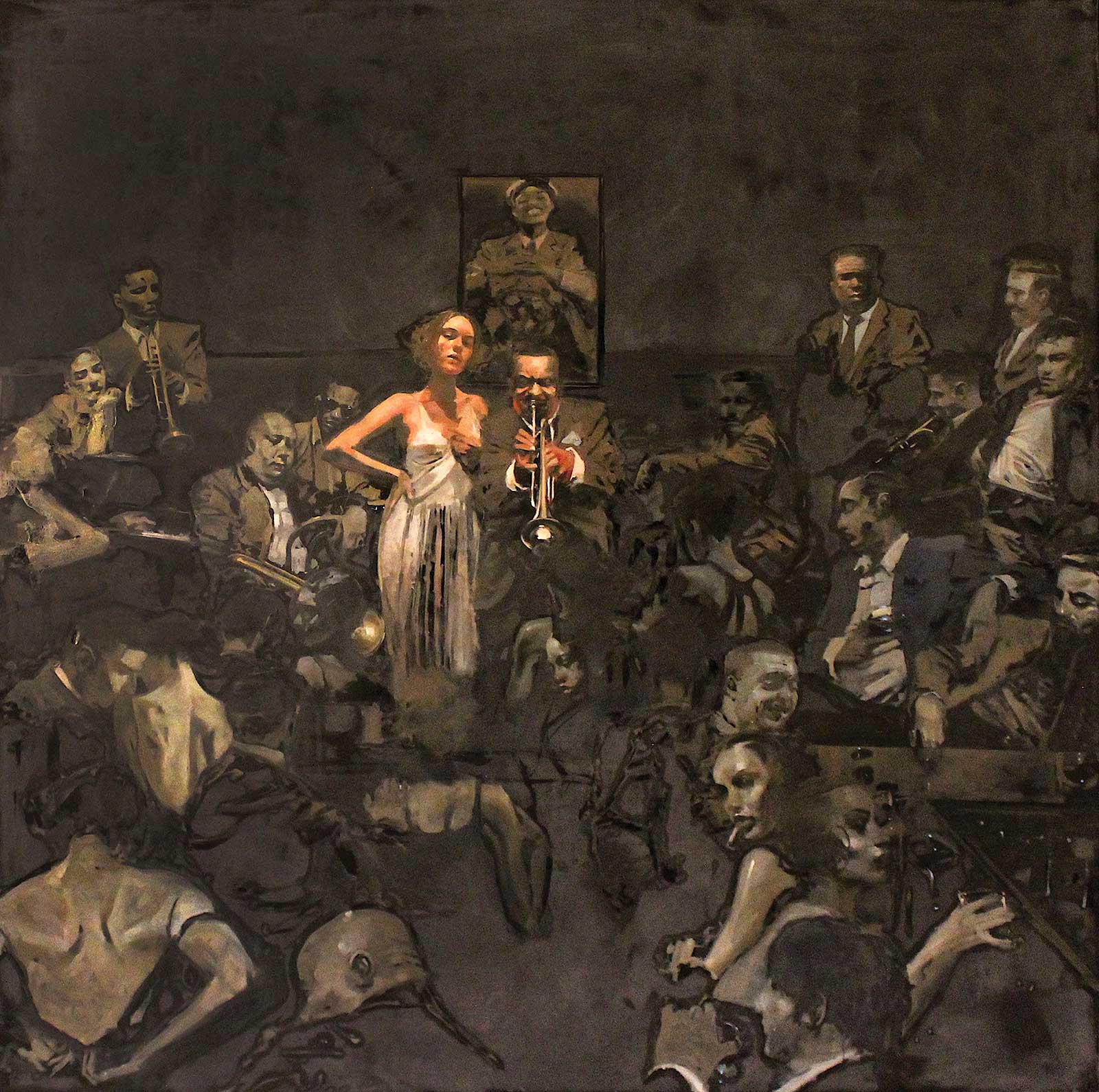
Smalls, 2016, oil on canvas, 72 x 72”. Private collection.
“One of my favorite things to explore while painting people is lost edges, where the depth of the background and the foreground figure collide, and sometimes blend together, allowing the mind to finish off or imagine these fuzzy areas,” he says. “Usually without even realizing it, it can be more interesting and also interrupt the natural depth and perspective of a piece.” Sometimes he adds a thick layer of clear resin for a dramatic shine on the works, enhancing their modern quality.
Currently in the Studio
When asked if his success has engendered a newfound confidence or freedom when creating, Carson replies, “I don’t know. In some ways I’m more free. Lately I’ve been really aware that I’m painting fast and using big brushes. If I move through paintings quickly, it maintains some of that fresh life and movement I aim for. It can be more gestural and the whole idea is to not lose that initial fresh looseness that you started with.”
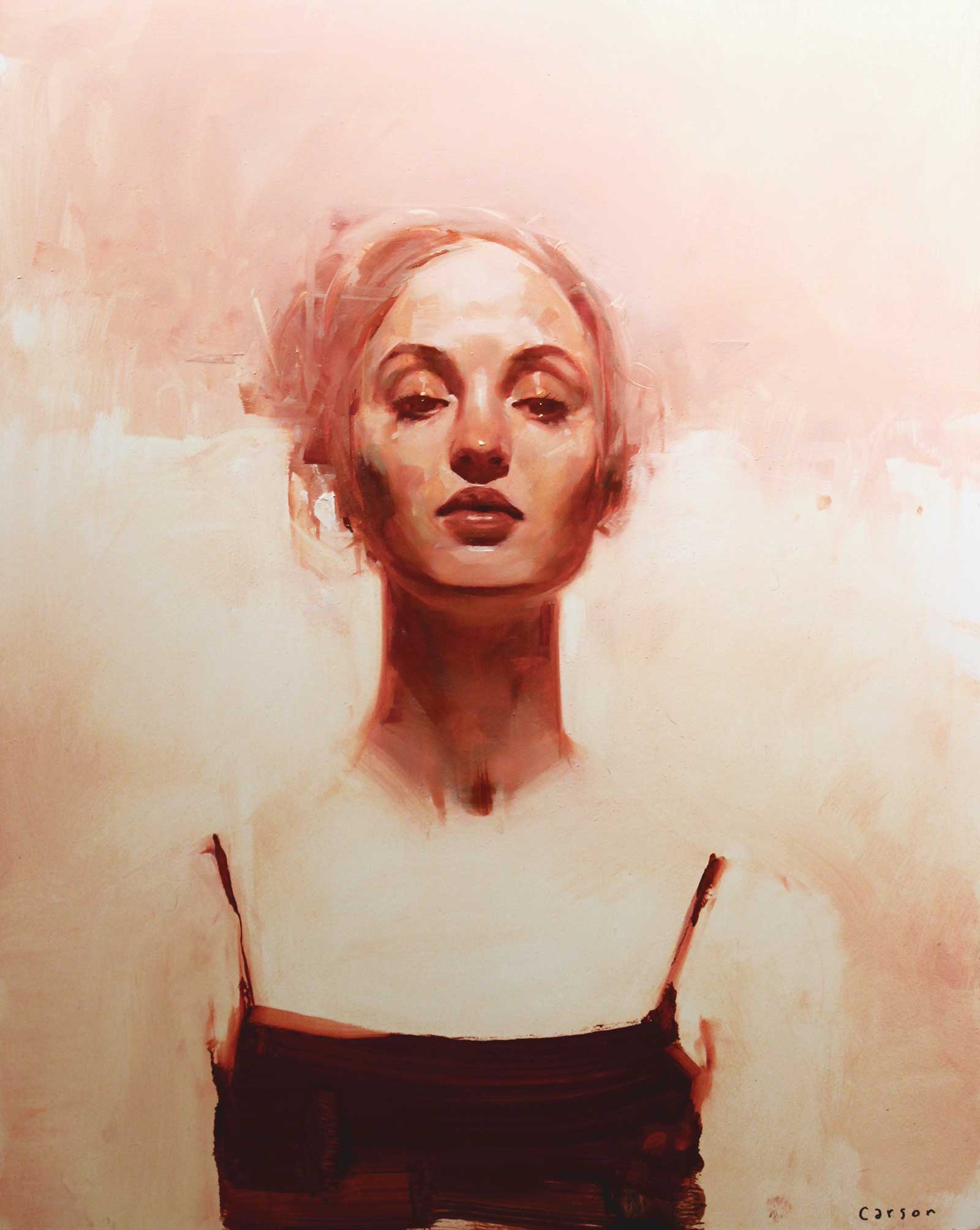
Ali the Dancer, 2016, oil on panel, 24 x 18”. Courtesy Bonner David Galleries.
Ever the creative, Carson also continues to create sculptures in ceramic, wood and bronze. He says he would do it more often if the studio was more readily set up for it. He is currently working on two new sculptures for a December exhibition at Bonner David Galleries, which will feature a combination of wood carvings and bronze. “I love the two materials put together seamlessly in a figure.” he says, gleaming.
Michael Carson is a painter, sculptor, musician and family man who currently resides in Arizona with his wife and three children. He is represented by Bonner David Galleries in Scottsdale, Arizona, and New York; Kelsey Michael Gallery in Laguna Beach, California; and Abend Gallery in Denver. He has taken the road less traveled by deciding to become a full-time fine artist…and that has made all the difference.
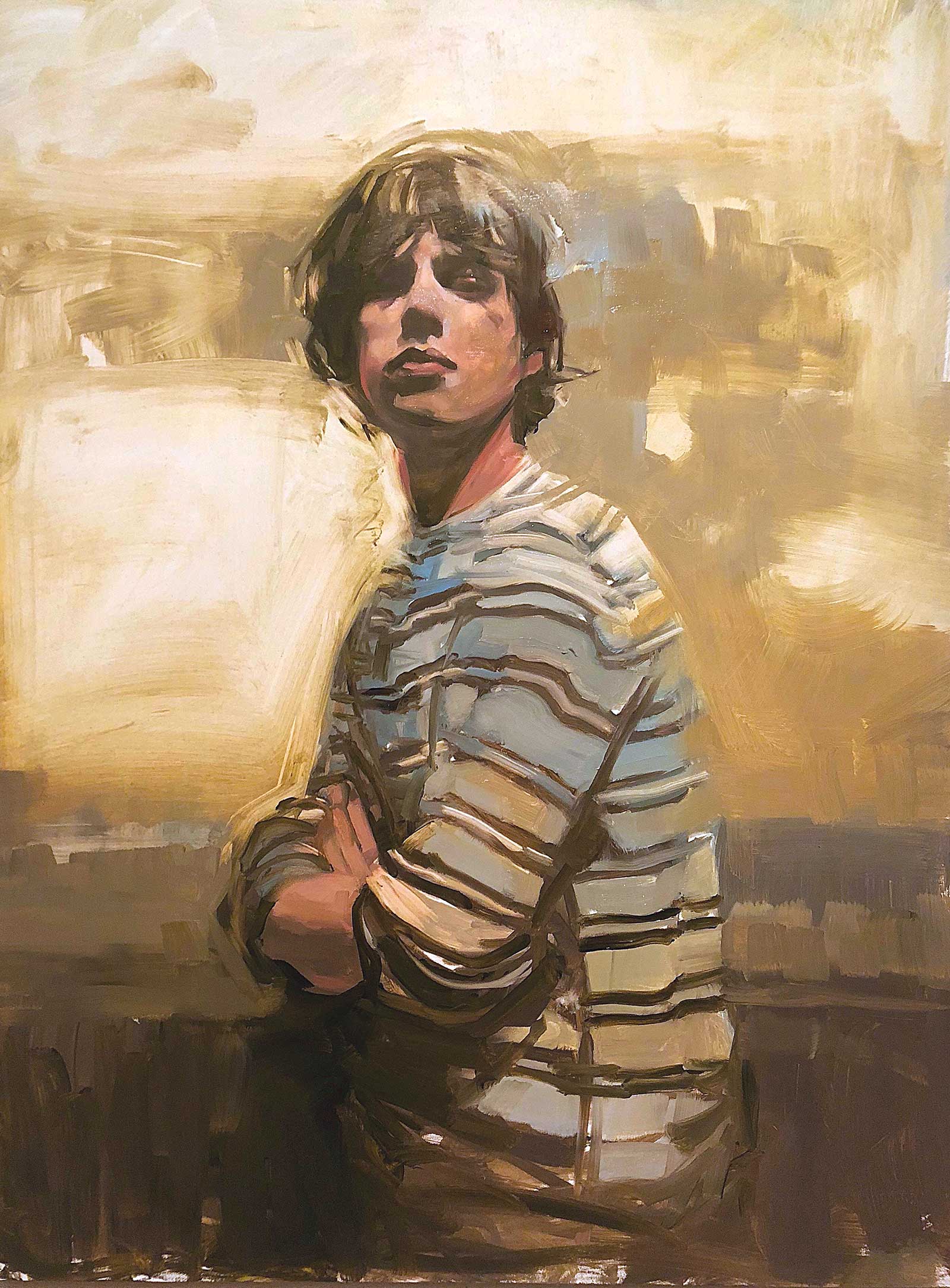
Mick, 2017, oil on panel, 20 x 16”. Courtesy Bonner David Galleries.
He leaves us with the following uplifting quote of gratitude: “The best thing I get to do every day is walk from my bed to a studio filled with paint, clay, wood, musical instruments, tools, chemicals and a fully stocked antique bar. I’ve made it so appealing for myself that I actually need to force myself to leave. I’m almost never bored and get to spend my life doing what I love. It’s a ridiculously lucky life. Sure, I have all kinds of minutiae and life inconveniences just like everybody else. But when I’m in the studio I get to be a kid again, and I have all kinds of fun diversions when I need to get away from paint and cleanse the palette, then start in again on a new work of art.” —
+++
Vanessa Françoise Rothe is a curator, editor/writer, art dealer and fine artist. In addition to curating over fourty exhibitions, she has dozens of articles published in various art magazines for the last 20 years, has served as chairman, PR Board and educational director for fine art organizations, and is founder of the Americans in Paris fine art project.
Powered by Froala Editor