

Among the ancient figurines of prehistory is the Venus of Willendorf, a four-and-a-half-inch limestone carving with enlarged breasts, stomach and thighs. Carved about 25,000 years ago, it was discovered in 1908 at a time when it was automatically assumed the figure and others like it were carved by men. Later interpretations suggest the figures may have been carved by women who, looking down at themselves, would see their breasts foreshortened and large. Their purpose remains unknown and Paleolithic people’s understanding of female fecundity and beauty is a mystery as well. Since the people at the time had no concept of the Roman goddess, Venus, who would be first mentioned over 22,000 years later, some scholars refer to her as the Woman of Willendorf.
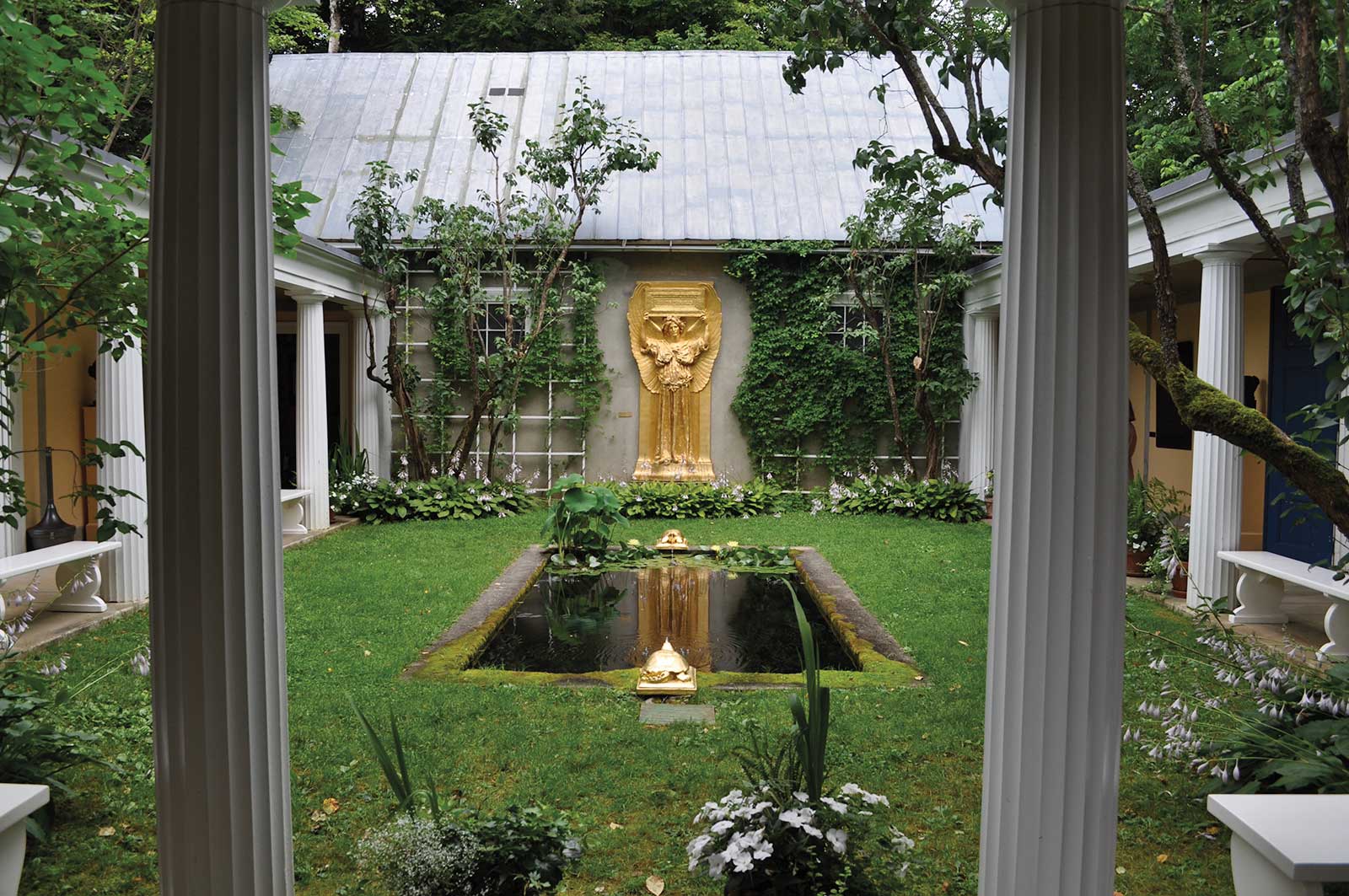
Augustus Saint Gaudens (1848-1907), Amor Caritas, 1885-99. Saint-Gaudens National Historic Park, NPS Park Cultural Landscapes Program.
Shortly before the sculpture’s discovery, the presentation of the ethereal female was a pursuit in the work of the American sculptor Augustus Saint-Gaudens (1848-1907). Amor Caritas (Love [and] Charity] was first modeled in 1880 for an unrealized tomb commission. Versions of the sculpture are in museums around the world. The version in the Atrium of the Saint-Gaudens National Historic Site in Cornish, New Hampshire, the artist’s home, was cast in bronze from a plaster version in the collection of the artist’s son, Homer, and was discovered in 1940. In 1975, it was gilded in the manner of his Diana of the Tower that once graced the top of the original Madison Square Garden and the ensemble of William Tecumseh Sherman and Victory in front of the Plaza Hotel in New York.
Although representing the eternal ideals of the human capacity to express love and charity, the sculpture attained an historical presence with the face being modeled after the artist’s mistress and favorite model, Davida Johnson Clark, whose face also graced Diana.
Gods and goddesses, especially those of ancient Greece and Rome, have been the subject for sculptors for hundreds of years. History is full, however, of lesser known but equally powerful deities.
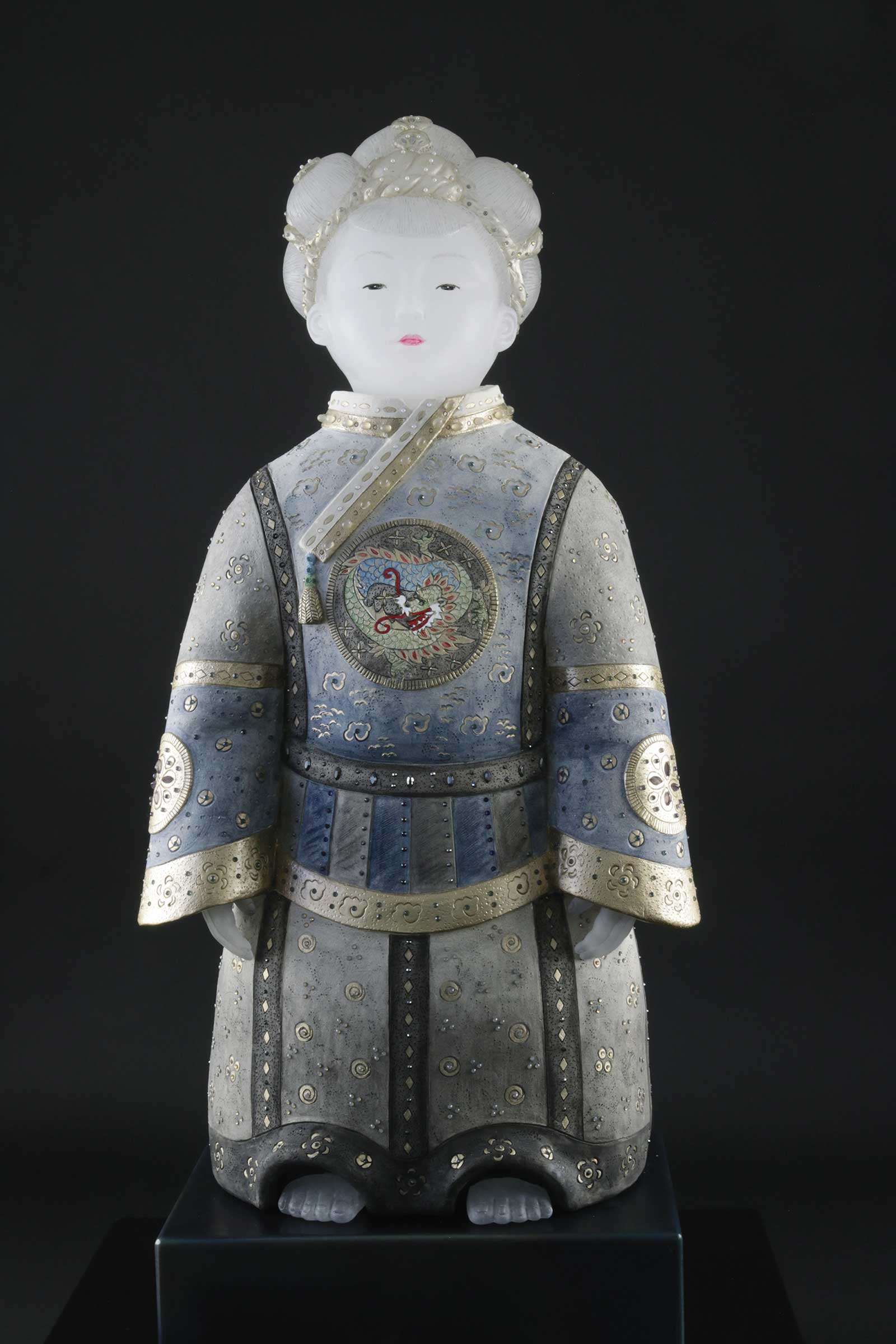
Blue Rain Gallery, Dragon and Braids, cast glass, stoneware, gemstones, crystal, silver leaf and steel base, 30½ x 14 x 9”, by Vivian Wang.
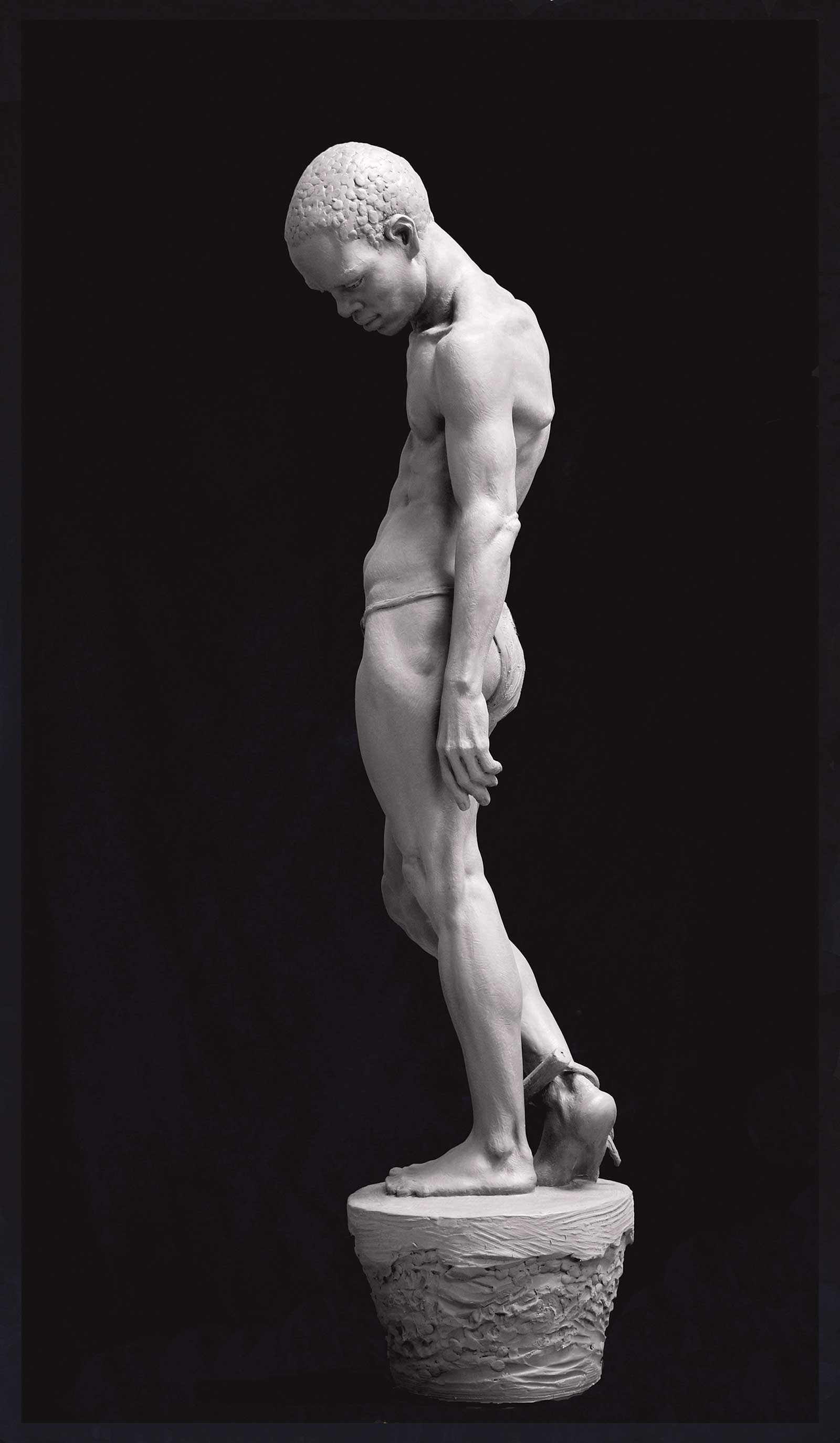
Kate Brockman, Boy, clay, 40”. Courtesy the artist. © Kate Brockman 2023.
Erik Ebeling describes the god Enki who “was a part of the Sumerian triad of creationary deities along with Anu and Enlil. Lord of water, knowledge and creation, amongst many other things, he was generally depicted wearing a horned helmet. The Sumerians saw him as the creator of what they believed was the first city in the world, Eridu (Uruk, much more well known today, was probably the first, but they’re close). His temple there dates to 5500 BC, making it the oldest in Mesopotamian religious and architectural history.”
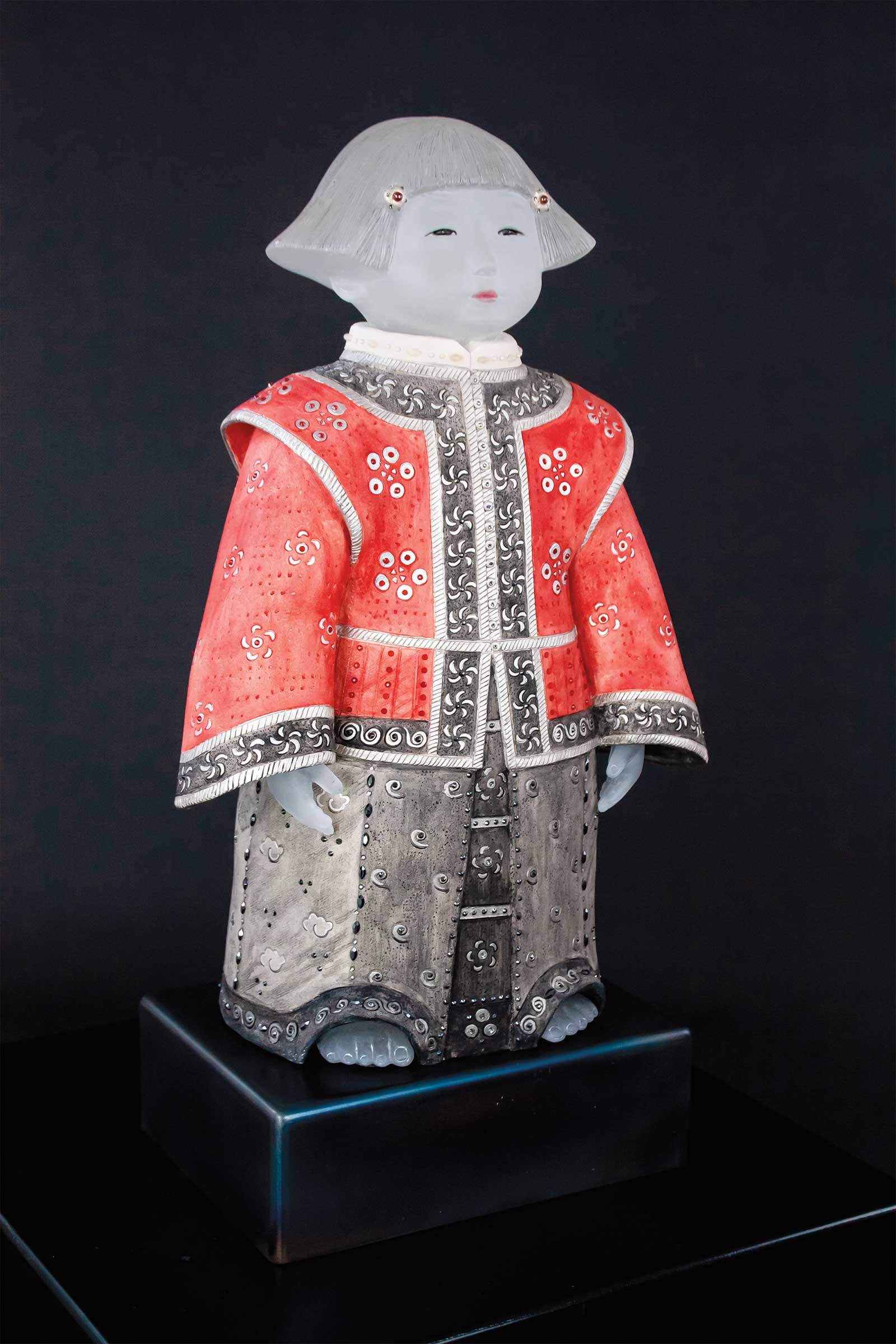
Blue Rain Gallery, Girl in Red, cast glass, stoneware and gemstones, 23½ 12 x 8”, by Vivian Wang.
Enki is also credited with forming the Tigris and Euphrates Rivers and causing water to flow into them from the mountains. Mesopotamia, literally the land between two rivers, is often called the cradle of civilization. The flooding of the rivers created fertile land which triggered the agricultural revolution about 12,000 years ago.
Ebeling’s Enki, with the horned helmet, appears to be a fragment of a bronze sculpture excavated somewhere in Sumeria. His strong but benevolent features embody his reputation as a loving and benevolent god. Ebeling modeled the sculpture in clay and then cast it in synthetic resin giving it a patina to resemble bronze.
African American slaves were called “boy” to indicate their being considered less than full men by slave owners. The Supreme Court ruled that, “Although it is true that the disputed word [“boy”] will not always be evidence of racial animus, it does not follow that the term, standing alone, is always benign.”
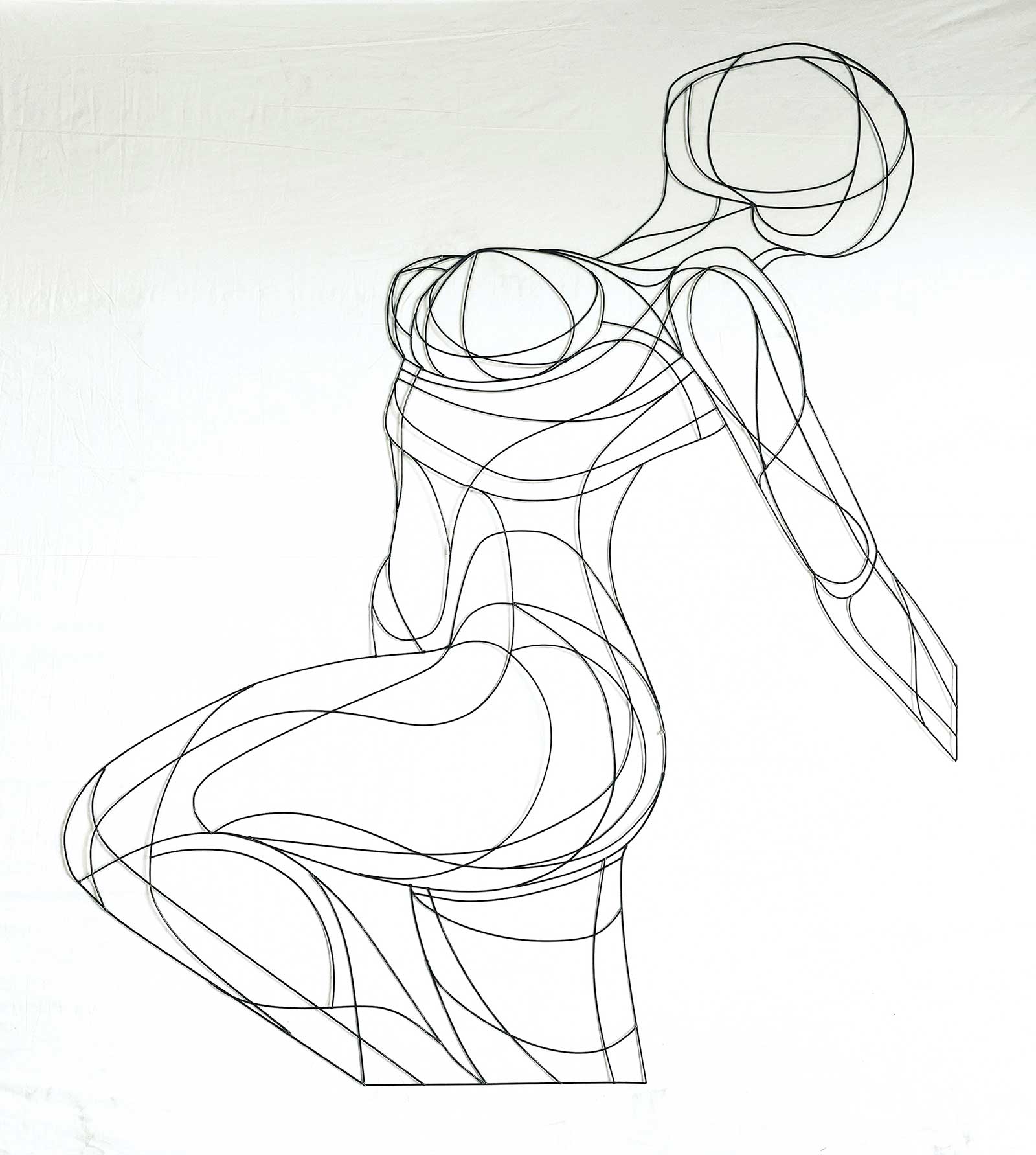
Jessica Laurel Reese, Yael, welded steel rod, 81 x 70”
Kate Brockman’s moving sculpture of a young slave boy, titled simply, Boy, is descriptive as well as evocative. Brockman writes, “Boy originated from a small study I had done from life as a class demo about five or six years ago. I kept it because I loved the fluid grace of the model and thought I would do something with it at a later date. In the summer of 2022, I took it off the shelf and was contemplating how this piece would mean something to me and decided that I wouldn’t worry about that and just enlarge it and make a graceful figure of a young adolescent and call it Boy. I immediately realized that because the subject was African American the title could easily be misinterpreted and offensive. That really got me thinking about words and their use and misuse and the damaging effects they can have, especially in youth. Boy grew out of these initial thoughts and enquiries.”
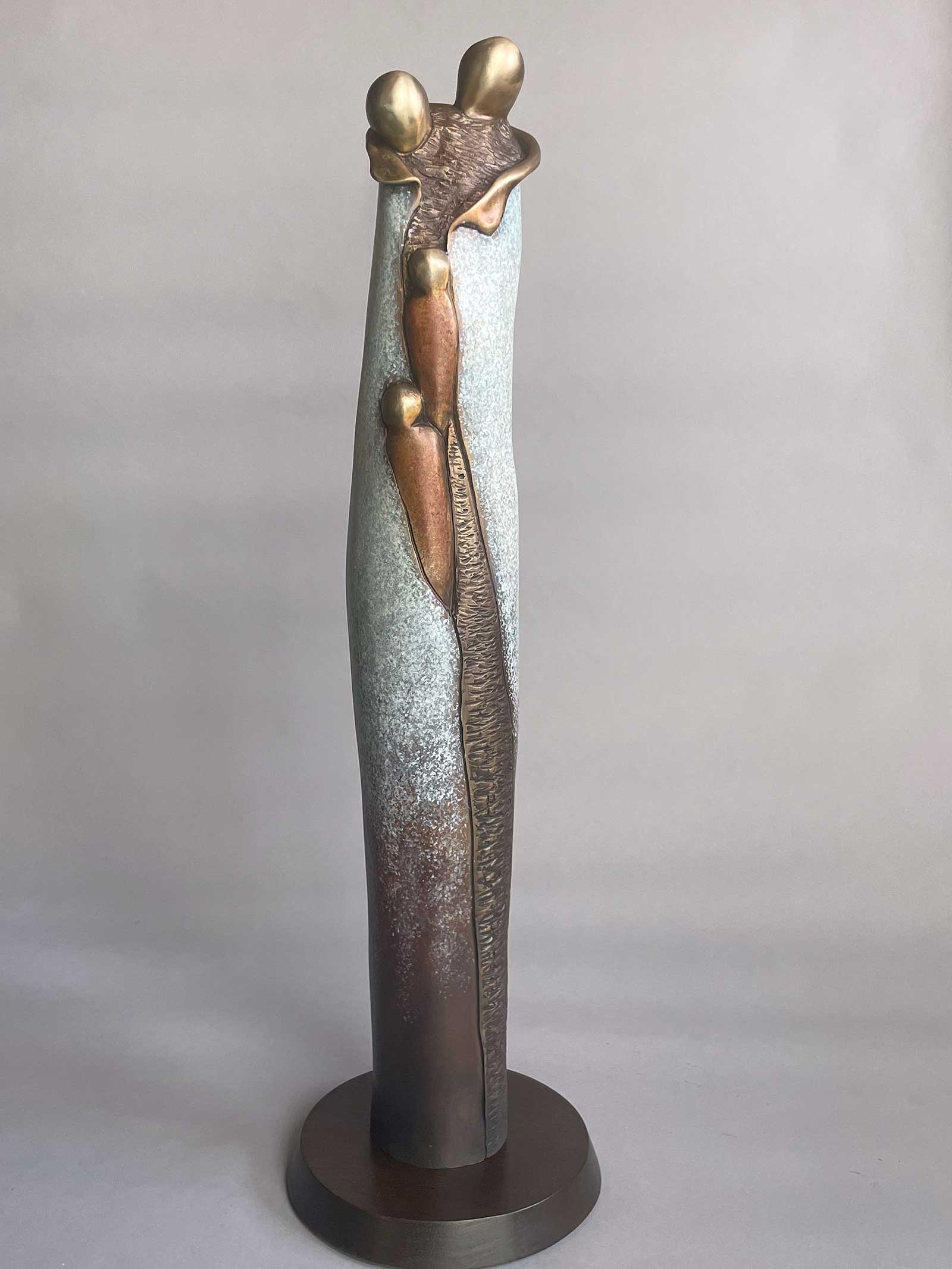
Felicia, Blessings, bronze, 30 x 5 x 5”
Throughout the pages of this special section, collectors can appreciate more works of sculptural art, each as distinct as the materials used to create them.
Blue Rain Gallery, with locations in New Mexico and Colorado, represents the sculptural art of American artist Vivian Wang, of Chinese descent. “Her glass and ceramic sculptures are largely inspired by the historic paintings and sculptures of the women and children of the Tang and Song dynasties of China and the Heian and Edo Periods in Japan,” explains Denise Phetteplace, executive director of Blue Rain Gallery. “Wang’s sculptures are at once luminous and statuesque; ancient and new. The artist pays close attention to the garments that clothe each of her subjects. As a former fashion designer, she enjoys combining patterns from ancient textiles with bold, contemporary color.” Phetteplace continues, “Wang spares no detail, adorning each peaceful sculpture with casein paint, gemstones and engraved designs. Her artwork reflects the opulence and pageantry of centuries-old court life. It is a true contemporary expression of ancient art.”
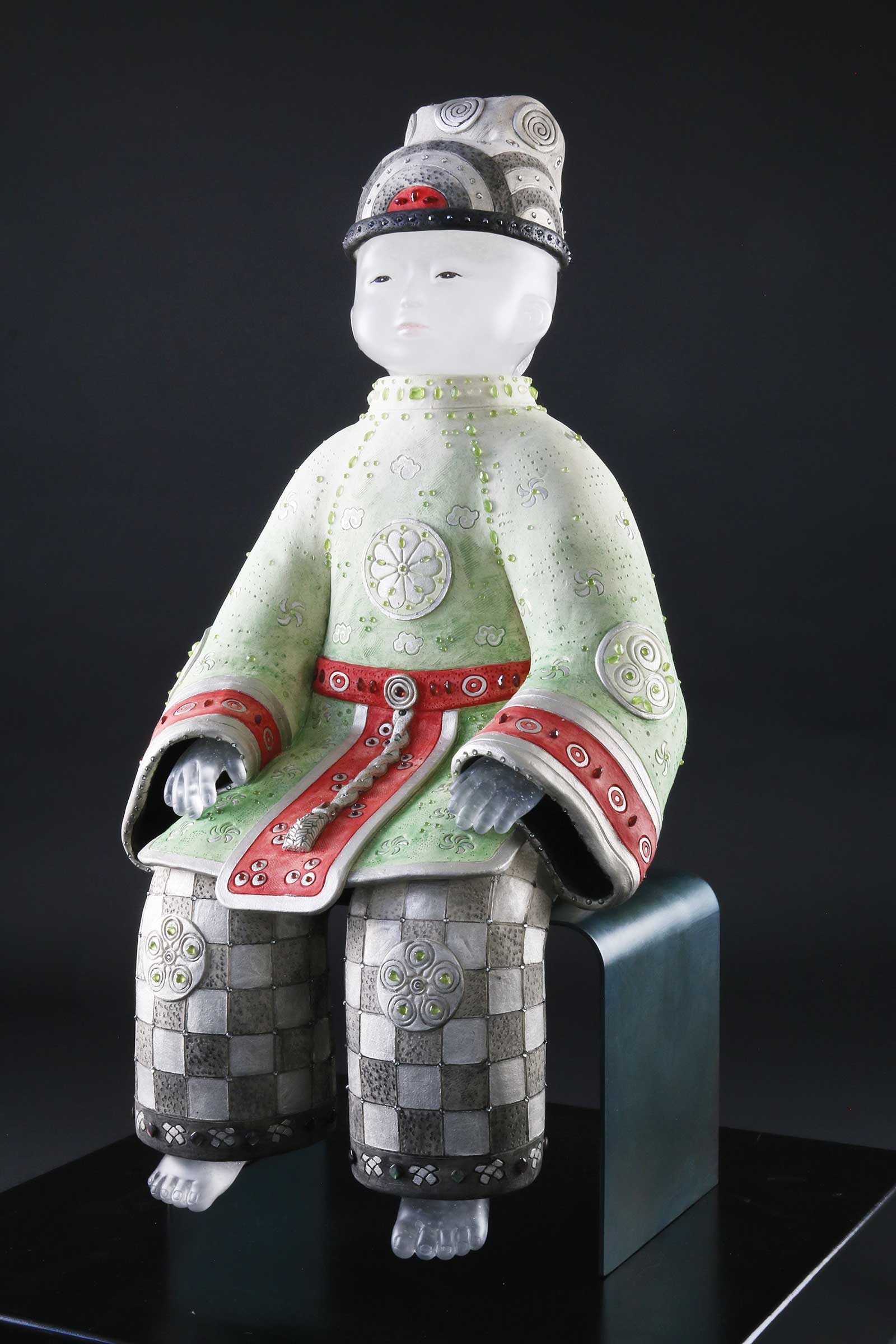
Blue Rain Gallery, Shogun, cast glass, stoneware and gemstones (peridot, garnet, citrine, iolite and crystal), 26 x 12 x 12”, by Vivian Wang.
Artist Felicia’s inspiration has always been people. She strives to echo the figure in her artwork, while keeping in mind a captivating creative vision of spiritual, simplistic contemporary forms. Her ultimate goal is to show different texture surfaces, along with high-polish areas, finished with different innovative patinas. Felicia has been creating miniature to monumental bronzes for over 30 years and has artwork in many private and institutional collections across the country. She will be showing at Sculpture in the Park in Loveland, Colorado, this August.
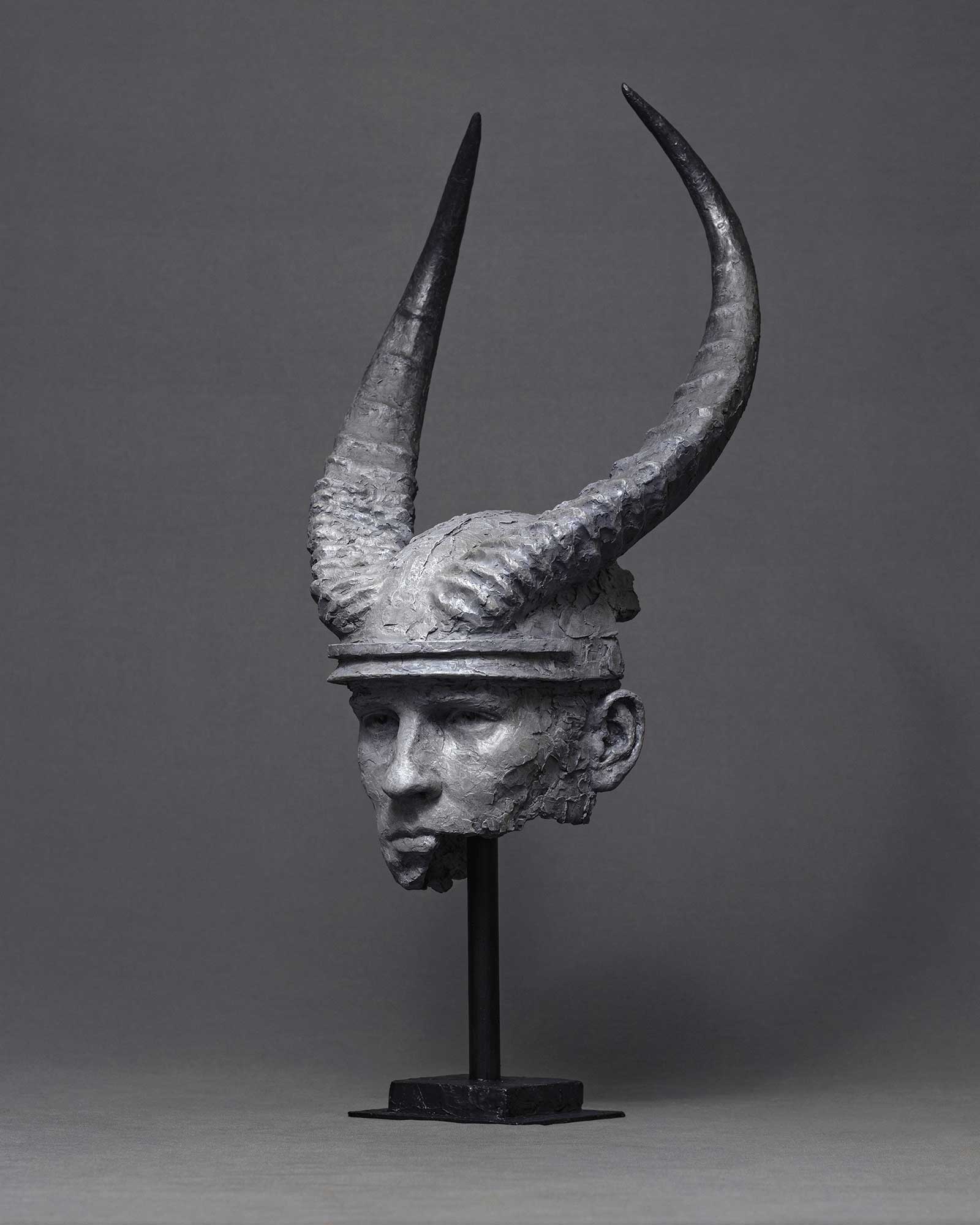
Erik Ebeling, Enki, cast resin composite, 26”. Courtesy the artist.
Jessica Laurel Reese bends and welds steel rods to fabricate one-of-a-kind, larger -than-life sculptures intended to hang on the wall. Working from life-drawing sketches or photographs, Reese sculpts provocative gestures of the human form that leave the viewer in awe of their power and magnitude. The shadows cast on the wall from the steel rod coupled with the negative space between each line add a dynamic element to her work, brilliantly exemplifying the beauty of the human form. Each line is tactfully chosen to convey the movement and weight of the body and to enhance the anatomical representation of form. Reese says, “These works speak to our individuality, the depth of our dimension, the parts of us that we share with the world and those we have yet to understand.” —
Featured Artists & Galleries
Blue Rain Gallery
544 South Guadalupe Street, Santa Fe, NM 87501, (505) 954-9902
934 Main Avenue, Unit B, Durango, CO 81301, (970) 232-2033
info@blueraingallery.com www.blueraingallery.com
Erik Ebeling
erik@erikebelingart.com www.erikebelingart.com
Felicia
(303) 570-5534 www.feliciasculpture.com
Jessica Laurel Reese
jessicalaurelreese@gmail.com www.jessicalaurelreese.com
Kate Brockman
163 W. Thompson Street Philadelphia, PA 19122 www.katebrockman.com
Powered by Froala Editor


