In the early 1930s, Laguna Beach was a remote, secluded artist community home to many plein air painters drawn by its spectacular coastline, desert landscapes and picturesque hills. It was also the era of the Great Depression and money wasn’t easy for anyone to come by, including, and perhaps especially, area artists.
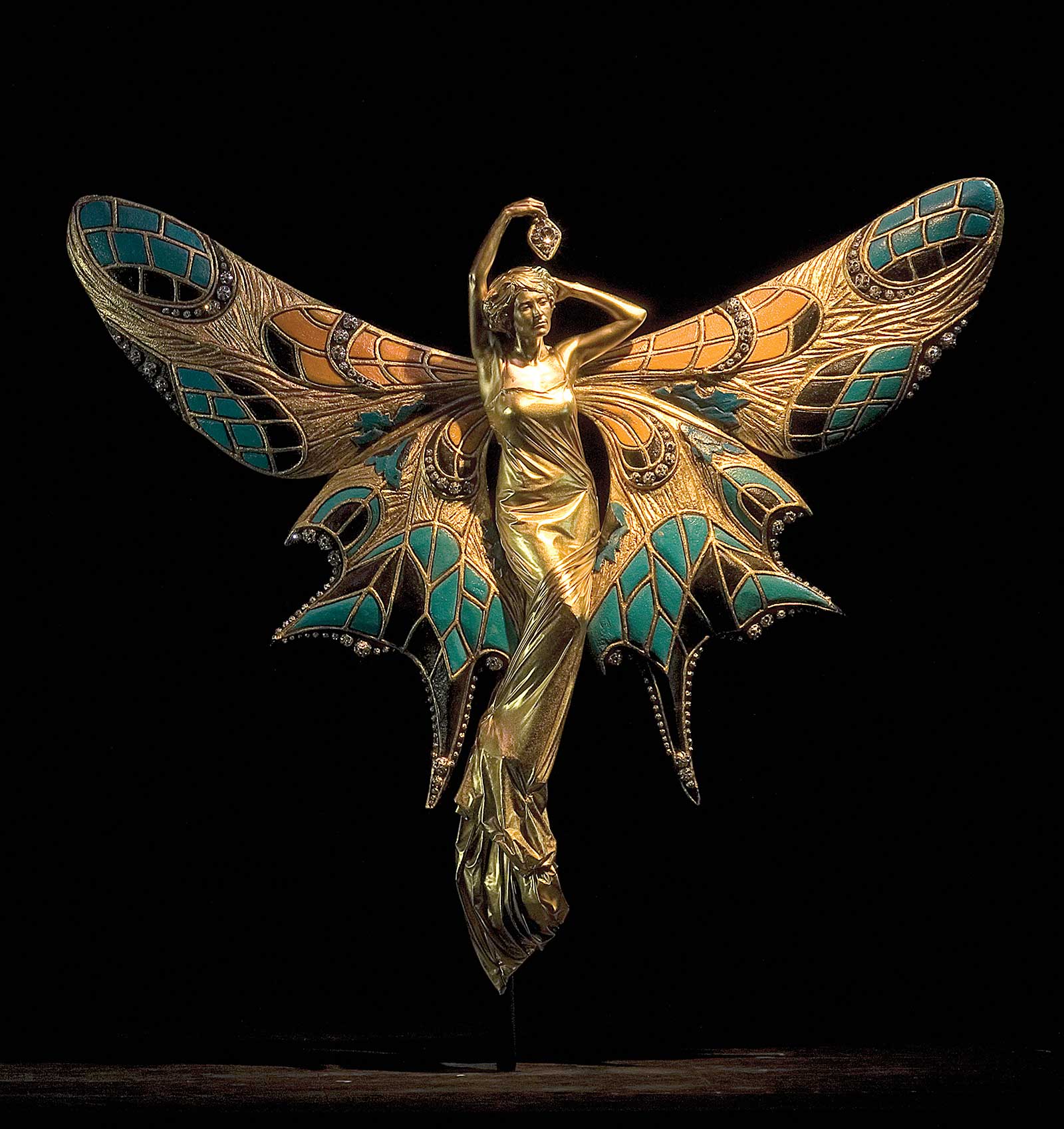
Pageant of the Masters re-creation of an art nouveau brooch by Gaston Lafitte.
In 1932, they banded together to throw a street fair in a downtown alley with the intent to lure patrons from Los Angeles, which was hosting the Summer Olympics that year. The first festival garnered $200. The following year, the nation’s financial distress reached its peak and, fearful that people would be disinclined to pay the 10-cent fair admission, they added a parade they hoped onlookers would follow down the hill into the center of town and entice them to pay the entrance fee.
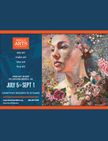
And the production, that 90 years later has grown into the epic, jaw-dropping theatrical spectacle of living, breathing art known as the Pageant of the Masters, was born. It has taken place every year since in conjunction with the Festival of Arts of Laguna Beach,a juried art show featuring over 100 artists that grew out of the impromptu street fair that is one year older than the pageant.
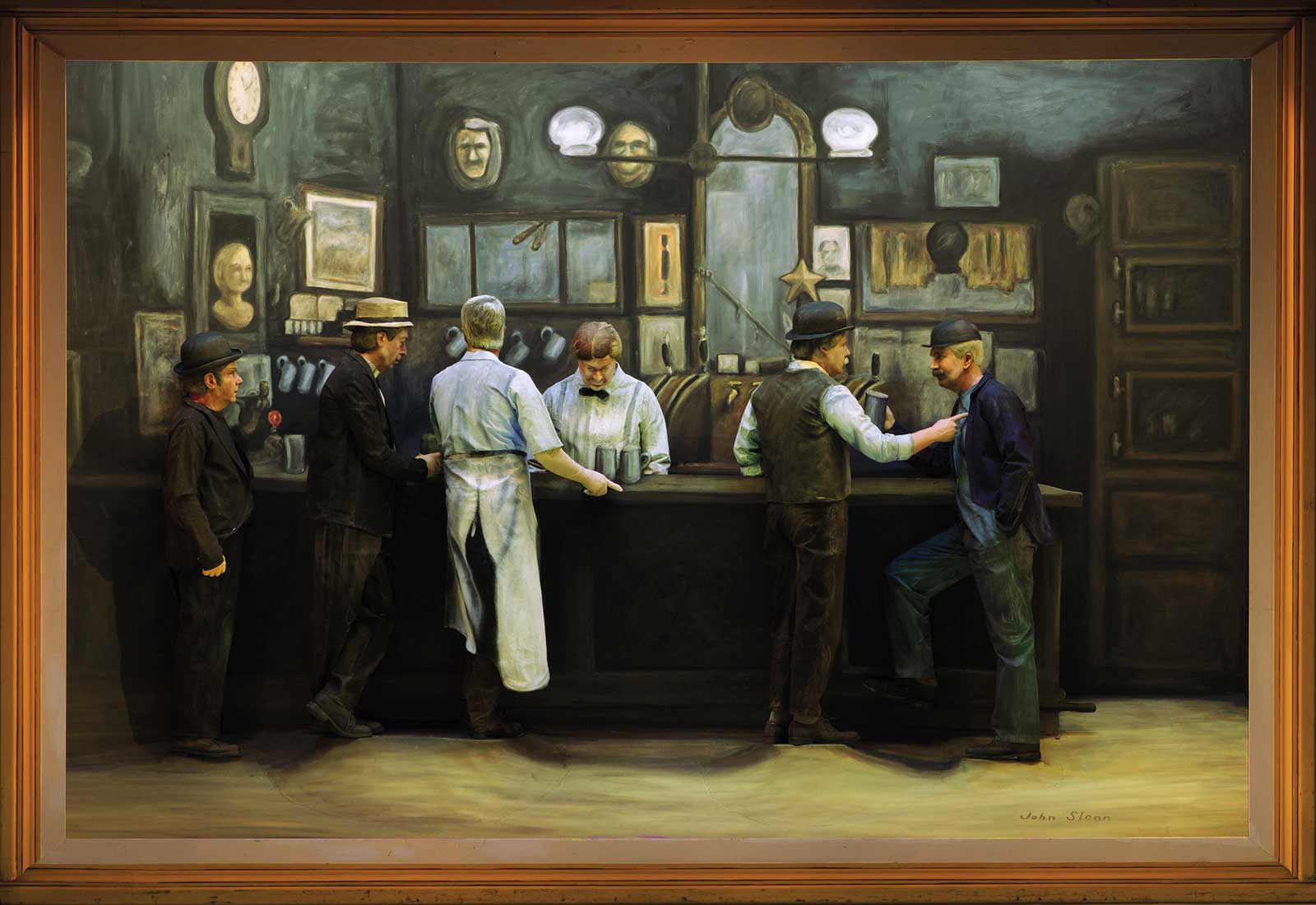
Pageant of the Masters re-creation of McSorley’s Bar by John Sloan.
The humble beginnings of Laguna Beach’s first living pictures consisted of rudimentary re-creations of the Sistine Madonna, Whistler’s Mother, The Blue Boy and the Mona Lisa on a rolling stage the size of two phone booths, in broad daylight before an audience sitting on the ground.
According to Dan Duling, Pageant of the Masters scriptwriter since 1981 and the event’s appointed historian, the most pivotal moment in the pageant’s history came in 1936 when volunteers Roy and Marie Ropp voiced their disdain for the quality of the production. Roy was a “Sunday painter” and builder who helped with set and stage construction and Marie was a festival board member who wrote the narration for the pageant.
“Basically, they told the board if they were going continue with the production, it shouldn’t be an embarrassment,” explains Duling. “That it should be done right or not at all and they were doing a disservice to these masterpieces if they didn’t treat them with respect.
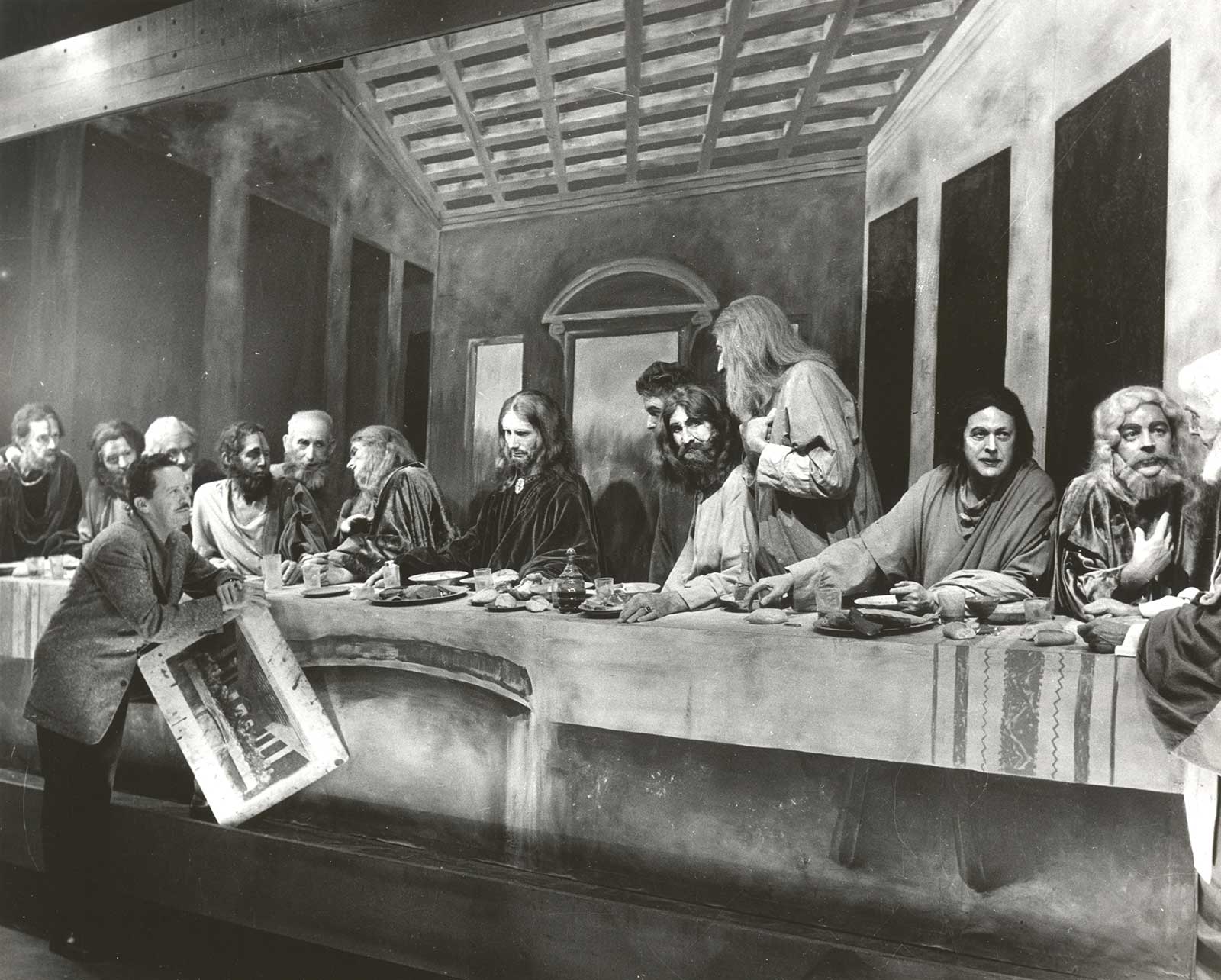
The 1958 re-creation of The Last Supper.
“The board turned it over to Roy and Marie and said ‘have at it’. They ended up creating the template for what we do today which includes live narration, live music and stage presentations of tableaux vivant—the art of creating the illusion of an artwork with people in makeup and costumes appearing in a set on a stage.” They also expanded the production from 45 minutes to 90 and, in a move that no one could’ve suspected would have such tremendous impact on the pageant’s trajectory, ended it with a tableau of da Vinci’s The Last Supper so massive it required the construction of a larger stage.
The response to the finale was so overwhelming, word-of-mouth reviews spread like wildfire across the country—the equivalent of millions of dollars worth of free publicity. Within three years, the board had to extend the festival’s length. Today the Festival of Arts' show and pageant run from early July through Labor Day Weekend, with performances nightly, drawing 250,000 attendees during its duration. And while the Pageant of the Masters presents a different theme and set of living masterpieces each year, it still closes out the performance with a variation of The Last Supper to this day.
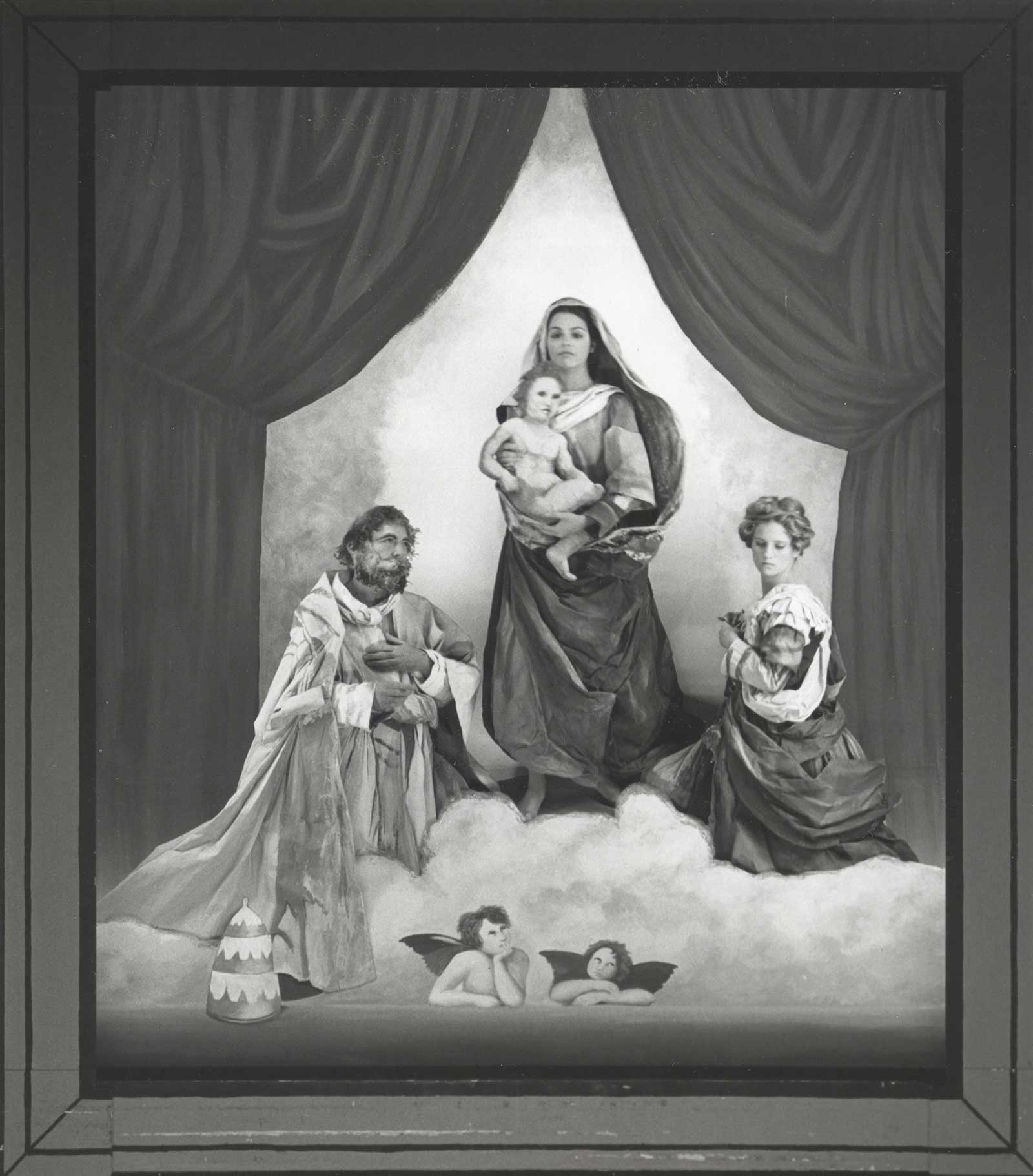
One of the very first living pictures at the Festival of Arts, a re-creation of Sistine Madonna from 1933.
“It was bringing more people to the festival and therefore creating more opportunities for the artists to meet new patrons and sell their work,” says Duling. “It was a win-win for the community when revenue was very hard to come by. It was still a remote location but the pageant put it on the map.”
Tableau vivant is French for “living picture” and defined as a silent, motionless, carefully-posed group of costumed people with props and scenery arranged under theatrical lighting to represent a scene. The tradition dates back to the Middle Ages when pageants were performed by villagers for visiting dignitaries, and carried over in the form of court and parlor entertainment in the 18th and 19th centuries in Europe and America. In perhaps their most creative employment, they were used by burlesque houses to get around laws prohibiting lewdness—if you put a naked woman on stage and she didn’t move, you were able to say she was a living piece of art.
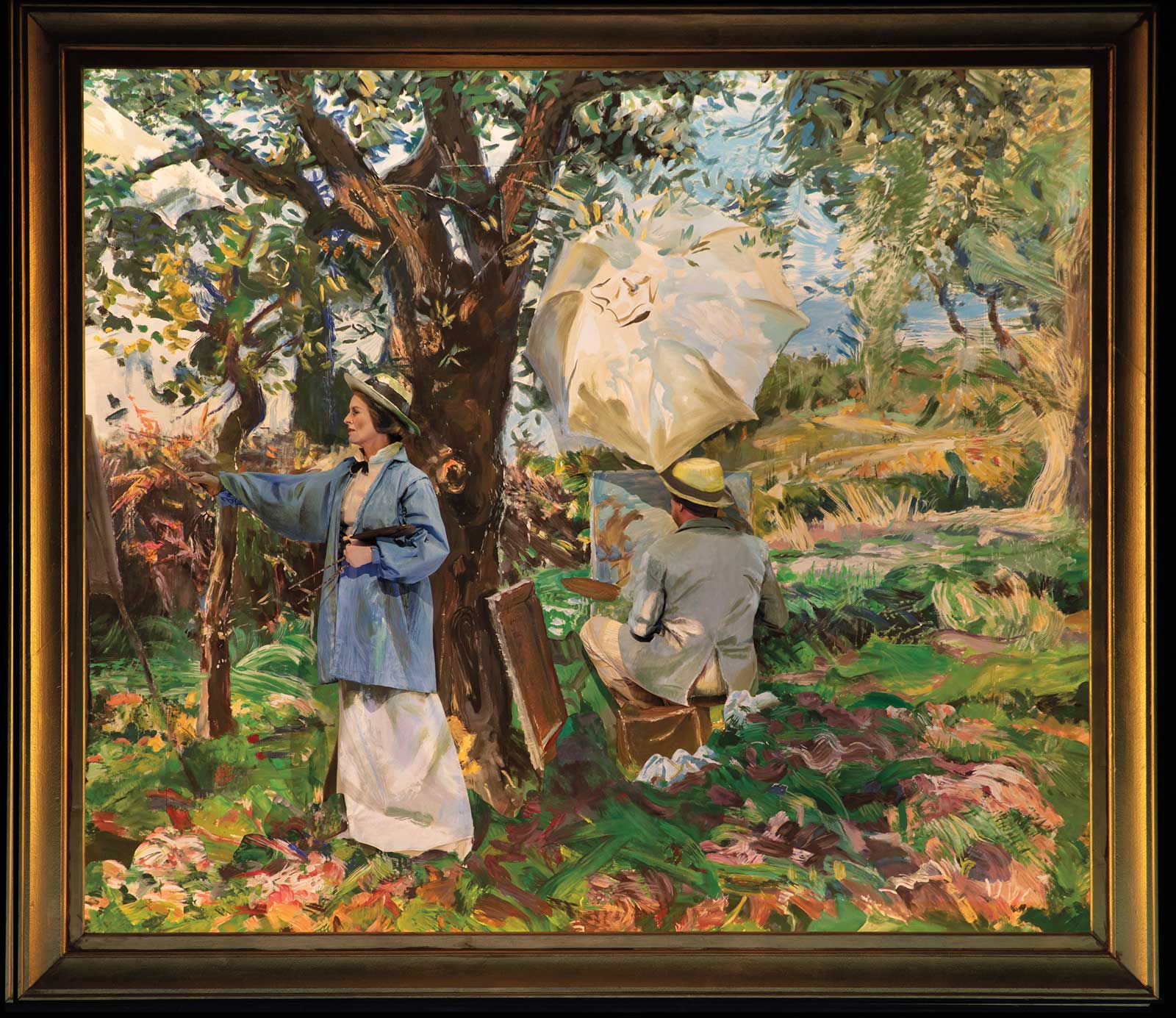
Pageant of the Masters re-creation of The Sketchers by John Singer Sargent.
Duling is quick to note that this is the antithesis of what the pageant is doing and that it’s an entirely G-rated—though not “Disney-fied”—performance for the whole family, for 5-year-olds and 80-year-olds alike, for sophisticated art afficionados and “those who wouldn’t cross the street to go to a museum if they had the chance.”
Over the course of its enduring legacy, Pageant of the Masters has had countless themes, breathing life into international works of painting and sculpture that best illustrate them. In celebration of the pageant’s 90th anniversary, this year’s theme is a nod to the community of artists that gave rise to the Festival of Arts of Laguna Beach and Pageant of the Masters, and the hundreds of volunteers who make the production possible each year. “Art Colony: In the Company of Artists” will feature 40-plus reenactments of works that acknowledge the deep connections and memorable stories of artists supporting and inspiring one another throughout their creative lives.
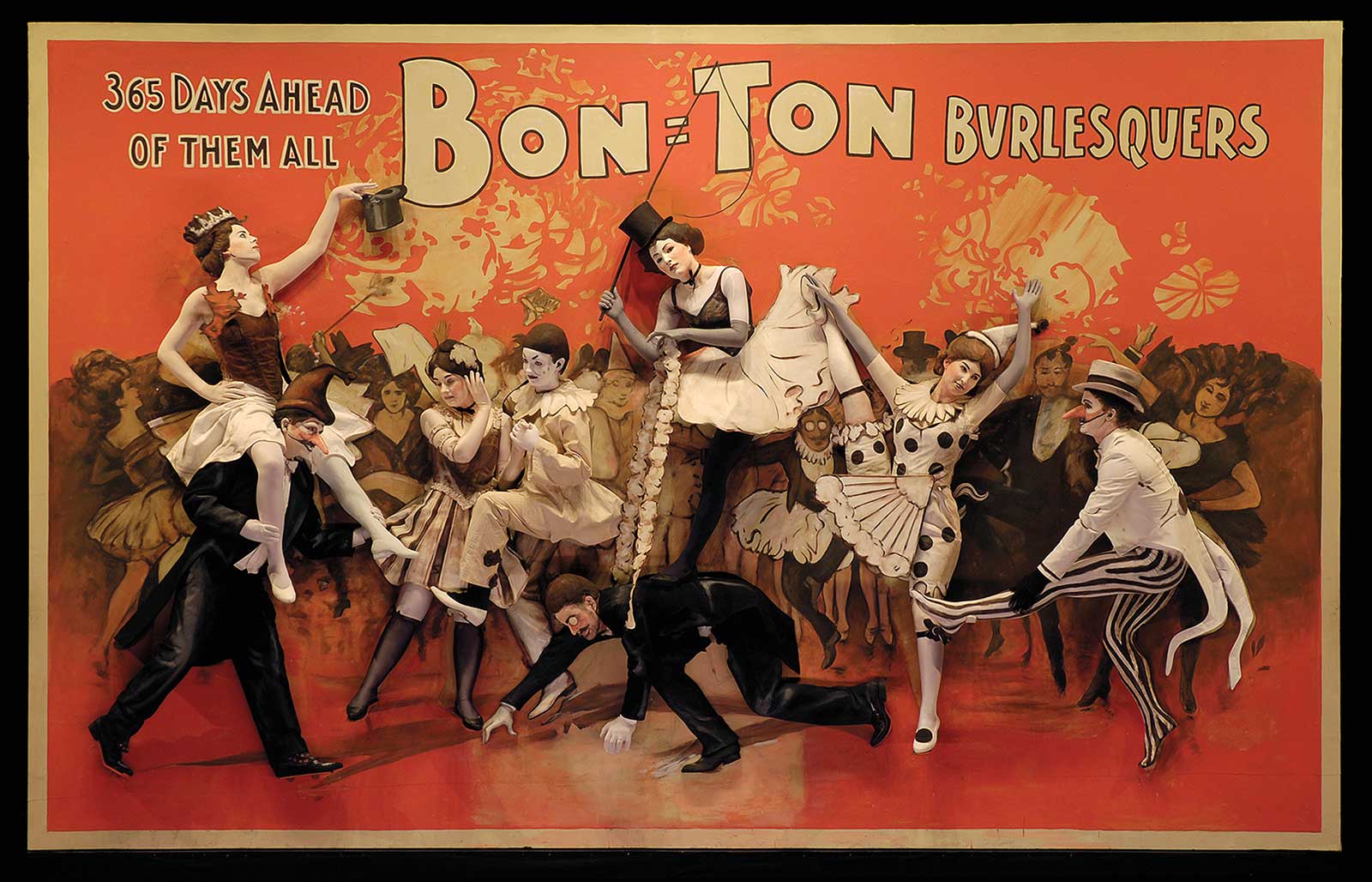
Pageant of the Masters re-creation of the Bon-Ton Burlequers.
In developing this year’s theme, pageant director Diane Challis Davy was “interested in what makes a place an ‘art colony.’ What are the essential ingredients to establish an art colony? Is there ineffable magic in the landscape, the light or the sky that draws artists? Is it a commitment to cooperation, camaraderie and shared love of art or something else?”
Taking a broader approach this year in its exploration of this theme, audiences can expect to see Alone and Together (Under the Freeway) by contemporary Chicano artist David Botello, Lift Every Voice and Singby Black sculptor Augusta Savage, and Native American paintings by Bert Geer Phillips, a founding member of the Taos Society of Artists. There will also be living renditions of works by Renoir, Toulouse-Lautrec, sculptor Luca della Robbia, John Singer Sargent and paintings by the late Laguna Beach artist Roger Kuntz. The visual phenomena is accompanied by a live symphony orchestra performing an original score and theatrical story-telling by a live narrator.
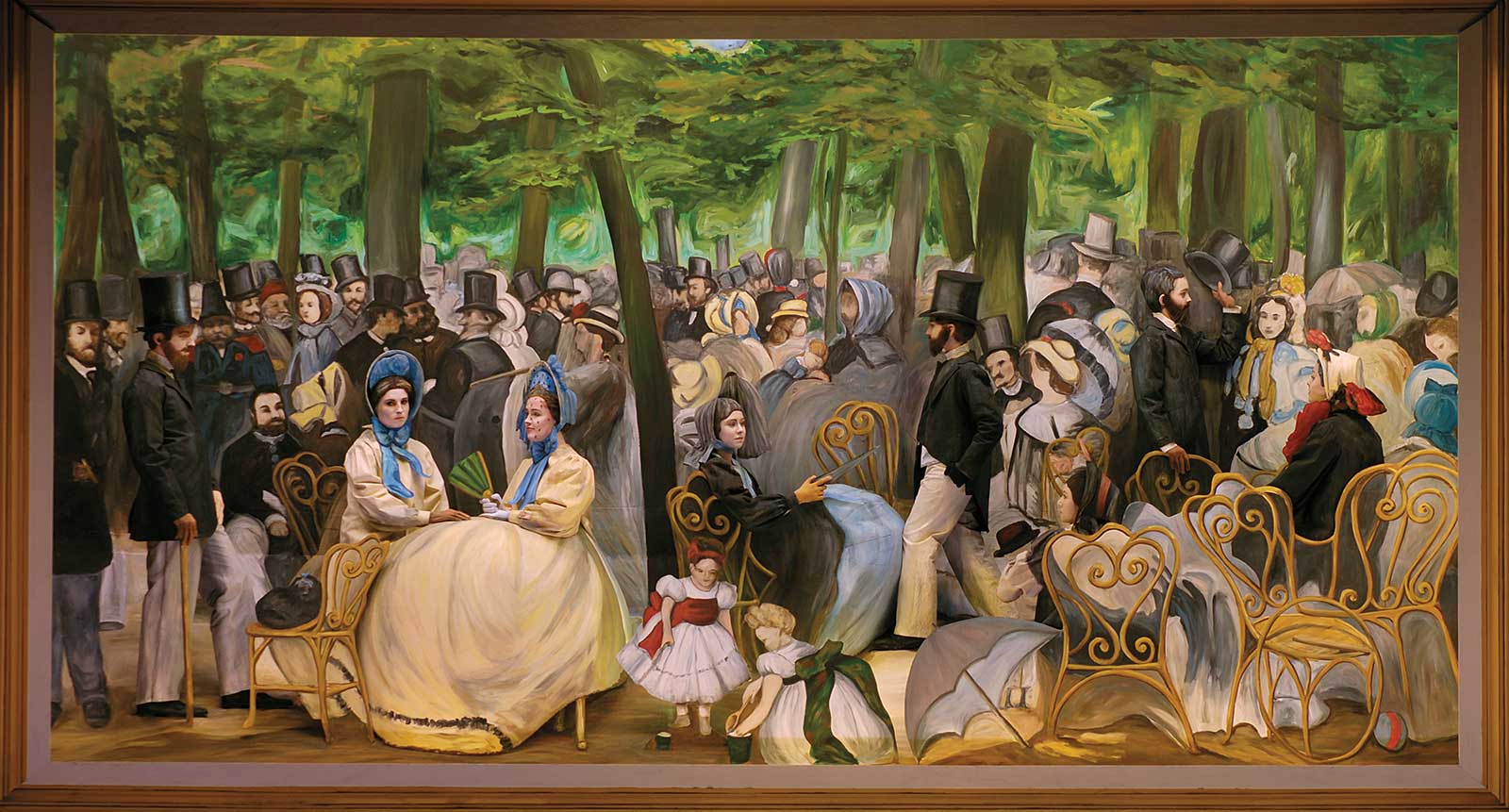
Pageant of the Masters re-creation of Édouard Manet’s Music in the Tuileries.
Executing the production requires 500 volunteers comprised of two complete casts of actors, two backstage support systems and 50 people in makeup. “All of our theatrical elements are done in a way unique to creating the illusion of a living picture. The goal is not realism— it’s not about trying to make it look like a real person; it’s supposed to look like a painted person on a canvas or sculptural material. It’s nonrealistic but with the cold-blooded approach of making it as true to the actual artwork as possible.”
To achieve this, headpieces are molded hats designed to emulate painted hair. The costumes are made from scratch out of muslin that is then painted to mimic the creases, folds and shadows in the clothing in the actual painting. The final element is the lighting, which flattens the image and accentuates the illusion.
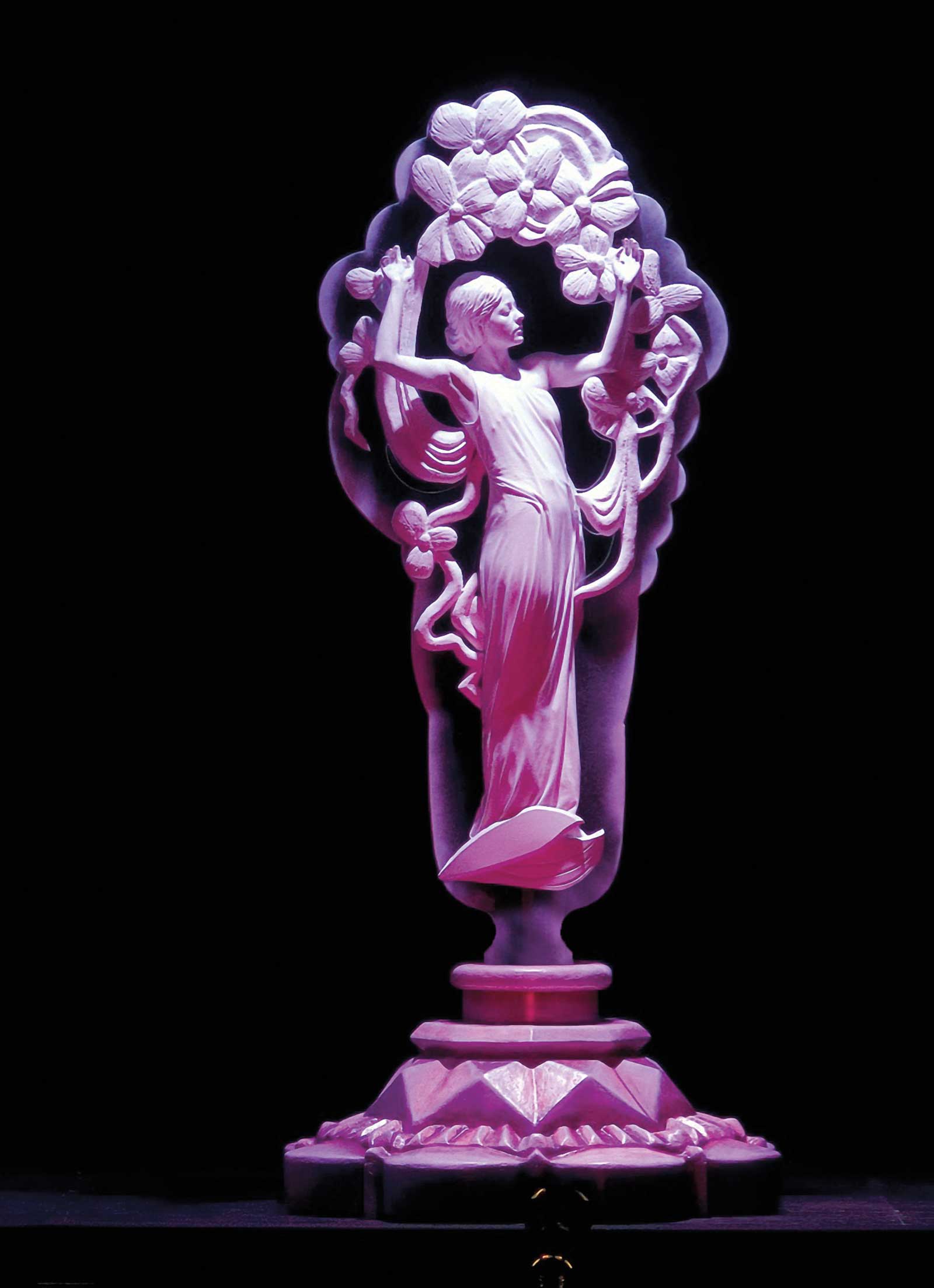
Pageant of the Masters re-creation of a 1920s crystal perfume bottle.
The live narration is also crucial in further engaging the audience, the script for which Duling, who’s spent a lifetime in the theater industry, takes great care and pride in writing in such a way that it's entertaining and educational but doesn't sound like an art history lecture.
When the pageant was in need of a new scriptwriter, the director at the time reached out to Duling who thought the production sounded “patently insane to him,” but he agreed to attend a rehearsal nonetheless. More than four decades later, Duling is still there, his passion and enthusiasm for the pageant having only grown.
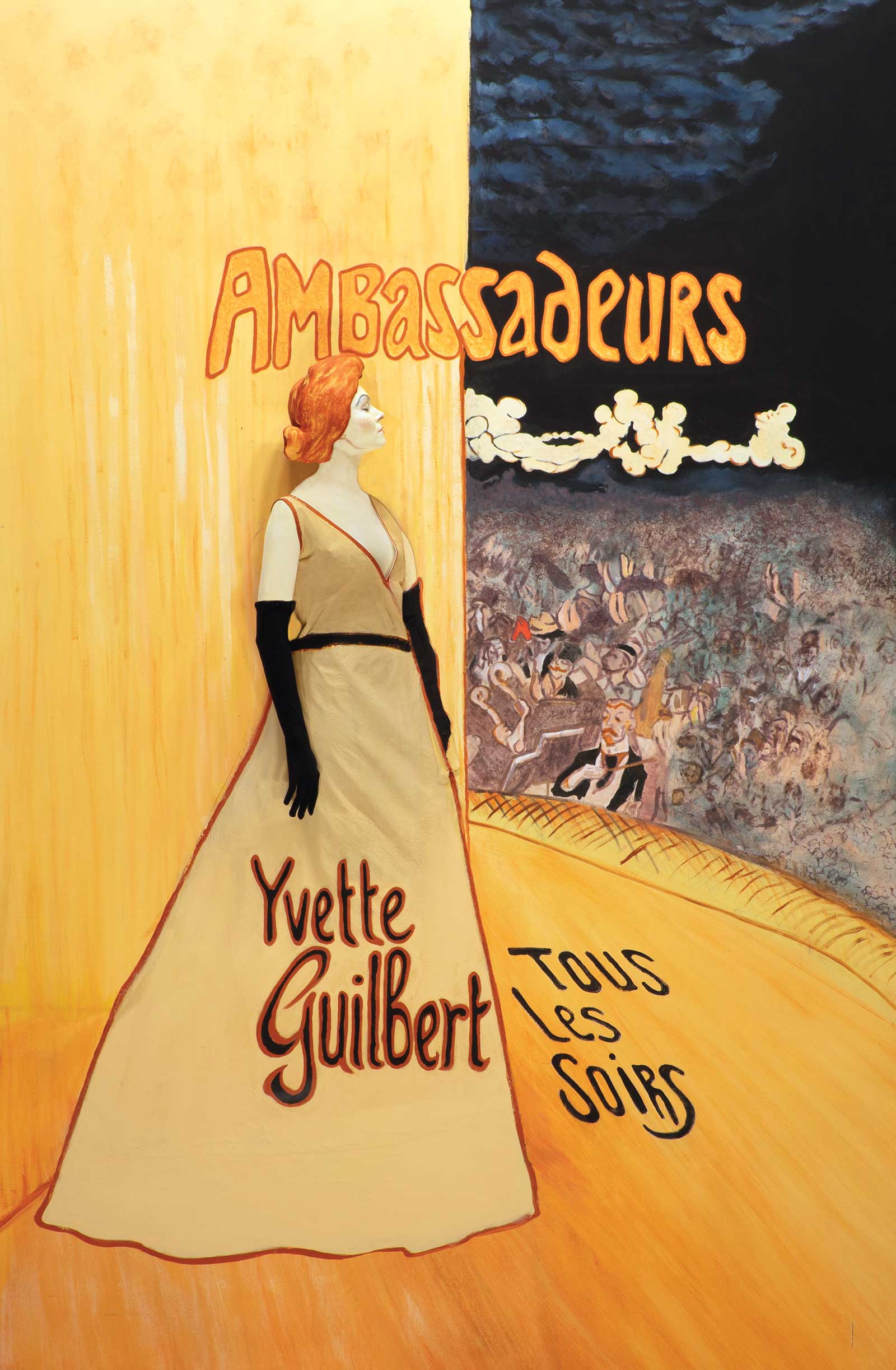
Pageant of the Masters re-creation of Yvette Guilbert by Henri de Toulouse-Lautrec.
“We believe in it,” says Duling, referring to his close collaborator, director Diane Challis Davy. “It’s a fully professional show executed at a level that I would put up against anything in LA or New York.”
The spectacle is also so much more than visual enchantment. It’s a show with stories written to have emotional resonance, to entertain and educate. It encourages engagement with art and is a way of fostering a deeper sense of artistic appreciation in the general public. “Our audience is drawn into the experience of a piece of art for longer than they would look at it in a museum because of the music and the stage magic and the storytelling,” Duling says.
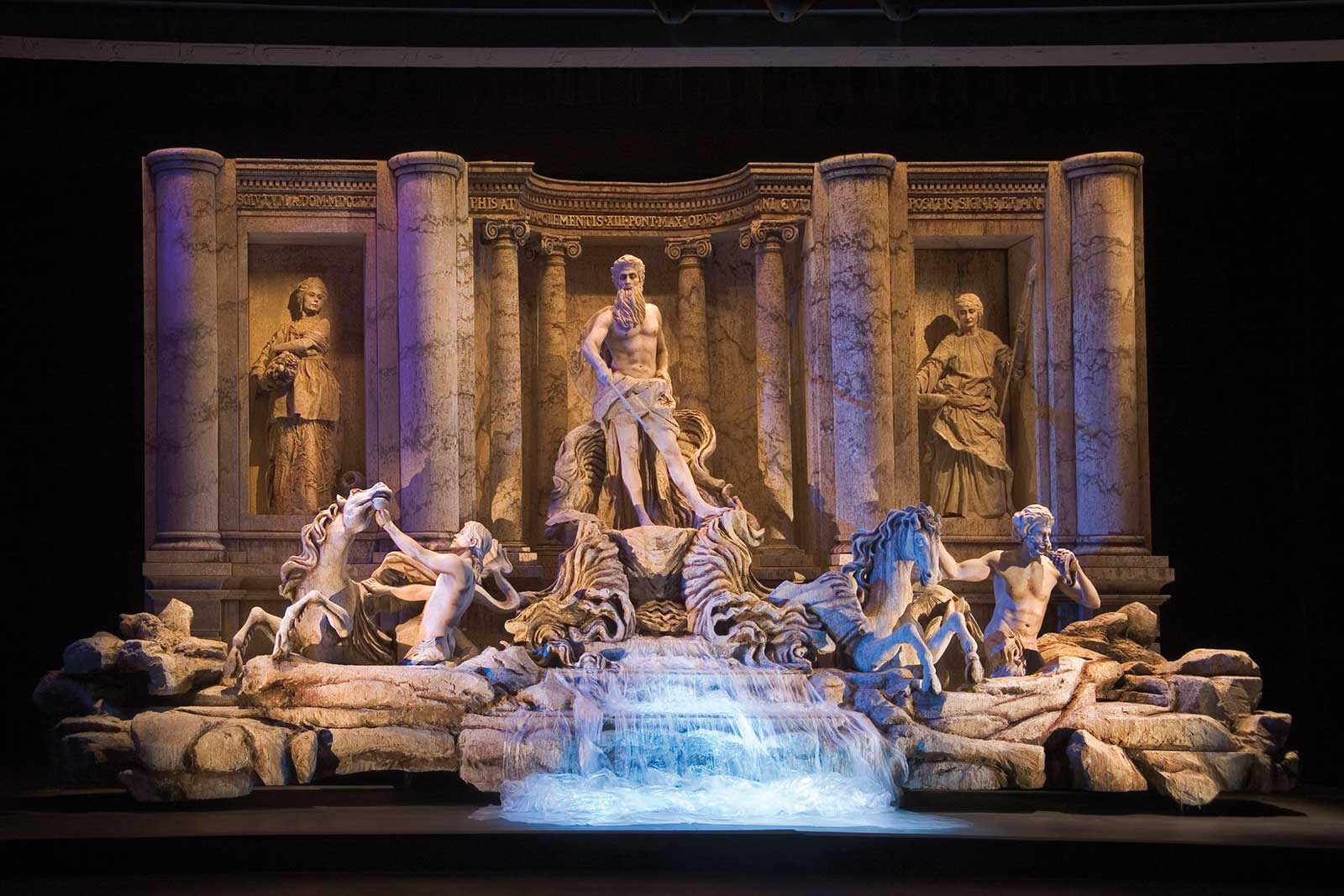
Pageant of the Masters re-creation of the Trevi Fountain.
“We want the audience to know they are truly seeing something at a level of artistic integrity unlike anything else in the world. Until someone has seen it, you can’t adequately describe how they will be sucked in and the moment when they realize how engaging the experience is. I always say to my friends in Hollywood—you have to see it to believe it.” —
Pageant of the Masters
July 7-September 1, 2023
650 Laguna Canyon Road, Laguna Beach, CA 92651, (800) 487-3378
tickets@lagunapageant.com
www.foapom.com
Powered by Froala Editor