From time to time a Steller’s Jay will wander down from the forests of the Sangre de Cristo Mountains and visit one of my bird feeders. Its color and harsh, scolding call remind me of the Blue Jays that were everyday visitors back east. The Steller Jay’s blue wings and tail and black body with a crested head are startlingly beautiful, standing out among the less grand visitors to my feeders.
Joe Garcia lives in a forested mountain town in Southern California, familiar with the nuances of light and the characteristics of changing seasons. In Winter Blues, blue shadows on snow and the black stems of shrubs nearly hide a Steller’s Jay taking off in flight. Garcia’s composition emphasizes the forward motion of the jay on the wide horizontal canvas, with minimal shadows on the left, building up to the intense shadows and shrub from which the bird emerges into the light.
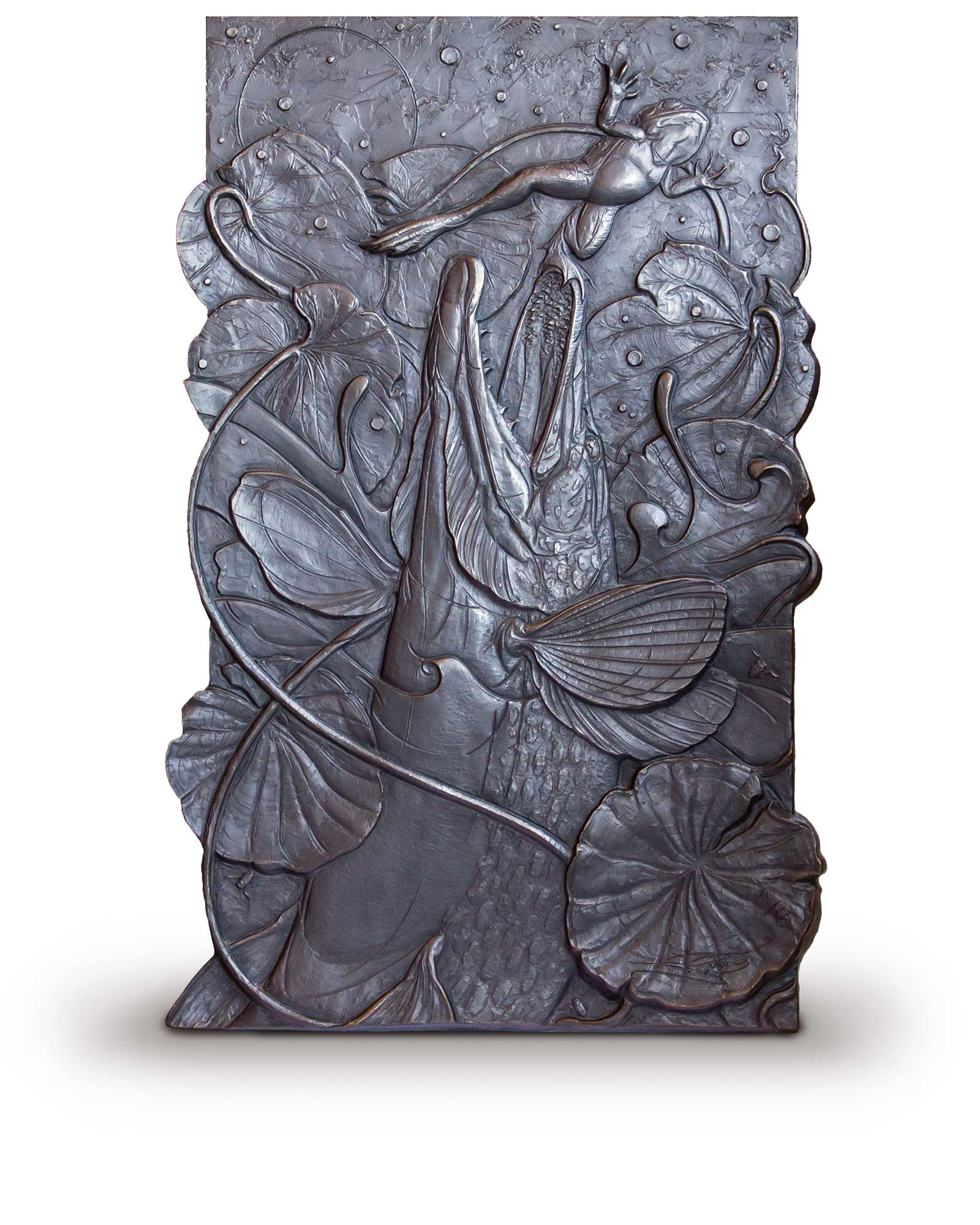 Broadmoor Galleries, Northern Torsion – Pike and Bull, bronze ed. 18, 19¾ x 12¾”, by Jeremiah D. Welsh.
Jeremiah D. Welsh compacts the depths of the watery world of a stream into his low relief bronze sculpture, Northern Torsion – Pike and Bull. The pike, emerging from the lily pads, commands the center of the composition with the frog propelling itself away by pushing a foot against the pike’s open mouth.
Welsh writes about the intimate scene of danger presaging a more global disaster. “With a swirl of dark water, the trajectories of two extraordinary predators—invasives and cannibals alike—collide and entwine. Then with a splash and an undulation of ripples, the watery curtains close with seeming resolution. Yet all is not well. Whatever the outcome of the encounter, ecological balance is evidenced as being skewed one small step further from center and the narrowing of species is made manifest. The slope that we have set our world upon is a slippery one and Nature harkens to us to heed its signs of warning….”
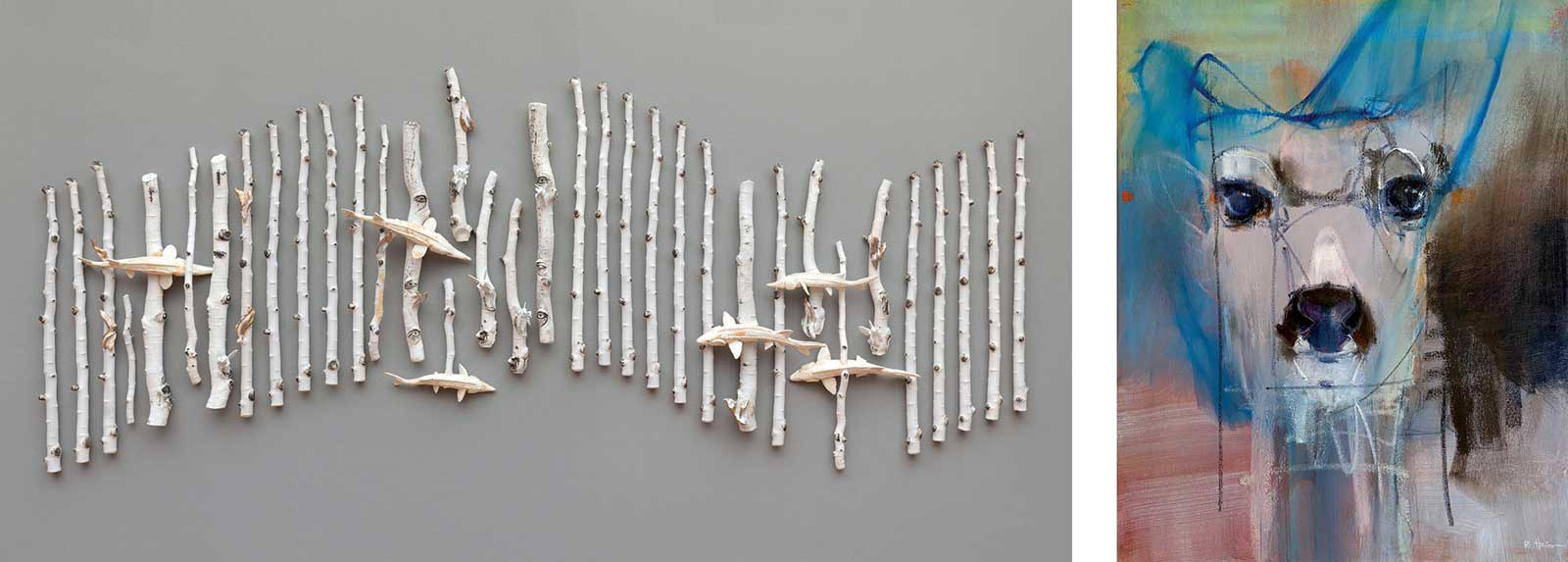 William Havu Gallery, Sturgeon Song, cast porcelain, 46 x 120 x 4½”, by Margaret Kenway Haydon; Giacobbe- Fritz Fine Art, Courage, Deer Heart, oil on canvas, 20 x 16”, by Rebecca Haines.Ceramics artist Margaret Kenway Haydon was struck by sturgeon when she first saw them. She was exhibiting her work at Vancouver Island University where she was a visiting artist-in-residence for four months. The gallery was next door to the university’s International Centre for Sturgeon Studies where she began to volunteer.
She explains that sturgeon “are important creatures historically, genetically, socially and now environmentally. I am obsessed with their physical reality, their large scale, their bony scutes and the elongated snouts of certain species. They have a certain kind of wisdom about them that comes from their longevity as a species.”
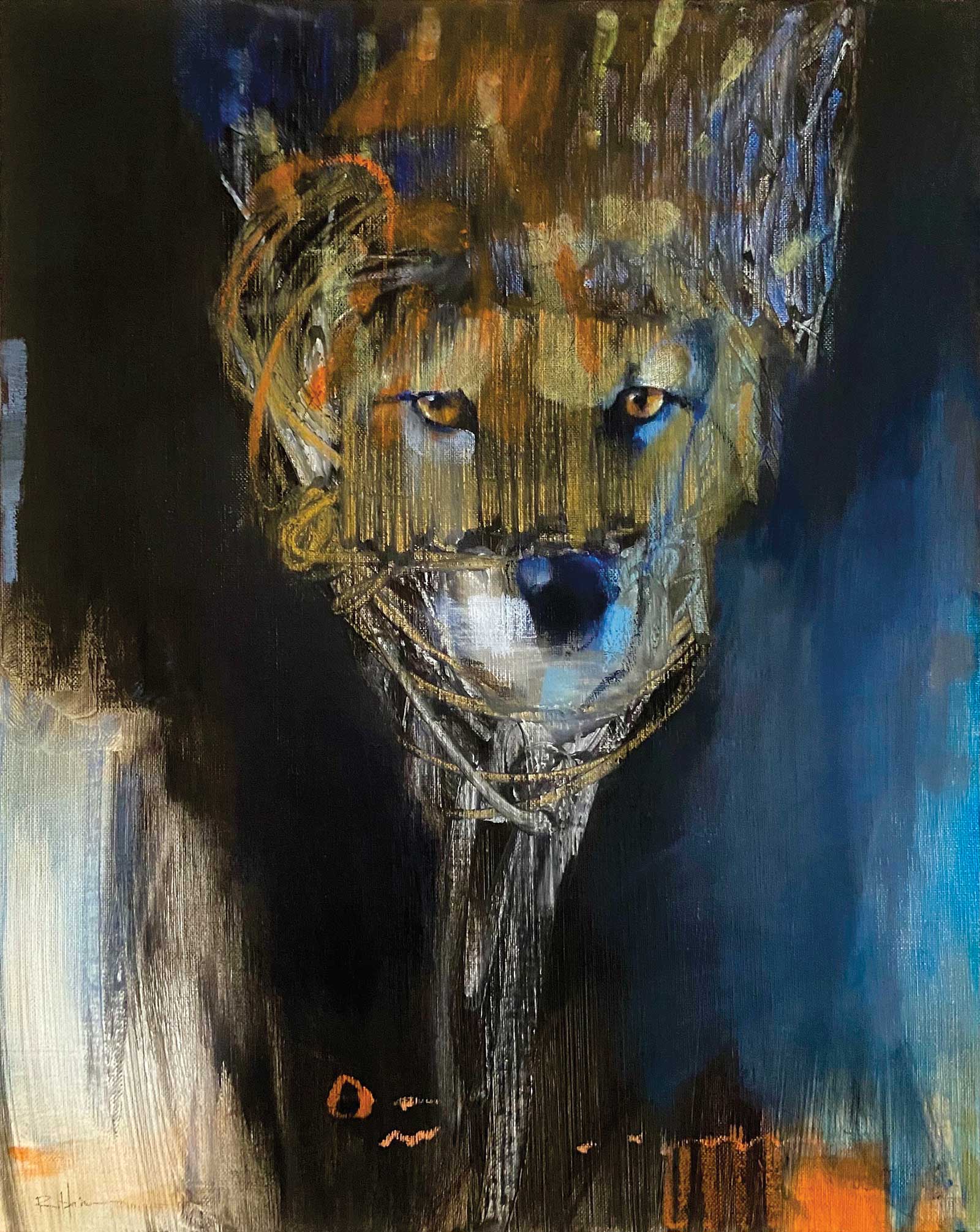 Giacobbe-Fritz Fine Art, Once Upon a Story, oil on canvas, 20 x 16”, by Rebecca HainesIn her 12-foot-wide cast porcelain sculpture, Sturgeon Song, the fish that date back to the Jurassic period, 200 million years ago, swim freely in search of food.
She comments, “I work with image elements from the natural world, and am attentive to changes in habitat and animal narratives. Through this investigation I have grown increasingly interested in the broader environmental predicament. Each day brings a new story highlighting the exploitation of various species from sturgeon and shark, to bee and golden frog. The more we become tangled up in technology, the greater the distance grows between society and the natural environment….I endeavor to render the beauty and the vulnerability of the natural world through compositions that raise questions and hopefully spark a broader thoughtfulness about the impact we are having on our physical environment.”
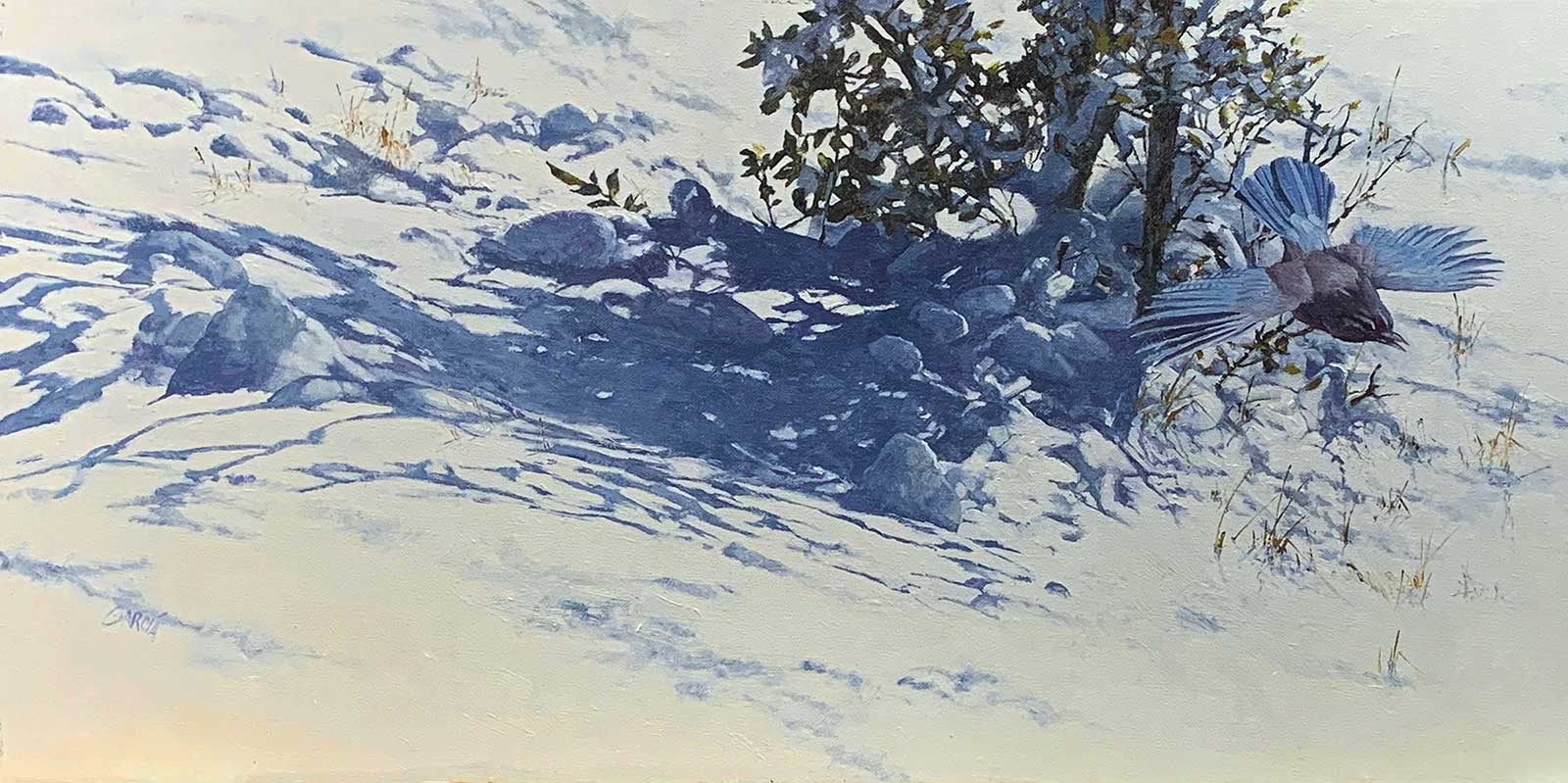 Mountain Trails Gallery, Winter Blues, oil, 12 x 24”, by Joe Garcia.
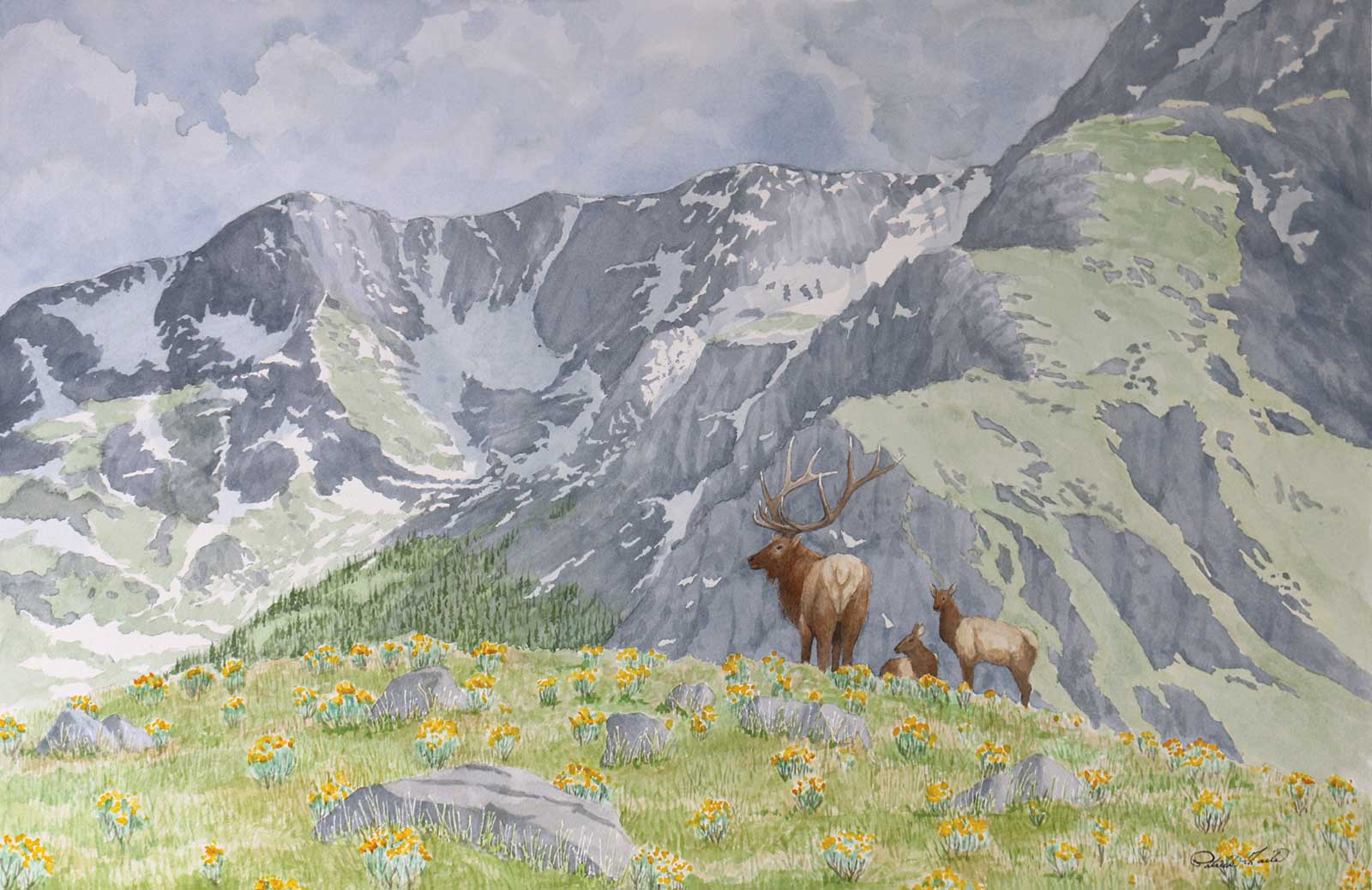
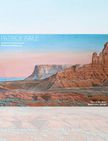
Patrick Faile, Spring Break, watercolor, 20 x 30”
Continue reading through this section dedicated to the genre of wildlife to hear additional insights from galleries and artists, along with advice on establishing or adding to a collection.
For artist Rebecca Haines, represented by Giacobbe-Fritz Fine Art, wild animals have been her primary subject matter for over 20 years. “They are an endless source of inspiration, beauty, wisdom and guidance,” she explains. “They live on the planet in a way that humans perhaps did once long ago, but a way with which we have drastically lost touch. We have more in common with these fascinating creatures than we have differences. We all want food, water, home, family, play, connection and affection. And yet, as a technologically and materialistically focused species, we choose to ignore this fact when it is inconvenient to our purposes of expansion and accumulation, and only remember it fleetingly if at all.” Haines felt a pull from the non-human animal kingdom as a child and that feeling has only intensified throughout the artist’s life. “They teach me how to be a better human animal,” she shares.
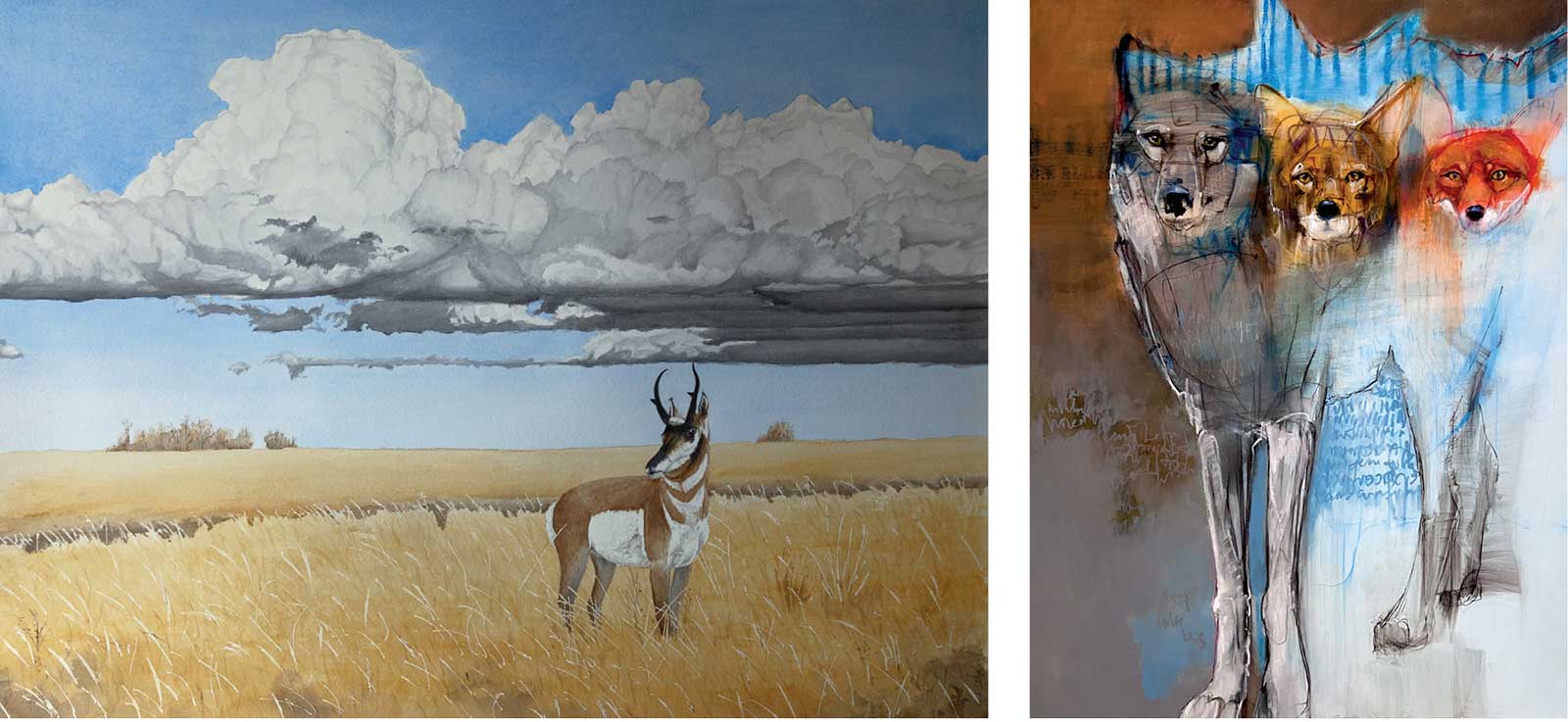
Patrick Faile, Dakota Storm Chaser, watercolor, 20 x 30”; Giacobbe-Fritz Fine Art, Tramps Like Us, oil on wood panel, 40 x 30”, by Rebecca Haines.
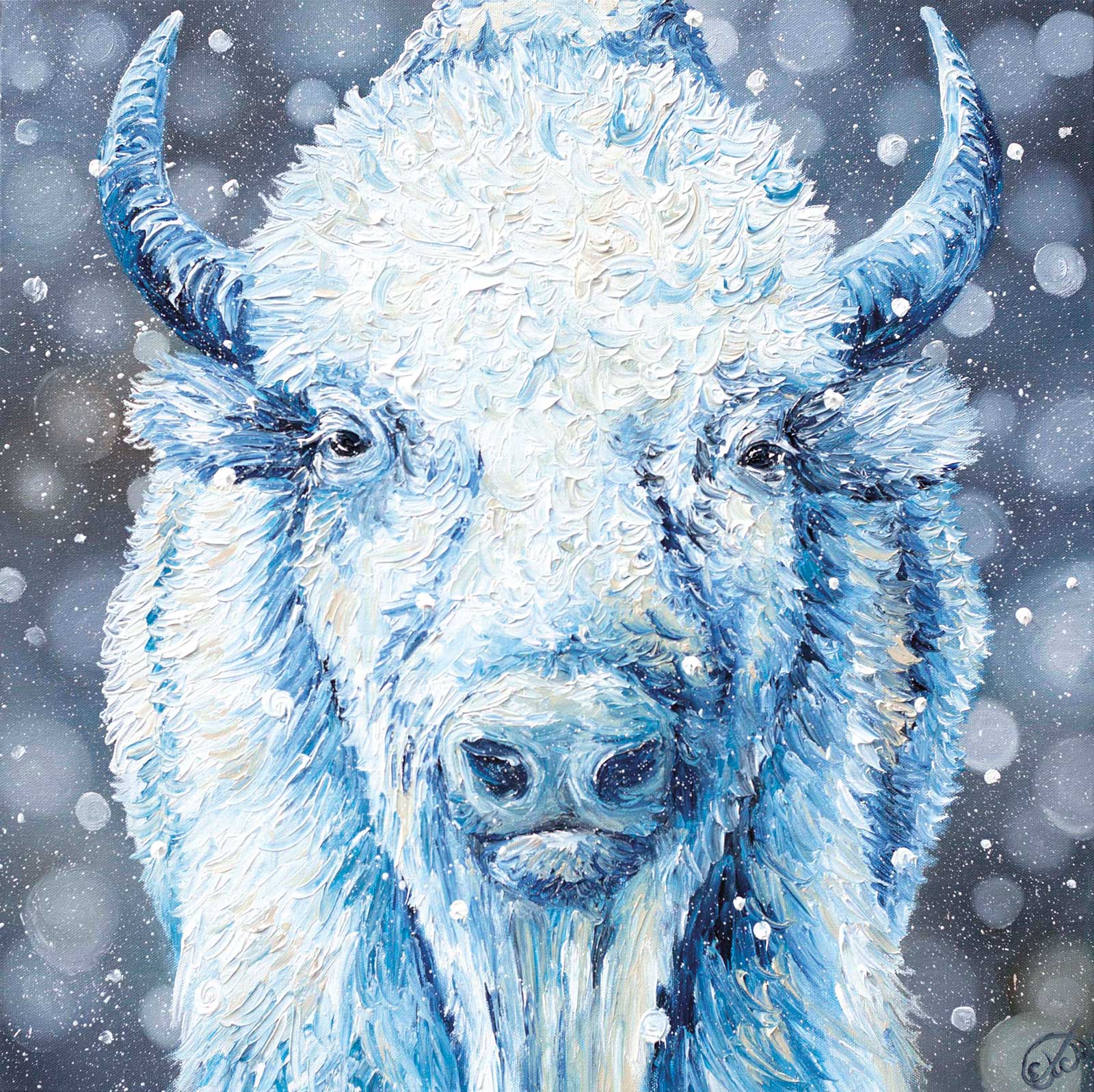
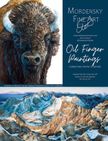
Elizabeth Mordensky, Spirit Buffalo, oil finger painting, 24 x 24”
When collecting for the genre, Haines says, “When you experience a true moment of connection with the animal in the artwork as a living, breathing, intelligent and engaging creature, buy that piece. Living with artwork that you connect to in this way will enhance your relationship to and understanding of these fellow beings that share our home.”
There are two passionate driving forces in the art of Patrick Faile—the love of the wide open spaces of nature and the watercolor medium. “I find watercolor to be the most challenging medium of all, and for the last ten years, I have set about documenting our national and state park landscapes and their inhabitants,” says Faile. “This has led me to acceptance in 55-plus national and international juried exhibitions and five signature memberships with various watercolor societies across America. My work has a simple theme—the magnificent beauty of our planet. I don’t try to incumber it with any social or political agendas. I let my work speak for itself.”
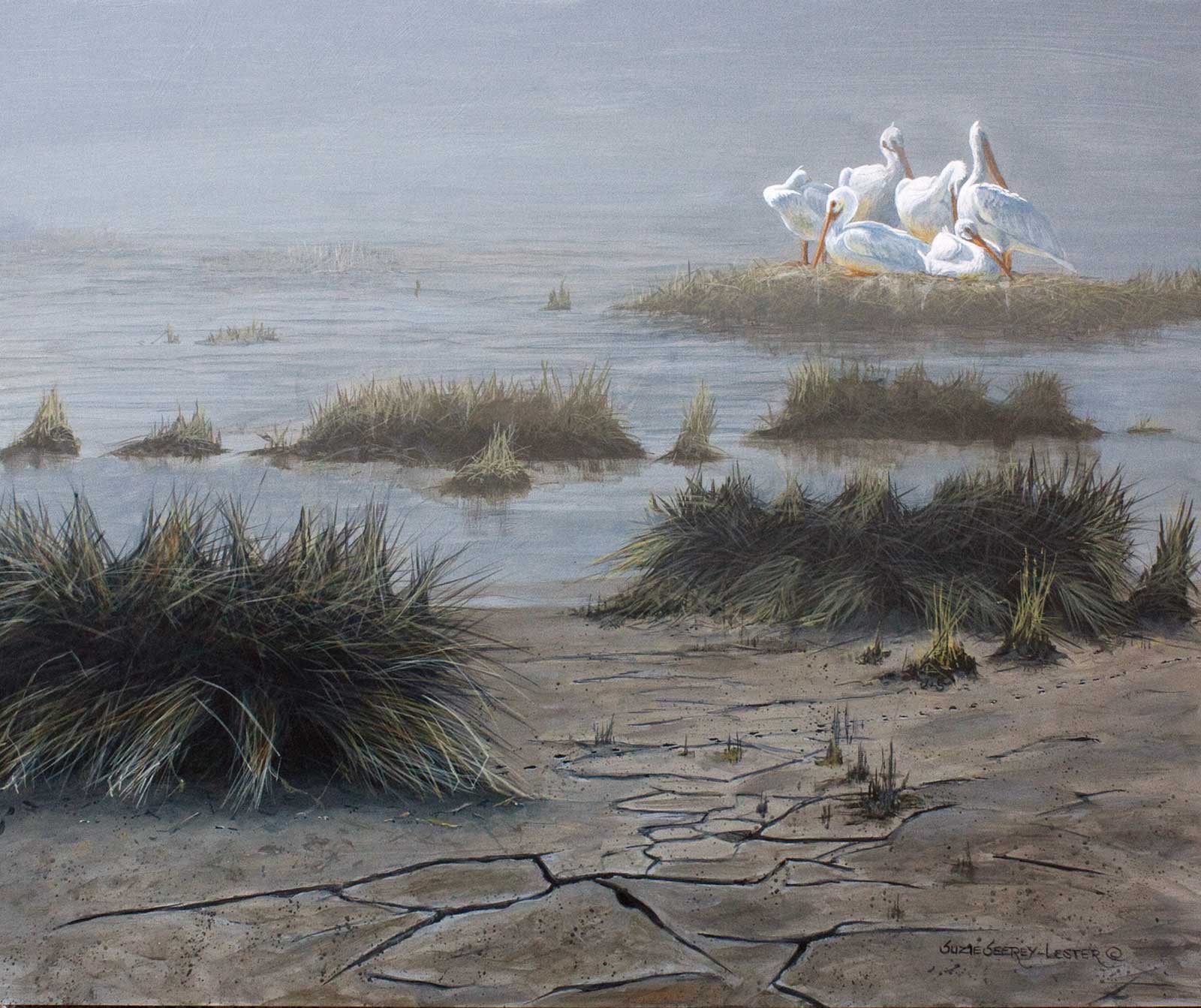
Suzie Seerey-Lester, African Parchment, oil, 20 x 24”
For the collector, Faile’s advice is to “always purchase work that you identify with and speaks to you personally, but consider that the watercolor medium has the transparency and blend of colors that cannot be achieved or found in any other medium.” Teaching at Triple D in Montana allows artist Suzie Seerey-Lester to photograph and paint wild animals in their natural habitat. “Mountain lions leap from rocks five feet away from you; wolf packs race by at neck-breaking speed; a snow leopard disappears on the mountain in front of you,” shares the artist. “These are just a few of the species I work with to achieve realistic paintings of animals you will probably never see in the wild. In my work, you get to experience these animals without bars or cages. Have you ever been three feet away from a grizzly bear? Experience foxes racing between your feet in their game of catch?” Artists or collectors also have an opportunity to experience these rare moments as well, through a class taught by Seerey-Lester in May.
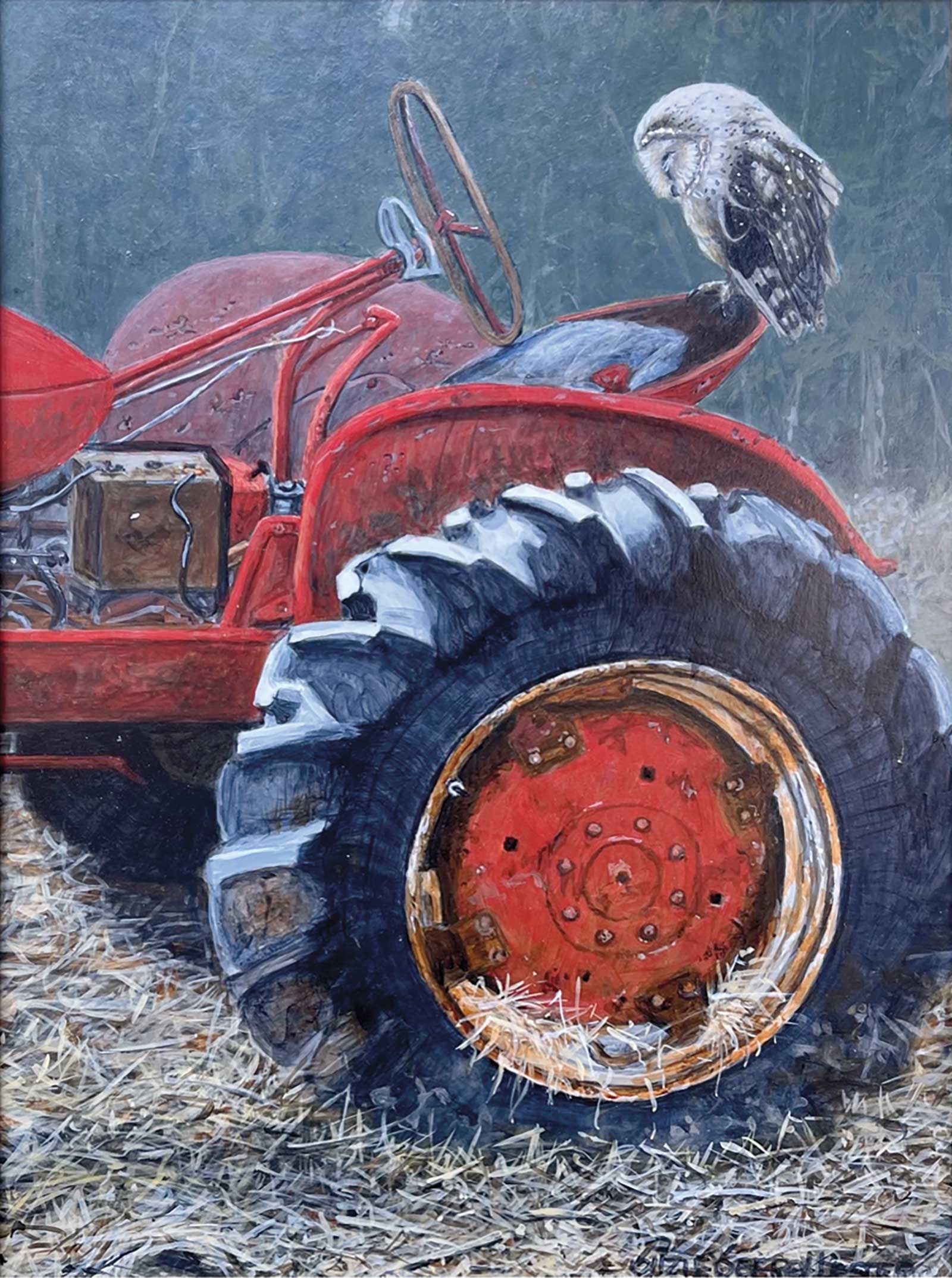
Suzie Seerey-Lester, Asleep at the Wheel, acrylic, 12 x 9”
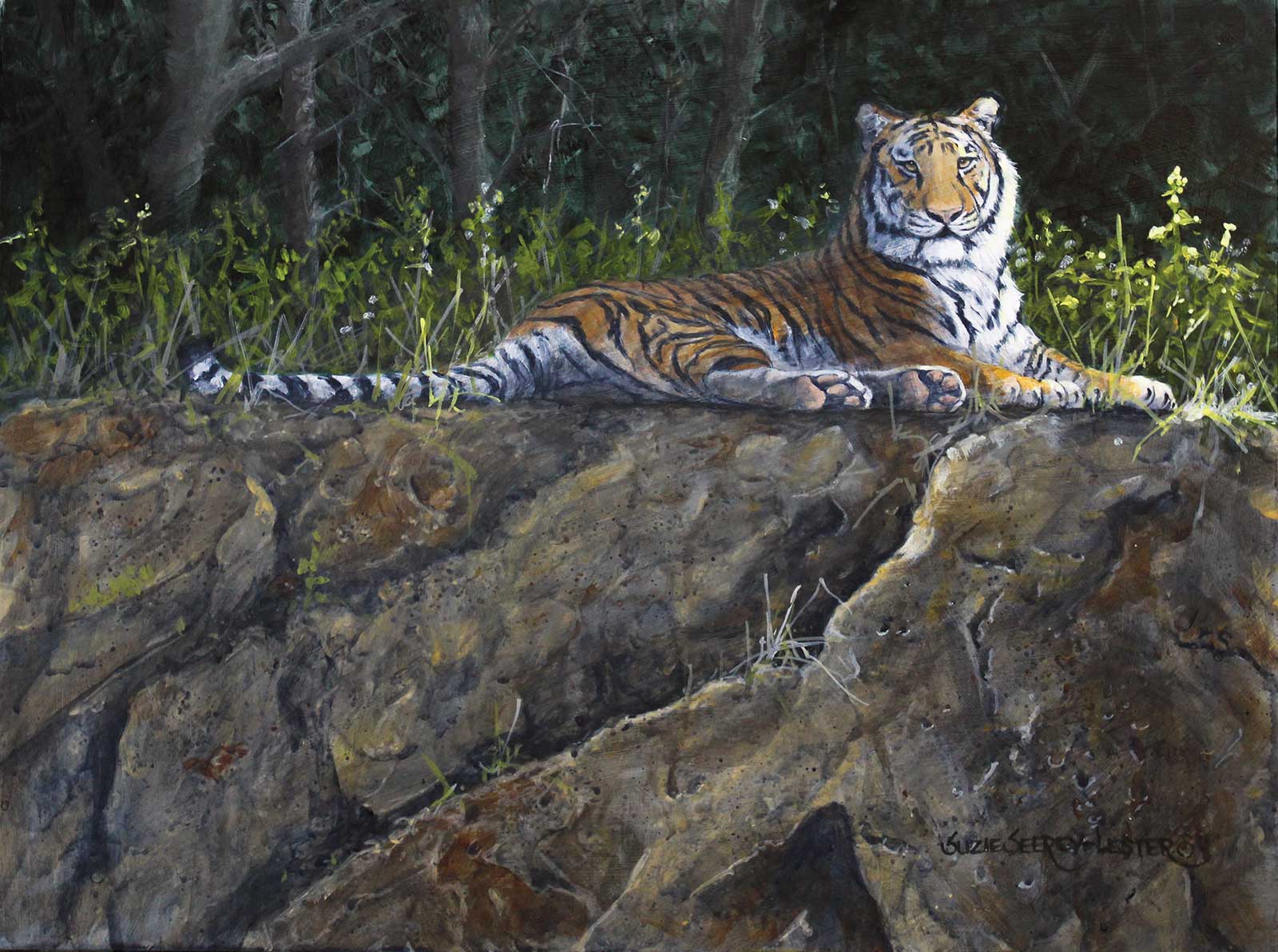
Suzie Seerey-Lester, Rock Solid, acrylic, 12 x 16”
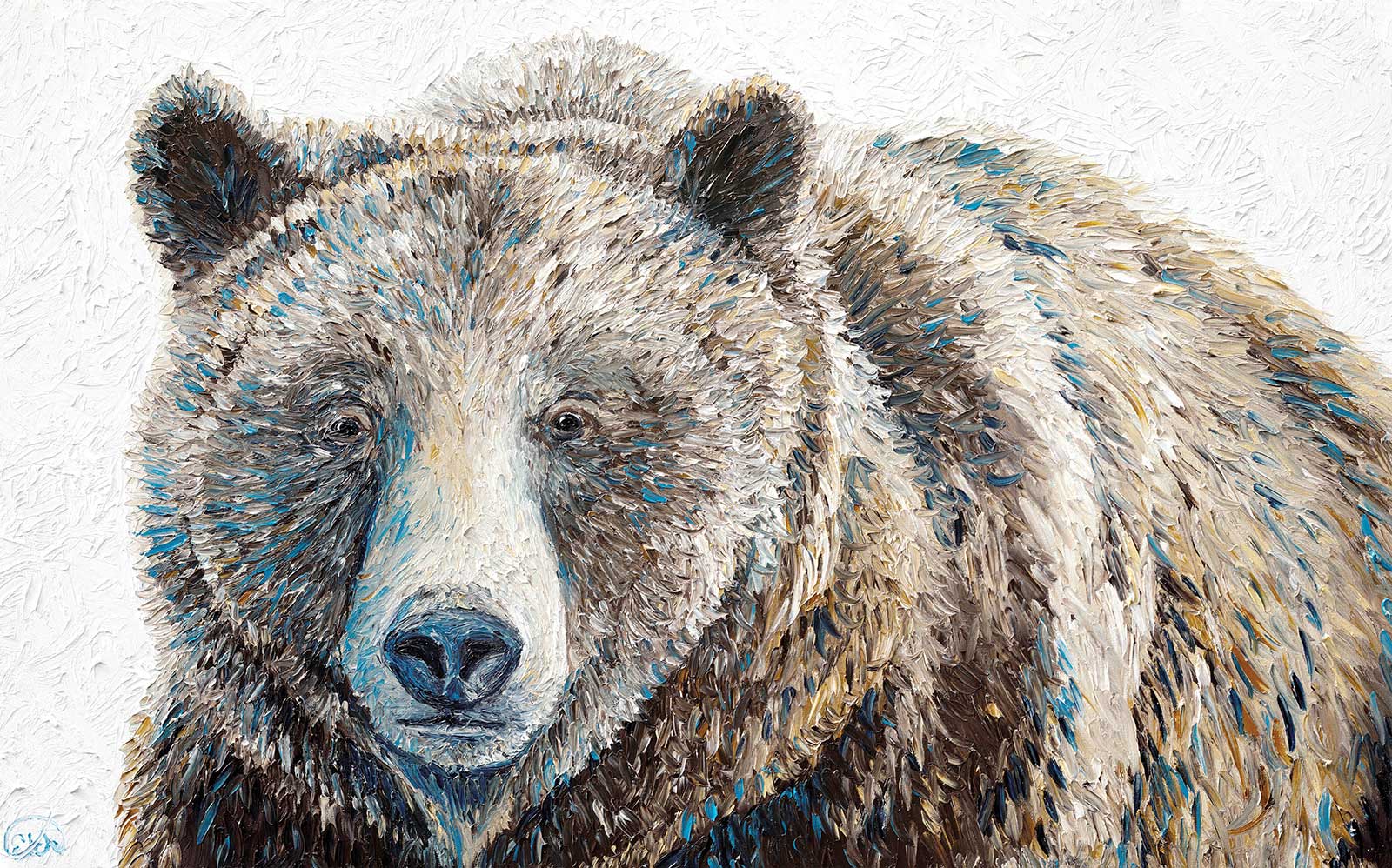 Elizabeth Mordensky, Brother Bruin, oil finger painting, 30 x 48”When it comes to finding inspiration, wildlife artist Elizabeth Mordensky doesn’t have to look far from home. As a wildlife guide in Yellowstone National Park, Mordensky spends her days dodging enormous bison walking down the street, watching sleek foxes pouncing for a meal and revealing the many-sided personalities of misunderstood bears. She loves observing animals, sharing their lives with visitors to the park, and eventually capturing some piece of their life and personality on canvas. Mordensky’s unique style is achieved by finger painting with oils, allowing her to infuse texture and movement into her pieces. The texture also gives the impression you could reach out and touch the wild animal and it might just come alive.
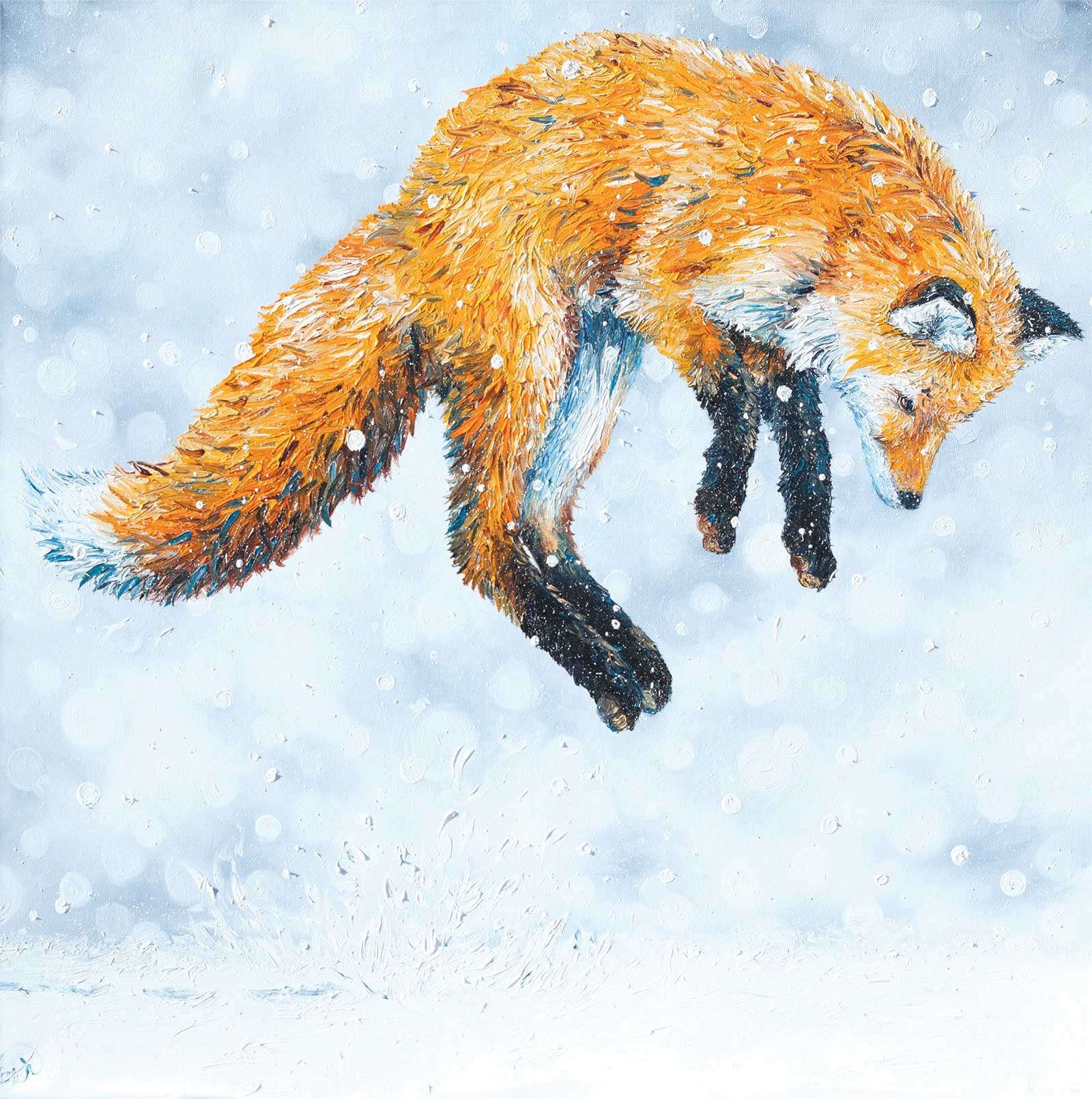
Elizabeth Mordensky, Pounce, oil finger painting, 48 x 48”
For collecting, Mordensky says “You want a piece that really makes an impression on you. If you walk away, but can’t stop thinking about it, that is a good sign that you will love that piece for years to come.” —
Featured Artists & Galleries
Broadmoor Galleries
1 Lake Avenue, Colorado Springs, CO 80906
(719) 577-5744 www.broadmoorgalleries.com
Elizabeth Mordensky
Gardiner, MT, (406) 219-8307
art@mordenskyfineart.com
www.mordenskyfineart.com
Giacobbe-Fritz Fine Art
702 Canyon Road, Santa Fe, NM 87501
(505) 986-1156, www.giacobbefritz.com
Mountain Trails Gallery
336 SR 179, Ste. A201, Sedona, AZ 86336
(928) 282-3225 www.mountaintrailssedona.com
Patrick Faile
(803) 517-8063
rpfaile@comporium.net
www.patrickfaile.com
Suzie Seerey-Lester
seereylester@msn.com
www.seerey-lester.com
William Havu Gallery
1040 Cherokee Street, Denver, CO 80204
(303) 893-2360 www.williamhavugallery.com
Powered by Froala Editor