Horses have always been a part of the life of New York City—work horses, show horses, carriage horses and the over 50 horses in the New York City Police Department Mounted Unit.
Thomas Worth (1834-1917) was a prolific illustrator and avid sportsman who also loved horse racing. He often sketched races that he attended with James Merritt Ives of the prolific printmaking firm Currier & Ives. He was a native New Yorker, born in Greenwich Village. When he was about 18, he showed a drawing to Nathaniel Currier of the same firm, who bought it for five dollars and later published it.
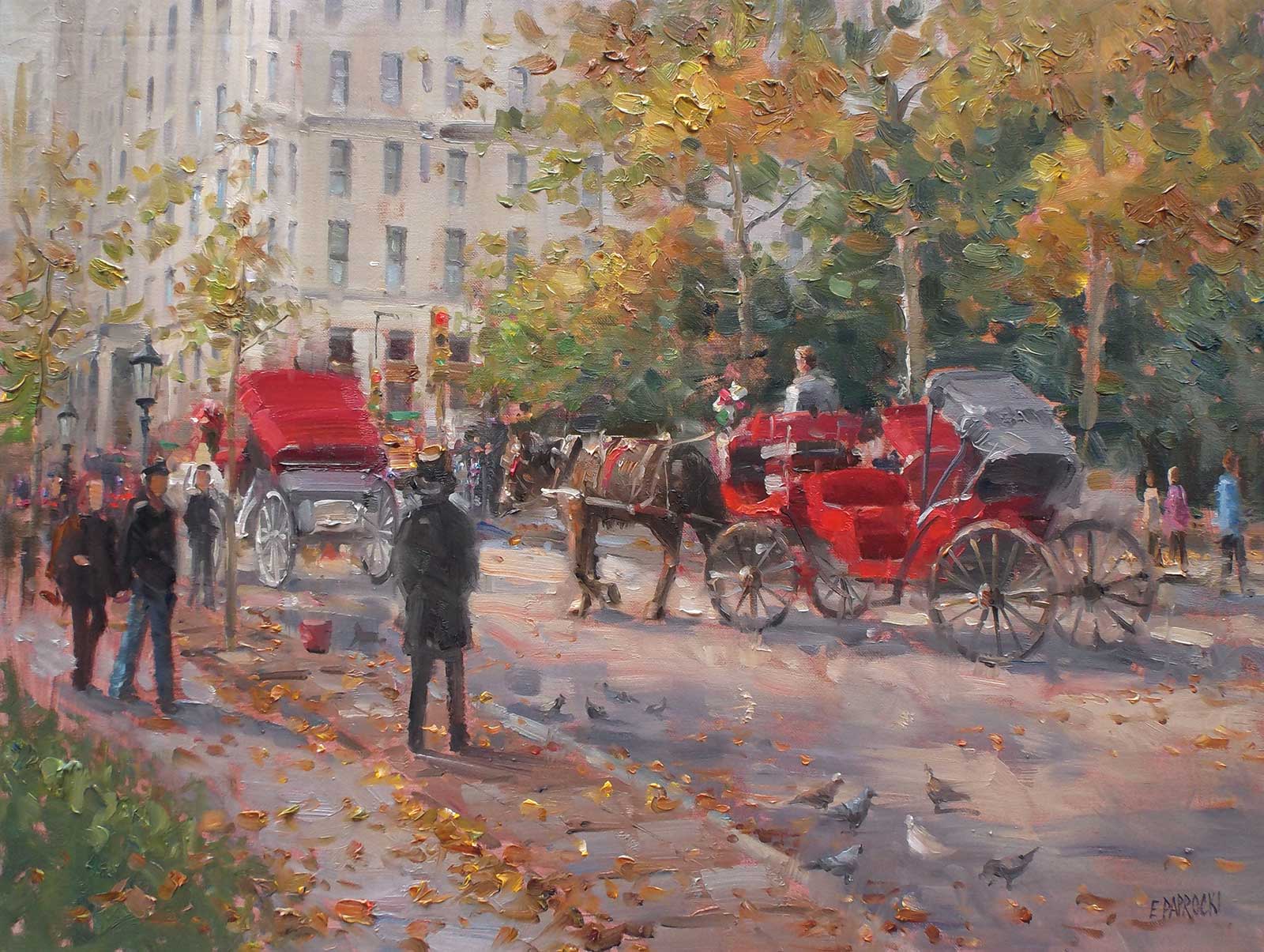
EJ Paprocki, Central Park Carriages, oil on linen, 18 x 24”
One of Worth’s Currier & Ives prints is Fashionable “Turn-Outs” in Central Park, 1869, a humorous look at wealthy New Yorkers showing off their finery, horses and carriages on an outing in the park. The sleek beauty of the horses and the details of the many styles of carriages are complemented by the variety of people, humorous caricatures from the bored to the pretentious.
The romance of the 19th-century Gilded Age is recreated in a way by the continuing tradition of taking carriage rides in Central Park. Carriage rides such as those shown in Worth’s print, began as soon as the park opened in 1858. In 1863, rides were offered to tourists for 25 cents per passenger. Since few if any New Yorkers have stables and carriages, the rides are available for the special occasions of city folk and visitors to the city. They cost from about $60 for a 15-minute ride to about $160 for a VIP tour “with photo stop.”
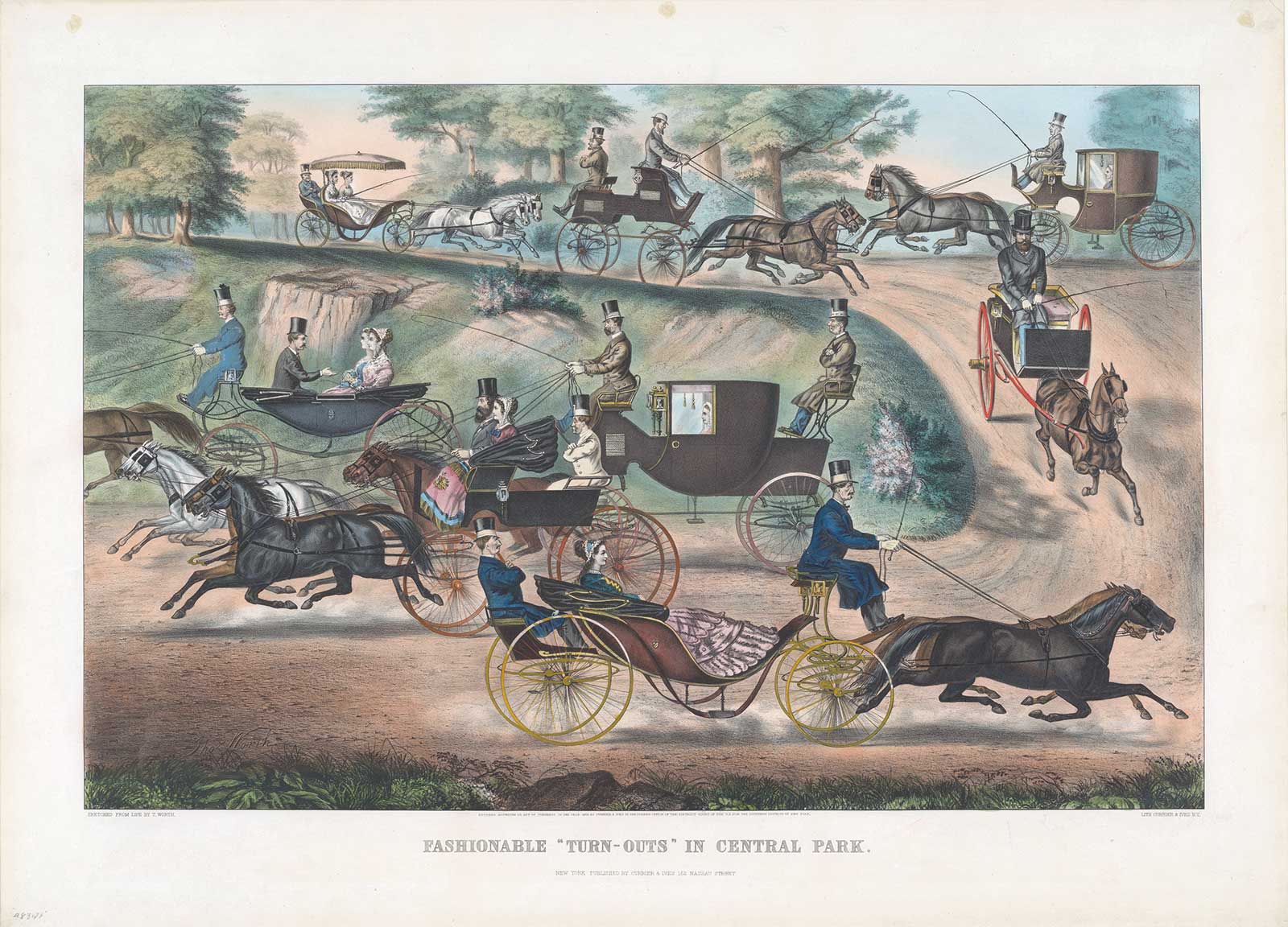
Thomas B. Worth (1834-1917), Fashionable “Turn-Outs” in Central Park, 1869. Publisher: Currier & Ives. Bequest of Adele S. Colgate, 1963. The Metropolitan Museum of Art, New York, NY.
Carriages in the park aren’t without controversy, however. Former Mayor Bill de Blasio proposed banning the “inhumane” rides and replacing them with vintage style electric touring cars. The controversy continues, however, as do the rides.
Rosanne Cerbo lives in bucolic Tuxedo, New York, about an hour outside the city. She brings her impressionistic painting style to a depiction of the carriages in the context of the city. A less romantic part of a carriage ride is the interaction with city traffic which, sometimes, spooks the horses. In NYC Taxis, Cerbo depicts a white carriage glowing in a patch of sun as it rounds a corner, followed by another carriage with a horse wearing a characteristic feather plume. A rectilinear panel truck contrasts with the complex patterns of the carriage. She comments, “Art is part, if not whole, of who I am…It takes me out of my comfort zone and challenges me on a daily basis.”
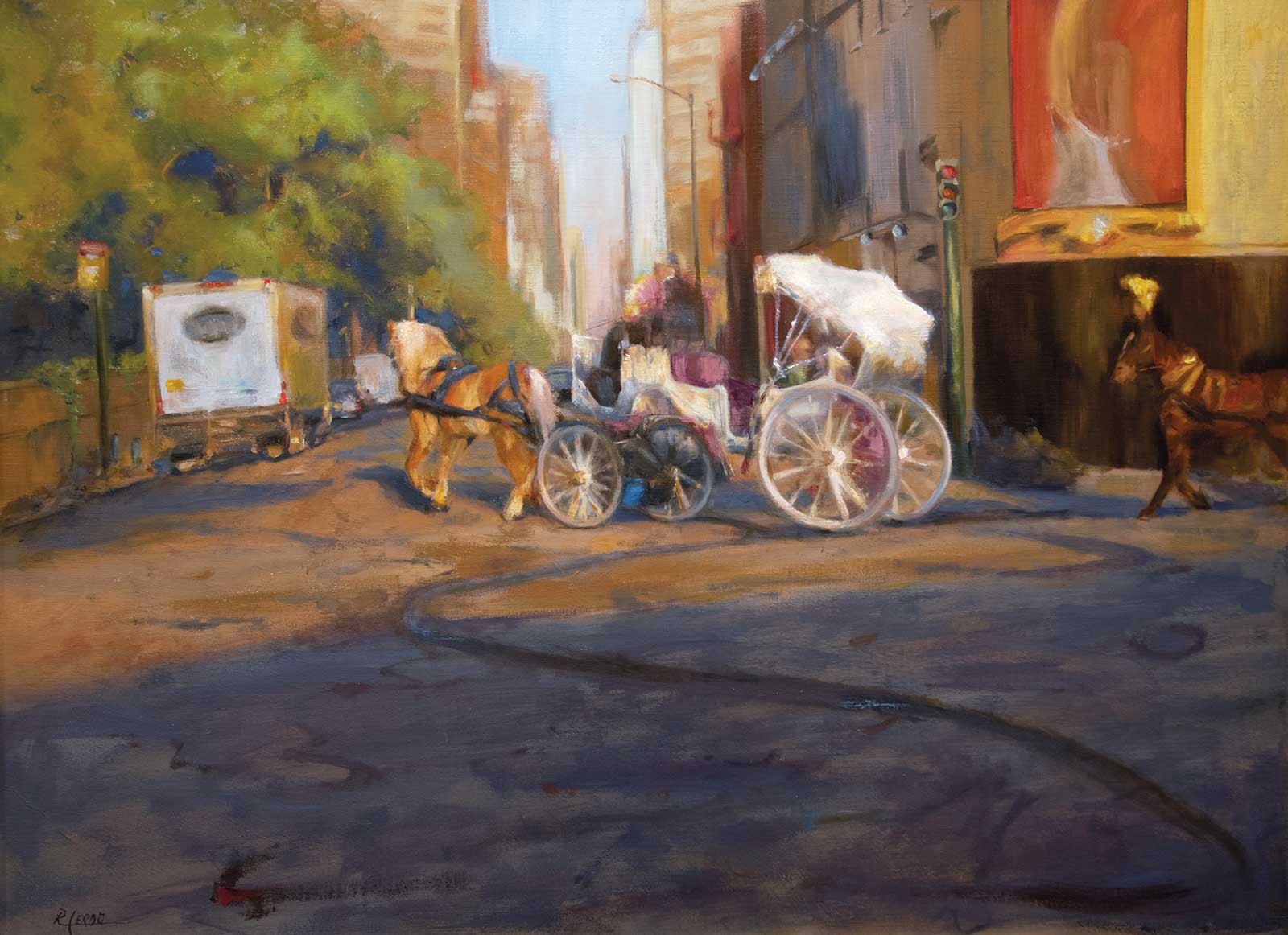
Spa Fine Art Gallery, NYC Taxis, oil on linen, 30 x 40”, by Rosanne Cerbo
EJ Paprocki was born in Chicago and began painting when he was 7. His paintings have been shown in The White House and at the Plaza Hotel, often the starting point for a Central Park carriage ride. Equally at home painting the landscapes of the American West and the cities of Europe, he has turned his attention many times to the Plaza and the carriages.
In Central Park Carriages, the impasto of his impressionistic style captures the vitality of the city on a fall day from people strolling, the city’s ubiquitous pigeons, and two carriages jockeying for position to pick up their next passengers.
Collectors and equine lovers can continue exploring even more paintings of horses within this special section, including racing scenes and portraits.
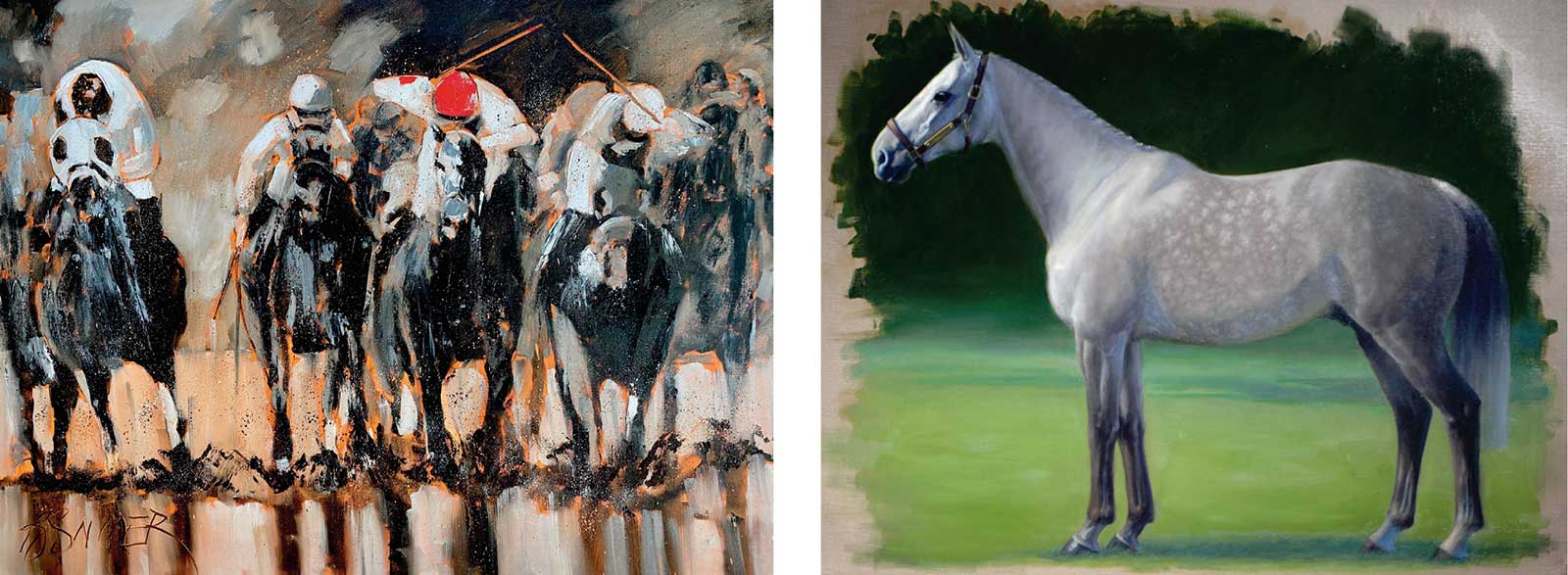
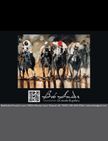
Bob Snider, Arkansas Derby Sepia, oil on canvas, 36 x 48” ; Kenneth Spirduso, Portrait of a Gray, oil on linen board, 24 x 30”
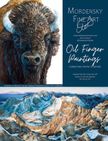
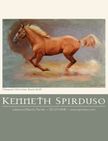
Much of Florida-based artist Kenneth Spirduso’s life has been inhabited by horses. From an early memory of sitting atop a headstrong pony to riding in the Irish countryside with his wife, he’s been enthralled by these magnificent animals for almost as long as he can remember. “Their structure, feel, smell and personalities are a joy to experience, and I endeavor to record horses and their traits in drawings and paintings,” says Spirduso. “Horses are a wonderful combination of hard, bony surfaces and rounded, muscular forms; their hooves feel as hard as flint—especially after receiving a kick—but their noses are as soft as velvet. All of these characteristics I strive to communicate in my paintings.”
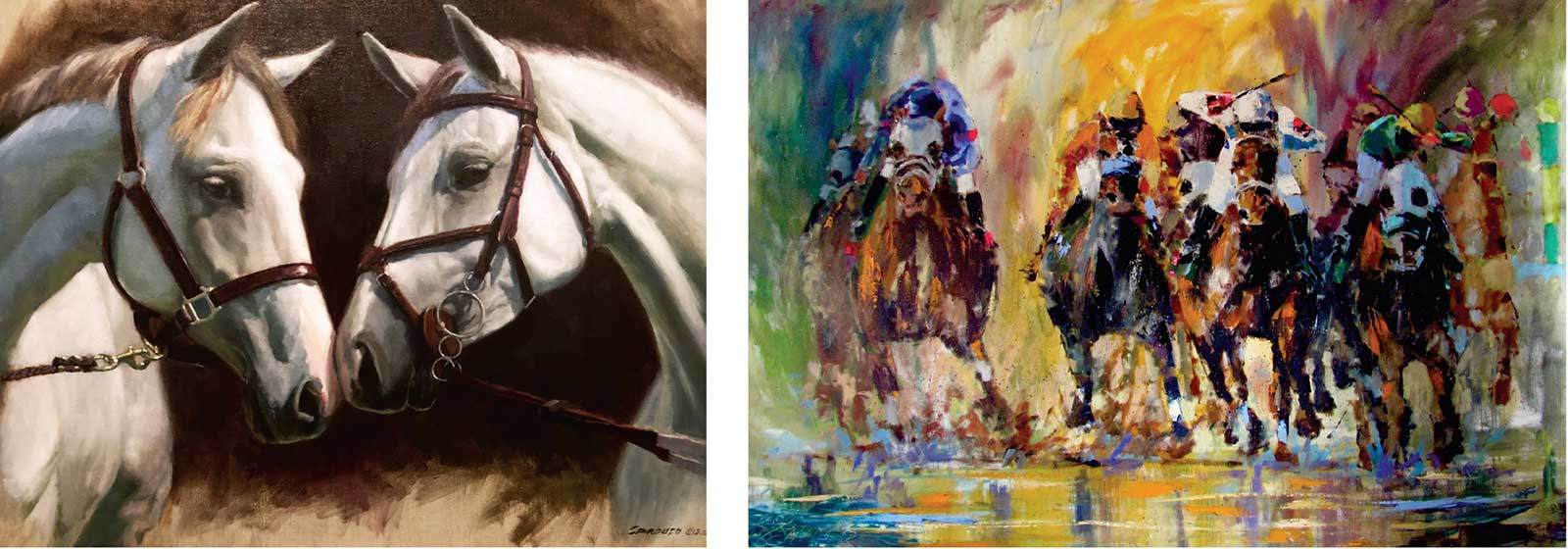
Kenneth Spirduso, Nose to Nose, oil on linen board, 16 x 20” ; Bob Snider, Arkansas Derby, oil on canvas, 30 x 40”
Arkansas artist Bob Snider was the only art major on a football scholarship at Ouachita University, but he “quickly figured out that my future was not in trying to run over really big guys.” The artist was far more interested in sketching his teachers during classes, or watching the intriguing shapes formed by clouds drifting in the sky. While Snider pursued watercolor for several years, he eventually switched to oils to paint larger, more dramatic pieces, with horse racing scenes especially catching his attention. “Oaklawn Park in Hot Springs is very popular and racing fans love the horses and buy their paintings. As you can see, my style is loose and impressionistic with lots of palette knife texture and splatter,” says Snider. “Horses are beautiful, fast, colorful and very sloppy in the mud, which makes for interesting paintings.” —
Featured Artists & Galleries
Bob Snider
23524 Woody Lane, Roland, AR 72135
(501) 690-3746
robtsnider@aol.com
Kenneth Spirduso
Lakewood Ranch, FL
(321) 217-4445
www.spirduso.com
Spa Fine Art Gallery
376 Broadway, Saratoga Springs, NY 12866
www.spa-fine-art.com
Powered by Froala Editor