Propped on his elbow, a young man in a hoodie, ripped jeans and high top sneakers gasps for breath.
Face down and body twisted, a young woman with long braids and a denim mini skirt breathes no more.
These bodies are found not on a street or the front page, but in an epic tableau in one of America’s most esteemed museums. The young man is a bronze sculpture emulating the pose of the ancient Roman sculpture, The Dying Gaul. The young woman is rendered in bronze as well as in a vibrant floral painting. She is named The Virgin Martyr Cecilia,after the Catholic saint of music.
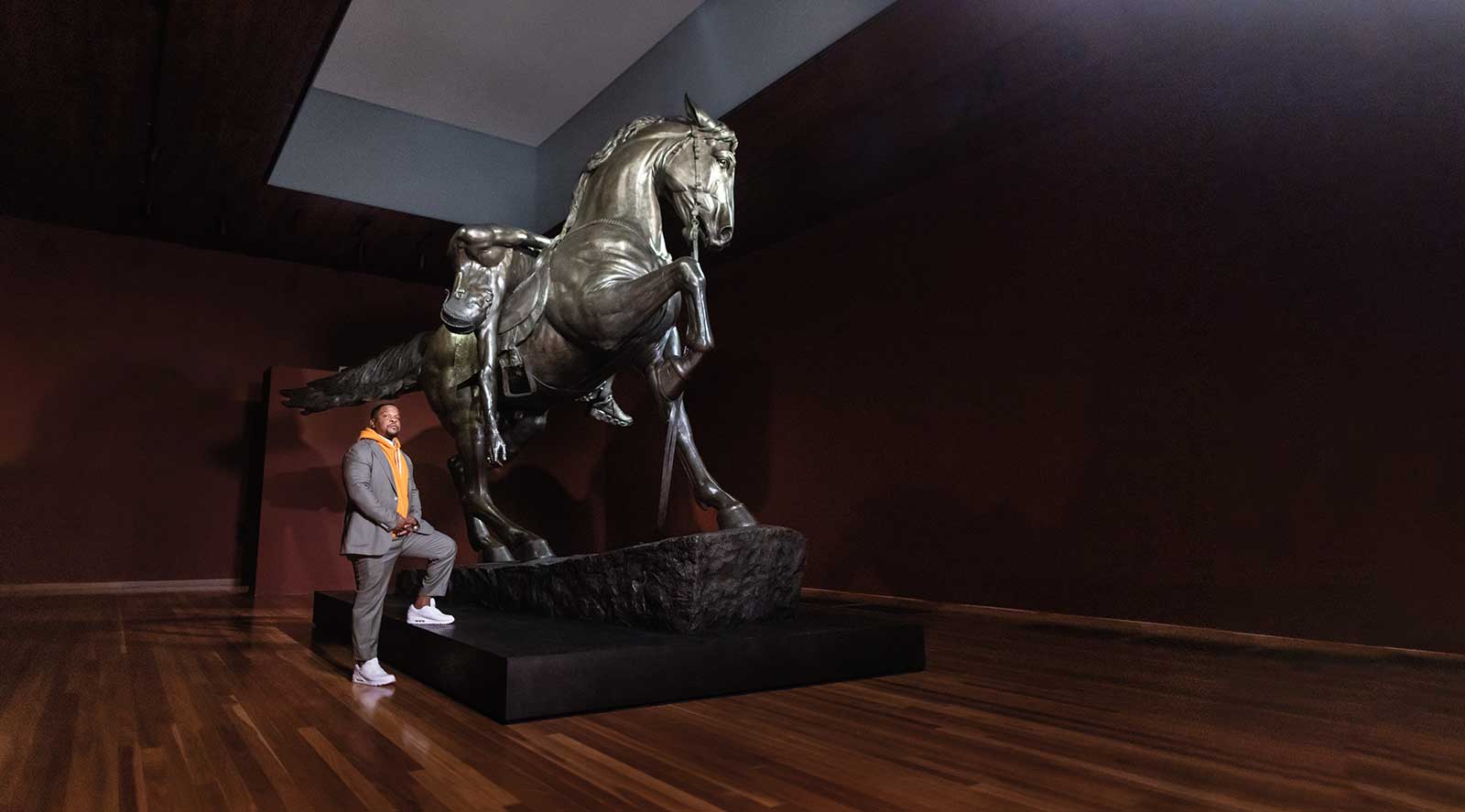 Installation shot with Kehinde Wiley standing near the exhibition’s eponymous sculpture, An Archaeology of Silence. Photo by Gary Sexton.Welcome to Kehinde Wiley’s monumental new exhibition, An Archaeology of Silence, which premiered in March at the de Young Museum in San Francisco and runs through October 15. The show features over two dozen paintings and bronzes of fallen figures—elegies to Black and brown people killed in the struggle for racial justice. As with his other work, Wiley references European Old Masters, Greek mythology and Western white canonical themes and upends them by inserting Black and brown people as subjects.
About the work, Wiley has said that the archaeology he is “unearthing” is “the specter of police violence and state control over the bodies of young Black and brown people all over the world.”
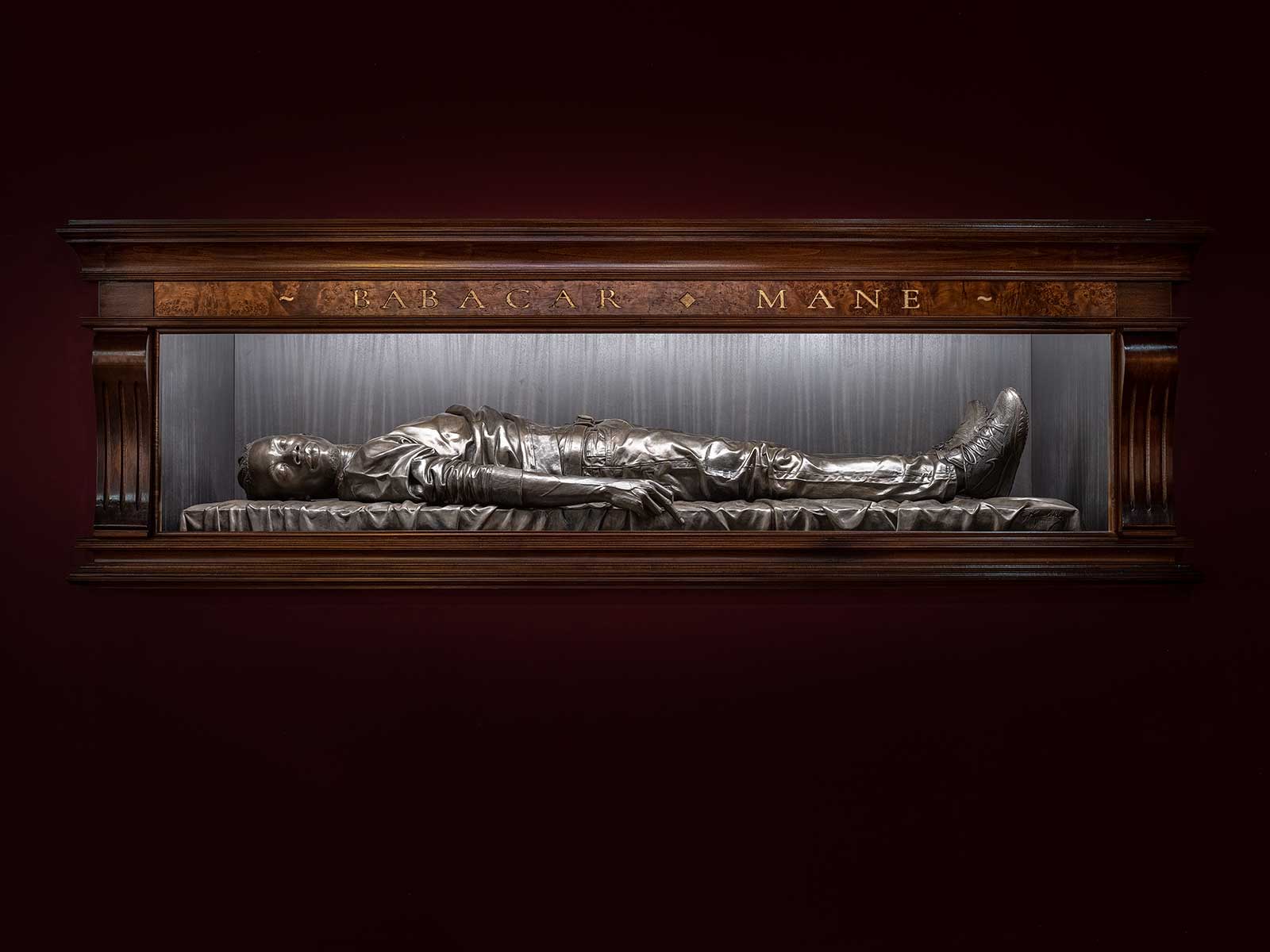
The Body of the Dead Christ in the Tomb (Babacar Mané), 2021, bronze, 17 11⁄16 x 38 3⁄16 x 103 1⁄8"
To do so, Wiley has made a dramatic shift in his storytelling tools. Rather than the grand verticality of previous works, his new works examine the horizontal plane. “This new body of work forgoes the rhetorical tools of empire that have informed his portraiture thus far,” says Claudia Schmuckli, curator of Contemporary Art and Programming at the Fine Arts Museums of San Francisco, the umbrella organization for the de Young and Legion of Honor.Wiley’s past work triumphantly occupied cultural spaces not usually occupied by Black people, Schmuckli says. He was playing with “a rhetoric of assertion,” she says. Starting in 2008, Wiley began a series called Down, in which he changed his focus to the recumbent figure. An Archaeology of Silencegrew out of this exploration of the fallen hero, the martyred Christ, and the reclining nude.
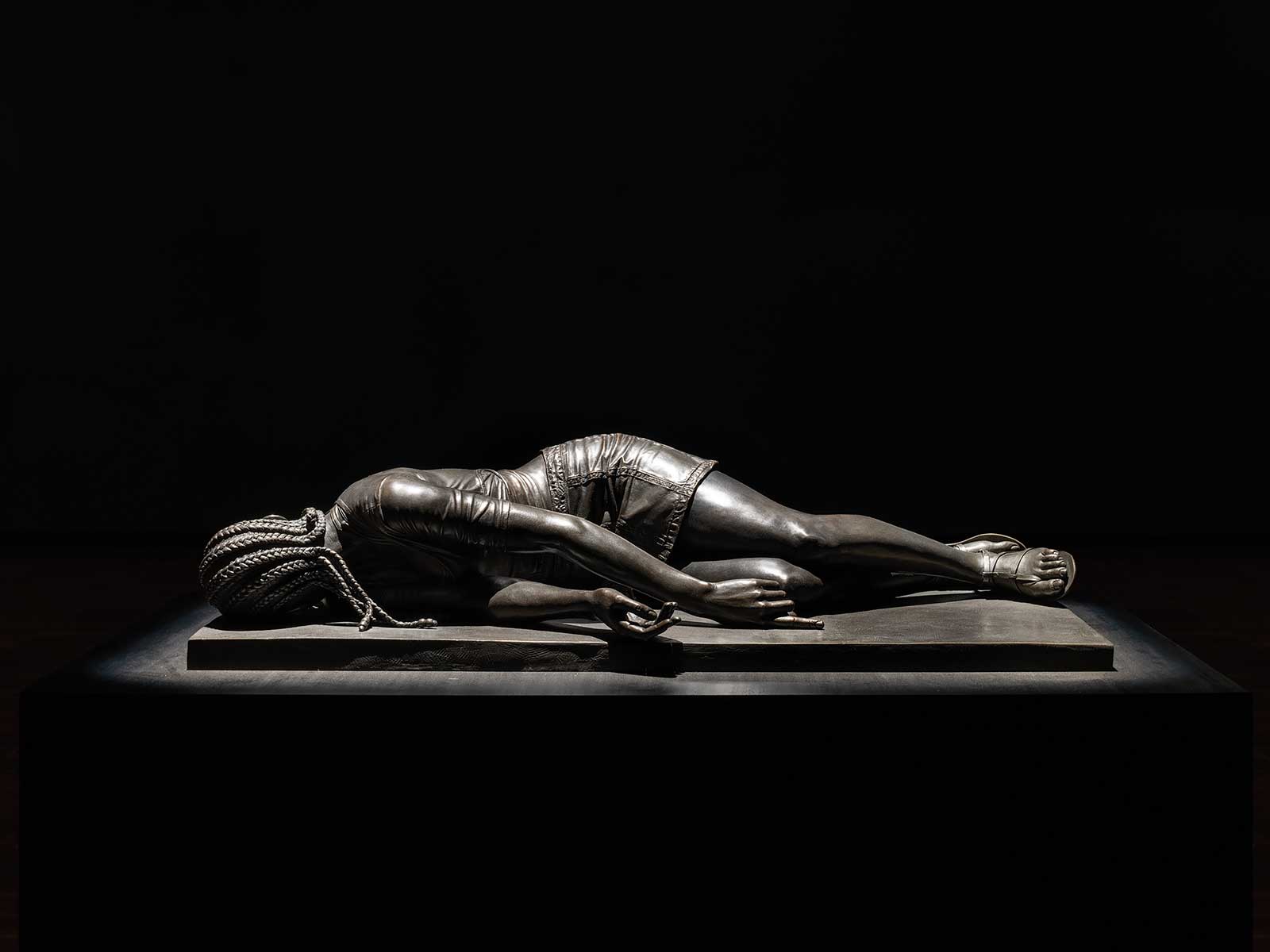
The Virgin Martyr Cecelia, 2021, bronze, 41 ½ x 19 x 9 ½"
Schmuckli says Wiley’s intention is to “shift the conversation toward a recognition of suffering and resilience that is both vulnerable and strong, elegiac and ecstatic, devastating and beautiful.”
Wiley created much of the work for this show during the Covid-19 international lockdown. He spent that time at Black Rock, a residency program he established in 2019 in Dakar, Senegal. He had to forgo his usual practice of “street casting”—meeting regular people on the street and inviting them to sit for him. Instead he worked with residents, staff and friends. The resulting artworks show this broader view, where Senegalese and West African subjects speak to the global nature of systemic violence.
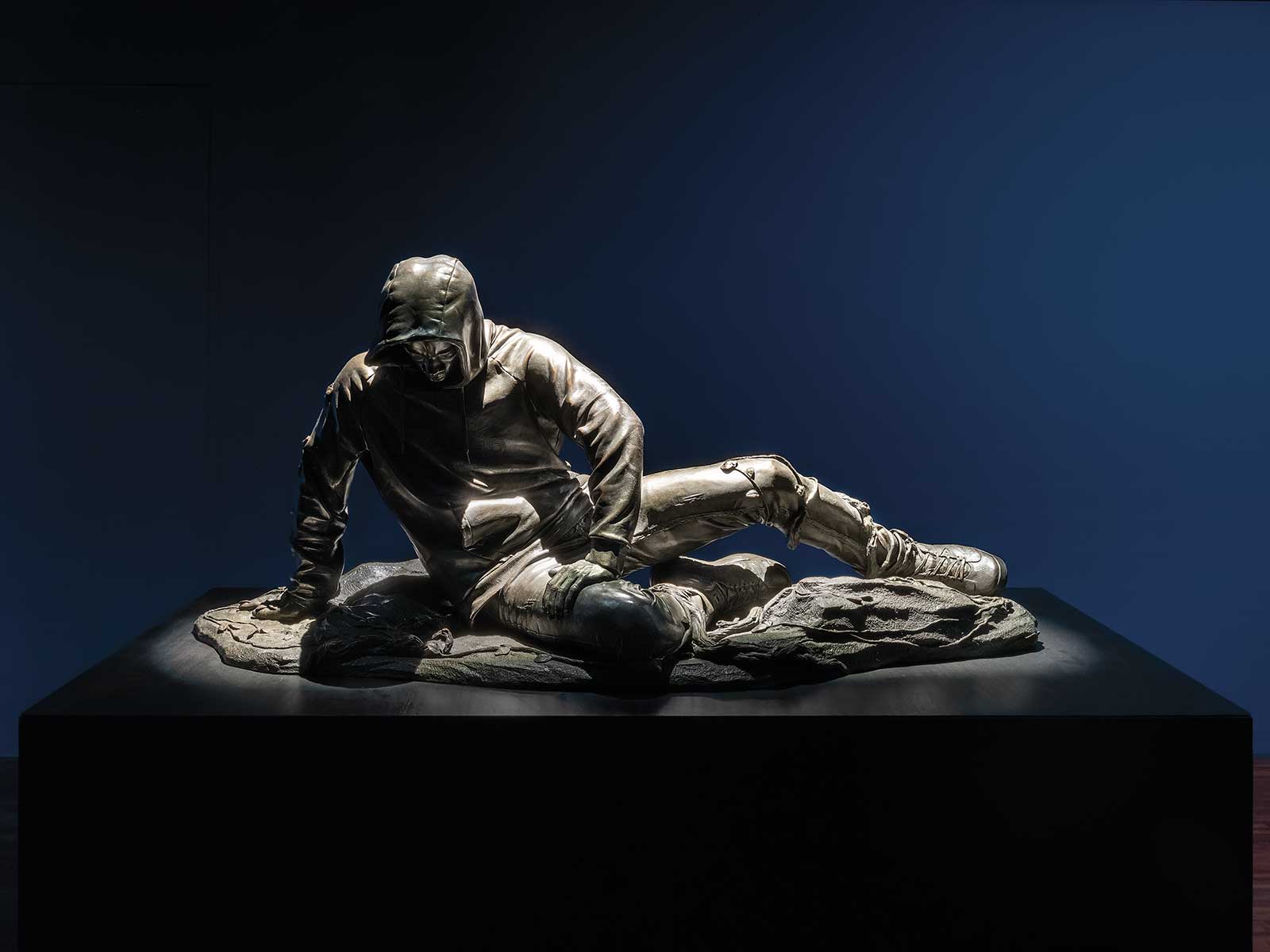
Dying Gaul (Roman 1st Century), 2021, bronze, 47 x 19 x 21"
Wiley’s paintings capture nuances in skin tone and fashion that vary individually and nationally, while his bronzes unify. The bronze ceases to be merely a familiar material. Similar to Amy Sherald’s use of grayscale, Wiley’s bronzes disallow assumptions based on skin tone. At the same time, white bodies have been rendered in bronze for centuries—causing viewers to see past color. The same holds true with Wiley’s sculptures; the irony being the skin of his subjects is closer in color to the bronze than that of a Caucasian figure.
Wiley’s The Body of the Dead Christ in the Tomb (Babacar Mané) is directly inspired by Hans Holbein the Younger’s The Dead Christ in the Tomb (1521–22). Holbein’s famous painting shows Christ’s body laid out on a grimy sheet. Elongated and emaciated, Christ bears an expression of anguish and horror. A bony middle finger points out from an otherwise clenched hand, perhaps in a last grasp for life.
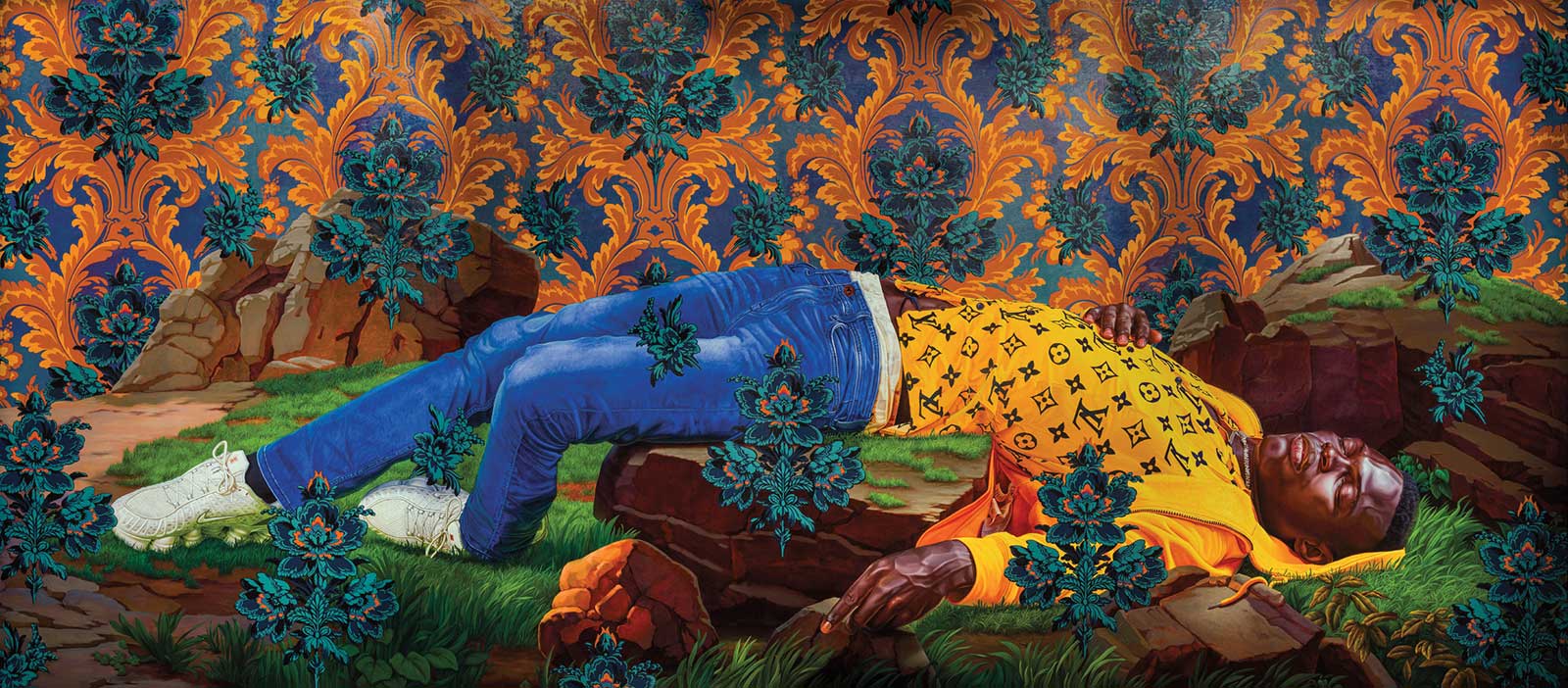
Femme piquée par un serpent (Mamadou Gueye), 2022, oil on canvas, 1317⁄8 x 300"
That same finger holds a different meaning in Wiley’s Christ. The young Black martyr looks at peace. His face is relaxed, his body is still muscular. He may be, colloquially, flipping his killers the bird. His is an expression of redemption and glory. This writer thought of lines from a Ben Harper song: “You may write me down in history/ With your bitter twisted lies./ You may trod me down in the very dirt/ And still like the dust I’ll rise.”
Schmuckli says Wiley’s work removes the image of the fallen Black figure from news media framing and places it in a realm of the sacred.
“We are invited to honor his subjects in all their particularities,” Schmuckli says. Evoking the duality of Christ as martyr and also symbol of hope, Wiley wants to guide viewers beyond pain and into reverence.
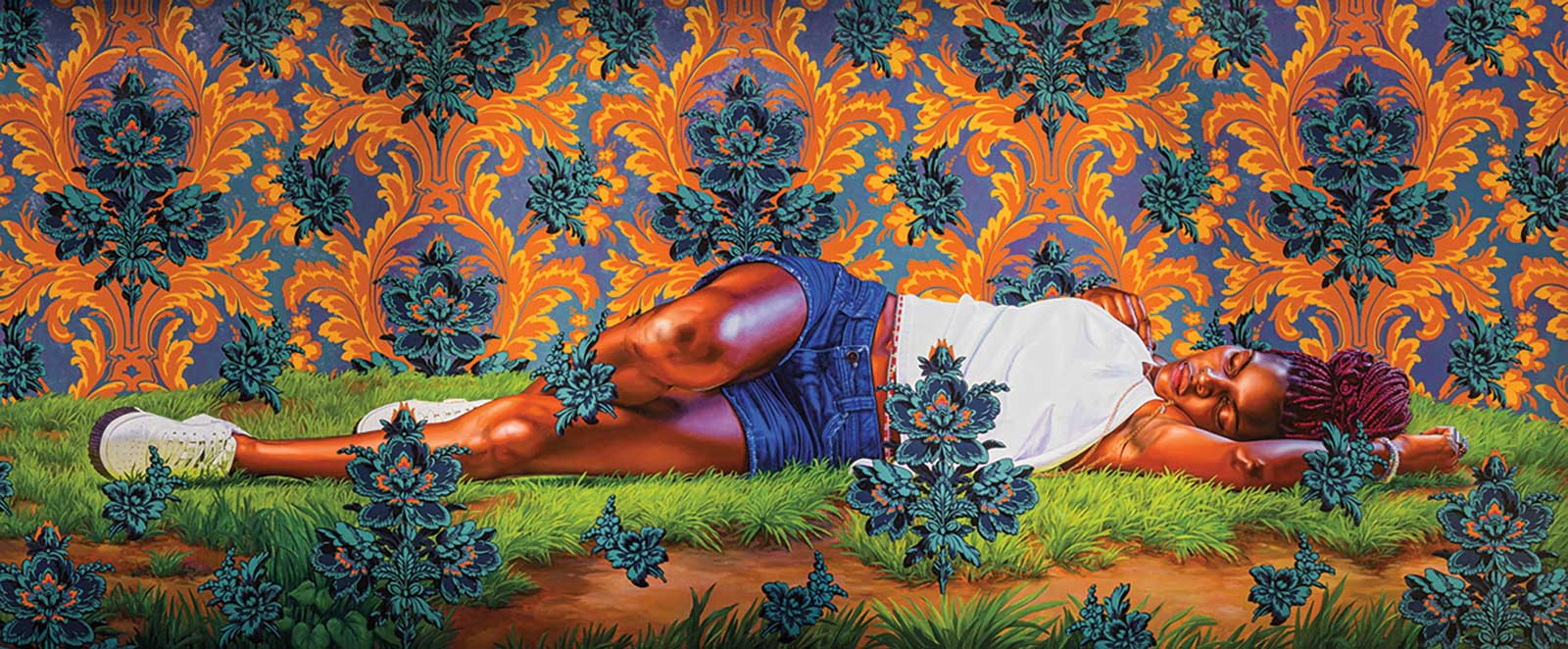
Reclining Nude in Wooded Setting (Edidiong Ikobah), 2022, oil on canvas, 108 x 45¼"
While there is a mood of divinity to the exhibition, tragedy and loss is unavoidable. The museum has created a respite room with places to sit and an altar where people can process feelings of grief. Similarly, a special resource room offers reference materials such as art history guides to support the appreciation and digestion of the work.
“It’s a powerful exhibition that can trigger many emotions and reactions,” Schmuckli says. “We want to provide tools for people to work through their feelings and reactions.”
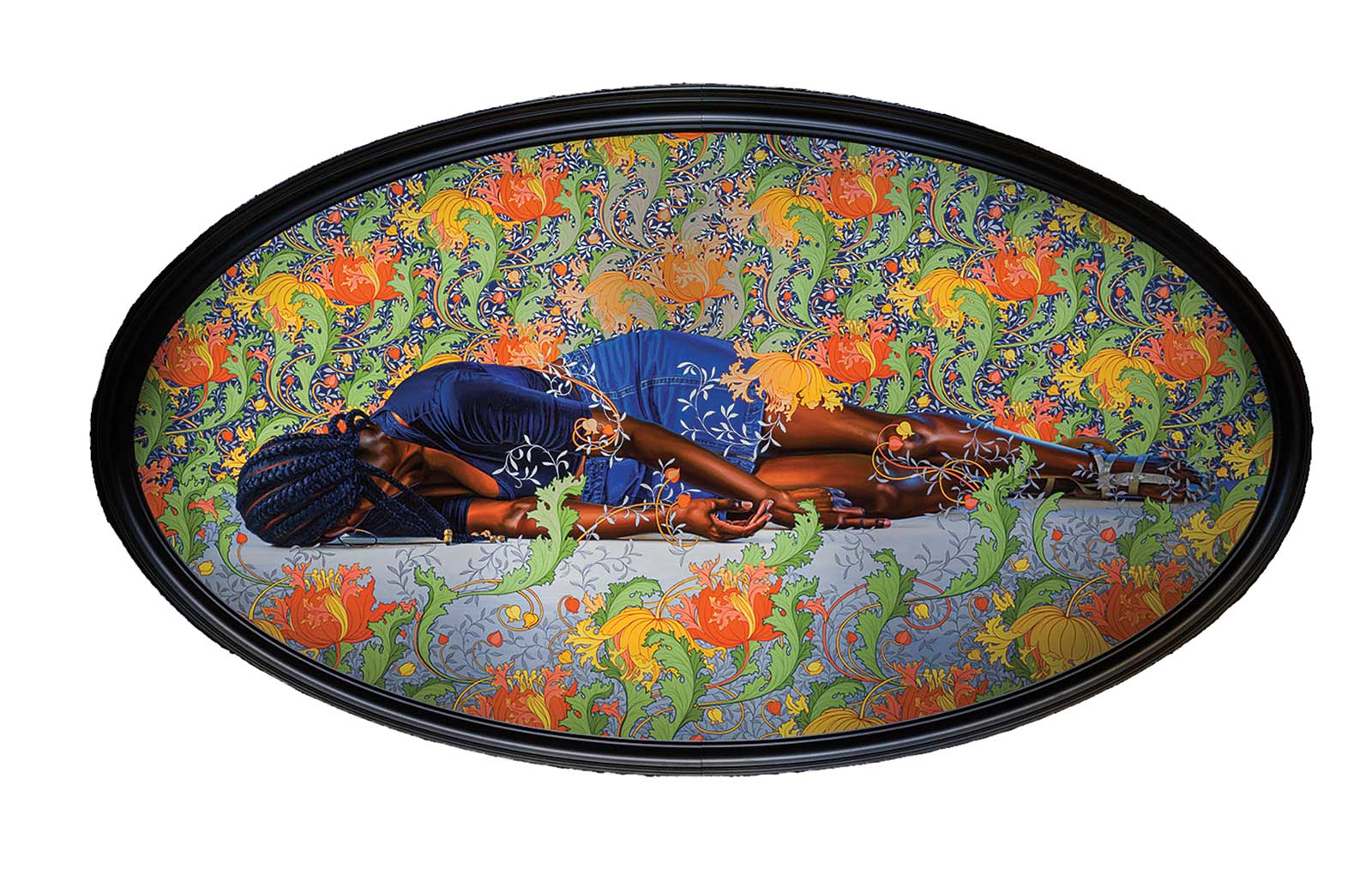
The Virgin Martyr Cecelia (Ndey Buri), 2022, oil on canvas, 77 3⁄8 x 143 ¾"
Another key contextual element for the exhibition is the proximity of the de Young’s other galleries. Schmuckli notes that the de Young is home to a diverse and important collection of American art. Hosting the U.S. premiere of Wiley’s latest work dovetails with the museum’s effort to reframe American histories. “We have works like the ones Wiley is referencing that can speak powerfully to strategic shifts he is making,” she says. “You can go around the corner and see a model of work Kehinde is citing. You can look at an image of a fallen soldier or mythological reclining nude or saint and you will understand how he is working within these traditions and inserting Black people into a realm of sanctity.” —
Kehinde Wiley: An Archaeology of Silence
When: Through October 15
Where: de Young Museum, 50 Hagiwara Tea Garden Drive, San Francisco, CA
(415) 750-3600, www.famsf.org
Powered by Froala Editor