Alex Katz first went to Maine in 1949 as a student at the Skowhegan School of Painting and Sculpture. He has summered in Maine since 1954 and became associated with Colby College in Waterville, Maine, and its museum of art which opened in 1959. In 1992, he donated more than 400 of his works to the museum and, in 1996, the Paul J. Schupf Wing for the Works of Alex Katz opened to the public. The vast galleries display Katz’s small and large works to their best advantage—often, a single painting will command a wall of two of the wing’s 70-by-36-foot galleries.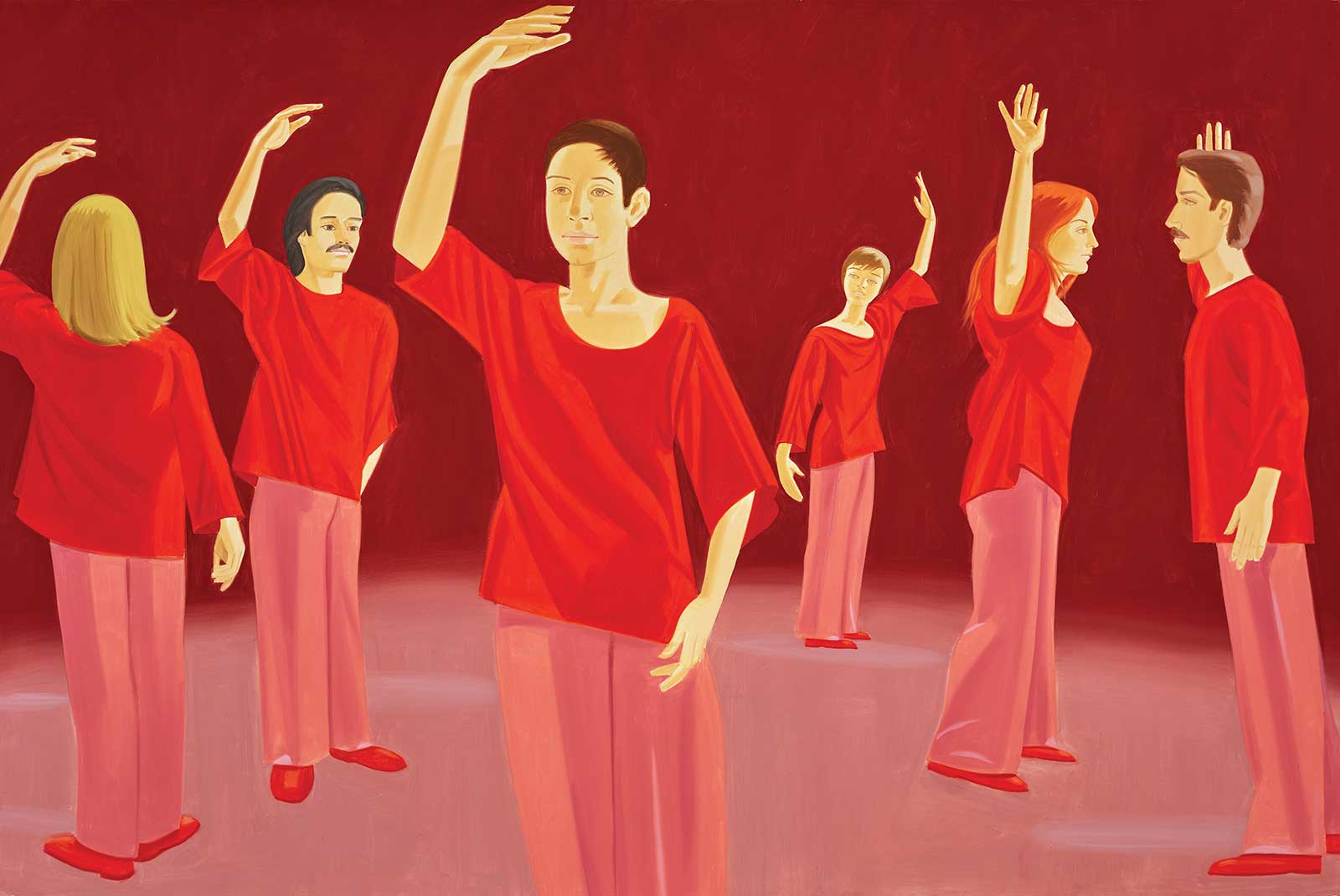 Alex Katz, Song, Laura Dean Dance Co., 1977, oil on canvas. 96 x 144”. Milwaukee Art Museum, Promised gift of Alex Katz in honor of Mrs. Harry Lynde Bradley, L126.1993. © Alex Katz / Licensed by VAGA, New York, NY
Katz described the striking and unusual lighting. “Rather than spotlighting my works, we wanted to achieve an evenly distributed light, which in the daytime is diffused through the skylight surface itself and at night by bouncing artificial light off the light wells.” Colby’s Alex Katz collection now numbers more than 900 works.
Today, the galleries contain the exhibition Alex Katz: Theater and Dance, continuing through February 19, 2023. The museum describes it as “the first comprehensive museum exhibition of his highly collaborative and playful work with choreographers, dancers, and members of avant-garde theater ensembles.”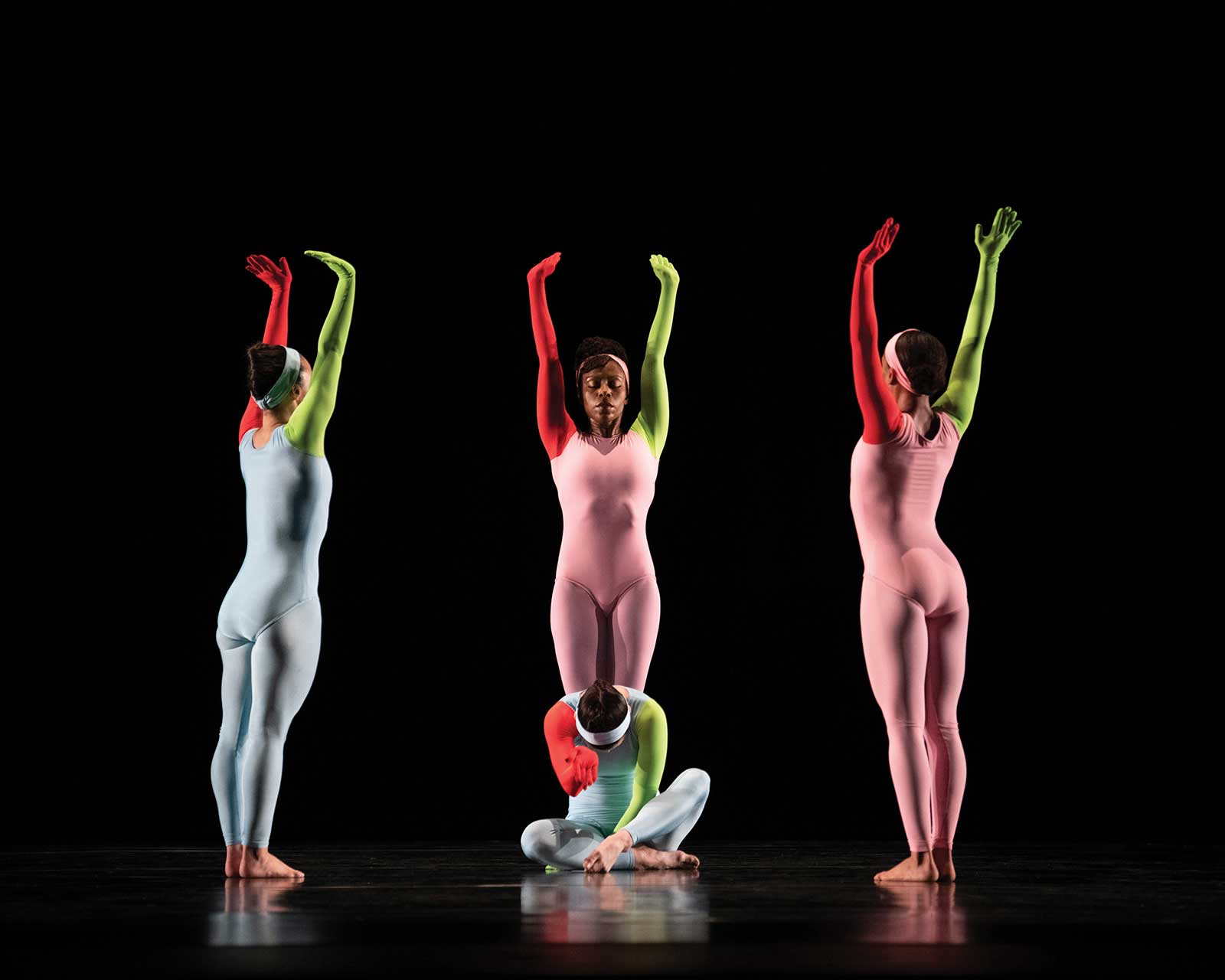 Contemporary performance of Post Meridian (1965), featuring Michelle Fleet, David H. Koch Theater, New York, 2019. Photograph by Nia Wurtzel.
The museum’s Katz Consulting Curator, Levi Prombaum, says, “Alex Katz’s collaborations with different artists—spanning an extraordinary range of art forms and art worlds—are among the most fascinating, yet understudied, aspects of his career. This vibrant celebration of Katz’s theater and dance work greatly expands our appreciation of the traditions and friendships that have shaped Alex’s singular vision.”
In 1959, Katz began his decades-long collaboration with dancer and choreographer Paul Taylor. Katz says, “the experience [of collaborating with Paul Taylor] expanded the idea of what I could do. You’re not just a painter, you’re a person who has an idea about the art. Once you get that through your head, you have an expanded way of dealing even with your painting.” The museum notes, “Katz and Taylor ultimately partnered on 16 productions, an enduring creative relationship that yielded some of the most significant post-modern dance of the 20th century and led the artist to collaborations with other companies including Yoshiko Chuma, Laura Dean, William Dunas, and Parsons Dance.”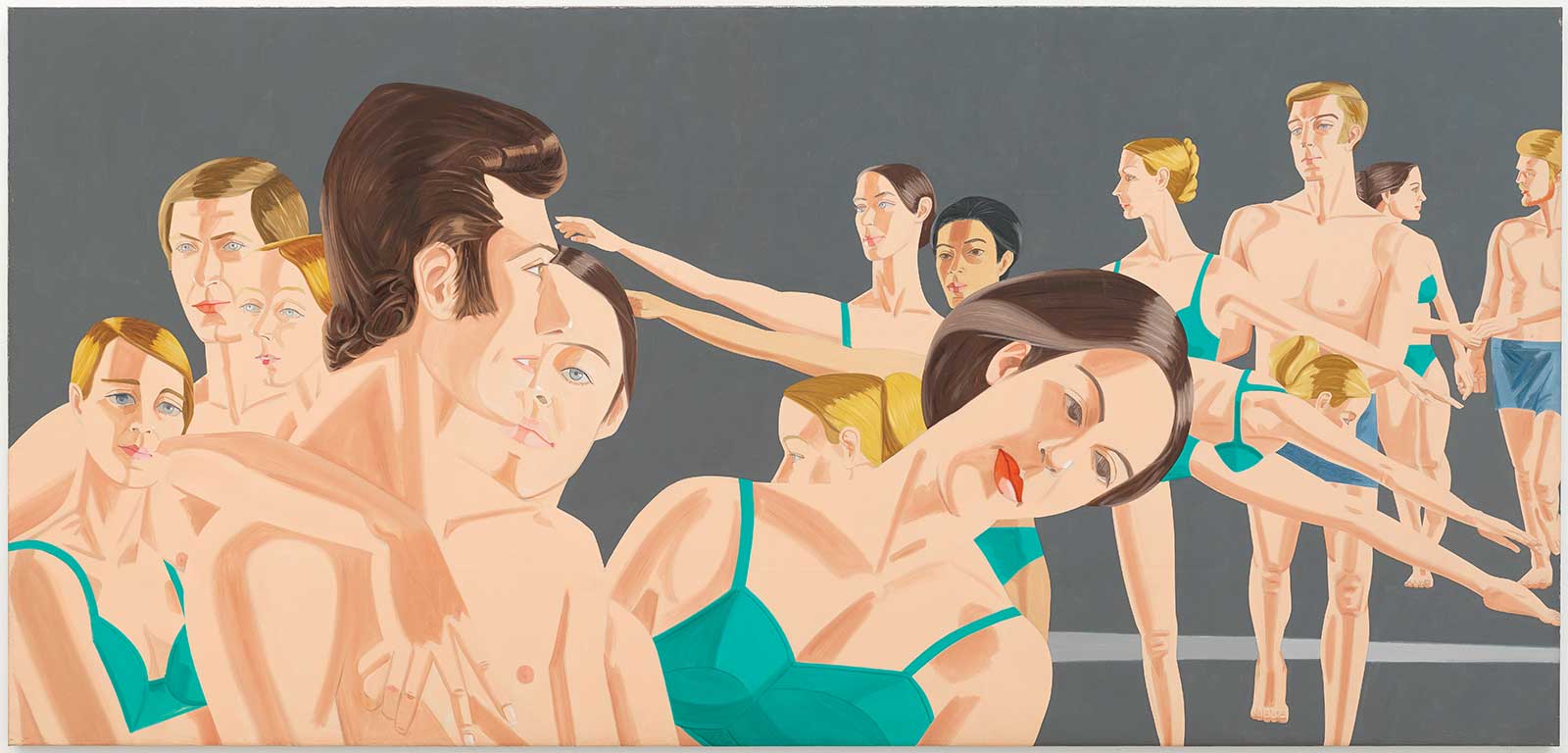 Alex Katz, Private Domain, 1969, oil on aluminum, 16 x 34”. Collection of the artist. © Alex Katz / Licensed by VAGA, New York, NY.
His collaborations didn’t always go smoothly as he relates in the catalogue to the exhibition. Commenting on his design for the production of The Red Robins by Kenneth Koch, he writes, “There were many different elements in this show—different parts of the production had these sets by different artists. The play was about these fighter pilots, called robins, and I wanted to do something very literal with that, so I had this one set piece with just a wall of these red birds. I’d seen some Beckett play and it had some sort of five-foot structure so you could just see the tops of the actors’ heads—I thought that was a great idea. So I really wanted to put my set in front of the actors—the heads and shoulders popping up between the robins. When I went to see the show, I was disappointed to see they had the actors in front of my set, instead of behind, and it really undermined the effect. At that point I said, ‘Kenneth, you’re a great poet. I’m not going to work with you ever again.’” Alex Katz, The Red Robins, 1977, acrylic on panel, four panels 61 x 96” each. Private collection. © Alex Katz / Licensed by VAGA, New York, NY
The lighting designer, Jennifer Tipton, comments on Paul Taylor’s Sunset, first performed in 1983 with sets and costumes by Katz and her lighting design. “As a dance, Sunset breaks my heart every time I see it: a group of soldiers who have a brief encounter with a group of women before they go away to war. The piece is kept from being sentimental by the beautiful but abstract ‘broken’ painting that Alex uses for the setting and the dreamy section of dance memory that Paul sets to the eerie calls of loons.”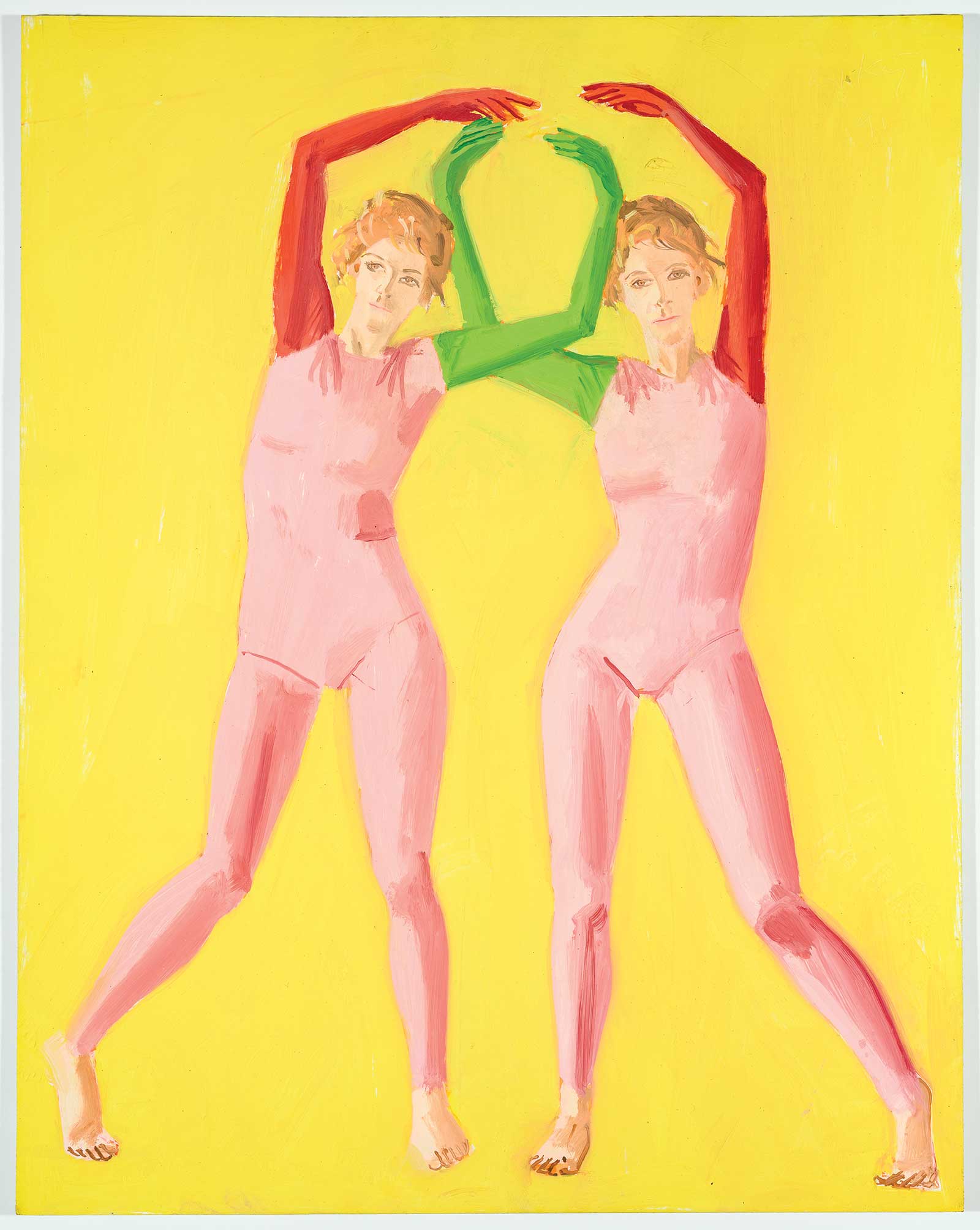 Alex Katz, Post Meridian, 1991, oil on board, 20 1/8 x 16”. Collection of the artist. © Alex Katz / Licensed by VAGA, New York, NY.
Katz writes on the art of collaboration, “I thought of Sunset as a light piece, like Guys and Dolls, but when Paul got involved he made it into a crucifixion; he made it into war. It was about youth—youth and expansion was my idea—and Paul turned it into something about youth and death. The dancing starts all fun, the dancers are playing together, but then in the second half the loon music comes on, the lights go down, and the girls pick this guy up, upstage, and carry him across the stage—that’s the Descent from the Cross. A lot of Paul’s ideas come from art history. Sunset covers the most audience—people go crazy over that piece.”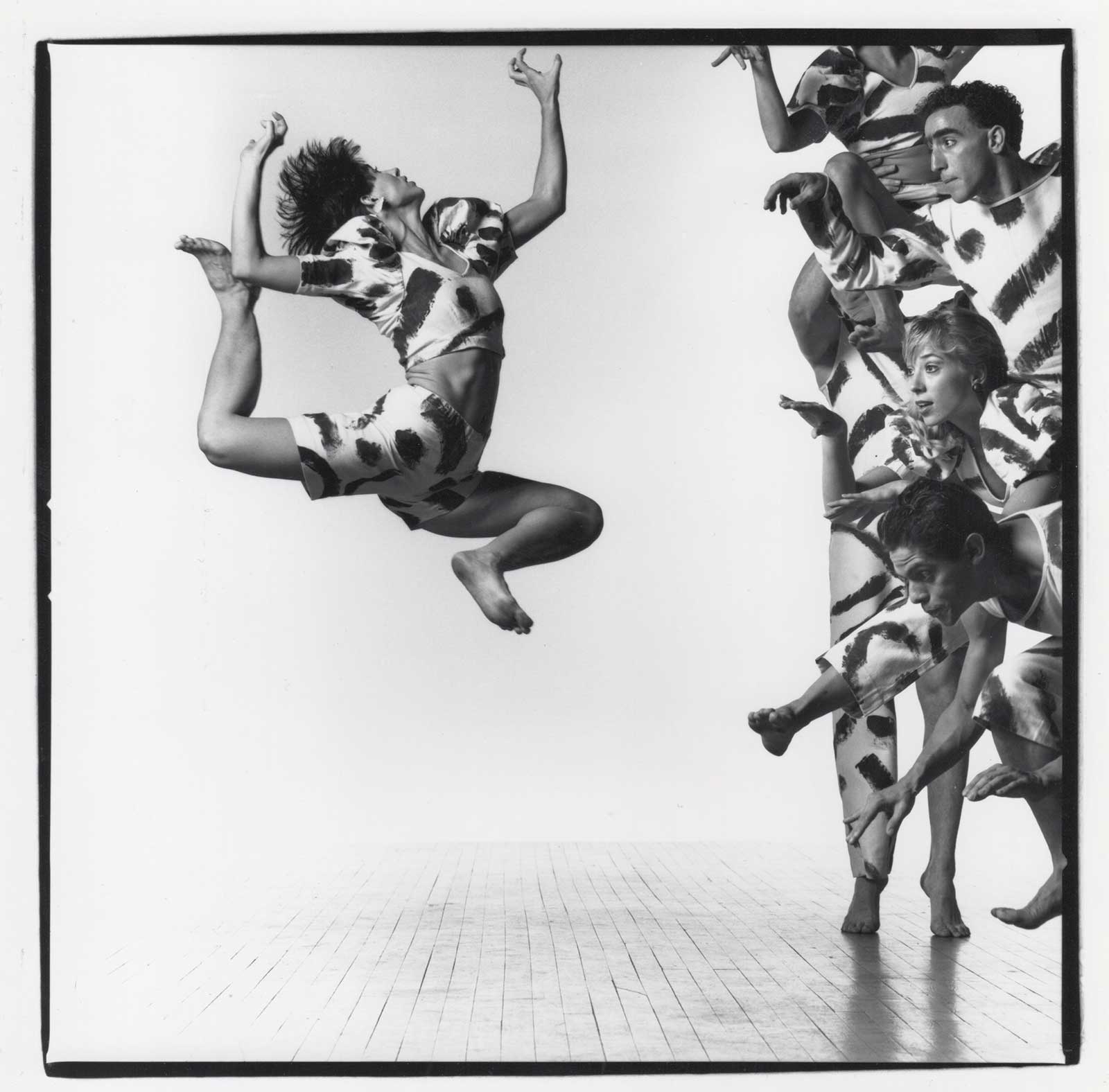 Lois Greenfield, studio performance photo of Incandescence, Parsons, 1990.
Katz and Taylor collaborated on the production of Meridian at the Spoleto Festival in Charleston, South Carolina, in 1960. In 1965, they collaborated on Post Meridian. Katz comments, “Post Meridian really started from Meridian, our first performance in Spoleto. Paul worked from that beautiful choreography, and I altered the set and costumes—I took out the petals on those leotards and added the gloved sleeves. I got the idea of extending the hand with a glove. Paul and I kept working with it and made strange patterns with the hands.”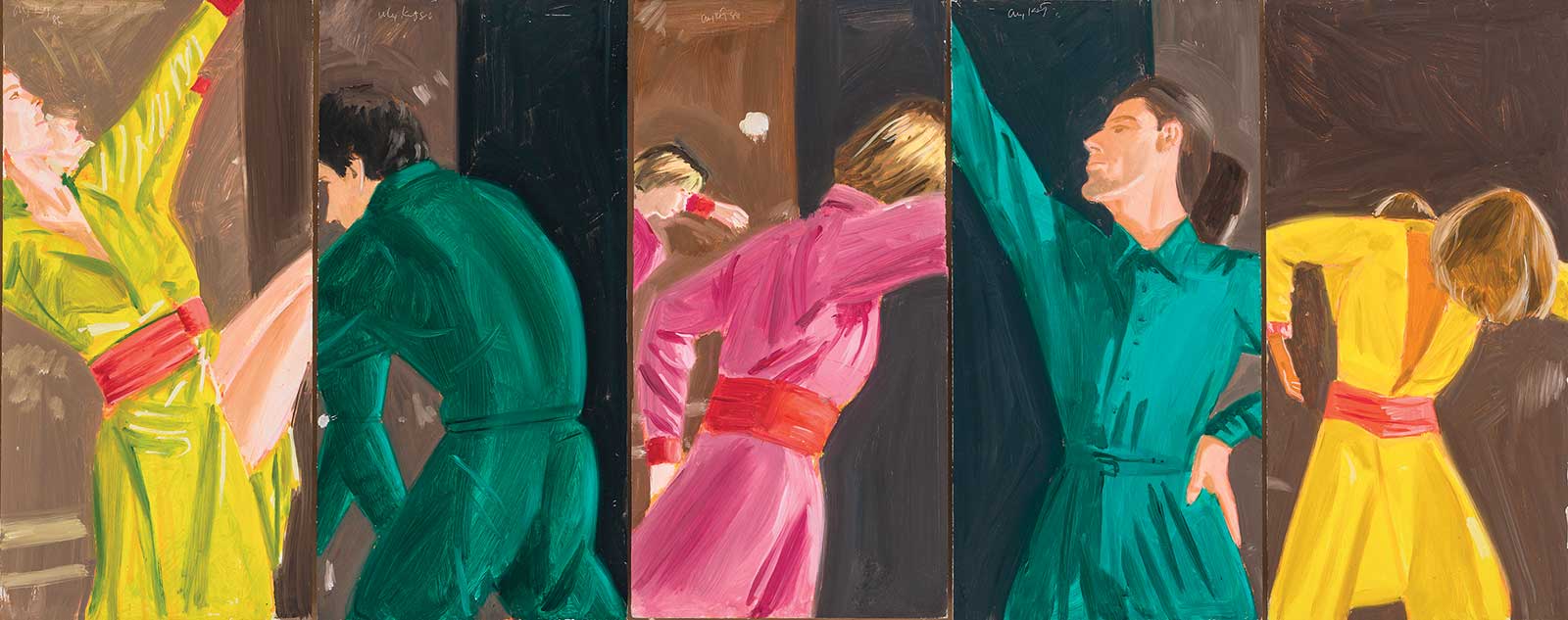 Alex Katz, Last Look, 1986, oil on board, 24 x 60¼”. Collection of the artist. © Alex Katz / Licensed by VAGA, New York, NY.
Katz’s friend Robert Storr is former senior curator of painting and sculpture at New York’s Museum of Modern Art. He writes in the exhibition’s catalogue, “It is entirely natural that Katz should have found himself interested in the basically unnatural codes of the theater, chiefly modern dance by such choreographic alchemists of everyday attire and movement as Paul Taylor. This exhibition and catalogue consists of designs for costumes, stage sets, and lighting for productions by those and other theater artists. At once vital and inventive, they show Katz at his best: paying close attention to how things look, knowing, as he does, that rather than being superficial, appearances are the key to understanding who and what we are.” —
Alex Katz: Theater and Dance
When: Through February 19, 2023
Where: Colby College Museum of Art, 5600 Mayflower Hill, Waterville, ME 04901
Information: (207) 859-5600, museum.colby.edu
Powered by Froala Editor