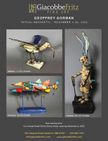
Geoffrey Gorman traces his fascination with found objects back to growing up on a sprawling, former horse farm in rural Maryland. Littered with old barns, rusted-out cars, an old fashioned gas pump and falling down cabins, it was all a young boy could wish for. He remembers discovering the caretakers’ shop, the drawers still filled with washers and other bits of hardware.
But many years would pass before Gorman would start using discarded odds and ends to create sculptures. After studying photography and working as a furniture craftsman, Gorman became deeply entrenched in the art and gallery world when he moved to Santa Fe, New Mexico. For 20 years he worked in the industry in every imaginable capacity—except making art himself.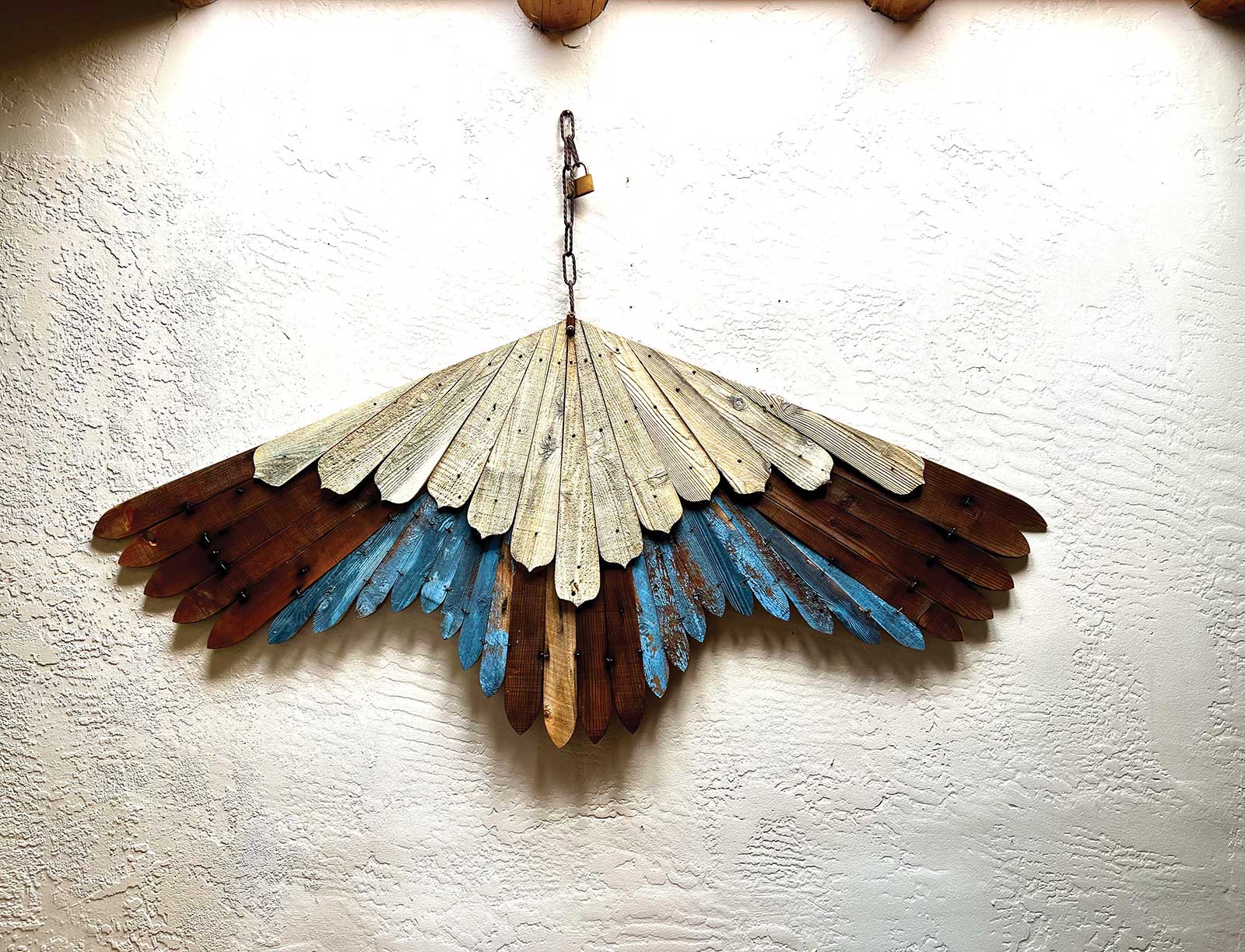 Datura Dreaming Wings, mixed media and found objects, 48 x 72 x 1"
At the time, he was weary of hearing about artists’ needs for the perfect materials, the ideal space, the most flattering light. Inspired by a woman who made art on her kitchen table after her kids went to bed, Gorman decided to make something using only what he could find in his backyard. When he made his first piece, “it was like this dam opened and I jumped right in,” he says. That was in August of 2005 and by November he had his first show, but he recognizes his experience in the art world gave him a step up. “I knew how to jump to the front of the line,” he says.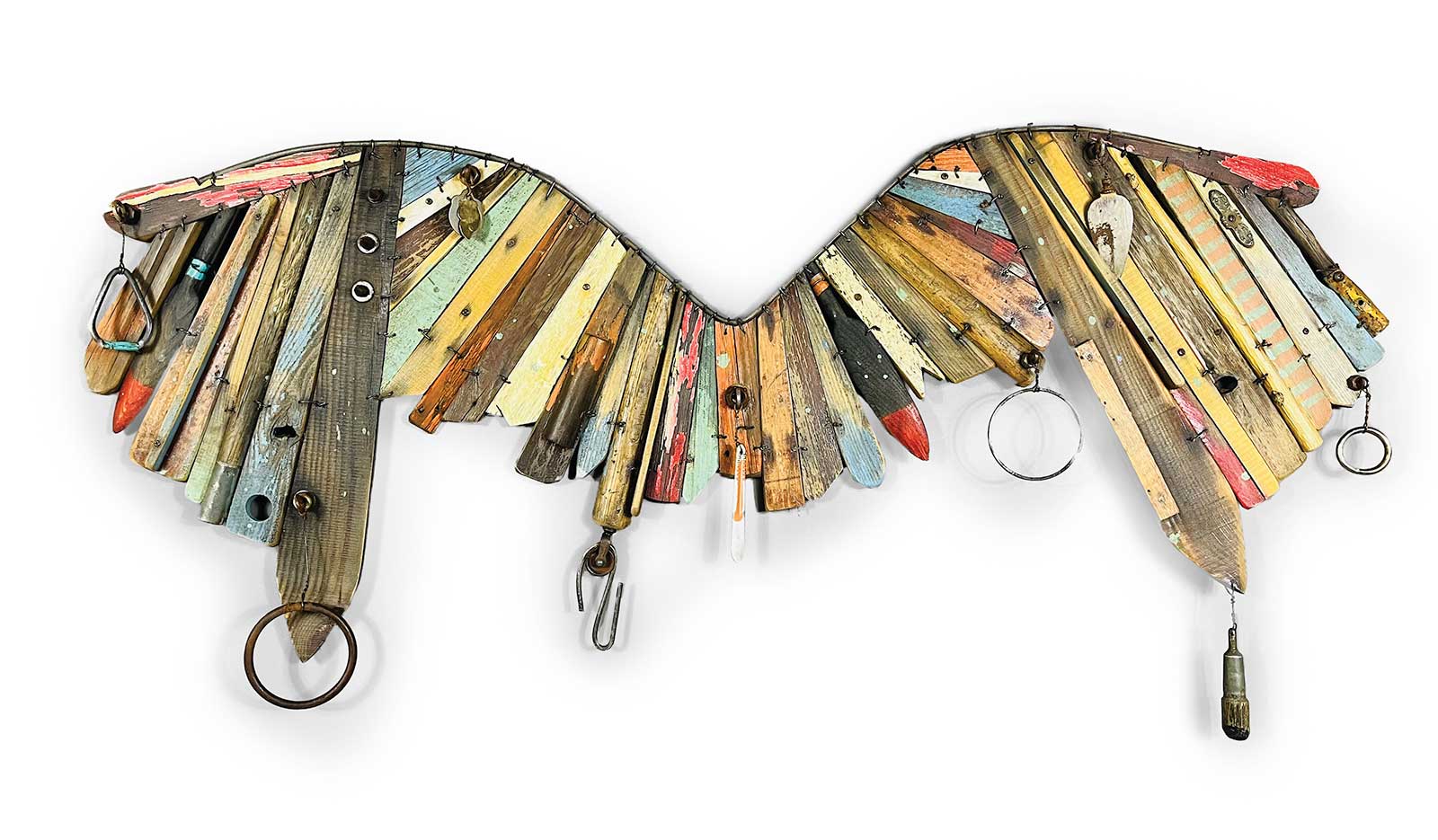 Chinle Wash Wings, mixed media and found objects, 21 x 48 x 2"
Today, Gorman traipses into the foothills around Santa Fe, looking for dead branches of juniper and cedar. The “flotsam, jetsam and ephemera” he picks up everywhere. He often makes his pedestals out of “bear’s breath,” a white-bottomed shelf-like fungus that grows off trees around Sitka, Alaska, where his two brothers live.
An experience at Sitka’s Sheldon Jackson Museum had a profound effect on his art-making. The museum features small-scale pieces of Inuit art, such as carvings, baskets and masks, that reveal how they were constructed. “One of my aesthetic choices is to allow my viewer to see how I assemble things. I find the process of assembly really interesting so I leave it visible.”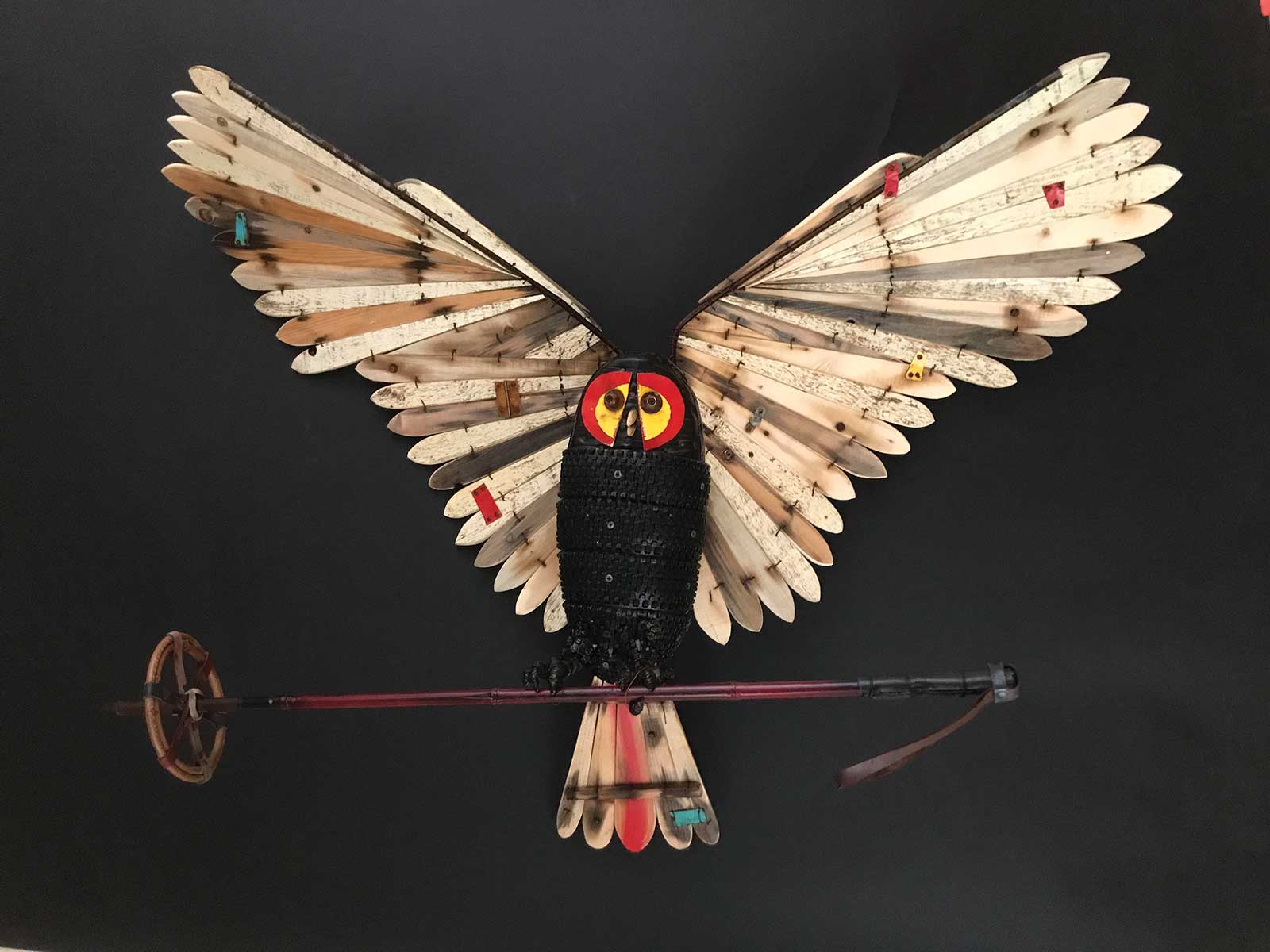 Silent Flight, mixed media and found objects, 36 x 32 x 10"
How an object was made and the components used to do so provide clues into the culture from which it came, like an archaeologist trying to interpret a relic from a lost culture that little is known about. Gorman wraps some of his work with strips of canvas, alluding to Egyptian mummification and a past waiting to be unlocked.
“When I look at a whale I think of their skin and how they’re maps of where they’ve been, traveled, how each marking tells a story,” he says. This notion of tribal identification plays heavily in Gorman’s work. His tribe is the tribe of animals, which he creates out of materials like bike tires, inner tubes, sticks, rocks, old brass fittings, hardware, tin cans, old chairs and suitcases, paint cans, and wire fencing that he then exposes to the elements or applies a chemical rusting agent to. “I’m thinking of them as if they’ve grown and had experiences, and of the things they have acquired over time, like wristbands, scarification—their adornments identify them to others and make them recognizable to each other.” Gorman uses the example of admiring a bracelet in Egypt, and the man saying that you were only allowed to wear it if you had gone to Mecca.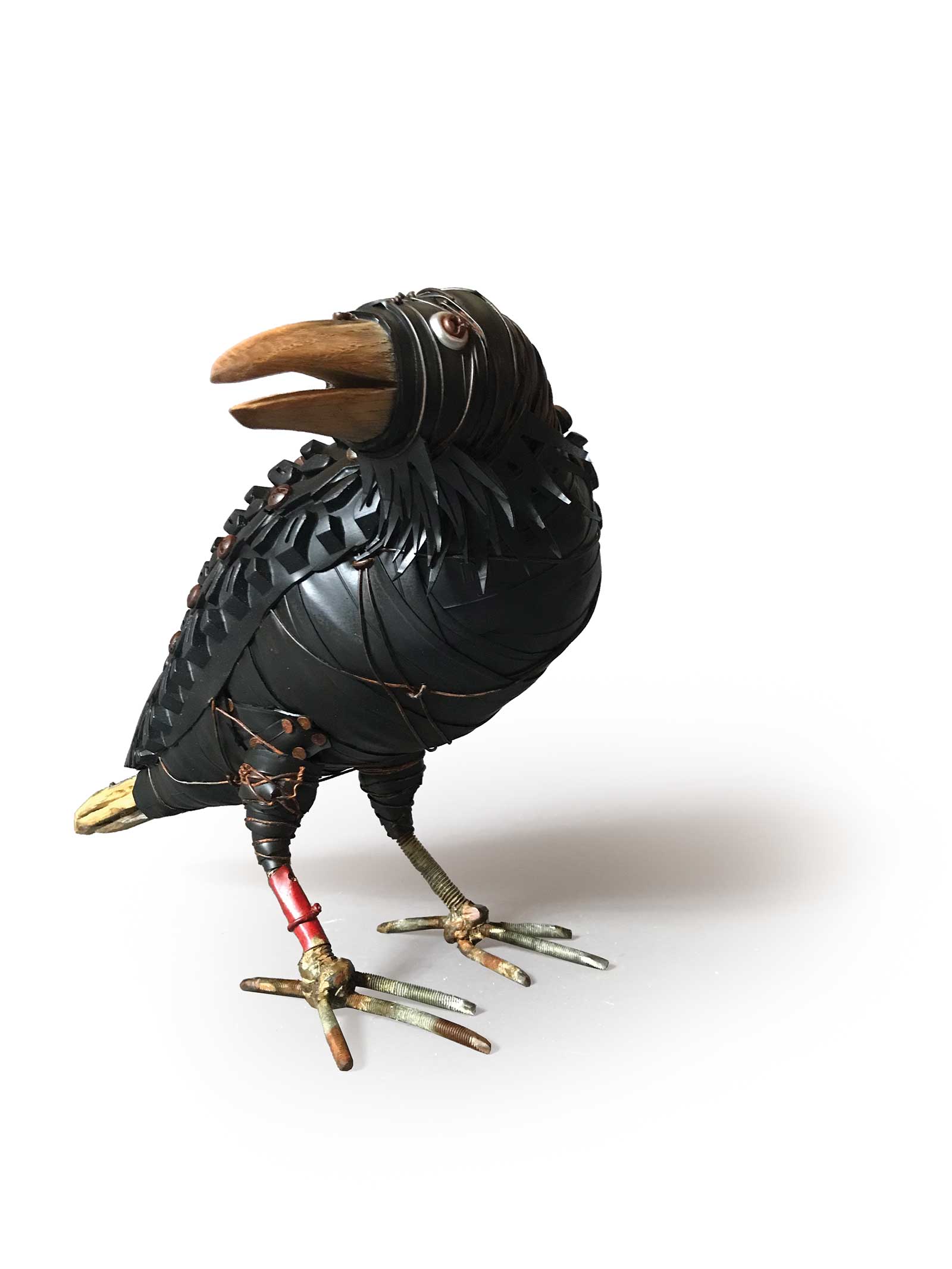 Just Landing, mixed media and found objects, 42 x 30 x 6"
“I chose the name of the show, Ritual Aesthetic, because I’m hoping my work has the aesthetic of a ritualistic object, something that has been held and handled for many years. I’m hoping it has the sense that so much has come before it and so much will after. I encourage people to pick up my work. It helps achieve the patina and, I think, gives it a little power.” —
Giacobbe-Fritz Fine Art
702 Canyon Road • Santa Fe, NM 87501
(505) 986-1156 • www.giacobbefritz.com
Powered by Froala Editor