
The Arizona-Sonora Desert Museum is hosting two overlapping exhibitions of Arizona artists Frank Gonzales and Guy Combes, both of whom create works that are deeply informed by their Southwest surroundings but with vastly different approaches, intent and outcomes. 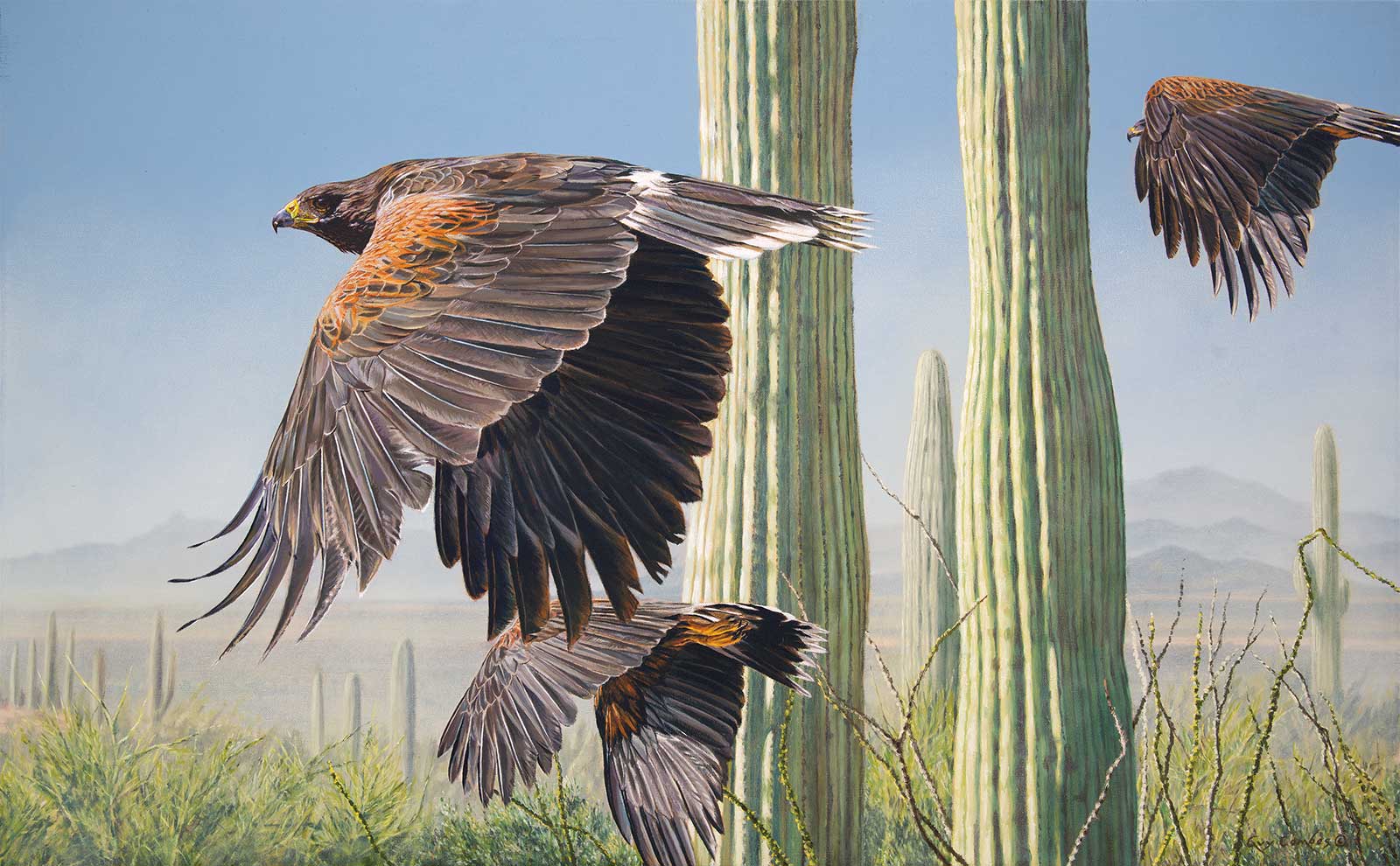 Guy Combes, Working Uptown, oil on canvas, 20 x 32"
Taking place in the Arizona-Sonora Desert Museum’s Baldwin Gallery through October 30, Hijo del Sol showcases Gonzales’ love of the Sonoran Desert through a selection of his imaginative, eye-popping paintings. Rooted in the organic, natural world, his work often realistically depicts birds and plant life offset by splashes of paint and colors that don’t exist in nature. 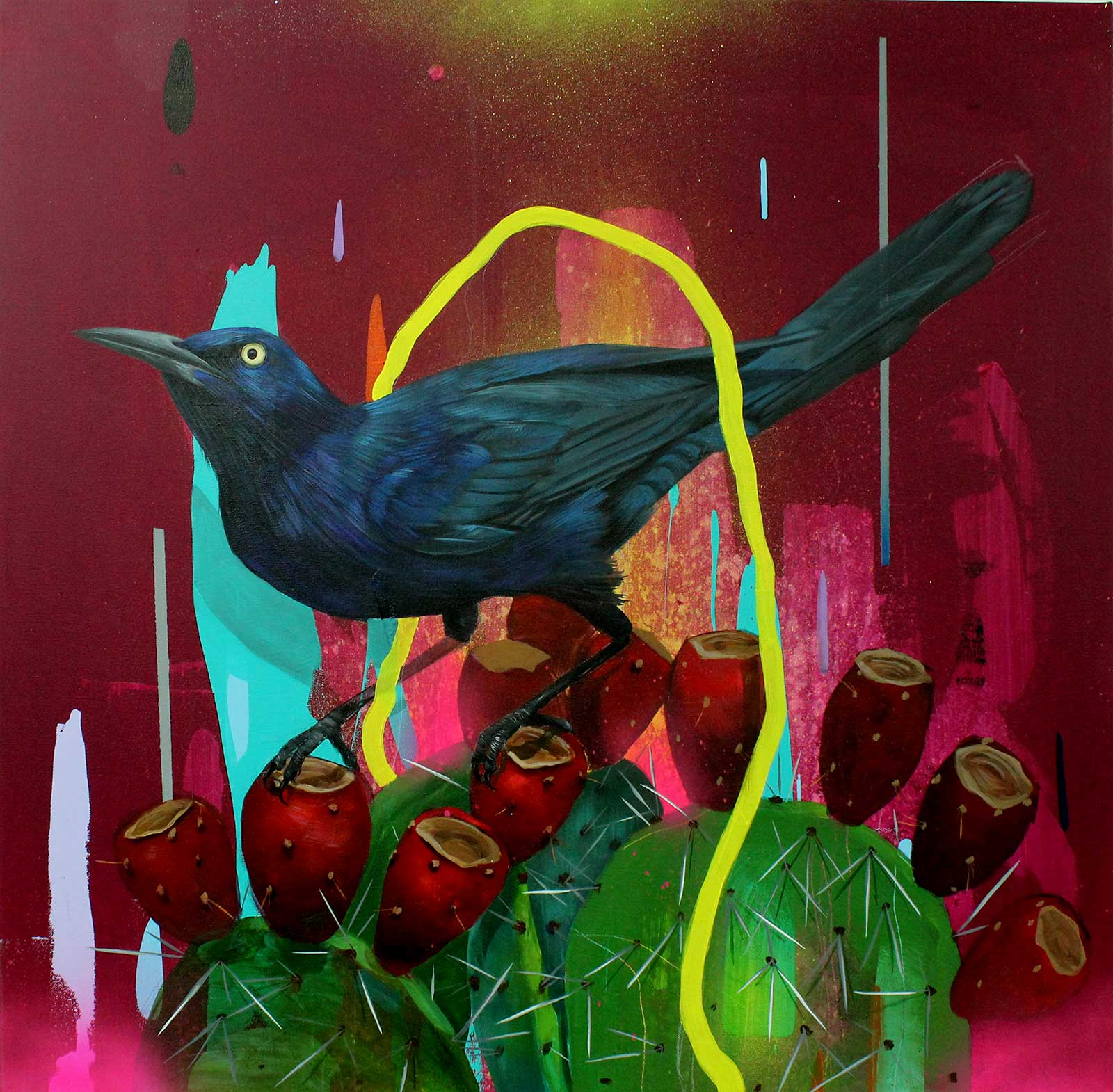 Frank Gonzales, Hunters Moon, acrylic, acrylic on canvas, 36 x 36"
“I love abstract art; I love graphic design. I love music,” says Gonzales. “I’m trying to meld all of these influences together into a single composition. The abstract elements have an energy that activates the space, that breaks it up.” He imagines that growing up in the ’80s and ’90s hip hop and skate culture unconsciously found its way into his work, showing up in his affinity for bright colors and occasional use of spray paint. 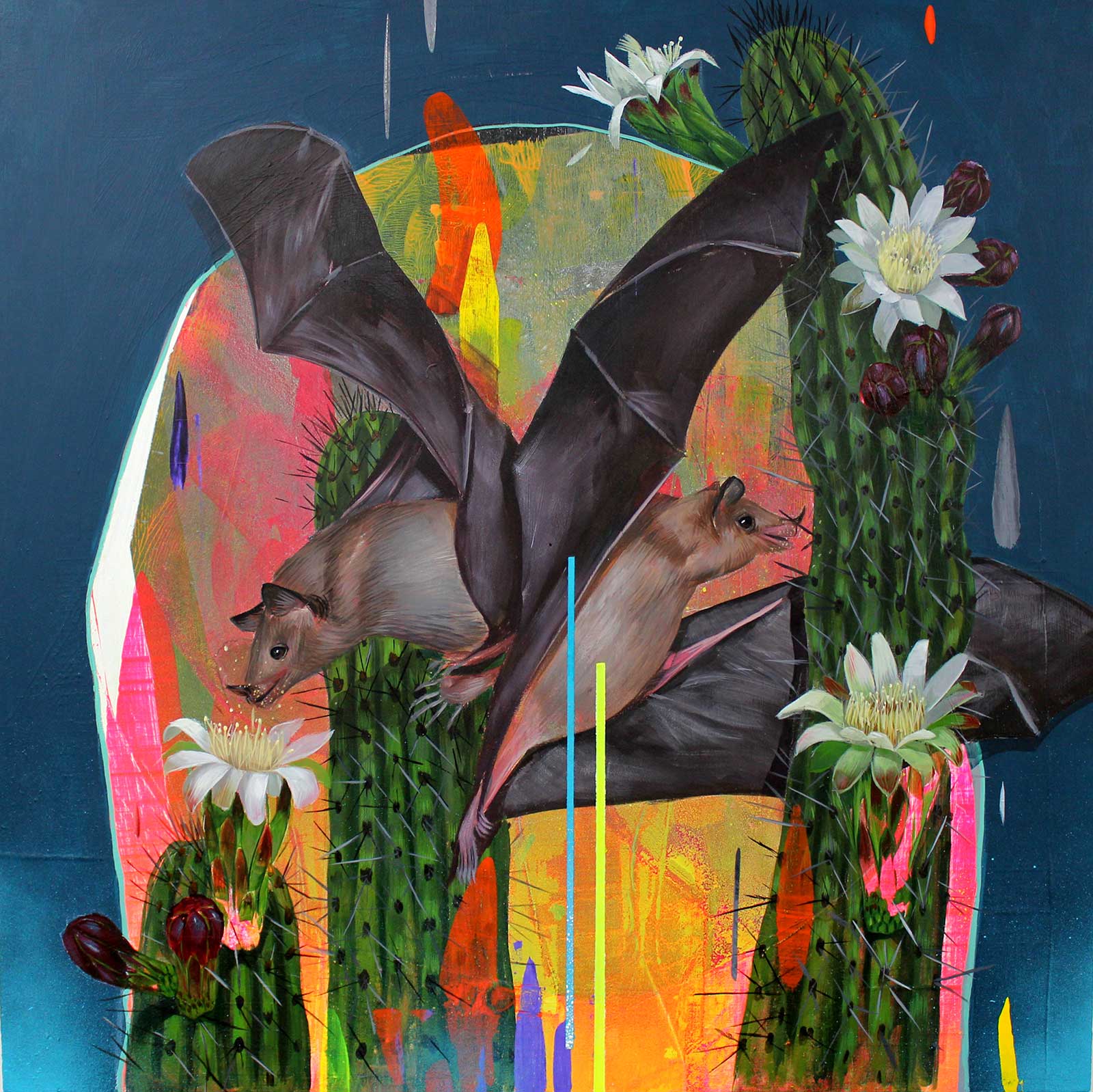 Frank Gonzales, Pollinators, acrylic on panel, 24 x 24"
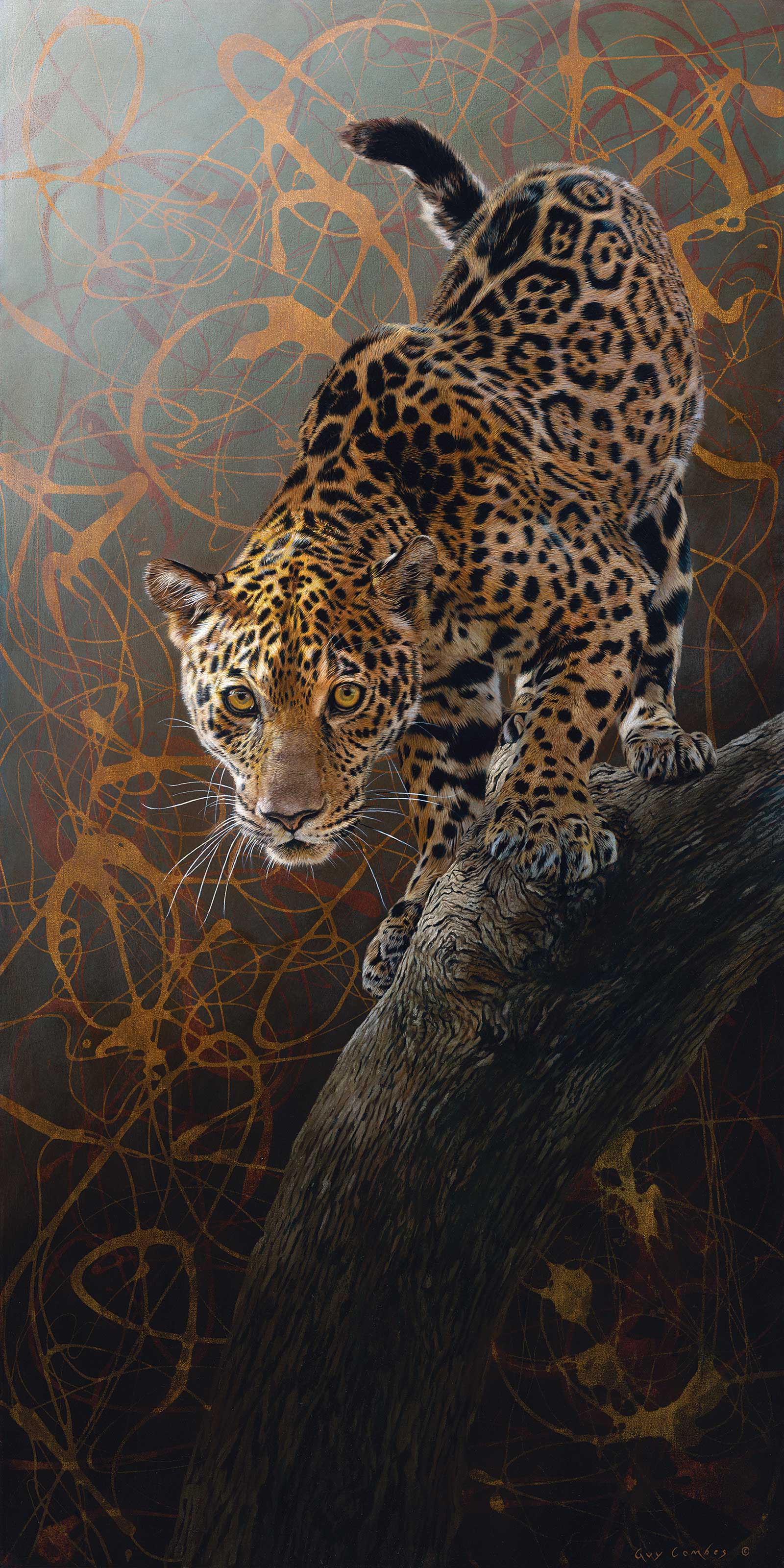 Guy Combes, Maelstrom, oil on canvas, 60 x 30"
Gonzales often works from observational studies in gouache or watercolor in addition to photos he’s taken or imagery sourced elsewhere, but he’s not interested in creating scientifically accurate illustrations.
“By creating paintings from reference and made-up elements, there becomes a play between artificiality and realism,” Gonzales says. “These combined elements may seem believable within the composition, but they wouldn’t normally thrive in real life.”
In his latest pieces, cacti prickle with blooms that strain toward the surface of the canvas as if reaching toward the sun; a cactus wren perches beneath a neon sky bleeding into the cosmos—a combination that causes the eye to flicker between the velvety details of feather and flower and the abstract elements. “Nature is endless,” says Gonzales. “The desert can seem so desolate but it’s so full of life. There’s an abundance of subject matter and for me it’s really about playing and seeing what vibes together.” 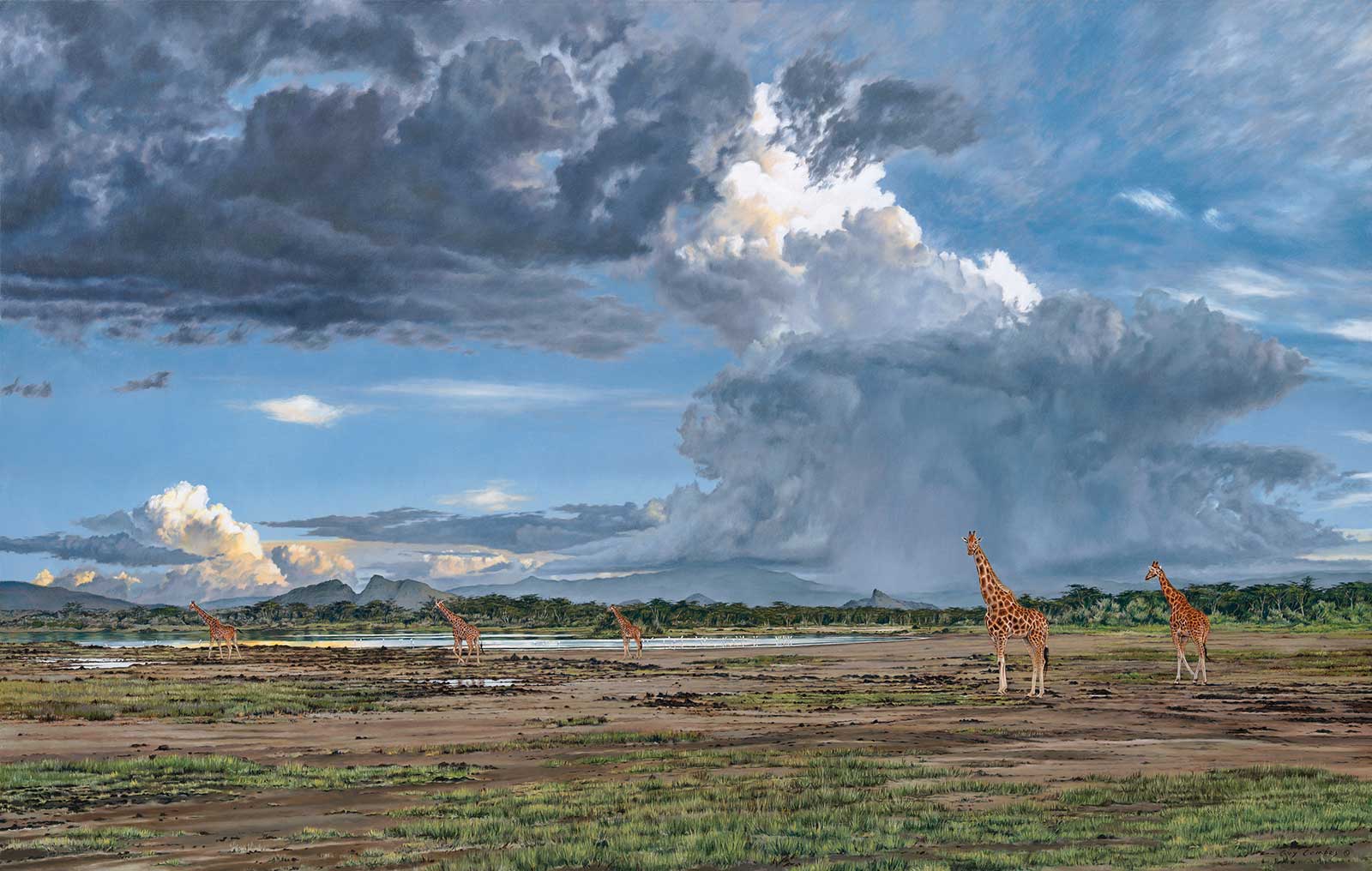 Guy Combes, Thunder over Eburru, oil on canvas, 42 x 66"
Through December 4, the Arizona-Sonora Museum’s Ironwood Gallery will also host the first major solo show of Kenyan-born, Tucson-based wildlife artist Guy Combes. NICHE: The Two Worlds of Guy Combes showcases the artist’s photorealistic wildlife paintings that draw inspiration from East Africa’s Central Rift Valley and the Sonoran Desert. Through 50 original oil paintings, viewers can experience Combes’ deep spiritual connection with his native Africa, the unexpected relationship forged with the Arizona desert and the personal—and scientific—links between them. “When I began to work on the concept of the show, I wanted to be able to focus on the geographical areas where I find most of my inspiration,” Combes says. “The Sonoran desert, like many parts of Kenya, is very much a living desert. The flora and fauna is rich and diverse, and as I began to study it, I was struck by how much it reminded me of my Kenyan home.”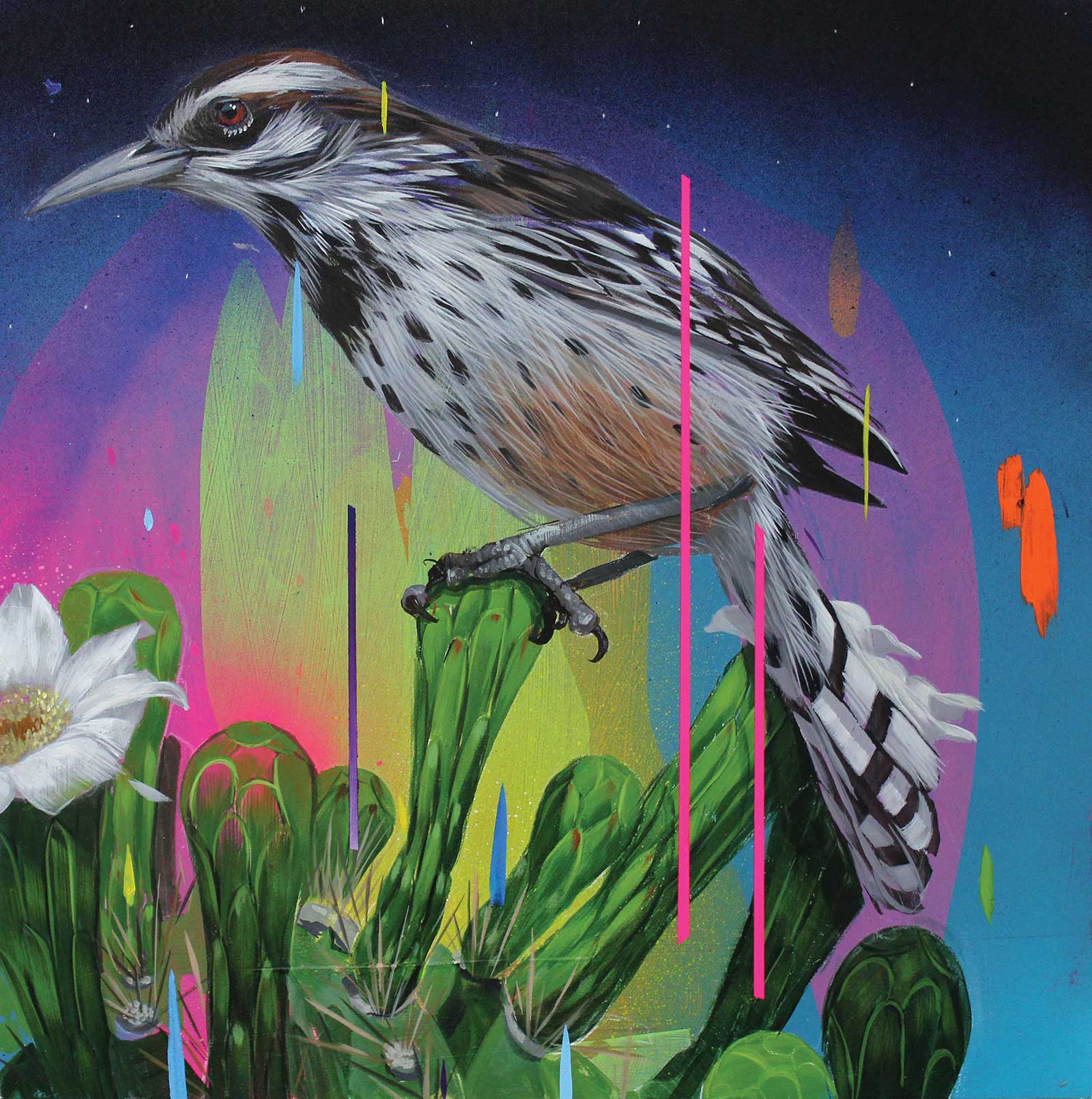 Frank Gonzales, Sonoran Cosmica, acrylic on canvas, 16 x 16"
Since moving to Arizona, Combes, who is deeply invested in wildlife conservationist efforts in Kenya, has come to know many naturalists, researchers and educators that share his intense passion for the Sonoran desert. Then he discovered that many of them are equally passionate about East Africa.
“It wasn’t long before I started to hear the words ‘convergent evolution’ mentioned repeatedly, and soon after that I had an overwhelming epiphany,” Combes says. 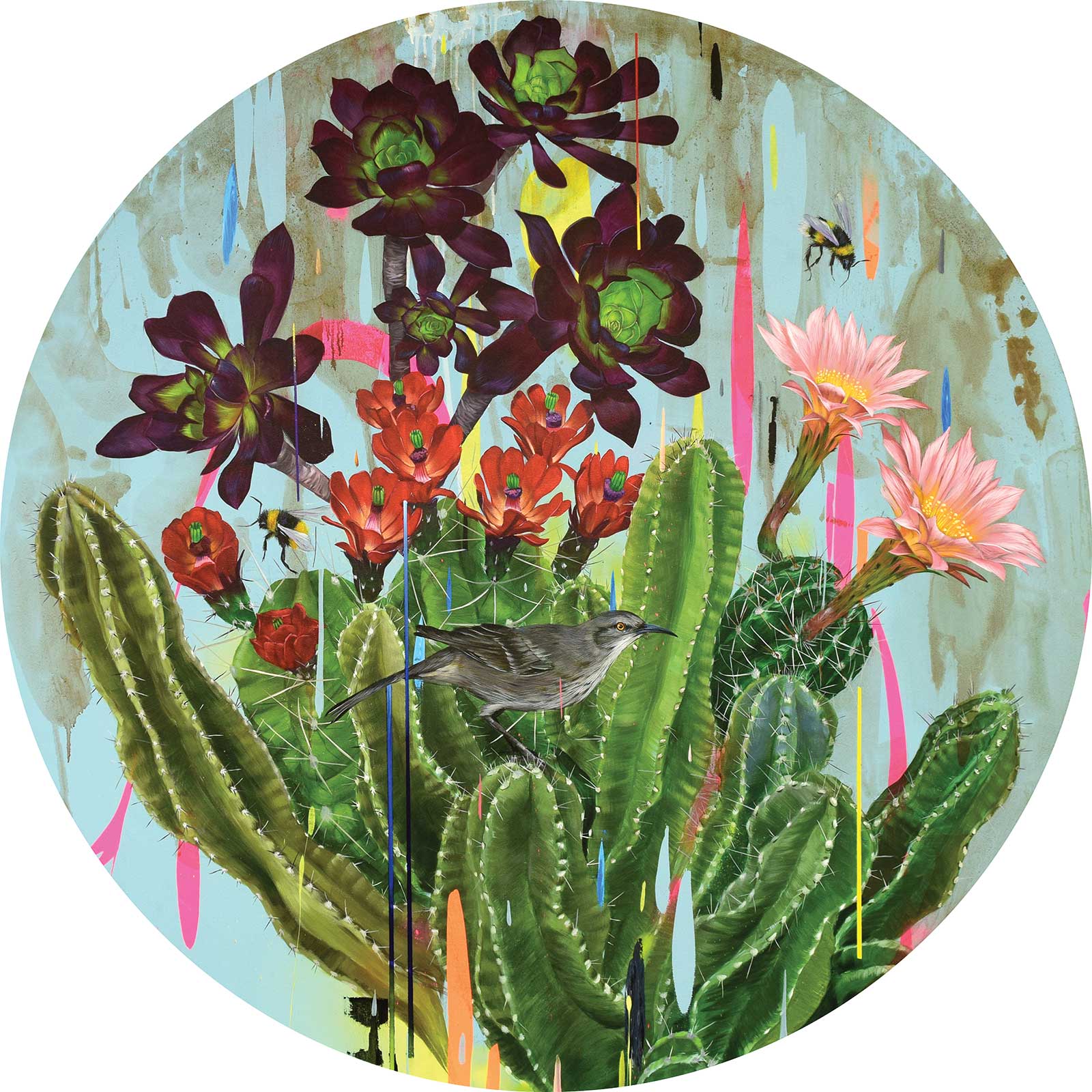 Frank Gonzales, Melodrama, acrylic on canvas, 72” tondo
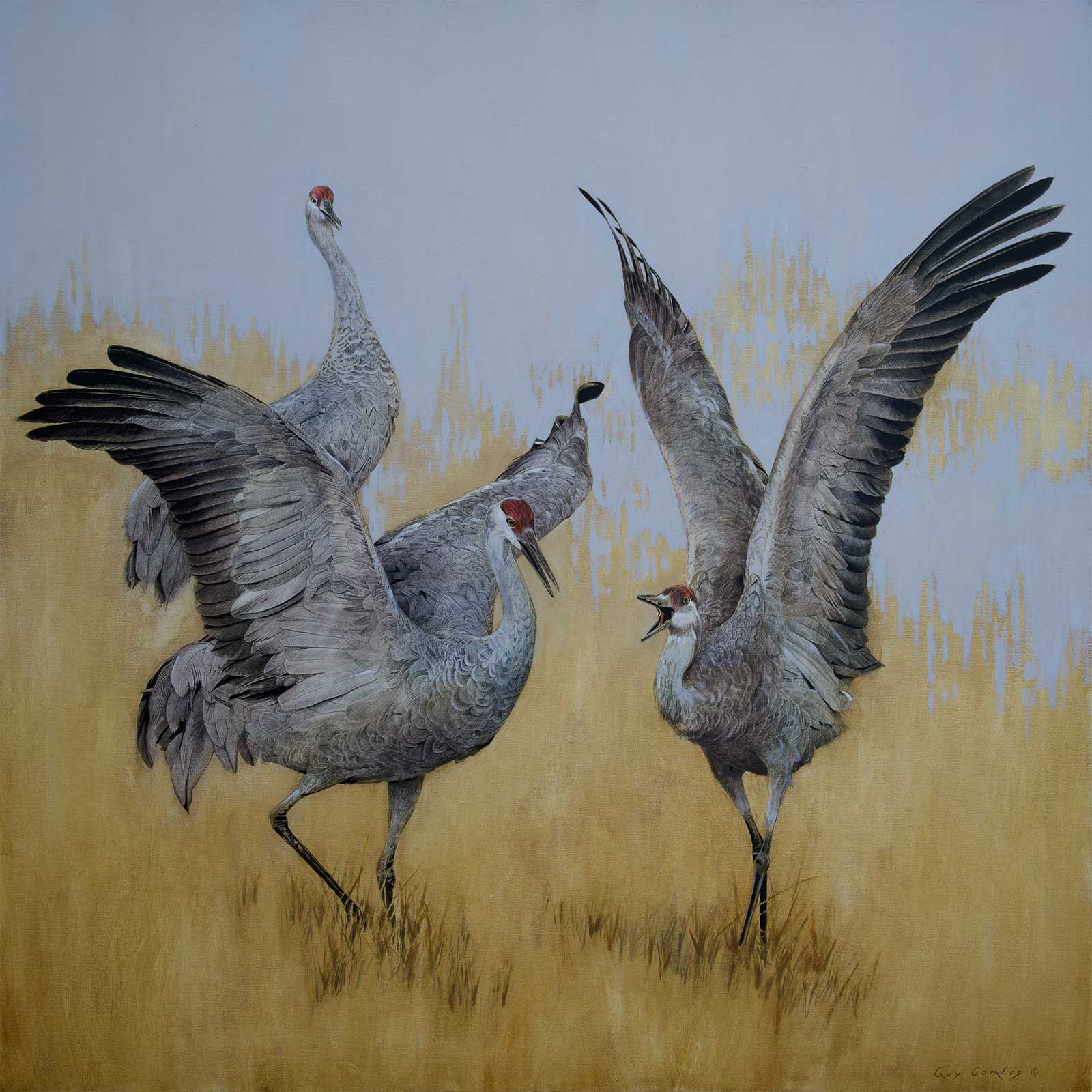 Guy Combes, Whitewater Dance, oil on canvas, 48 x 48"
Fascinated by the concept—the phenomena of two distinct species evolving in similar ways because they are exposed to similar environmental conditions—he quickly began to discover even deeper parallels between his birthplace and current home. There are countless examples but Combes points to the javelina, a member of the rodent family native to the Southwest; and the warthog, a wild pig found in Sub-Saharan Africa. They have no genetic connection but their appearance and behavior have developed commonalities as a result of their comparable habitats. These scientific and artistic explorations laid the groundwork for NICHE—surprising connections, a sense of home and the inherent will to survive. —
Arizona-Sonora Desert Museum
2021 N. Kinney Road • Tucson, AZ 85743
(520) 883-3024 • www.desertmuseumarts.com
Powered by Froala Editor