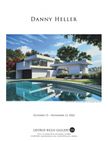

Southern California painter Danny Heller is known for his photo-realistic renderings of mid-century modern architecture—Tiki lounges, long-finned Cadillacs, breeze-block walls, clean lines and geometric shapes. A passionate aficionado of the era, Heller aims to help preserve a design history he holds dear.
In his latest show at George Billis Gallery, Heller turns back the clock a few decades to focus on the first hints of modernism in California. Entitled Wonderland, the show captures 1920s architecture by Frank Lloyd Wright as well as his son Lloyd Wright, and students Richard Neutra, R.M. Schindler, John Lautner and others.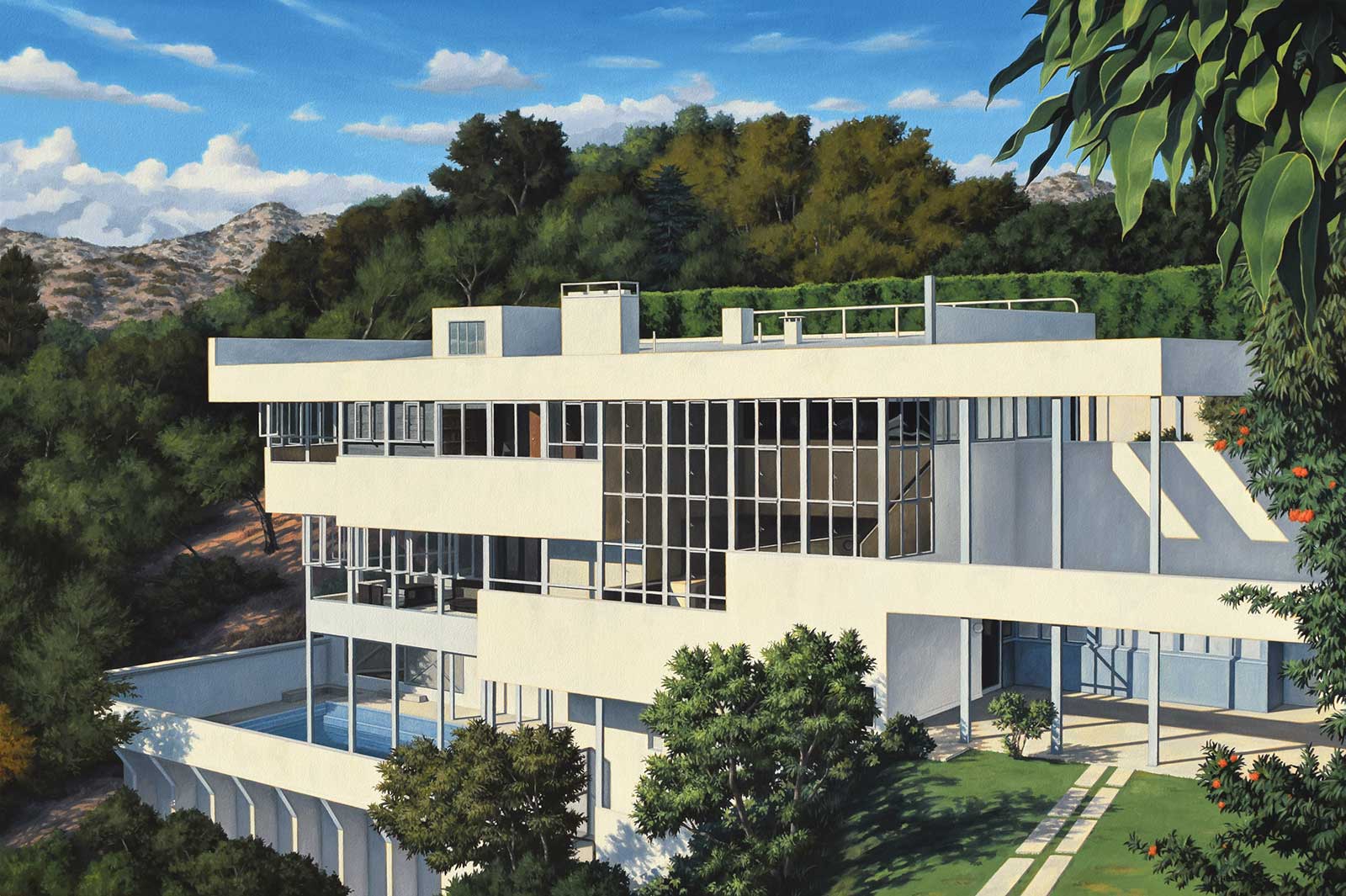 Richard Neutra, Lovell House, oil on canvas, 32 x 48"
“In this latest series of paintings, I trace how these seminal projects in early modernism adapted to unique parameters, often influenced by the cultural backgrounds of their respective architects,” Heller says.
To create his paintings, Heller began driving around Los Angeles, ferreting out landmark buildings. “There’s nothing like seeing in person those buildings I’ve only ever seen in magazines,” he says.
Working from photographs, Heller paints the striking architectural compositions of the buildings in a fitting composition of his own. He adjusts color and lighting to emphasize lines and mood. But he doesn’t amp it up much—maybe just a bit of warmth to a white surface or a careful framing of trees.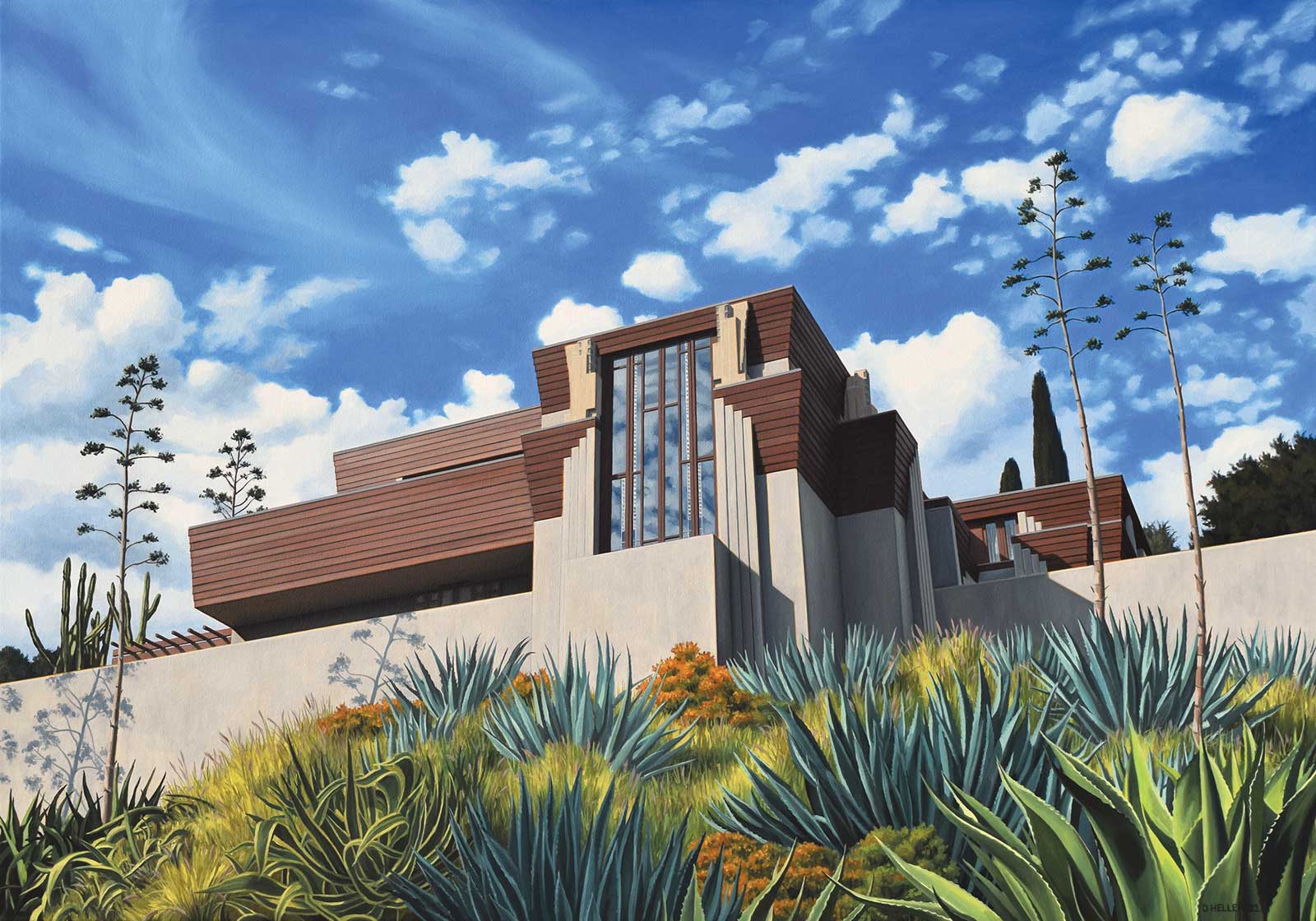 Lloyd Wright, Taggart House, oil on canvas, 28 x 40"“It’s important to me to convey these houses and buildings realistically,” he says.
Heller’s paintings almost never include people. He wants the subject matter to speak for itself rather than being a backdrop to human goings-on. However, humanity is implied within the paintings because the buildings were designed for a new way of living.
Modernism heralded a shift in mentality, Heller explains, where people started to want their homes to be one with nature rather than set against it. For instance, one of the featured paintings is of the Lovell Health House, designed by Richard Neutra. Constructed in the late 1920s for Los Angeles physician and naturopath Philip Lovell, the house integrates indoor and outdoor space, embodying what we now associate with healthy living.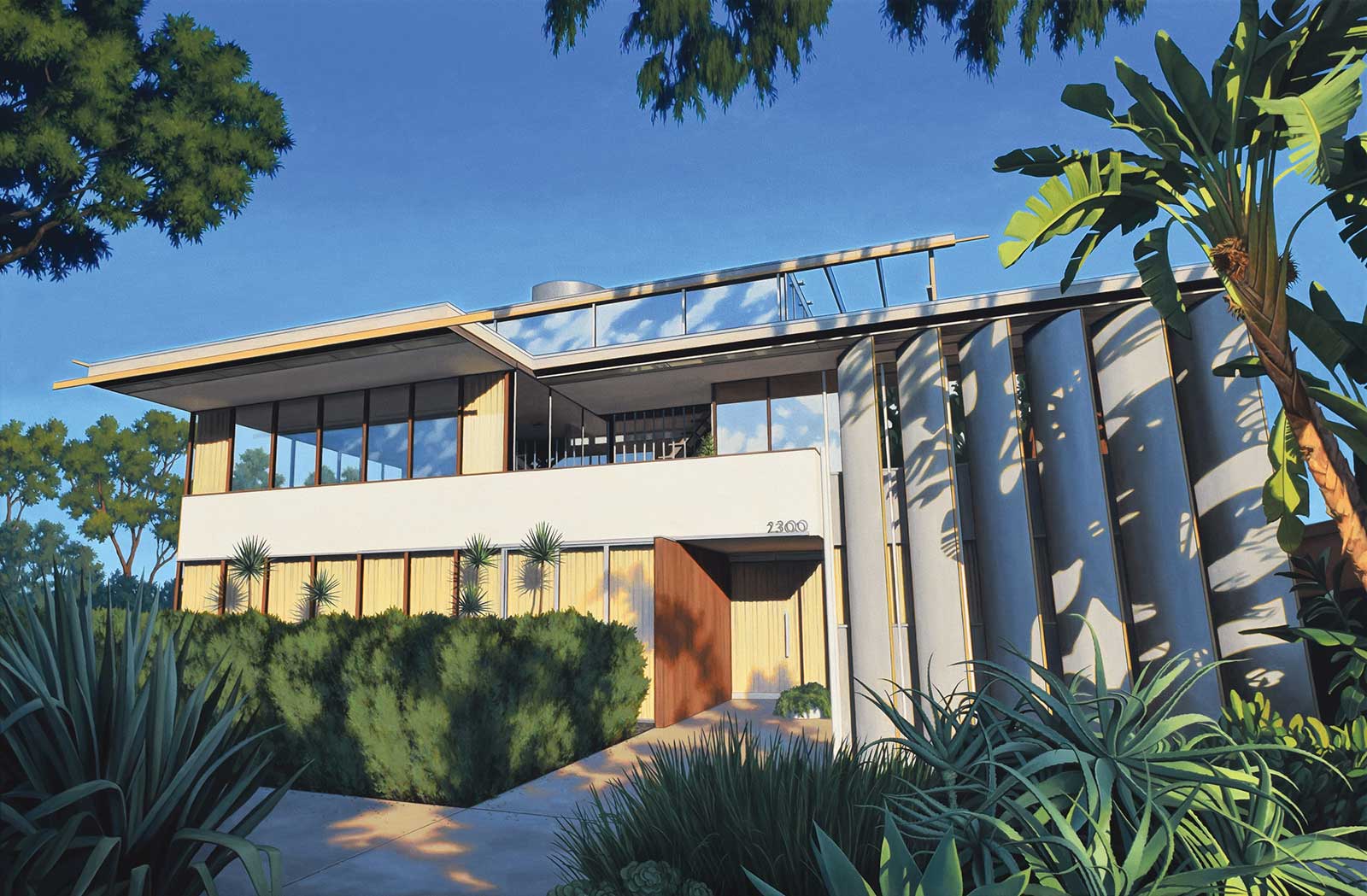 Richard and Dion Neutra, VDL House, oil on canvas, 38 x 58"
“People appreciate those principles today because of our heightened consciousness around health and wellbeing,” Heller says. “Having big sliding glass doors and being able to enjoy the outdoors is important to people today.”
Heller’s scene of the Lovell House vibrates with possibility. So many spaces to encounter the sun; fresh air and open views abound. Ripe oranges dot the trees on the border. The viewer could step into the picture and reside effortlessly in the intersection of built environment and the natural world.
In Lloyd Wright, Taggart House, Heller uses an upward angle to show the house growing out of the landscape as if it were another natural element. In Richard and Dion Neutra, VDL House, palm tree shadows fall across vertical sun louvers as a way of noting the detailed design principle at play.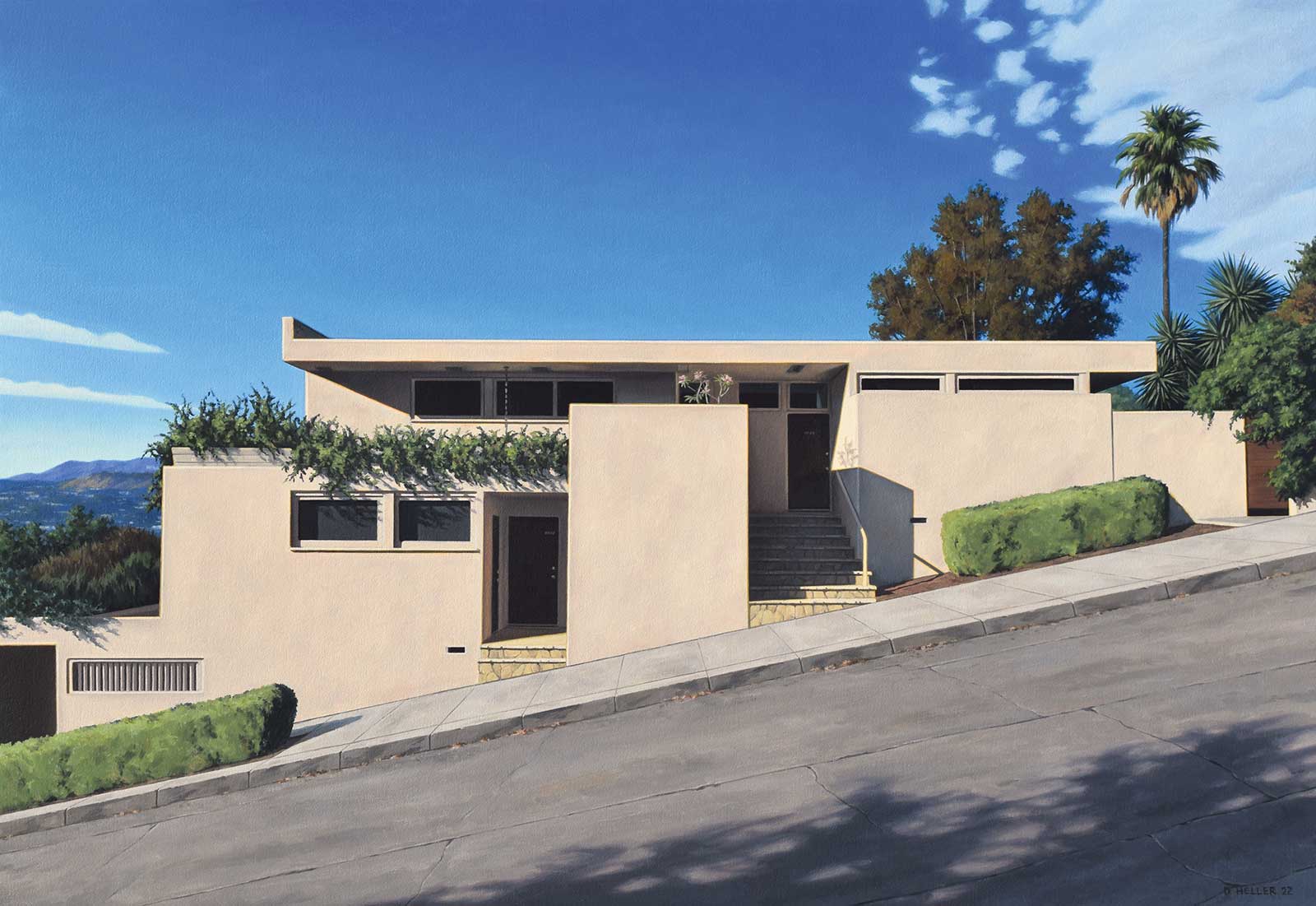 R.M. Schindler, Falk Apartments, oil on canvas, 22 x 32"“The shadows cast by verdant plant life around the buildings, the hints of glorious Los Angeles vistas in the distance, the reflections in a pool—all these brilliant details come together to create masterful paintings that capture a groundbreaking era of pioneering design,” George Billis Gallery partner Tressa Williams says.
Each painting in Wonderland distills a moment and a vista, inviting the viewer to simultaneously gaze at the past while looking into the future. More than a design trend, these paintings, like the buildings that inspired them, are here to stay. —
George Billis Gallery
2716 S. La Cienega Boulevard
Los Angeles, CA 90034
(310) 838-3685
www.gbgla.com
Powered by Froala Editor