The world is full of conflict. In its worst version this can be outright warfare, or it can just be the micro-struggles associated with living life—a sudden turn in the weather, traffic, burnt toast, the emotions associated with a life event. How people deal with these conflicts, great and small, reveals a universal language within the human experience. It’s a language we’re all speaking now, even as we fine tune the mechanics amid the chaos of living.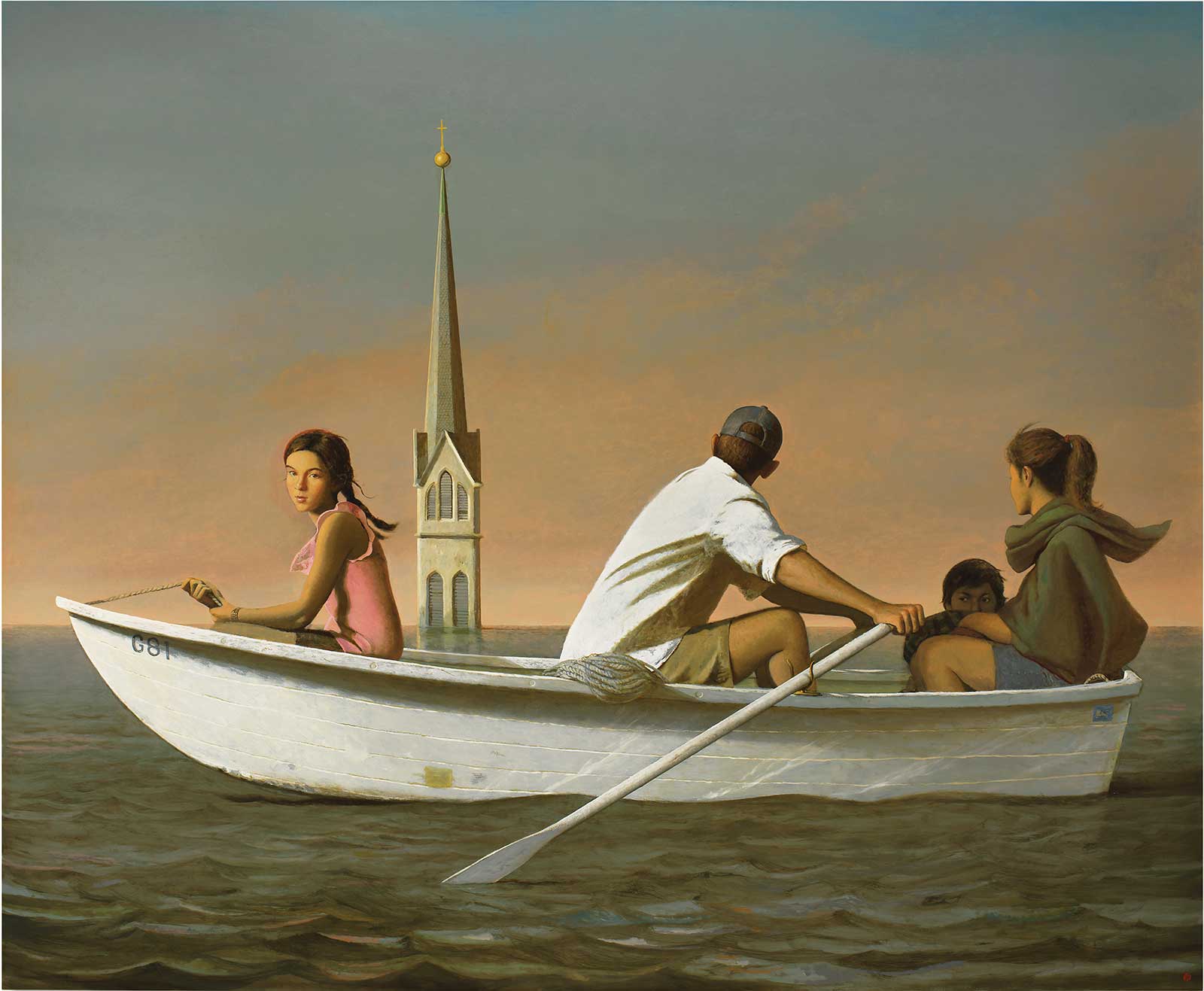 The Flood, 2018, oil on linen, 82 x 100". ©Image courtesy of the artist and Miles McEnery Gallery, New York, NY.
These themes, and several others, are explored in a new exhibition titled Earthly Matters opening September 9 at the Gibbes Museum of Art in Charleston, South Carolina. The exhibition’s subject is painter Bo Bartlett, whose works offer thought-provoking narratives on nature, people and the perseverance of life in an unstable world.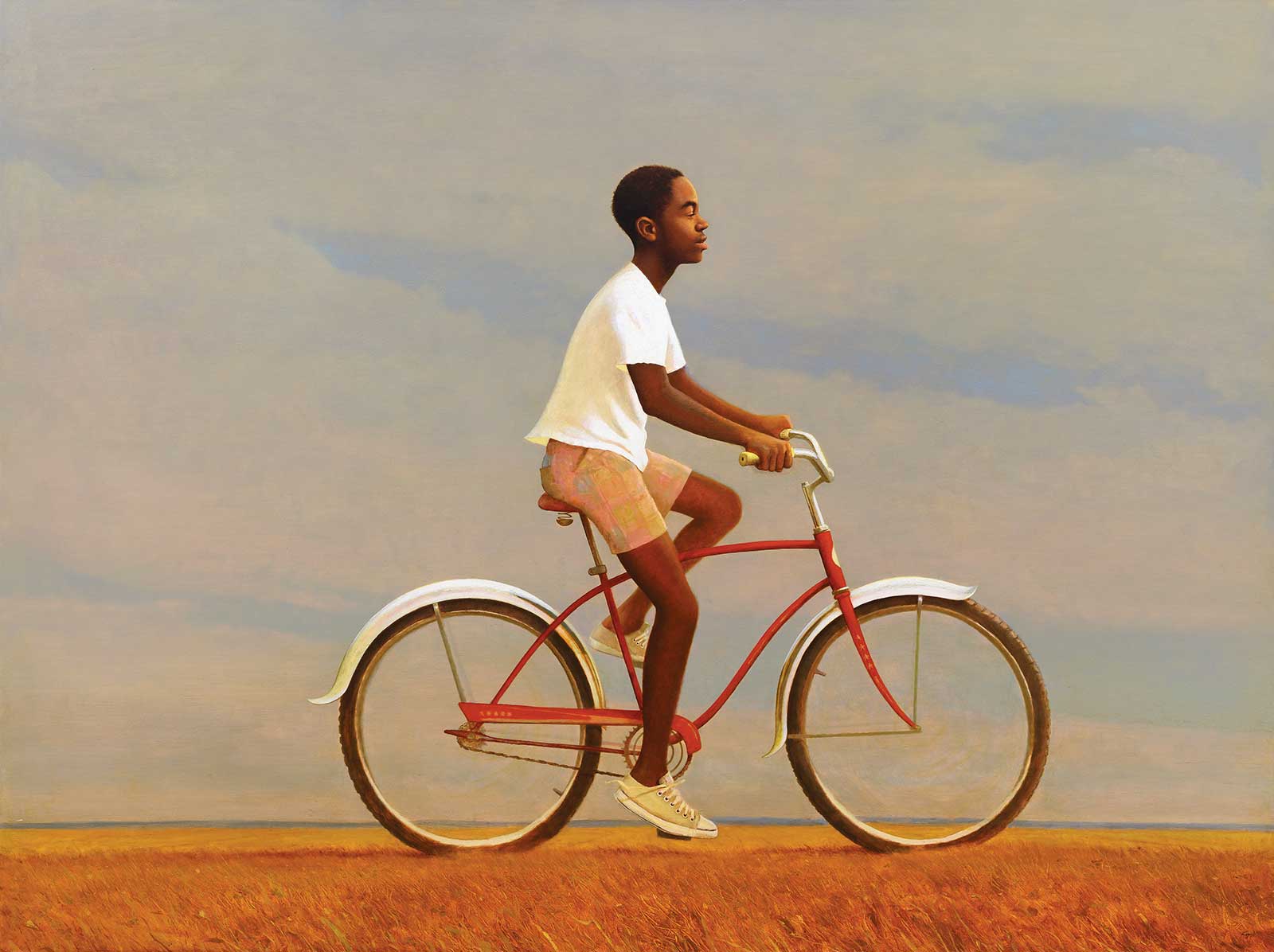 Georgia, 2021, oil on linen, 60 x 80". © Image courtesy of the artist and Miles McEnery Gallery, New York, NY.
“Historically, artists have found great inspiration and strength from being in the wild. This has resulted in transformative paintings, symphonies and poetry. I believe in the power of art to transform lives. It is more than an aesthetic or cultural experience,” Bartlett says. “Art is at the very core of what it means to be alive, to be human on this planet. Man against himself and man against nature have long been reccurring themes in my work. We live. We struggle to get our basic needs met. We study history. We side with our teams and tribes. We love our families, our heritage, our religion. We study math and science. We learn. We progress. We want and yearn to change, and we hope to evolve out of our standard laissez-faire ways of being. We long to get along…to grow…to broaden our worldview…to rise to a higher consciousness. Art opens the door to this.”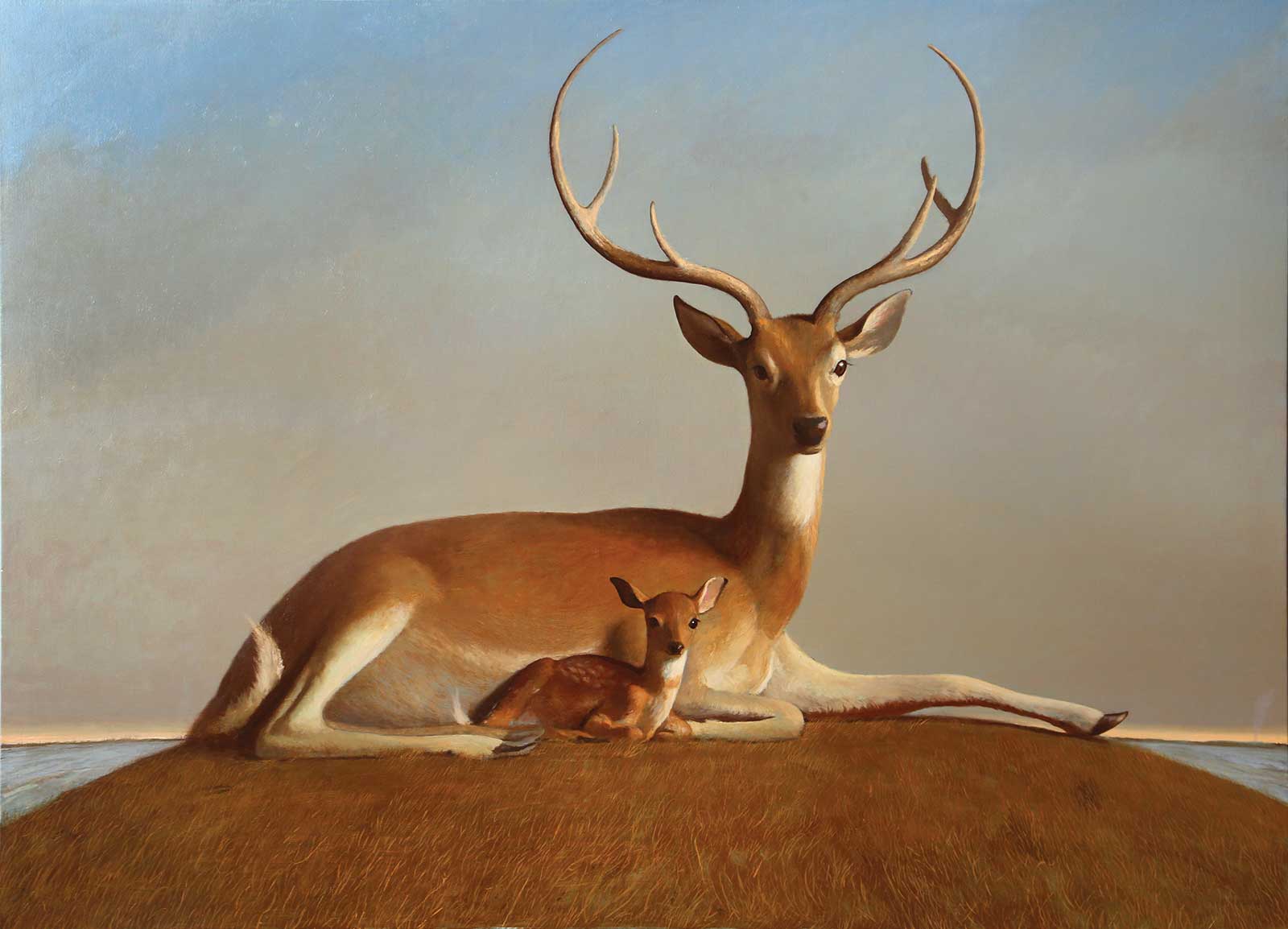 The Covenant, 2016, oil on linen, 48 x 66". © Image courtesy of the artist and Miles McEnery Gallery, New York, NY.
The title Earthly Matters was originally proposed by the Gibbes Museum, which had bestowed its 1858 Prize for Contemporary Southern Art upon Bartlett in 2017. Back when the award was given, the museum and the artist hoped to bring a full exhibition together. Five years later, they have.
“[For Earthly Matters]…we were planning on having the theme for each piece relate to the overall theme of nature and the human interaction with the earth. Animals were originally a primary focus, I’ve done many animal paintings over the years. But, due to availability of works the individual pieces in the show morphed to encompass more paintings with figures,” Bartlett adds. “We included pieces which deal with a holistic view of the themes of man vs. himself and man vs. nature. These works take on a psychological quality in relationship to the ecological context.”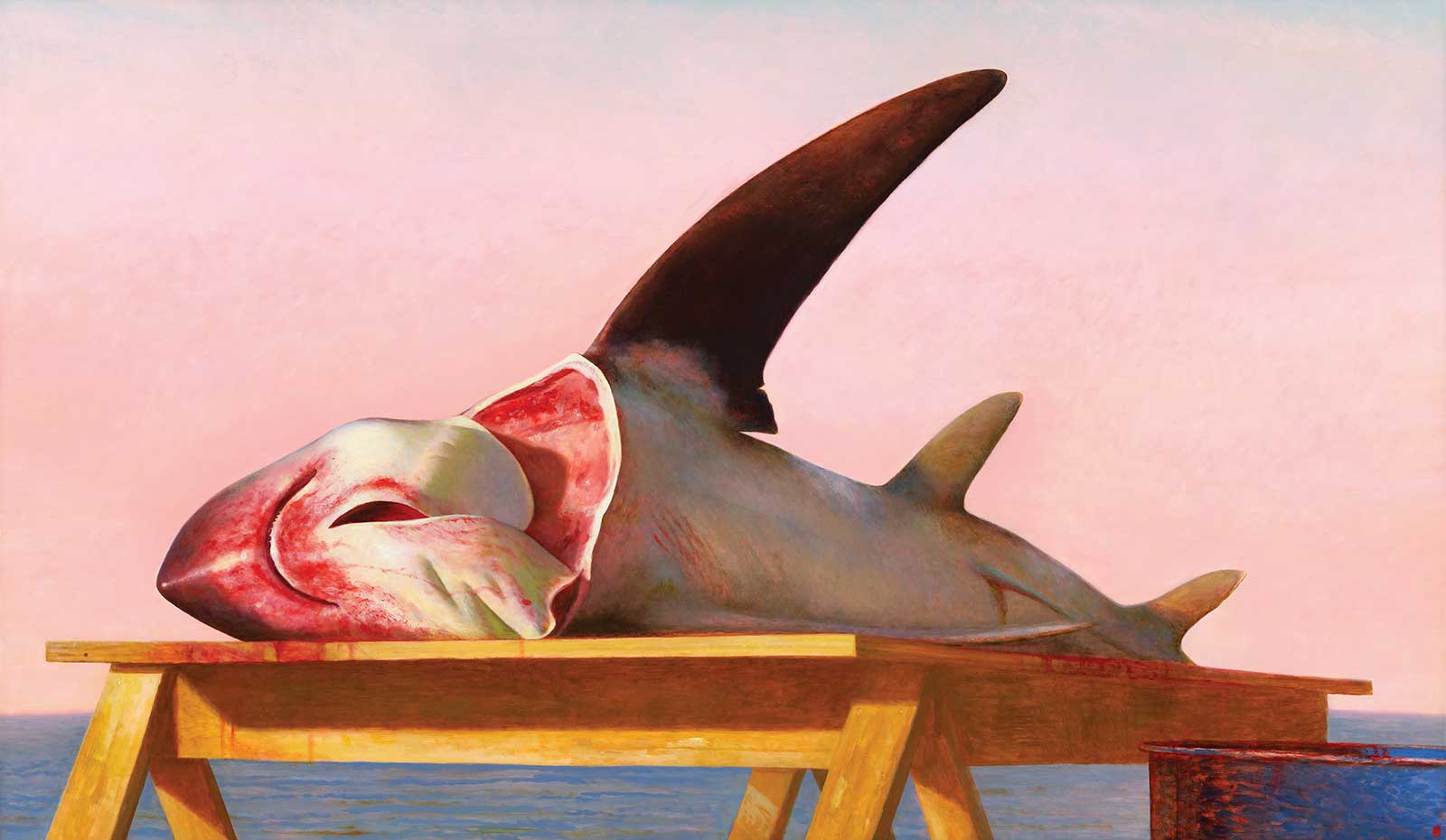 Where Did All That Life Go, 2020, oil on linen, 48 x 82". © Image courtesy of the artist and Miles McEnery Gallery, New York, NY.
One of the works with an ecological perspective is The Flood, showing a group of diverse people in a boat rowing past a church steeple poking out of the water. Though it’s always hard to pick a favorite work in an exhibition, guest curator Pam Wall quickly calls out The Flood when asked what works speak to her as a curator. “It’s like picking your favorite kid—it can be impossible,” she says. “The Flood is from 2018, and it shows a family in a flood with a church steeple. It speaks to me because it feels like Charleston, which has been called the Holy City due to the many church steeples. Flooding, of course, is something we all have to deal with in the Coastal South. Climate change, heatwaves, floods…thinking about the impact people have had on the climate is something that is brought up here in this work. I know Bo was thinking a lot about Hurricane Harvey that flooded Houston, which is part of the genesis of this work. He’s really looking at how man is at the mercy of nature, that ultimate struggle.”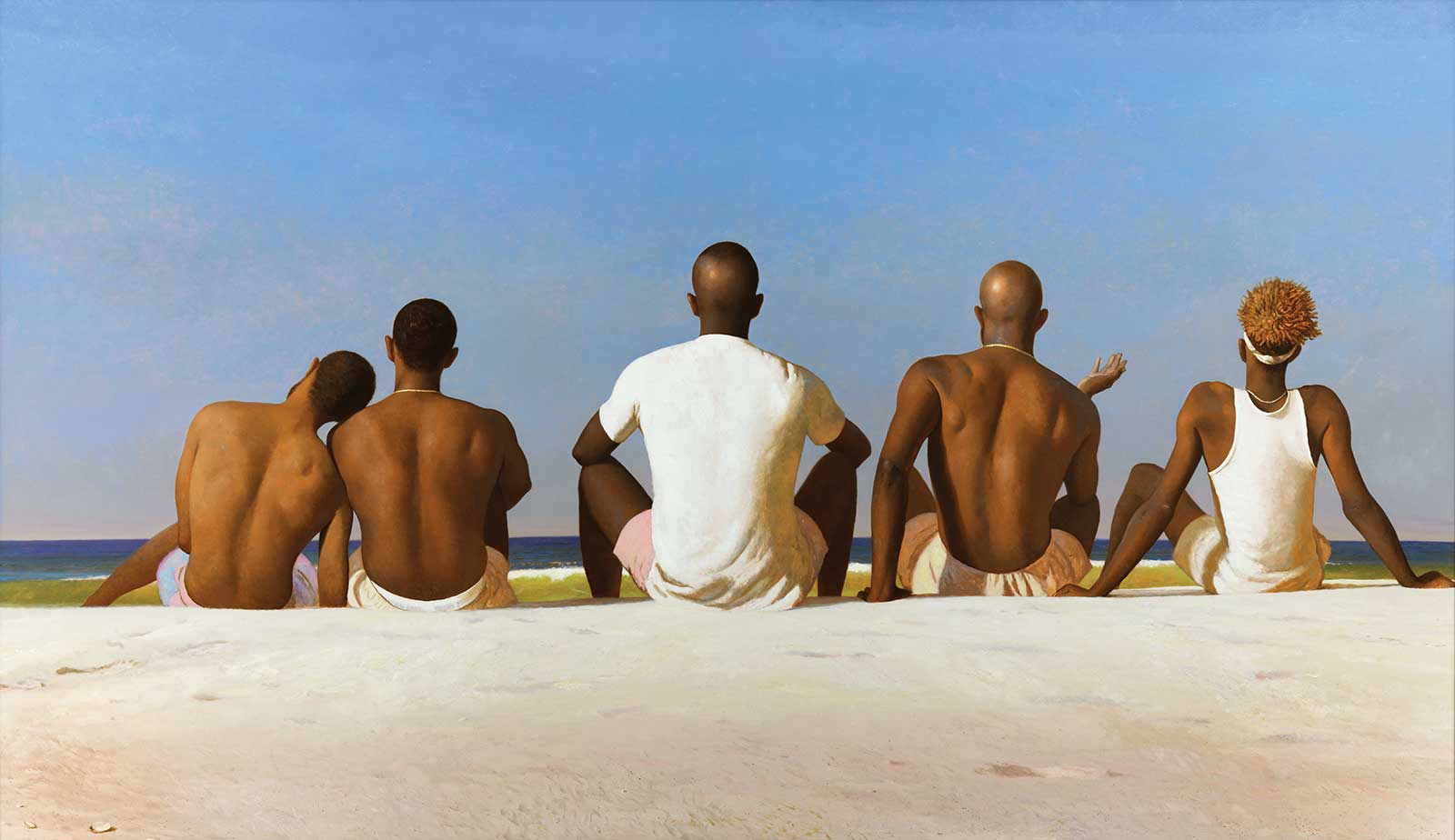 Hurtsboro, 2021, oil on linen, 70 x 120". © Image courtesy of the artist and Miles McEnery Gallery, New York, NY.
In other works, the staggering toll that mankind has had on the world is more violent and gruesome. For instance, in Where Did All the Life Go, Bartlett paints a shark dead and carved up on a table near the ocean. For fans of Bartlett’s works, this image of a dead sea creature out of the water is a recurring motif in his work, including in his great masterpiece Leviathan, showing a whale being sliced open to reveal a shirtless boy tucked into the pink flesh of the now-dead animal.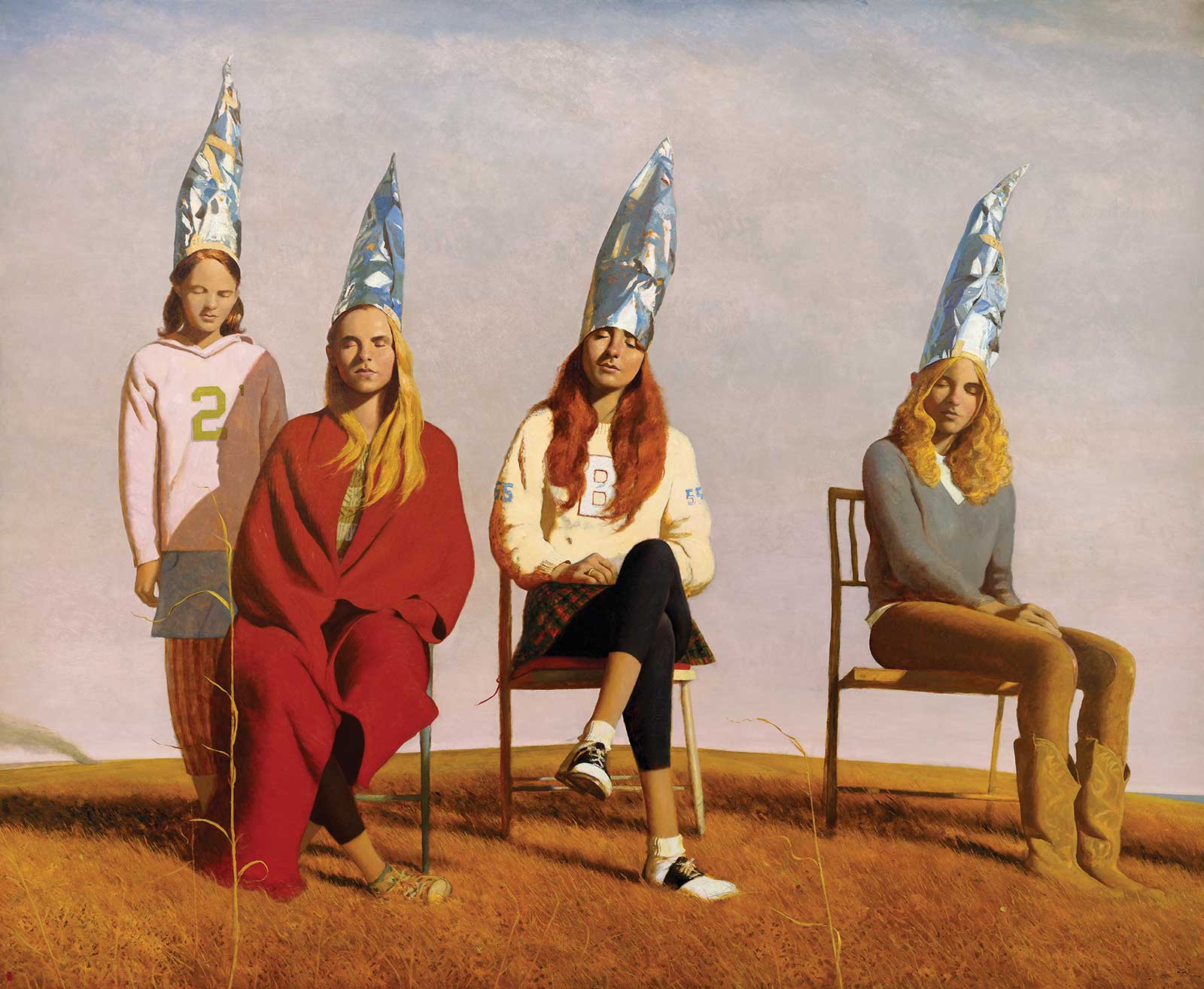 Thin Veil, 2021, oil on linen, 82 x 100". © Image courtesy of the artist and Miles McEnery Gallery, New York, NY.
“The metaphor of the shark has kept me engaged since I was a teenager. One night I watched deep sea fishermen catch a 15-foot great white shark off of the pier in Daytona Beach. I watched them battle it for hours before finally claiming victory. The next morning, I returned to witness what was left of it, in disbelief over the absence of that powerful life-force taken from the sea,” Bartlett says, adding that elements of the story appear in his feature film Things Don’t Stay Fixed, including the line “Where did all of that life go?” “For me the shark represents the unconscious, coming up from the deep, to bite those who are unaware. I know that there are horrible things that happen in this world. My attempt to make paintings is in no way an attempt to cover up or hide the horror. A painting like Leviathan is not trying to prod the viewer or create an obtuse piece of visual art or illustrate some archaic text—it is instead an honest attempt to find an appropriate visual metaphor for where I am in my life. It represents a highly personal inner/outer journey.”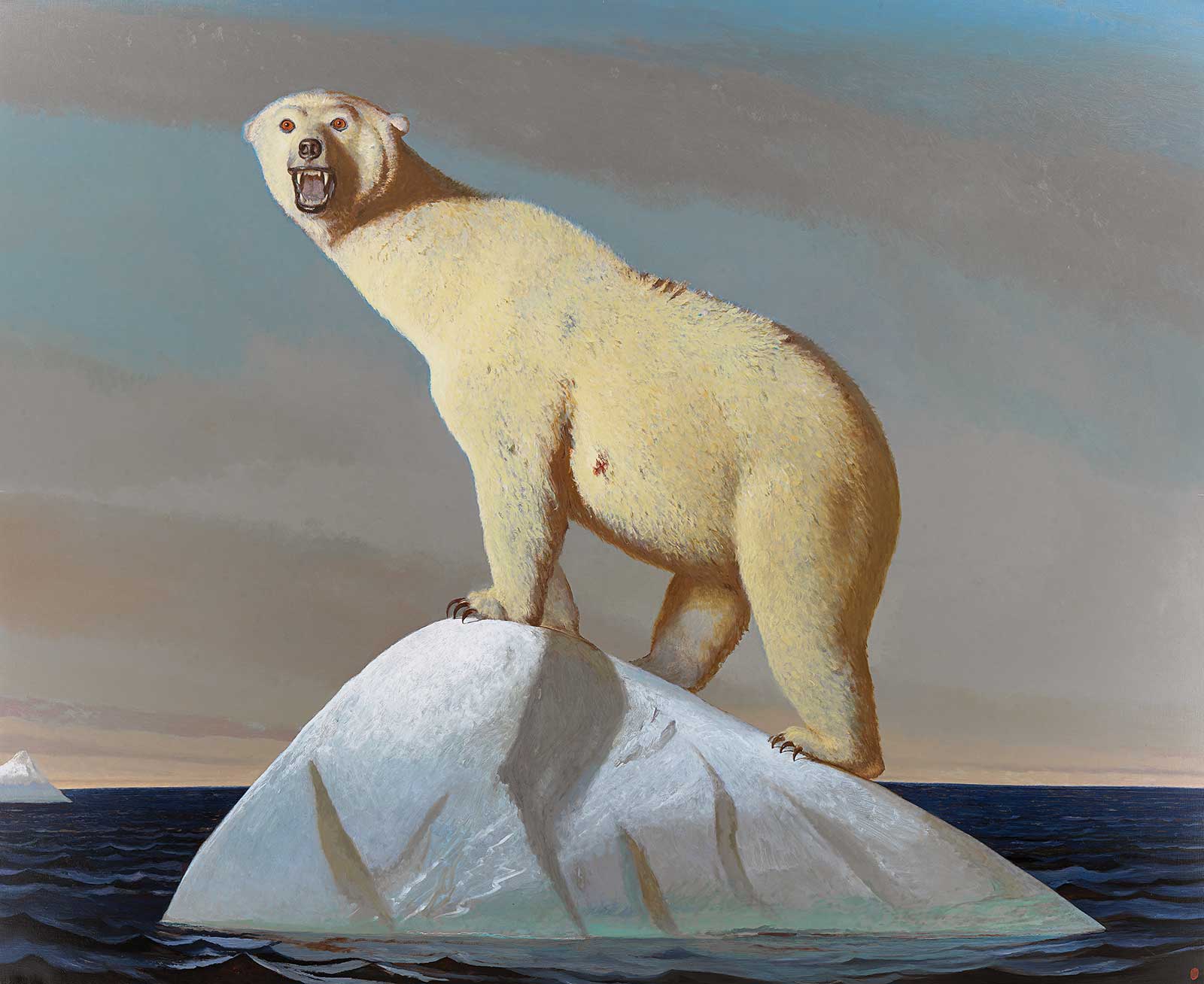 Dominion, 2016, oil on linen, 82 x 100". © Image courtesy of the artist and Miles McEnery Gallery, New York, NY. Loan courtesy Asheville Art Museum, Asheville, NC, gift of Alex Washburn, 2021.71.01.(The story of the shark also appears in Jesse Brass’ magnificent short film on Bartlett, Ineffible. Use the QR code in this feature to view the film. Brass and Bartlett also co-directed the short film Helga, about Helga Testorf, Andrew Wyeth’s longtime muse.)
For Wall, Bartlett’s work and his involvement in the exhibition at the Gibbes have been a remarkable experience for the seasoned curator. “He’s very accessible to the museum, and he trusts the process. Between him and his gallery, Miles McEnery Gallery, it’s been a dream,” Wall says. “He’s a masterful painter. There is a lyrical beauty to his work that draws viewers in, from veteran museum-goers to more casual viewers. Everyone stops in front of his paintings because they are alluring and his skill as a painter is incredible. The more you look the more you’re curious bout the narrative in the story. The fun part is that he offers tantalizing clues in the titles and the images, but it’s up to the viewers to probe the narrative, bring out their own thoughts, ideas and perceptions. He creates opportunities for two-way exchanges. I think that’s the magic of his work, he can draw that out of the viewers.” —
Bo Bartlett: Earthly Matters
September 9, 2022-January 15, 2023
Gibbes Museum of Art, 135 Meeting Street, Charleston, SC 29401
(843) 722-2706, www.gibbesmuseum.org
Powered by Froala Editor