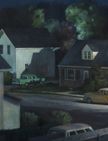
The Pulitzer Prize winning Kiowa novelist M. Scott Momaday wrote, “I am interested in the way that we look at a given landscape and take possession of it in our blood and brain. None of us lives apart from the land entirely; such an isolation is unimaginable.”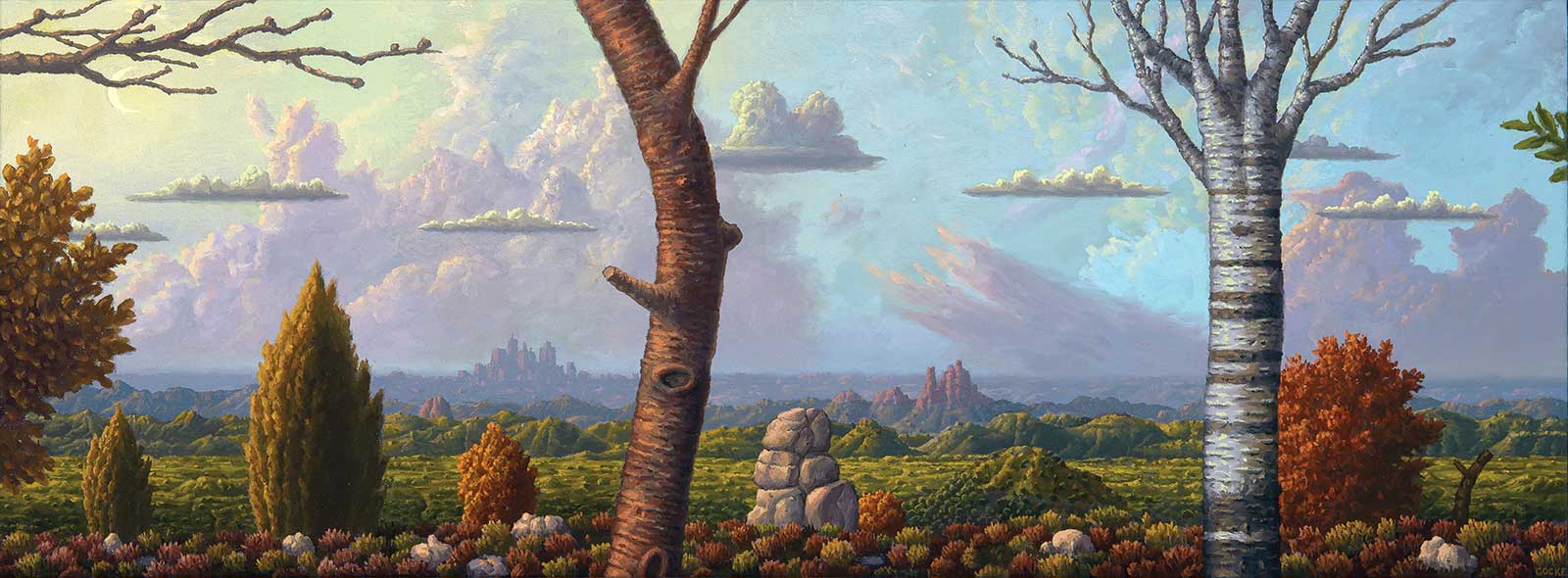 Tory Folliard Gallery, Simple Truth, oil on canvas, 14 x 30", by Robert Cocke.
Whether we experience a landscape in a pocket park in the city, our back yards or the vastness of the prairies, the mountains or the seashore, we absorb the sights, sounds and smell and become one with them. Sights, sounds and smells can bring the experience of the distant experience back to us.
Thomas McNickle writes, “When I confront the landscape, I am overwhelmed by the specificity of the moment, the place and the light. Through painting I try, not only to experience the moment, but to connect with it in a way that is outside the moment…timeless.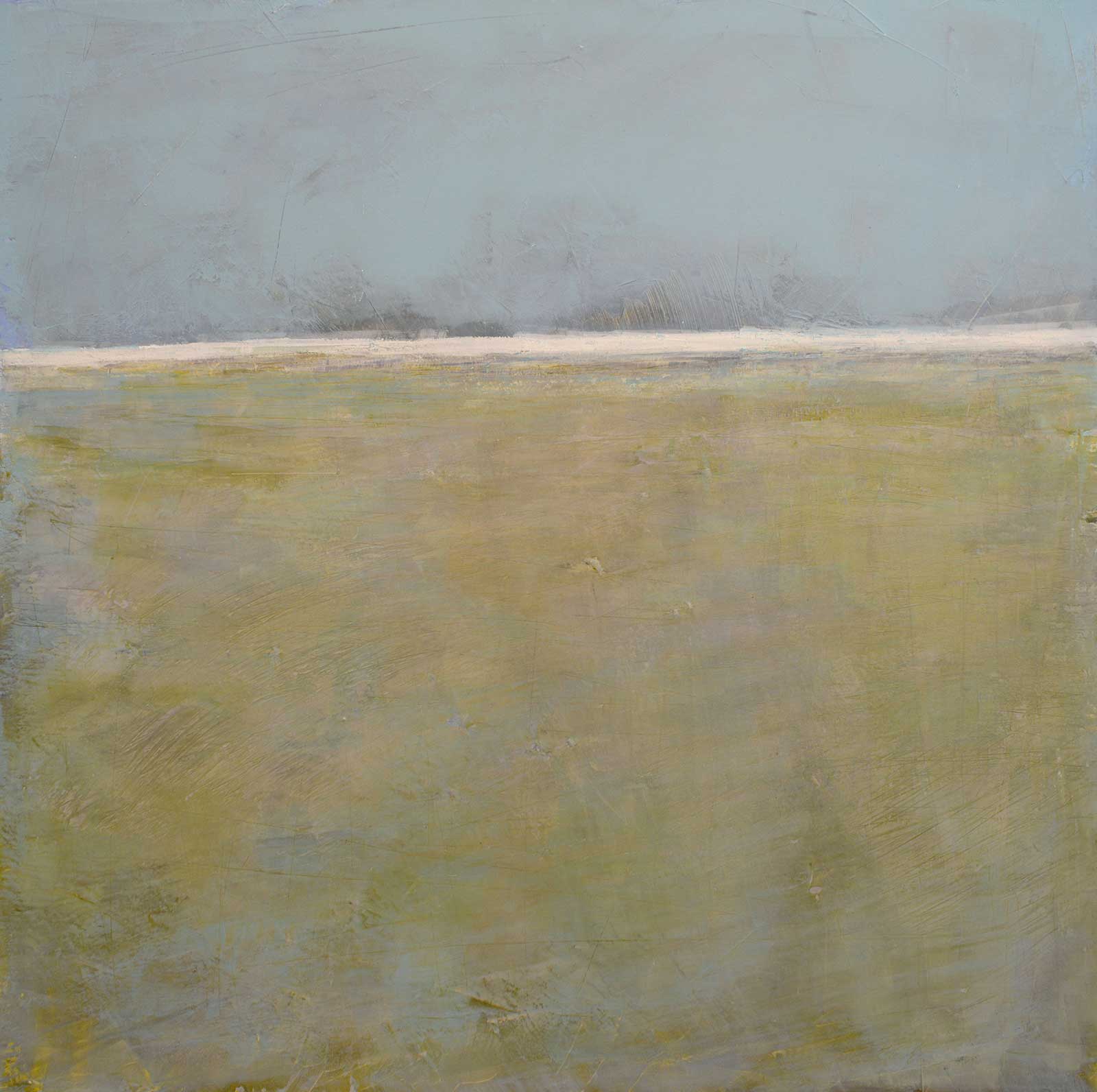 Principle Gallery, Marshland, oil and wax on panel, 24 x 24", by Jeff Erickson
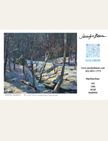
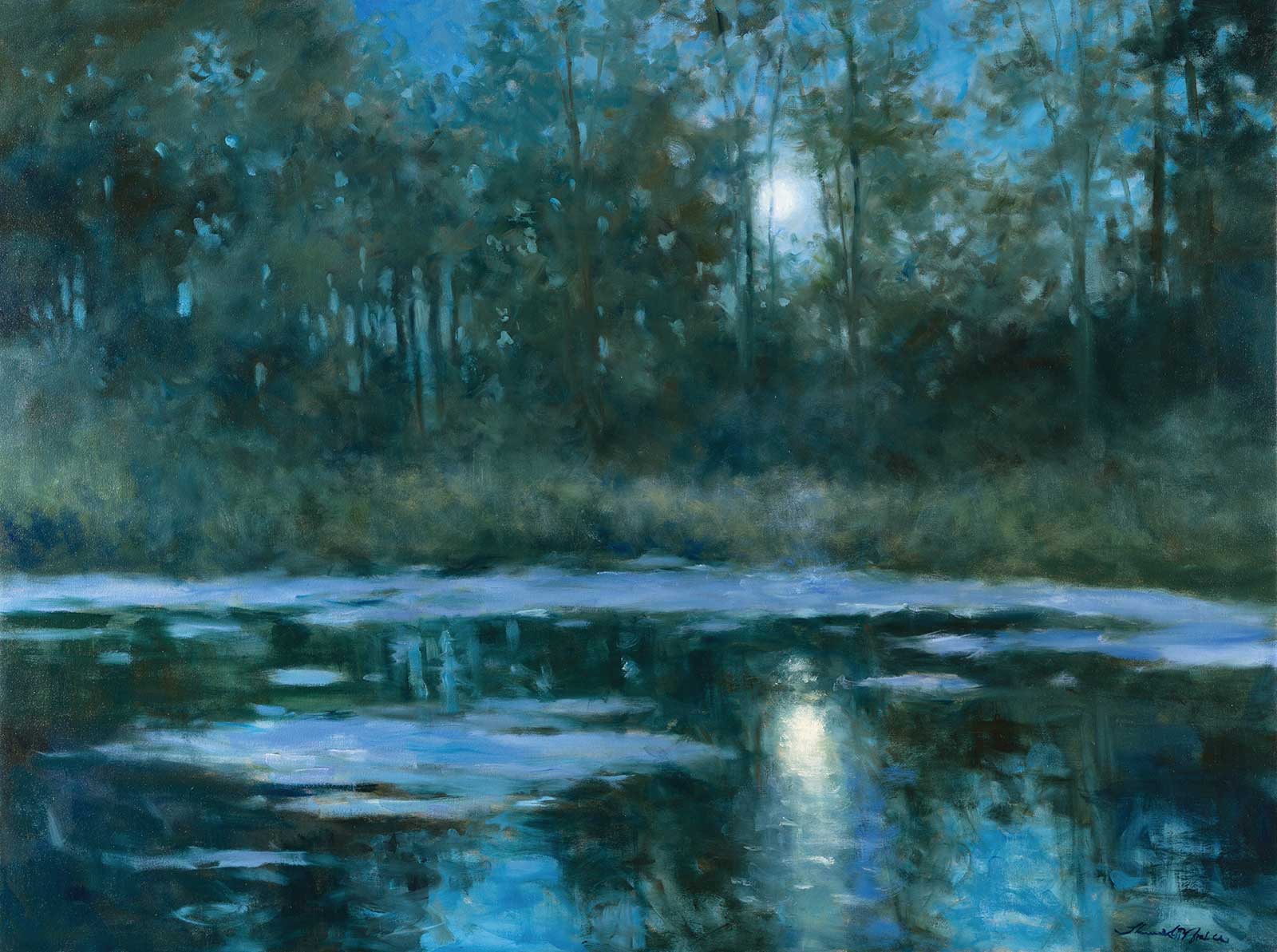 Jerald Melberg Gallery, Blue Moon on the Scout Pond, oil on canvas, 36 x 48", by Thomas McNickle
“I want my work to be evocative of the initial experience not descriptive of it. Ultimately, it must be of the experience not about it. I want the scene to take precedence over what I do and what I think I know.”
His painting, Blue Moon on the Scout Pond evokes the extraordinary experience of the world turned blue. Since I always want to know why, after experiencing the phenomenon from my tent while on retreat at the Prajna Mountain Forest Refuge north of Santa Fe, New Mexico, I did a little research. Our vision occurs through the rods and cones in the retina of the eye. In low light, vision comes from the rods that are sensitive to blue. The objects that reflect blue are then more visible than those that don’t. Technically, a “blue moon” is the third of four full moons occurring in a season that has four full moons. The next blue moon will be in August 2024, thus the phrase for a rare event is “once in a blue moon.” Blue Moon on Scout Pond is evocative of an experience regardless of our knowledge of the “why” of the phenomenon.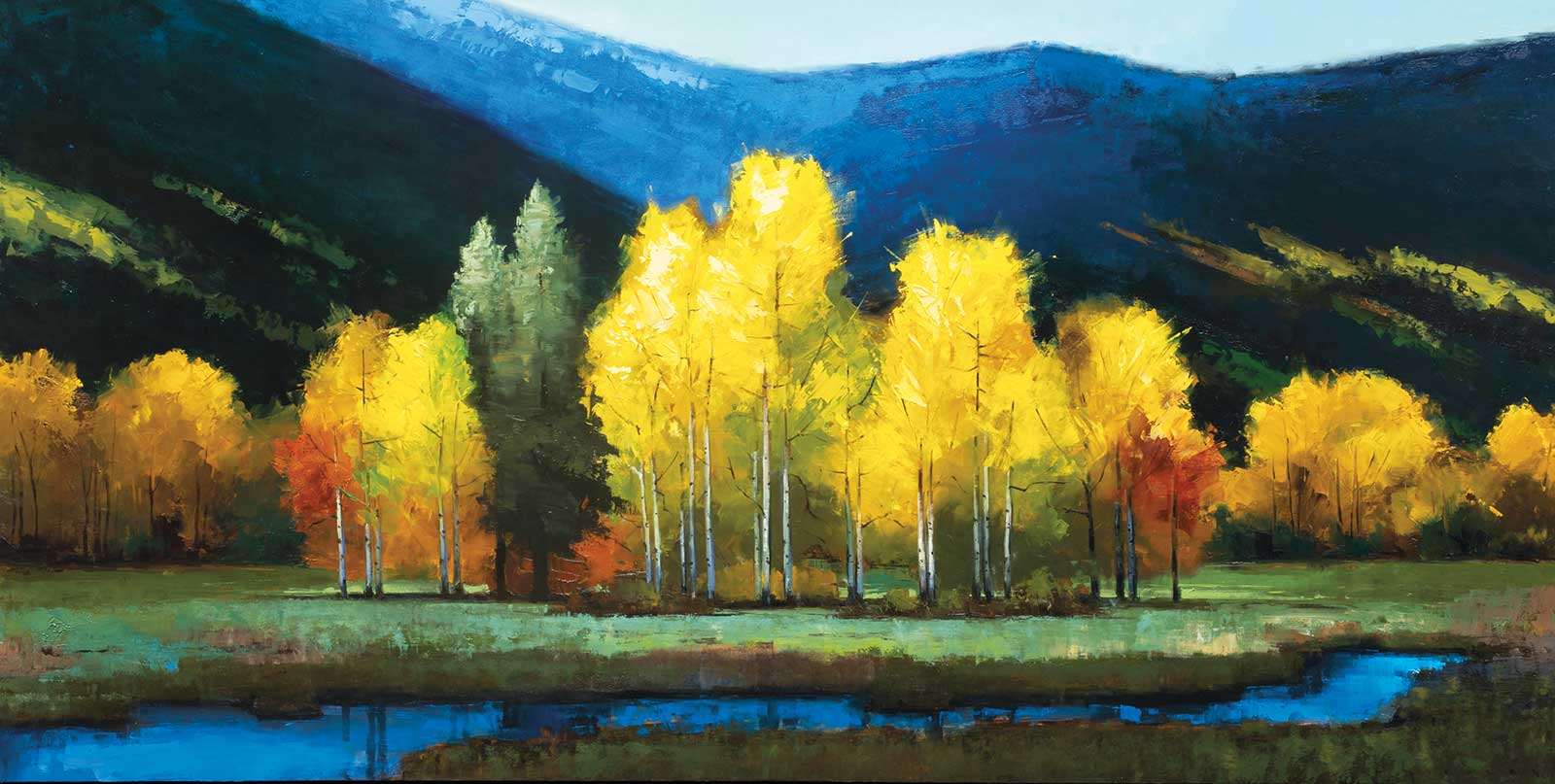 Blue Rain Gallery, Change, oil on panel, 36 x 72", by Matthew Sievers.
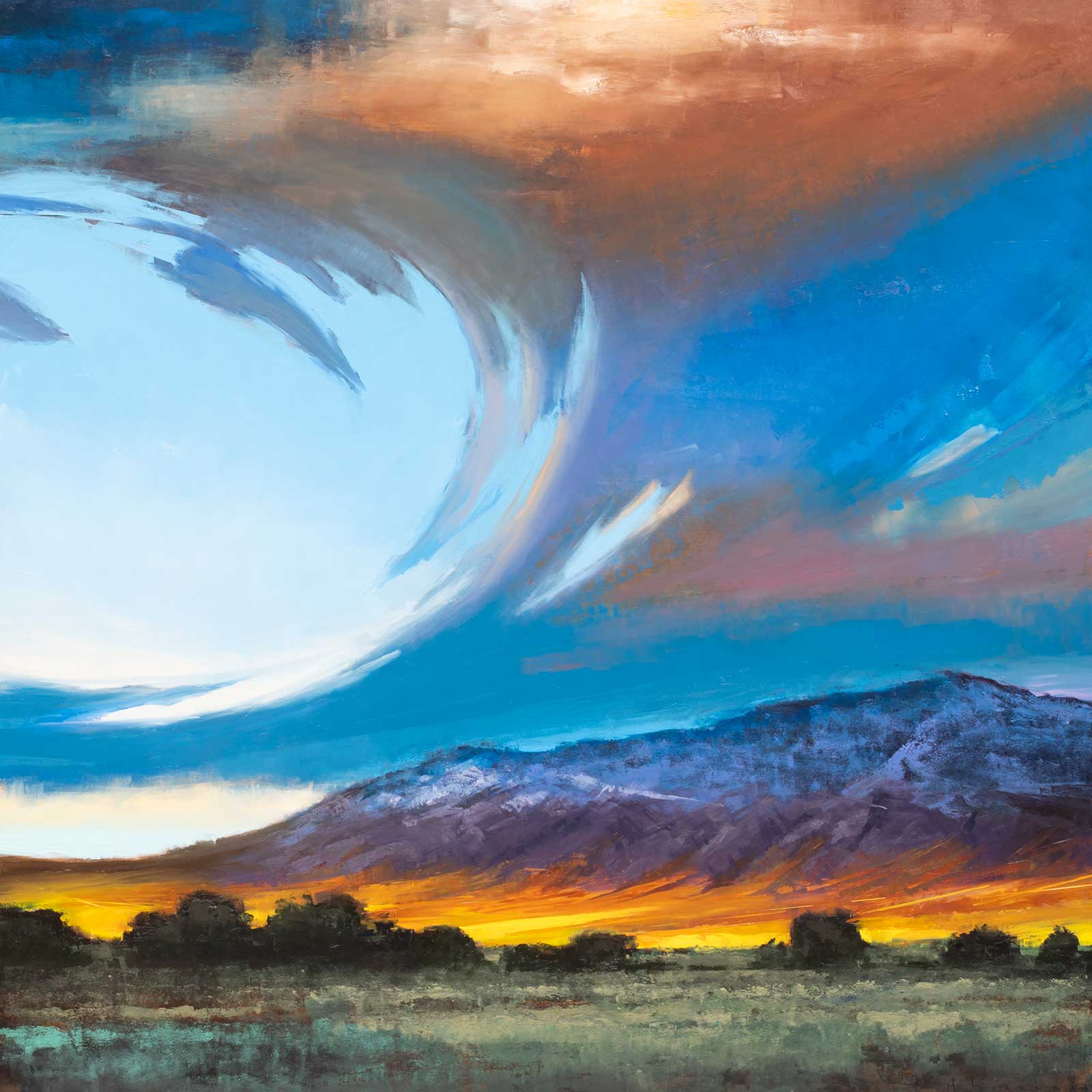 Blue Rain Gallery, Cloud Shadows, oil on panel, 48 x 48", by Matthew Sievers
In her novel, One of Ours, Willa Cather might have been describing McNickle’s painting. “The sky was a midnight-blue, like warm, deep, blue water, and the moon seemed to lie on it like a water-lily, floating forward with an invisible current.”
Jeff Erickson’s grandmother was an American impressionist painter. He says, “I would watch her create colorful brush strokes across the canvas…My paintings have a minimal and literal landscape element, while I try to capture and convey the textures of life. The experience of painting is a great escape from the complexities of life, and I always find myself creating an abstract scene of peacefulness, relaxation and calmness…I’m drawn to water, the sea, the ocean and these feelings show up in my abstract landscapes. I paint with oils and wax medium on canvas, gessoed hardboard and paper. I’m able to create multiple layers of translucent colors and through the process of scratching, distressing and dissolving, I’m able to capture depth and feeling within the painting.”
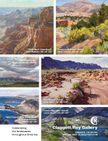
In Marshland, the marsh, shore and trees blend into an overall scene of light and near formlessness.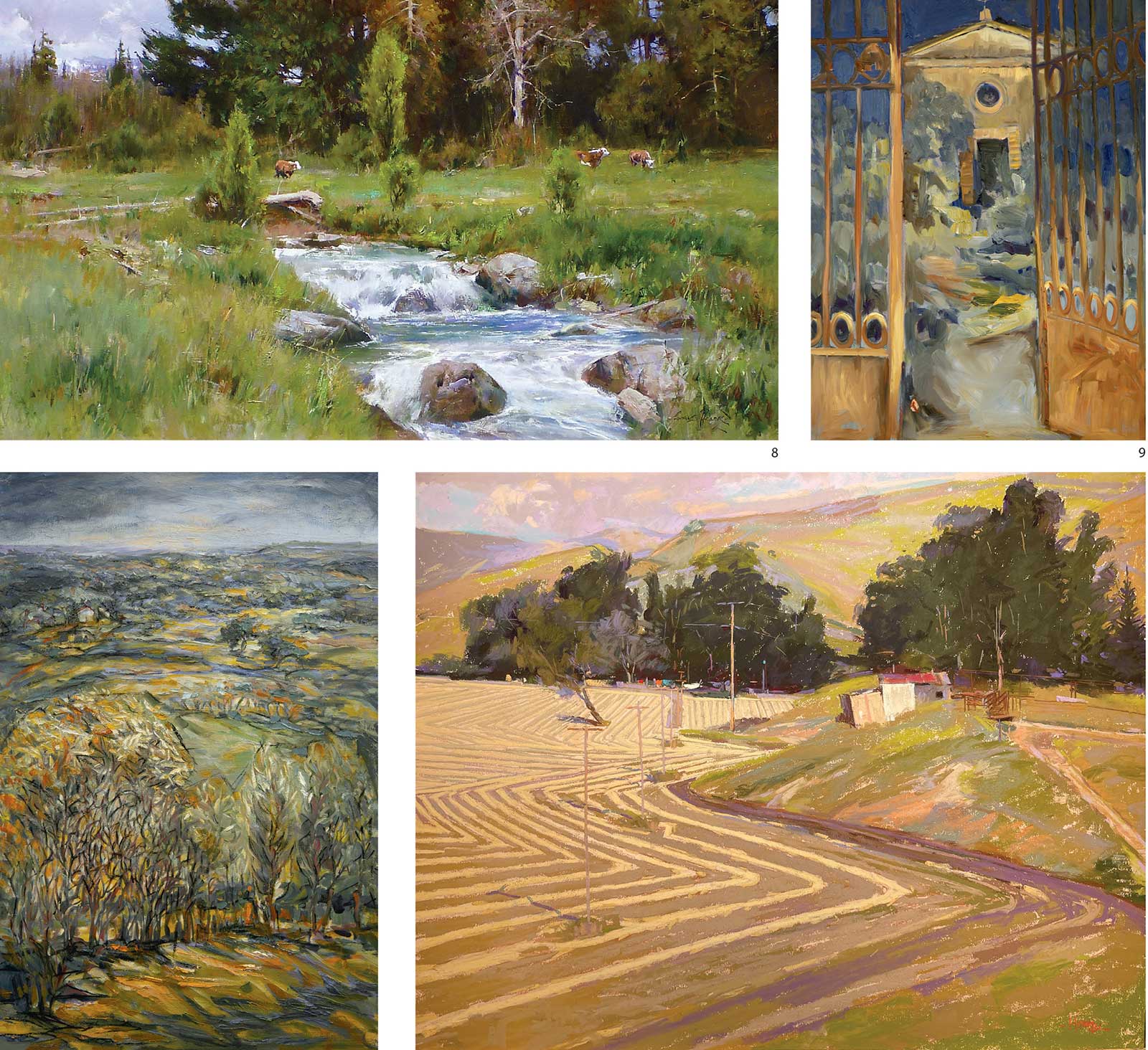 Top row: Claggett/Rey Gallery, Spring Meadow, oil, 22 x 38", by Cyrus Afsary; Janet Grissom, Hinged Barrier, oil on board, 24 x 18". Bottom row: Janet Grissom, Living with Trees, oil on canvas, 36 x 24"; Claggett/Rey Gallery, The Taylor Ranch - Cambria, pastel, 16 x 20", by W. Truman Hosner.
Robert Cocke’s paintings explore exterior and interior landscapes. He writes, “We spend most of our lives indoors, encased in a technological bubble, cunningly devised to entertain and distract us to the point of addiction. What are we trying to avoid? Of course, it is those age-old existential questions—Where did we come from? Why are we here? What happens when we die? We are a part of nature. When we connect with the natural world, we step away from information and entertainment, and we open ourselves up to the possibility of an older, deeper wisdom and the peace that comes with that wisdom.”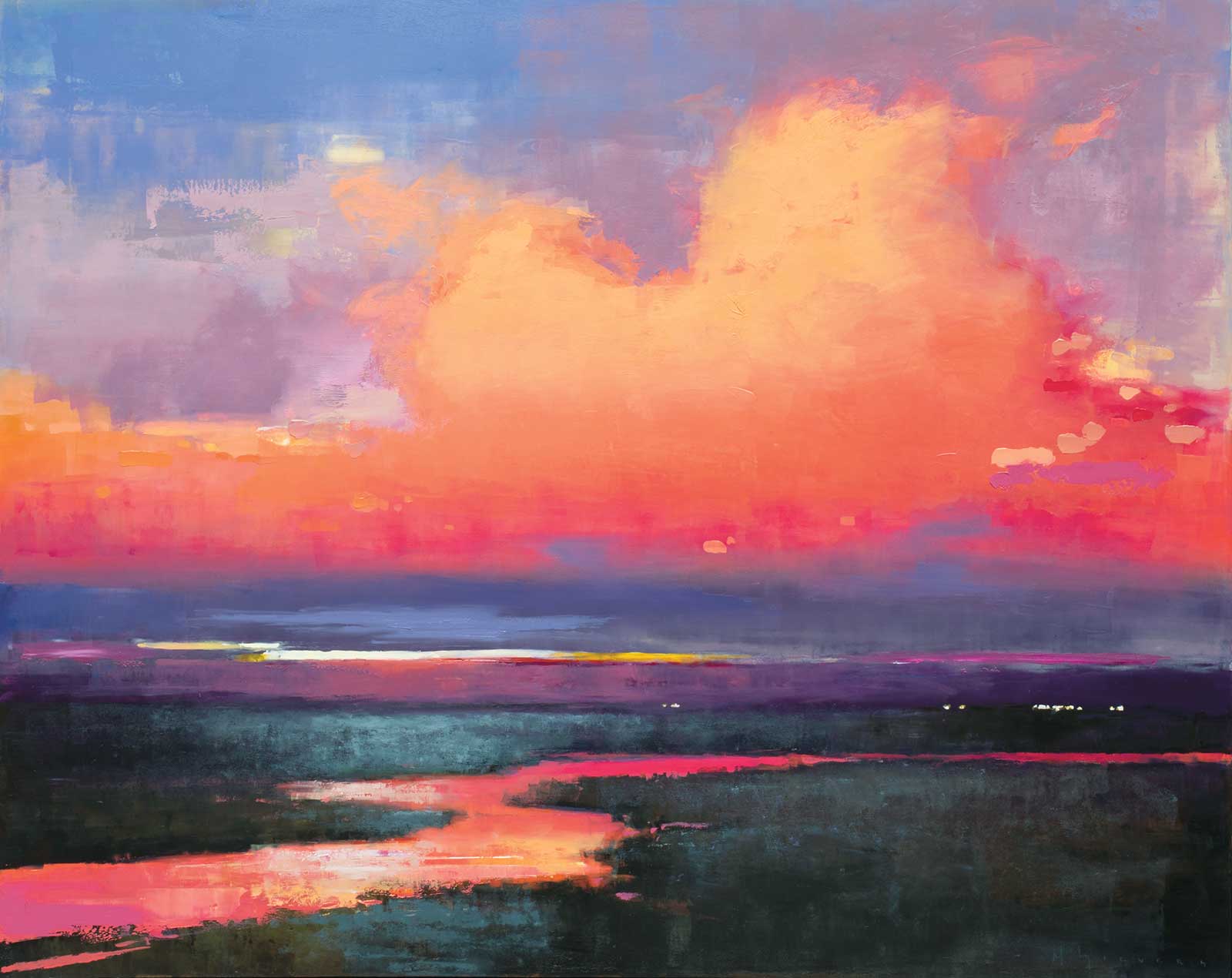 Blue Rain Gallery, Colorful Reflection, oil on panel, 48 x 60", by Matthew Sievers
In Simple Truth, Cocke combines elements of various landscapes into a surreal whole. A pile of rocks in the foreground is echoed in pillars of rock in the middle distance and, possibly, a constructed pile of rocks in a city in the distance. The bare trees in the foreground remind us of the cycle of nature, a conceit often used by Hudson River School painters in the 19th century.
To hear more from artists, galleries and museums on the impact of the landscape in many diverse forms of artwork, continue reading throughout this section dedicated to the genre. Also hear advice and insights on establishing or adding to a collection. 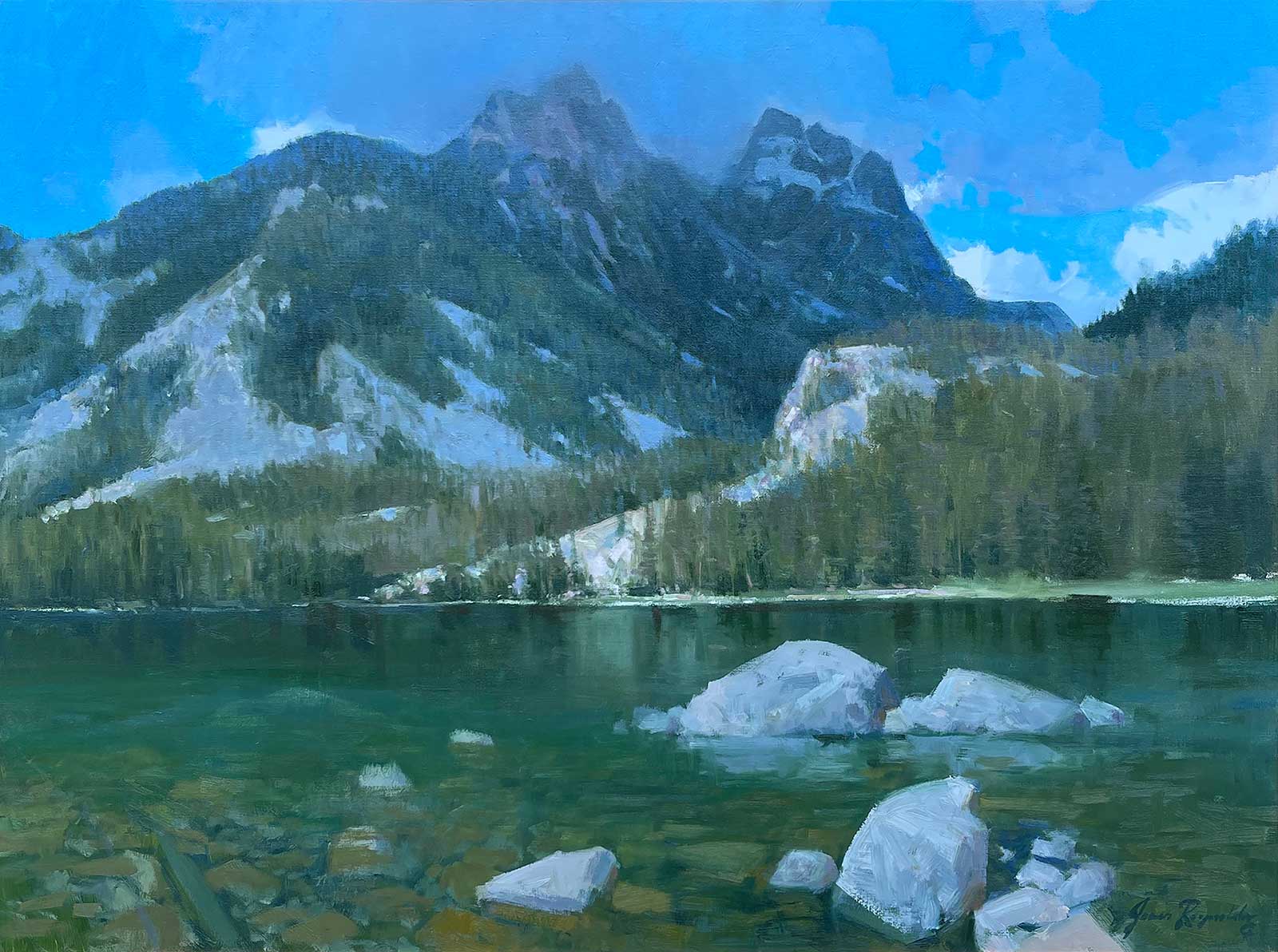 Claggett/Rey Gallery, Sierra Lake, oil, 30 x 40", by James Reynolds.
One of the simple pleasures in life is immersing yourself in a magnificent landscape painting. “The details that present themselves are like a stroke of unexpected color clandestinely drawing your eye or a small figure giving the scene scale,” says Maggie Rey of Claggett/Rey Gallery. “These expressions can only be discovered if you can pause, gazing for an unmeasured amount of time. Whether it’s a small vignette or a work of grand scale, these creations draw you in to the environment at a particular moment in time, presenting seasonal changes from a specific viewpoint, be it a bucolic vista or the rugged mountain terrain.” 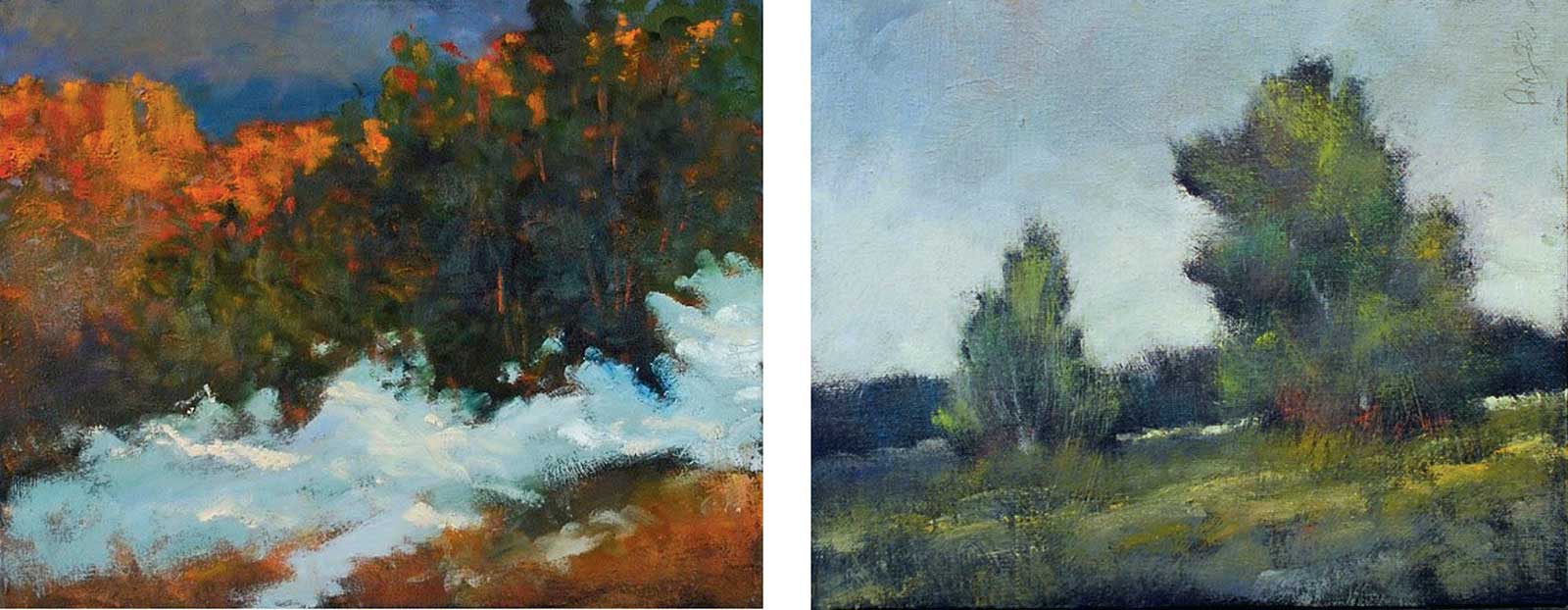 From left: Robert MaGaw, Red Bluffs, oil on canvas, 16 x 20"; Robert MaGaw, The Embrace of Light, oil on canvas panel, 8 x 10"
The gallery is fortunate enough to represent a broad array of contemporary landscape artists who are masters of their fields, including James Reynolds, Curt Walters, Josh Elliott, W. Truman Hosner and Cyrus Afsary, among many others. Rey continues, “We are honored that these masters of their environments have shared these transporting visions with us, and we would love to share them with you.”
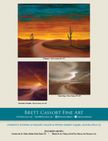
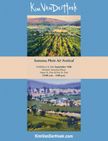
Artist Kim VanDerHoek finds inspiration from her coast-to-coast travels when participating in plein air events. Whether working on location or in her studio using photos taken out of an airplane window, VanDerHoek strives to capture the unique qualities of each place. “I try to balance painting essential details that give a scene it’s individual character while also including bold palette knife work.”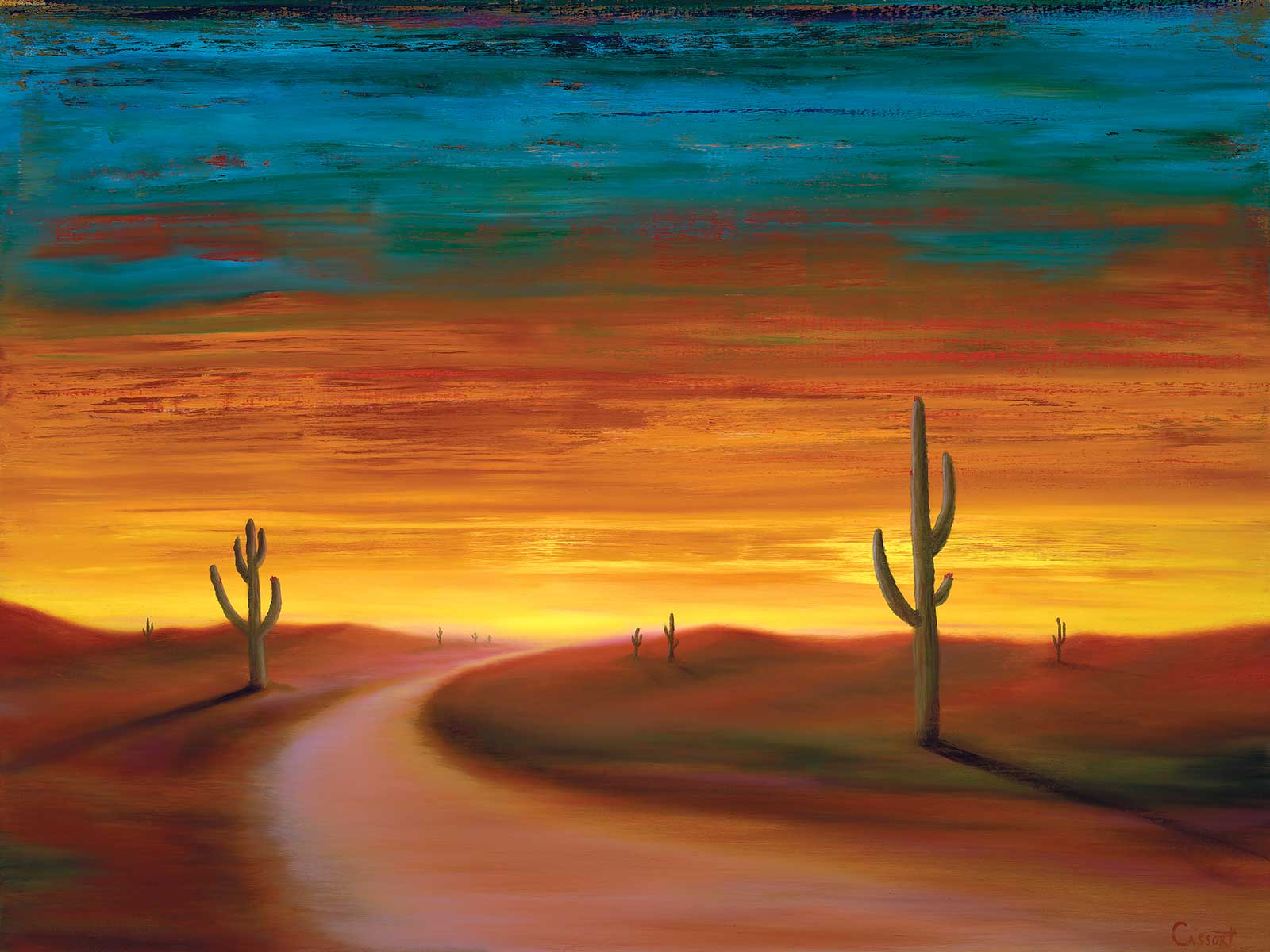 Brett Cassort, 9 Saguaros, oil on canvas, 36 x 48"
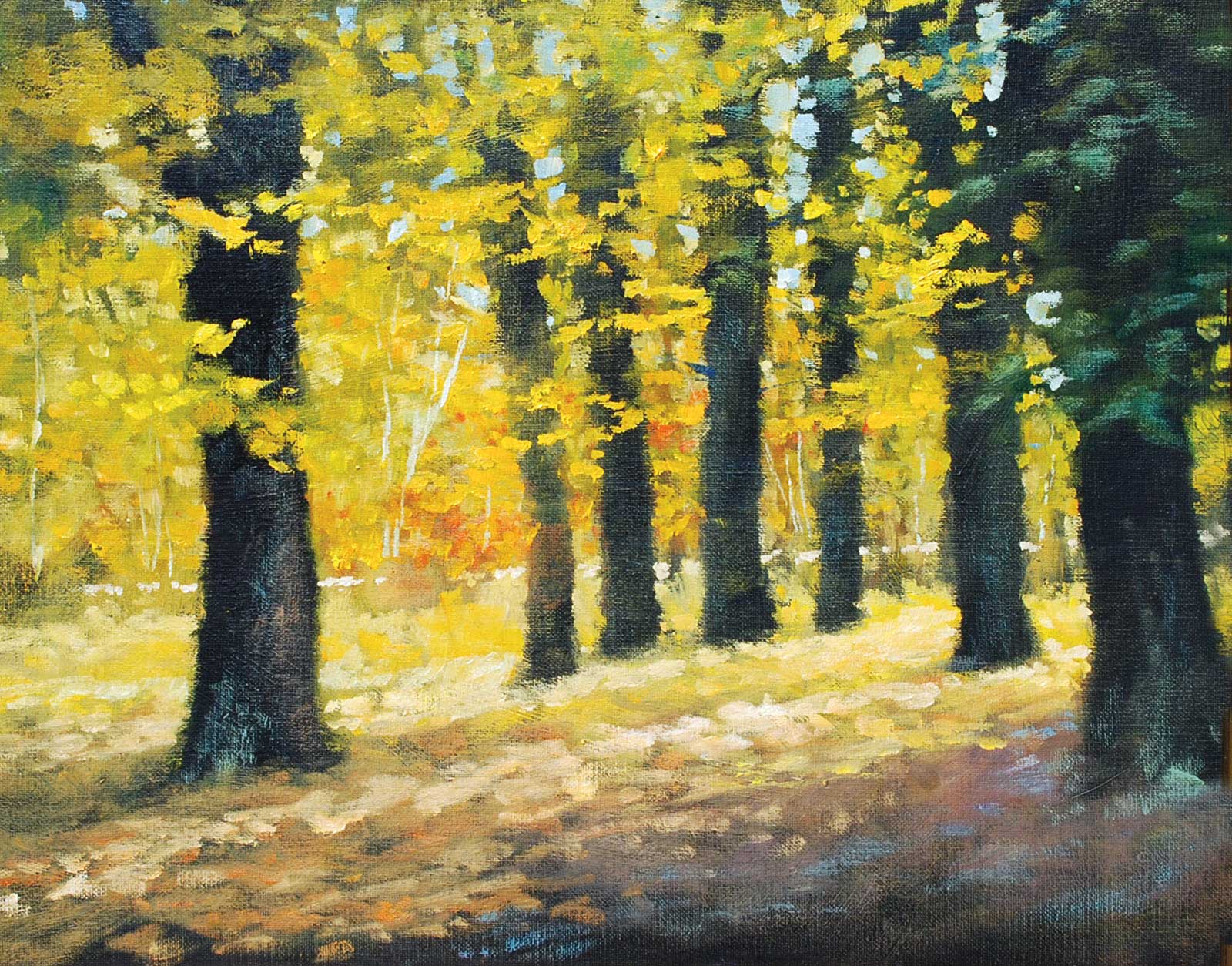 Robert MaGaw, Autumn Grove, oil on canvas, 16 x 20"When collecting, she says, “Buy artwork that challenges you in some way. Over time it will reveal unexpected aspects that will keep you engaged with it long term.”
Matthew Sievers, represented by Blue Rain Gallery, attributes light as a main focus in his work. “As of late, he has been exploring different ways of filtering light in his paintings to create both subtle and dramatic changes in his subjects,” explains Denise Phetteplace, executive director for Blue Rain. “If he can convey temperature or time of day in a painting, he is then free to break rules with abstract mark making and blurred lines, a signature of Siever’s painting style. The artist would prefer that the location of his paintings remain vague in hopes that he can evoke a sense of memory or nostalgia in the viewer. It’s about creating a feeling.”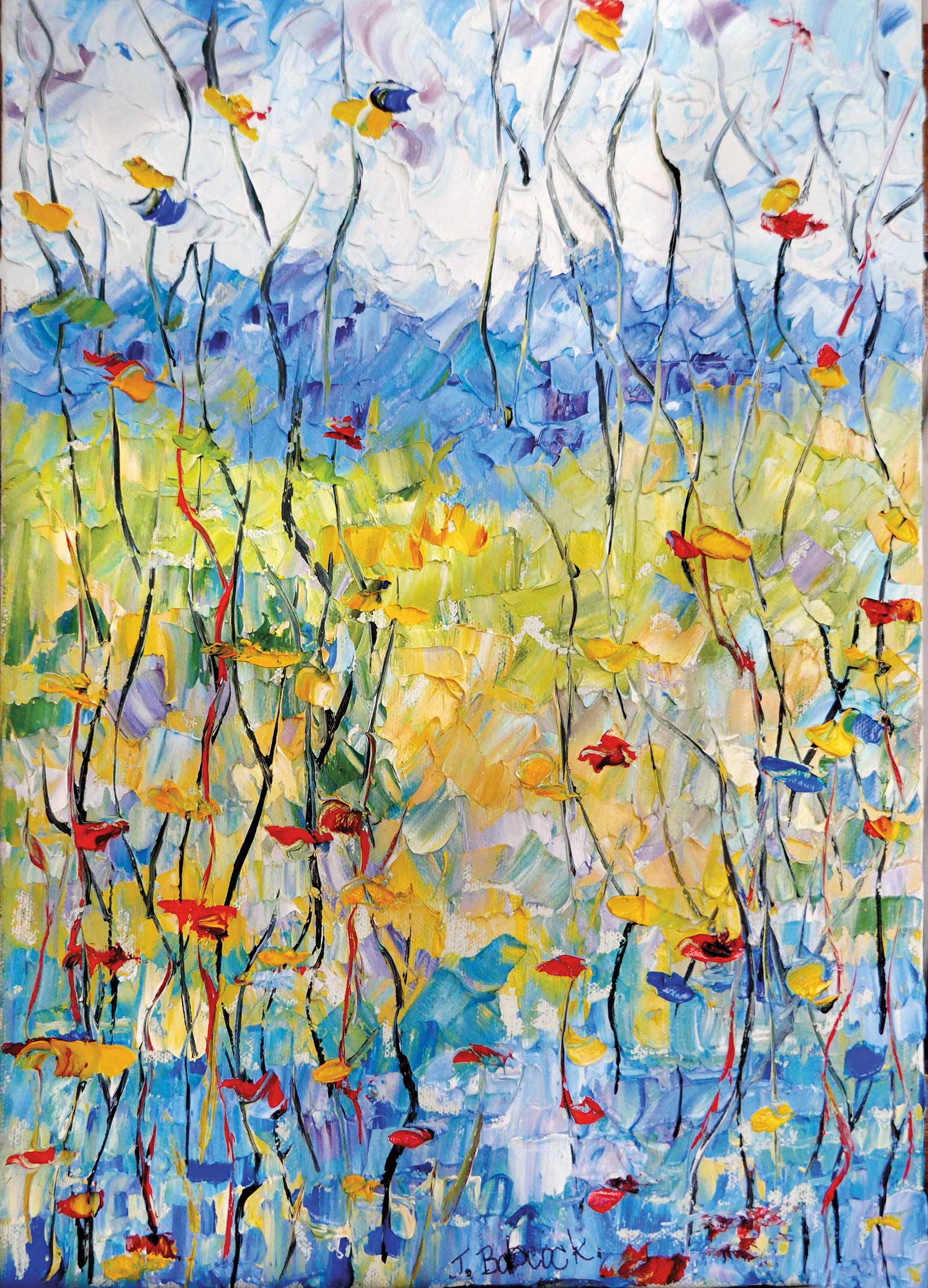 Judith Babcock, Summer Celebration 3, oil on canvas, 16 x 12"
“When collecting work in this genre,” Phetteplace continues, “find something you love and collect the best quality you can afford. There are a lot of landscape painters and paintings to choose from. Find a style of work that speaks to you and do some comparisons.”
Janet Grissom believes that artists create to communicate; “to communicate the joys of life and to communicate the challenges of life,” she says. “But it is with collectors who, by living and sharing these works, allow the world around us to experience these trials and tribulations. I have always felt it is my responsibility as an artist to offer my truest interpretations of the world around me. The emotions of my world, both the calm and chaos, flow through the various colors and textures.” This can be more closely seen in Grissom’s landscapes like Living with Trees, pictured here, where the color palette, shadow and perspective communicate a mood. 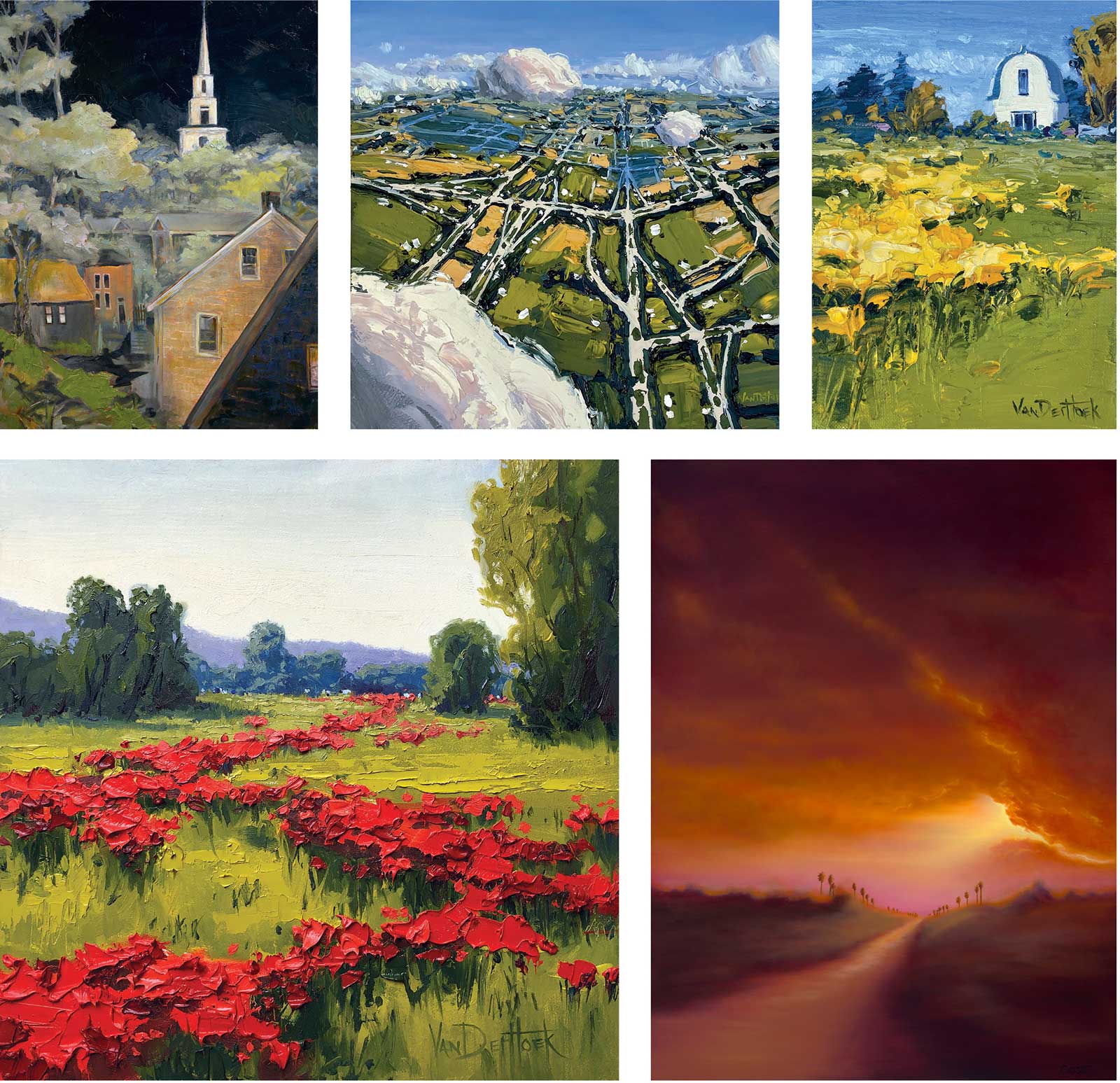 Top row: Janet Grissom, Trajectory, oil on canvas, 48 x 36"; Kim VanDerHoek, Many Roads to Redemption, oil on panel, 10 x 10"; Kim VanDerHoek, Meadow of Dreams, oil on panel, 7 x 5". Bottom row: Kim VanDerHoek, Wild Reds, oil on panel, 12 x 12"; Brett Cassort, Dirt Road to Paradise, oil on canvas, 48 x 36"
“We are all moving through this world together, facing daily challenges of uncertainty,” Grissom continues. “Art is the gift that allows us to experience life together as both creator and collector.”
Artist Brett Cassort implores you to stop and take a deep breath, relax and lower your shoulders as you read. “Take this moment to have gratitude for everything that is good in your life and smile!” He says. “We don’t stop and appreciate the good things in life as often as we should, especially in this tumultuous world. You’ve travelled down many roads in your life to get to this point right here, right now.” The artist’s goal in his dreamy and mesmerizing landscape pieces is to “free you from struggle and to no longer look in the rearview mirror, just focus on the road in front of you, do your best and show the world who you are,” he says. “You’ve weathered storms, you’ve hit plenty of bumps and roadblocks along the way, but you shook it all off enough to be present in this very moment. Resiliency is a beautiful thing so keep traveling down those roads in front of you to discover all the adventures waiting out there, over the hill, around the bend, where the light is coming from. My hope is to inspire you.”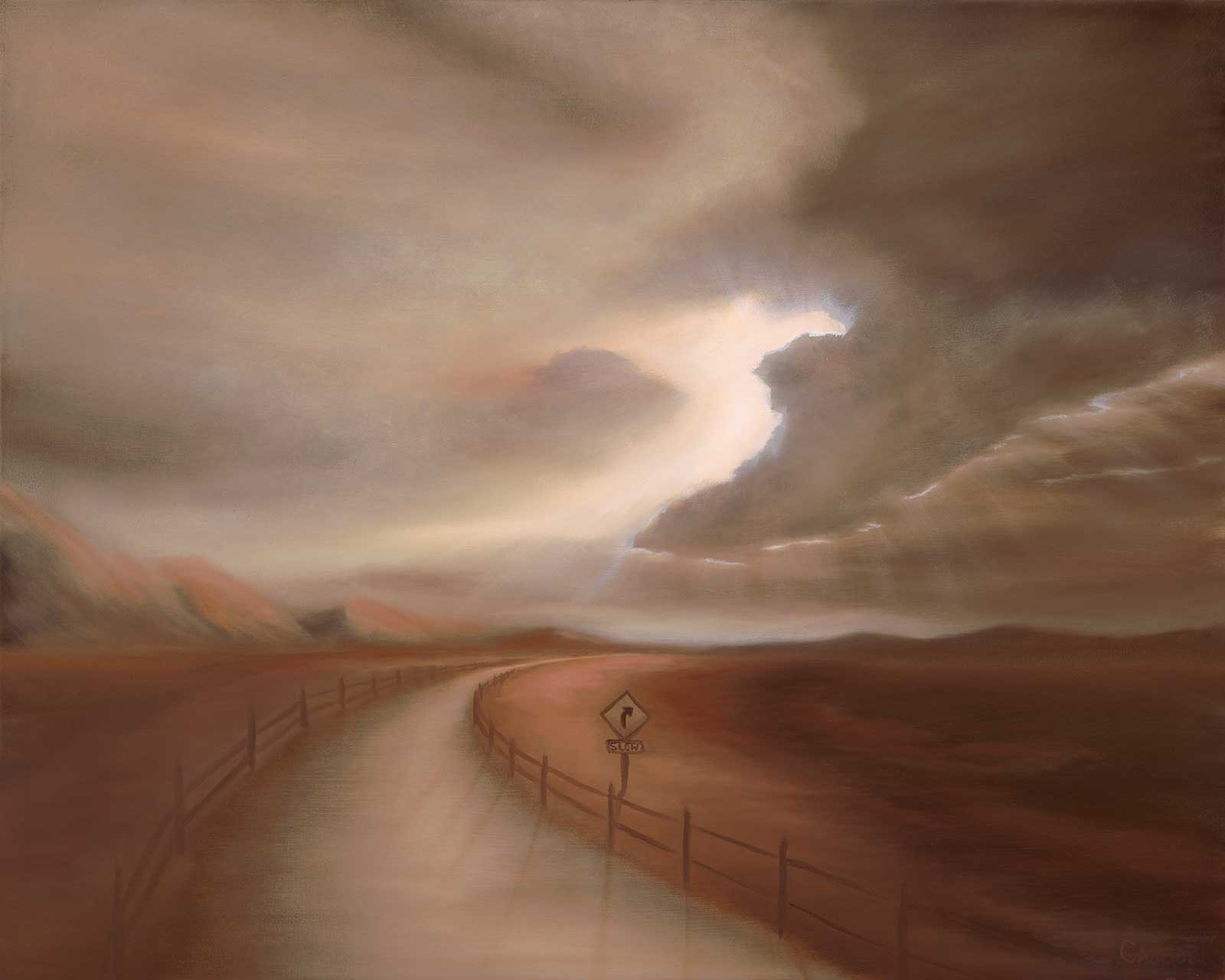 Brett Cassort, Easy Living, oil on canvas, 24 x 30"
Find Cassort’s work at realART Gallery in Agoura Hills, CA, and at upcoming shows at Barker Hanger, Santa Monica, California, September 22 to 25; and at Dallas Market Hall, Dallas, Texas, October 20 to 23. 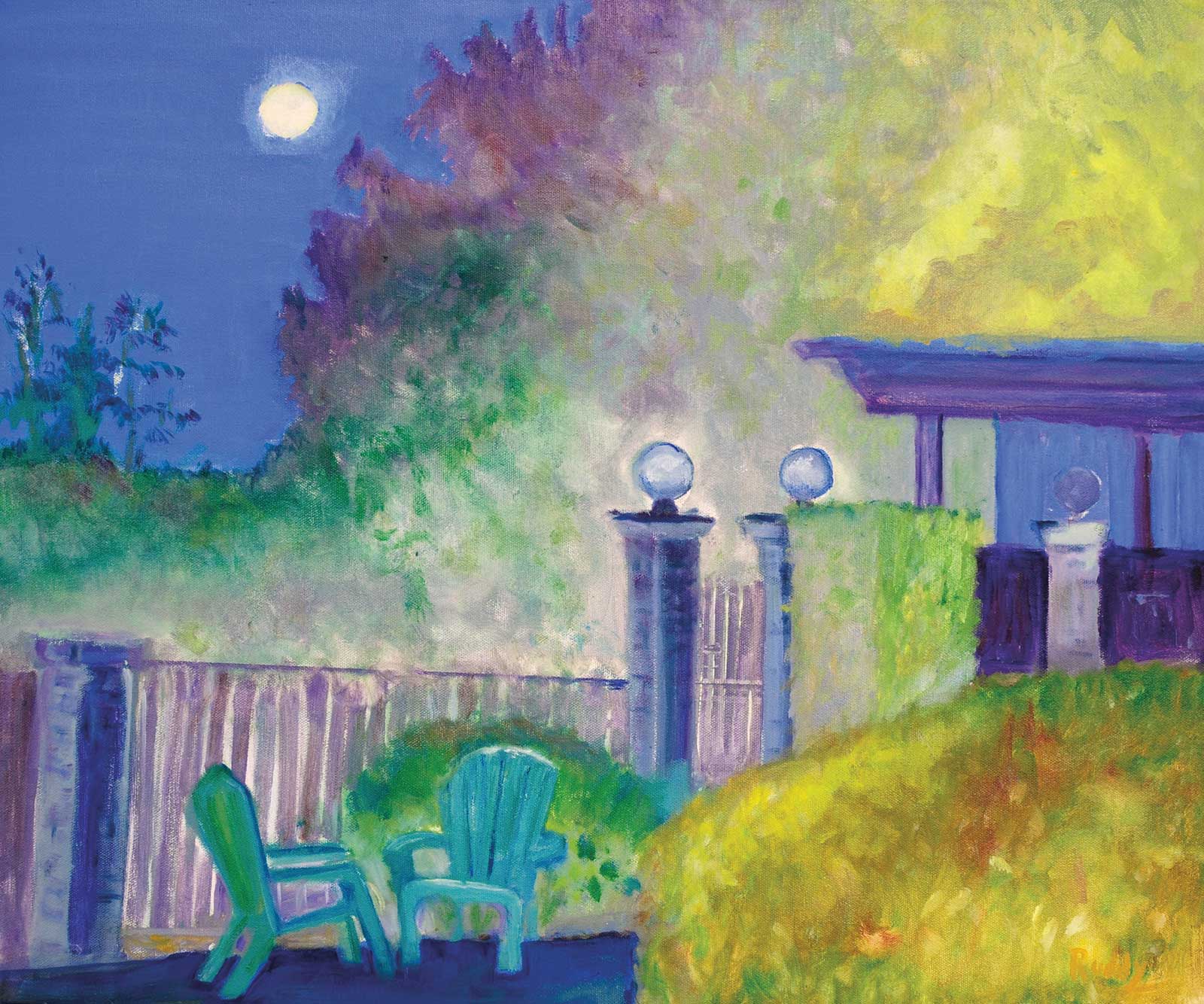 Sally Ruddy, Just Before the Stars Come Out, oil on canvas, 20 x 24"
Artist Robert MaGaw has been called an impressionist, a tonalist and many have commented on a certain atmospheric quality in his work. “I have always been more comfortable outside in nature,” he notes. “When I am painting, I am conscience of how I feel in the landscape; that inspiration flows from me onto the canvas. As a boy, my friends and I would spend our days in the woods and often camped out, doing what young boys do. My paintings, I hope, reflect that youthful sense of adventure, inviting the viewer to come along with me into the woods, the fields or vast open plains that are places to be explored as much as they are peaceful sanctuaries.”
MaGaw’s landscapes are also considered relaxed and colorful, with a sense of the abstract and that beckon the familiar. Some examples of this can be seen in The Embrace of Light, Red Bluffs and Autumn Grove, all pictured here.
For collectors, his only advice when viewing landscape paintings is to “listen to your own voice. If it says ‘I want to be there,’ then you feel that special emotion of your own familiar place—one you will enjoy walking into every single day.”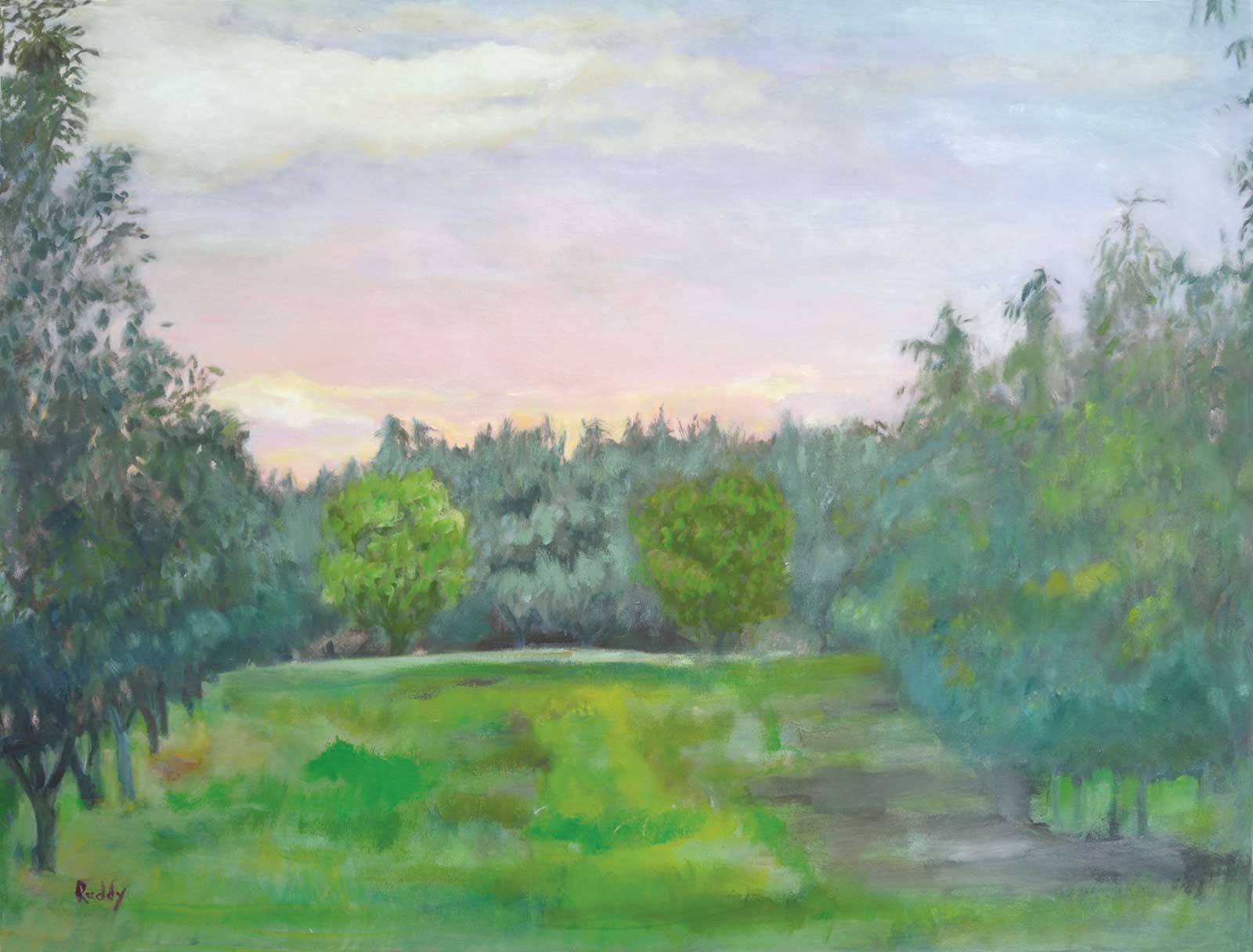 Sally Ruddy, Sultry Summer, oil on canvas, 30 x 40"
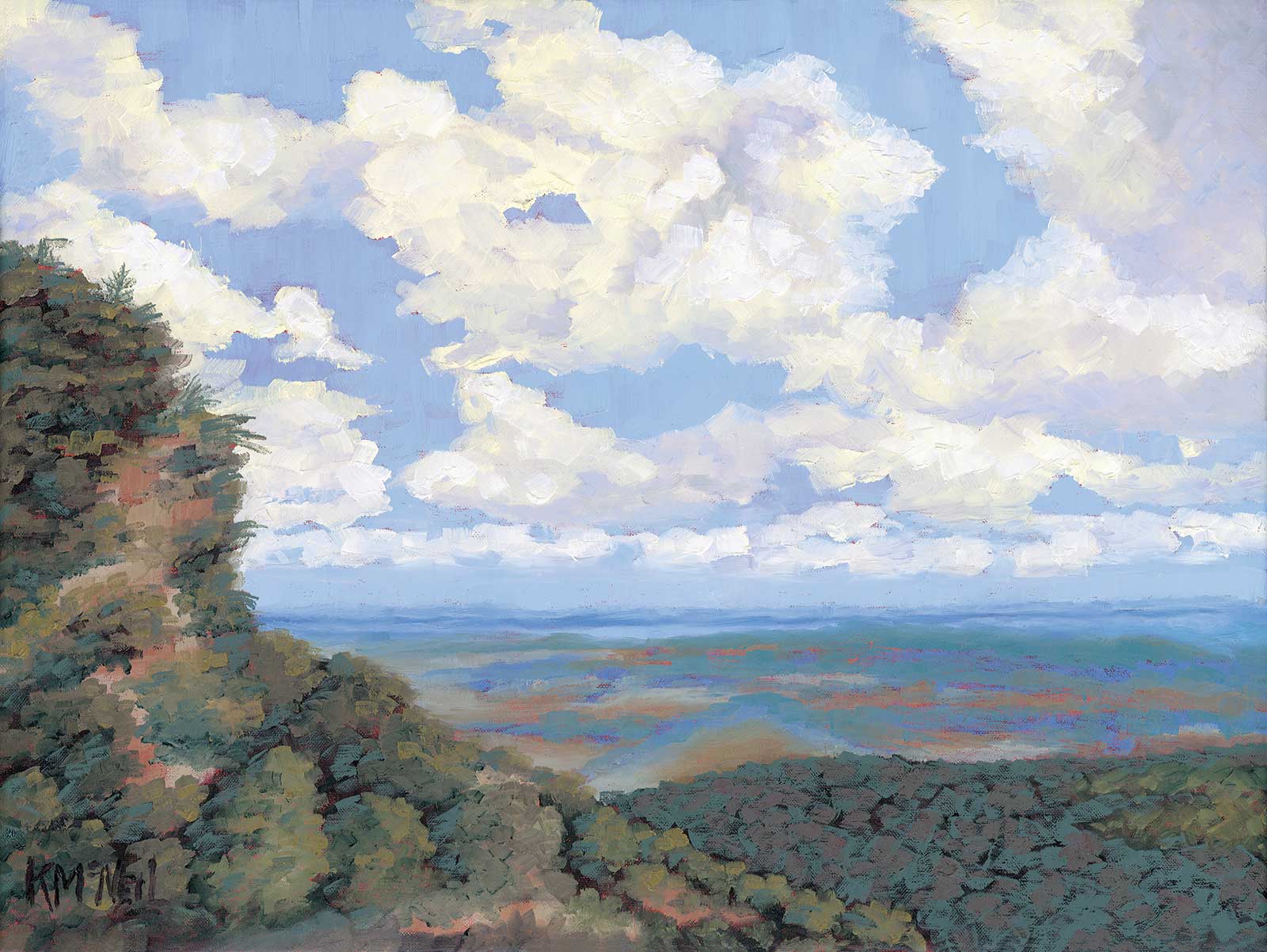 Kasandra McNeil, Pinnacle Overlook, oil 18 x 24"
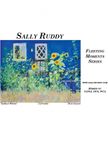
Soft brushstrokes and an airy, effortless blending of colors contribute to a heavenly environment focused on emotional response and personal narrative in the works of Sally Ruddy. Omitting fine details in the scenery, Ruddy creates a setting that is otherworldly, transporting her viewers into her intimate memories of family and self. Her series Fleeting Moments, captures her profound connection to the California Central Valley. Aglow with a poetic softness, her magical scenes of orchards, flowers and skies dance across the canvas reflecting the gentleness and alluring mystique of nature. She explains, “The series reflects my efforts to find those experiences that catch the eye. We want them to last, but what makes them special is how soon they pass.”
Denice Peters creates pastel paintings using strong light and shadow to create beauty, a bit of nostalgia and a sense of peace. “The effect that light has on nature or objects captivates and attracts me,” she says. “It’s this spark of brightness shining against the darkness that inspires me. Regardless of the subject, each painting is about this dramatic glow evoking an emotional response using my honed style I call ‘blended reality.’ The elements of light, detail and feeling all come together in a realistic way to create serenity, appeal and sentimentality, through everyday items, antiques or landscapes that I visit. This is done without tools other than my fingers and pastel sticks. My goal is to help others see that beauty and peace. Life’s too short to do otherwise.” 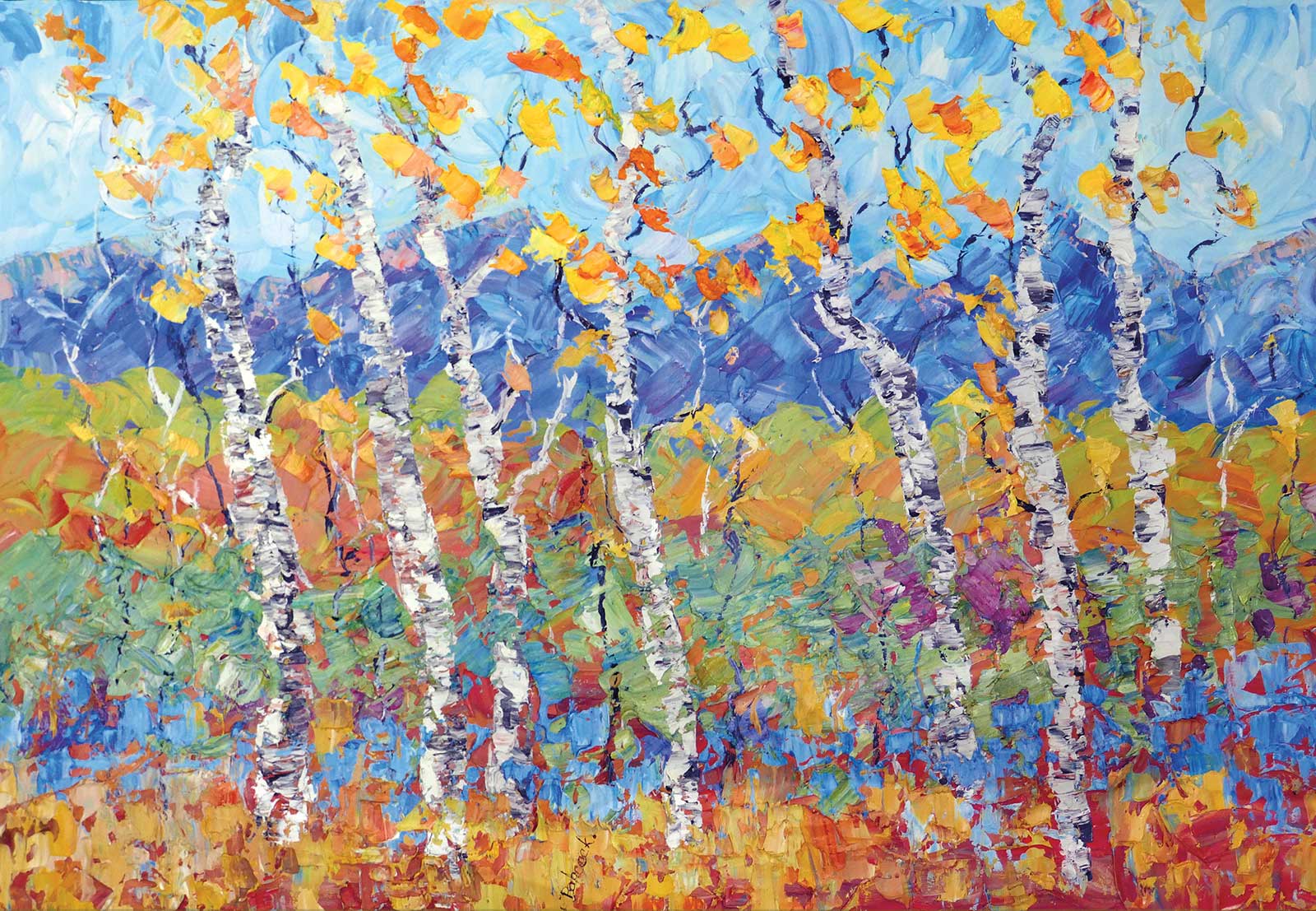 Judith Babcock, Reaching for the Gold, oil on canvas, 30 x 48"
When collecting, she suggests “always buy a painting that you love, that drew your attention. That way you’ll always be happy with it. Decor changes, but a pastel painting will last for centuries!”
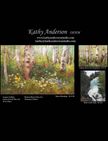
Although Kathy Anderson is an East Coast gal, part of her heart remains among the crisp forests and clear rivers of the West where she visits at least once year. “As a member of the now sadly disbanded Rocky Mountain Plein Air Painters, I would always seek out the aspen groves, water rushing over rocks at a river or waterfall or the many wildflowers that are almost everywhere,” she shares. “The colors, textures and hidden treasures found in the woods…fill me with such peace and excitement at the same time that I’m tempted to stay there forever. 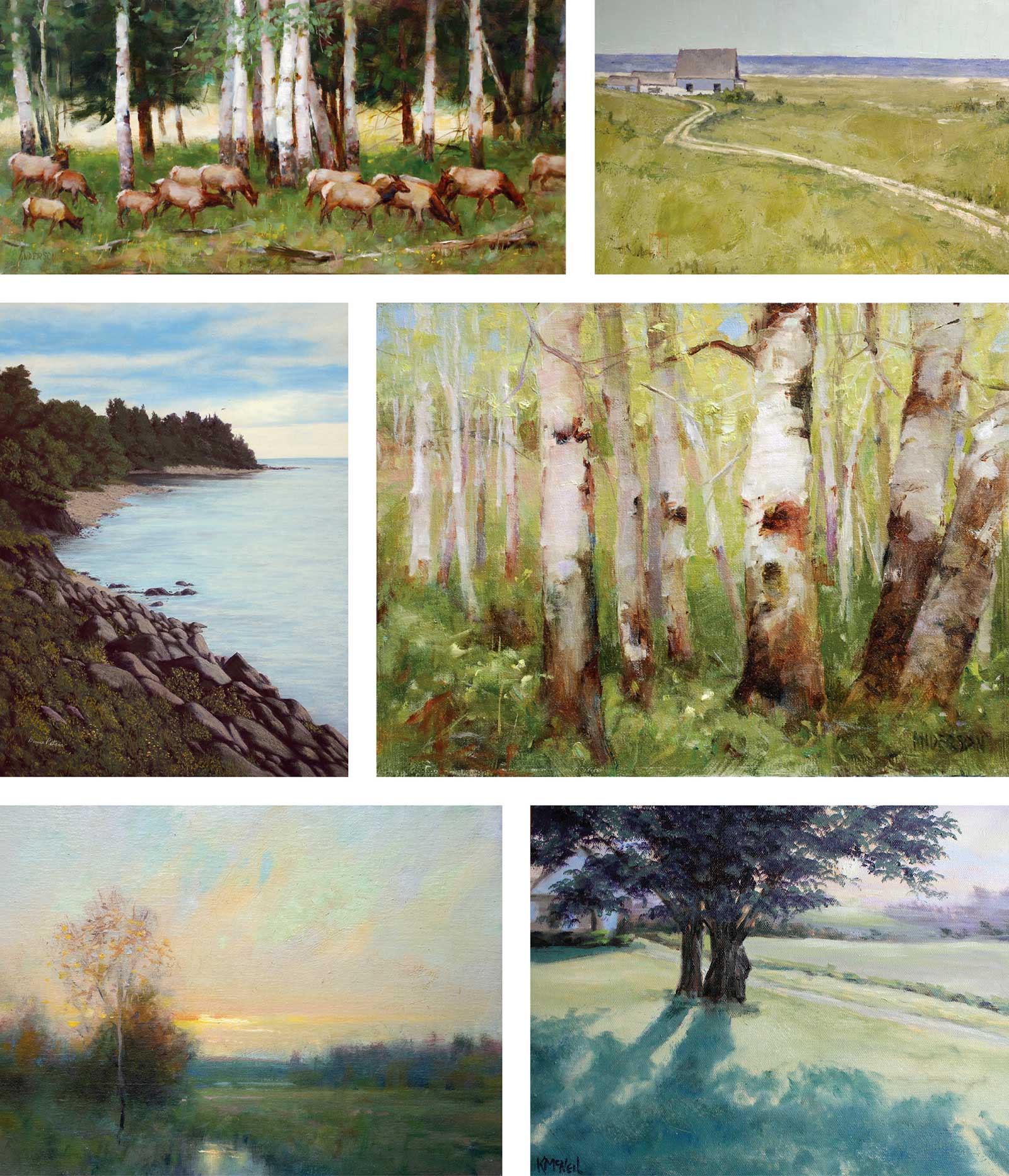 Top row: Kathy Anderson, Everyone Here?, oil on canvas, 10 x 20"; Jason Bailey, Reminiscent, oil, 26 x 36" . Middle row: Denice Peters, Lake Superior Shore, pastel, 24 x 18"; Kathy Anderson, Aspen Grove in Steamboat, oil on board, 9 x 12". Bottom row: John MacDonald, New England Dusk, oil on board, 16 x 20"; Kasandra McNeil, Morning Oracle, oil, 11 x 14"
Anderson’s muse is the intimate landscape, and her hope is that she can convey this feeling to her viewer “so that you’ll want to join me through the forest, in the spray of a waterfall or see the uniqueness of each tree, each rock and every piece of this incredible earth that I love so much,” she says.
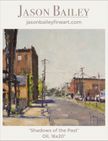
Jason Bailey is an impressionist who is drawn to buildings in the landscape. He often paints small town street scenes along railroad tracks or buildings along the coast, where he can get a variety of man-made and organic subject matter. “I love to find the beauty in the mundane,” he says. Spending the majority of his time painting outdoors from life, he’s learned to capture light and atmosphere on canvas. “I try to capture the energy of life in that moment,” he continues, “that’s what I love about plein air painting. There is constant movement in life, so the splatters, squiggles, bold brush strokes and thick palette knife work is how I see the world in paint.”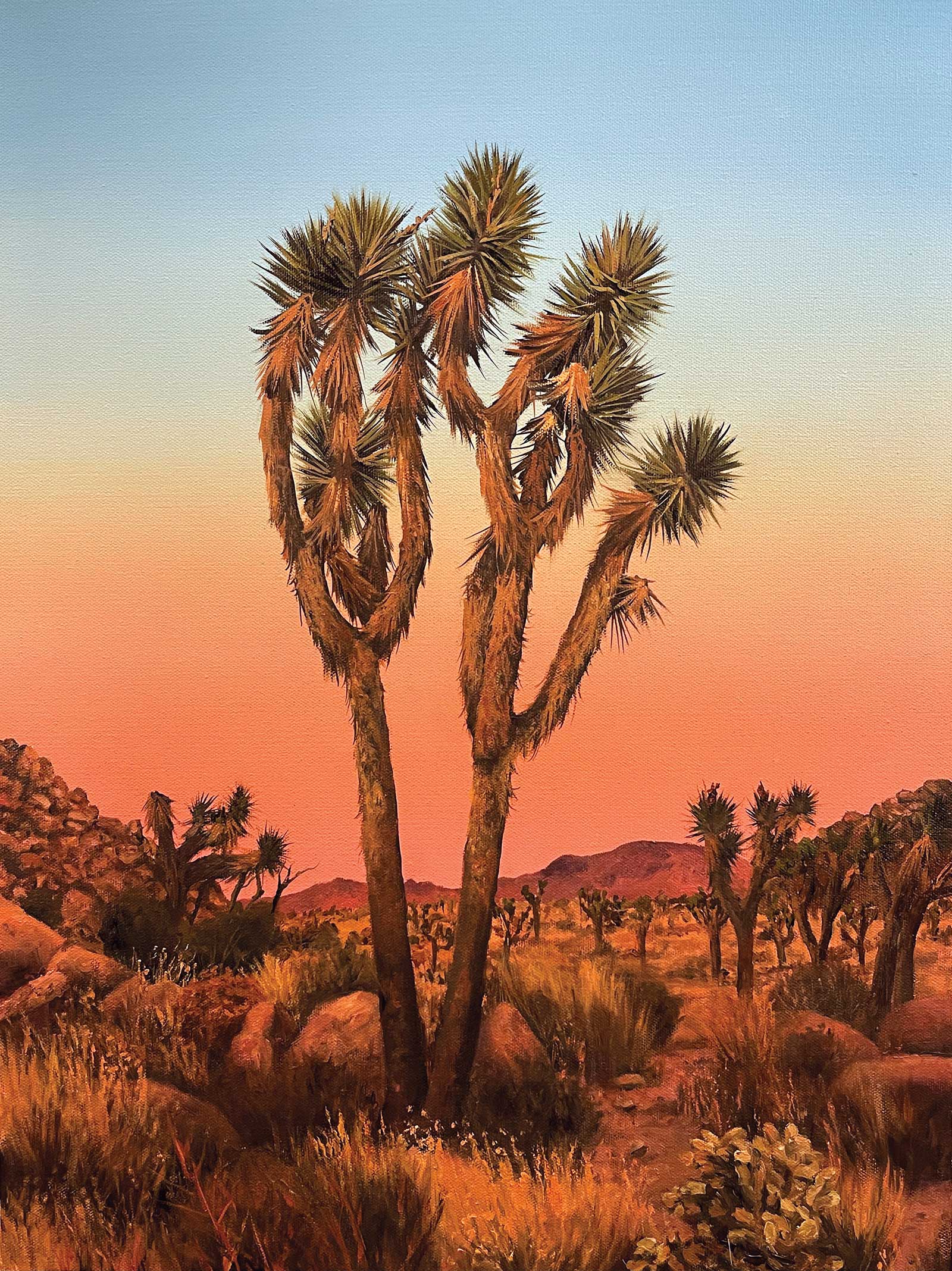 Naomi Brown, Just Peachy in Joshua Tree, oil and acrylic on canvas, 24 x 18"
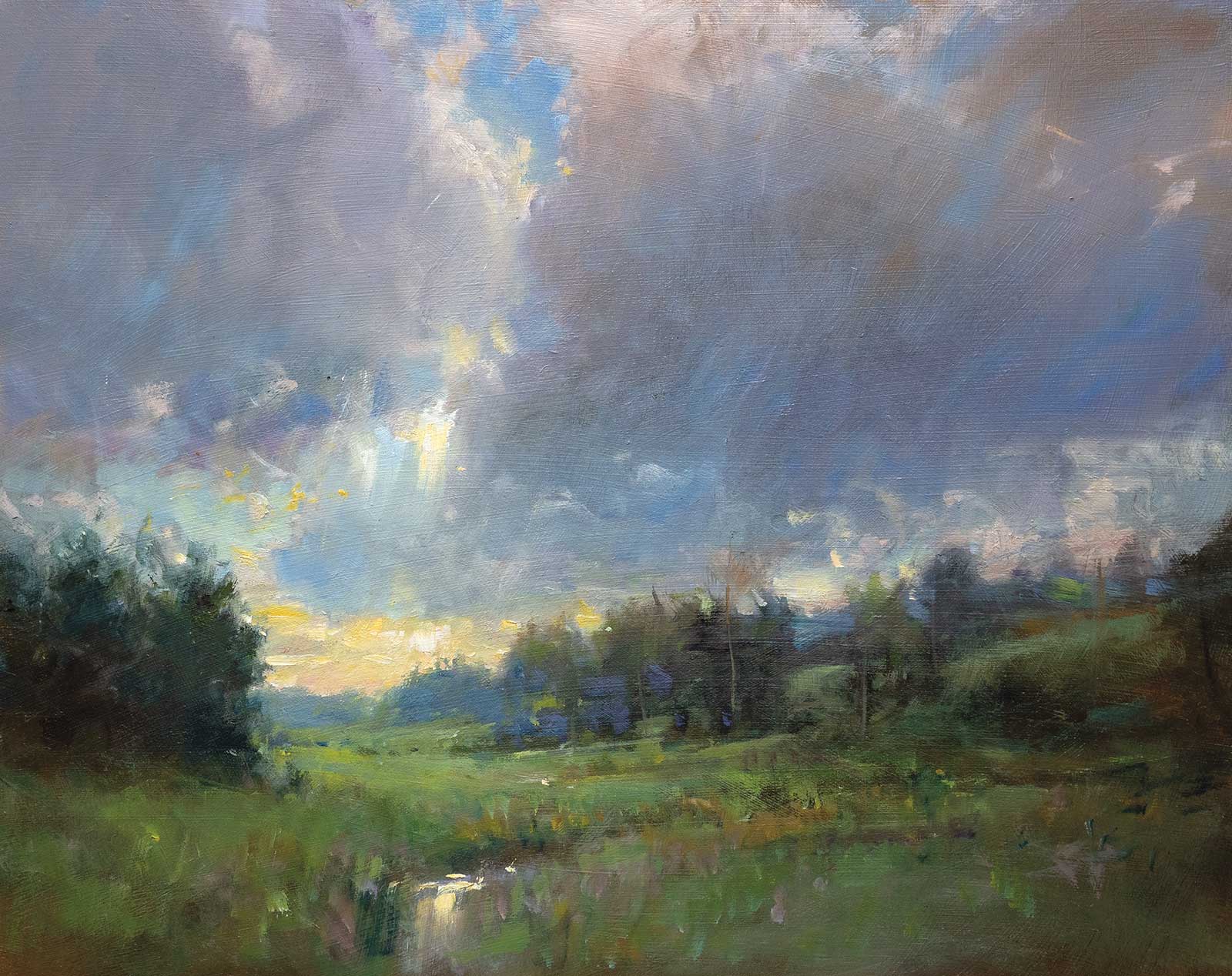 John MacDonald, Berkshire Sky, oil on board, 12 x 16"
His main focus is capturing the energy of the scene with values, composition and textures. In Reminiscent, he sought to find the peaceful mood and energy of an old island home. He shares, “I want you to be able to feel the warm breeze and hear the ocean in the distance when you view this painting.”
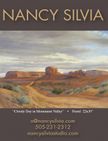
Also an impressionist, artist Judith Babcock trained at the Russian school of painting, and enjoys color and texture in her work. She is also influenced by the Russian expressionist style and studied Don Sahli and Boris Shoshensky, both masters in Russian expressionism. Large aspen landscapes and mountain views set the stage for her own unique style. “My larger paintings are done from my smaller plein air studies and my imagination,” she notes. “The pallet knife is the secret weapon for my bold color contrasts and development of the finished product. Each painting takes on a personality of its own.” Babcock’s work is widely collected and hangs in many private and corporate collections.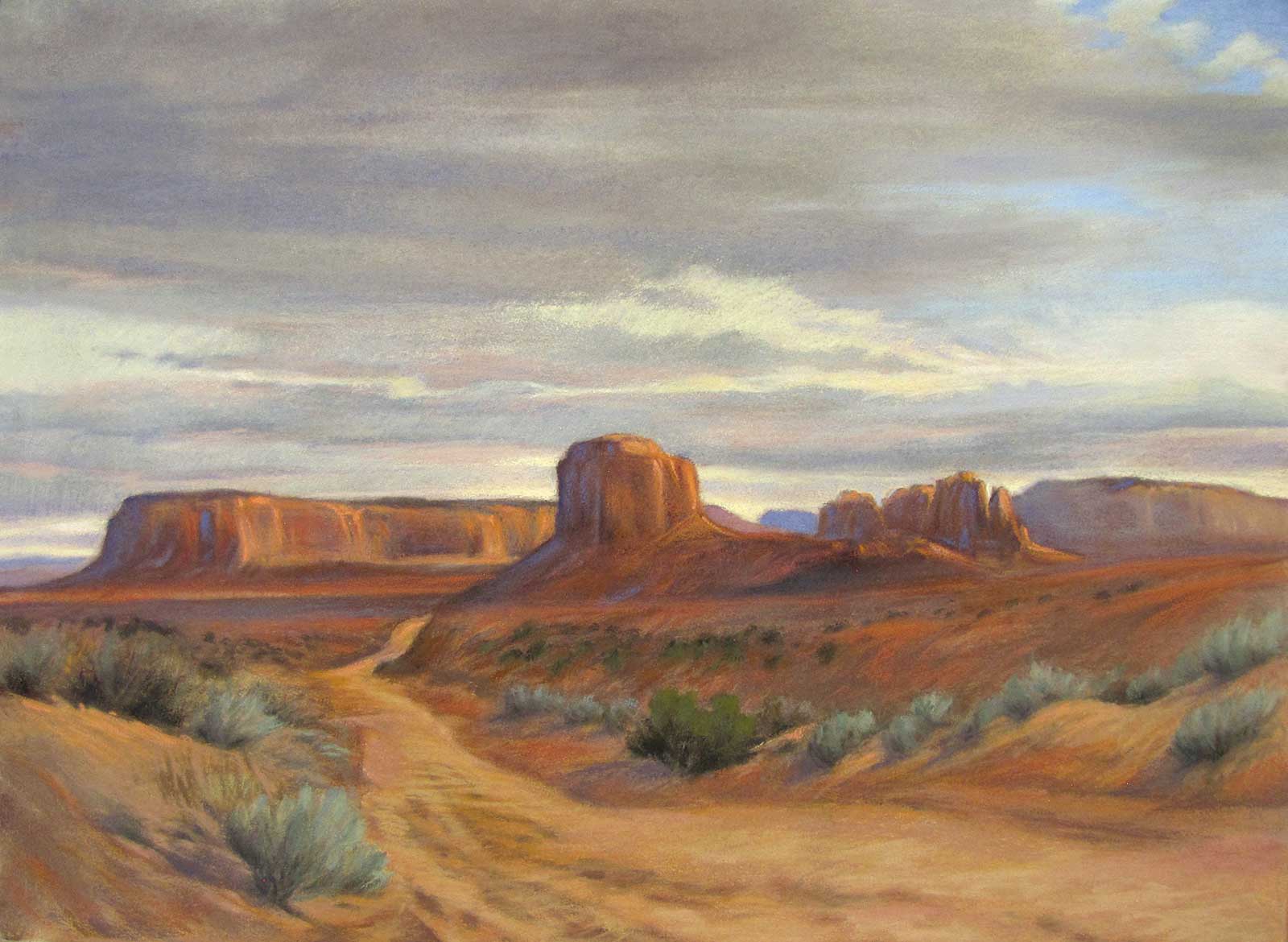 Nancy Silvia, Cloudy Day in Monument Valley, pastel, 22 x 30"
When Kasandra McNeil needs inspiration for a new painting, she walks on her fourth-generation, 30-acre Kentucky farm. “I have been wading the creek behind the property and exploring the timberline my entire life,” McNeil says, “and I have watched the sky, the trees and listened to the bullfrogs in our pond. A certain magic happens when the fog rolls in on a crisp morning. I especially love it when hay bales stand in silence. It may sound crazy, but they talk to me. As I’ve gotten older, I’ve learned to listen.” Her oil paintings capture the creek rushing over slate rock, morning mist diffused by the sun and flowers from her garden. Some of her work features other locations in Kentucky, as well as her international travels. McNeil’s paintings are exhibited throughout Kentucky, as well as the Midwest and the West Coast. Her portraits are in private collections nationwide.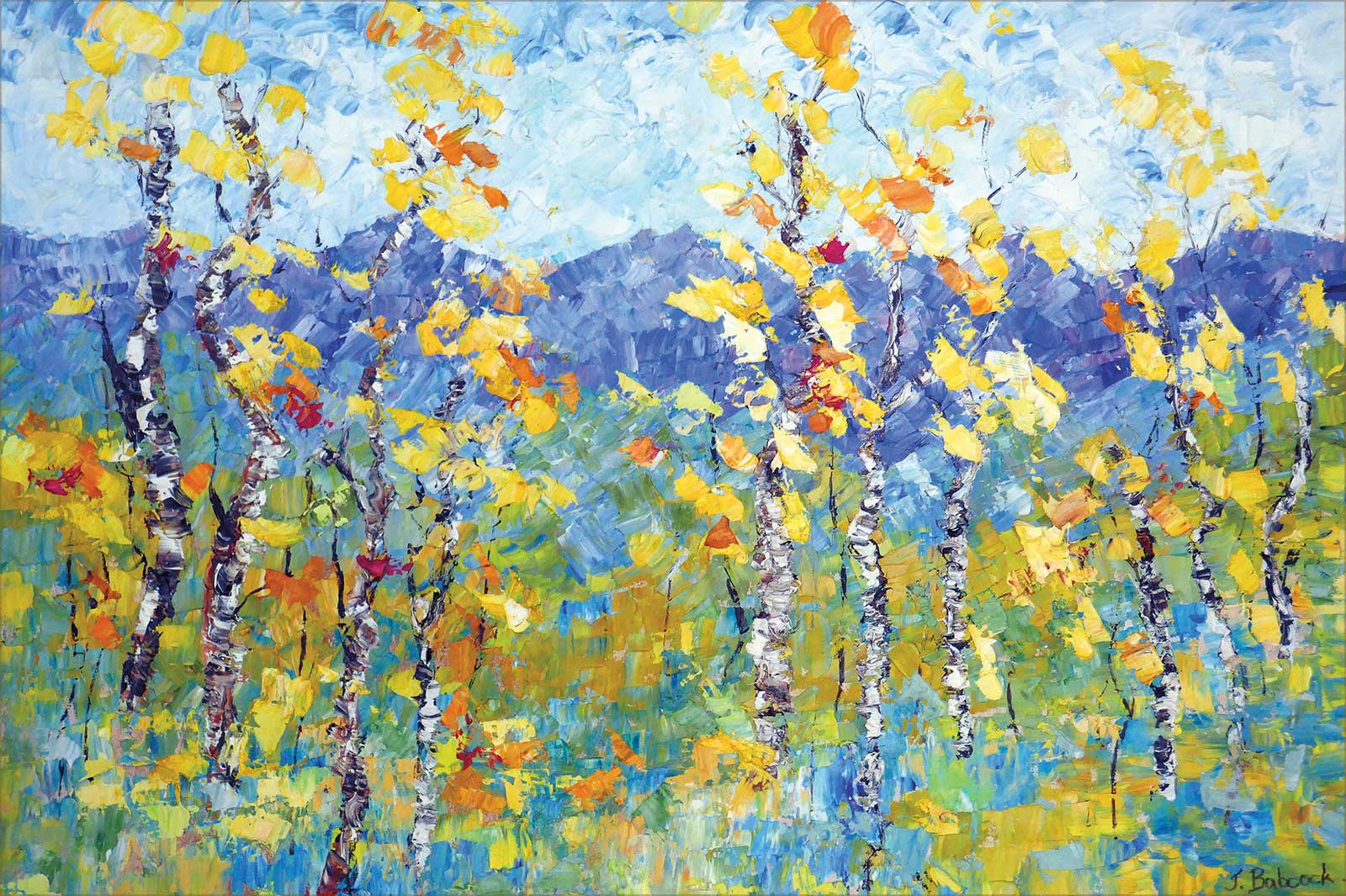 Judith Babcock, Mountain Aspen, oil on canvas, 24 x 36"
As a Southwest Desert landscape artist, Naomi Brown is always trying to push herself as an artist to better understand the Southwest’s array of beautiful colors displayed in its vast landscapes and vibrant sunsets. “I love the challenge of capturing these colors in my paintings,” says Brown. “I feel very lucky to be able to go out in my back yard that extends to hundreds of acres of open Sonoran Desert and study those beautiful desert colors that show up almost every evening in our sunsets here in Arizona. I love when I have collectors tell me they bought my [work[, because they felt like they could walk right into my painting and that they really had a sense of being in that moment. That helps me as the artist feel like I accomplished what I set out to do before I even started that particular painting.”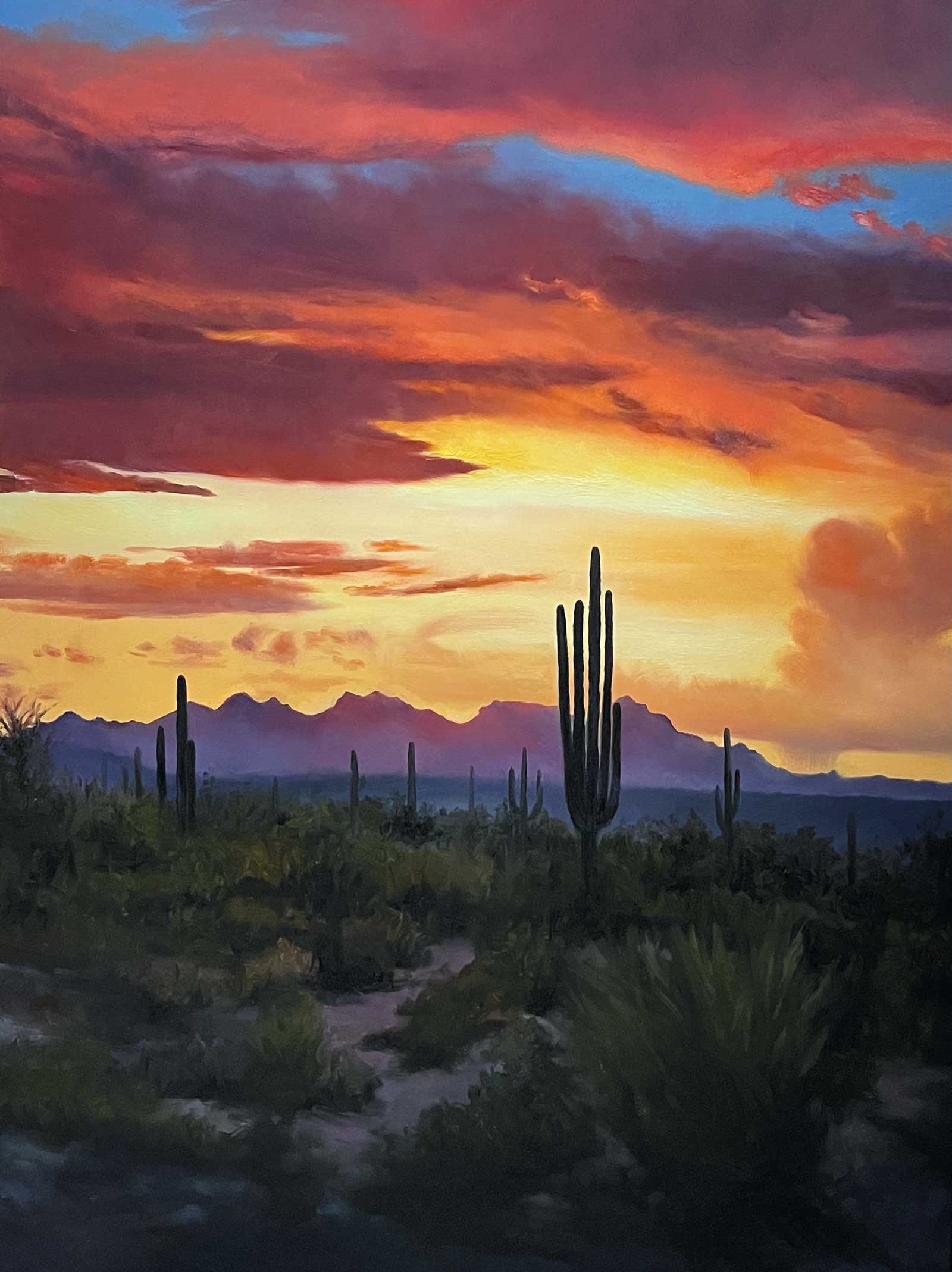 Naomi Brown, Tucson Sunset, oil on canvas, 40 x 30"
In choosing to represent the natural world, Nancy Silvia seeks to evoke a sense of place and the evanescent sensations of light and weather. “There is an active choice involved in observing, selecting, transforming and often inventing elements of the view that I present,” Silvia explains. “In depicting natural landscape scenes in partnership with abstract pictorial composition, I hope to convey an intense and personal impression. Honoring the beauty of nature in a painting is a meditation, a poem and a gift to the viewer.”
For advice on collecting, Silvia notes that “collectors of landscape paintings have a vast range of subjects and styles from which to choose; every person is ultimately moved by a feeling that arrests them in a painting that they wish to acquire. Pastel paintings stand out among other media for the vibrancy of color, drawing and unique velvety surface…”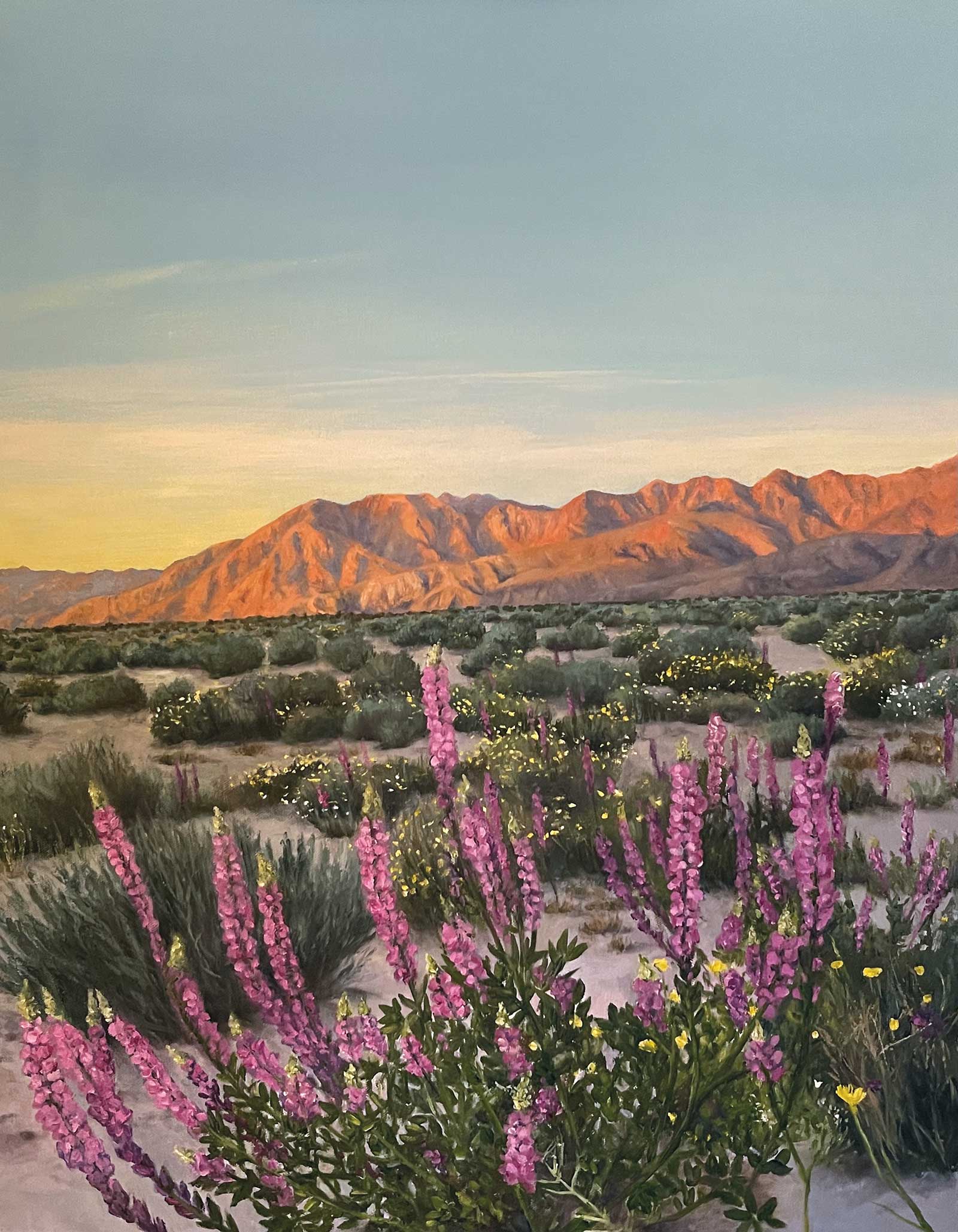 Naomi Brown, Desert Verbena, oil and acrylic on canvas, 24 x 20"
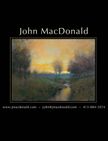
John MacDonald’s love of the landscape is rooted in a childhood spent in the fields and the woodlands of Indiana. “I am in love with the transient yet timeless beauty of the shifting light and color of the natural world, an appreciation that I share with my two greatest influences: the American tonalists and the classical poets of China,” the artist says. “Like them, I strive to say as much as possible with as little as possible—to subtlety suggest forms rather than to overtly describe them. I wish to create paintings that capture a mood rather than tell a story. It is the quiet timelessness of the natural landscape that most speaks to me and which I wish to convey to a viewer. I hope to hint at the greater reality that lies behind the surface of things, leaving some mystery in a painting that entices the viewer to explore the landscape within.”
“[When] buying a landscape,” MacDonald continues, “choose one you’d like to explore; to live in. That’s the sign that the heart connects to it.” —
Featured Artists & Galleries
Blue Rain Gallery
544 South Guadalupe Street
Santa Fe, NM 87501
(505) 954-9902
info@blueraingallery.com
www.blueraingallery.com
Brett Cassort
brett@brettcassort.com
www.brettcassort.com
Claggett/Rey Gallery
216 Main Street suite C-100, Edwards, CO 81632
www.claggettrey.com
Denice Peters
Denison, IA, (712) 263-3090
www.denicepeters.com
Janet Grissom
paintingsbygrissom@gmail.com
www.janetgrissompaintings.com
Jason Bailey
jason@jasonbaileyfineart.com
www.jasonbaileyfineart.com
Jerald Melberg Gallery
625 S. Sharon Amity Road Charlotte, NC 28211
(704) 365-3000
gallery@jeraldmelberg.com
www.jeraldmelberg.com
John MacDonald
(413) 884-2074, john@jmacdonald.com
www.jmacdonald.com
Judith Babcock
Denver, CO, (303) 669-6353
www.judithbabcockfineart.com
Kasandra McNeil
(606) 416-4347
kasandramcneil150@gmail.com
www.kasandramcneil.com
Kathy Anderson
kathy@kathyandersonstudio.com
www.kathyandersonstudio.com
Kim VanDerHoek
Southern California, (949) 510-6921
www.kimvanderhoek.com
Nancy Silvia
(505) 231-2312, n@nancysilvia.com
www.nancysilviastudio.com
Naomi Brown
www.naomibrownart.com
Principle Gallery
208 King Street, Alexandria, VA 22314, (703) 739-9326,
info@principlegallery.com
www.principlegallery.com
Robert MaGaw
(419) 649-9907
robertmagawart@aol.com
www.robertmagaw.com
Sally Ruddy
info@sallyruddy.com
www.sallyruddy.com
Tory Folliard Gallery
233 N. Milwaukee Street
Milwaukee, WI 53202
(414) 273-7311
info@toryfolliard.com
www.toryfolliard.com
Powered by Froala Editor