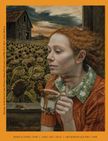
In 1890, writer Lafcadio Hearn arrived in Japan after a tumultuous journey through life that began in Greece, and took him to Dublin, Ireland, and later Cincinnati and New Orleans in the United States. After his arrival to Japan, he was immediately struck by the culture of the country, particularly its folklore, legends and ghost stories. Hearn, who would later take the legal name Koizumi Yakumo, would eventually publish Kwaidan: Stories and Studies of Strange Things, which cataloged some of the stories that had largely been passed on via oral traditions. The book was a sensation. 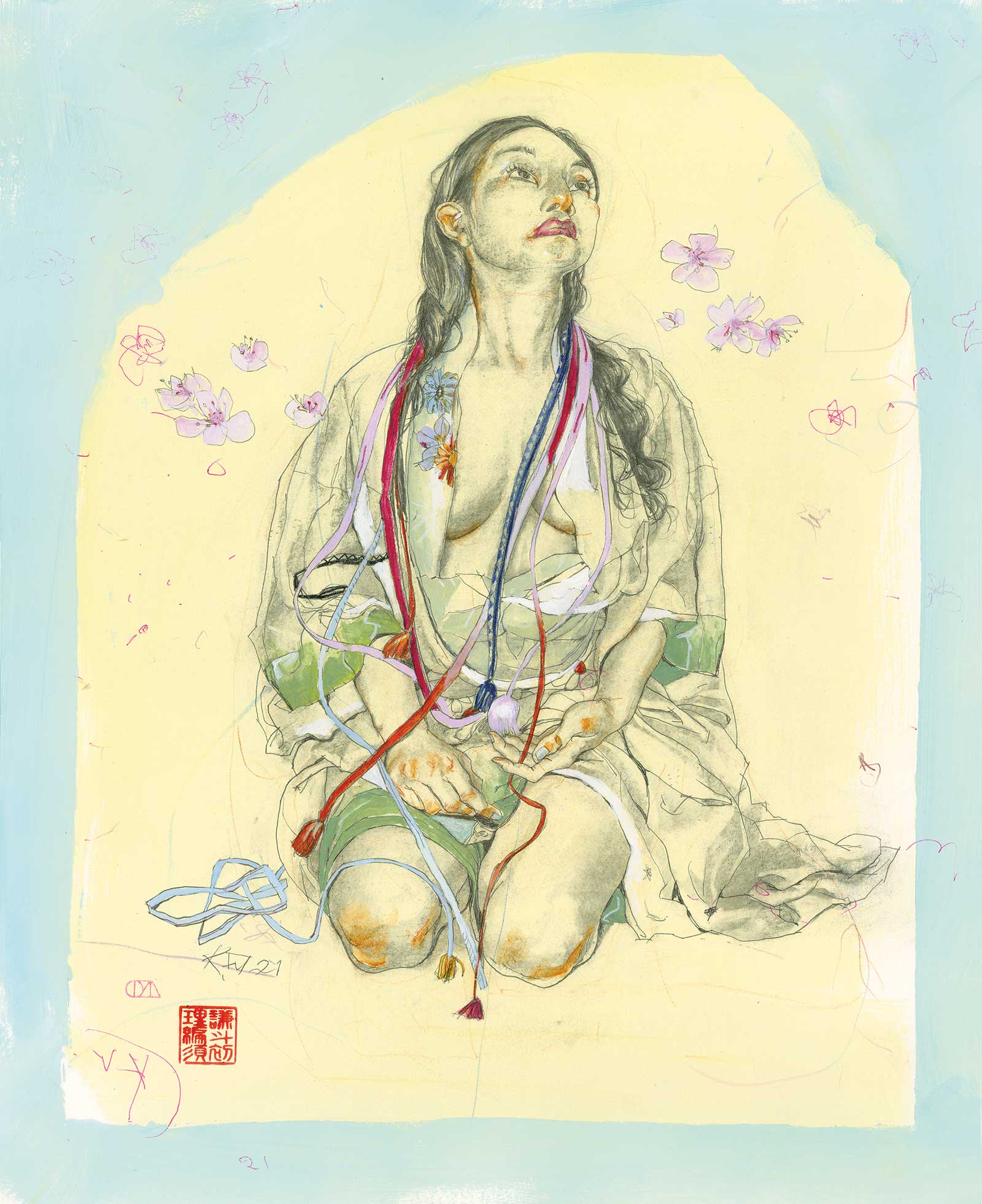 Ubazakura, mixed media on paper, 22 x 16"
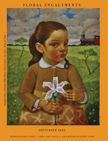
More than 130 years since Hearn arrived in Japan, Beehive Books is offering a new version of Hearn’s stories with The Kwaidan Collection. The book will have new illustrations created by California painter Kent Williams, who will be presenting the original paintings and drawings for the book at a new show opening September 10 at KP Projects in Los Angeles. “It’s a dream project,” Williams says, adding that Kwaidan and similar books by Hearn have been in his library for many years. “It’s Japanese folklore, but it’s also the closest thing you’ll get to Edgar Allan Poe. They’re not horror stories so much, but folk tales handed down for centuries. [Hearn] was so engrossed in the stories that the Japanese people accepted him for what he was doing by writing these stories down.”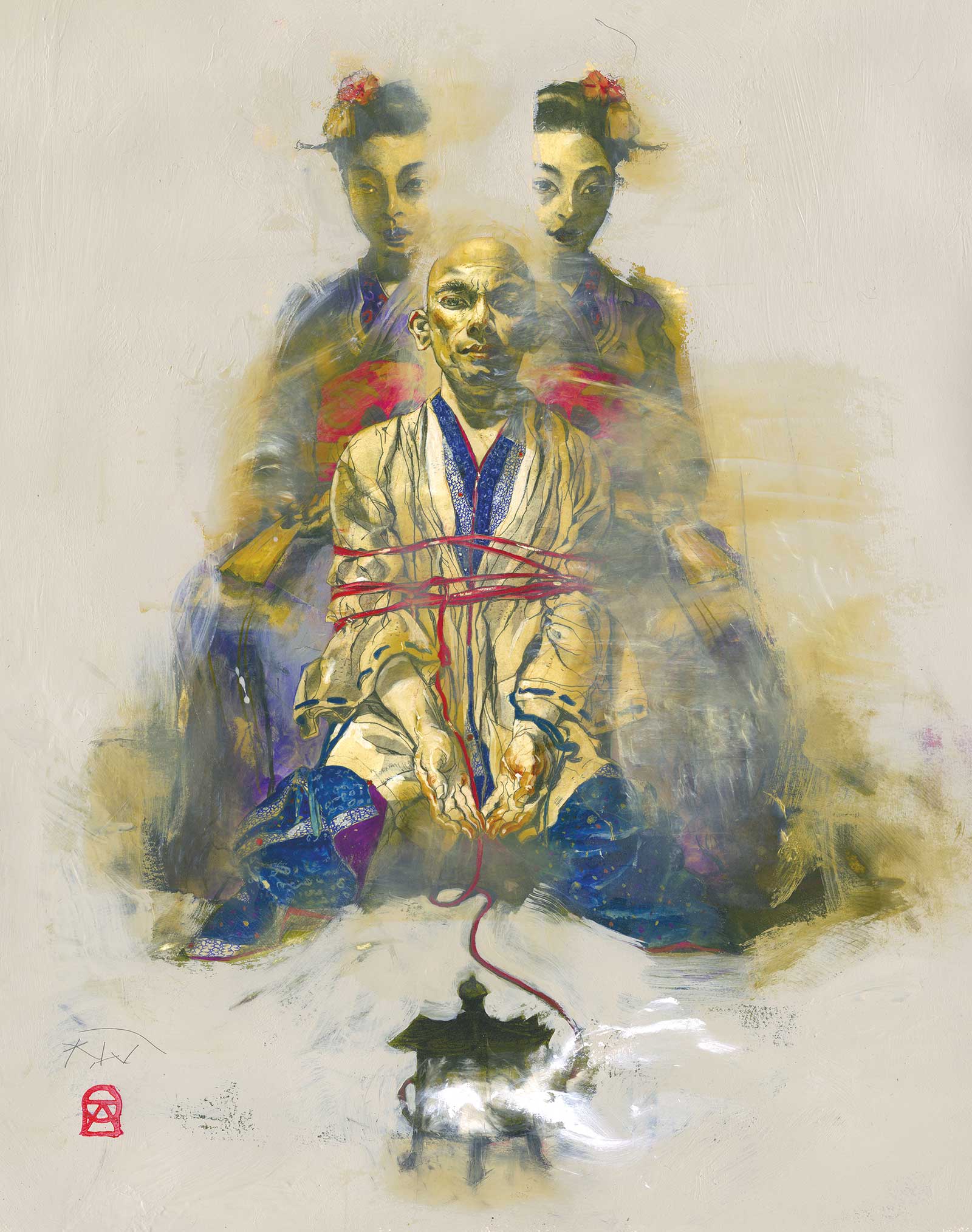 Sympathy of Benten, mixed media on paper, 22 x 16"
Williams was first introduced to Kwaidan through Masaki Kobayashi’s 1965 film, which told four stories from two Hearn books. So it’s fitting then that the forward of the book is written by filmmaker Darren Aronofsky, who worked with Williams on a graphic novel version of his 2006 film The Fountain. 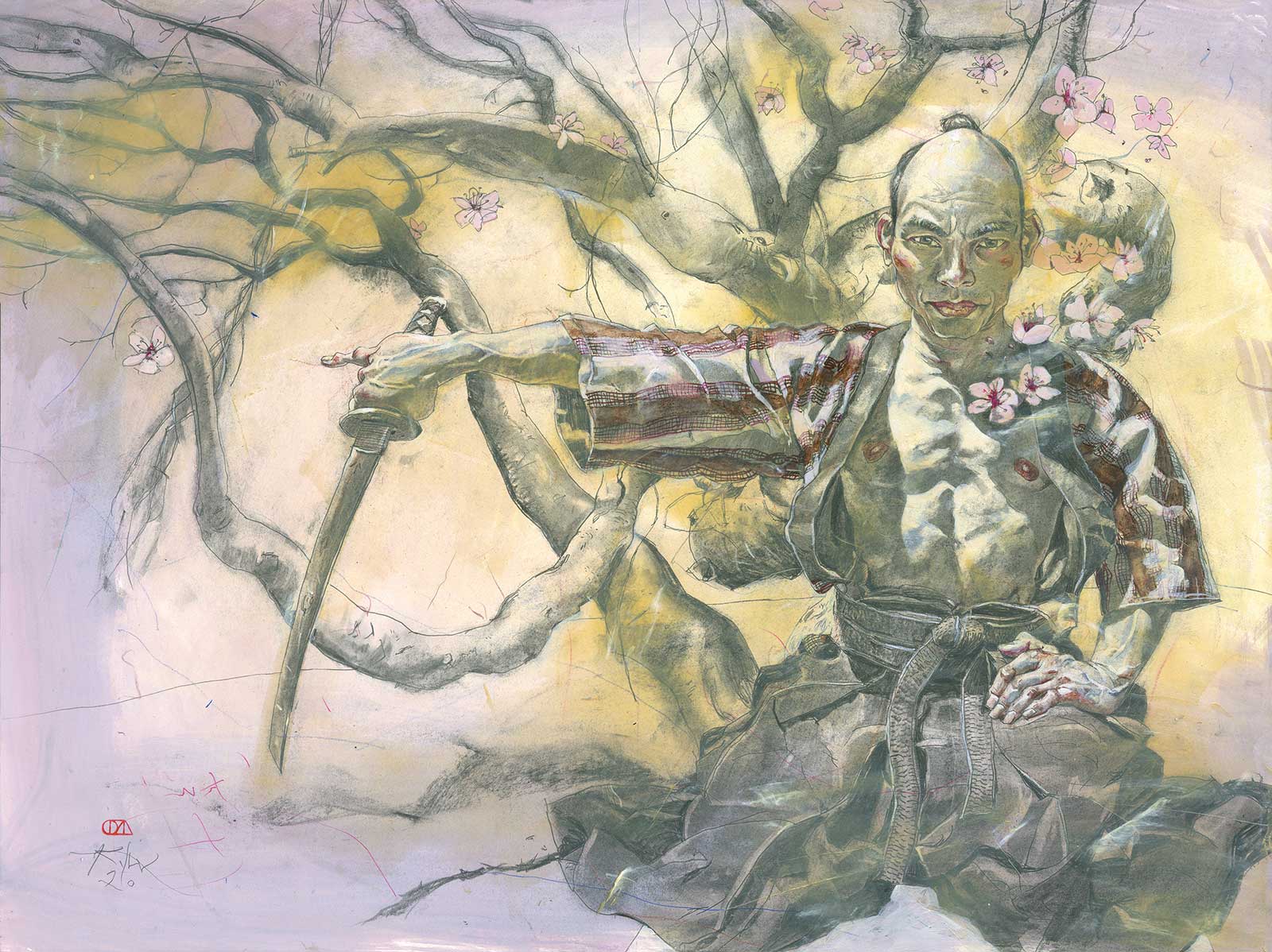 Jiu Roku Zakura, mixed media on paper, 18 x 24"
“Kent Williams illustrating the short stories of Kwaidan is a match made in a dark and delicious hell. Kent’s work is kinetic and disorienting, moving and emotional. At the heart of each piece is a story, yearning to be discovered. There’s a soul in every canvas, something restless and hungry,” Aronofsky writes. “The work of [Hearn and Williams] has a complementary sense of insatiability. But it’s not just what they have in common that makes them such a perfect match, but rather what they don’t. In Hearn’s Kwaidan, we find the earliest examples of what are now the stylistic signatures of the Japanese horror genre. And while the subject matter runs the gamut from scary to meditative, each of the stories share the same core tenet: it’s not about what you see, but what you don’t. Fear is always located in the unknown. Enter Kent Williams, whose work is as direct and confrontational as the Kwaidan stories are abstract and elusive. His art is dreamy and surreal, a mash-up of damned and divine. His subjects are almost always turned directly towards the viewer, faces unobscured by masks or shadows or slithering black hair. Their eyes are haunted—they peer out from the page and demand things from us. It’s this dissonance between text and illustration that’s so exciting. The explicit, penetrating boldness of Kent’s art is in conversation with the shadowy hidden worlds in Hearn’s stories.”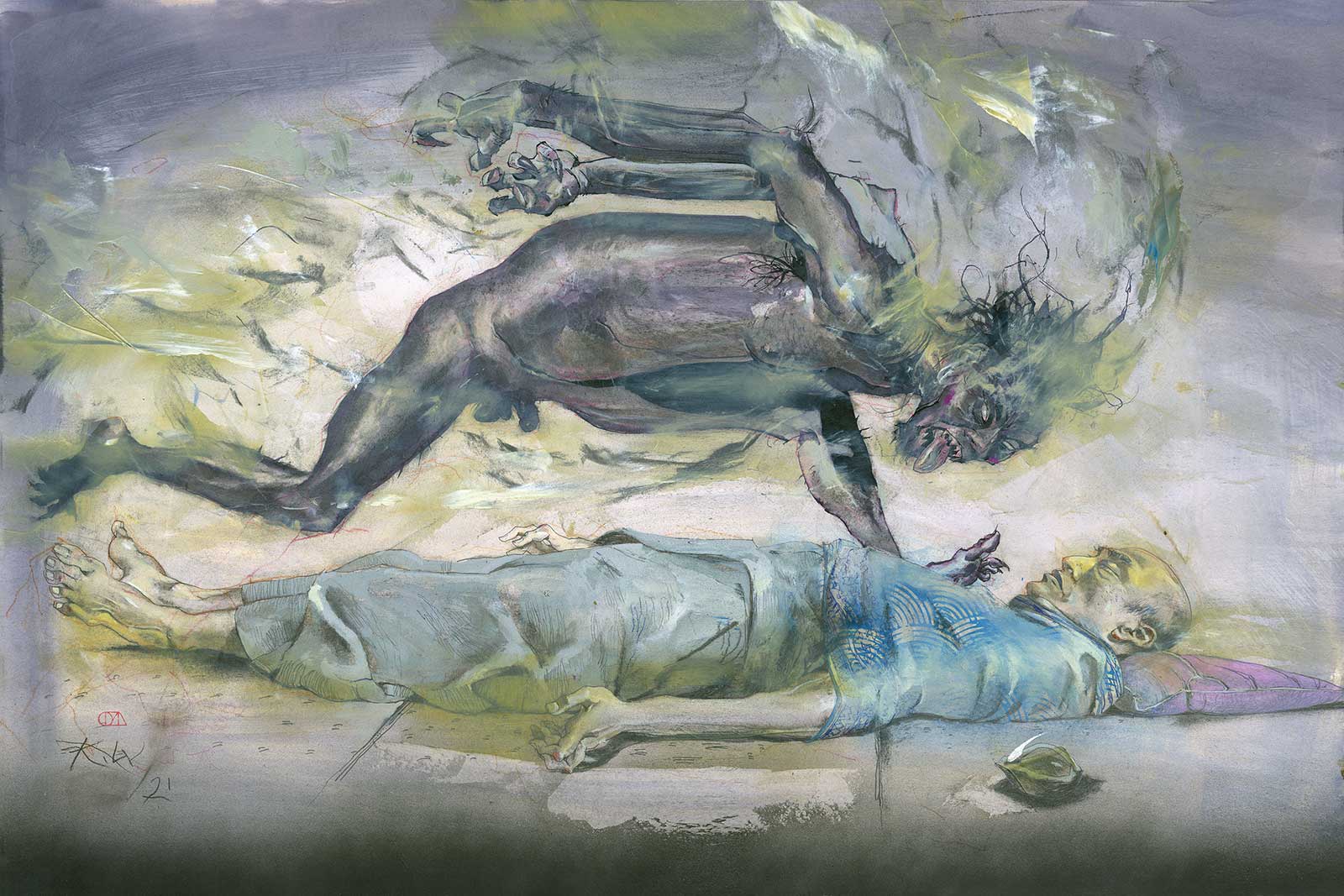 Jikininki (Monk), India ink with mixed media, 11 x 14"The publication will also feature an essay from Japanese scholar Kyoko Yoshida and an afterward from Hearn’s great-grandson, Bon Koizumi. The KP Projects’ exhibition, during which all of the works will be for sale, will continue through October 1. —
KP Projects 633 N. La Brea Avenue • Los Angeles, CA 90036 • (323) 933-4408 • www.kpprojects.net
Powered by Froala Editor