Upon entering the new Cheech Marin Center for Chicano Art & Culture at California’s Riverside Art Museum, visitors are greeted by a towering 26-foot lenticular (remember those holograms that came inside boxes of Cracker Jacks?) sculpture of an Aztec goddess that morphs into a Transformer-like robot made out of lowrider cars when you move laterally before it.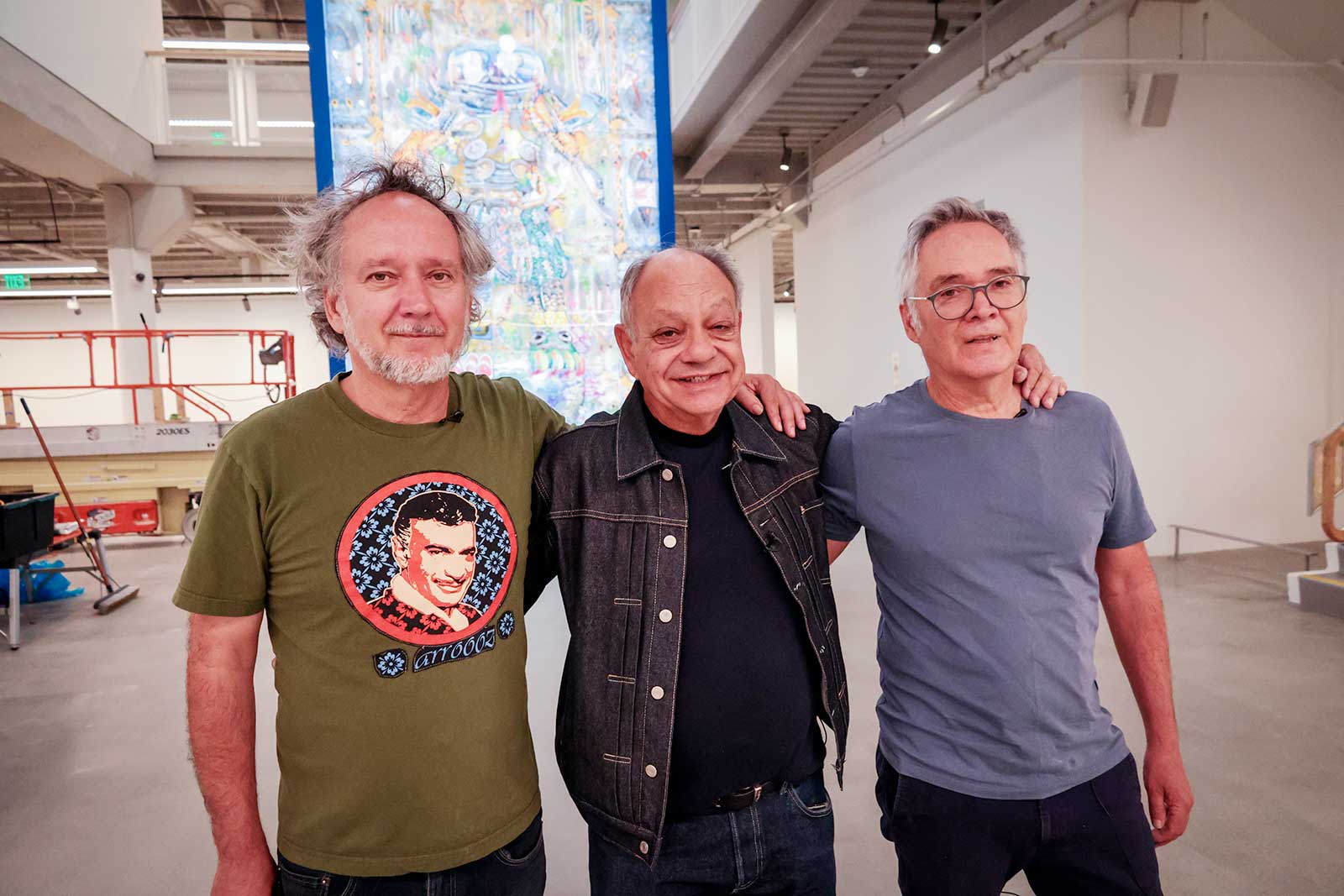 Cheech Marin with Einar and Jamex de la Torre in front of the brothers’ 26-foot lenticular sculpture they made for The Cheech Marin Center for Chicano Art and Culture.
Commissioned from Mexico-born brothers Einar and Jamex de la Torre specifically for “The Cheech,” the installation is an apt introduction to the artists’ work which embodies the collision of two cultures—and the third culture that is born out of it. Now living in San Diego and Baja, California, 30 years’ worth of the artists’ creative output makes up the museum’s first temporary exhibition, Collidoscope: de la Torre Brothers Retro-Perspective. A collaboration with the Smithsonian National Museum of the American Latino, The Cheech marks the first stop of the exhibition’s national tour. Taken together, the exhibit explores the complex influences of life on both sides of the border. Combining Mexican and American iconography and symbolism unique to Chicano culture, often using humor to draw people in, their elaborate rasquache (meaning “left over” or “of no value”) rococo-style, mixed-media sculptures are as layered and irreducible as their meaning and the many questions they pose.
“We like to joke that when you cross a border you take one brain out and put in another,” says Jamex. “You really literally think differently and feel differently on one side than you do on the other. As immigrants we want to express what we see on both sides. Our process is additive. It’s not a distillation of an essence. We have always said that our work is layered, being Mexican and American, being two brothers, and the fact that we are hyper-Baroque.” When the brothers discovered lenticular as a medium—which allows up to 20 layers of 3D imagery in one sheet of acrylic, they realized it was a perfect fit.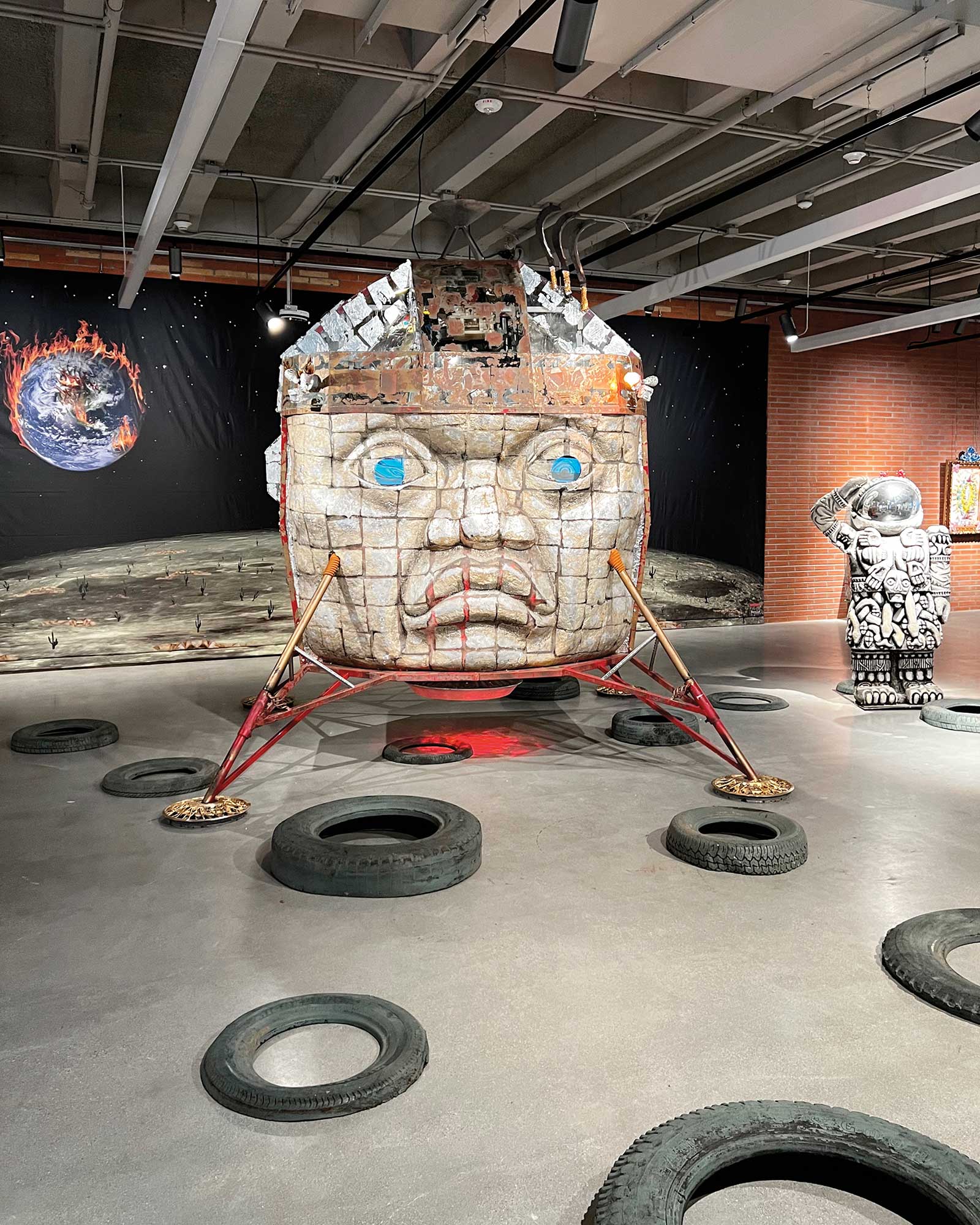 Einar and Jamex de la Torre, Colonial Atmosphere, 2002, mixed media, 140 x 360 x 450”. Courtesy of Einar and Jamex de la Torre and Koplin Del Rio Gallery.
One of the most important installations, and one that encapsulates the de la Torres brothers’ creative style, is Colonial Atmosphere, a sculpture alluding to the 1968 lunar lander with Toltec—a pre-Columbian Mesoamerican culture—facial features. “The whole idea was, if we’re colonizing the moon, just like in the U.S., the first thing that would show up is a taco stand,” says Einar.
Pages could be dedicated to the visually and conceptually complex art of the de la Torre brothers, but it is beyond time to note that this museum would not be possible without the donation of 550 works from the personal collection of Cheech Marin. Yes, he of stoner fame as half of the ’70s comedy duo Cheech and Chong. Marin has been amassing Chicano art for 40 years. Steeped in art as a boy, it wasn’t until he discovered the Chicano painters, a school of art approaching 60 years old, that he truly felt personally connected to a genre of art.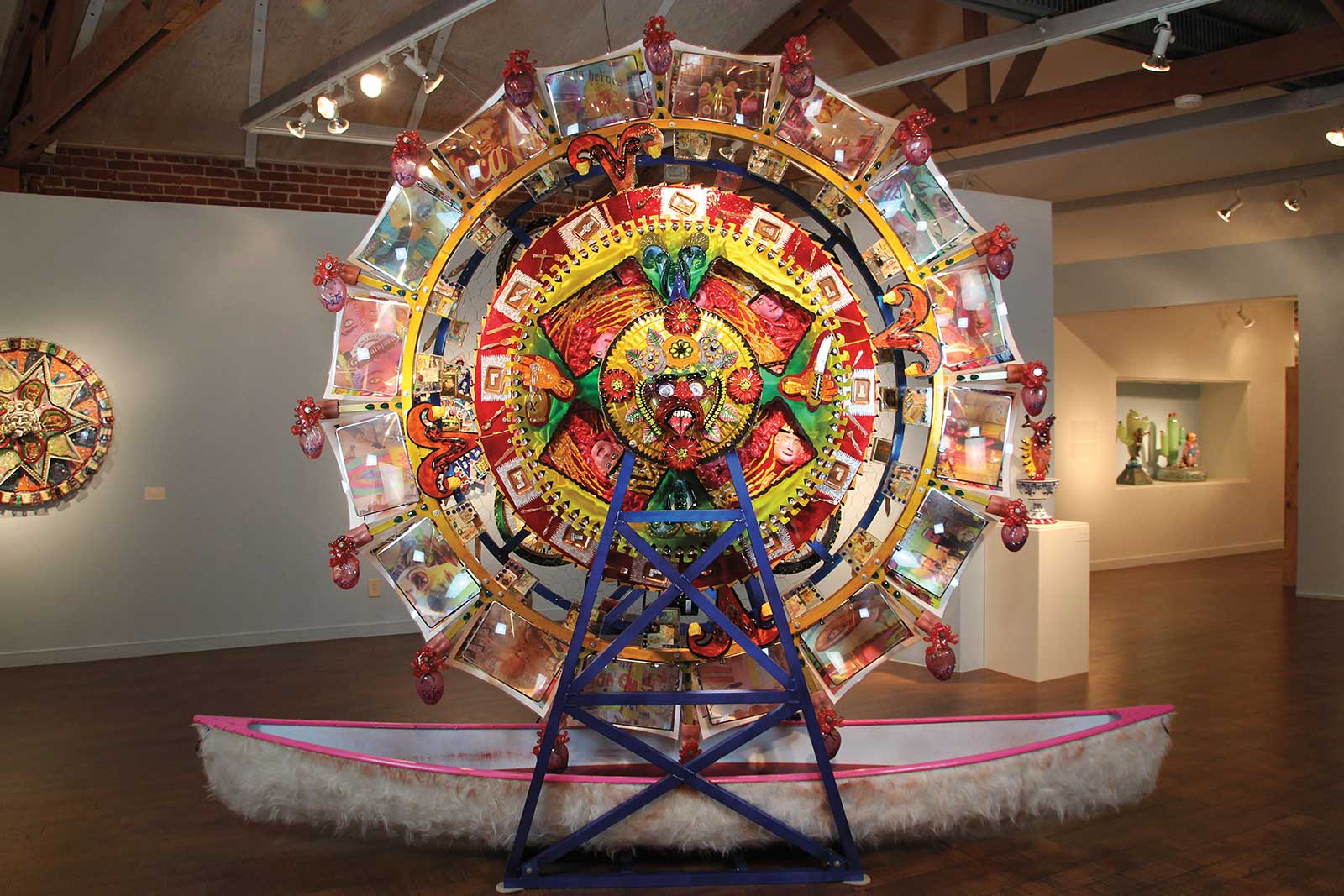 Einar and Jamex de la Torre, La Belle Epoch, 2002, mixed media, 120 x 144 x 36”. Courtesy of Einar and Jamex de la Torre and Koplin Del Rio Gallery.
“I understood the foundations on which it was built and the influences,” Marin says. “It had people that looked like me and my family and my neighborhood and the schools that I went to and the streets I grew up on. They were my people.” The art struck him viscerally and he was dismayed, if not surprised, by how undervalued and underrepresented it was.
“That was my question: These artists are great and why aren’t they being represented in galleries and museums? I decided to address that problem. It was a two-fer. I wanted to collect this art. It was the best art I saw out there by far. They were taking on subjects that no other artists were taking on. They are documenting the communities in which they live. From all the angles they attack it, you get, not a finite description of it, but the flavor—I like to call it the sabor—of the community. The overall effect is ‘I see what this smells like and tastes like and looks like. Its description of culture is unmatched by any other school.”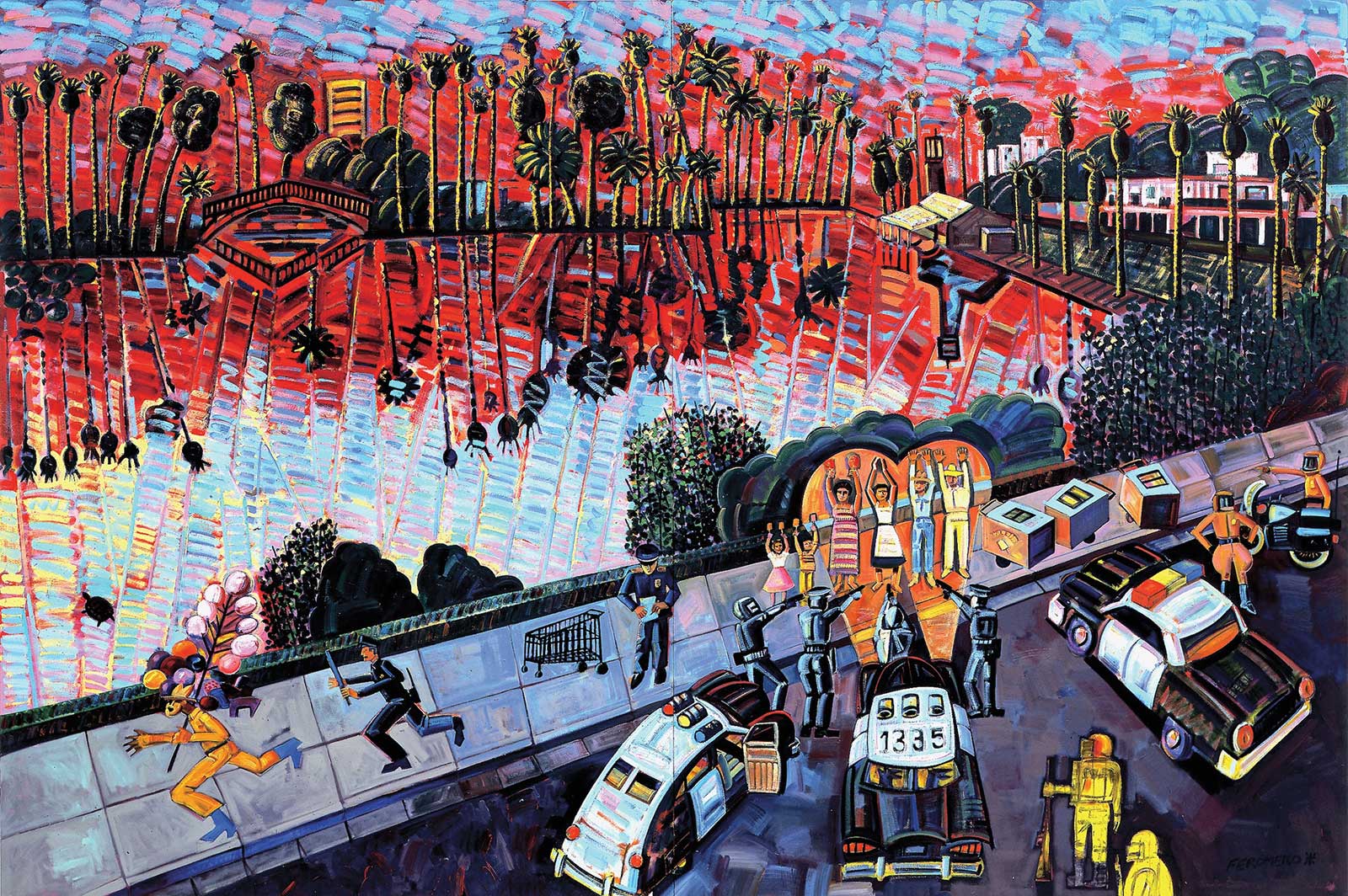 Frank Romero, The Arrest of the Paleteros, 1996, oil on canvas, 72 x 96"
The museum’s permanent exhibit, Cheech Collects will be on regular rotation and traces Marin’s journey as a collector while providing a survey of Chicano art since its emergence as a cohesive genre. The inaugural exhibition, which runs through December 2022, includes iconic works that have toured in Chicano Visions: American Painters on the Verge, among other notable exhibitions, as well as pieces that will be on view for the first time. A second iteration will open in January 2023, featuring more works by some of the most respected Chicana/o/x artists in the world.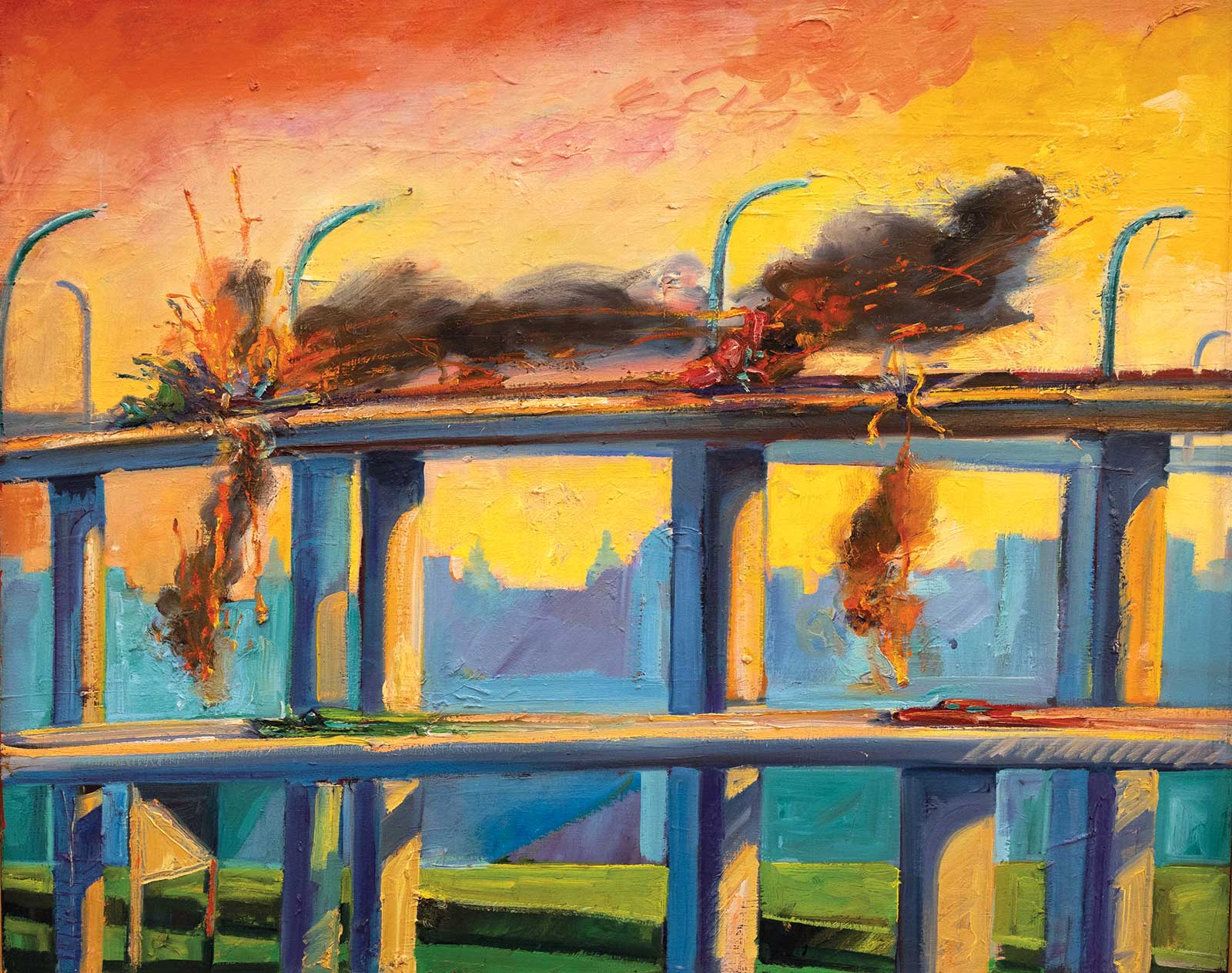 Carlos Almaraz, Sunset Crash, 1982, oil on canvas, 35 x 43"
The identifier “Chicano”—which Marin says originally indicated Mexican Americans with a defiant political attitude—came out of the turmoil and social unrest of America’s 1960s civil rights movements. Some Chicano artists were already emerging out of this movement as advocates for change. Slowly, these artists turned to their individual artistic concerns. “But every new group, or age bracket, that comes into this community, always gives news from the front,” Marin says. “‘This is what my neighborhood looks like today.’ It’s almost tidal. The tide comes in, recedes, leaves stuff on the beach. The next time it comes in, it’s a higher tide, leaves more stuff on the beach. That’s a reoccurring thing in the history of Chicano art.”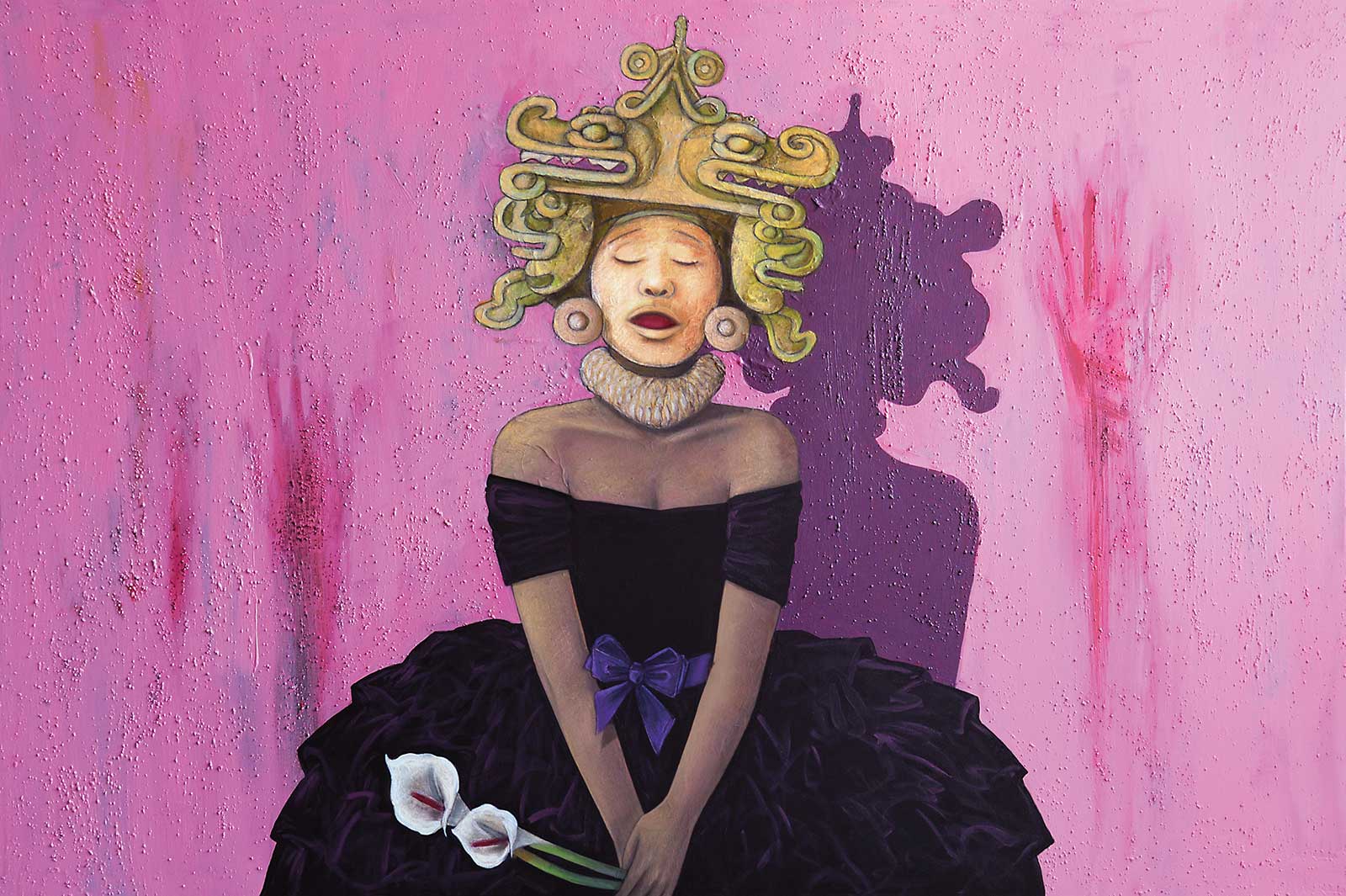 Judithe Hernández, Juárez Quinceañera, 2017, pastel mixed-media on canvas, 40 x 60”. Collection of Riverside Art Museum.
Among The Cheech’s collection of paintings, drawings and sculptures are works by Patssi Valdez, a multimedia artist and cofounder of the seminal 1972 Chicano artist collective, Asco.; and Frank Romero, one of LA’s most iconic artists and whose work in the 1974 exhibition at the Los Angeles County Museum of Art was acclaimed as one of the first ever Chicano art shows at a mainstream museum. One of several Romeros at The Cheech, The Arrest of the Paleteros, is a 1996 painting that illustrates ice-cream vendors being arrested in Echo Park for not having permits. Another member of the Los Four art collective, Judithe Hernández, was among the first Chicana artists to break through the mainstream museum barrier. Also in the show are works by muralists Wayne Alaniz Healy and Margaret Garcia, as well as the late Carlos Almaraz, a leader in the Chicano LA arts movement in the 1970s and ’80s. 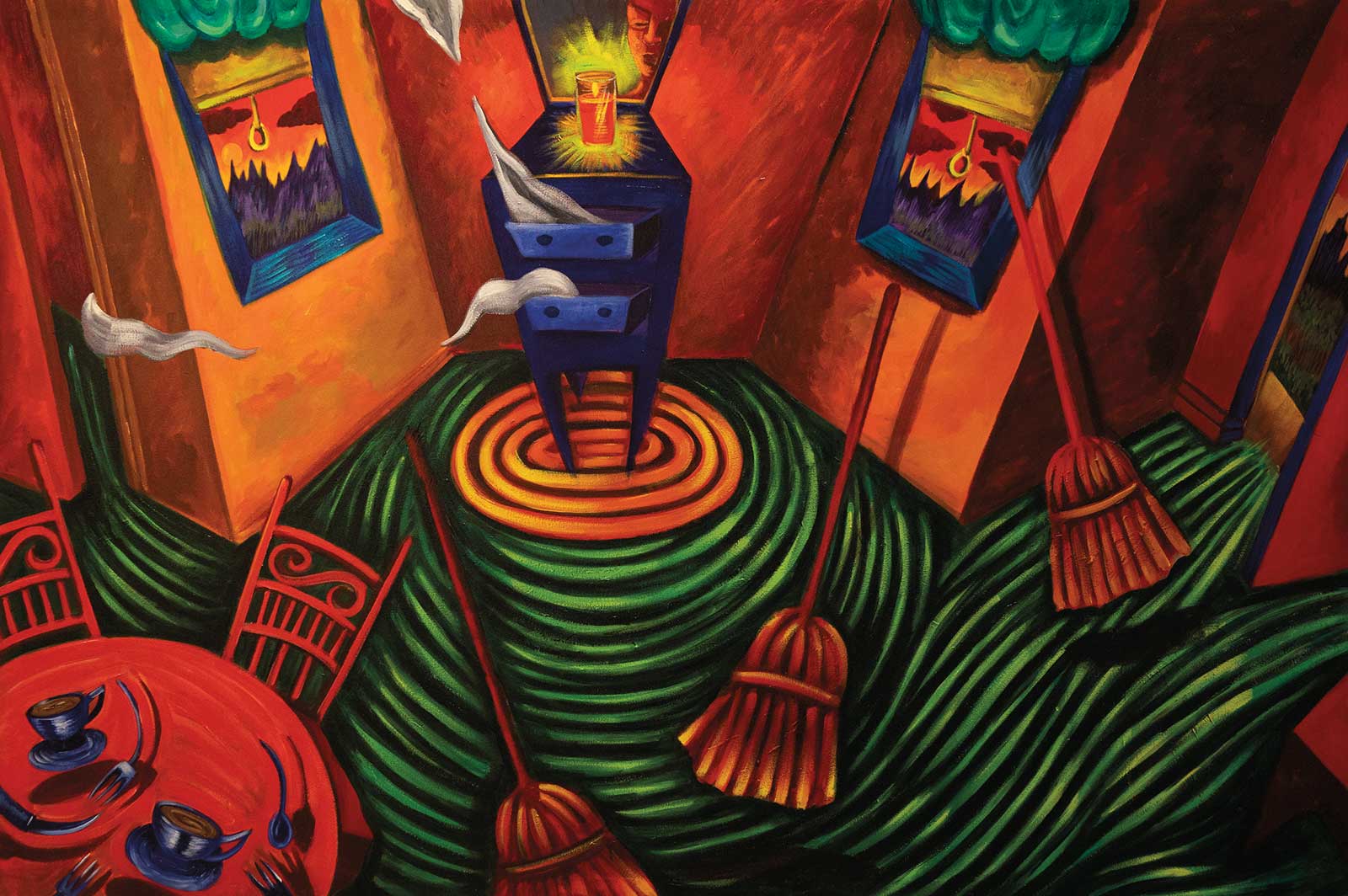 Patssi Valdez, Room on the Verge, 1993, acrylic on canvas, 48 x 72"
When Cheech first encountered the de la Torre brothers’ work 25 years ago, they were glass blowers just starting out, but he knew they were on their way to something big. “It was like hearing a new music rhythm that you haven’t heard before. It takes a while to get inured to what that is and see the rhythm of it, [but once you do] you can see where it comes from.” He has been collecting their work ever since.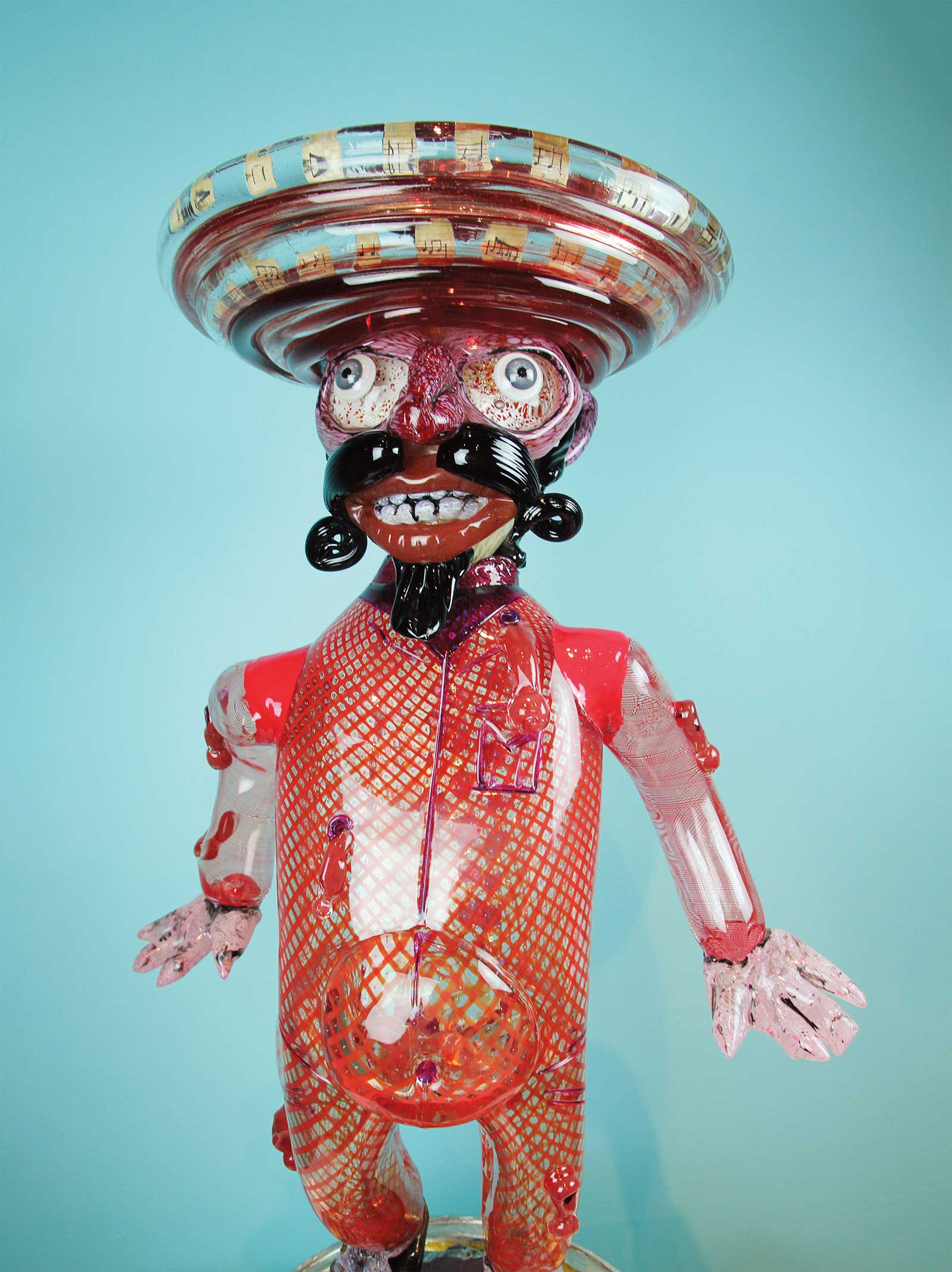 Einar and Jamex de la Torre, El Imortal, 2010, mixed media, 41 x 22 x 16". Courtesy of Danny and Aranzasue Damian.
When Cheech approached the artists four years ago they were working with the Smithsonian on the inaugural exhibition for the museum's Latino branch. “The two things came together kind of magically,” says Jamex. “At one point, Cheech said we had to open the exhibit at his museum,” adds Einar. “And we were like ‘well, we’re not going to say no to Cheech’—he’s a hard person to say no to.” —
Powered by Froala Editor