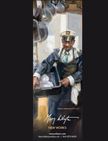
Charles Warren (C.W.) Mundy is known as one of the most esteemed American impressionists of our time, having firmly established his place in American art history. From his early years as a collegiate basketball player, to life as a sports illustrator and becoming a professional fine artist, we celebrate his colorful artistic journey and recognize his many honorable achievements. Mundy’s work is displayed in many fine museums as well as admirable corporate and private collections. He has won numerous awards including five Best in Shows at the Hoosier Salon, a Legacy Award from the American Impressionist Society, an invitation to show at the American Masters exhibitions, and holds a “Master” recognition from many of the top oil painting organizations in America.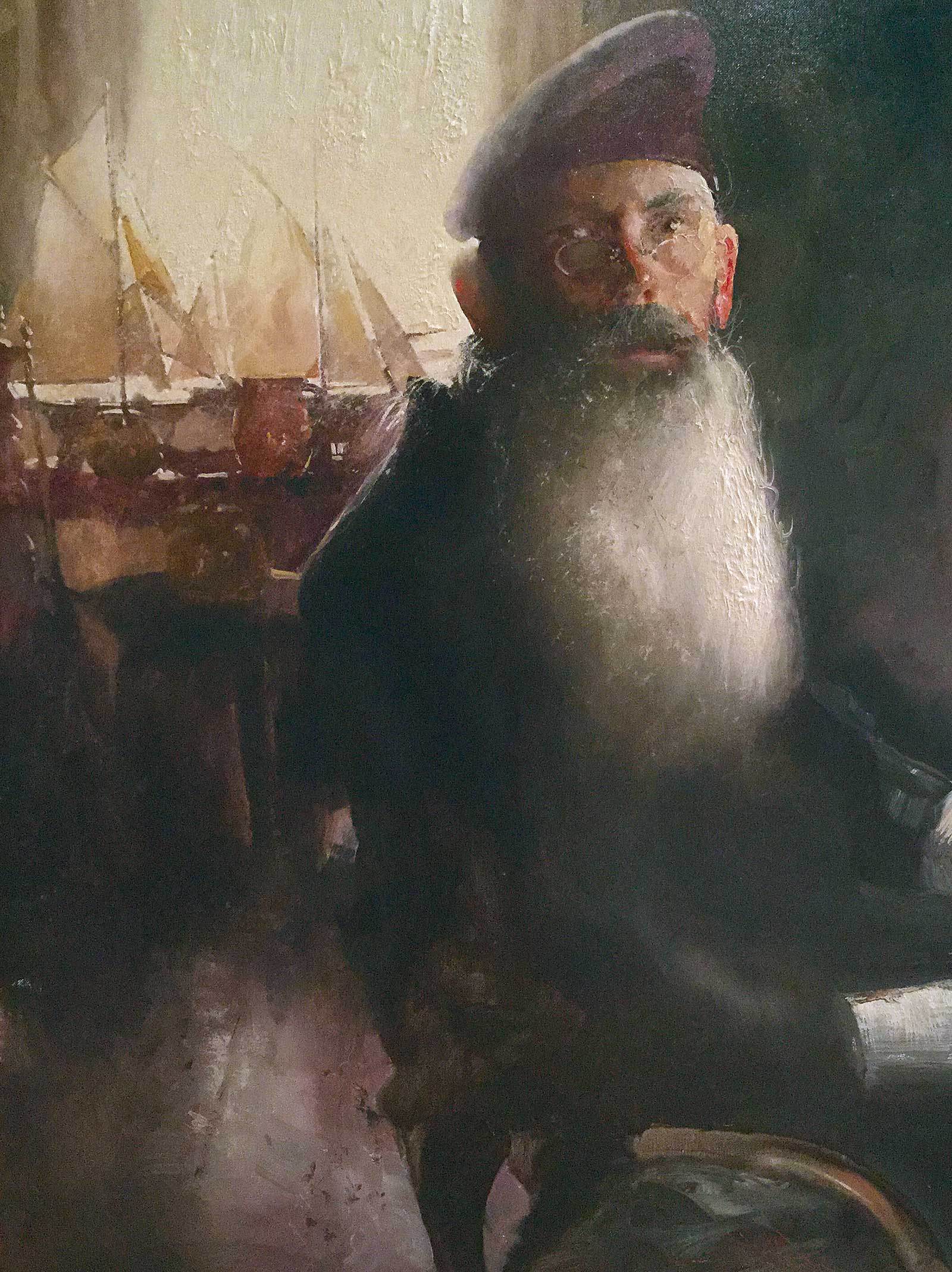 The Veteran, 2015, oil on linen, 40 x 30"
Born in Indianapolis, Indiana in 1945, Mundy was singled out as a promising artist by his grade school art teacher and was greatly influenced by his father’s drawings. Mundy received a full-ride basketball scholarship for college but transferred to Indiana's Ball State University to receive proper art training and the degree he was looking for. Mundy received his undergraduate degree in art from Ball State University and his Master's of Fine Art at California State University, Long Beach. He then studied “painting from life” under Donald “Putt” Putman in California, where he learned a great deal about the professional world of fine art and design. Mundy says, “He was the first living artist that I had ever met who actually had a vibrant art career and was making money in the cowboy Western art world. The words ‘mileage’ and ‘value’ were the two most important aspects that Putt taught, even though he was a phenomenal colorist.” Mundy and fellow local artist Dan McCaw both attended his Wednesday night live portrait and figure sessions. Illustration was big at this time, especially in California, both in Western themes that now sell as fine art in galleries, as well as sports illustration—which perfectly fit Mundy's interests. He created numerous sports commissions and media art such as the GTE front row Indy race car and NBA all-star covers.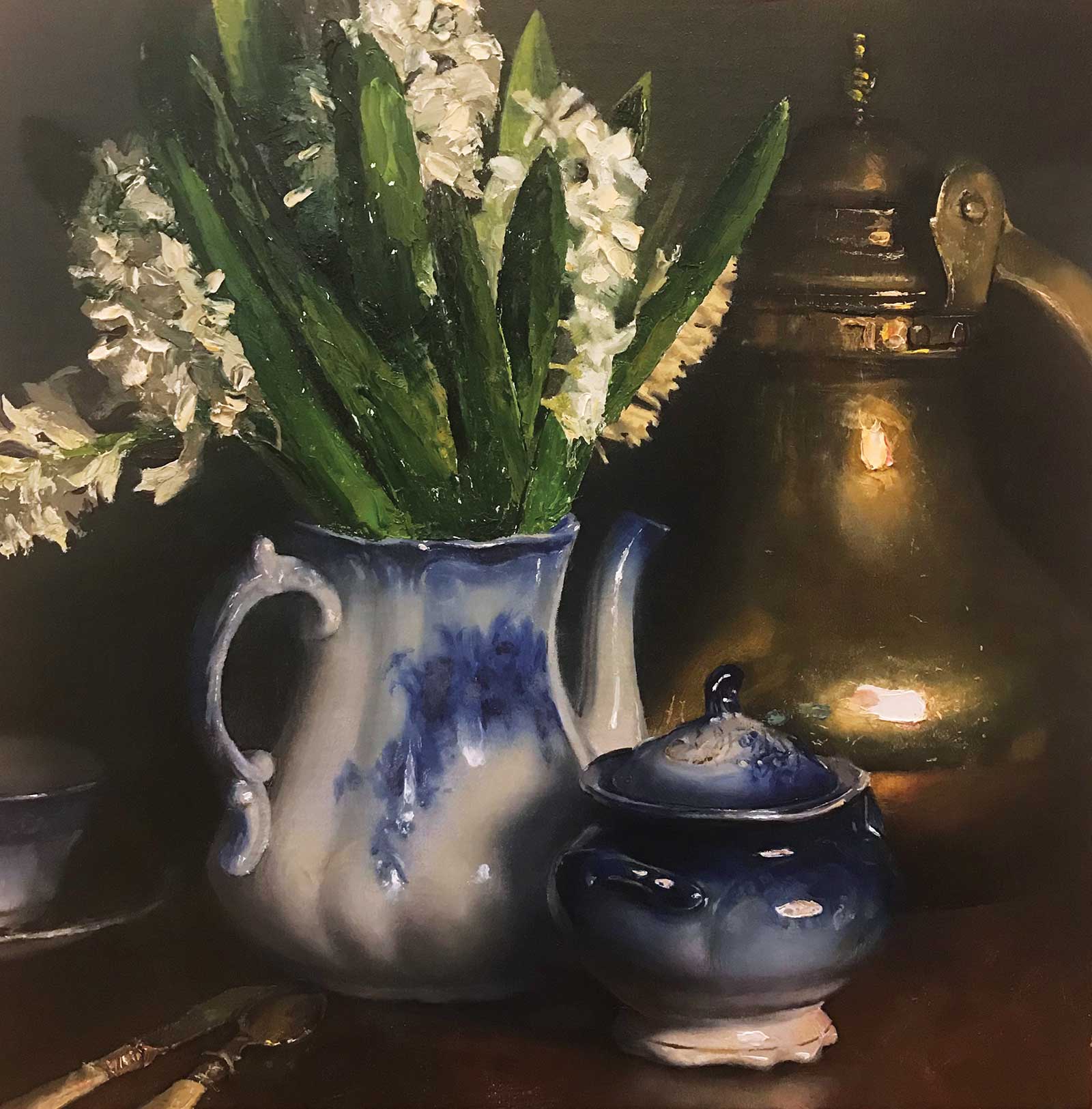 Hyacinths, Blue Flow and Brass, 2019, oil on linen, 16 x 16"
After such an illustrious career in sports illustration, the demand for this type of art slowed, and at the same time, he longed to create his own work and to find his own voice as a painter. It was time to consider another road to follow for his creative genius. Mundy conveys this memory: “My wife and I discussed trying my hand at becoming an impressionist. We contacted a local Indianapolis gallery to show my work. He was expecting sports art, but kept the impressionistic paintings to show clients and to our surprise, he sold both small landscapes the next day. This was just the beginning.” Shortly after, Mundy began painting a series of women and children at the beach, influenced by the paintings of Frank W. Benson, and inspired by artist friends and the Old Masters. Using his own photos of his nieces and nephews at the beach on vacation, Mundy soon became well known for this impressionist style and subject matter early on in his fine art career.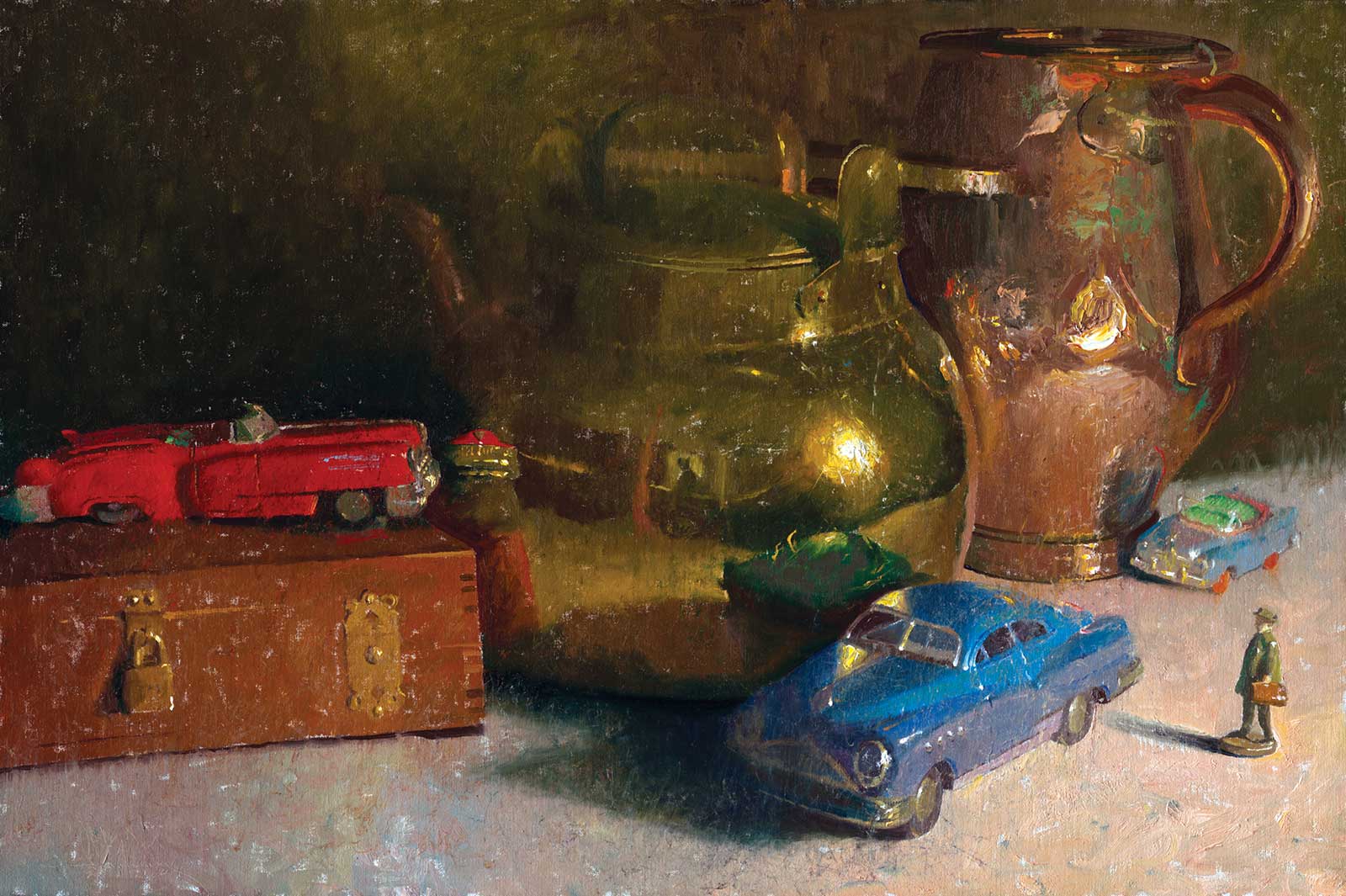 All Along the Boulevard, 2012, oil on linen, 24 x 36"Also around this time, Mundy and his wife Rebecca attended a grand retrospective on Claude Monet in Chicago, which also had a major influence on his work. After Rebecca researched Monet’s life in France, they were soon off on a six week painting trip in France to visit the locations where the impressionists painted. Upon their return in 1995, Mundy had his first one-man exhibition, which proved a great success. The couple decided to set off each year for the next decade to paint overseas—first Italy, then England and Spain…after all, who wouldn’t want to paint on location and travel to the worlds most beautiful places and capture their light, color and beauty? Mundy had found his way in the world as a fine artist. He aimed to capture these areas, as the Masters had done before him, and to document them in his own art, from the Cote D’Azur to the Thames River and the Netherlands, and at different times of day. He explains, “Wherever I would travel in Europe, I would look for paintings in certain times of the day with light and shadow. Then I would return to paint that scene at the time of day best suited for the painting. I also started painting in series like Monet’s haystacks, to paint the same subject but in different lights, in different times of the day and in various seasons and weather.”
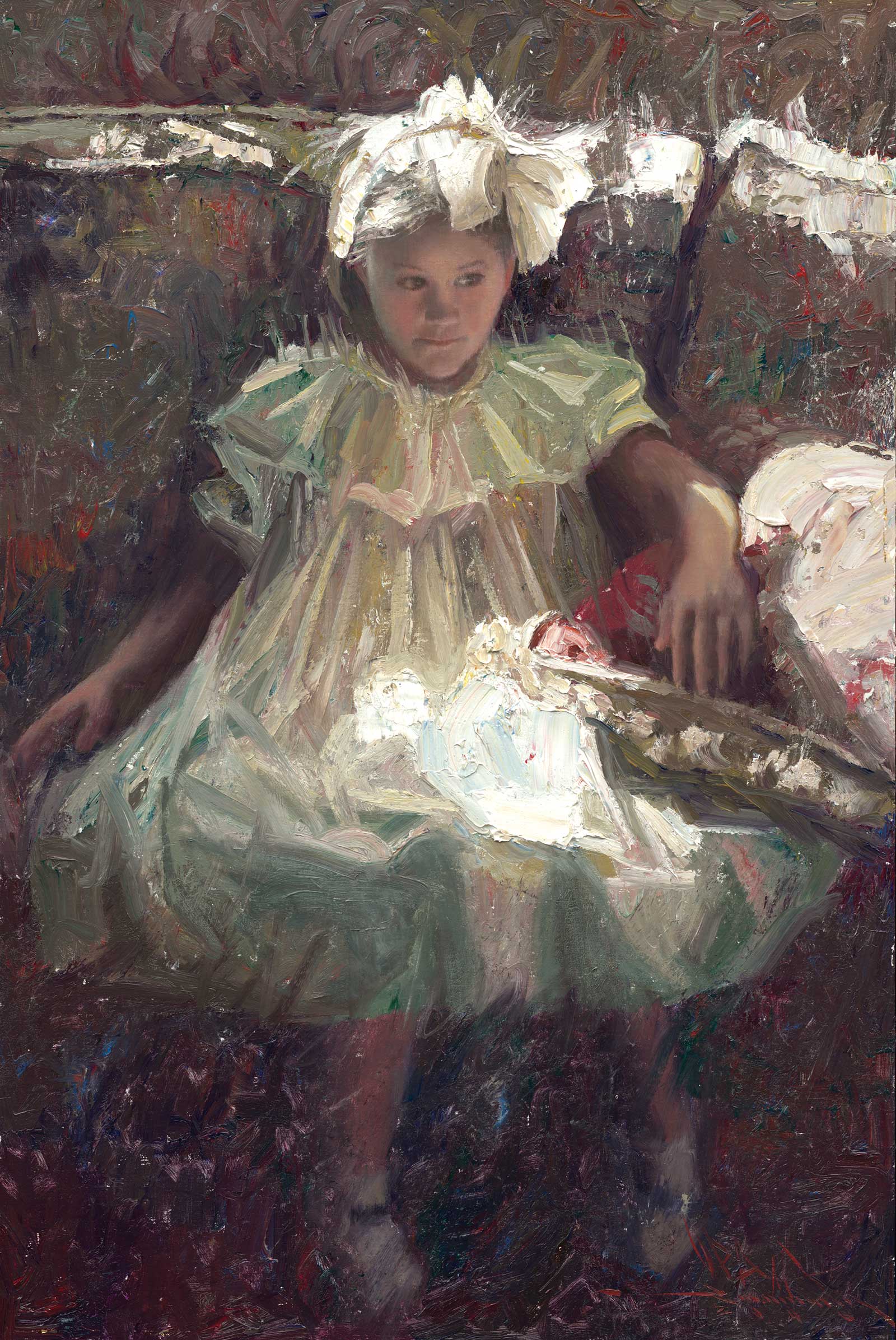 Portrait of Anne, 2006, oil on linen, 36 x 24"
Mundy, with his many years of classical painting skills, is able to handle all subjects technically. Painting the representational subject matter of figure, still life and landscape became three natural revolving subjects for him and, by switching between them, keeps his interest. Still life painting really caught his attention after studying Emil Carlsen, Henri Fantin-Latour and the French impressionists. Mundy is very well known for his depiction of brass pots, an advanced still life subject for any artist, creating glimmering reflections with realism and impressionism. He is also very fond of painting maritime art—harbors and boats and coastal scenes—and continues to visit Massachusetts’ Gloucester Harbor to this day. Figurative paintings have always inspired him as well. “My Ballerina series was inspired by paintings by Edgar Degas,” he says. “I explored the way he used lighting, such as with stage light coming from beneath and reflecting under their dresses and with the ballerinas having bottom-lit faces.” Mundy notes that he has found that this versatility has helped him garner a larger range of collectability.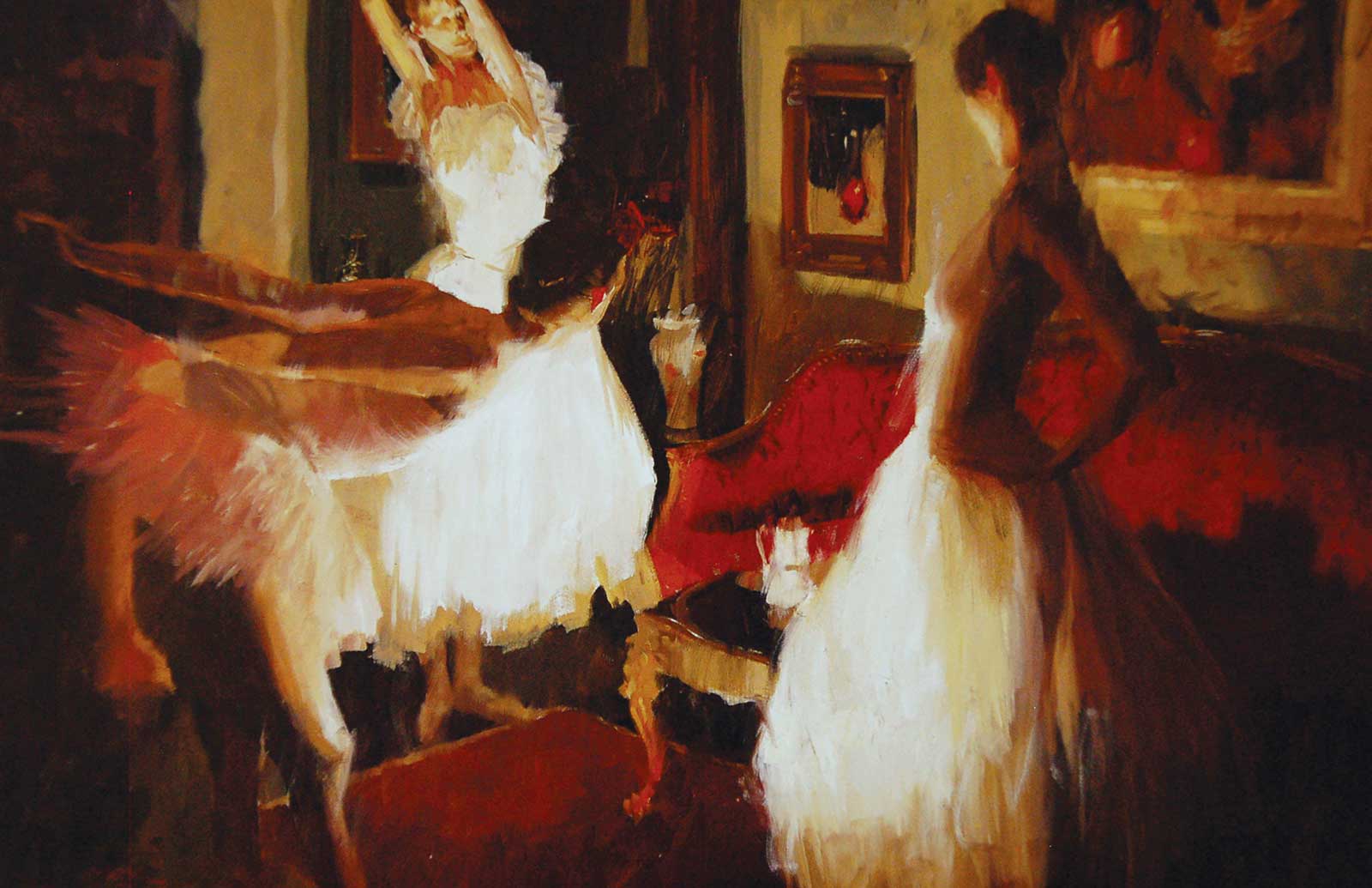 Before the Ballet, 1999, oil on linen, 24 x 36"
Mundy’s works are engaging and we marvel at his realism, his fine handling of light, the lost and found edges in his work. His style is firmly rooted in realism yet surrounded by bolder, energetic, painterly strokes. To combine these two styles takes creative talent and many skilled and critical decisions. “In the beginning, it was all about doing the best job of copying,” says the artist. “Learning the disciplines to accurately depict the subject is always a logical start. You have to learn to draw, and then learn how to push paint, and how to mix the colors and values you are seeing. An artist always needs to understand the rules of the science, before he starts breaking the rules.” Mundy has spent the last years understanding the important contrast in a work of rest and action that he learned from studying the works of other contemporary and modern artists. In the middle part of his career, he began to take more liberties with subjects to actually make a better design in painting, and started to move objects as needed rather than copy exactly what was there.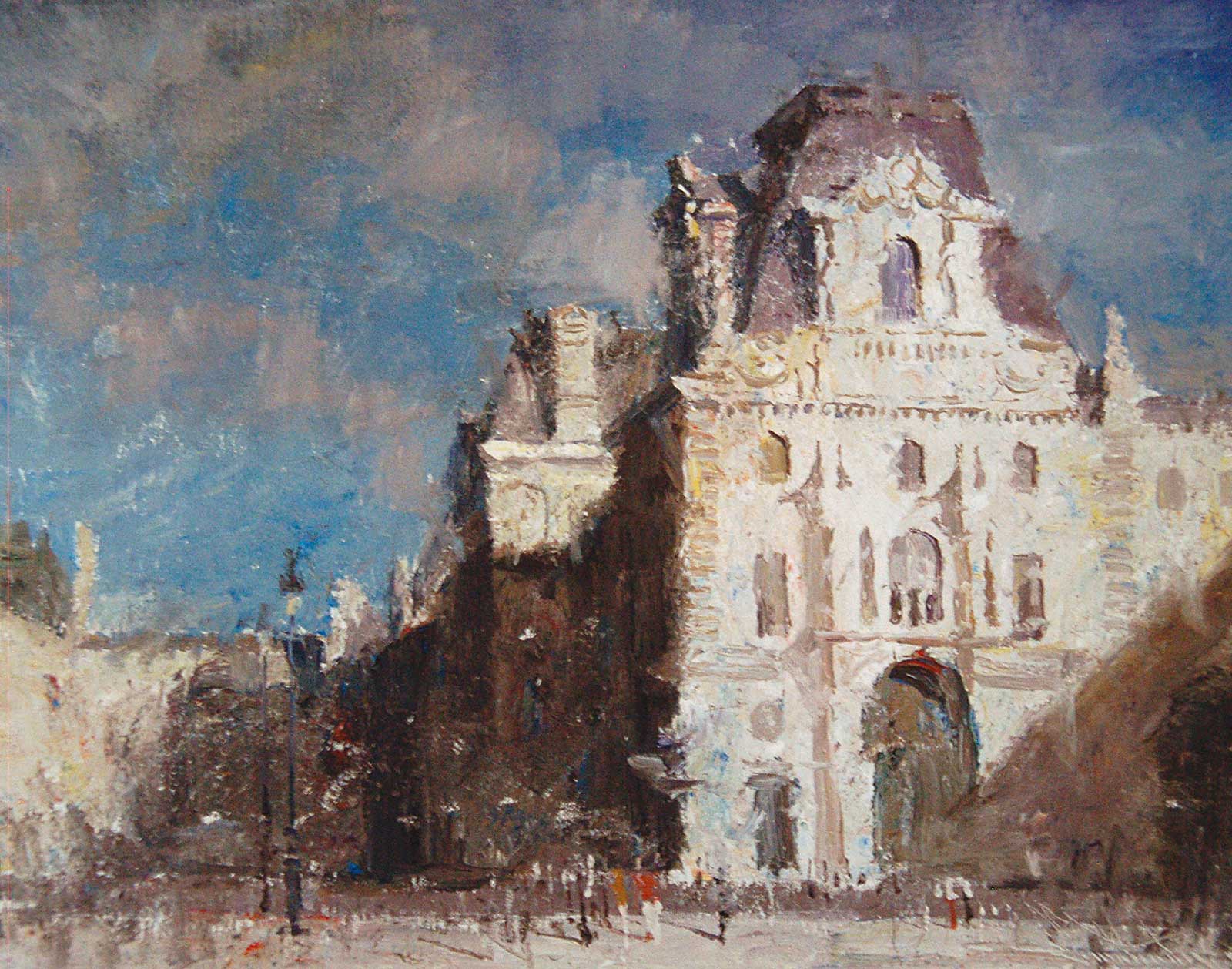 Musée du Louvre, Paris, oil on linen, 16 x 20", 2005
Many classically trained, skilled realists, when they are in the latter part of their career, and even young artists as of late, become brave enough to break out of realism to dabble more in abstraction. “I’ve learned to have the freedom to let things become more intuitive and more abstract,” Mundy says. For the last six to eight years, this has been a growing trend in the contemporary art world and Mundy has been an important part of its emergence.
The artist is currently working on a seascape collection that captures the atmospheric qualities of the sea and the power of crashing waves. 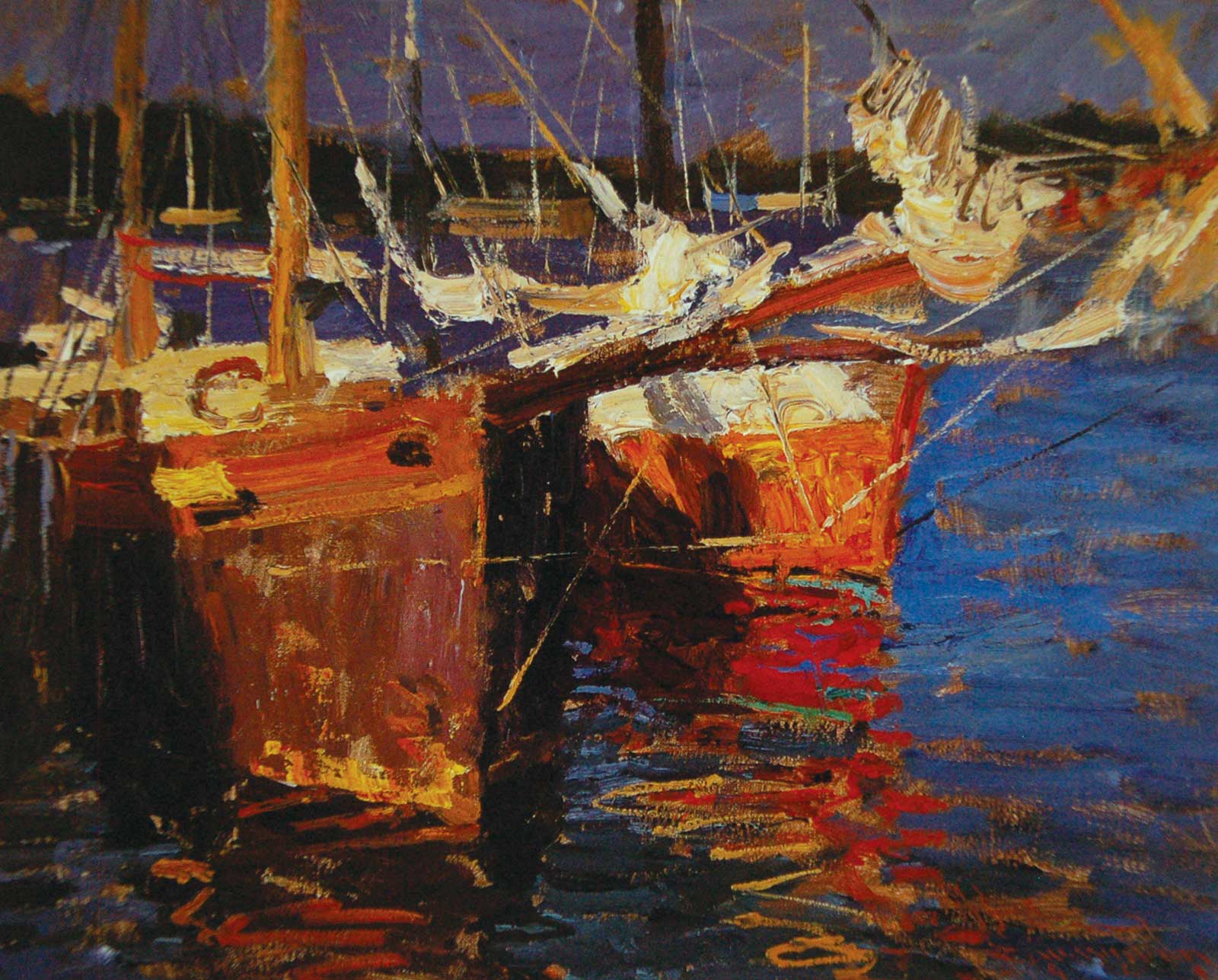 The Rana and the Mimi, Late Afternoon Light, 2001, oil on linen, 16 x 20"
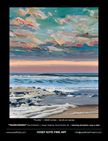
In order to truly know C.W. Mundy, you must also know of his deep appreciation and love of music. “I play primarily the five-string banjo; bluegrass music, jazz and the blues, and new American roots music,” he shares. “I also play the dobro-banjo and six-string guitar.” For Mundy, writing and performing music is almost synonymous with authoring a painting as both are expressions of feelings and emotions. After receiving his masters, Mundy knew the true importance of teaching and mentoring, and has been giving back to the art world for years by teaching workshops. Lately he has been devoting some of his time to mentoring other highly regarded contemporary artists, sometimes as many as 10 at a time.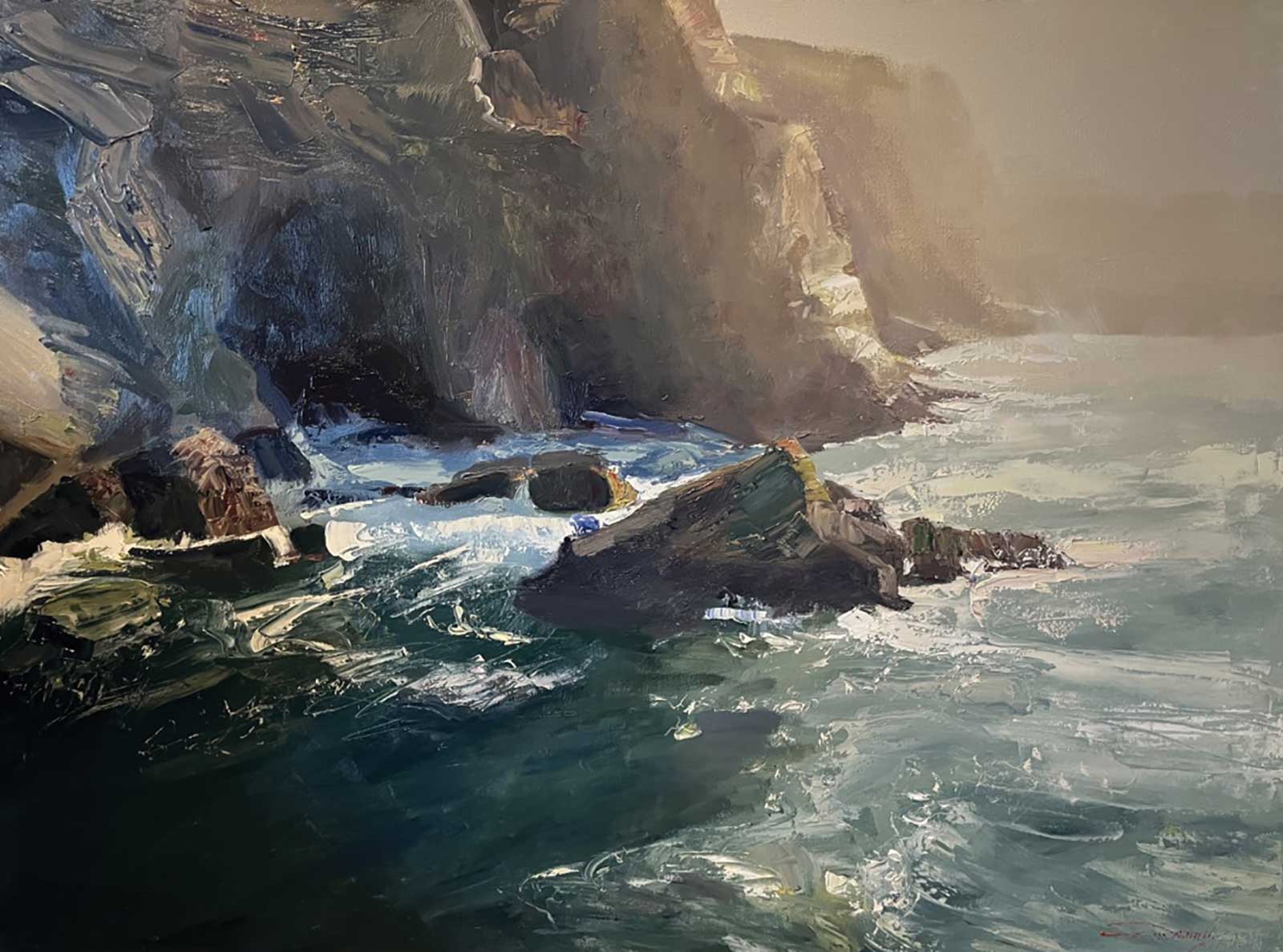 Late Afternoon Light, California Coast, oil on linen, 30 x 40", 2022After such a colorful and successful career path, countless hours of hard work to master his craft, and with his gift of extraordinary creativity, Mundy continues to stun the worlds of realism and impressionism with incredible new works that continue to win awards and respect at the top art events in these genres. His works are truly beautiful and timeless. Charles W. Mundy is currently, and will be known in the history books, as one of the most important American impressionists of our time. —
+++
Vanessa Françoise Rothe is a curator, writer/editor, art dealer and fine artist who has had the pleasure of knowing and working with C.W. Mundy for many years. As a longtime admirer of his work, Rothe was honored to write about his life and career as a contemporary master artist.
Powered by Froala Editor