For Juan Carlos Collada, beauty is, indeed, ubiquitous. It’s everywhere. The artist, whose work will be featured in Juan Carlos Collada: Ubiquitous Beauty at Diehl Gallery in Jackson, Wyoming, from July 21 through August 13, recalls how his mother invented projects to keep him entertained when his father, a stone mason, was off at work. “One day we decided to build a two-story, free-standing house out of line paper, scotch tape and glue. I think it was the first time that I experienced the satisfaction of having created something beautiful out of ordinary objects. I was fascinated by the idea that one can put effort and imagination together to create a thing of beauty.”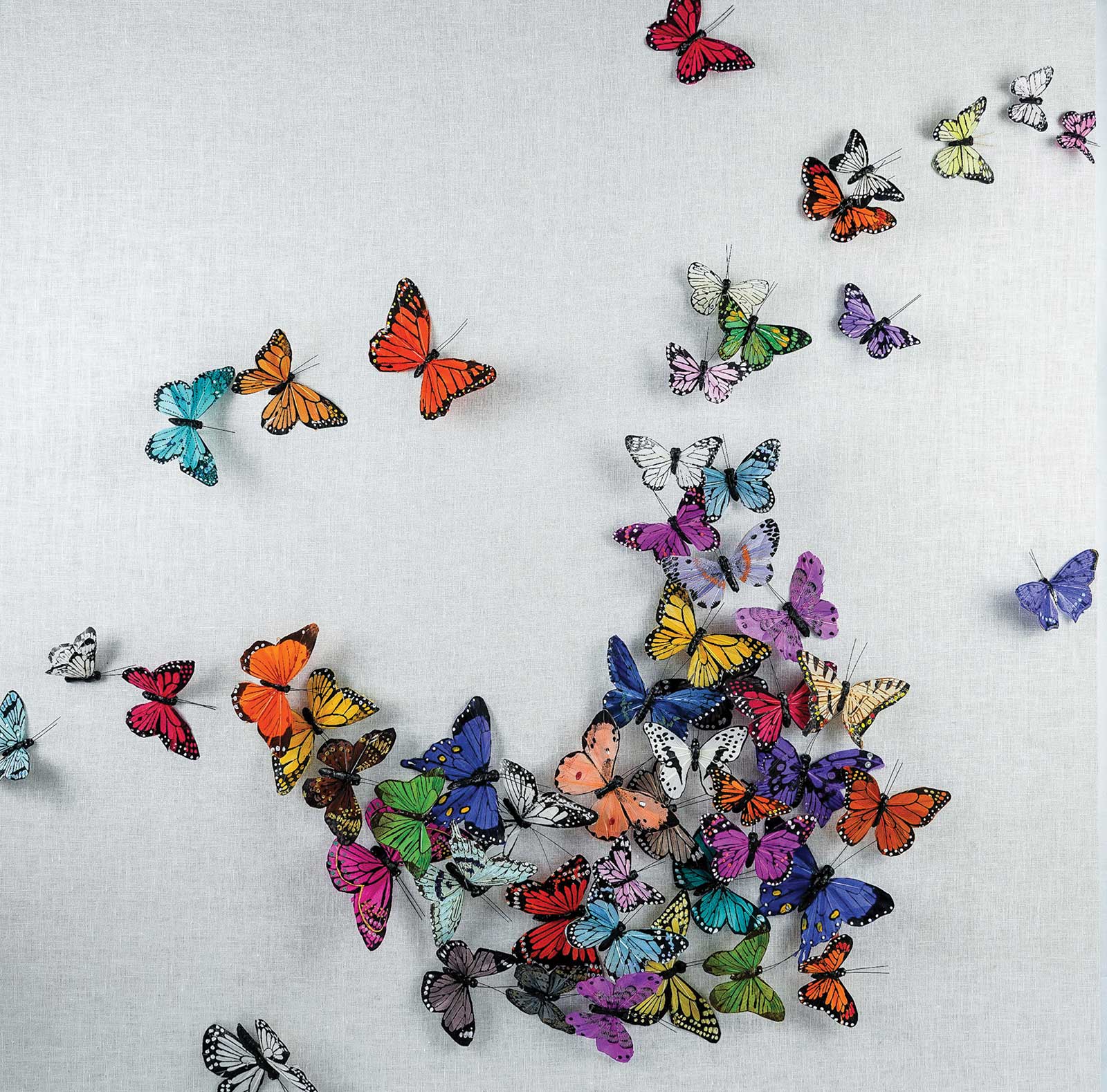 Collada makes butterfly installations out of painted turkey and goose feathers that are nailed linen-covered MDF.
Today he creates things of beauty carving stone, painting on canvas and constructing shadow boxes of butterflies composed on hand-painted feathers. In all of his work, even in the subtleties of stone, color speaks. “Color is everything,” he says, “It is my language. It can provoke a feeling of calm, joy, excitement and so many other emotions. I can see a certain shade of coral that will take me back to a sunrise in Kenya. A particular green will transport me to a sunny Easter Sunday with my grandmother as a child and there are shades of orange, red and pink that will evoke the image of the Naples sunset where I now live. Color can trigger a song in my head or the reverse, a song can bring up a color. Colors have always been incredibly important in my life.”
The Miami native is best known for his large butterfly installations of painted turkey and goose feathers nailed to linen-covered medium-density fibreboard (MDF). His first attempt was a seven-panel, 17.5-foot-long assemblage.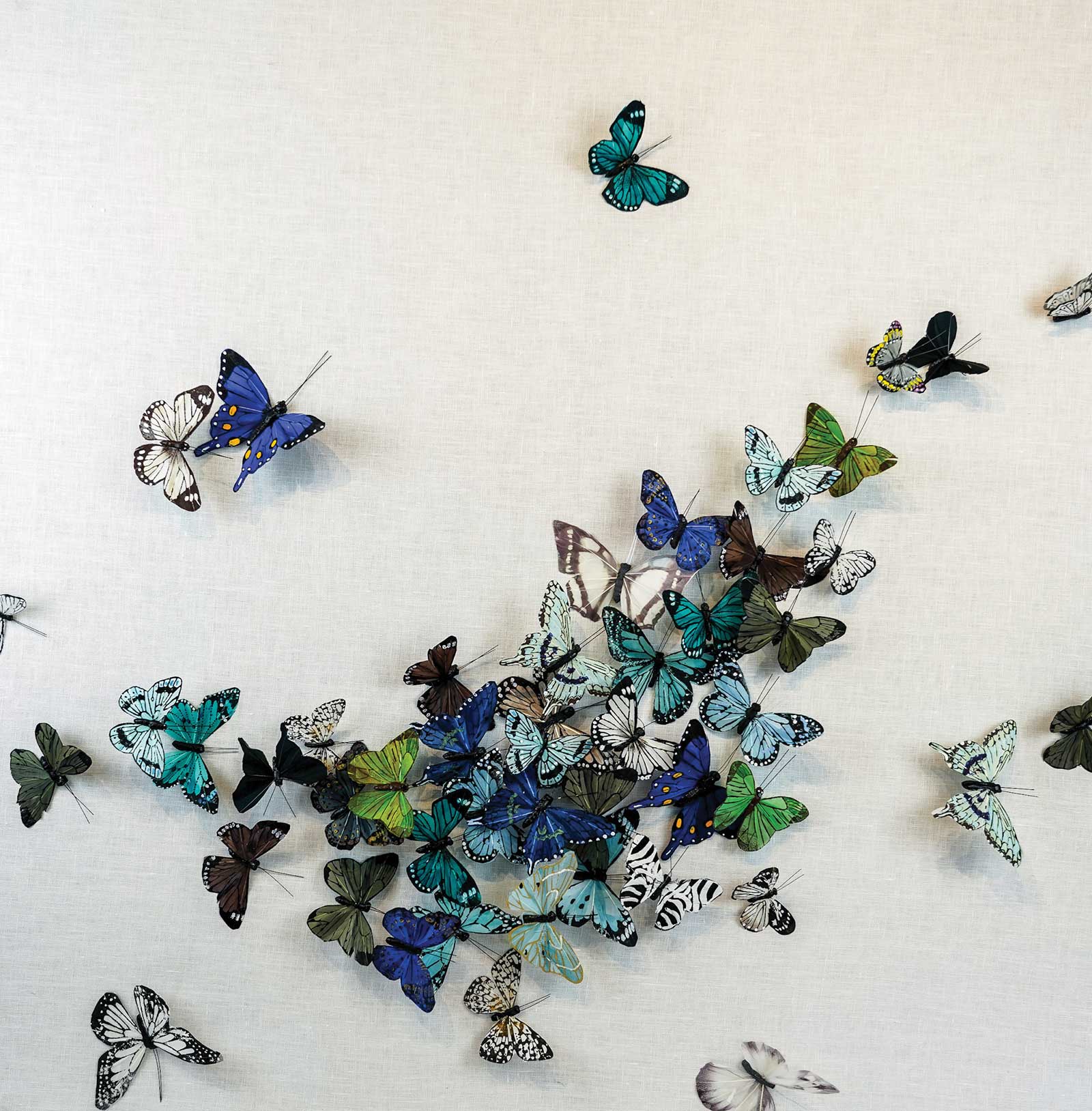 Collada quotes Japanese artist Isamu Noguchi as one of his greatest influences.
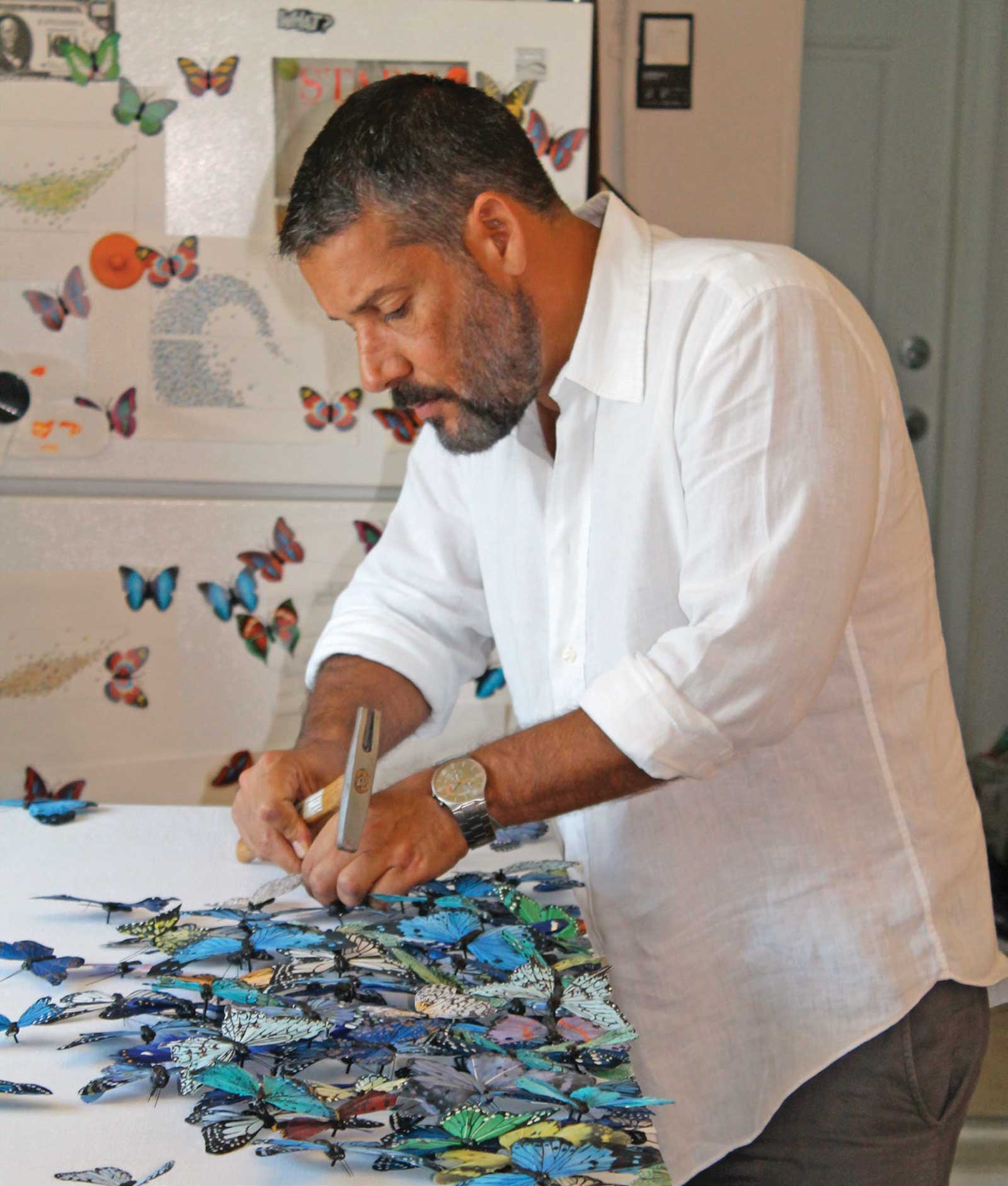 Whether painting, carving or making butterfly shadowboxes, Collada is driven by a passion for color.
“The symbolism of the butterfly is a sign of good luck,” he explains, “and refers back to one my mother had embroidered onto my jean jacket as a child. It always had special meaning to me.”
As for influences, he says, “Isamu Noguchi is my absolute favorite artist. I feel like he is most influential and easily identified in my stone sculpture and is also seen in the minimalism of my painting. In the butterflies, however, it is in the natural flow and harmony that I feel his influence and that of the Japanese culture in general.” —
Diehl Gallery
155 W. Broadway • Jackson, WY 83001
(307) 733-0905 • www.diehlgallery.com
Powered by Froala Editor