
Magnificence in a muddy field-—the special genius of Russian impressionist painters was their ability to render the seemingly mundane with splendor typically reserved for waterfalls and cathedrals.
They revered the land, the rich, dark soil that fed a nation. Rigorously trained and set loose on a vast landscape, they painted mountain and forest and seashore throughout the mid-20th century, but their talent shone brightest when applied to flat land used for farming, particularly in springtime. They captured slushy spring days unfolding beneath brilliant blue skies painted with an optimism that can only be known after a long, dark winter. 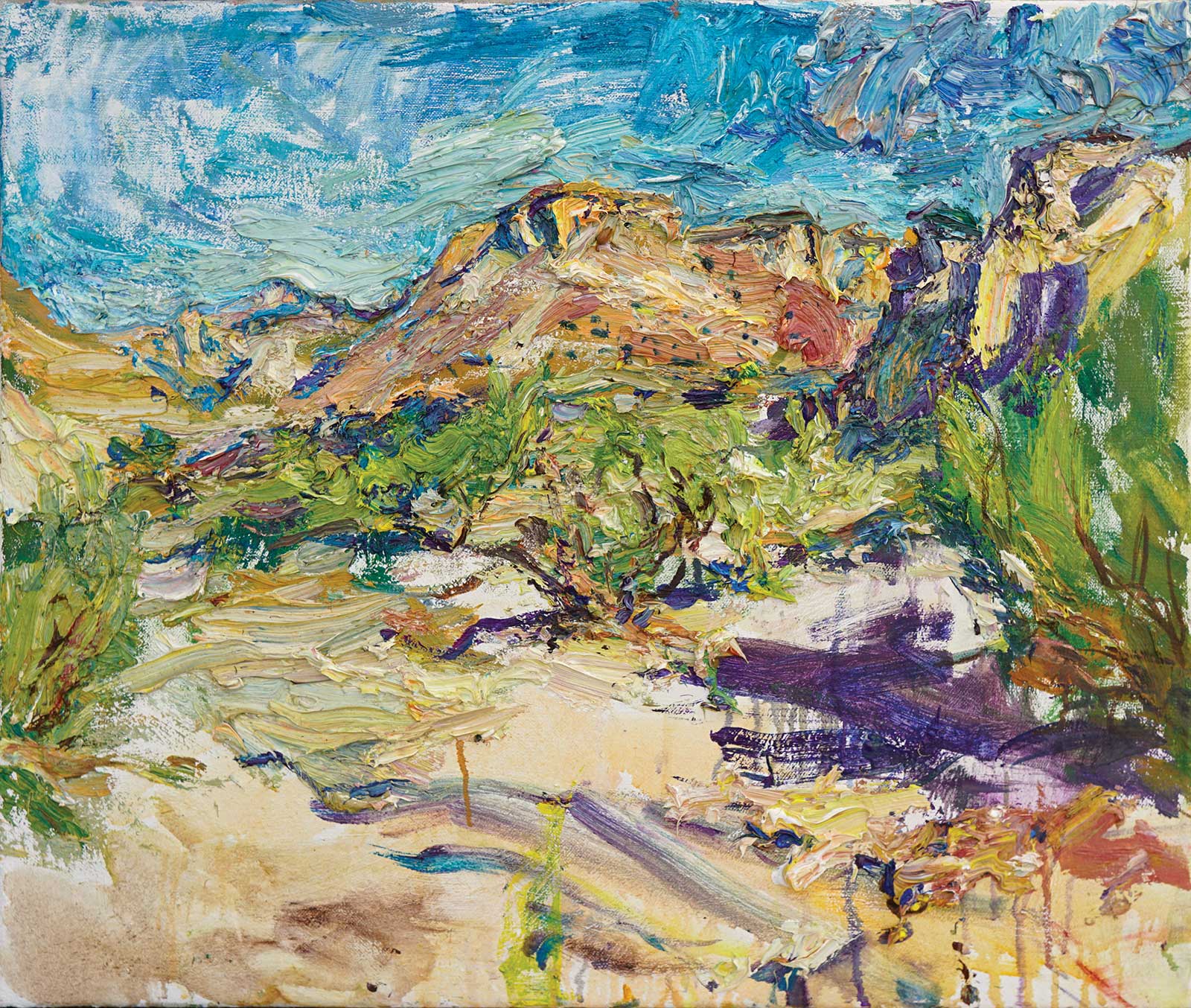 In the Andalucian Desert, oil on linen, 21½ x 25½"
Brushier, earthier, more passionate than their French forebearers, the Russian impressionists made marks in a barely controlled frenzy, expressing pure joy for being in the moment, the feeling, and the connection to the earth. They poured their emotions onto the canvas, recording fleeting experiences with light and atmosphere, never allowing needless details to get in the way of a dazzling composition.
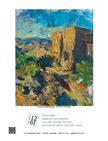
German-born Ulrich Gleiter adroitly carries on this tradition, exalting the land through an economy of dynamic brushstrokes—never more than absolutely necessary—to bring forward an image richly textured and colored in hues of purple, azure and golden yellow.
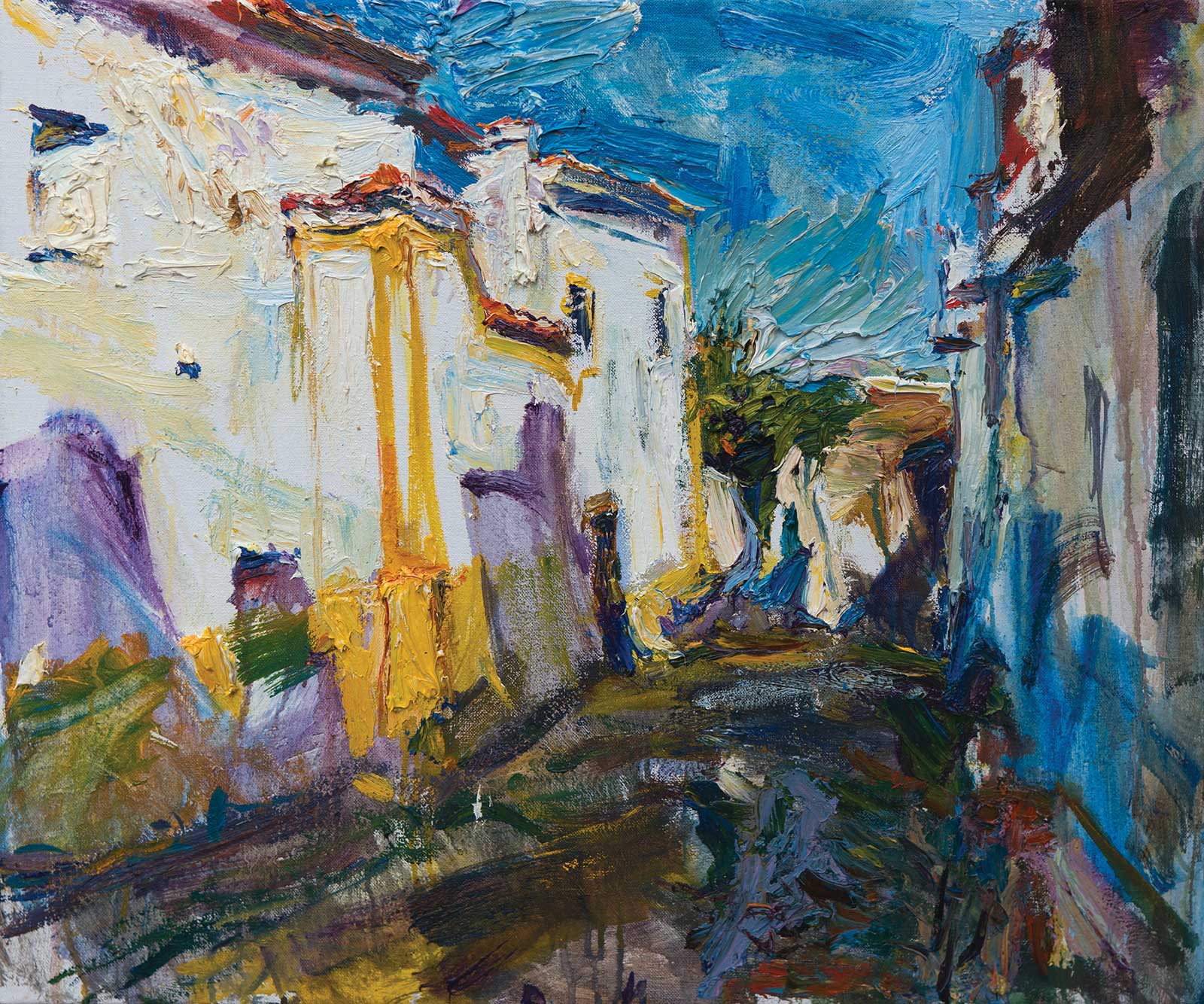 Street in a Portugese Town, oil on linen, 23 5/8 x 27½"
Gleiter took the seven years of training he received in Russia across Europe, turning his skill to locations which scarcely need augmenting to glorify: France’s Burgundy, Spain’s Andalucia, the historic towns of Portugal’s Alentejo and the northern lands of Karelia, Finland, and Sweden. The breathtaking results of his effort can be seen in a solo exhibition titled Migration at Gallery 1261 from June 24 through July 15.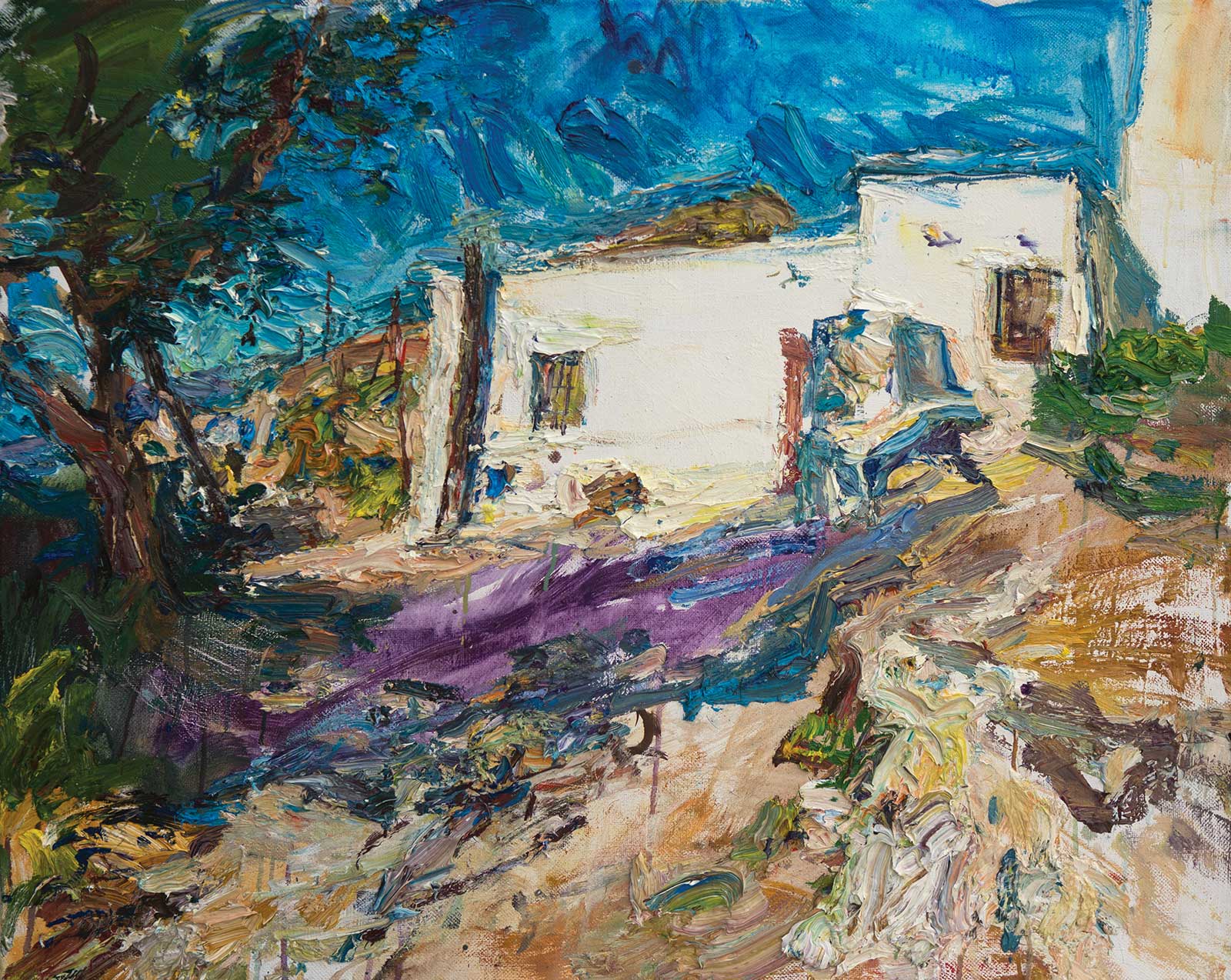 Andalucian Houses, oil on linen, 27½ x 33½"
“I always loved those Southern [European], intense, whitewashed buildings in that light,” Gleiter says. “If you go to Portugal, if you go to Spain, you have those whitewashed buildings everywhere. I have had images like this on my wish list and then I see a spot and say, ‘wow, this is what I’ve wanted to paint all of these years.’”
Gleiter, who divides his time between Germany, Russia—prior to its invasion of Ukraine—and the United States, paints in plein air. He quickly made a name for himself among American plein-airists when he racked up best in show awards at plein air festivals in California, Colorado and Wyoming during a 2010 visit.
When depicting a scene, Gleiter prefers taking his time, coming to know a place through multiple visits.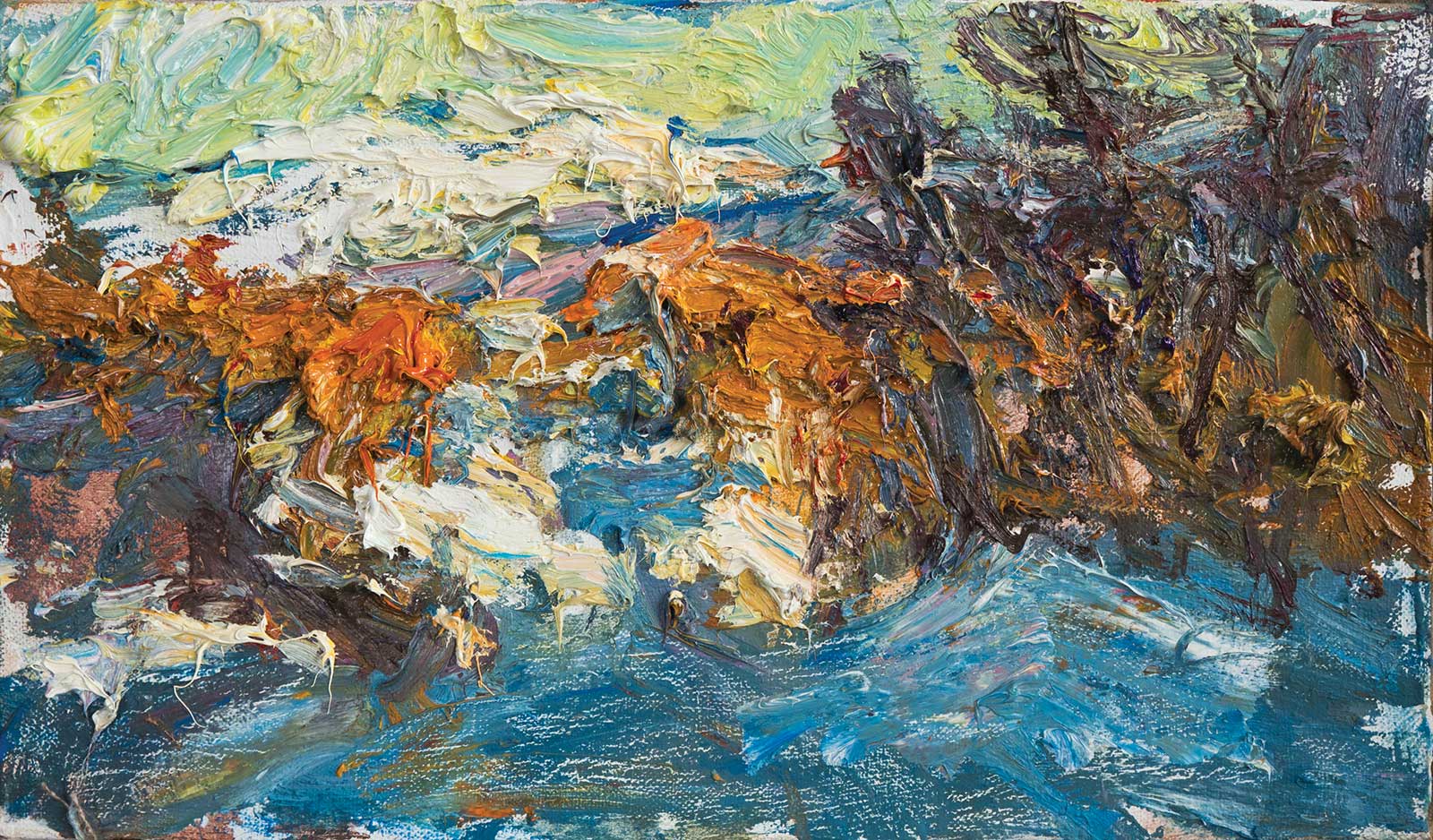 Winter Evening in Northern Sweden, oil on linen, 10 x 16"“I start for one or two days for one or two hours, [then I] leave [the painting] for a week,” Gleiter explains of his method, which can take as long as a month to complete a work. Why so long? “You get new ideas, you fix things. They become less a picture of what you were seeing, a reproduction. They [become more about] what you were feeling when you were seeing—painting the idea and not just the reproduction.” —
Gallery 1261 • 1261 Delaware Street, Suite 1 • Denver, CO 80204 • (303) 571-1261 • www.gallery1261.com
Powered by Froala Editor