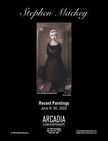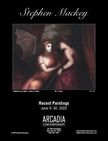
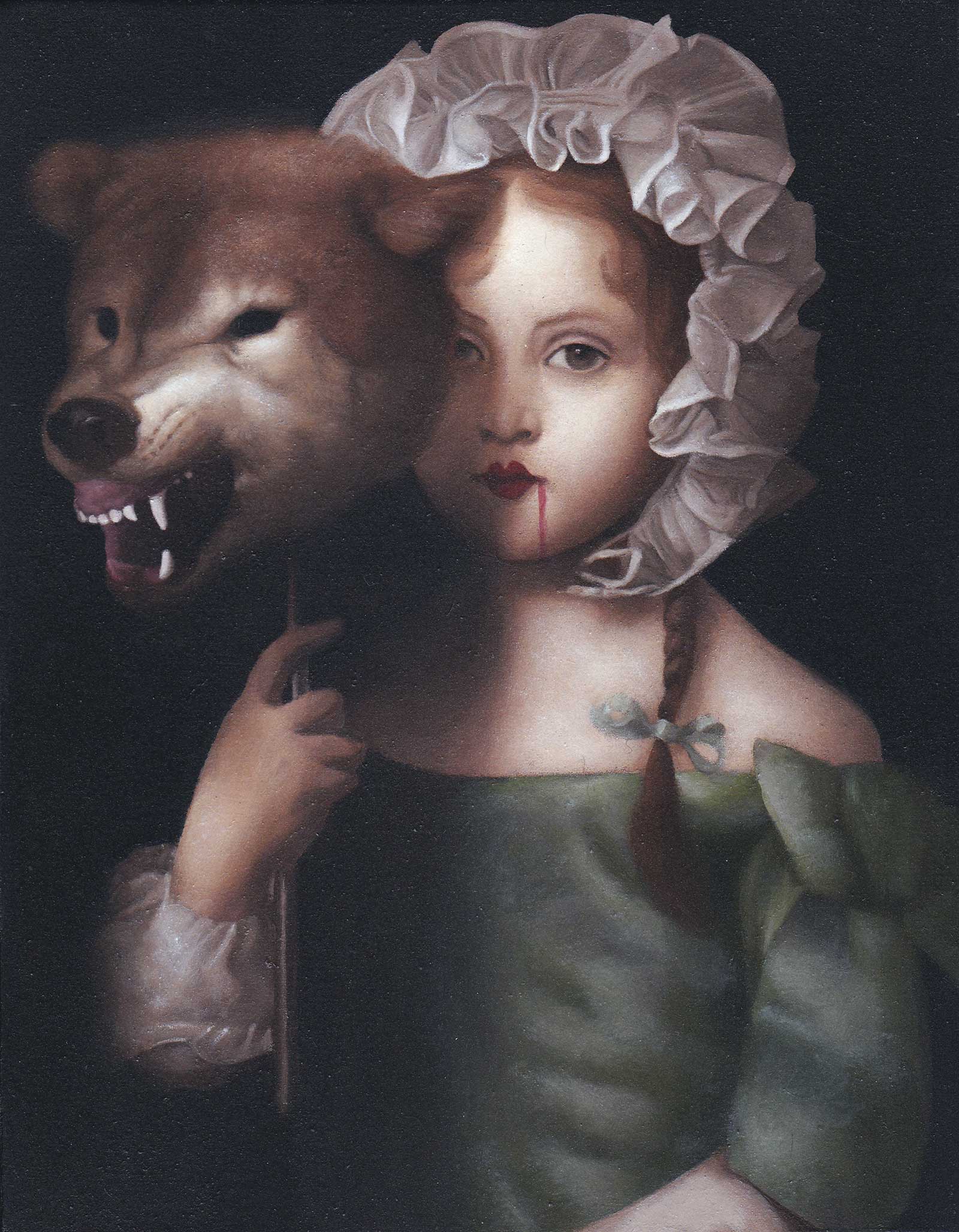
In a post-Jung, post-Freud world, it’s nearly impossible not to analyze or read into art that is mysterious—to superimpose meaning on entire images or details. The self-taught English artist Stephen Mackey discourages such readings of his paintings. “The dream-like and the fantastic I love, but I have no special interest in randomness and the unconscious, Jung and Freud etc.” He also distances himself from surrealism, a term often applied to his work. Parsing the word surrealism you come up with ideas such as “incongruous” or “irrational.” Perhaps “unexpected” is closer. Mackey likens his paintings to the “penny dreadfuls,” the cheap, sensational pulp novels of 19th-century England. “Slightly unhealthy goings on with the curtains drawn,” he explains.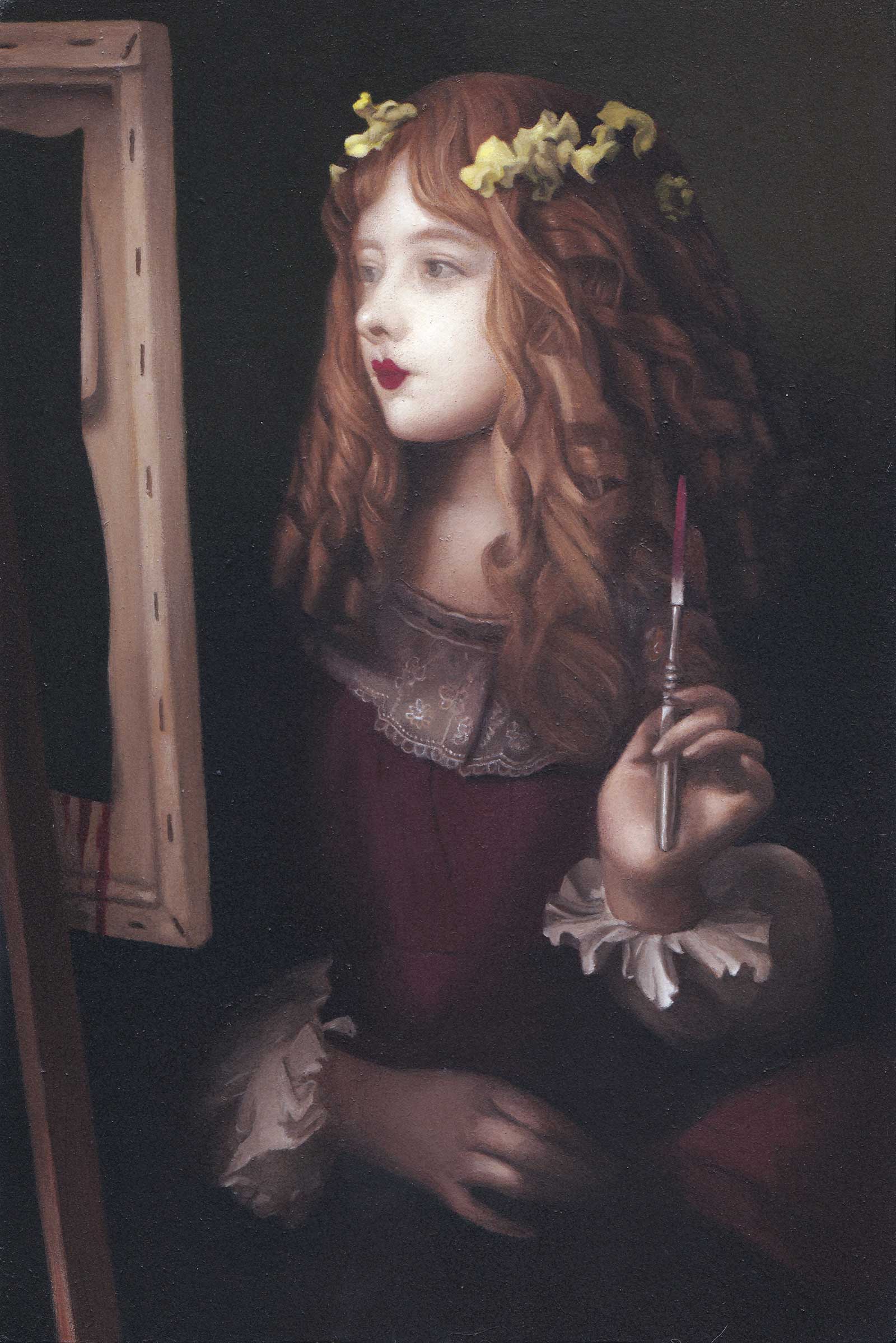 Painting as Witchcraft, oil on panel, 10½ x 7"
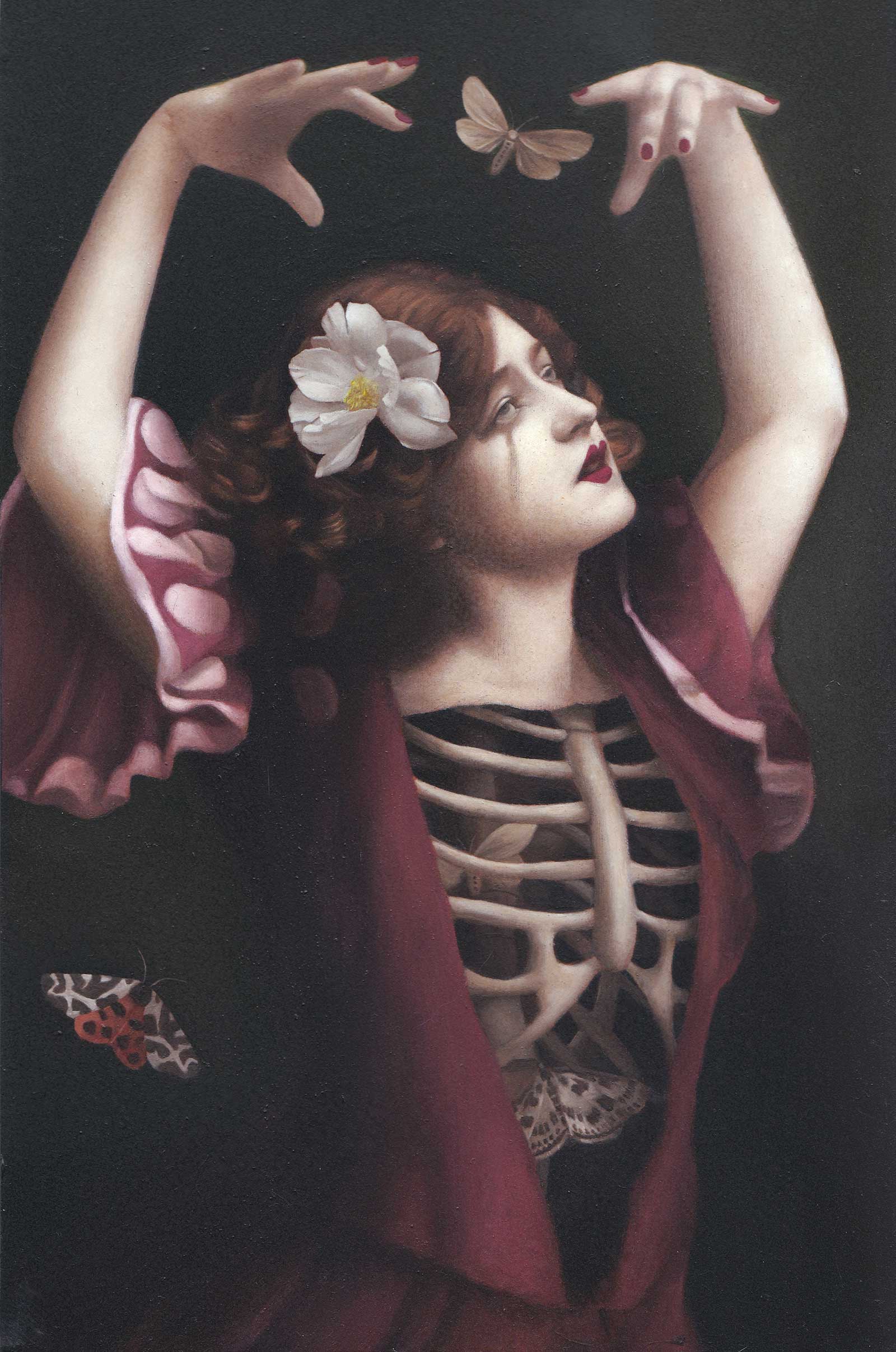 Slow Music With Moths, oil on panel, 12 x 7¾"
The unexpected juxtapositions in his paintings are often mysterious to him as well as to us. “They should be a mystery,” he says. “The great privilege of painting is never having to finish a story. No payoff is required. Like stopping a movie at the end of the first act, and everyone is fine with that. And I think that if a picture doesn’t suggest more information than it shows, it has, on some level, failed.”
Mackey’s subjects live in lush bygone times of elaborate clothes, pre-lightbulb darkness, with the curtains drawn. In the darkness anything is possible. He draws from the art of the past as well as science fiction artists of the ’70s. One of the artists he admires is Elisabeth Vigée Le Brun (1755-1842), famed for her insightful self-portraits and those she did of Marie Antoinette and her children. Vigée Le Brun wrote, “The passion for painting was innate in me.” When asked to comment on her quote, he replied, “I’m pretty phlegmatic, even by the standards of the British Isles, so ‘passion’ doesn’t really figure in my vocabulary. For me, I think the impulse to paint lies somewhere between habit and compulsion. The physical act of painting is incredibly pleasurable, and therefore habit-forming. Image making is the thing that is slightly more of a compulsion.”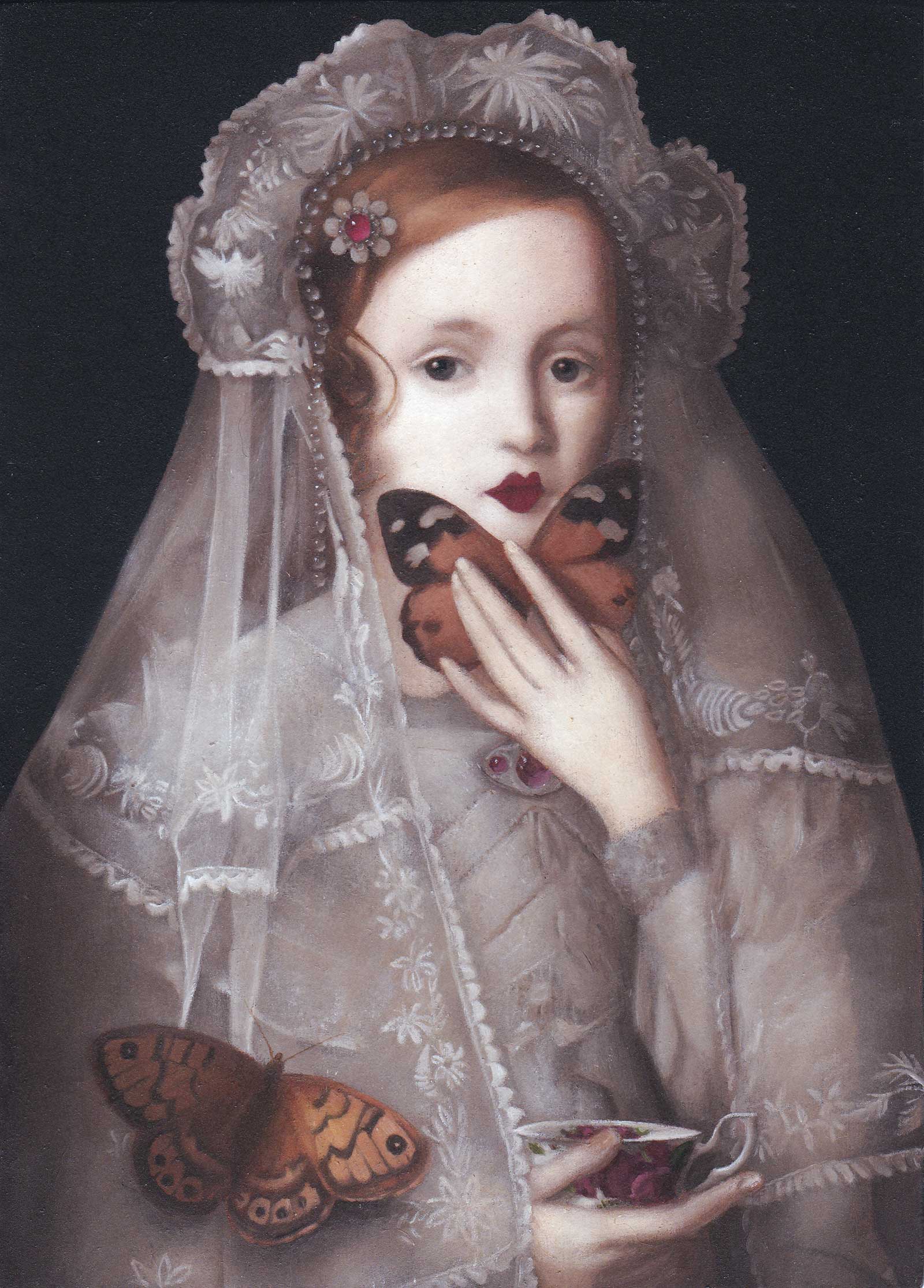 Butterfly Tea, oil on panel, 10 x 7½"
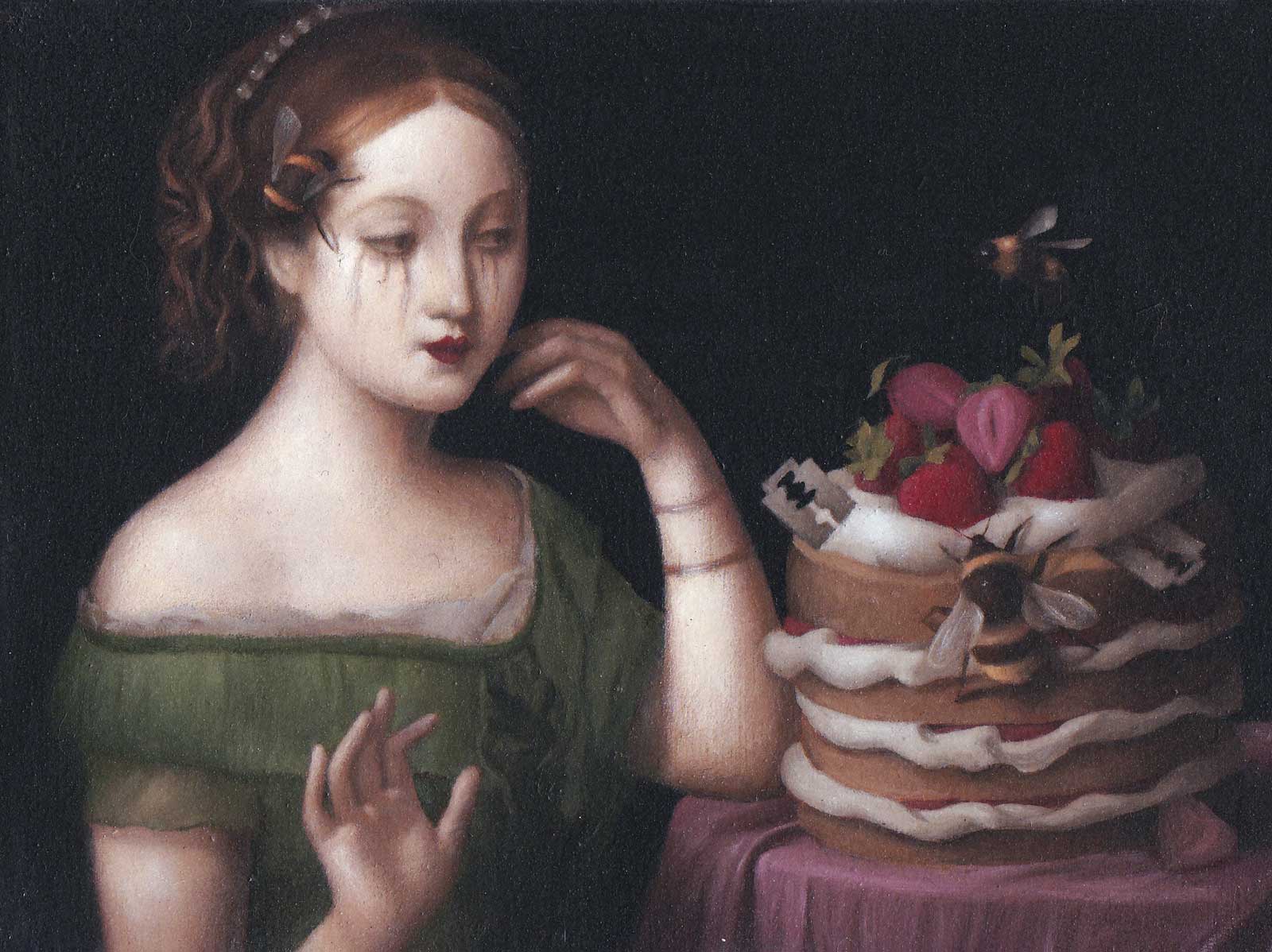 Cake That Hurts, oil on panel, 4½ x 6"
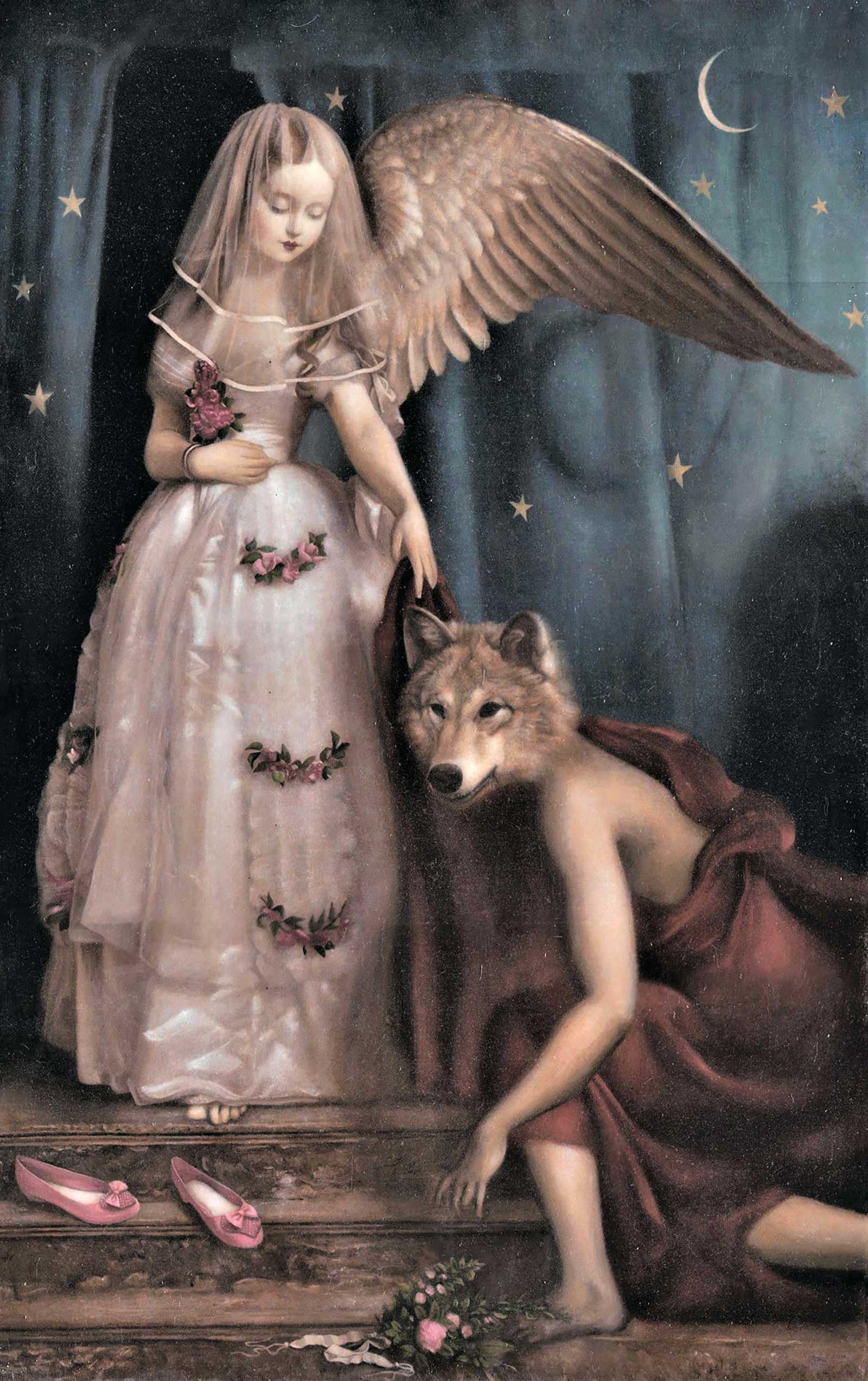 The Pantomimers, oil on panel, 24 x 15"
The tradition of afternoon tea in the British Empire benefitted the non-working class with dainty crustless sandwiches and pastries served midway between luncheon and dinner. The young woman in Butterfly Tea is dressed for the occasion, holding a delicate hand-painted porcelain cup. Her gaze suggests the disturbing possibility that she might consume the butterfly and that her tea might actually be butterfly tea.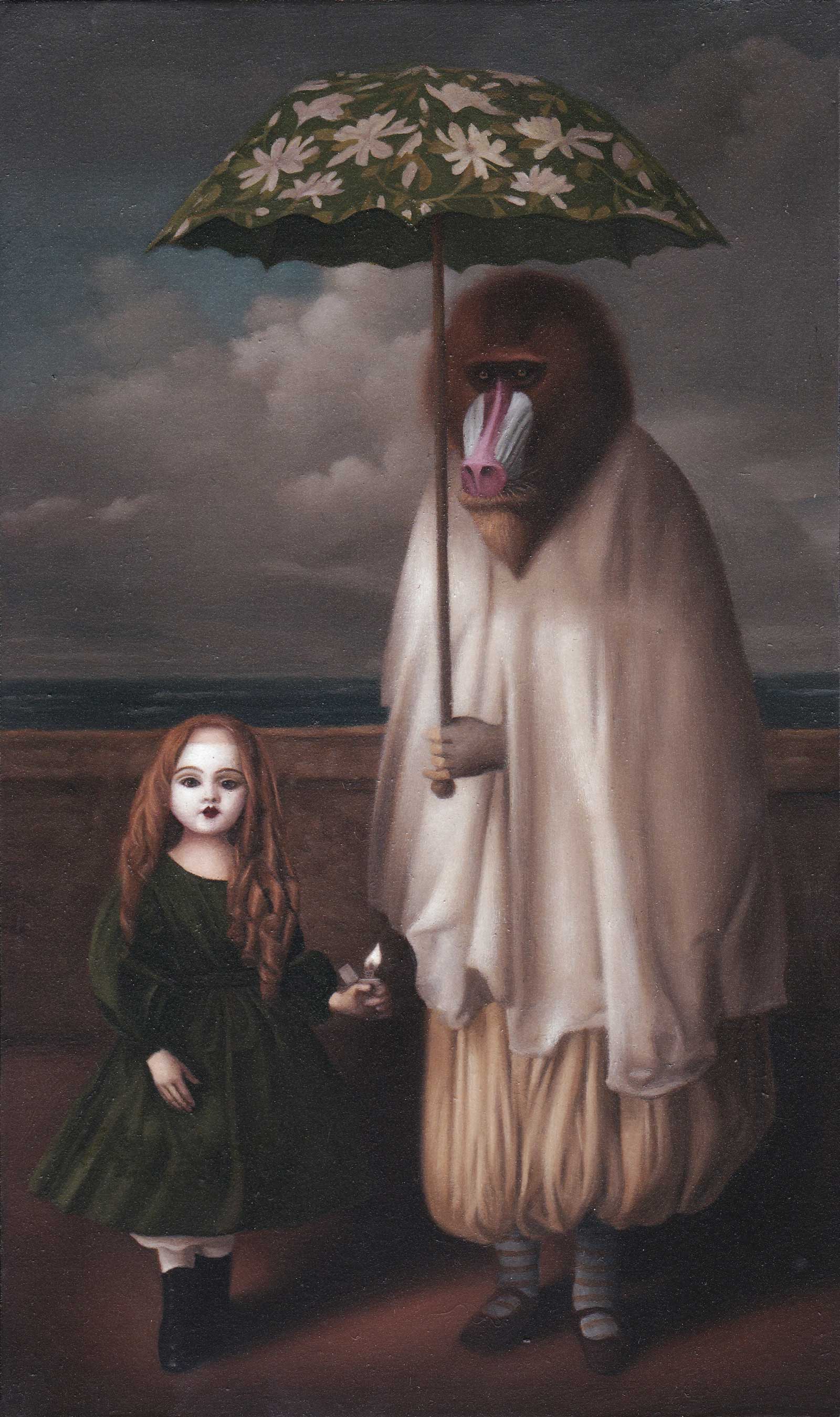 The Promenaders, oil on panel, 11 x 6½"
 Ready for Strangers, oil on panel, 9 x 7"
Having finished off the figure in an earlier painting and having turned the canvas over, the young artist in Painting as Witchcraft, is poised, ready to start again—using a palette knife in case things get out of hand. Whatever she does, it will be done impeccably.
Mackey’s latest paintings will be shown at Arcadia Contemporary in New York, June 9 through 30. —
Arcadia Contemporary • 421 W. Broadway, New York, NY 10012 • (646) 861-3941 • www.arcadiacontemporary.com
Powered by Froala Editor