In 1999, Clive Smith won the prestigious BP Portrait Award at the National Portrait Gallery in London. That same year I included his work in the exhibition Re-presenting Representation IV at the Arnot Art Museum. The following year we purchased one of his paintings for the permanent collection. At the time, I wrote about Clive’s themes of the human condition, isolation, comfort and social confinement as in his painting Double Single, 1998. I’ve been intrigued by the apparent changes in his work over the years and recently had the opportunity to catch up.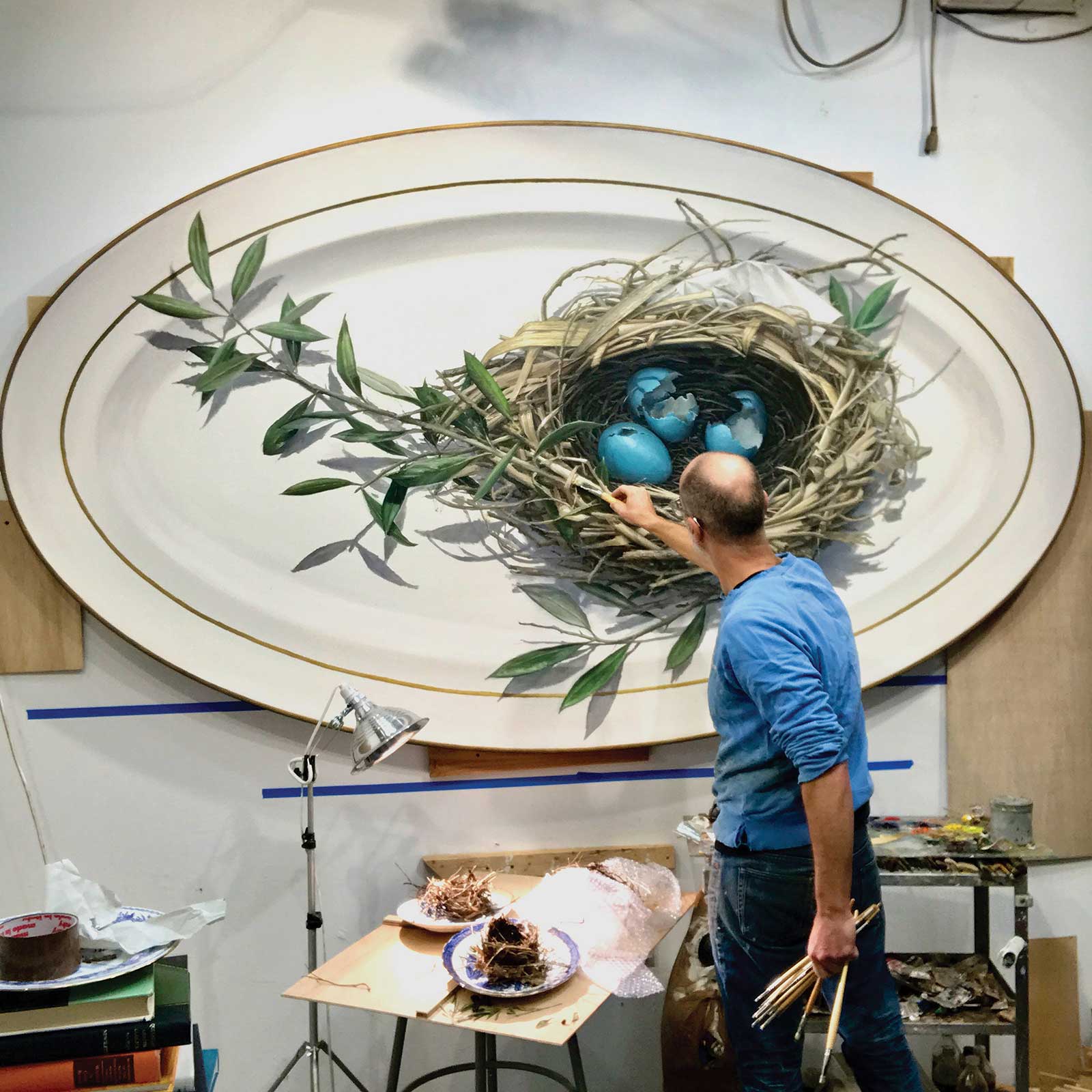 Clive Smith paints in his studio.
Clive was a fashion designer in Paris, Naples and New York before studying painting and drawing with the late Peter Cox at the Art Students League of New York. It’s always tempting to find the influence of the teacher in the student, but in the case of Peter and Clive, it’s a more human quality than a painterly one—a similarity of outlook. At one point I wrote of my friend Peter, “Cox’s skills in observation and his active imagination allow him to express a unique response to the reality of being human that sets him apart from his peers. The reality of his figures goes beyond the surface.” I realize now that applies to Clive as well, from his early figures to his bird’s nests on plates, to his new work on Speculative Birds, in which he engineers new breeds of bird “by thinking about how a certain birds’ patterning and color could match the DNA of a specific painting.”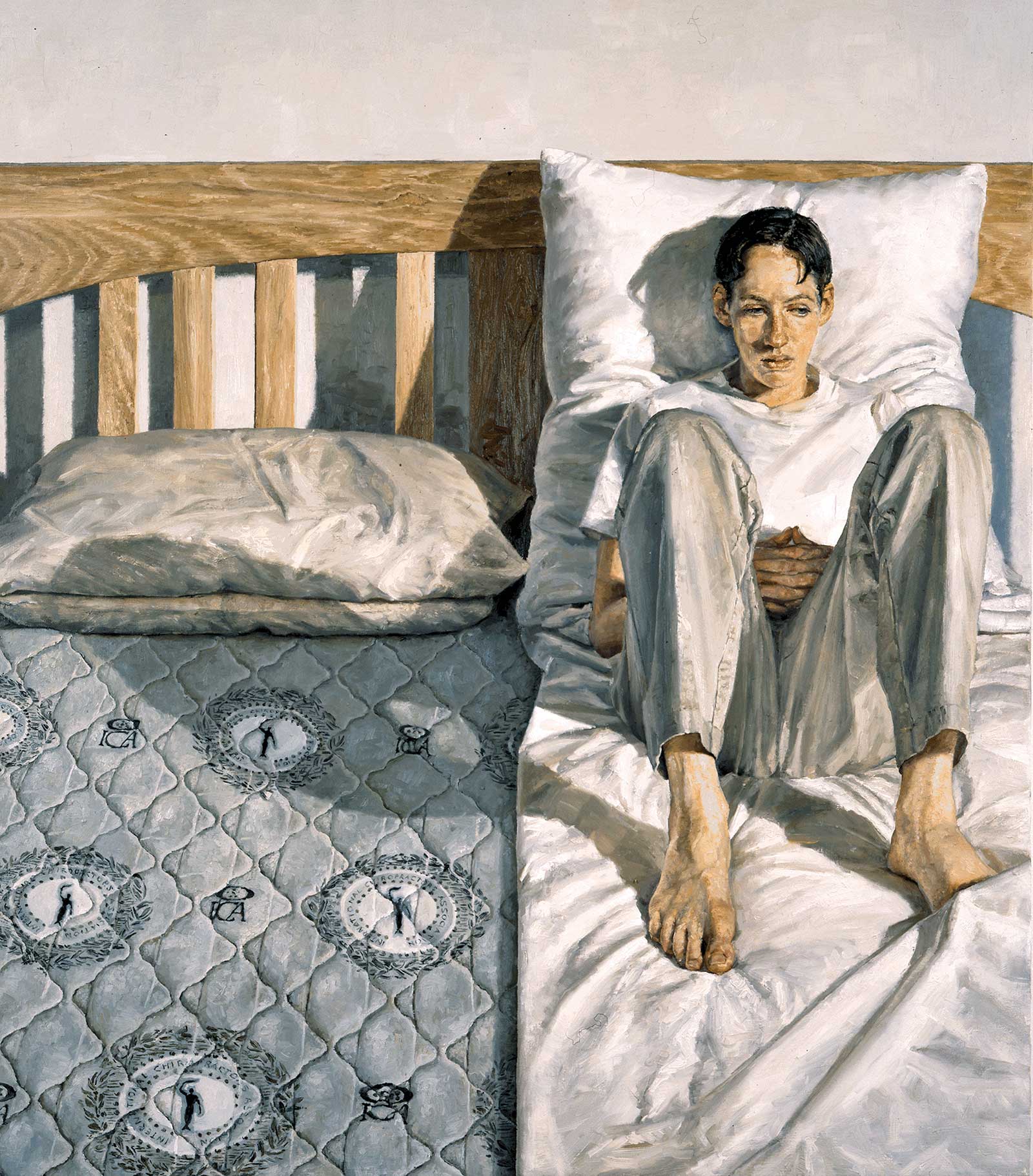 Double Single, 1998, oil on canvas, 50 x 45". Private collection.
The thread through the years has been humans—humans as subjects, humans’ impact on the environment and Clive as human painting those things. “It’s a journey,” he explains. “I’m not an artist who is going to do one thing and just keep doing it regardless of what’s happening in life or in contemporary art. I keep painting the way I paint but there’s a more refined natural progression based in my observation of what’s in front of me. I took the figure out and began to look at the environment, which can be a scary and fascinating thing.”
Walking his dog at his home in the Hudson River Valley, he found bird nests and began to collect them. He saw a parallel between the way the twigs and sticks were built into the nest and his own way of building a canvas. He began painting the nest in large scale while at the same time questioning what he was doing. He began to look into the way nature and birds had been depicted through history including Audubon’s paintings and a book titled Illustrations of the Nests and Eggs of Birds of Ohio. The two-volume set was begun by Genevieve Estelle Jones who had been inspired by Audubon’s engravings at the 1876 Centennial World’s Fair in Philadelphia. Her biography noted that she also painted on ceramics. “This made me think about putting the nests on plates to comment on how we are consuming the natural world,” Clive explains. “I started to alter the designs of the ceramics to depict birds’ extinction and the human hands that have/are altering the natural world.”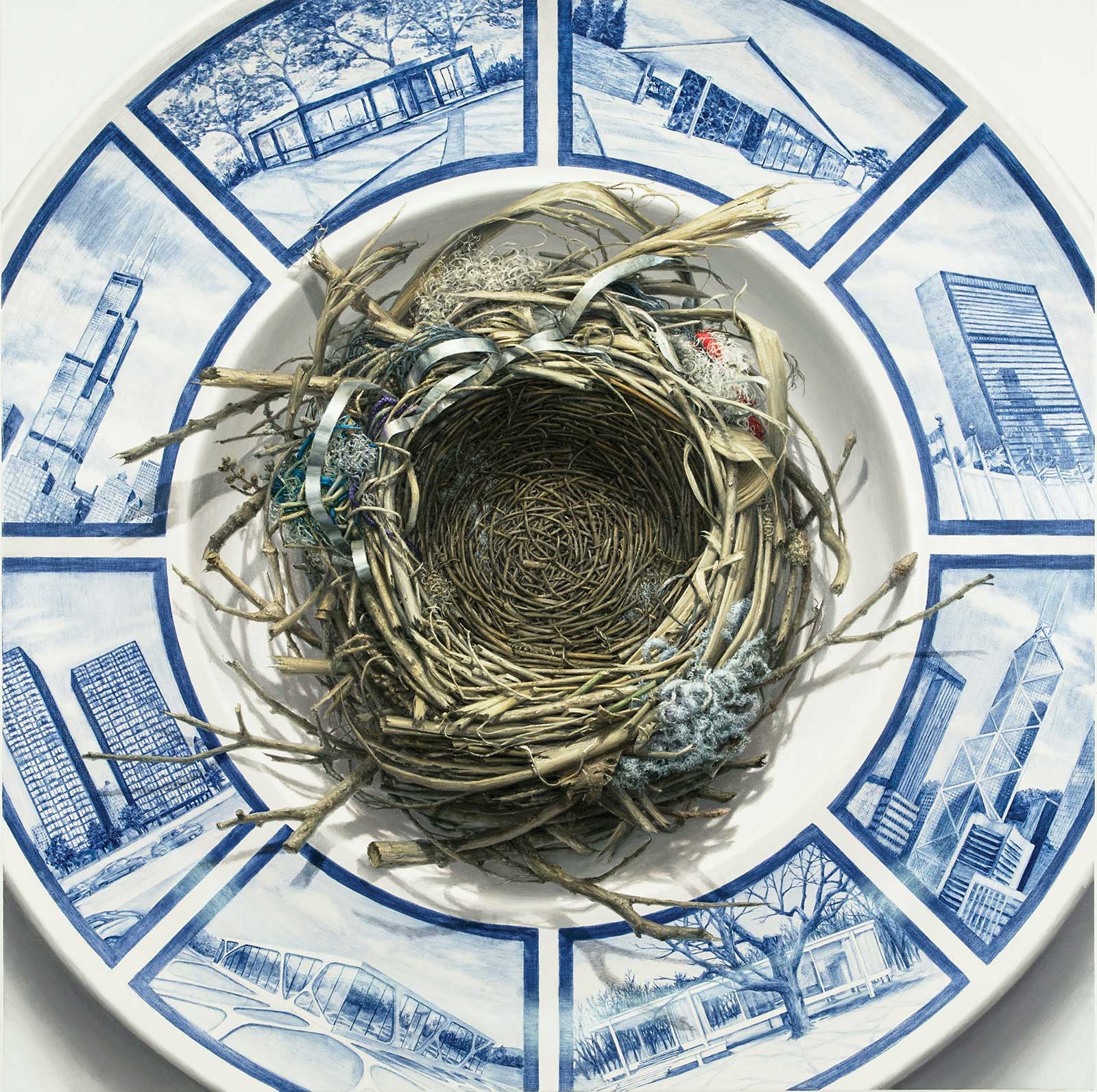 Beak, Claw, Hand, Brush (Killer Buildings), 2017, oil on canvas, 56 x 56". Courtesy Marc Straus Gallery, New York, NY.
One painting, Beak, Claw, Hand, Brush (Killer Buildings), 2017, depicts a nest on a plate with transfer prints of classic midcentury and contemporary buildings from Philip Johnson’s The Glass House to the 1,450-foot-high Willis Tower in Chicago. As an architecture buff, I recognized them all as killer buildings but began to realize that their reflections and presence confuse birds who fly into them and are killed.
He began to break the plates and to glue them back together celebrating the patterns of the breaks as the Japanese do in kintsugi, where breaks are repaired with gold, highlighting the break.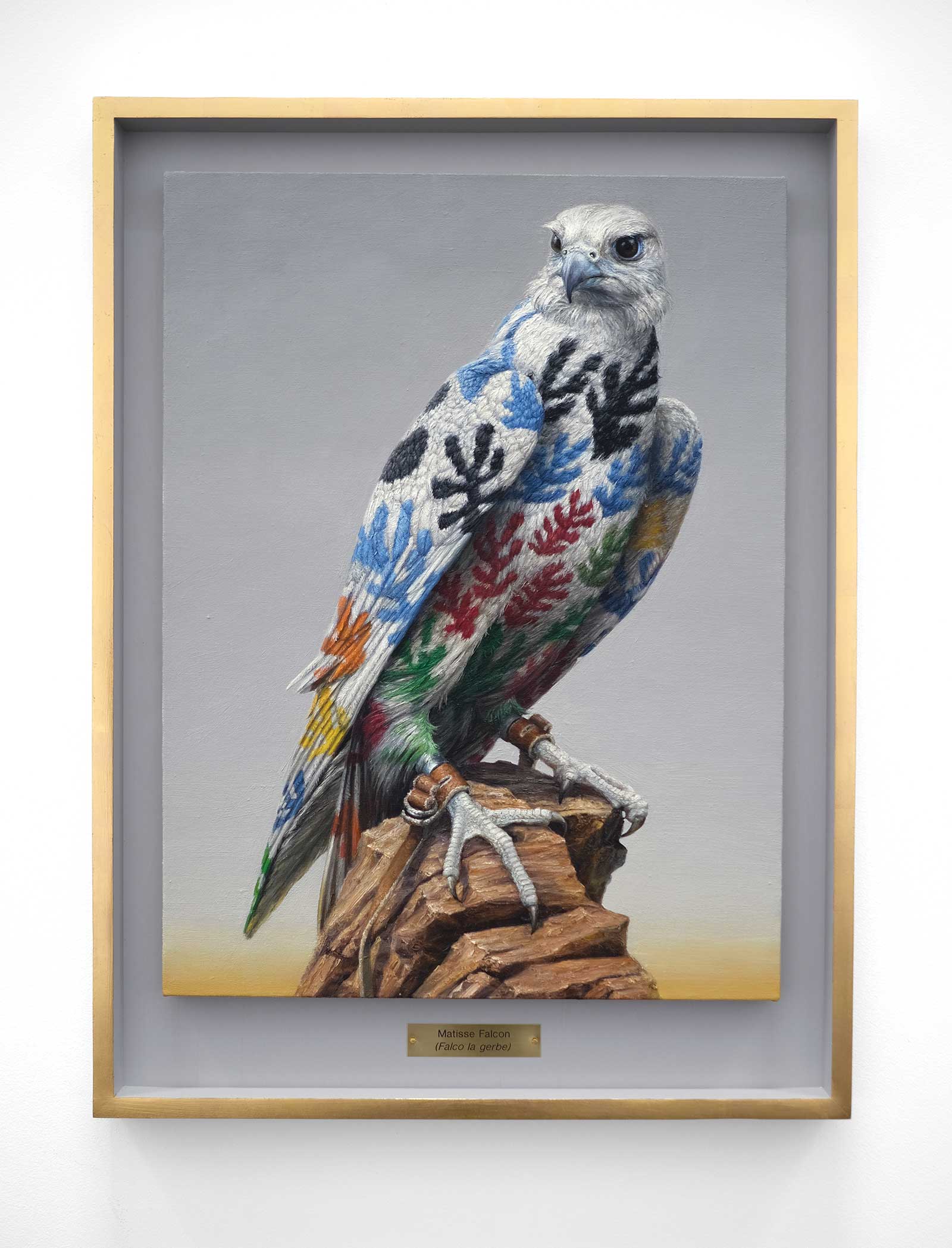 Matisse Falcon (Falco la grebe), 2021, oil on linen, 24 x 18" (framed). Courtesy the artist.
Clive loves abstraction, “But it’s not something I naturally do,” he adds. “I’m jealous of abstract artists not having to fit into reality. The broken plates that I glue back together feed my realism, but I’ve got all these shapes in which I can do what I want, having freedom with color and shape.” A Little Life, 2017, appears to be assembled from fragments of the color field painter Kenneth Noland’s target paintings.
“I am fascinated by the plumage of birds and abstract expressionism,” he says, “in my mind, connecting them together. So I started to think about extracting the DNA of paintings and editing them into birds. That is how my Transgenic Bird breeding program started in my studio. We have manipulated nature for centuries, specifically grafting of trees, then modern-day gene splicing, all of which inspires my Transgenic Bouquets.”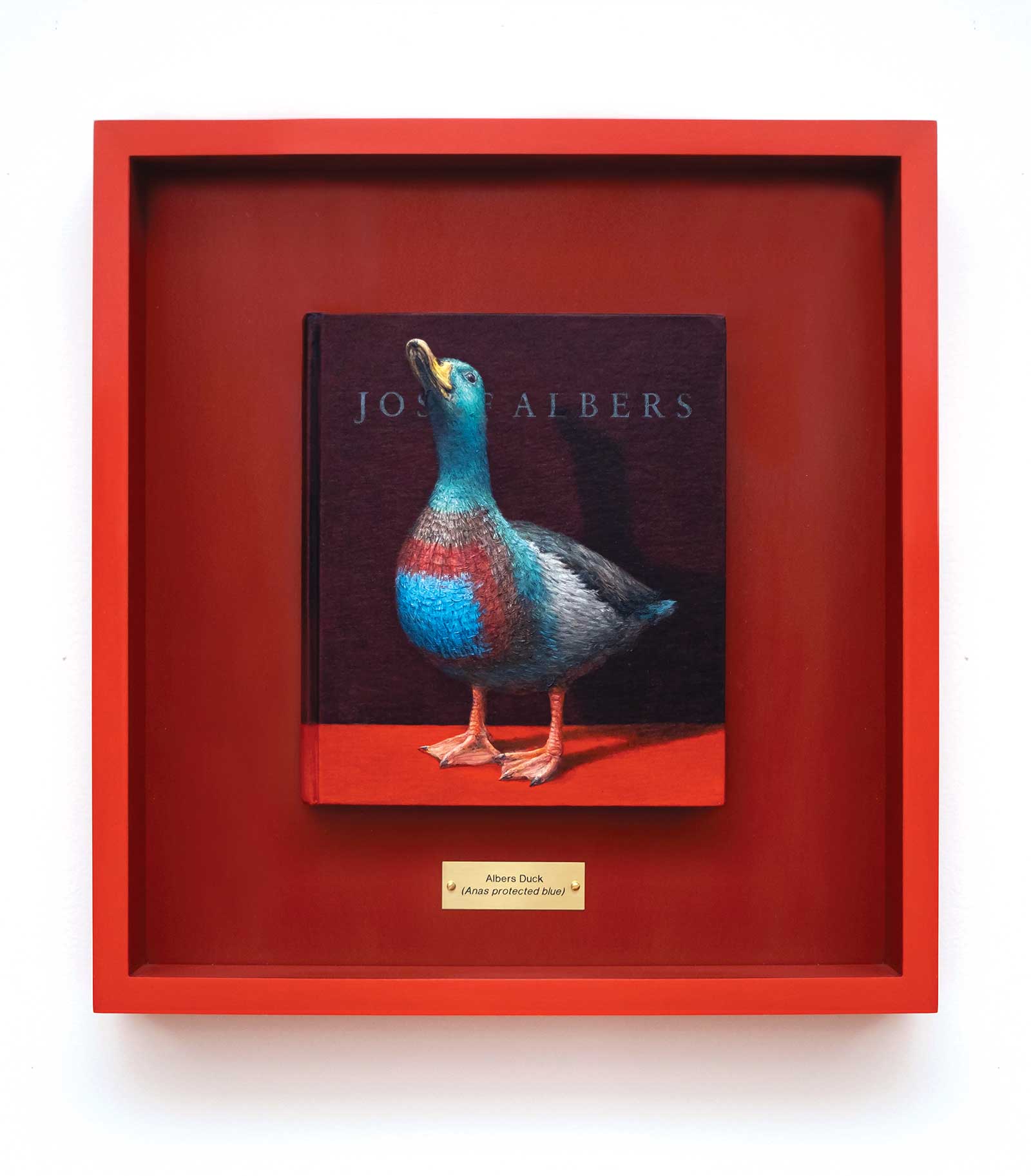
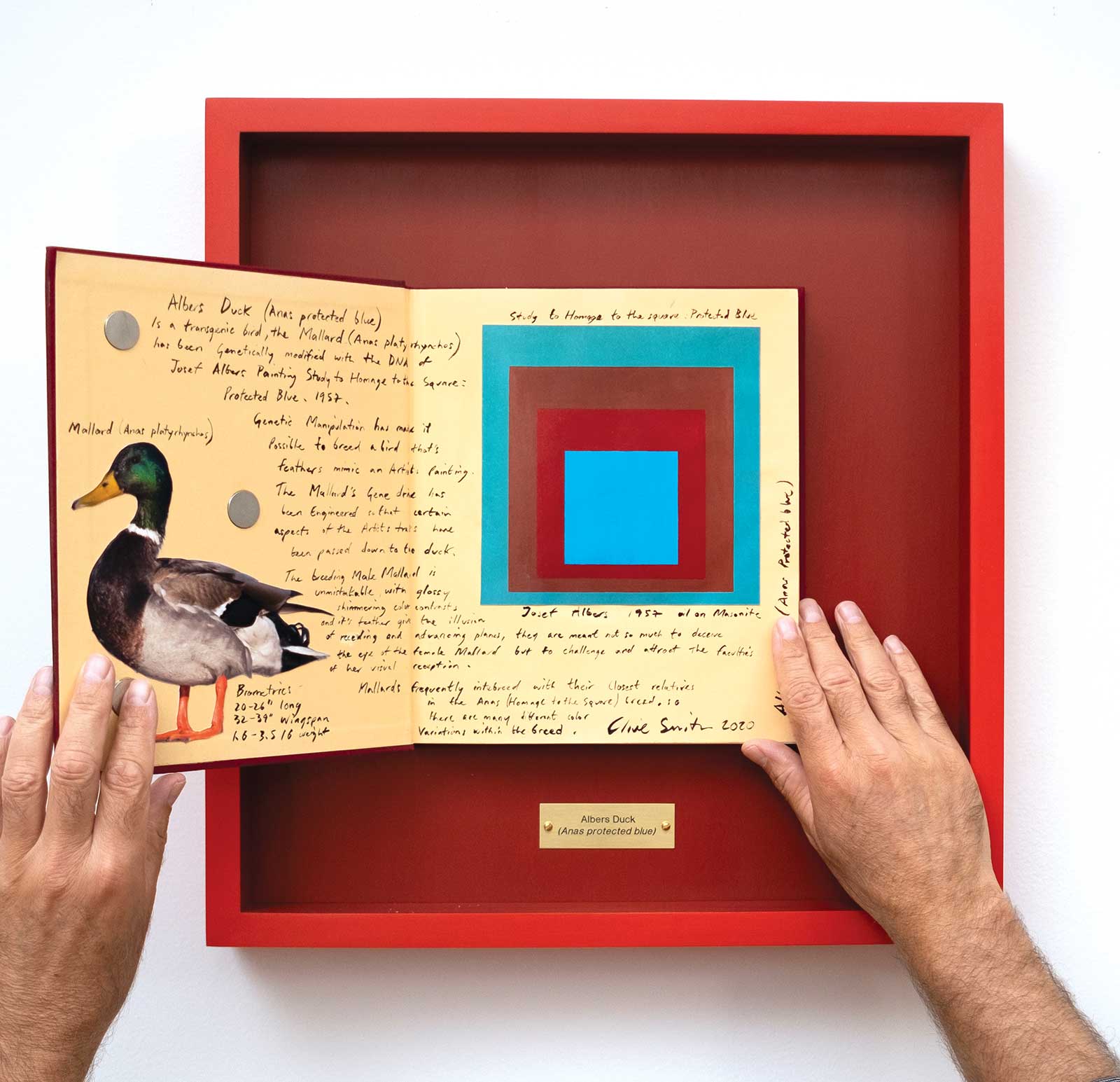 Albers Duck (Anas protected blue), 2020, oil on found book, 18 1⁄8 x 17¼ x 2 1⁄8". Private collection. Courtesy Marc Straus Gallery, New York, NY.
His Speculative Birds appear on the covers of vintage books he finds at the Strand Bookstore or on the internet. Researching the reintroduction of extinct species from DNA extracted from specimens preserved in natural history museums, he “became fascinated by the creation of new, yet familiar breeds. By combining an existing bird and mixing it with the DNA of a painting, I wanted to create an entirely new and wonderful subspecies,” he says. “I have engineered these new breeds by thinking about how a certain birds’ patterning and color could match the DNA of a specific painting. There is an interesting correlation between brushstrokes and feathers. Plumage, like paintings, has evolved to evoke very specific emotions: aggression, warning, seduction, joy. These new birds are painted on reference books which were integral to the research, in a way they contain all the information, all the DNA of the original species.”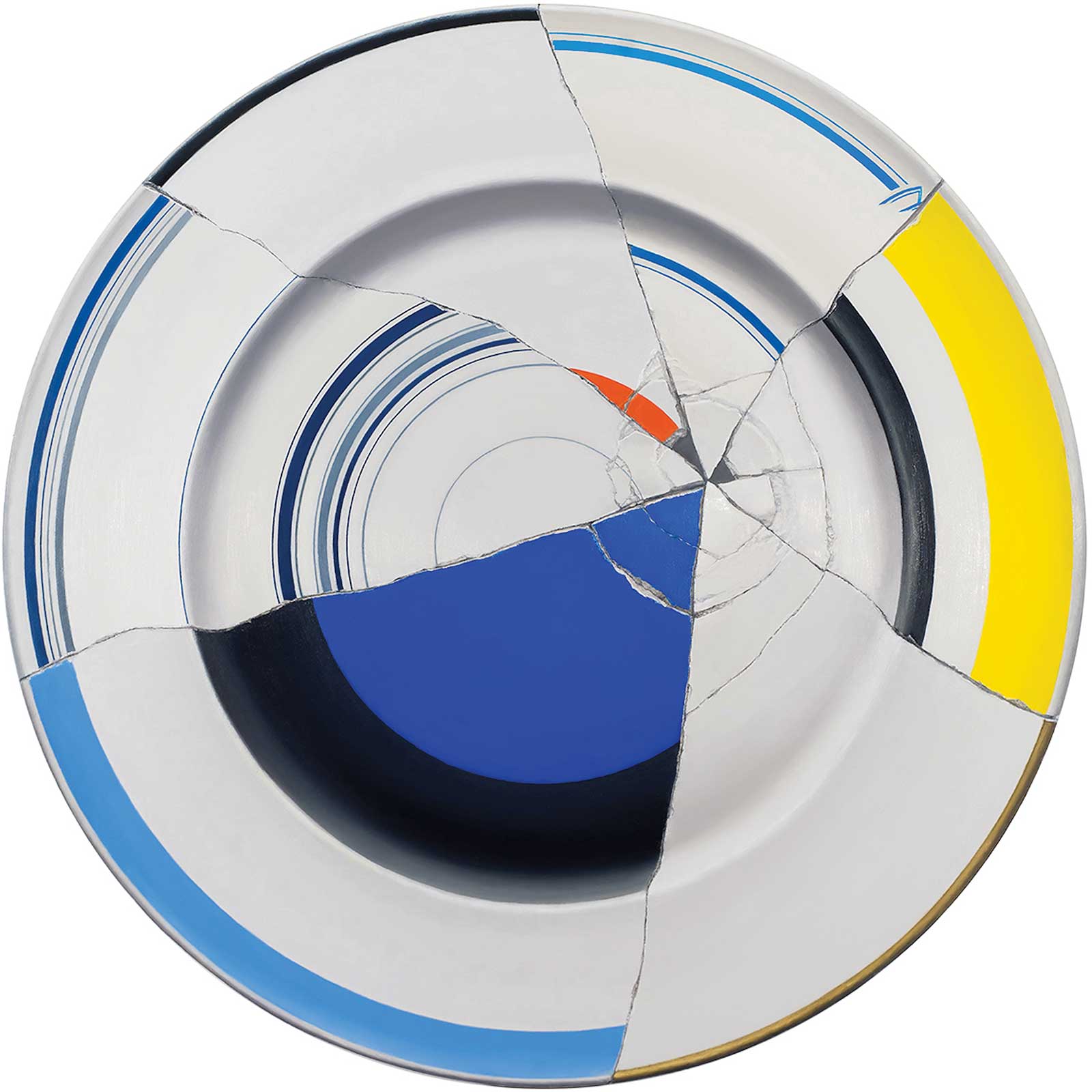 A Little Life, 2017, oil on canvas, 45" diameter. Courtesy Marc Straus Gallery, New York, NY.
The Speculative Birds bring the paintings of Ellsworth Kelly, Picasso, Clyfford Stiil and others to unexpected avian life. He found working with Josef Albers’ squares “a tough one,” having to find a bird with a big enough breast to incorporate the pattern. He settled on a duck which now appears as Albers Duck (Anas protected blue) on the cover of the book that is mounted in a shadow box. The first few pages of the book reveal Clive’s research notes and his developmental sketches of this new species. He reveals that the book is held shut “by magnets that are just strong enough to keep it closed but not too much to open it up.”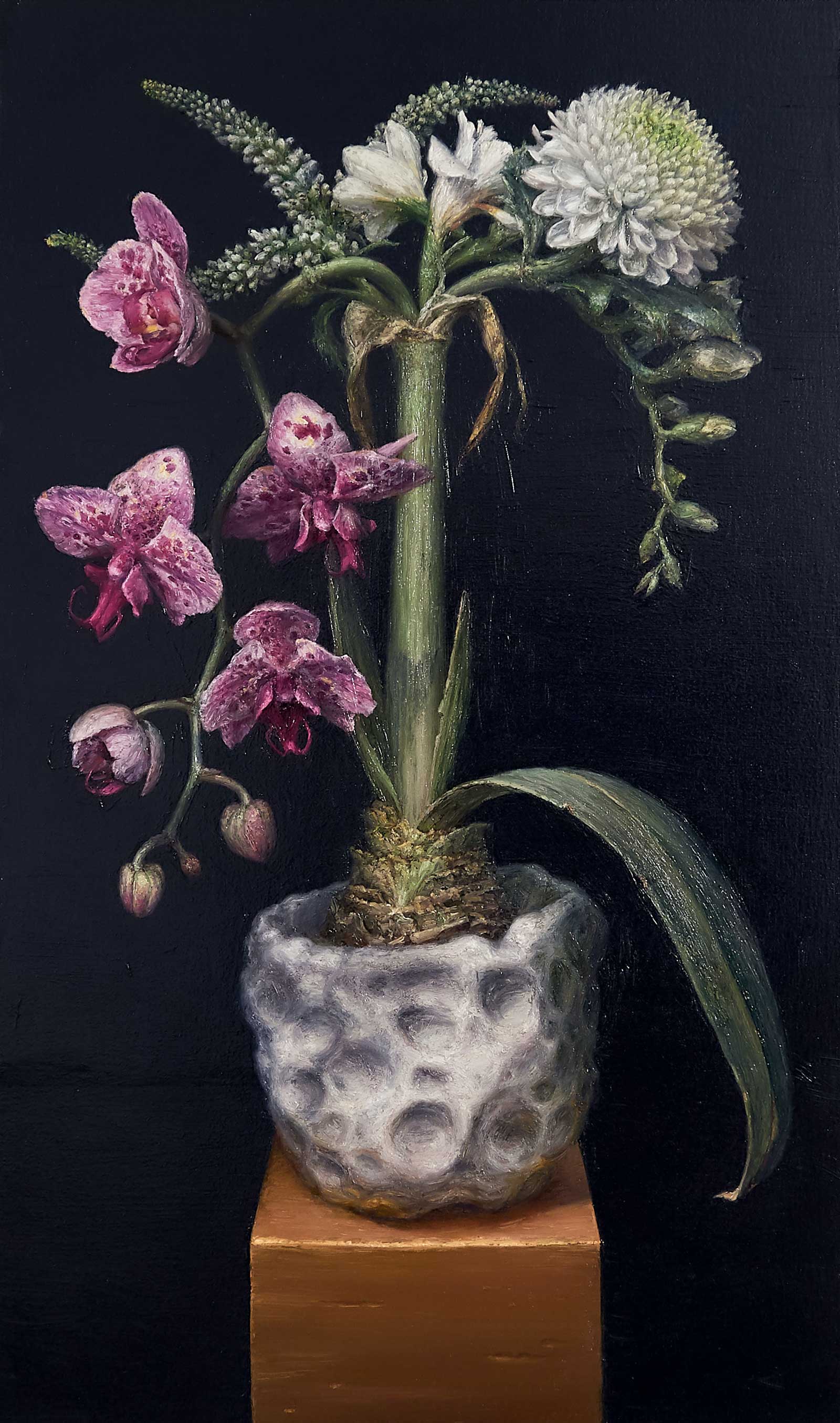 The Scott, 2019, oil on wood board, 19.6 x 12.12". Courtesy Marc Straus Gallery, New York, NY.
For an upcoming exhibition in Jedda, Saudi Arabia, he is creating speculative falcons since falconry is a popular sport there. Matisse Falcon, 2021, will make its debut at the show.
“I want to make something interesting and beautiful to look at,” he says. The country and the city inspire his work in different ways. In his Bushwick studio in Brooklyn, he is surrounded by artist of all types from conceptual to realist. “These people have helped me change my work,” he explains. “I enjoy seeing what they think.” In his upstate studio he can go for walks and contemplate nature, the way birds build their nests and the way human actions impact the seemingly pristine forest. In his studio he creates stories about the human hand in nature. —
Powered by Froala Editor