As an architecture nerd, I went to visit the 12th century Haddon Hall in Derbyshire, England, solely to see the Elizabethan Long Gallery and its great plasterwork ceiling. The fact that the site had been the set for much of the 1987 romantic film The Princess Bride could have been a draw, too.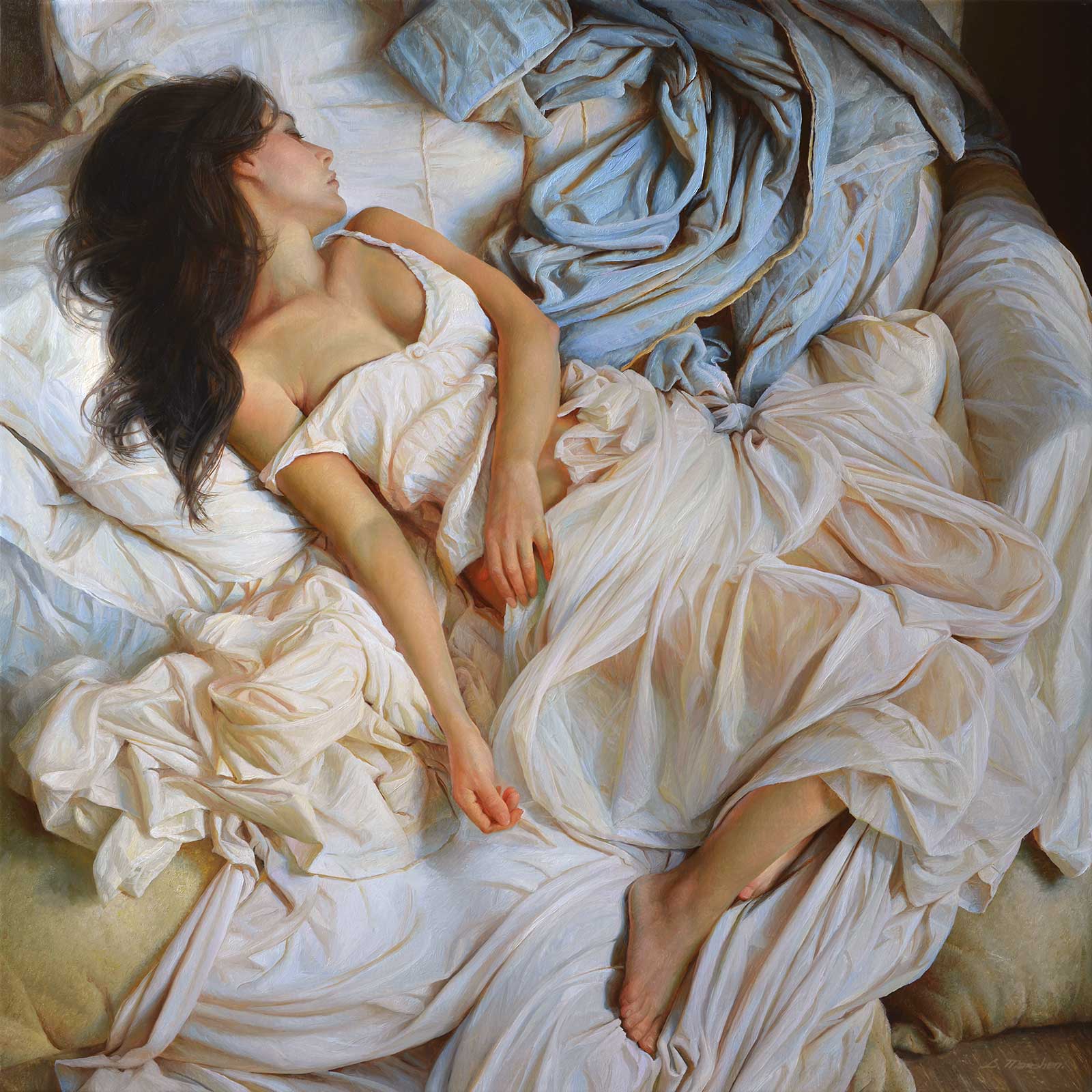 Maxwell Alexander Gallery, Fragment of a Dream, oil, 32 x 32", by Serge Marshennikov. Private collection.
I decided to check out the chapel and stopped in my tracks in front of the marble effigy of a young boy. His head raised on a pillow, he was dressed in a long gown and laid on a shroud which was gathered up under his crossed hands, his bare feet sticking out as if he would soon get up from a nap. The boy was the eldest son of the 8th Duke of Rutland and would have succeeded his father as Duke and lord of the manor had he not died in 1894 at the age of 9. The base of the sculpture reads, “Hope of my eyes / Something is broken that we cannot mend / With Grief, Remembrance / Pride and Love, I decorate / his Memory / Dear dear little Boy / You give us all Perpetual Benediction. Entirely designed and modelled / by his Mother.”
The emotional impetus for the Duchess of Rutland to memorialize her son was intense and the intensity emanated from that white effigy in the chapel at Haddon Hall. The drapery and shroud have stayed in my mind ever since along with the hopeless hope that that little boy would get up and take his rightful place in the world.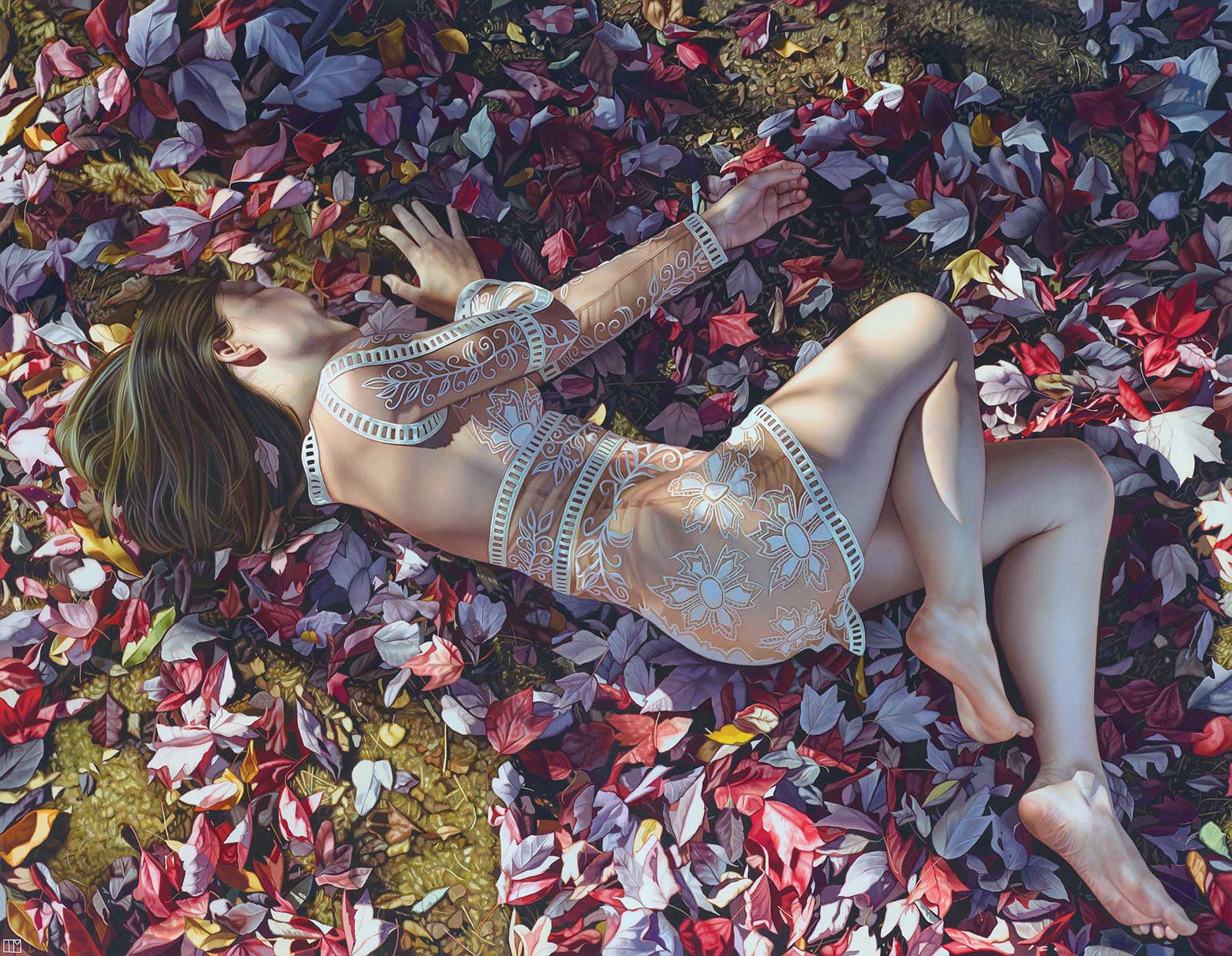 Stone Sparrow NYC, The Past Leaves Us Leaf by Leaf, egg tempera on panel, 25 x 32½", by Teagan McLarnan
In his sculpture Child Bride, Philippe Faraut uses drapery to obscure the face of a young girl. He says, “This sculpture was created to bring social awareness to the plight of the 15 million girls who are married each year before the age of 18. This young girl’s expression of fear is barely hidden by her veiled face.” Faraut, who was born in France and now works in New York’s Finger Lakes Region, has traveled the world to study many cultures. He has also studied forensic facial reconstruction and anaplastology, enabling him to sculpt astonishingly expressive portrait busts from children to the aged.
Russian painter Serge Marshennikov says, “An artist’s goal is always the same—the creation of an image that shows emotion and that transfers the painter’s feelings to the viewer.” His passion for painting and for the beauty of the female figure result in richly sensual paintings. 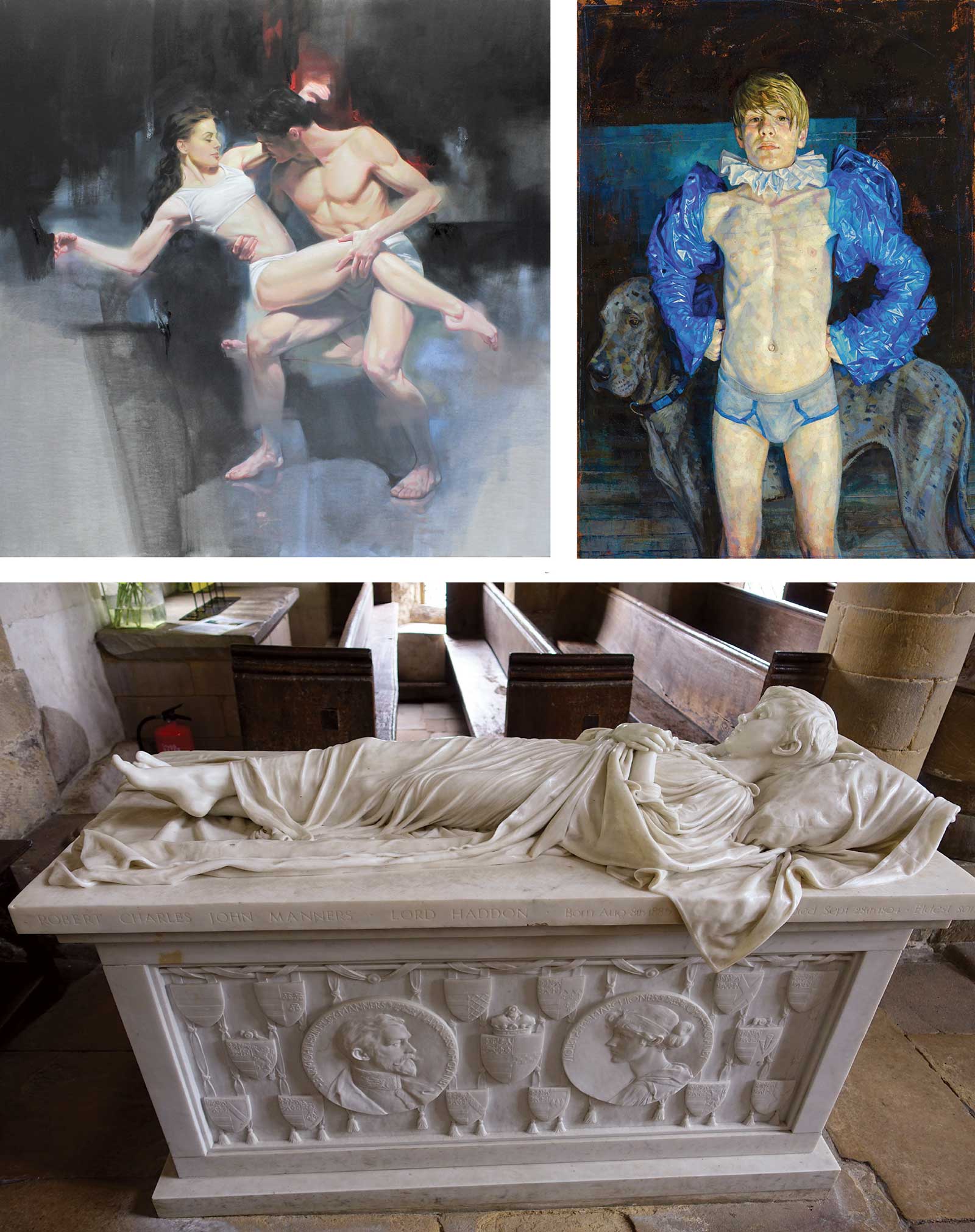 Clockwise from top left: Richard S. Johnson, Capture, oil on canvas, 48 x 48"; Galerie Mark Leibner, Blue Boy with Floyd, acrylic on canvas, 42 x 30", by Daniel Barkley; Violet, Duchess of Rutland (1856-1937), Memorial to Robert Charles John Manners, Lord Haddon (1885-1894). Chaple of Haddon Hall, near Bakewell, Derbyshire, U.K.
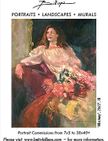
In his Fragment of a Dream, the model reclines in her negligée among the jumbled bedclothes that she has disrupted during the night. Draperies not only partially hide her figure but become a subject themselves, the artist reveling in their subtle colors, textures, opacities and translucencies.
As I look across the room from my desk, I see a watercolor by the Canadian artist Daniel Barkley of Icarus with blue plastic wings. The plastic appears often in his work, as in Blue Boy with Floyd. Barkley explains, “The blue plastic poncho from Niagara Falls that I have been working with for years lent itself perfectly to the task of transforming this model into the Blue Boy. As a substitute for Gainsborough’s silk and satin, the reflective blue plastic is easily malleable and set into place with cloths pegs, its glossy translucency adds the element that brings this subject into our 21st century. It adds an element from our contemporary experience that helps make the subjects from art history that I explore more relatable to a modern audience.” The confidence of his model echoes that of Thomas Gainsborough’s A Portrait of a Young Gentleman (The Blue Boy) painted 250 years before. 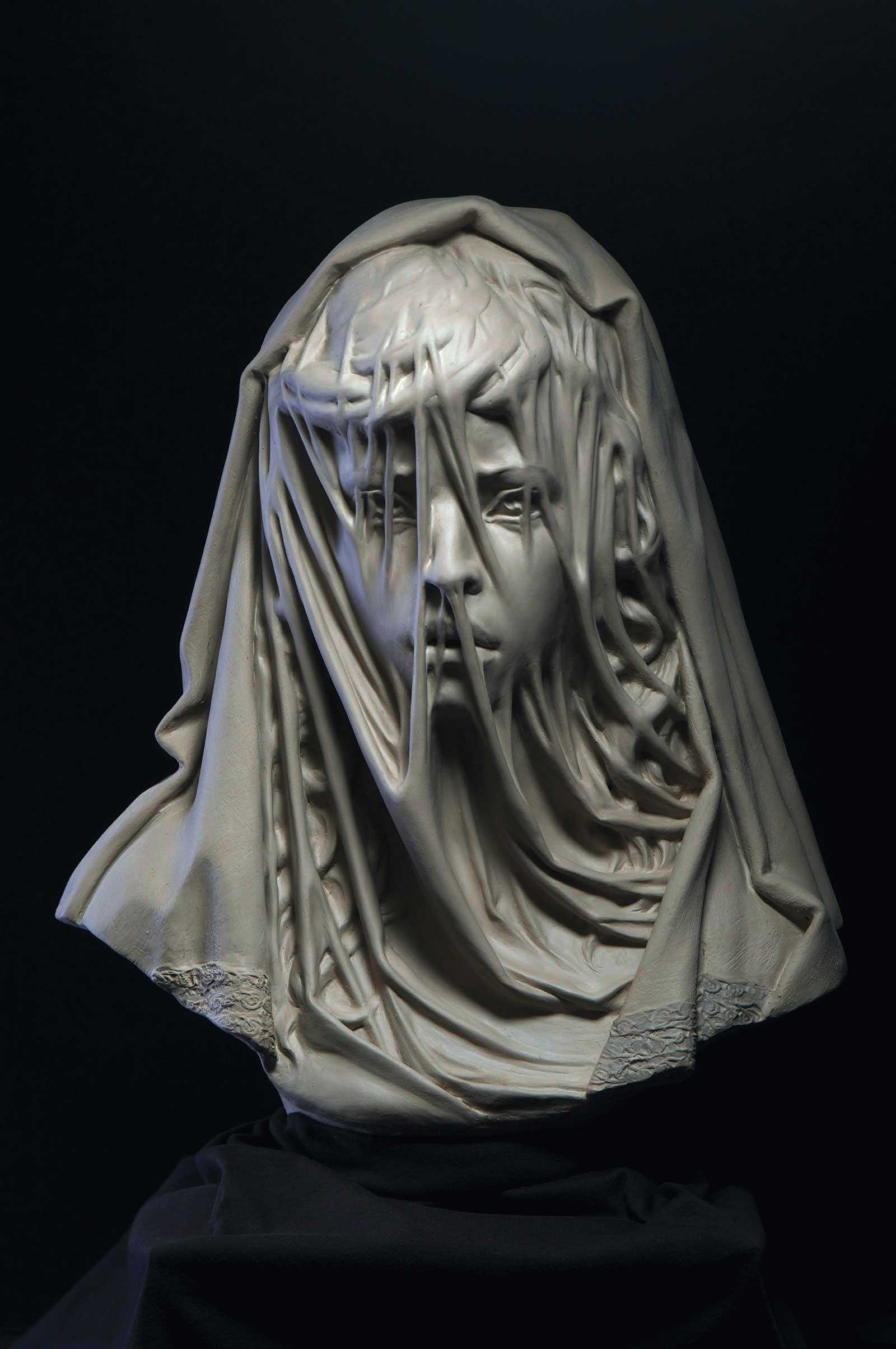 Philippe Faraut, Child Bride, earthenware clay, 19 x 13 x 11"
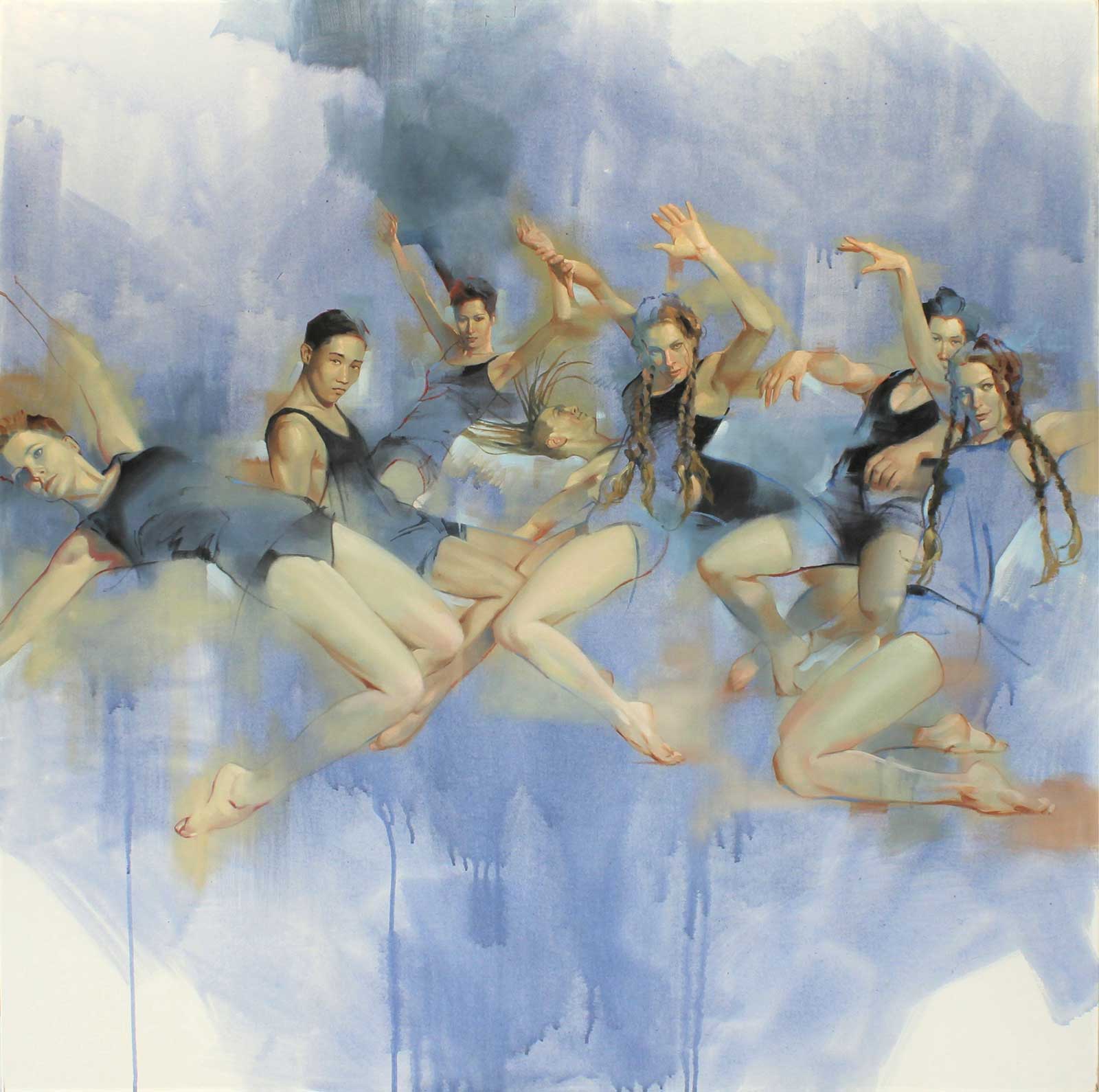 Richard S. Johnson, We all Fall Down, oil on canvas, 48 x 48"
The artwork found in this feature reflects many aspects of the figure allowing the collector to connect with the artwork personally. Done in classic and contemporary styles, the art is just a glimpse at what is being created today.
At Stone Sparrow NYC collectors can find the artwork of Teagan McLarnan, who works in egg tempera and is scheduled to have a solo exhibition at the gallery in late spring. Explaining her process, McLarnan says, “Every day when I crack an egg, I am excited to pick up a brush and paint. Egg tempera dates to the late 15th century and was the primary easel painting technique. Egg tempera allows me to bring the craftsmanship back in my art by building my own panels, ‘cooking’ traditional rabbit skin glue/marble dust gesso and mixing my own paint with a yolk of an egg. With the inability to ‘blend’ with egg tempera paint, form is built up though many thin layers of cross-hatching and optical mixing. The traditional and delicate process in which to make an egg tempera painting inspires me to bring this unique medium to contemporary art.”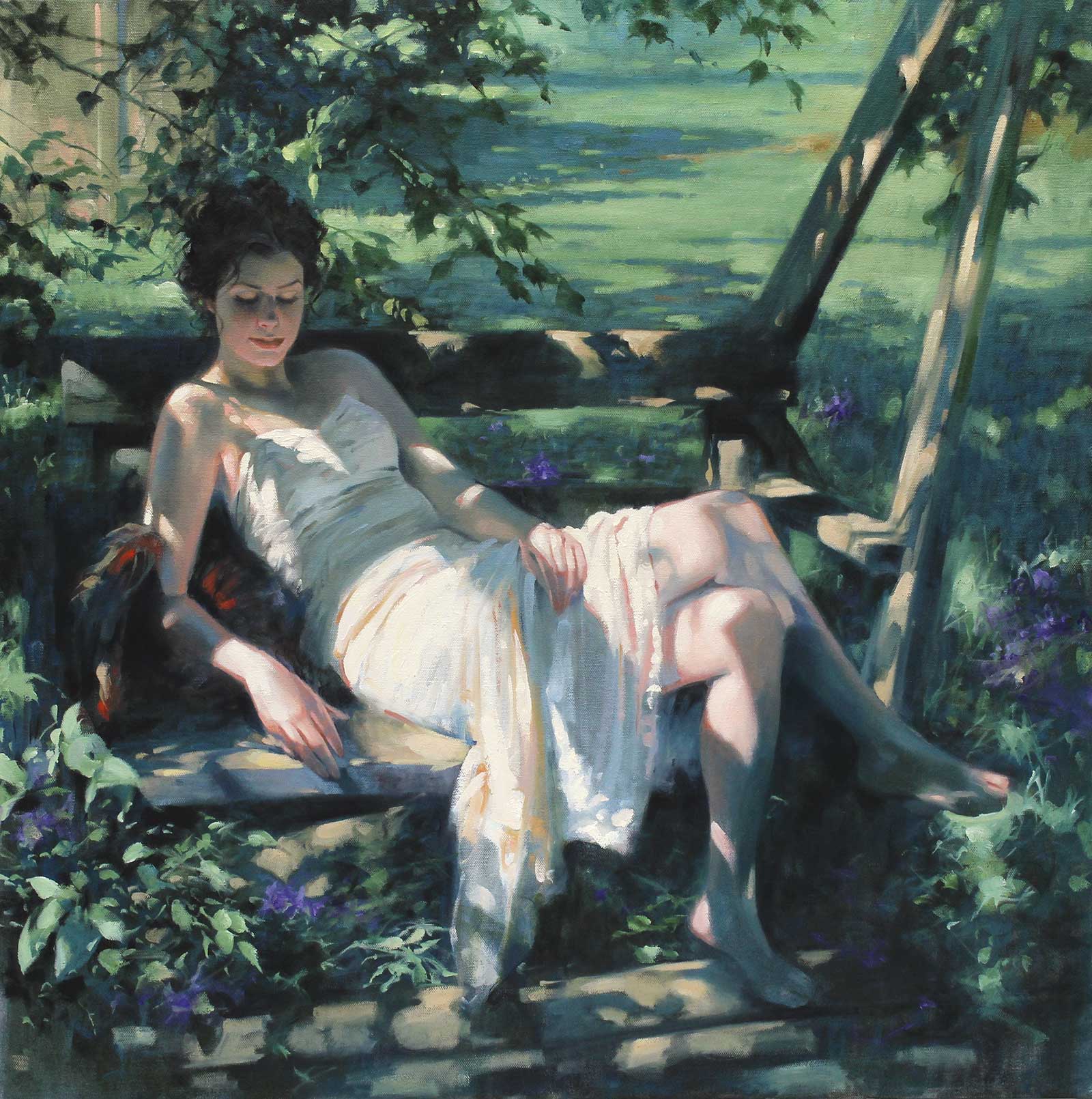 Richard S. Johnson, The Garden Swing, oil on canvas, 30 x 30"
Her artwork “consist of highly realized organic subjects with the contrast of flat geometric shapes or lines,” she says. “The subjects I choose to paint have been consistently present throughout art history, but my work reflects a sense of obsession and study to detail contradicting with minimalism. The compositions I place my subjects in exploit them in a raw form that allows me to be consumed by the details that make them whole. I draw inspiration for my work from many artists including Maxfield Parrish, John Singer Sargent and Euan Uglow.”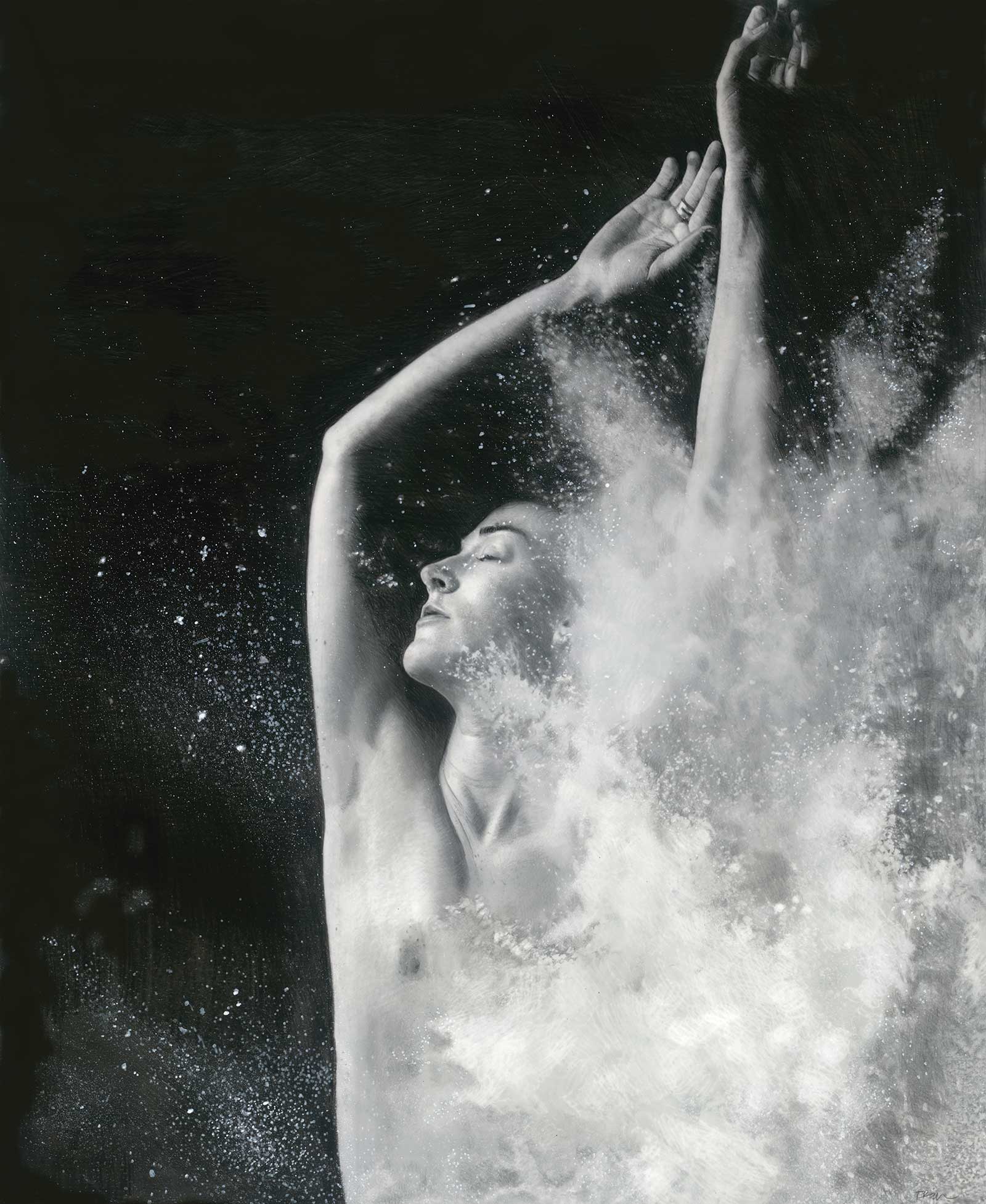 Tracy Frein, Saddling the Wind, colored pencil, 26 x 22"
Painter Richard S. Johnson, who is represented by Addison Gallery in Delray Beach, Florida, has always loved to render the figure accurately and to tell a story in his paintings. Johnson explains, “This is what made the artists I admired so powerful. Gibson could explain a woman’s whole attitude by the way she waved her hand or tilted her head. Sargent opened a whole world of information about the people he painted, their standing in society, their personality, their worldview. It was in their eyes and the way that they stood. It is not enough to be accurate, you must capture what is real in the people you paint.”
Johnson’s most recent series of paintings are of dancers because he loves their physicality and how they translate emotions in their performances. “During this season of COVID I have found them to be energizing and I deeply connect with their desire to communicate using their talents,” says the artist. “Over the years my style has become looser and more abstract as I attempt to hear what my subject matter is saying to me. I try not to impose an idea onto the image but to let the image speak for itself. Many times, I am surprised by what other people ‘hear’ in my paintings and it delights me that I could give a voice to my paintings that reaches beyond me.”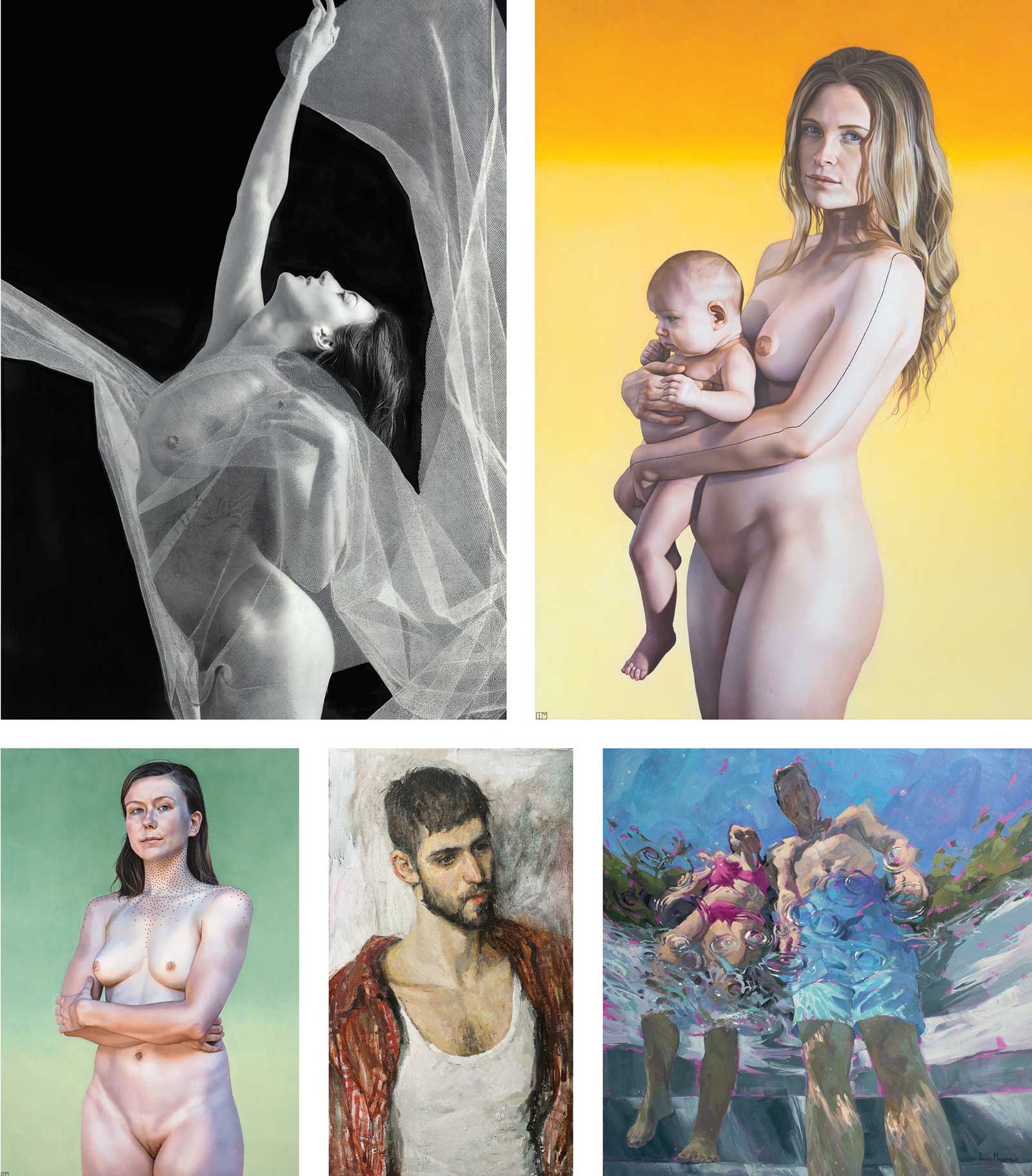 Top, left to right: Tracy Frein, Corralling a Lightning Bolt, colored pencil, 35 x 23"; Stone Sparrow NYC, Becoming Mother, egg tempera on panel, 39 x 27", by Teagan McLarnan. Bottom, left to right: Stone Sparrow NYC, Get Comfortable With the Uncomfortable, egg tempera on panel, 36 x 25", by Teagan McLarnan; Paul Scott Gallery, Daniel, oil, 31 1/8 x 18½", by Ksenia Saldaeva; Michele Poirier-Mozzone, As Luck Would Have It, oil on canvas, 36 x 36"
As a portrait artist, Tracy Frein finds inspiration in his subjects and their “hidden emotional truths.” He continues, “To be able to capture those emotions, I model my work in black and white colored pencil on drafting film. Each subject is a compelling visual portrayal of the human spirit, determination and courage.
I strive to show the viewer that while at first glance, my subjects seem serene and normal, but show a sense of inner fragility. Capturing this inner fragility is what has moved me forward documenting my subjects and their dealing with mental illness and social stigmas.”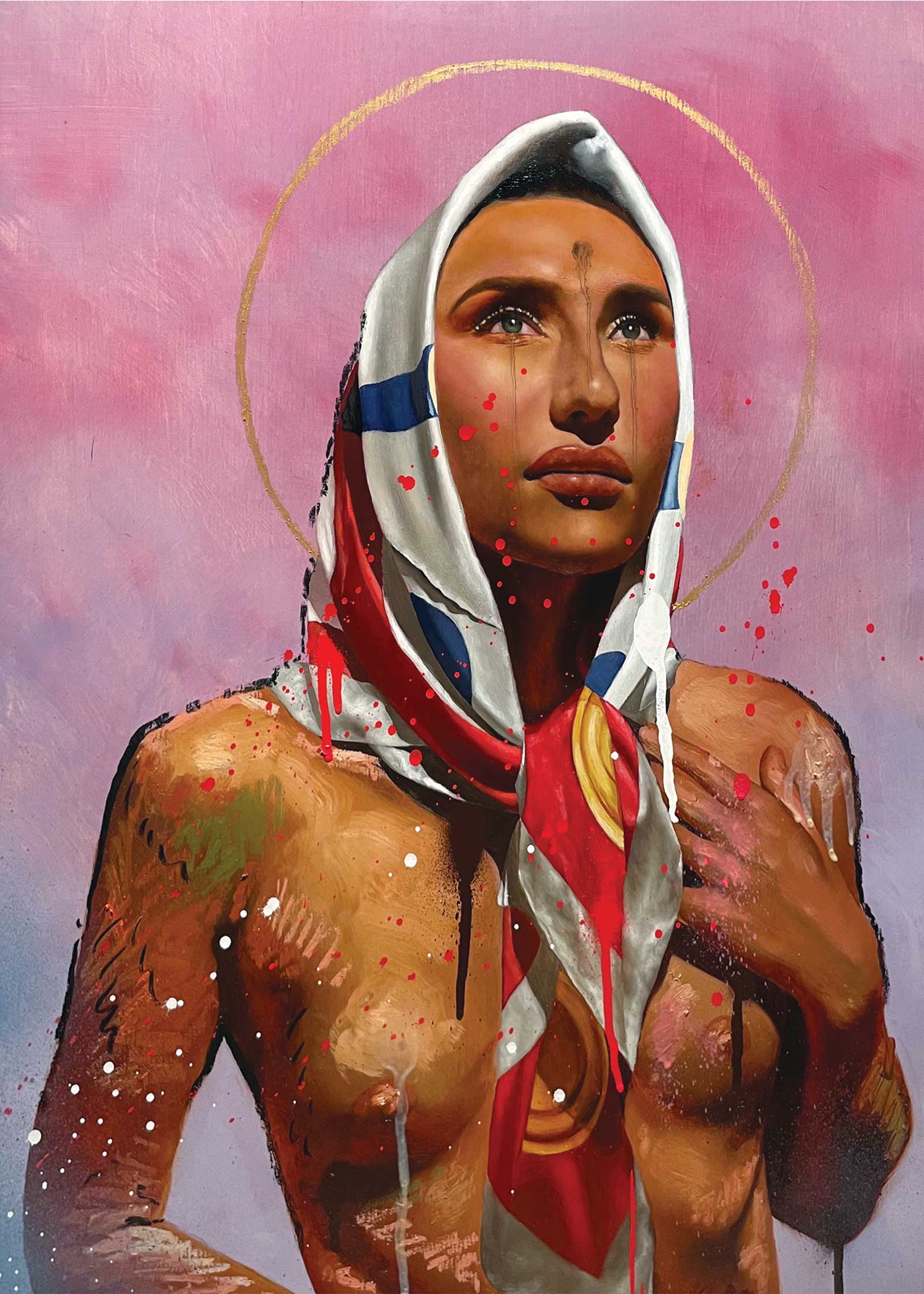 Isaac Pelayo, Give me back my fucking babushka, oil, oil stick and aerosol on wood, 24 x 18"
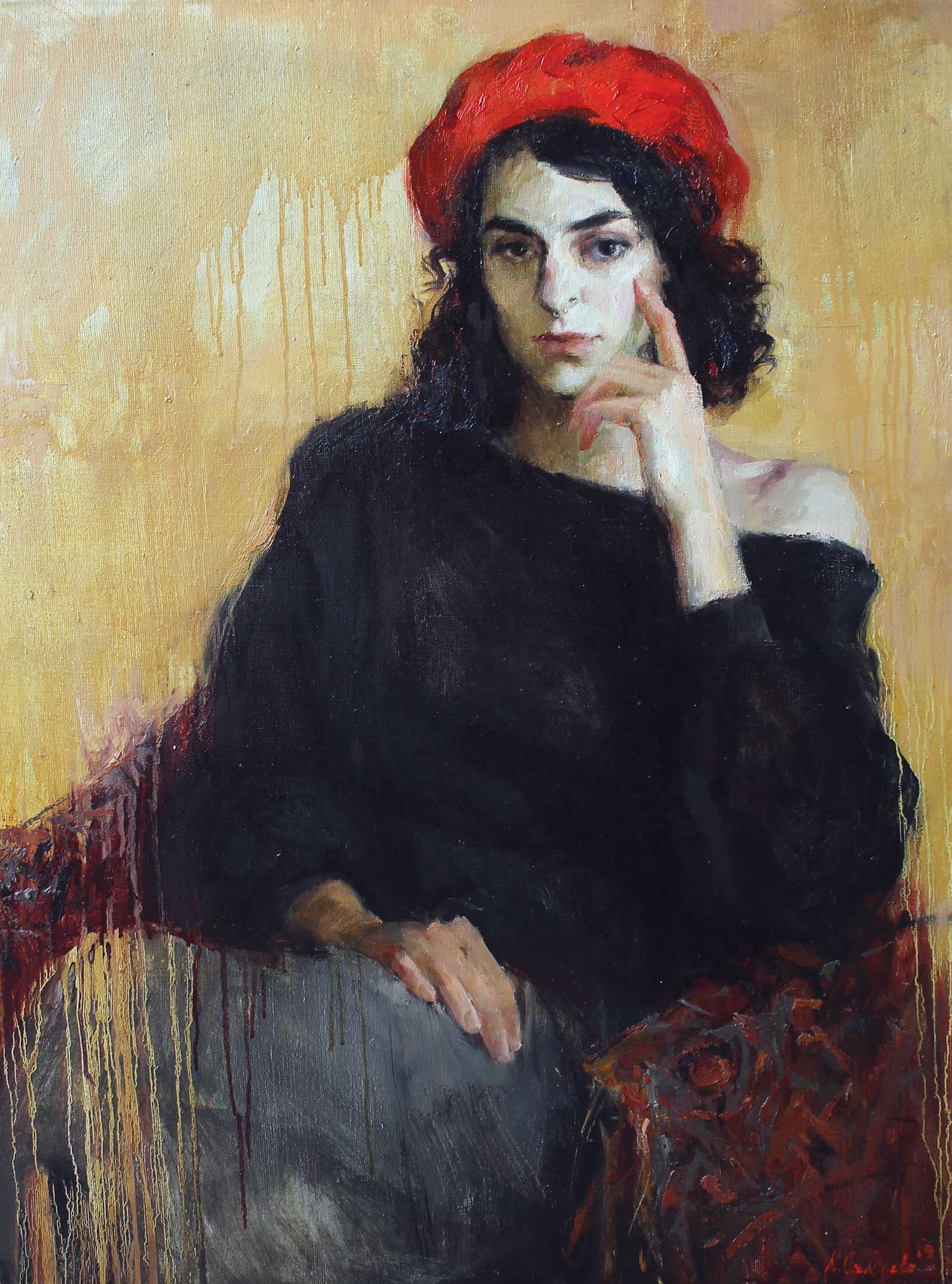 Paul Scott Gallery, Lusine, oil, 31½ x 26¾", by Ksenia Saldaeva.
Scottsdale, Arizona-based Paul Scott Gallery features the work of many Russian artists who focus on the figure in their paintings. “Tatiana Chernieva and Ksenia Saldaeva are both recent graduates of the famed Repin State Academy of Painting, Sculpture and Architecture, one of the top art institutes in the world,” says gallery owner Paul Eubanks. “The academy was established by Catherine the Great in the 1750s and has seen many great painters walk through its doors such as Ilya Repin and Nicolai Fechin. These two artists have continued the grand tradition of the academy, technical mastery on top of natural talent and an aggressive push to find originality in their work.”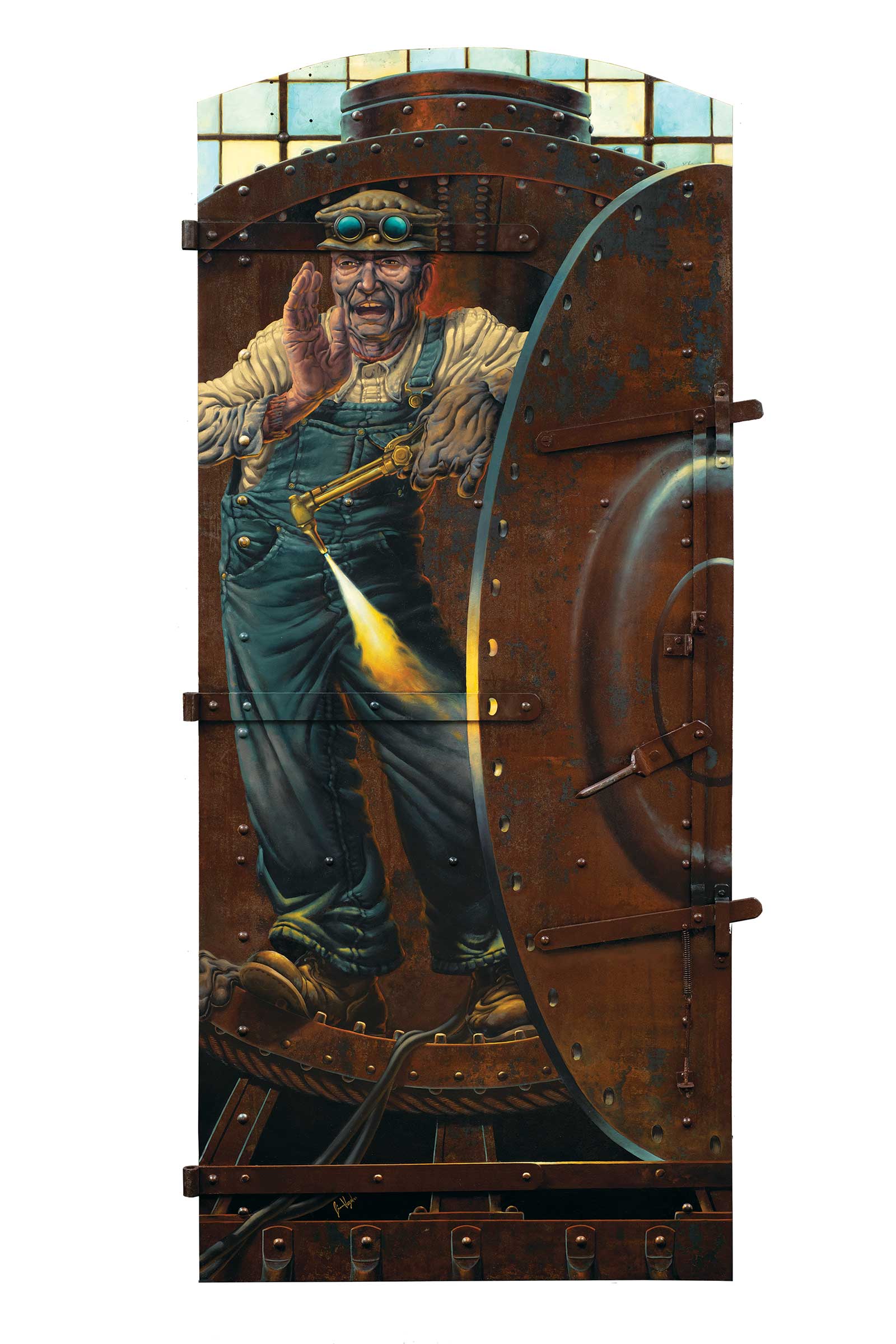 Blue Rain Gallery, Boiler Maker, oil on salvaged steel fire door, 89 x 37 x 3", by Jim Vogel (frame collaboration with Christen Vogel).
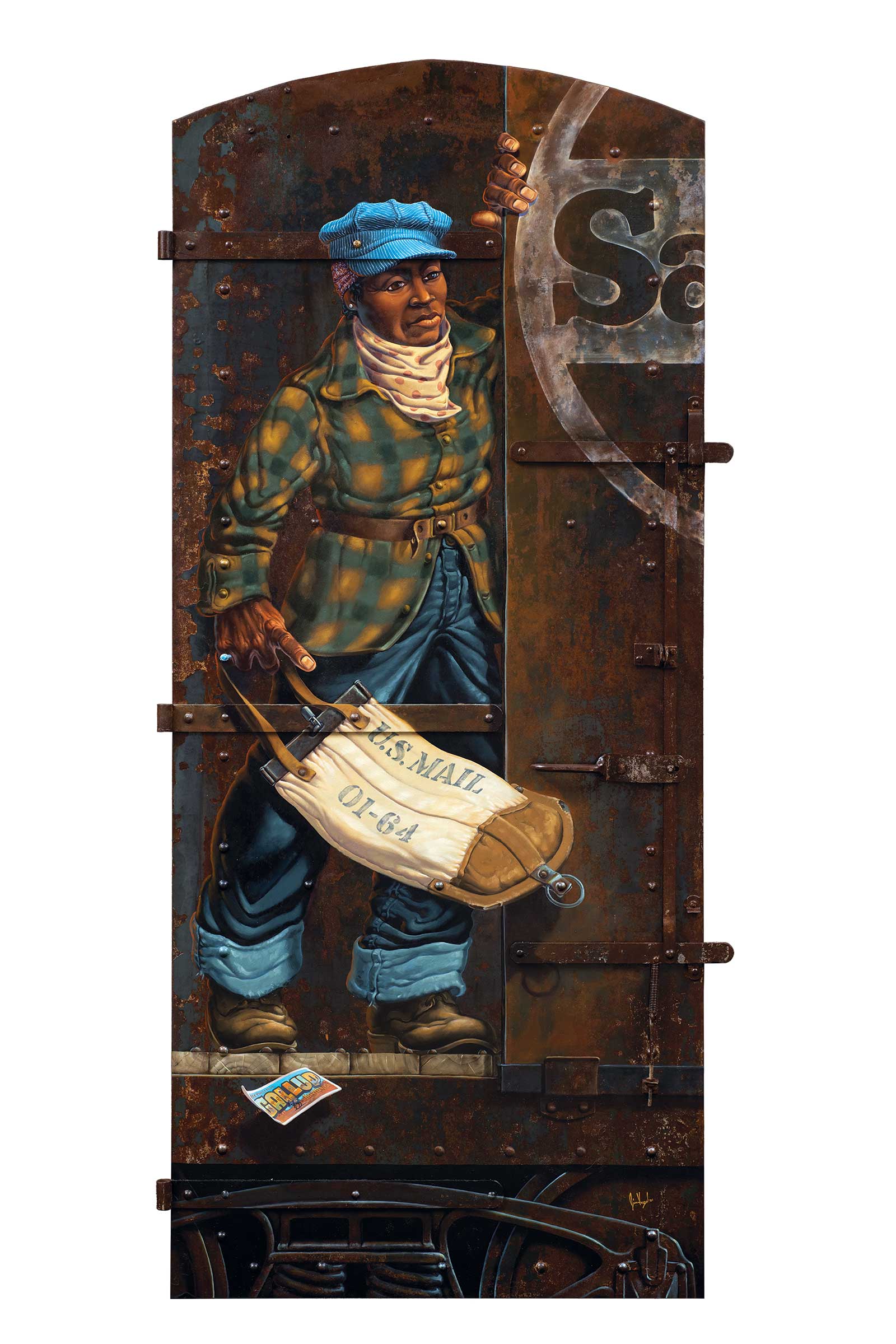 Blue Rain Gallery, Special Delivery, oil on salvaged steel fire door, 89 x 37 x 3", by Jim Vogel (frame collaboration with Christen Vogel).
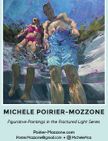
In her Fractured Light series of paintings, Michele Poirier-Mozzone pairs her “dual interests of figurative imagery and colorful abstraction to create paintings that capture the unique feeling and distinct associations of the body suspended in water and time,” she says. “This series of work allows me to paint what I love—the figure, while exploring areas of fluid distortion that exist naturally in turbulent, sunlight-drenched water. As a vehicle for life, cleansing, change, renewal and death, water lends meaning to the work. I find this unique atmosphere extraordinary.”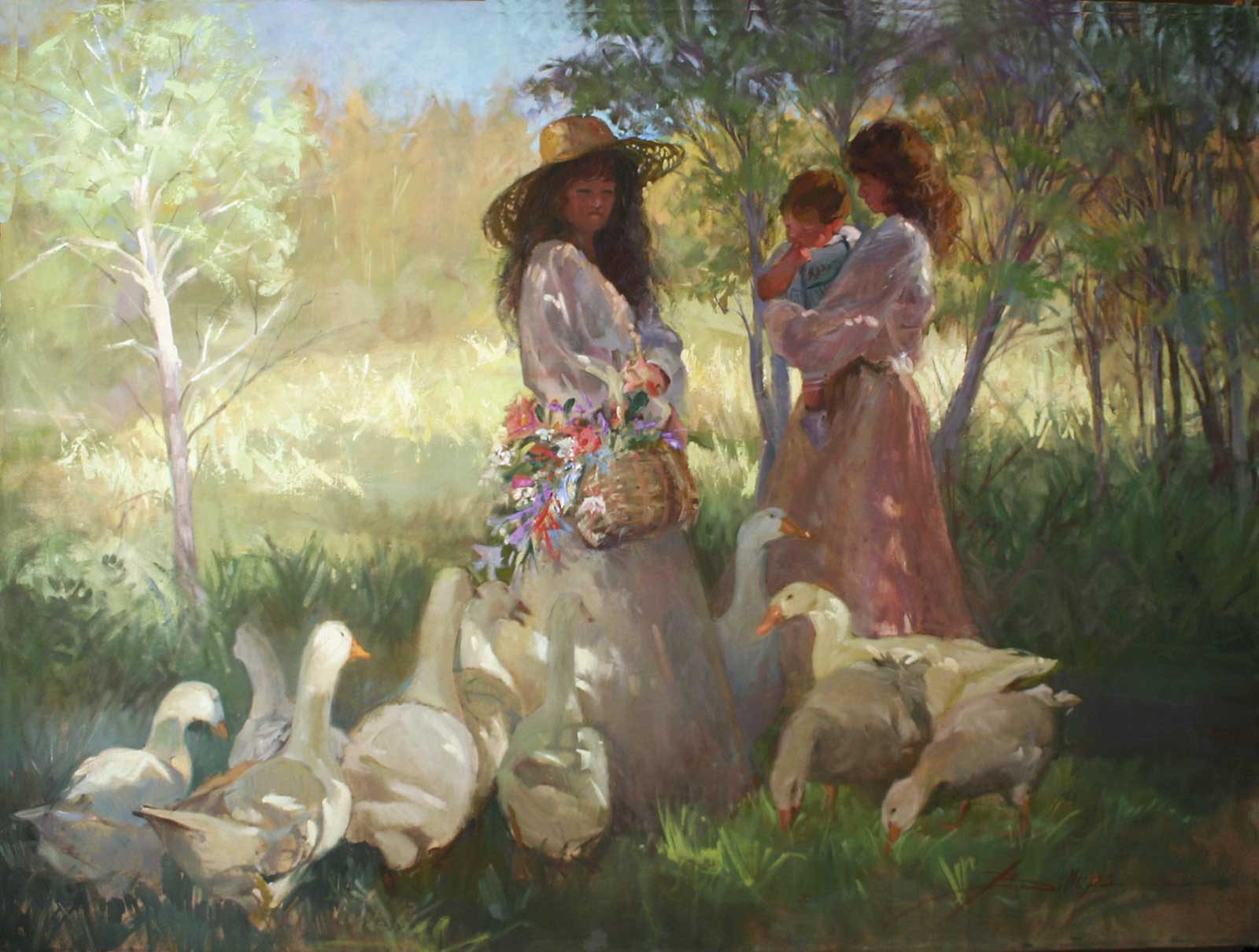 Betty Jean Billups, Afternoon Gathering, oil, 36 x 48"
Her oil painting As Luck Would Have It was “inspired by two wonderful people in my life who were brought together by chance during the strange, early months of the pandemic. They enter the water together, a new beginning for both—a chance worth taking.”
Artist Isaac Pelayo creates works using oil, oil sticks and aerosol on wood in style he calls “Street Baroque.” He says, “Street Baroque explores innocence and influence, unveiling the depths of my personality and interests. Growing up
I was most inspired by the Renaissance and Baroque periods and the street art movement—studying the first and observing the second. I’ve long been drawn to the combination of new and old, the juxtaposition of two things which don’t inherently belong together.”
He continues, “I’ve always painted with the intention of learning from the masters before me, and continuing the line of old artists inspiring new ones. With this collaboration between the parts of me that are poetic and joyful and the parts of me that are rebellious, and carefree, I know that I am doing what I’m supposed to do. Maybe someday years after my demise a young striving artist will pick up my brush and continue where I left off. Until then I have a cheap date with insomnia and some paint to push...”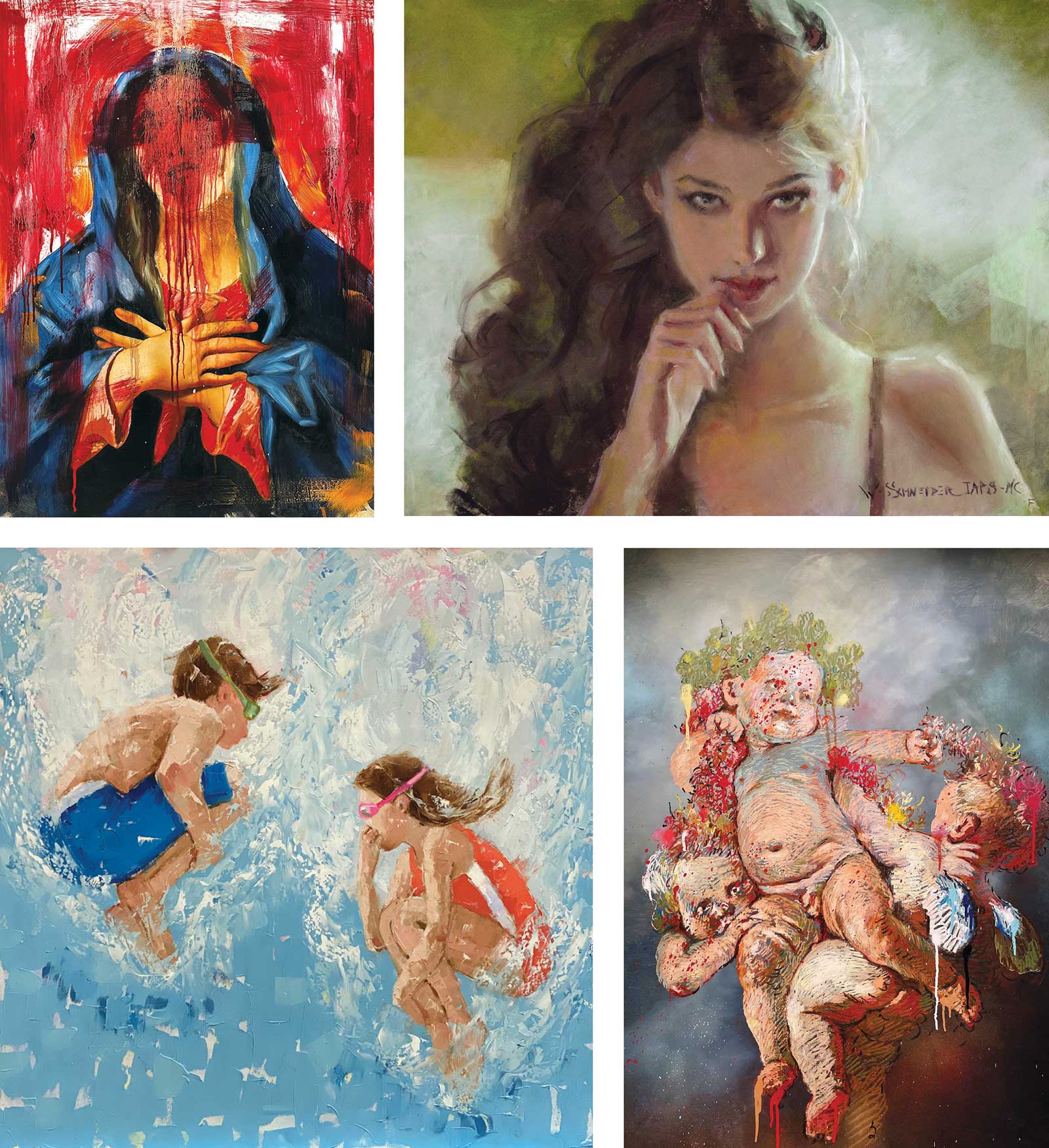 Clockwise from top left: Isaac Pelayo, Sunday service mood swing, oil, oil stick and aerosol on wood, 40 x 30"; William A. Schneider, Voulez Vous, pastel on archival support, 16 x 20" ; Isaac Pelayo, Straight from the Trenches, oil, oil stick and aerosol on wood, 48 x 36"; Eileen Corse, Amusing Antics, oil on canvas, 40 x 40"
Blue Rain Gallery in Santa Fe, New Mexico, represents artist Jim Vogel who paints narrative figurative scenes often on unique materials and with frames designed by his wife, Christen.
Among Vogel’s latest pieces is Special Delivery, which was inspired by the many women who joined the work force in World War II in jobs that were deemed at the time as only suitable for men. Describing the painting, which depicts a mailwoman, Vogel says, “More than just Rosie the Riveter, these women filled roles up and down the railways to keep the home industries chugging along. Many Hispanic and African American women came onboard the ATSF railway and here I imagined this young woman working along the east-to-west route through New Mexico. Tossing the outgoing mail onto the platform of a small station as a hook attached to the trainer grabbed the inbound mail, she would have her timing down to the second.”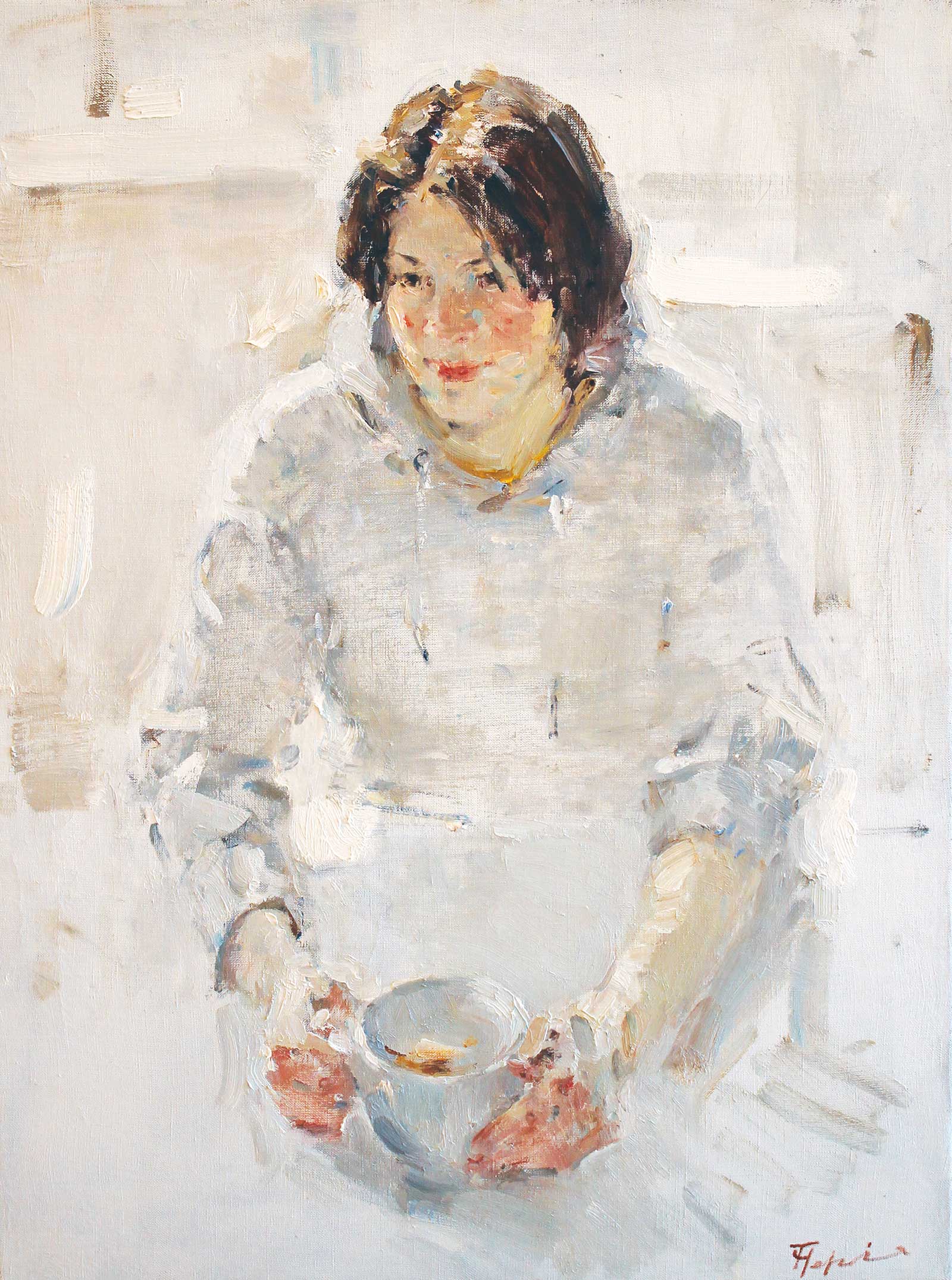 Paul Scott Gallery, Nadya, Light Portrait, oil, 31 ¼ x 23 ½", by Tatiana Chernieva
Boiler Maker “was a job title given to the skilled tradesmen working in the railroad shops up until the 1950s. My inspiration for this painting originated from the antique steel firedoor it’s painted on,” says Vogel. “These artifacts from the industrial era brought to mind the railyard shops in Alburquerque, New Mexico. The highly skilled journeymen and their apprentices, as well as the many supporting laborers, of the Atchison, Topeka and Santa Fe Railway would repair and rebuild the steam driven locomotives and railcars.”
In her artwork, Betty Jean Billups is “Capturing the inner feeling, a moment so quickly passing, a moment that is beyond words, almost beyond thought. The nuances that dance between a mountain and the sky that embraces her, creating a symphony that the eyes perceive, but only the soul can remember,” she says. “This celebration of light upon the physical and ethereal worlds, that creates a love affair, not only between these two worlds, but also for the viewer. It is this special moment in time that excites me, that drives me to even risk failure, if I but have the chance to capture a fraction of what I see, of what I feel, from this wonderful experience we call life! Art, as in music, there are rhythms, movements, flow and ebbs.”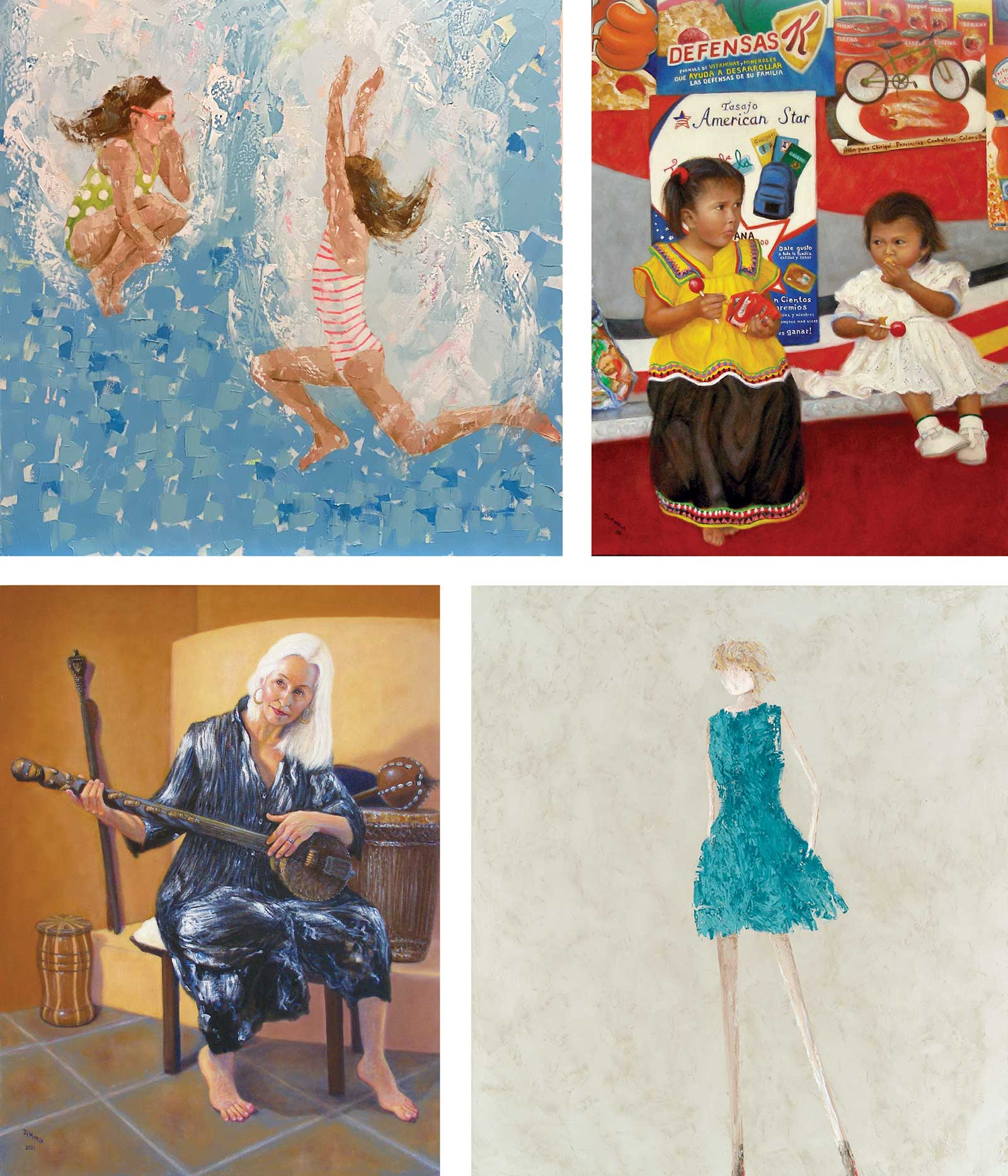 Clockwise from top left: Eileen Corse, Whoopsie Daisy, oil on canvas, 48 x 48"; Donelli DiMaria, Same, oil on canvas, 40 x 30"; Donelli DMaria, African Strings #7, oil on canvas, 40 x 30"; Karen Anderer Fine Art, Scarsdale: a self-portrait, oil on canvas, 60 x 54", by René Romero Schuler
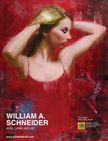
William A. Schneider is a master member of several art organizations, including Oil Painters of America and the American Impressionist Society, and his artwork is found in galleries nationwide. He says, “While I enjoy landscape and still life, my passion is the human face and form! Thousands of years of our shared humanity have trained us to read the emotions conveyed in the slight arch of an eyebrow or the fleeting gesture of a hand. To observe these subtle nuances and record them in paint is both the challenge and the great joy of the artist’s craft. Or as Irving Stone wrote, The Agony and the Ecstasy!”
Schneider’s painting Midnight In Rio, depicting a woman wearing a masquerade mask, is available at Reinert Fine Art in Charleston, South Carolina, while his portrait Voulez Vous and the ballerina painting We Are All Dancing Through Time are both at Illume Gallery of Fine Art in St. George, Utah.
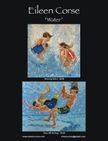
Artist Eileen Corse says, “Although I set out to paint a very familiar genre, I was determined to paint in such a way so that my works would be unique and recognizable. I believe my Water series of paintings, do just that—everything an artist strives for in a body of work.”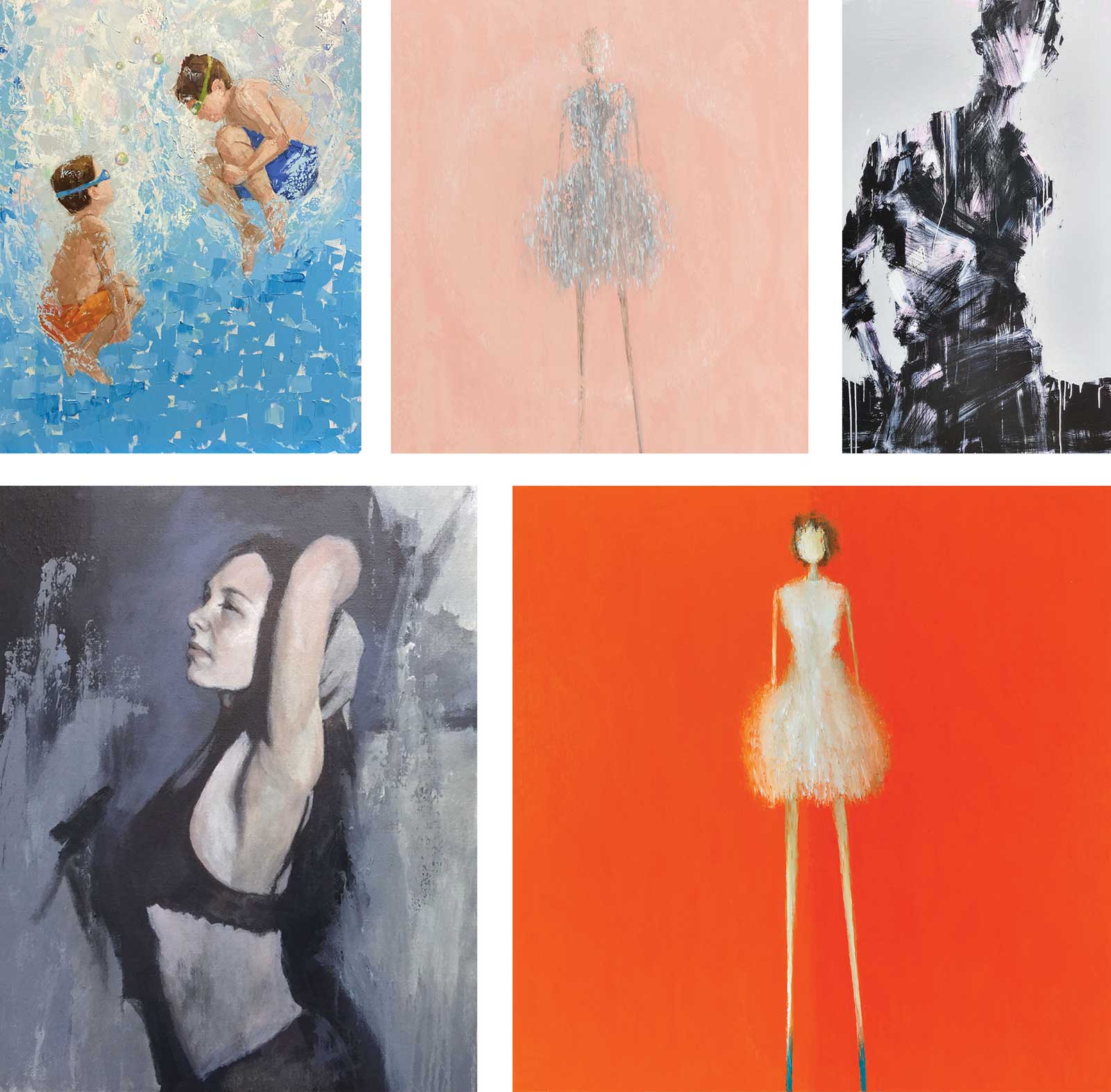 Top row, from left: Eileen Corse, Over Under, oil on canvas, 50 x 40"; Karen Anderer Fine Art, Pepper, oil on canvas, 44 x 40", by René Romero Schuler; Leslie Nolan, Peter, acrylic on canvas, 60 x 36". Bottom row, from left: J.M. Brodrick, Freiheit, acrylic, 24 x 18"; Karen Anderer Fine Art, Bridget, oil on canvas, 60 x 60", by René Romero Schuler.
In paintings such as Over Under, Amusing Antics and Whoopsie Daisy, Corse paints what happens beneath the surface of a pool after children have jumped in. The water rises around their figures, showing the air bubbles, a sense of movement and play.
At Karen Anderer Fine Art in Lancaster, Pennsylvania, collectors will find the figurative paintings of René Romero Schuler, who takes figuration to levels beyond the physical image. Created exclusively with palette knife, her artwork challenges the viewer “to look beyond the surface and understand that figurative includes all aspects of human existence.” The surface tension on her artwork “emulates the ‘human condition,’ and the figures are extraordinarily present, yet fading in and out of the surface all at once.”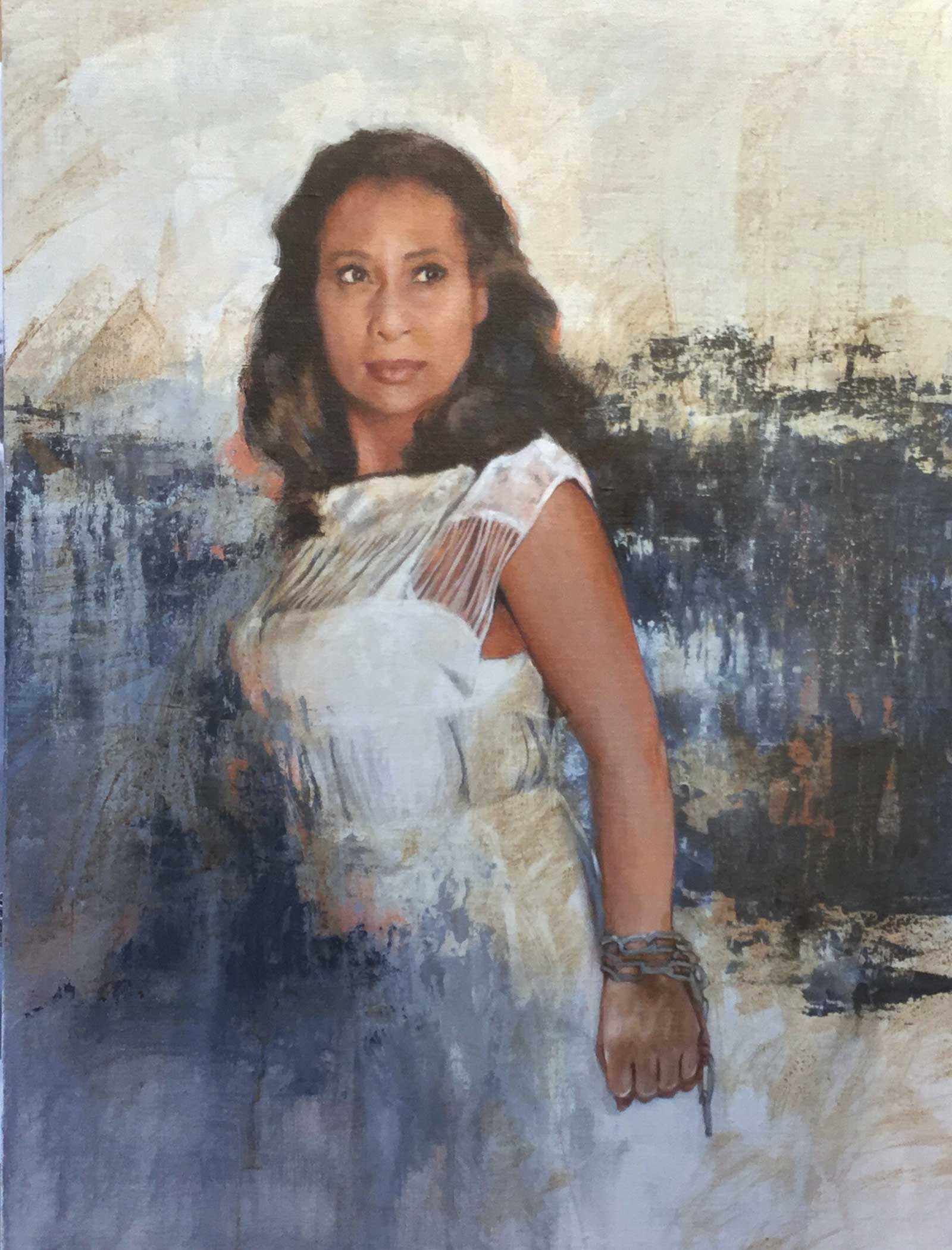 J.M. Brodrick, Dauntless, acrylic, 24 x 18"
Schuler’s artwork is full of symbolism and if the layers of meaning are peeled away it can be seen that every stroke and mark is deliberate. The texture of the work from using the impasto technique “is her way of conveying the ‘stuff of life’—the baggage, the scars, the harsh realities, the joys—of just being human.”
In his artwork Donelli DiMaria tries “to represent objects of beauty that each carries their own story whether the painting is figurative, still life or landscape,” he says. “This is accomplished using classical painting techniques with contemporary themes. Color theory of the impressionists and compositions reminiscent of the modernists are incorporated into my work to further enhance the drama generated by the underlying strong value pattern I use.”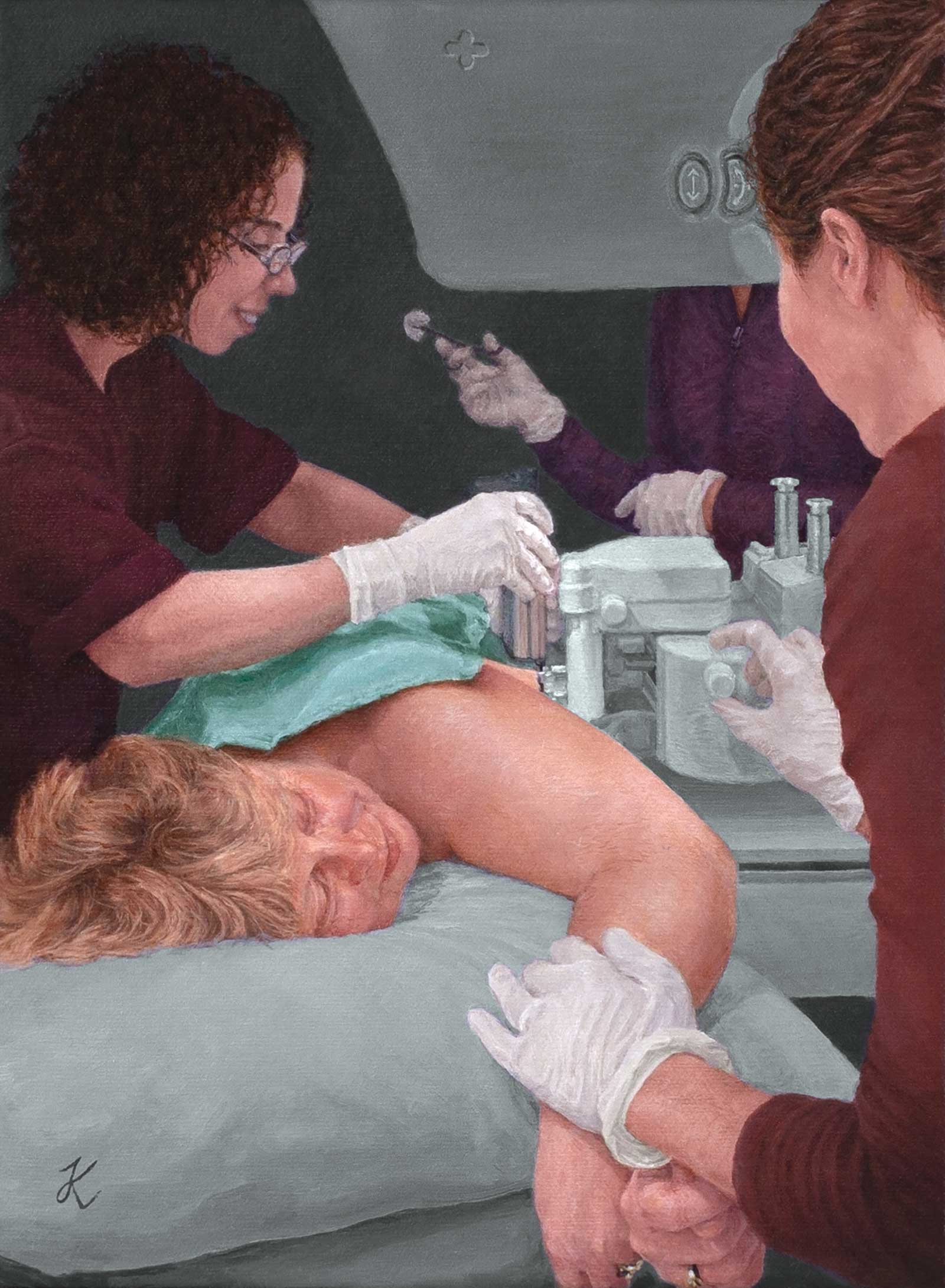 Kari Visscher, Biopsy, oil on canvas, 12 x 9"
His paintings Same and African Strings #7 represent her work in the social realism arena. He elaborates, “The painting Same shows the interaction of central American children eating snacks surrounded by commercial advertising consistent with any part of our world’s current society. The painting African Strings #7 is part of a series of paintings I have done over the last 20 years showing the merging of different world societies in the area of music.”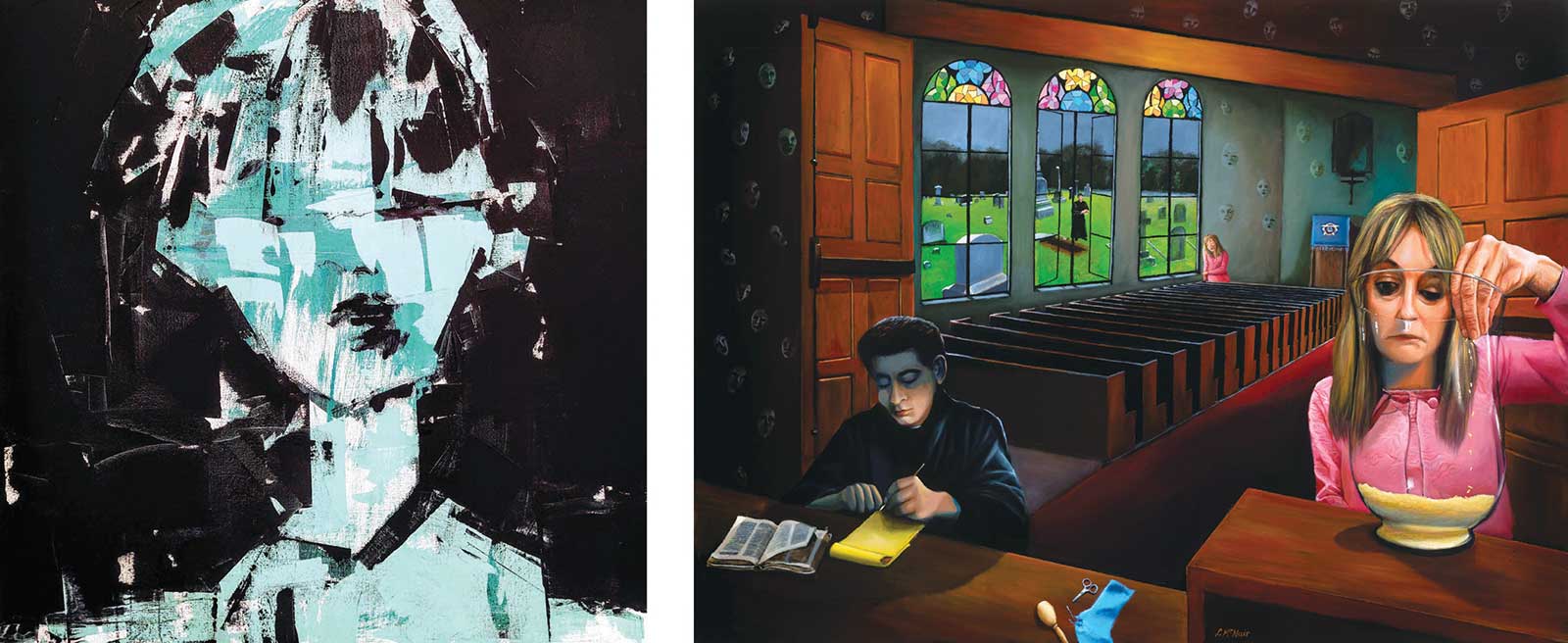 From left: Leslie Nolan, Sonny, acrylic on canvas, 36 x 36"; Loretta McNair, Eleanor Rigby, oil, 30 x 40"
Artist J.M. Brodrick almost always paints people that she knows, such as her friends who appear in the paintings Dauntless and Freiheit. They can be longtime friends or new ones she has met in the park or while out for coffee. “For me it’s more meaningful when I know the person I’m painting,” says Brodrick. “The inspiration in my work comes form a little spark within me that just ‘feels right’ and so I off on the next painting. I jump from one subject to the next following my heart. I do attend figure drawing labs to keep in practice, these labs are to me likened to practicing the piano, I’ve got to keep my skills in tune.”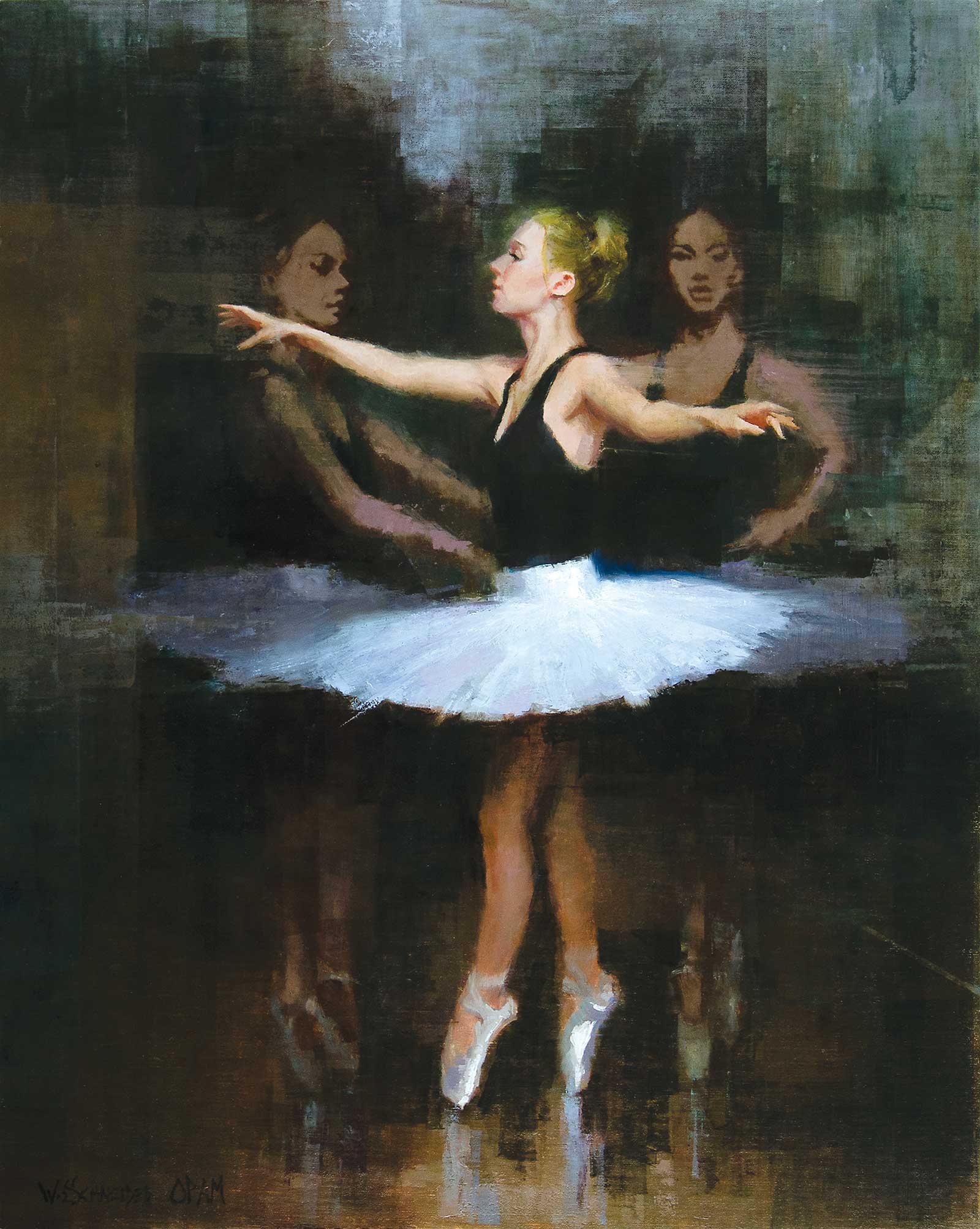 William A. Schneider, We Are All Dancing Through Time, oil, 30 x 24"
Kari Visscher says, “As an artist I aim to paint my everyday moments which as a radiologist can create interesting figurative work.” Two paintings from her radiology series are Biopsy, depicting a breast biopsy being done, and Multidisciplinary Rounds, which shows a meeting that involves different types of doctors gathered to discuss patient treatment plans.
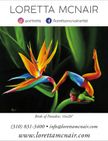
The song Eleanor Rigby by the Beatles inspired Loretta McNair’s ongoing series of song paintings “because I could envision the characters and their story so vividly as I listened to it,” she says. Explaining her painting Eleanor Rigby, named for the song, she says, “Ironically I painted 13 others in the series before settling on which composition I would choose for this one, as it had become so important to me over the years to match the level of emotion the Beatles achieved in their recording.”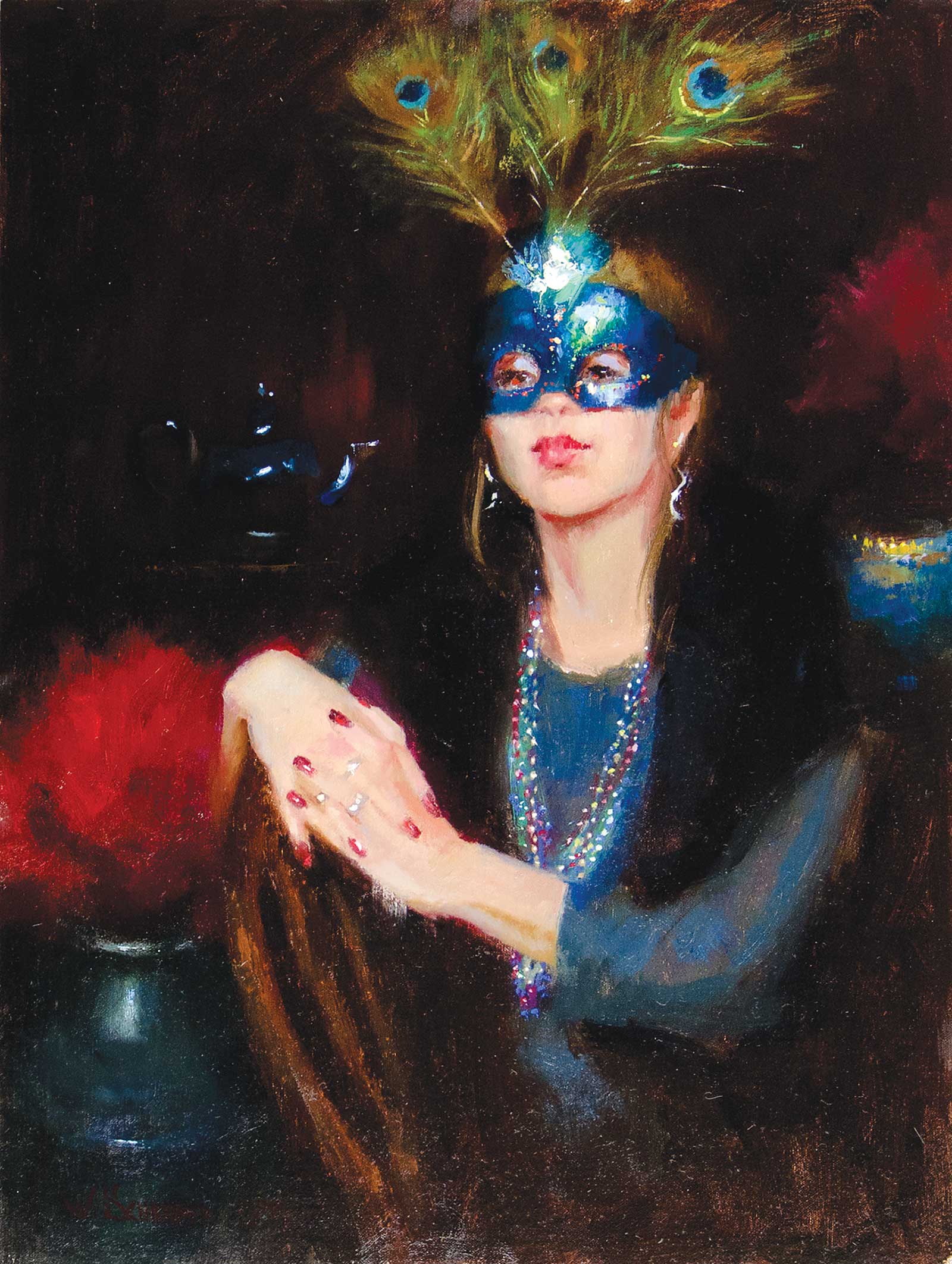 William A. Schneider, Midnight in Rio, oil on linen, 24 x 18"
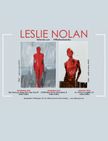
Drips, restated lines, contrasting color and visible brushwork all help convey the tension and ambiguity that form Leslie Nolan’s signature style. In approaching the subject of the face and the human body, Nolan responds to the feelings behind the facade to suggest resolve, fear, pride, frailty or other emotions. The paintings often suggest a kind of chaos that invites viewers to make their own interpretation. The Washington Post describes her work as “striking,” “impressionistic and painterly” and filled with “brawn and urgency.” —
Featured Artists & Galleries
Betty Jean Billups
www.bettybillups.com
Blue Rain Gallery
544 S. Guadalupe Street
Santa Fe, NM 87505
(505) 954-9902
info@blueraingallery.com
www.blueraingallery.com
Donelli DiMaria
cinder48@msn.com
donelli-dimaria.pixels.com
Eileen Corse
emcorseart@gmail.com
www.eileencorse.com
Galerie Mark Leibner
(514) 984-5524
www.markleibner.com
Isaac Pelayo
(951) 446-6445
www.isaacpelayo.com
J.M. Brodrick
www.jmbrodrick.com
Karen Anderer Fine Art
146 N. Prince Street, Lancaster, PA 17603
(717) 393-8807
www.karenandererfineart.com
Kari Visscher
karivisschermd@gmail.com
www.karivisscher.com
Leslie Nolan
Washington, DC
paintings@leslienolan.com
www.leslienolan.com
www.contemporary-images.com
Loretta McNair
(310) 831-3400
info@lorettamcnair.com
www.lorettamcnair.com
Maxwell Alexander Gallery
406 W. Pico Boulevard, Los Angeles, CA 90015
(213) 275-1060
www.maxwellalexandergallery.com
Michele Poirier-Mozzone
poirier.mozzone@gmail.com
www.poirier-mozzone.com
Paul Scott Gallery
7103 E. Main Street, Scottsdale, AZ 85251
(480) 596-9533
www.paulscottgallery.com
Philippe Faraut
www.philippefaraut.com
Richard S. Johnson
rjohnson.fineartstudioonline.com
Stone Sparrow NYC
45 Greenwich Avenue, New York, NY 10014
(646) 449-8004
www.stonesparrownyc.com
Tracy Frein
tracyfrein@gmail.com
tfrein.artspan.com
William A. Schneider
william@schneiderart.com
www.schneiderart.com
Powered by Froala Editor