Jeff Bye received his BFA from Rhode Island School of Design and his MFA from the Graduate School of Figurative Art, New York Academy of Art. It was during a year in Italy, however, on RISD’s European Honors Program that he discovered the texture, coloration and patinas of distressed buildings that have been his passion in art ever since.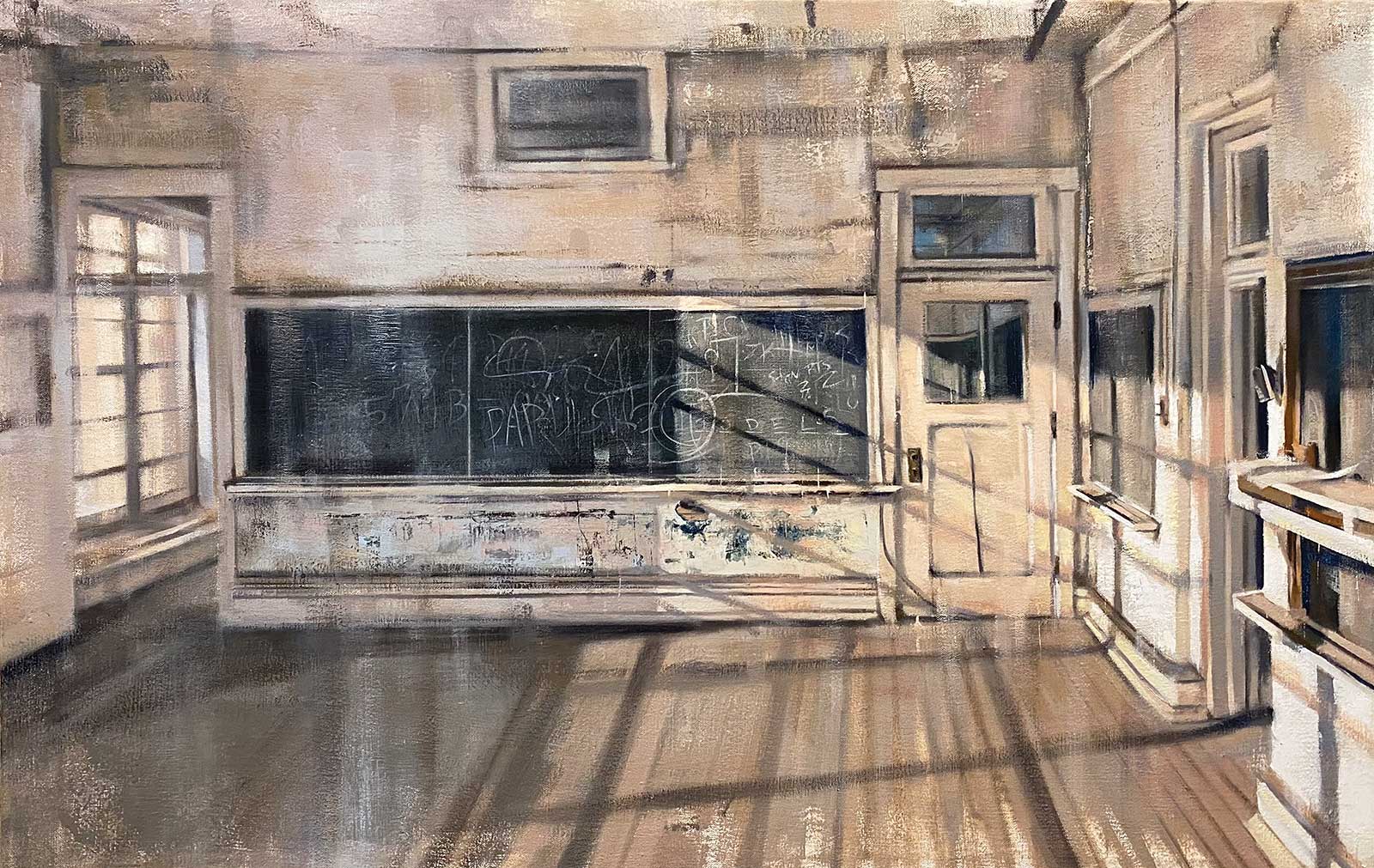 Hangman (detail), oil on linen, 24 x 36"
In Europe, he also had the experience of seeing original works of art in their original settings rather than in projected slides in an art history lecture. He says, “The surroundings of the actual paintings, the wonderful spaces, the texture and materials of the walls, the textiles, all added to the experience.”
When he was in New York, he worked in the Metropolitan Opera Scenic Shops and for a conservation company, gaining access to old buildings off limits to the public. New York also gave him access to museums and galleries where he was able to continue his study of fine art.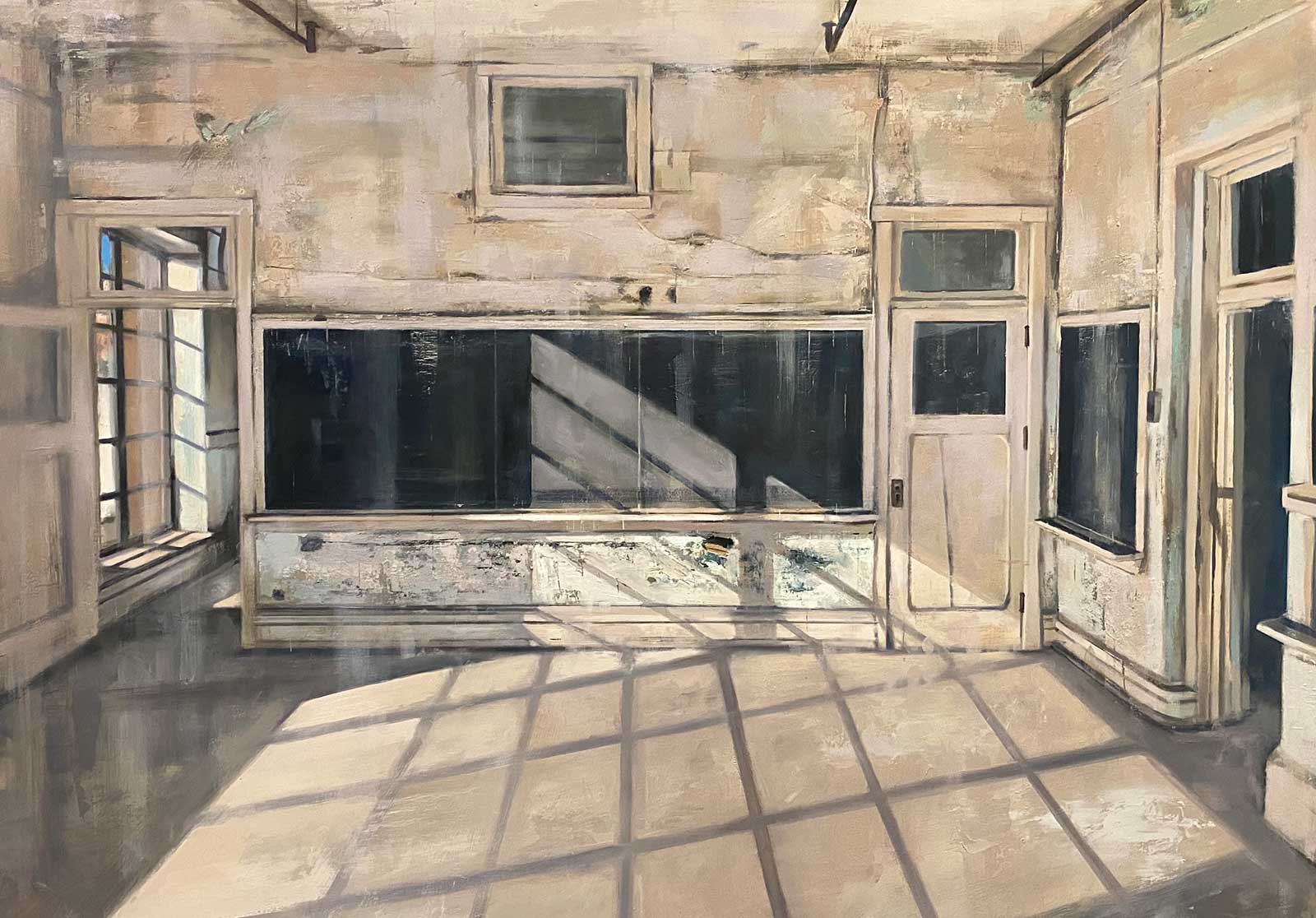 Triangle, oil on board, 30 x 40"
He met his wife, Amy, at a class in plasterwork on Long Island and the couple moved to her hometown of Hershey, Pennsylvania. Amy opened Surface Studios specializing in wall and furniture finishes, and Bye began teaching at Pennsylvania College of Art & Design. Hershey gives him easy access to Philadelphia, New York and Washington, D.C., with their museums and old buildings. It also allows him the luxury of having his studio separate from his home.
“In New York, living wasn’t separate from work,” he says. “I need the space to look at the work and to grow. I have 10 or 15 paintings going at once and sometimes put them aside for a couple of months. Going home from the studio allows me to decompress. When I return to the studio, I see the work with fresh eyes and can make adjustments to what I want out of the painting. In the summer, I’m also free from classroom conversations going on in my head.”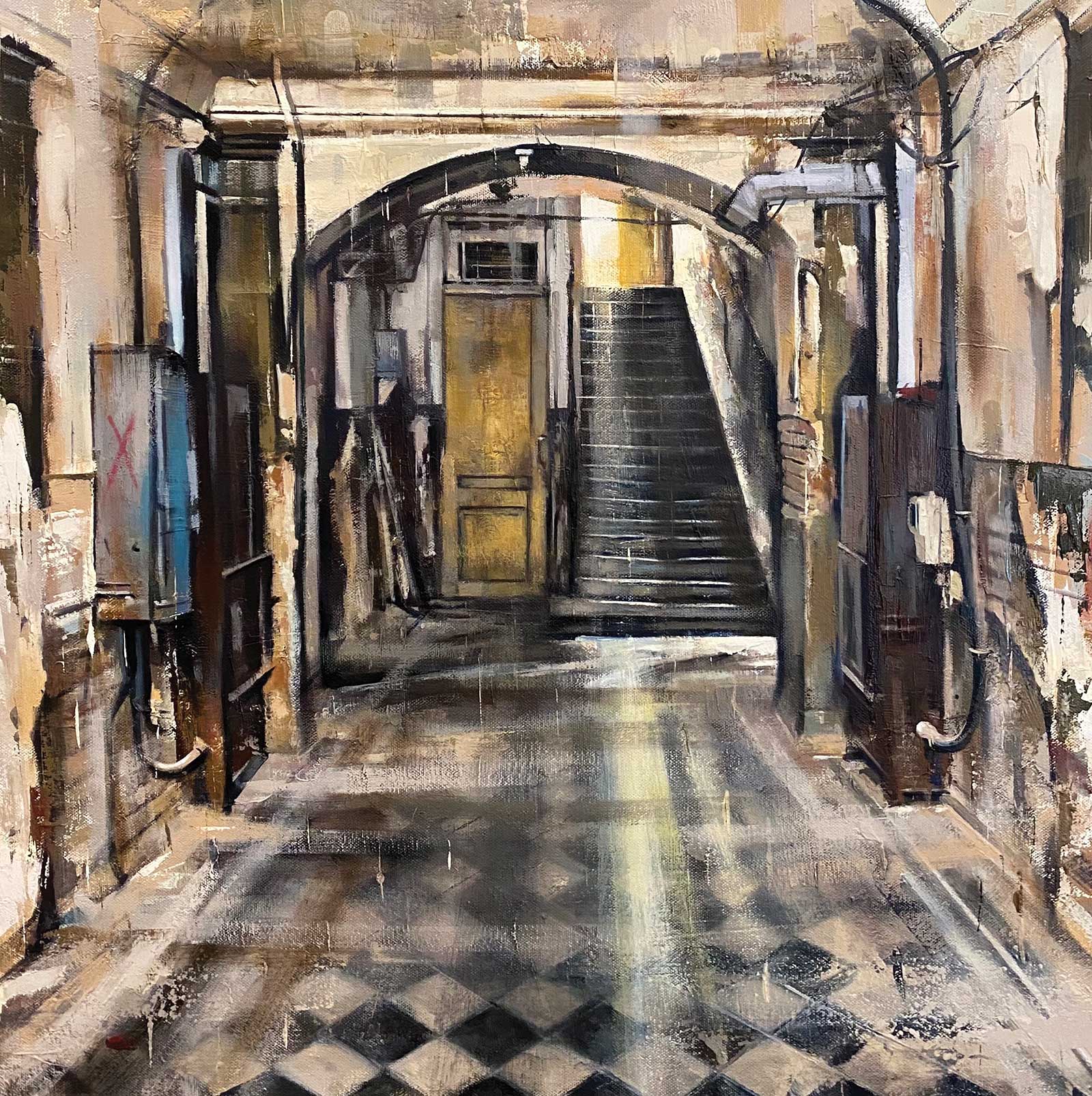 Entrance, oil on canvas, 22 x 22"
About an hour from Hershey is Shenandoah, Pennsylvania, a coal mining town, whose population is now less than 5,000 as opposed to its population of nearly 30,000 in the early decades of the 20th century. Shenandoah High School (later the J.W. Cooper School) was scheduled to open in 1918 but the Spanish Flu had overwhelmed the local hospital. The school was turned into a temporary hospital and its gym into a morgue. It opened as a school a year later and was in operation until 1994 when it was left to deteriorate. The J.W. Cooper Community Center was established in 2013 by a local merchant to prevent its demolition and to find new uses for it by the community.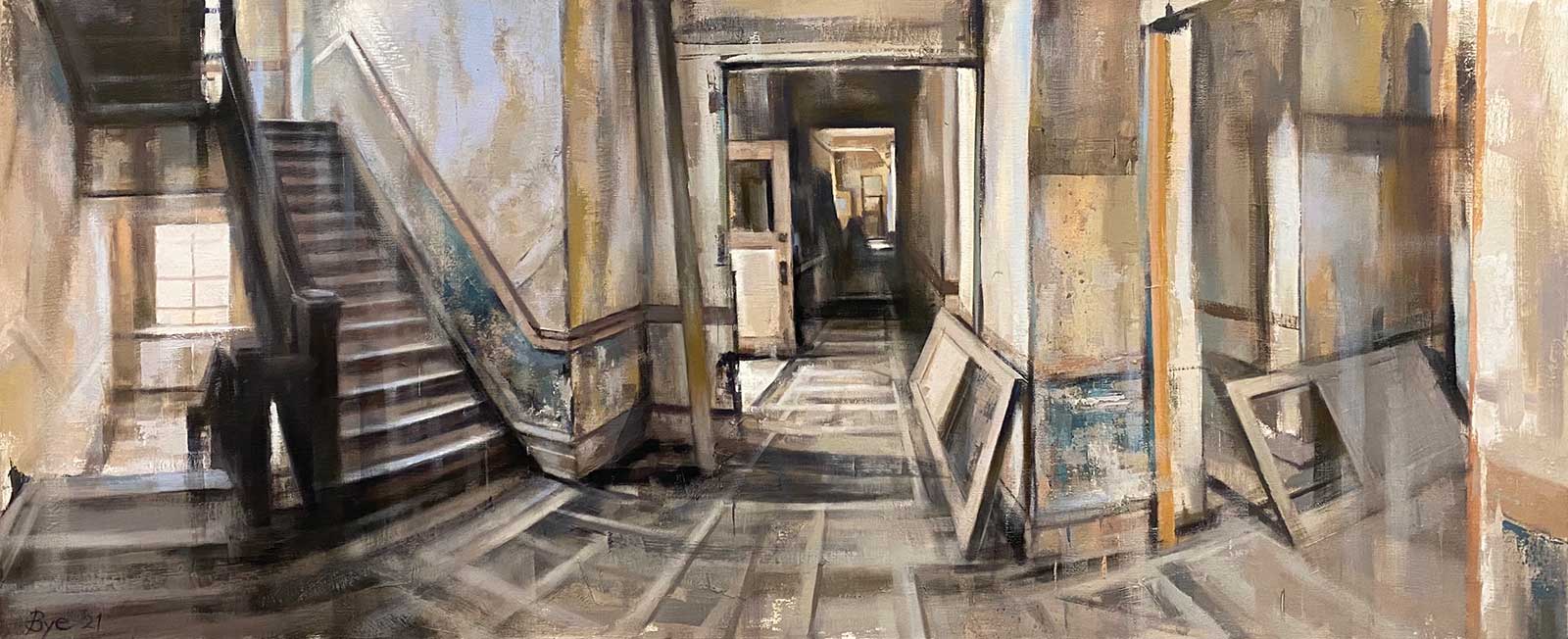 Intersection, oil on linen, 20 x 48"
The J.W. Cooper School is a perfect setting for him. An exhibition of paintings of the structure will be shown at Edgewater Gallery in Middlebury, Vermont. The exhibition, Shenandoah, runs October 1 through 31. The gallery’s director, Theresa Harris, says, “Bye is an accomplished painter who skillfully draws us into his compositions and leaves us to conjure stories of what might have gone on in these spaces before they were abandoned.”
The building’s owner has allowed Bye to return to the school often to experience its empty spaces in the light of different seasons and to make sketches and little paintings on location. “It’s nice to not be run out of the building,” he acknowledges. The pandemic has prevented him from traveling around the country and the school provides a ready source of inspiration.
The composer John Cage wrote, “There is no such thing as an empty space or an empty time. There is always something to see, something to hear. In fact, try as we may to make a silence, we cannot.”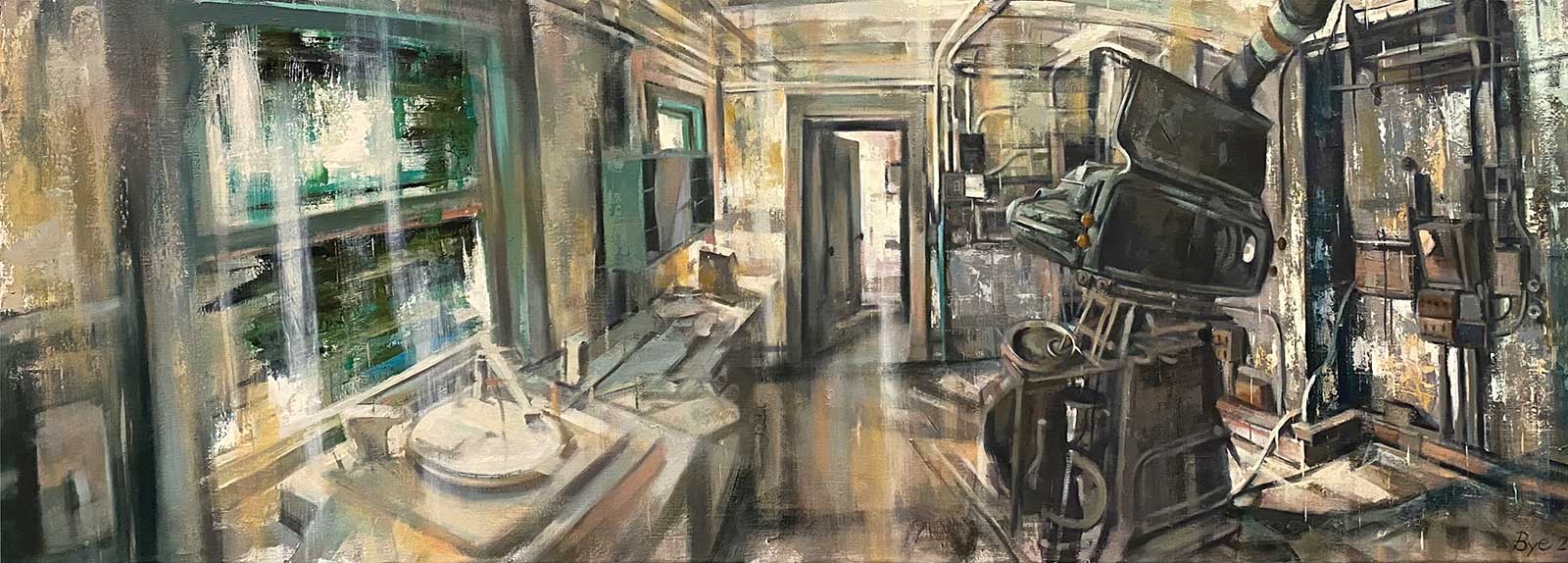 Projector Room at the Palace, oil on linen, 19 x 52"
Bye speaks of the “stillness” of the classrooms—children and teachers gone, graffiti on the blackboards attesting to people having come and gone. The emptiness allows sunlight to progress across the rooms unimpeded.
“I love how light filters into the classrooms,” he says. “I like to see how light affects the space.” “It’s more dramatic after 5 o’clock and in the early months of winter. It creates a mood and wonderful shapes.” In Hangman, the sun illuminates the graffiti on the blackboard which becomes the center of attention. The light itself, the rectangular shapes of the blackboards, the triangle of light shining on them and the pattern of the window muntins cast on the floor, create a different mood in the painting, Triangle. The brightness of the light, while illuminating the texture and detail as it rakes across the wall, wipes out the detail in the floor.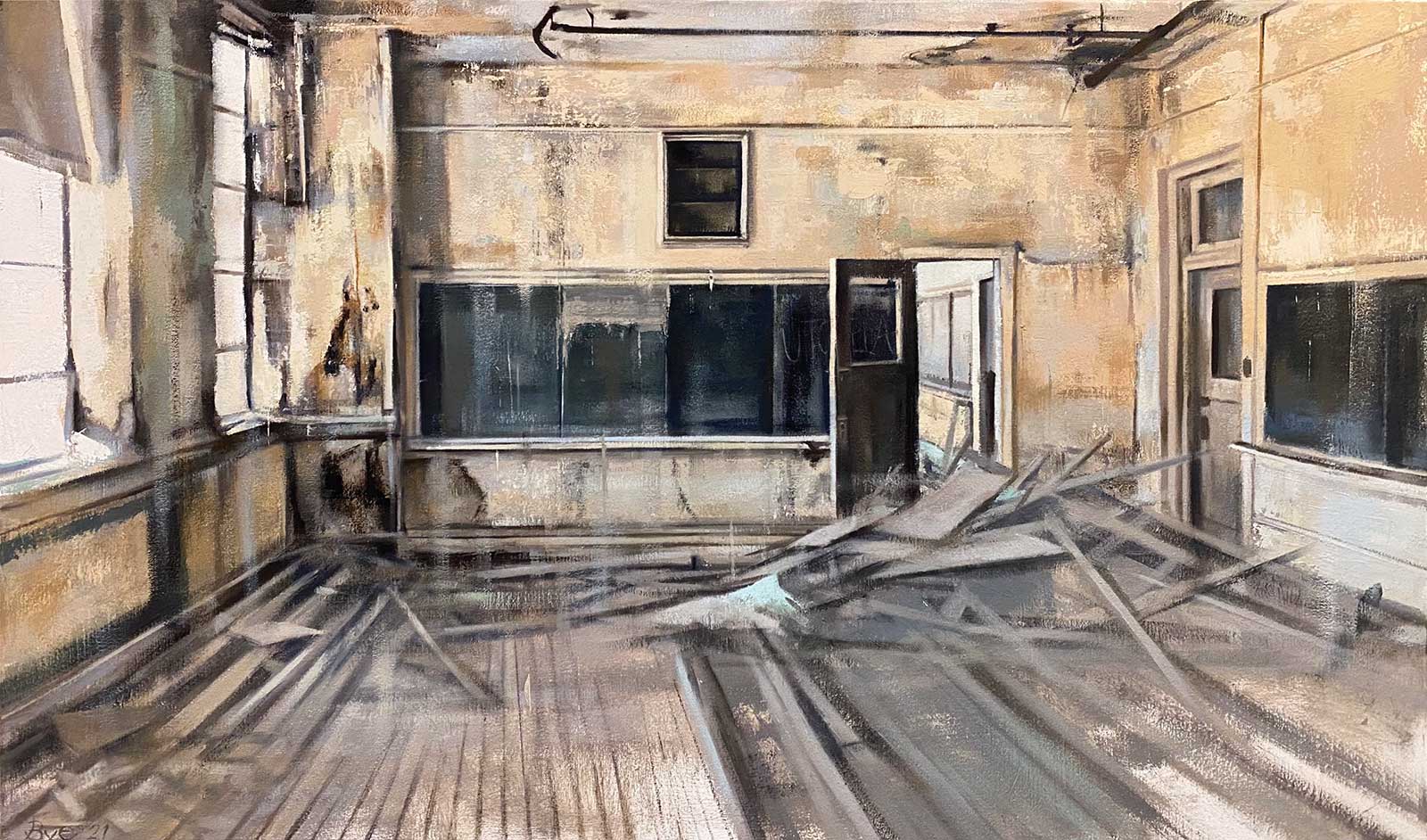 Utopia, oil on linen, 24 x 40"
In the 4-foot wide panorama Intersection, Bye edits the detail of the scene with areas of soft focus and areas with more detail. The light at the end of the long hallway leading away from the viewer in the center of the painting draws attention, but the “wonderful shape of the stairwell,” he observes, draws the eye to the left. The bright light from the window in the lower left landing draws the eye farther from the center.
In the stillness of his interiors, the voices of generations of teachers, students, actors, musicians and factory workers continue to reverberate. The textures, patinas, peeling paint and trash attest to a place lived and experienced over time. In this series of paintings, his palette is subdued, almost monochromatic. They bring attention not only to the subtleties of the spaces themselves, but to his masterful application of paint which becomes part of the narrative. —
Jeff Bye: Shenandoah
When: October 1-31, 2021
Where: Edgewater Gallery on the Green, 6 Merchants Row, Middlebury, VT 05753
Information: (802) 989-7419, www.edgewatergallery-vt.com
Powered by Froala Editor