Since the earliest days of portraiture, artists have struggled to maintain the purity and integrity of their work while facing new technological advances in an ever-changing field. The arrival of new technologies that could make portraiture “easier” were not always welcome.
The earliest portrait artists, “the masters,” were beset with newer and easier ways of making paint, of constructing canvases and even in making their own brushes. Later, as mass production became the norm, even the most dedicated purists found themselves lured by the ease of buying supplies from someone who mass produced them.
Today we continue to face advances in technology that allow for newer and easier ways to create the human form. From high-resolution digital photography to computer enhancements and AI tools, creating beautiful works of art is becoming more and more commonplace, challenging the traditional methods and techniques.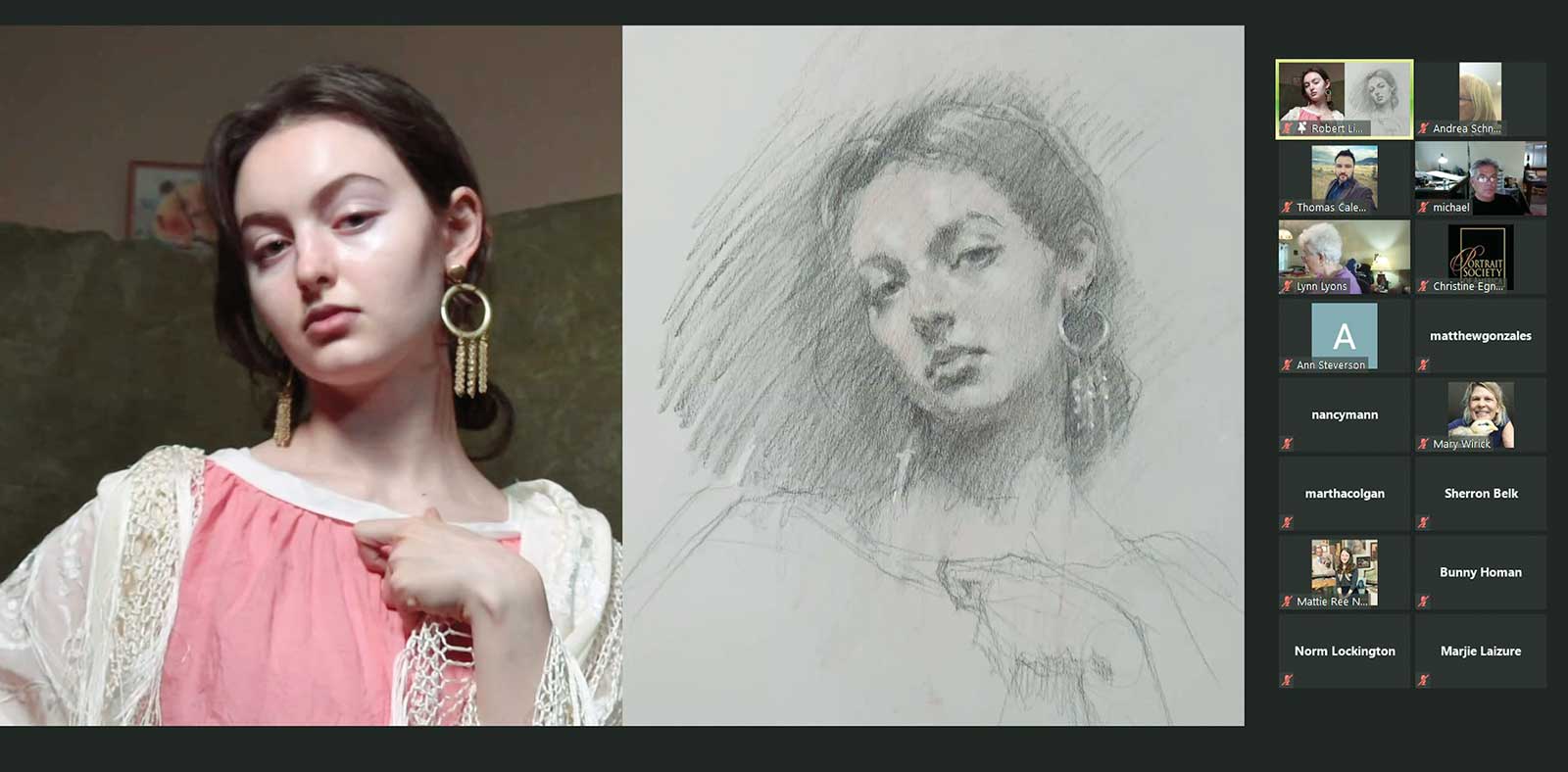 Robert Liberace, via Zoom, opened the pre-conference workshops, teaching attendees how the basis for drawing is a connection between the eye and hand.
Through these advances in new technologies one thing persists: passion. A passion to create, to inspire and to bring authentic beauty into the world. The questions surrounding the advent of these new technologies for those dedicated to the trade of true portraiture are not easy ones.
This year, Portrait Society of America was met with a different technological challenge. With a pandemic raging, our 23rd annual conference was on the verge of being cancelled, but our unbridled passion for our mission prevailed and we adapted. We deployed new technologies and found a way to bring both teacher and student together in a marvelous array of webinar-type programs. Of course, we missed the in-person comradery and, of course, we always knew that a “real” conference would have been better. But we had a choice, and I believe we made the right one.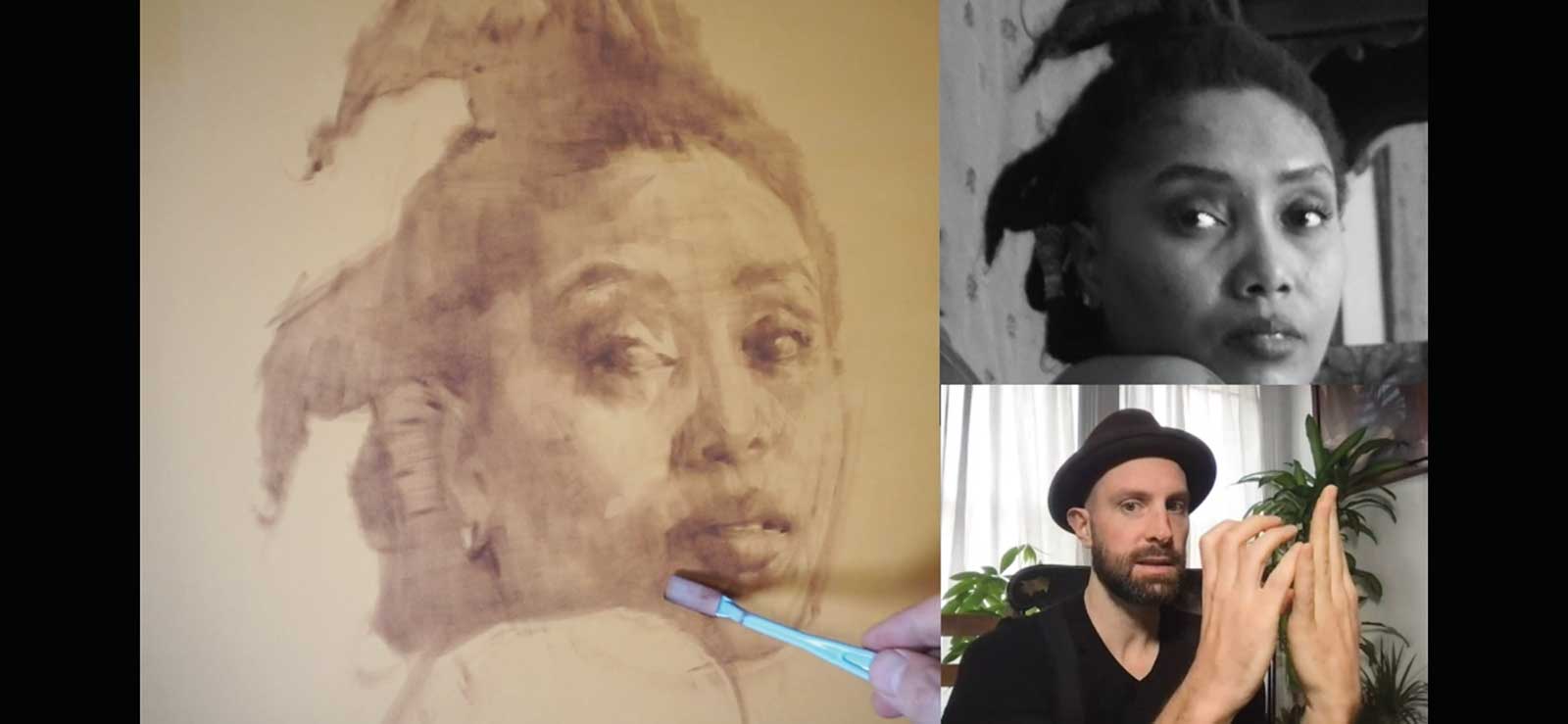 Kerry Dunn taught the opening Drawing Workshop during this year’s virtual conference.
With the leadership of our board, a dedicated staff and faculty, and an eager-to-learn membership, this year’s conference—every bit of it done using new technologies—was nothing short of spectacular. We had members who had never heard of Zoom or Vimeo and were hesitant to participate, concerned about the platform. But their passion came through and many took the time to learn and adapt to these new technologies. And they did so with an astonishing degree of perseverance, and we emerged with a series of fantastic workshops, demonstrations, panel discussions and interviews.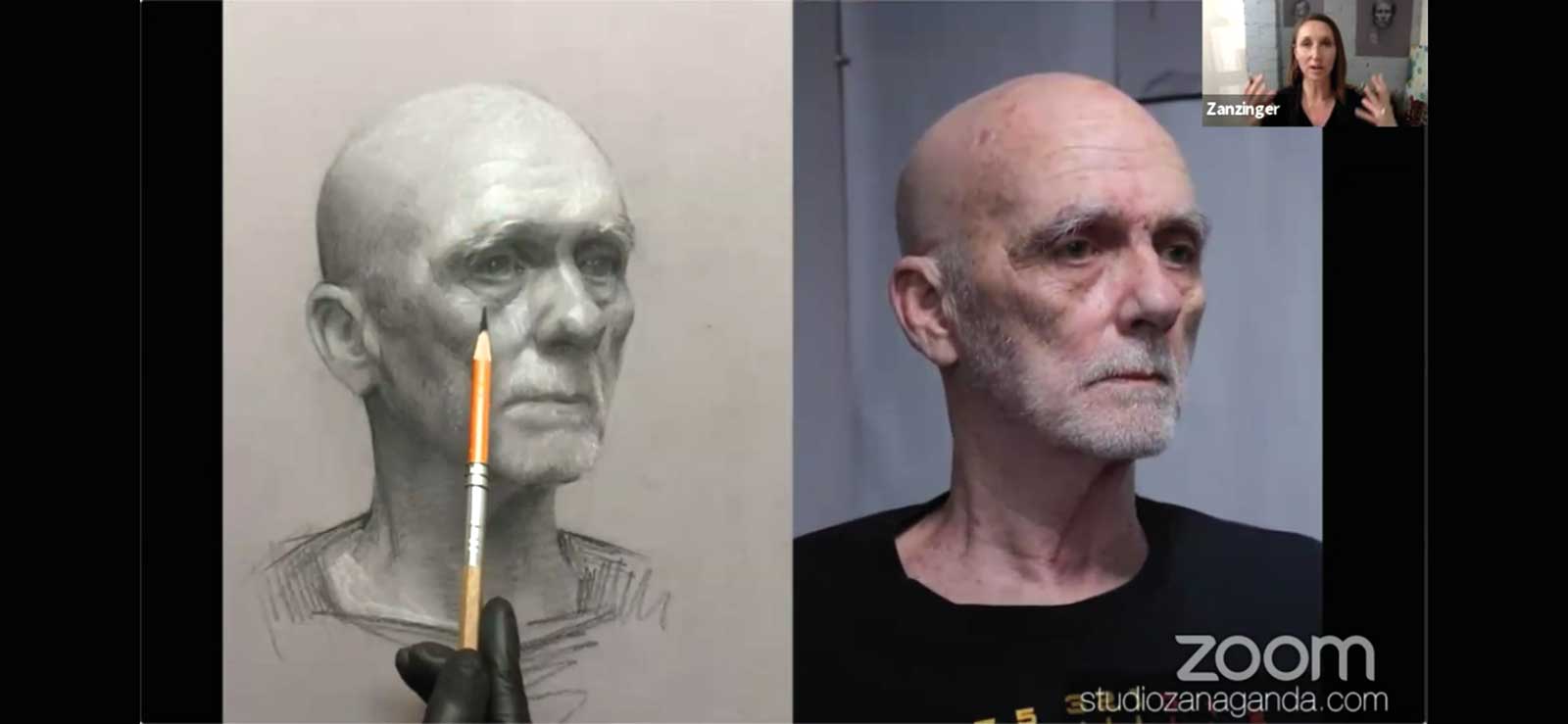 Elizabeth Zanzinger gave a thorough structural drawing workshop, sharing her technical and methodical approach to the portrait through a webinar.
Passion and technology converged to make our annual conference a success. While we are finalizing our plans for next year’s in-person conference being held April 21 to 24 in Atlanta, I feel strongly that there is a lesson in this for all of us. As our Society moves forward into the future, as we consider and even confront new technologies, let us never lose our passion for portraiture or for those who care so deeply about the art of the portrait—even if it means we must, from time to time, adapt to new technologies. —
Join us for the 24th annual The Art of the Portrait from April 21 to 24, 2022, in Atlanta, Georgia. Register at www.portraitsociety.org.
Powered by Froala Editor