Albert Moore (1841–1893) was a painter of languorous female figures in diaphanous gowns during the Aesthetic Movement in England. The artists of the movement believed in “art for art’s sake” and avoided narrative references.
The women in Moore’s paintings are aesthetically pleasing objects, without facial expressions, naked, but revealing nothing. Angela Fraleigh strives to restore their agency, to liberate them from a liminal state “between awakening and dreaming.” Just as society was roiling with change at the turn of the 20th century and women were only beginning to emerge from their domestic constraints, Fraleigh’s figures are full of potential.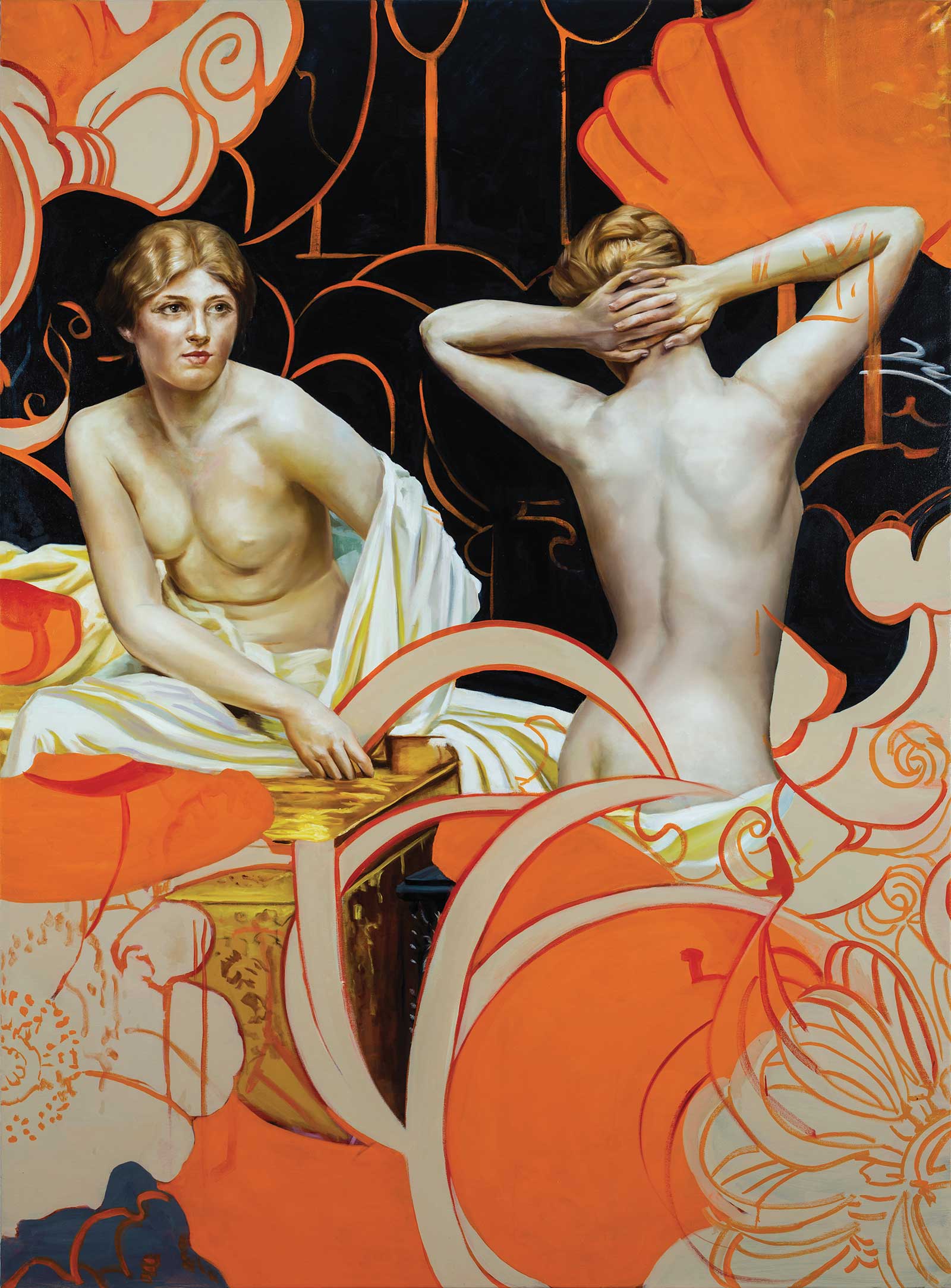 Rooted in constellations, oil on linen, 90 x 66"
The art nouveau poster designer Ethel Reed (1874-1912) attained prominence in Boston when she was only 18. She was the first American woman to be recognized for her graphic design. When her work was shown in Washington, D.C., in 1896, a reviewer pointed out that she was “the foremost woman poster maker in America” but added gratuitously that she was “one of the most beautiful women Washington has seen in ages.”
Fraleigh has combined elements of both artists work in her exhibition, Fluttering Still, at Hirschl & Adler Modern in New York, through March 12.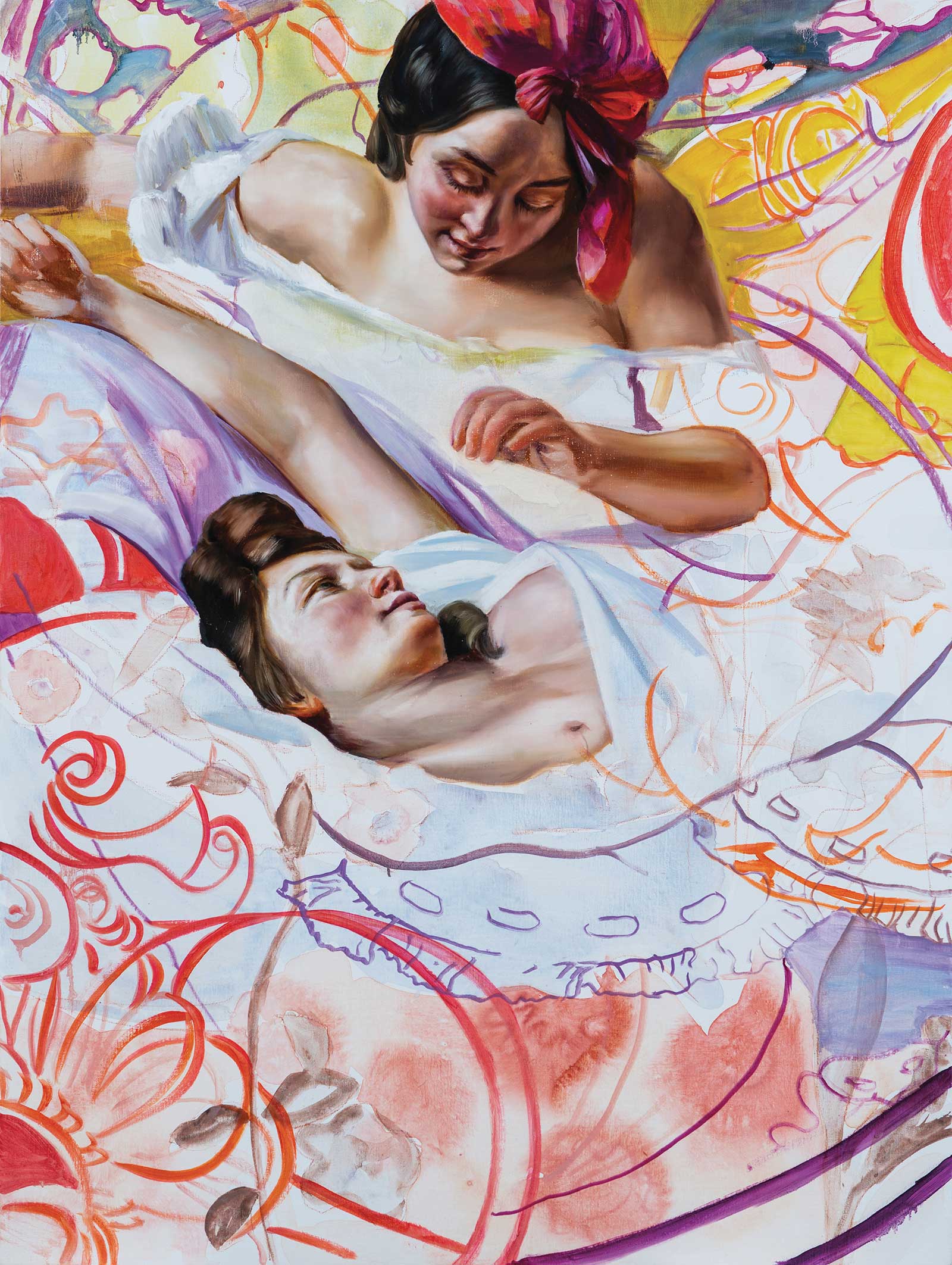 A pang of livid light, oil and watercolor on linen over panel, 48 x 36"
“I like that illustration was one of the few pathways for independent young woman. It was a socially acceptable career path until they got married and took on the duties of a wife,” says Fraleigh. “Ethel Reed has been lingering in my visual psyche as a theme in this body of work. Her work is very feminine but bold and graphic.”
In her title painting, Fluttering Still, Fraleigh envelops two figures from Moore’s A Summer Night with sinuous forms in Reed’s characteristic red/orange organic shapes—which she likens to the color of signs at construction sites.
In Shaking to sound the silent skies, she paints two of the Pettigrew sisters, models for many of the great artists of the day. She says, “The figures look like they could be two sisters engaging with each other, mirrors of themselves or even lovers.”
“We denigrate women’s speech as gossip,” she says. “But there are seeds of wisdom in gossip. These women are engaged in an underground railroad of knowledge sharing.” Throughout history women have had knowledge that men didn’t want shared.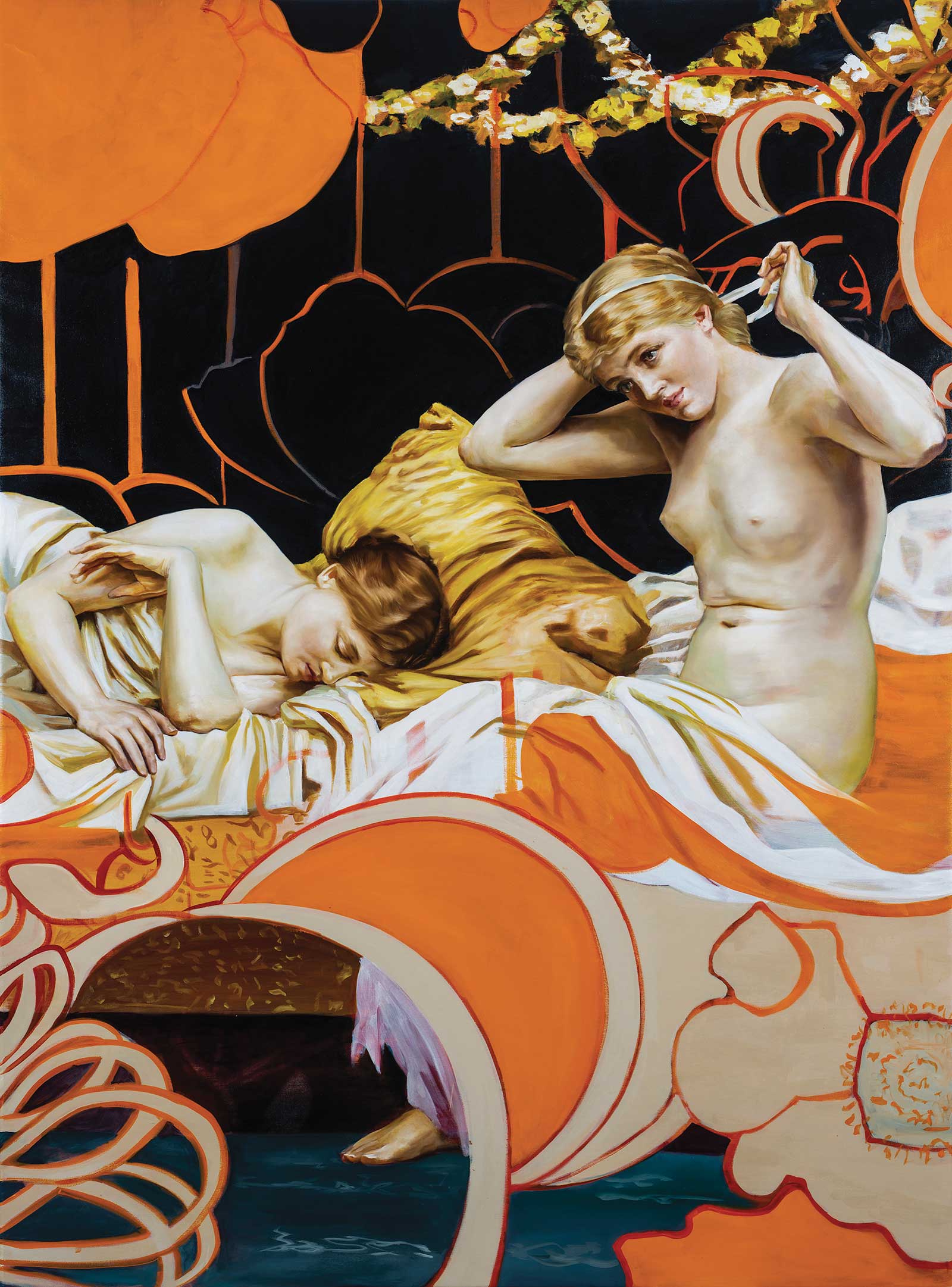 Fluttering still, oil on linen, 90 x 66"
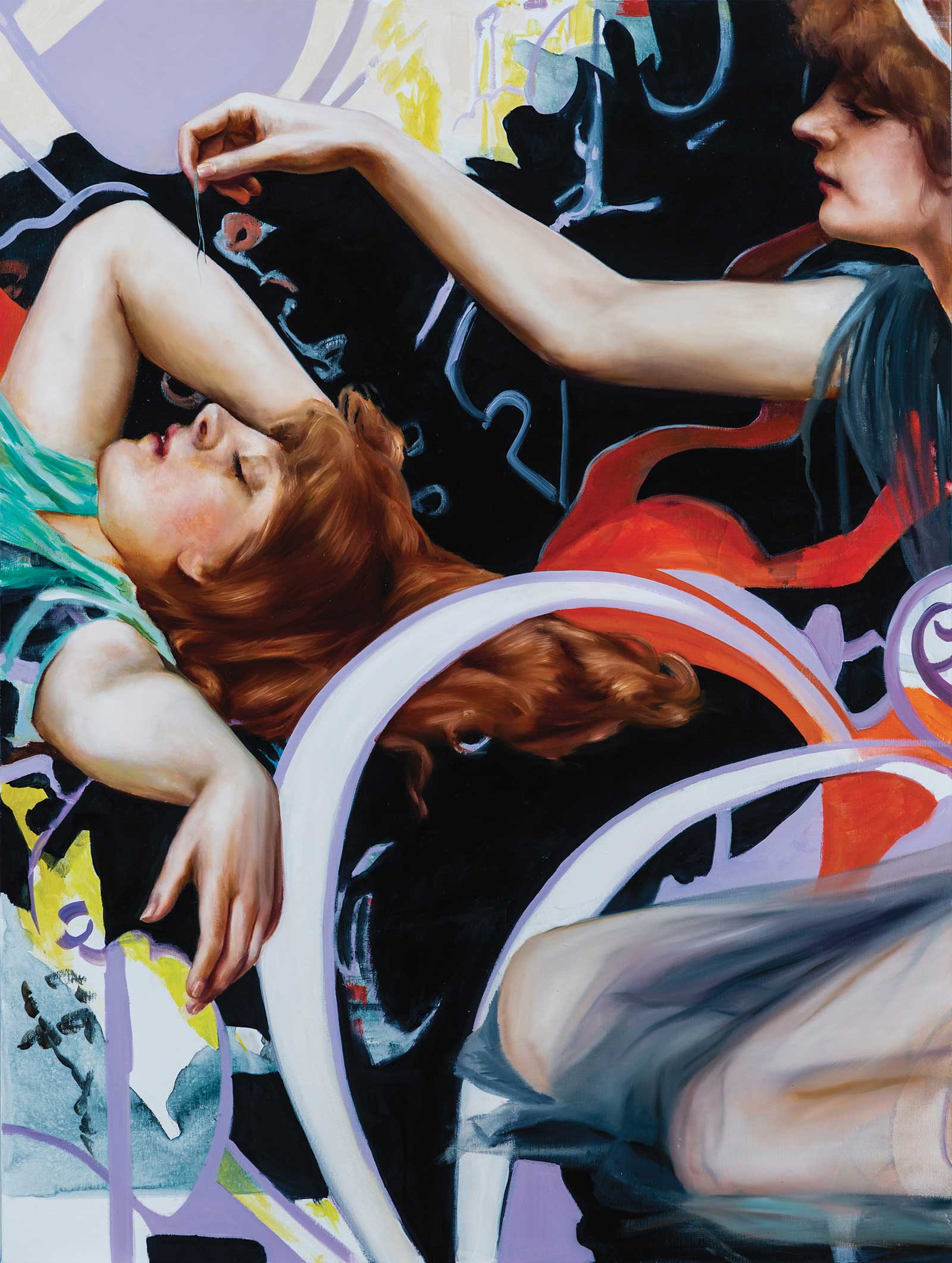 Shaking to sound the silent skies, oil and watercolor on linen over panel, 48 x 36"
Marina Warner, author of From the Beast to the Blonde: On Fairy Tales and Their Tellers, writes, “Fairy tales are about money, marriage and men. They are the maps and manuals that are passed down from mothers and grandmothers to help them survive.”
Fraleigh says, “My work is about how meaning gets made and questions how cultural narratives are applied, structured and how that comes to shape our experiences in the world.”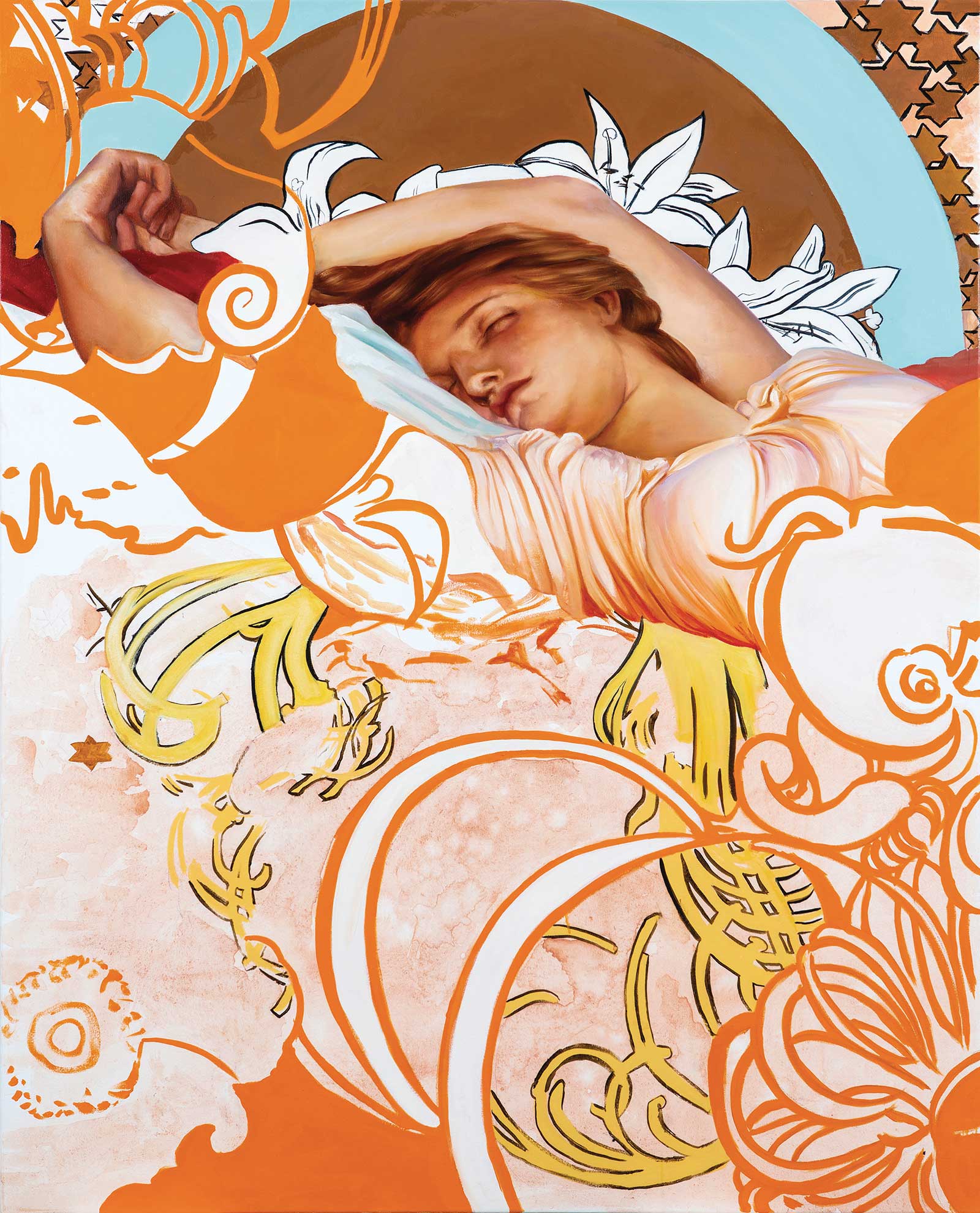 We tell beginnings, oil and watercolor on canvas over panel, 56 x 48". Images courtesy the artist and Hirschl & Adler Modern, New York, NY. © Ken Ek.
Despite their having been portrayed as placid and titillating, women’s agency was intact and within and among themselves they were up to something. “Is it possible to see them anew,” she continues. “That they are sharing information to help progress their own relationship to independence, power dynamics
and agency?” —
Hirschl & Adler Modern
41 E. 57th Street • New York, NY 10022
(212) 535-8810 • www.hirschlandadler.com
Powered by Froala Editor