Six months ago my family and I moved to the central coast of California. After more than 30 years of living in Southern California’s “Inland Empire”—where the heat and traffic were becoming unbearable—living in a small coastal town feels like a dream. My wife and I now take our morning walk on bluffs overlooking the ocean: we used to follow bland sidewalk rimmed by tract houses and parked cars. As we stroll, we breathe in the cool sea air, admire the crashing waves, and catch glimpses of leaping dolphins and the occasional tummy-slapping otter. It’s a routine that offers a sense of respite, one that takes us away from life’s concerns.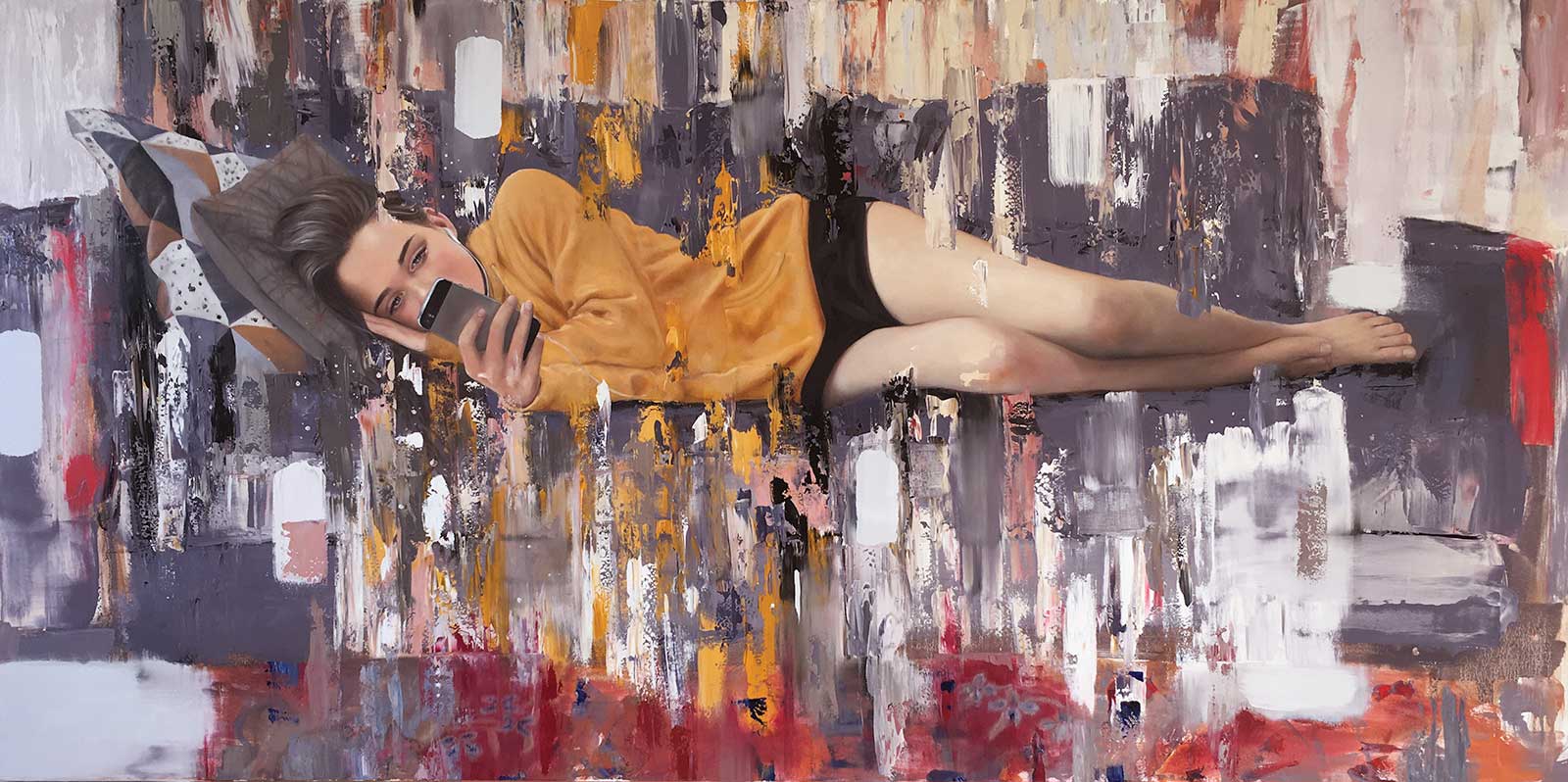 Meredith Marsone, Lost Generation, oil on canvas, 70.8 x 35.4"
The trail we take is sprinkled with wooden benches, including one next to the ocean that looks out over a spectacular rock formation. On one recent morning we glanced toward this favorite bench—hoping it might be empty—but it was occupied: by a couple staring at their phones. Yes, with a jaw-dropping view vista straight ahead, they chose to check their Facebook. I wanted to feel superior, but that would have been hypocritical. The truth is that I have done the same thing.
Few among us are strong enough to resist the tantalizing flow of images and information that is prying us away from what previous generations called “reality.” Nature, other people and great paintings in museums still interest us, but smartphones are giving them some serious competition. We are the most distracted society in the history of the world. Television, which so many media-age Savonarolas warned us would be the end of culture, was just a warm-up for this whatever-you-want-on-demand tsunami of personalized content.
We now live in an “attention economy,” where there is always some kind of distraction at our fingertips. While stuck in traffic—and there is a lot of that—we can turn to digital devices that break up the monotony with satellite radio, playlists and podcasts. Boredom has been vanquished, and that may not be a good thing. If you have a smartphone, Twitter, Facebook and Instagram are always in your pocket. Yes, the screens we stare at can show us things of really high quality—if you have the patience to be selective—but the same screen that shows you a well-made movie is also a trapdoor hovering just above the quicksand of never-ending content. This scenario is changing our lives and affecting the art of our times.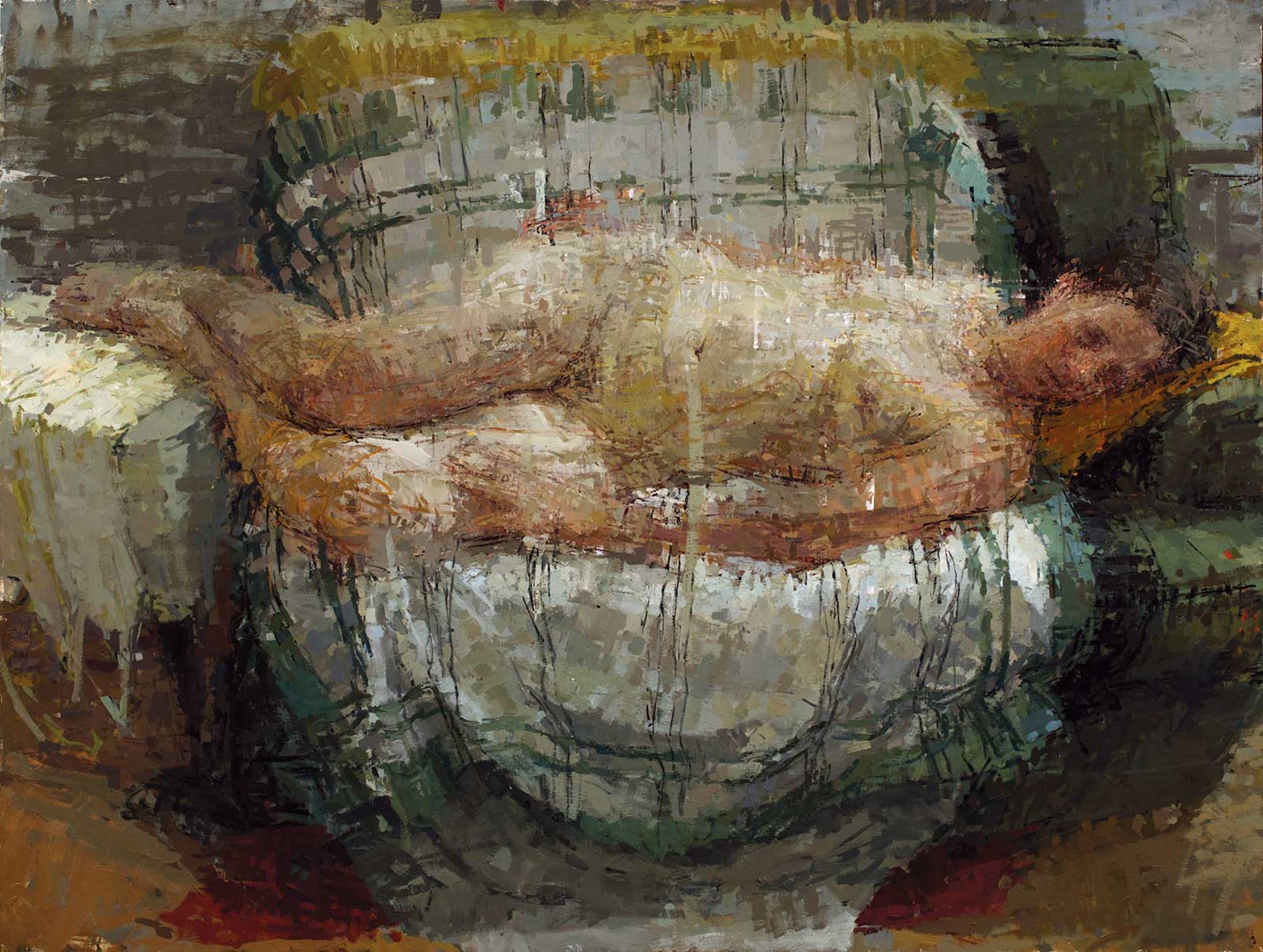 Ann Gale, Shawna in Lines, oil on canvas, 44 x 58"
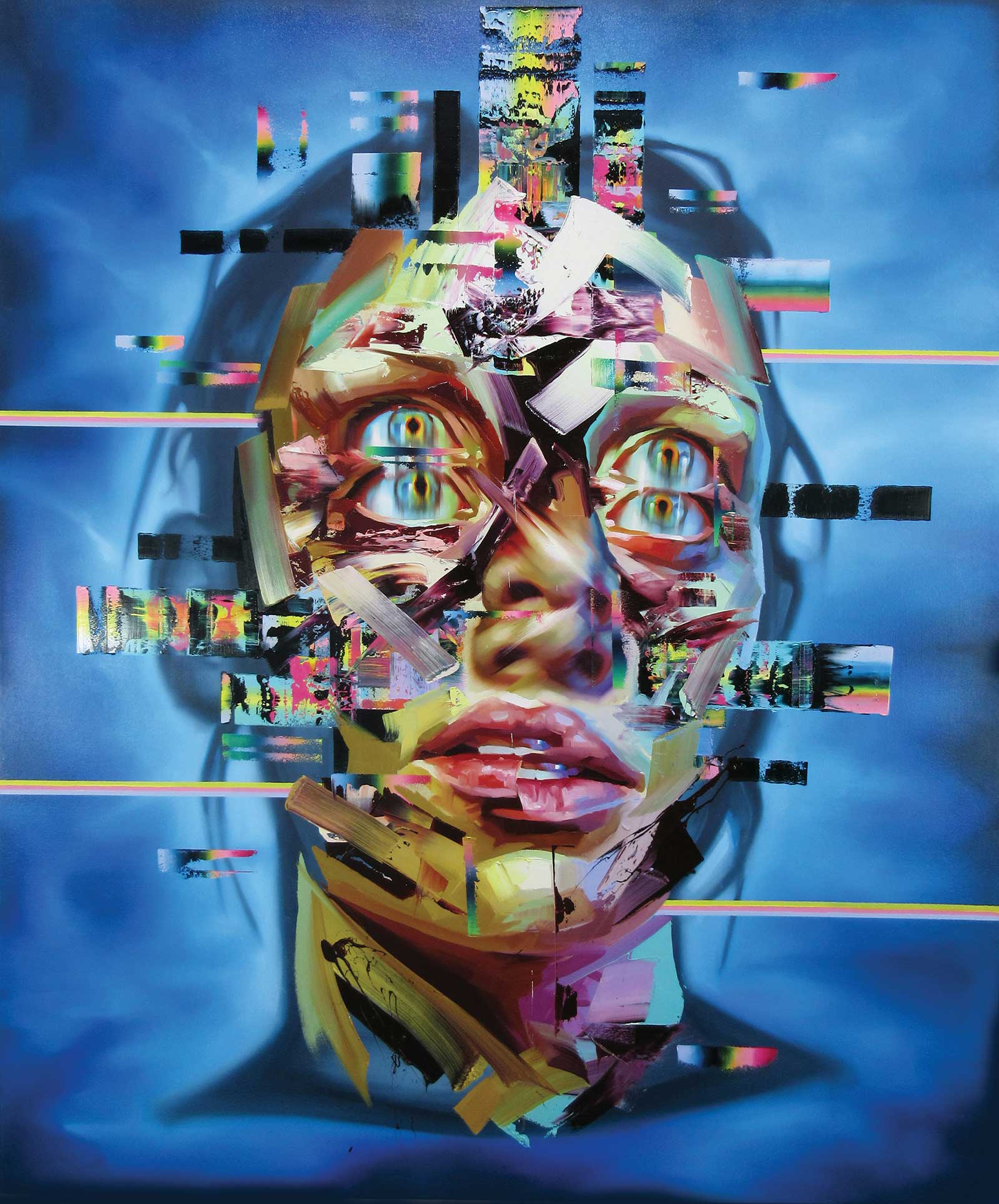 Justin Bower, The Magician, oil on canvas, 72 x 60"
The availability of endless stimulation via the digital world is relatively new. The energies and interruptions of actual life endure. In addition to the dramas we view on screens, our real, actual lives—the parts that aren’t digital—alternate between the mundane, the profound and the tragic. While reading the interviews of artists submitted for this book, I was struck by the mentions of challenging and life-changing events that have reshaped their lives and works.
Aiden Kringen’s life was forever changed when he was struck in the head by a foul ball at Dodger Stadium, Justin Bower decided to get his MFA in painting after being stabbed, and Zack Zdrale has grappled with the issues caused by a brain tumor. The spaces and subjects of Alyssa Monk’s paintings were profoundly transformed after the experience of watching her mother succumb to cancer, and Meredith Marsone has struggled with depression.
Given the intense mix of events and images that come through our minds—from real life and from screens—is it any wonder that modern reality can be hard to grasp? Is there still any peace to be found anywhere? How can you find the time and space to steer your mind toward the people, causes, and questions that really matter? Just where—one wonders—can clarity be found? My feeling is that painters, especially gifted ones, are asking themselves those questions in the studio. When that is the case, searching for answers becomes a central motivation.
Painting is a form of meditation. It is a solitary activity best done in quiet—or maybe to some favorite music—that generates an alternative universe. In contemporary painting, those universes reflect ideas, images and impulses gleaned from the artist’s life, sometimes placed there consciously, sometimes unconsciously. If you think about the long tradition of realism in Western art, the “alternative universes” that emerged in paint were filled first with religious and mythological scenes and then later with real people and their surroundings.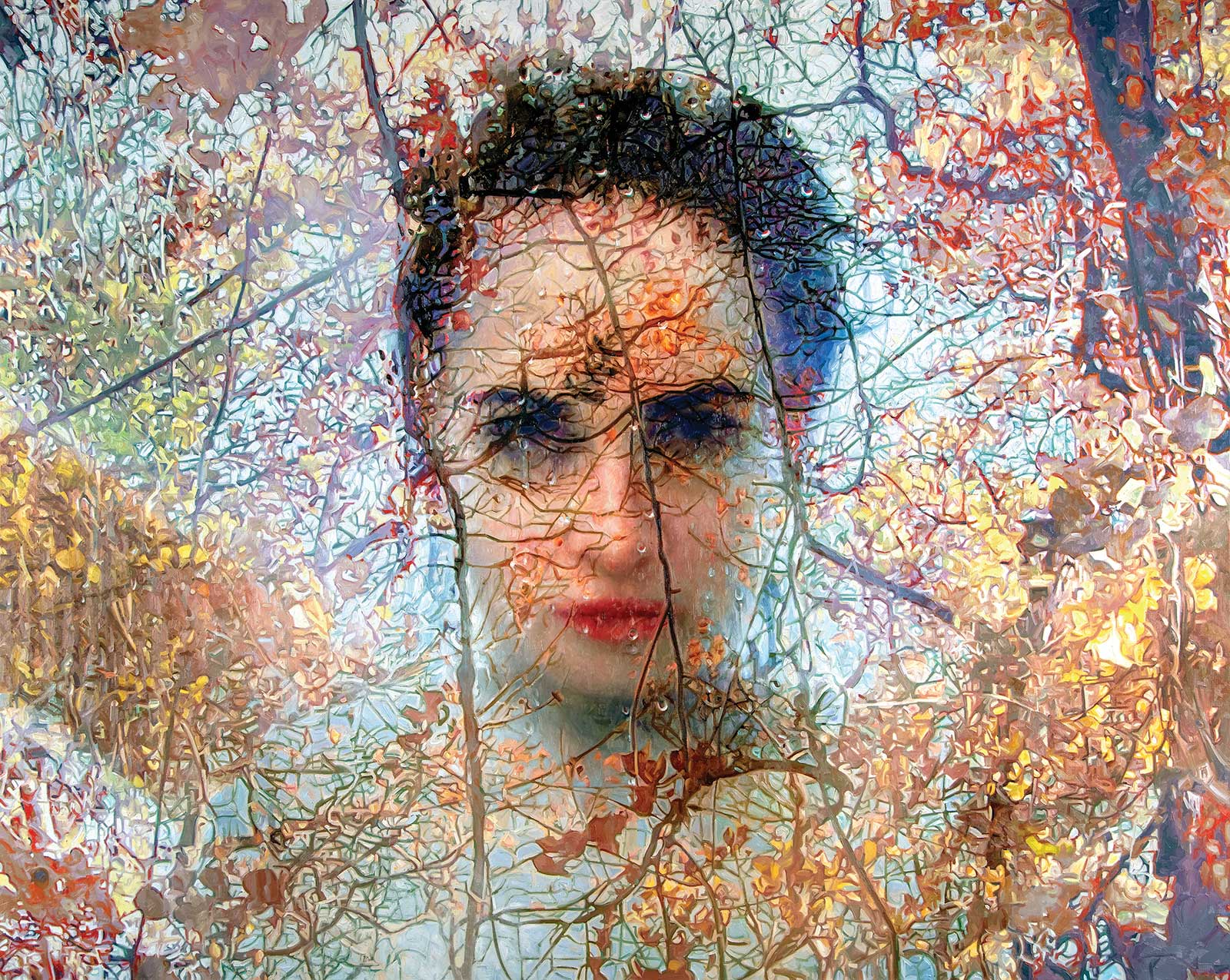 Alyssa Monks, Elpis, oil on linen, 68 x 86"
Since the advent of mechanical image-making—with its rapid takeover of the traditional domains of realism—artists have had the opportunity to make their work more subjective. The vanguard styles of the modern era became possible because of the subjectivity that emanated from the central question of Paul Cézanne’s work: “Is this what I see?” In the current phenomenon of disrupted realism, the process of seeing tends to overlap with perception, which leads to another kind of question: “What am I feeling?” This engagement with the subjectivity of feeling is something that is meant to be shared between the artist and his audience, as Joshua Meyer explains: “I want someone who approaches the painting to feel what it is like to make a painting, and to feel the struggle to understand and to see the world.”
Yes, “straight” realism—meaning art made with an undeviating and strict allegiance to what the eye sees—is still valid, possible and, in skilled hands, masterful and moving. I think of realism as being like opera: when real talent is involved it is transcendent, but when talent and skill are lacking it can be embarrassing or worse.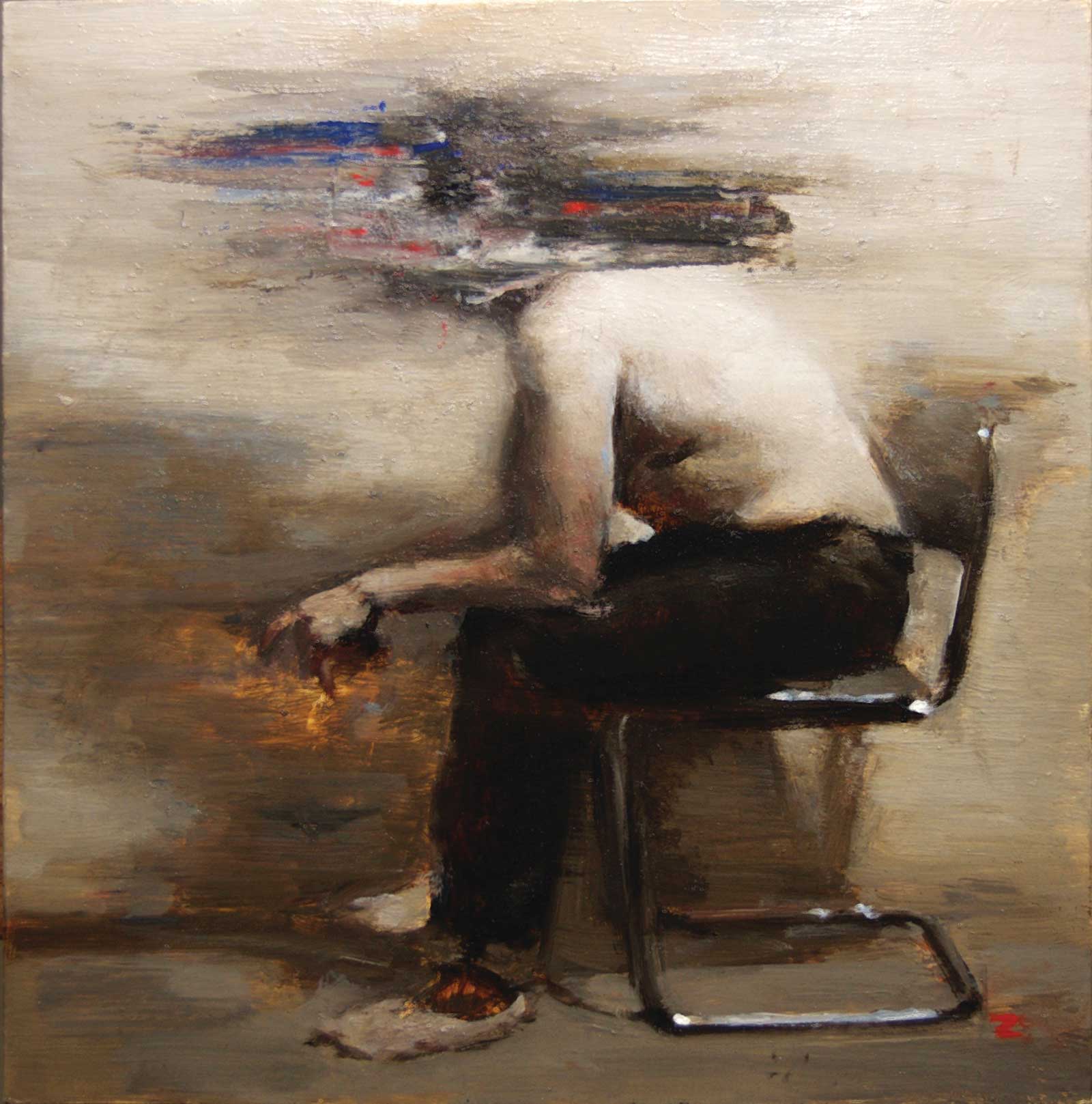 Zack Zdrale, Dissociation II, oil on panel, 6 x 6"
I also try to remember that even the strictest realism is inherently abstract—it’s just paint on canvas, creating illusions, right?—and realist painters who don’t balance their drive for clarity with at least a hint of ambiguity will make dull work.
For these reasons and others, realism is hard to learn and even harder to master. Forty years ago there were only a handful of schools and teachers that even bothered to pass on the necessary information and skills, which were considered passé. I can’t tell you how many times I have heard representational artists from my generation say “I had to teach myself” or “There was only one professor at the college I attended who actually understood perspective, but he was an alcoholic who was shunned by the other faculty.”
Still, something was happening. A handful of newly founded institutions—including the New York Academy of Art (founded in 1982) and the Florence Academy (founded in 1991)—went against the grain and offered programs that revived the foundational skills needed by realist artists. Several established schools, including the Pennsylvania Academy of Fine Art and the Slade School in London, had notable faculty members who extended and expanded the possibilities of figurative and representational painting. It took some time, but the graduates of these schools (and a few others) fanned out to become teachers themselves or to open ateliers, and a new generation of skilled painters took shape. There are, it appears, thousands of artists in the West who are very much capable of painting convincingly in a realist fashion. And yes, there are many thousands more in Asia and Eastern Europe (where realism never experienced quite the same decline in status).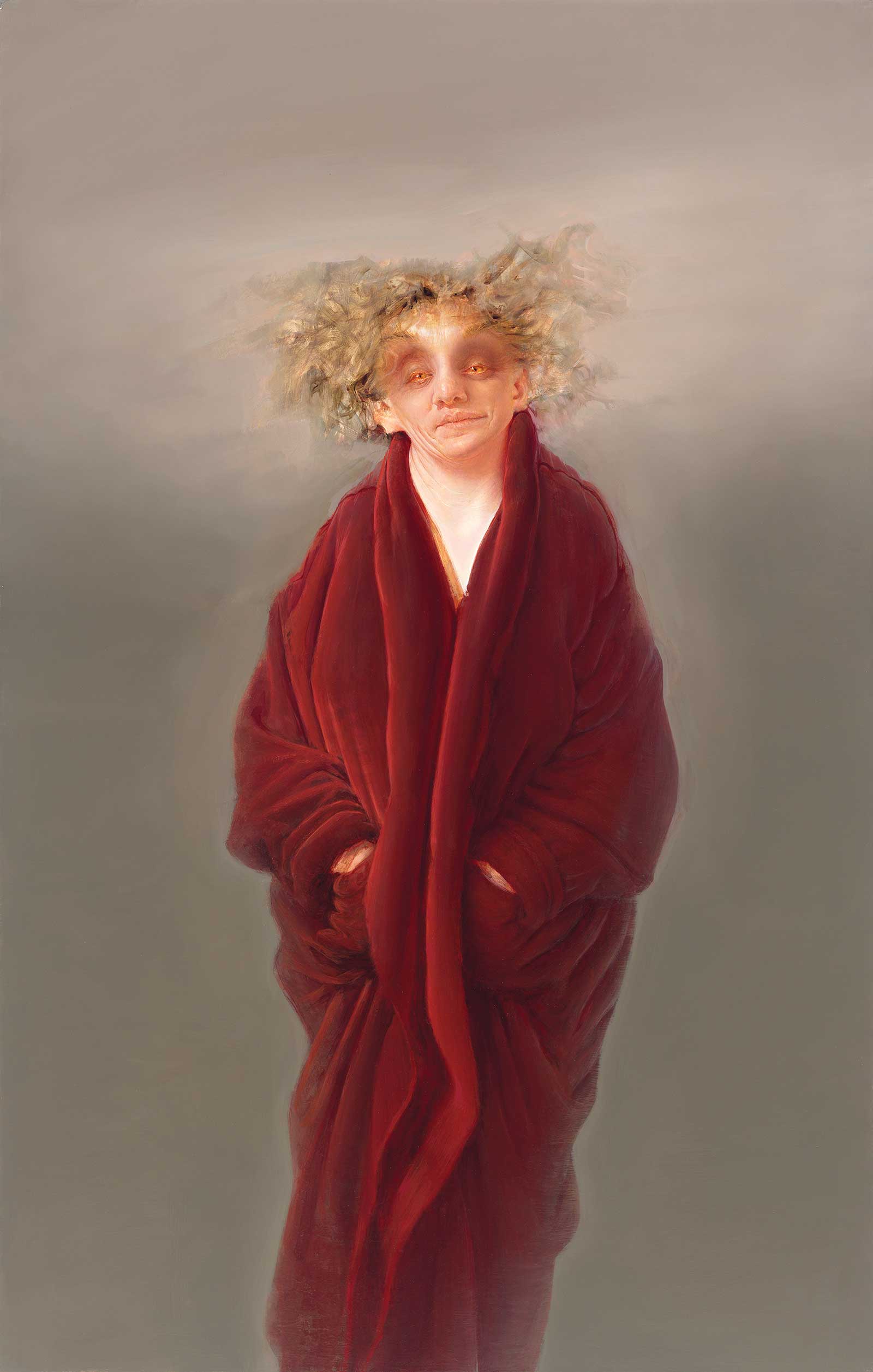 Anne Harris, Portrait (Red Robe), oil on linen, 52 x 33"
All of this brings me closer to the real topic of this essay, which is disrupted realism. And the elephant-in-the-room question is this: If you are a painter who has the chops, why not just be a realist? There isn’t one answer to this question. In fact, there are as many answers as there are disrupted realists. As it turns out, “disrupted realism” isn’t a style—these days the idea of a well-defined style is perhaps as outdated as a newspaper in a driveway—but rather a phenomenon. What I kept noticing as a blogger was a growing cadre of well-trained artists who were doing something to exit the cul-de-sac of realism and explore the winding roads of hybridity.
The various impulses toward disruption—and I’m using that word broadly and flexibly—were as individual as the artists themselves, but there did seem to be some level of shared conviction that the tradition of realism needed to flex in order to be more in tune with modern life. Dorian Vallejo, for example, says that his evolution was “not necessarily to disrupt anything I hold dear, but in order to genuinely ascertain whether I might add another way of sharing what I understand as the human experience.” When I look at the variety of individual approaches that I consider disrupted realism, I am struck by the tension between the artist’s need to make singular work and their universal and humanistic aspirations. It is as if they are responding to anthropologist Margaret Mead’s sage advice: “Always remember that you are absolutely unique. Just like everyone else.”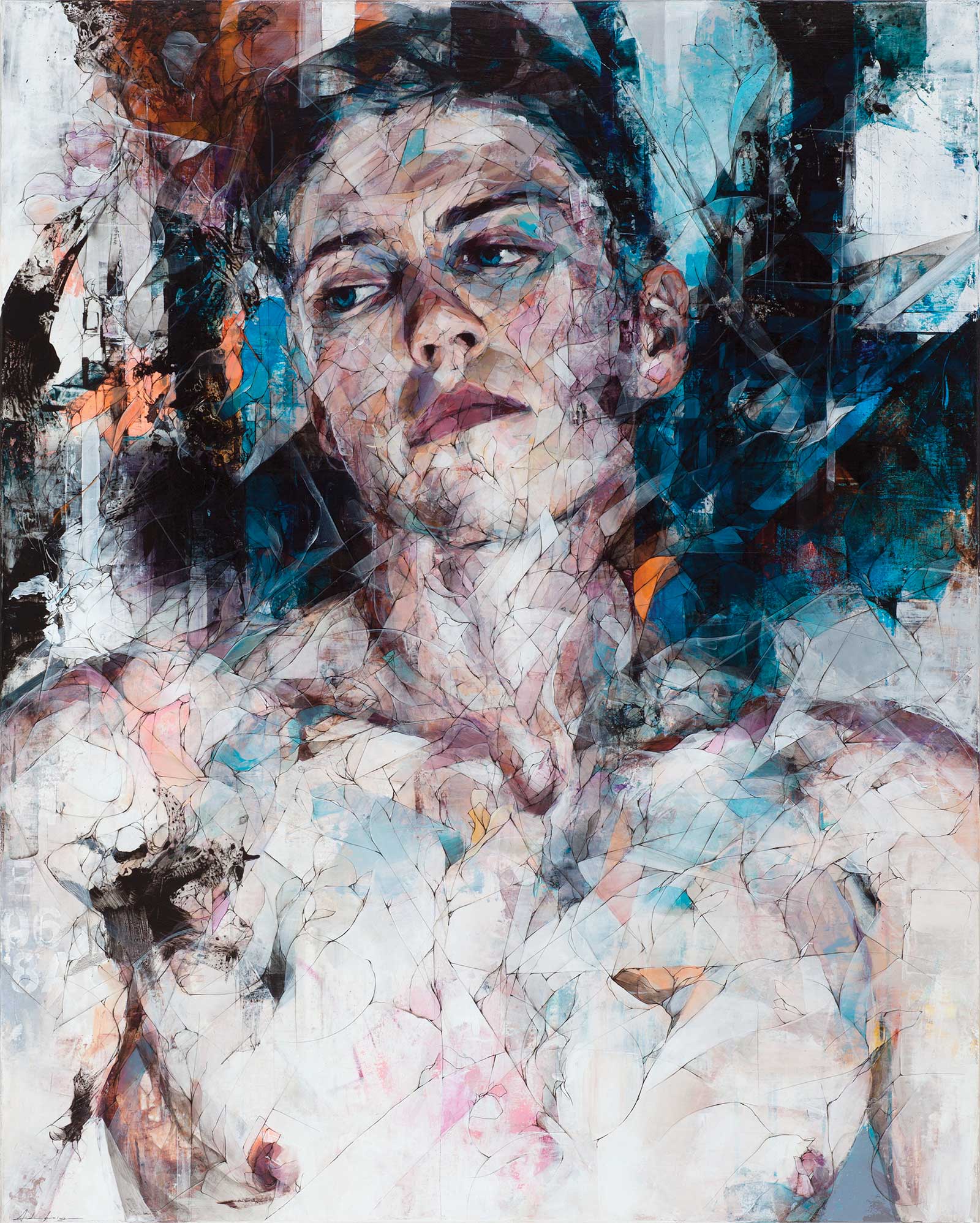 Aiden Kringen, Mind’s Eye, acrylic and mixed media on canvas, 60 x 48"
The experiences of contemporary artists are diffuse and diverse. They encompass, and reframe, every kind of experience. What I have come to realize is that the diverse forms of disrupted realism have to do with everything in each artist’s life: the real, the remembered, the digital, the imagined, and the dreamed, all filtered through the artist’s perceptions. Trying to argue that the works in this book can be anything tighter than loose frameworks is a losing argument. Respecting the richness, individuality, and hybridity they represent makes much more sense.
Is there a single conviction that these artists share? You would have to ask them, but I will toss this out: They believe that painting is a way of moving toward life’s center at a time when our atomized culture keeps dragging us all toward its edges. To put it another way, when our senses are sated, our souls still need the nourishment of art.
I have decided that “disrupted realism” is a flexible enough label for a wide range of approaches. Whether you agree or disagree I hope you will respect and admire the art and artists gathered between the covers of the book, Disrupted Realism: Painting for a Distracted World. Each individual artist has demonstrated a commitment to extending the language of realism—and of art—in a remarkable way.
++++
John Seed is a painter, writer and independent curator who contributed over 350 blogs to the Huffington Post’s Arts and Culture page between 2010 and 2017. Known for his direct and engaging style, Seed became an important voice in the evolving conversation about contemporary representational painting. Seed has also blogged for Hyperallergic.com, contributed articles to print magazines including Art Ltd., Arts of Asia, Catamaran and Harvard Magazine, and appeared in the Google Arts and Culture video series Name That Art. Now semiretired after more than 30 years of teaching art at Mt. San Jacinto College, Seed lives on California’s central coast with his wife and two daughters.
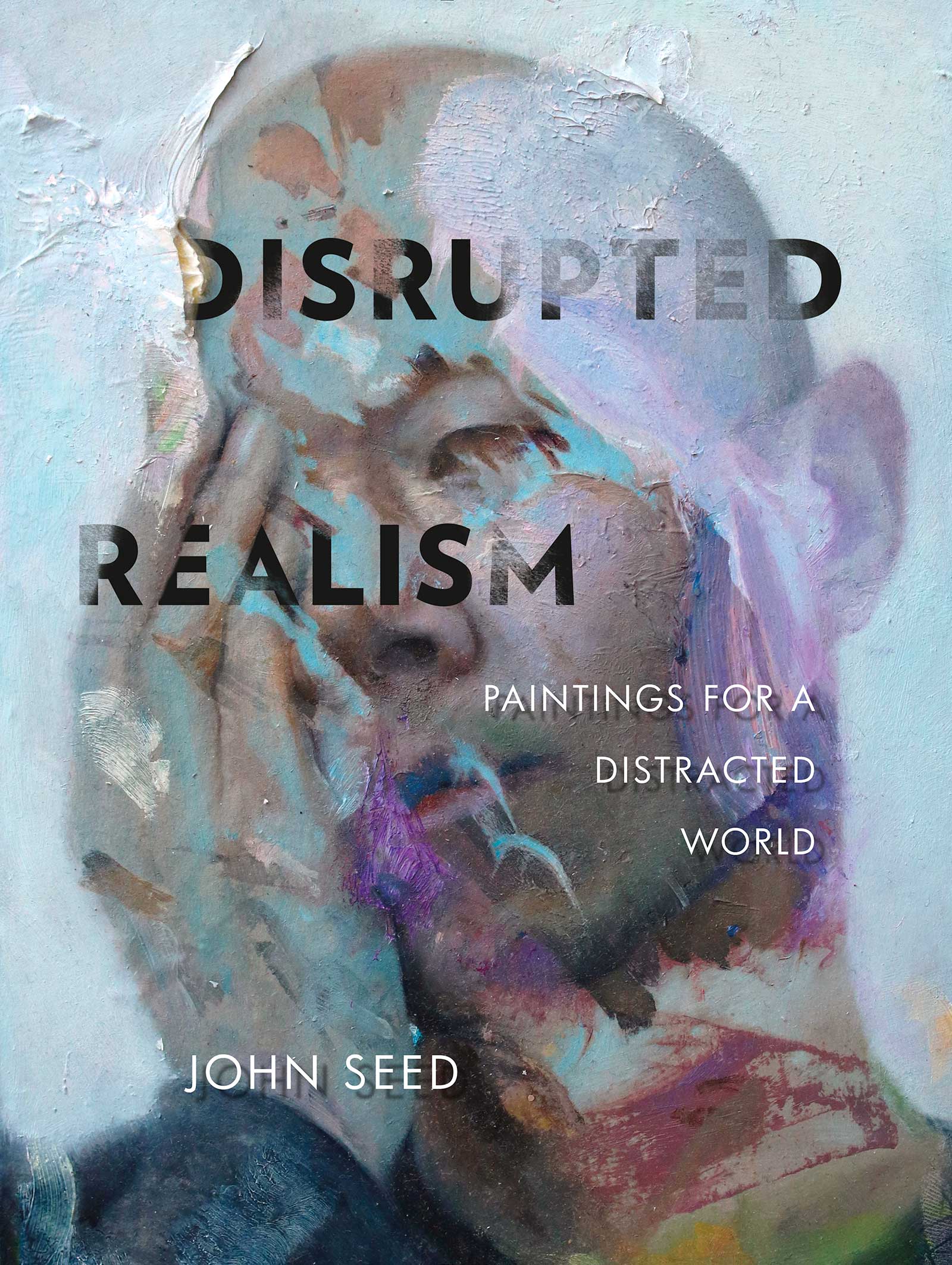
His new book, Disrupted Realism: Paintings for a Distracted World, is published by www.schifferbooks.com and available through Amazon and other booksellers.
Powered by Froala Editor