Architect C.P.H. Gilbert (1861-1952) designed mansions and townhouses in Manhattan in a variety of styles, some of which have since become embassies and, most notably, The Jewish Museum, a French Gothic chateau on Fifth Avenue. Prior to putting his mark on Manhattan he designed exuberant townhouses in Brooklyn including a Richardsonian Romanesque brownstone in 1887 for James H. Remington (1838-1899), a Brown educated lawyer who was injured in the Civil War and later moved to Brooklyn practicing law in New York City until his death.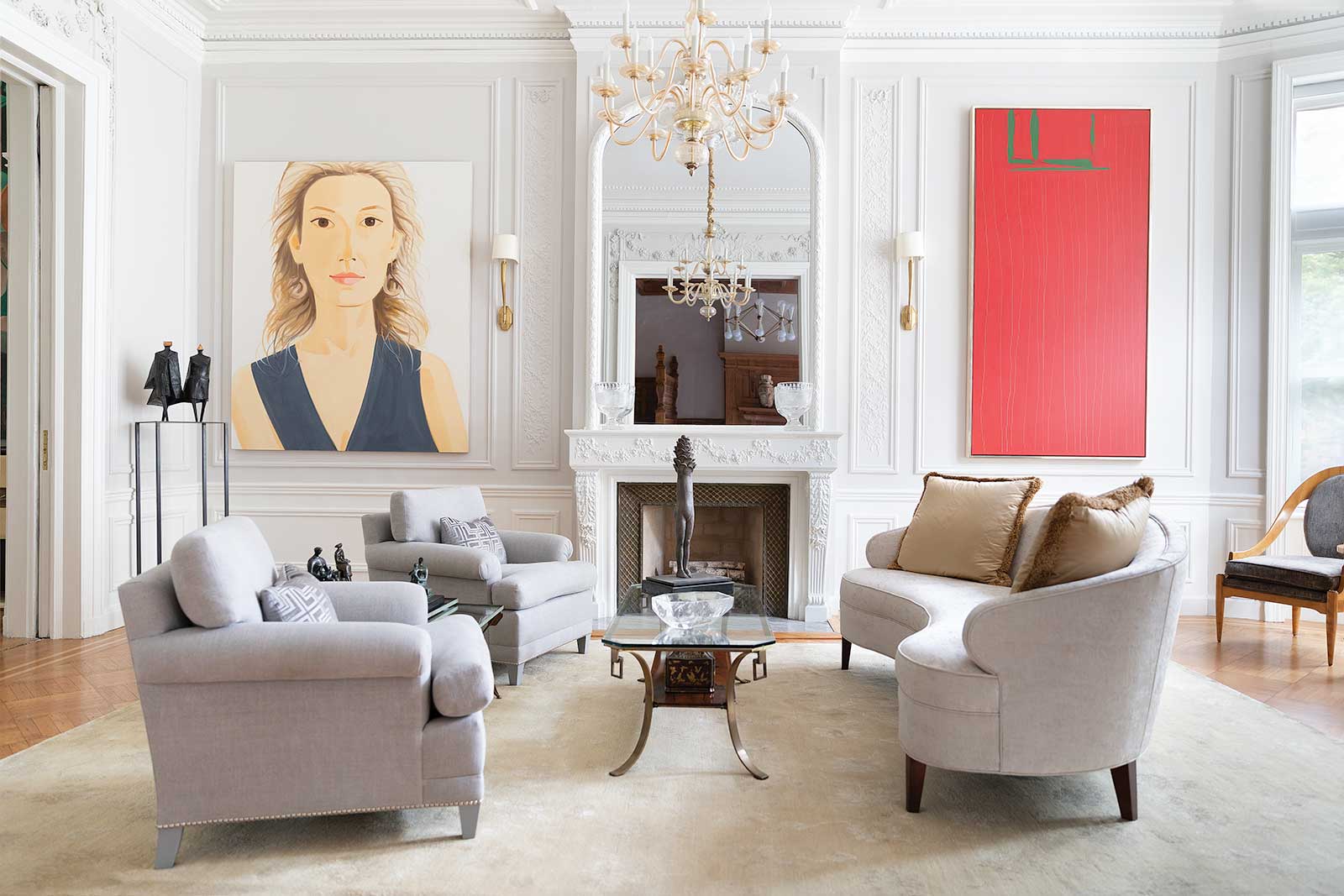 The fireplace is flanked by Alex Katz’s Leora, 2003, oil on canvas, and Scarlet Open, 1972, acrylic and charcoal on canvas, by Robert Motherwell (1915–1991). In the left corner is Walking Couple, II, 1987, bronze, by Lynn Chadwick (1914-2003). Topiary, a bronze by Louise Bourgeois (1911-2010), is displayed on a circa 1940s table from Maison Jansen next to a crystal bowl by Robert Kuo and beneath a 1940s Murano chandelier. The gray William Pahlman club chairs are circa 1950.
Gilbert would be pleased by his Park Slope masterpiece today. It is the home of Lillian Heidenberg and her company Lillian Heidenberg Fine Art. The spacious rooms are the settings for modern master paintings by Helen Frankenthaler and Robert Motherwell among others, sculpture from a Tang Dynasty ceramic horse to Henry Moore and Louise Bourgeois bronzes as well as cutting-edge contemporary art from around the world. The furniture is also eclectic and includes modern pieces from the ’30s, ’40s and ’50s.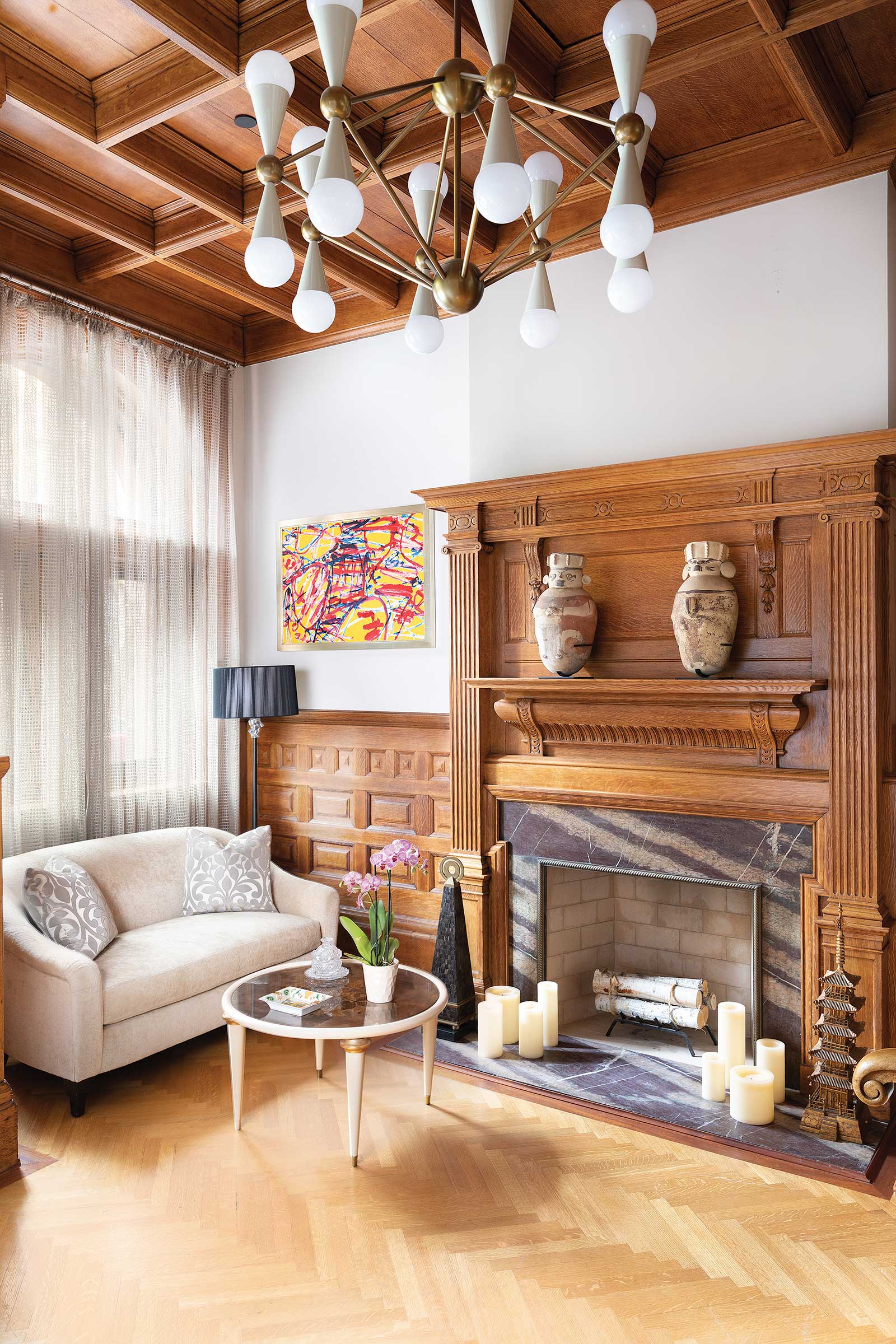 On the left is Mire G 103 (Kowloon), 1983, acrylic on paper mounted on canvas, by Jean Dubuffet (1901-1985). Two slip-decorated earthenware urns from the Pre-Columbian Chancay culture. The verre églomisé tabletop is by Maison Jansen.
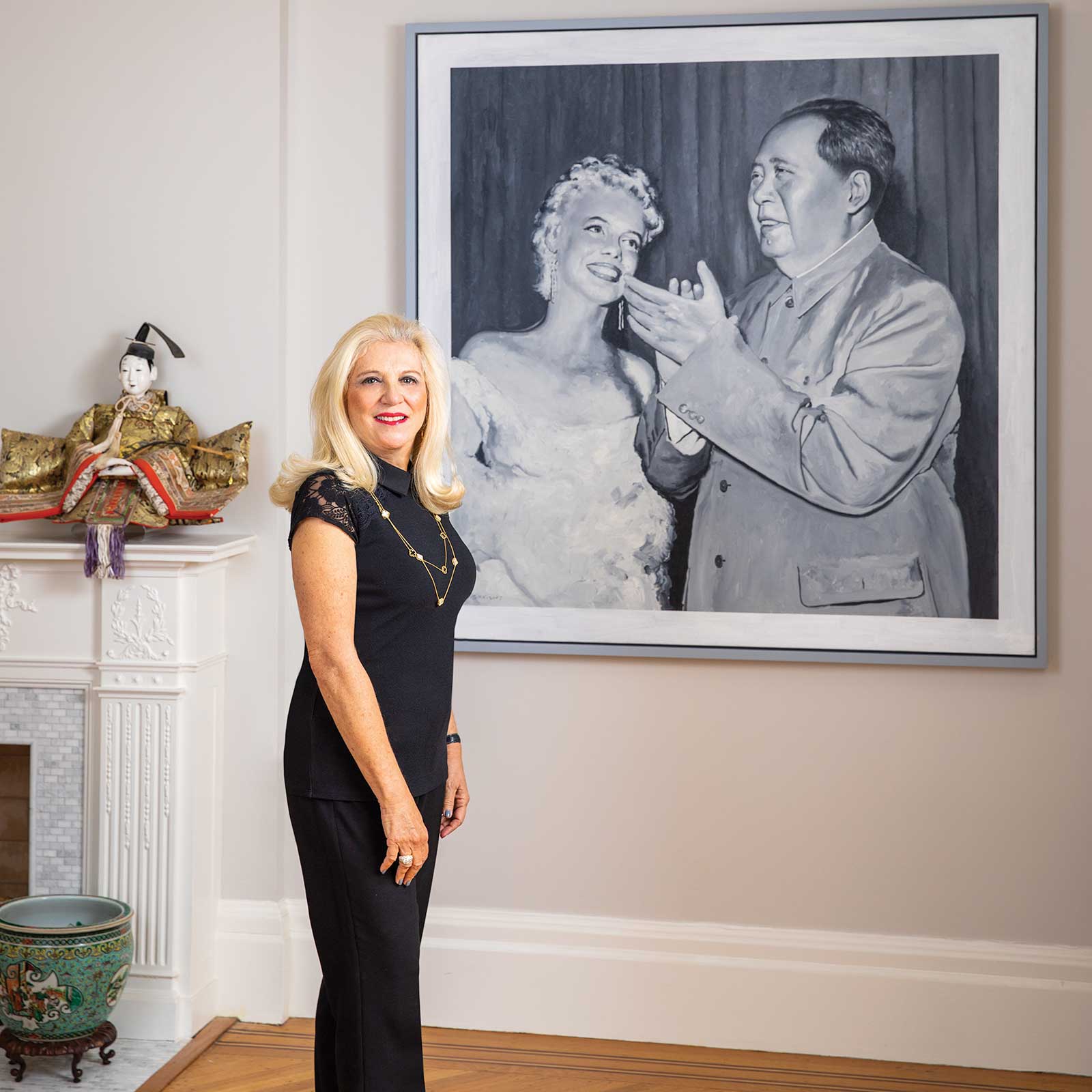 Lillian Heidenberg stands in front of Shi Xinning’s Worship, 2007, oil on canvas. On the mantel is a Japanese doll, circa 1920, silk and gofun (crushed oyster shells and paste).
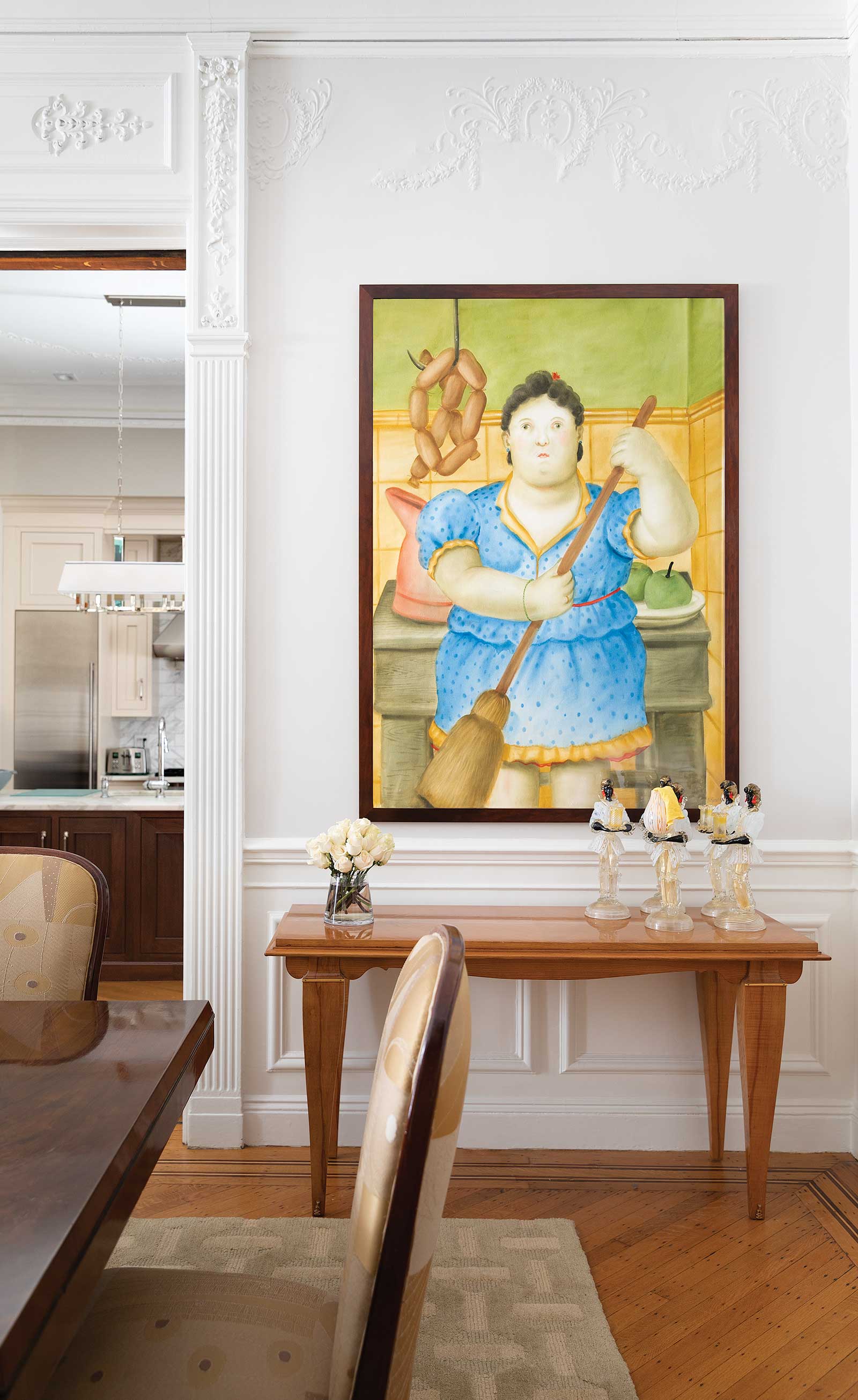 Fernando Botero’s Woman in the Kitchen, 1981, watercolor on paper, hangs above Fred Wilson’s Murano glass sculptures, Shatter.
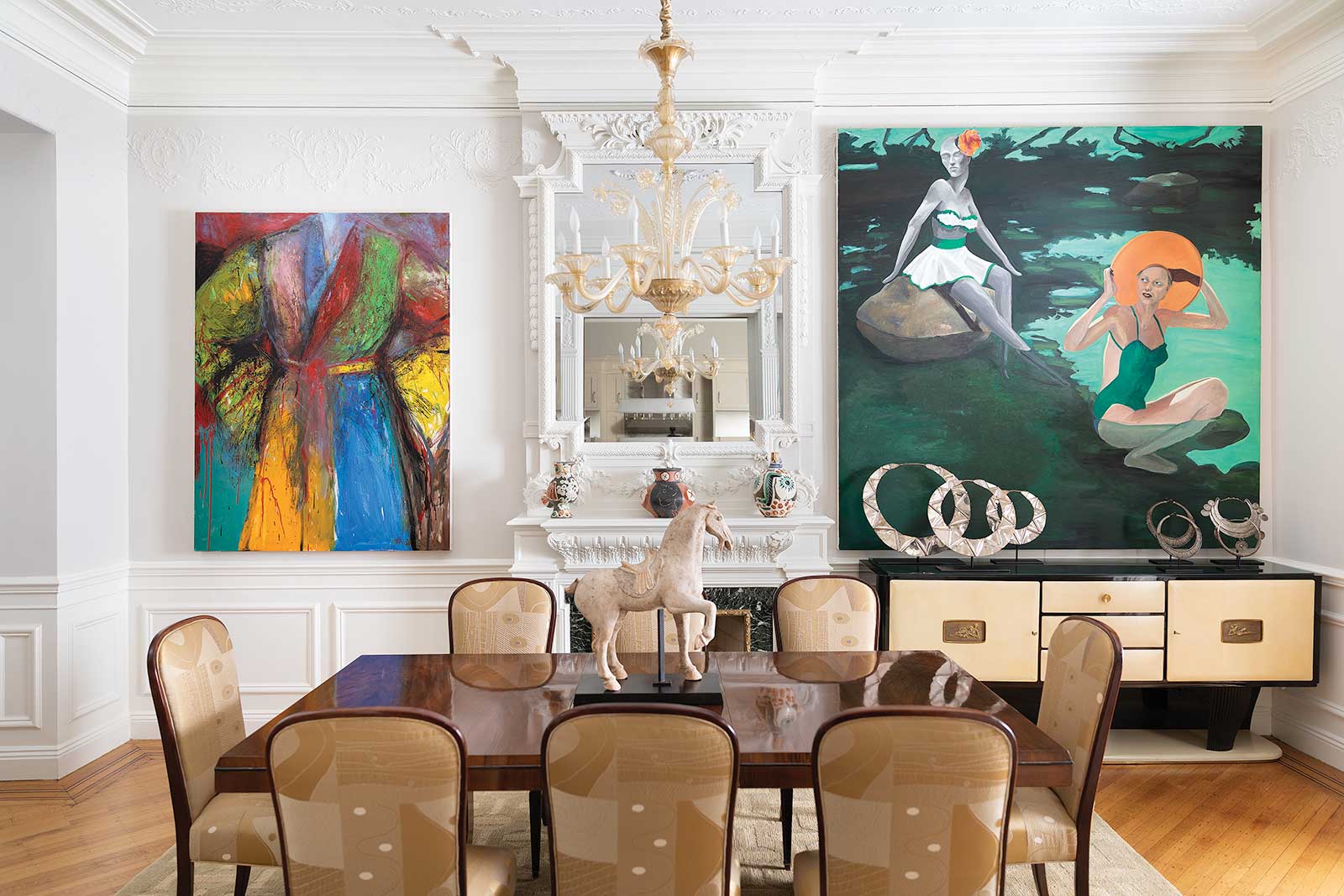 Flanking the fireplace are Jim Dine’s Glow of July, 1992, oil, enamel and charcoal on canvas, and Eric Fischl’s Woman in Water, 1980, oil on canvas. A Tang Dynasty (618-907 CE) clay horse sits on the 1940s art deco dining table and three ceramic pieces by Pablo Picasso (1881-1973) are on the mantle. On the Aldo Tura circa 1940s sideboard are, from left, Mao Culture collars, 20th century, and 19th-century Chinese ceremonial necklaces.
Heidenberg had worked in a New York gallery and wanted to be an art historian. However, she fell in love with being in close contact with the artists and artwork and she didn’t want to leave New York, so she opened her own gallery. “It was the only way people sold art at that time,” she says. “Galleries were the meeting place for artists and collectors. Today, I operate a virtual gallery.” She continues to sell art internationally and notes that with the internet there is immediacy that did not exist before.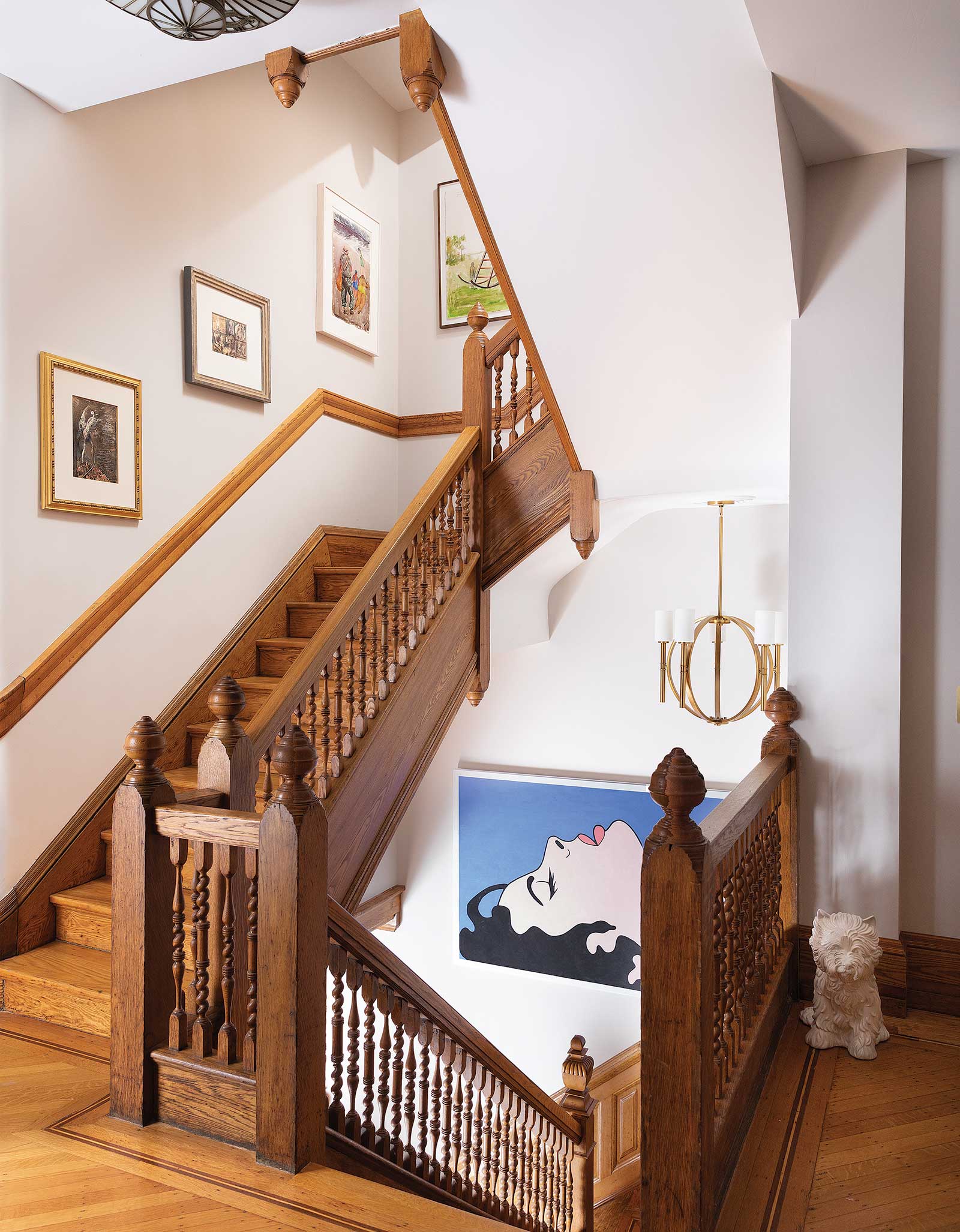 On the lower staircase is Untitled (portrait of Elizabeth Taylor), 2011, acrylic on canvas, by John Wesley. Ascending the stairs are two works by Henry Moore (1898-1986), Miner drilling in drift, 1942, watercolor, wash, pen and ink, wax crayon, and Mother and Child Studies & Figure Studies (a double-sided work), circa 1942, colored crayon, charcoal, pencil, ink and gouache on paper. Above them is Approaching Storm, circa 1930, watercolor on paper, by Milton Avery (1885-1965). At the top is Juan Capote’s Voluntad de Poder (Will of Power), 2013, watercolor, charcoal and pencil on paper.
We profiled her Park Avenue home several years ago. One of my favorite of Heidenberg’s stories from that time was her encounter with Henry Moore (1898-1986).
“I had seen an exhibition of Henry Moore’s sculptures in Florence and knew I wanted to sell his work. I went to see him and he said ‘No.’” She then gathered together pieces from other galleries and collectors and put on her own exhibition in New York. When Moore learned of the exhibition, he told her, “You’ve proven yourself. I’ll work with you.” A Moore watercolor and several bronzes relate to mother and child themes in her collection. “His work was often monumental,” she explains, “but he did themes that touch everybody—the mother and child, figure as landscape. They are personal but they are totally universal.”
Another English sculptor in her collection is Lynn Chadwick (1914-2003). She says,
“I had shows for him at my gallery. His work is happy and optimistic and he was very friendly, warm and full of life. His sculpture has a quasi-abstract quality that is instantly recognizable. I think that consistency of style is a sign of a good artist.”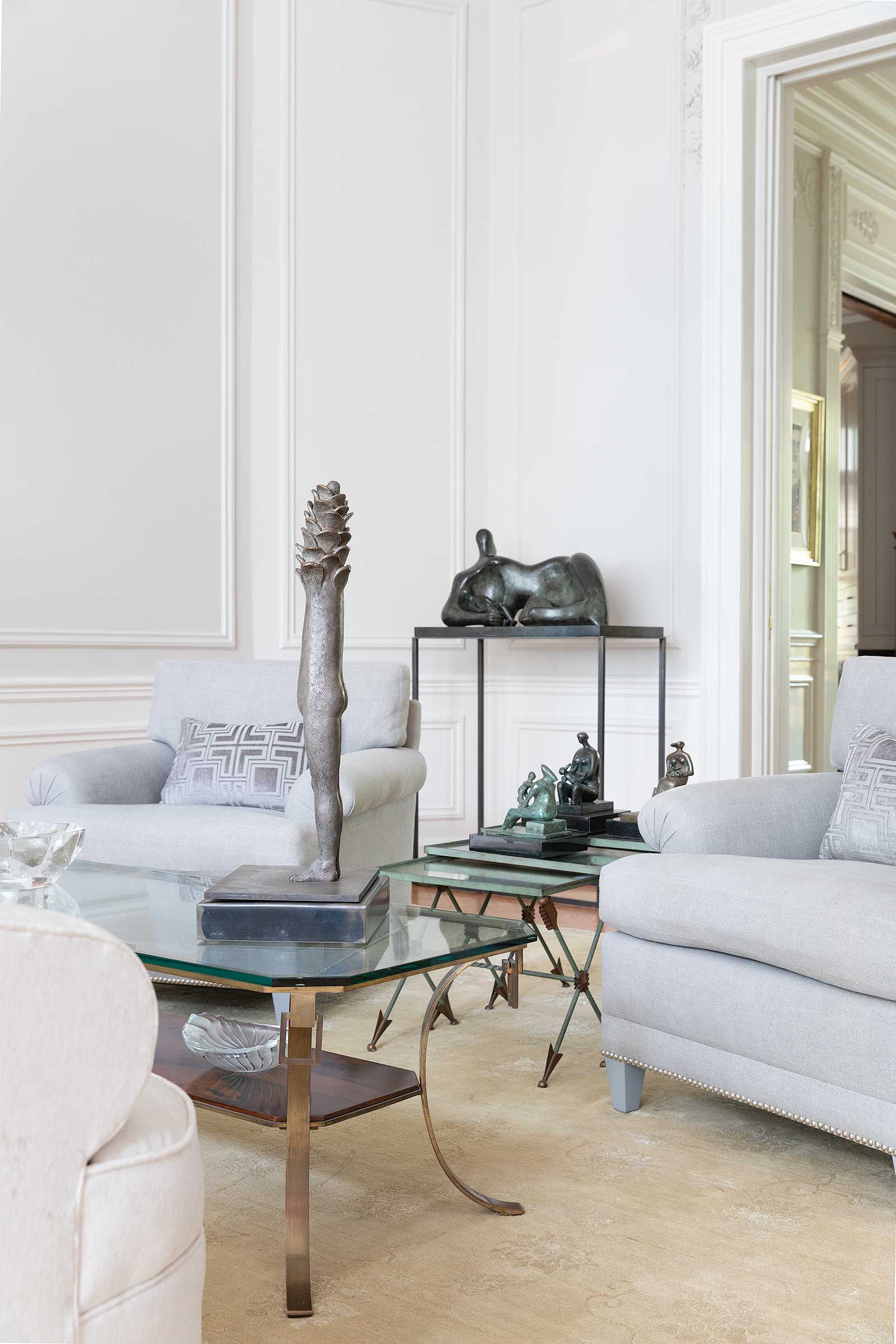 Topiary, a bronze by Louise Bourgeois (1911-2010), is displayed on a circa 1940s table from Maison Jansen. A Lalique bowl is on the bottom shelf. The large bronze is Working Model for Draped Reclining Mother and Baby, 1982, by Henry Moore (1898-1986), acquired directly from the artist. His Mother and Child Round Form and two additional mother and child bronzes are on the bottom shelf.
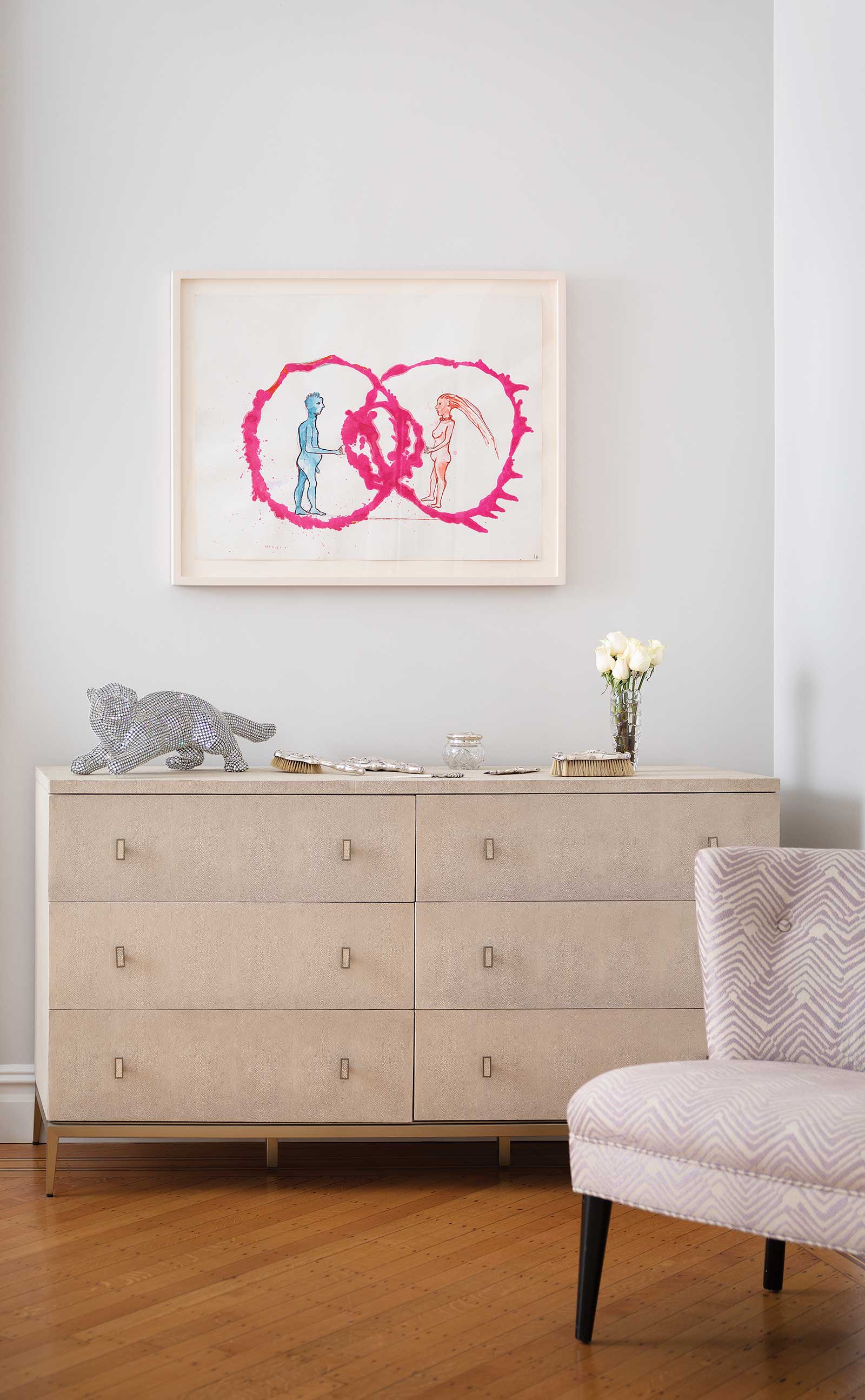 Untitled, 2003, watercolor, India ink and pencil on paper, by Louise Bourgeois (1911-2010) hangs above Cat, 2005, Swarovski crystals, by Nicola Bolla.
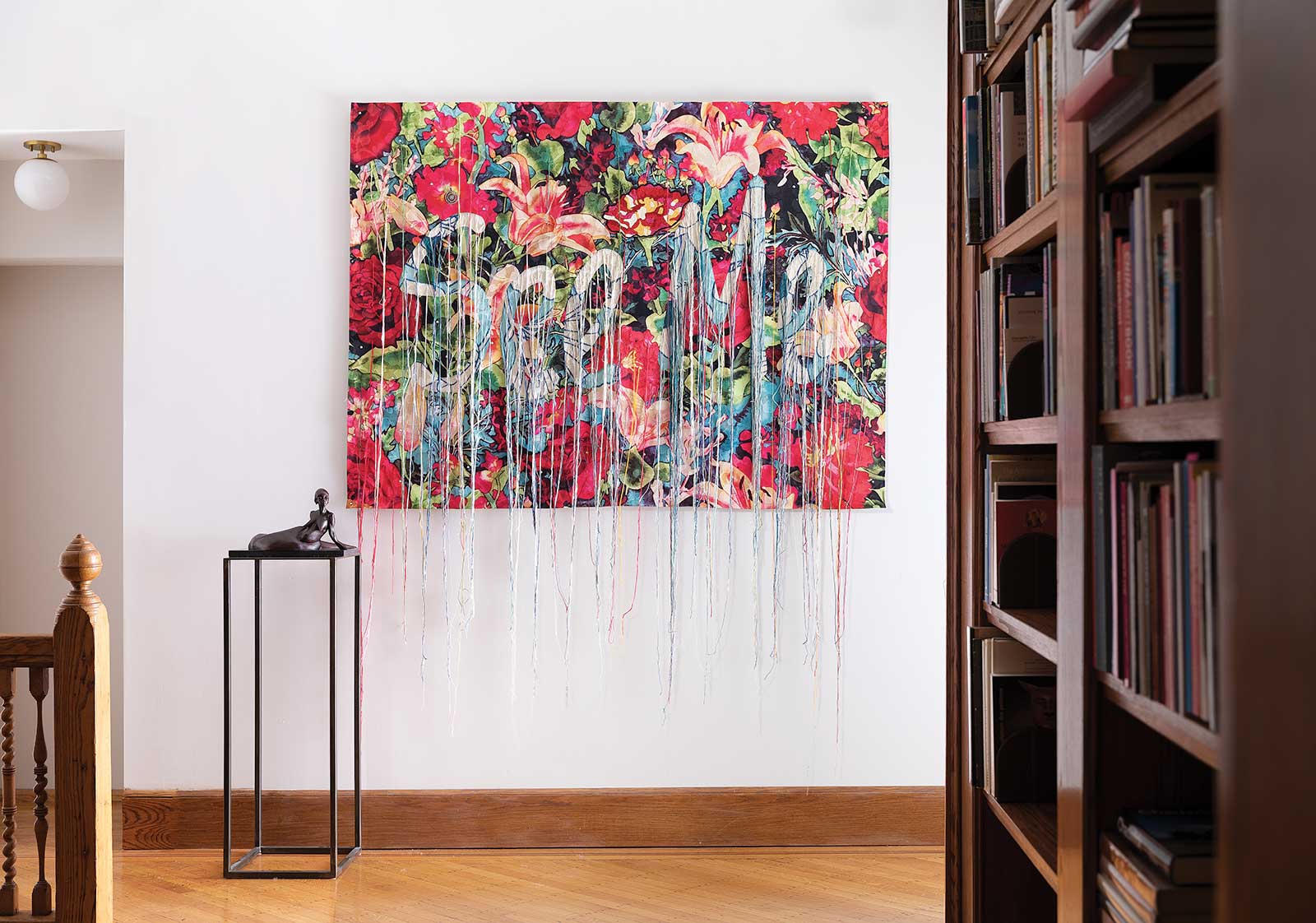 Ebony Patterson, a young artist from Kingston, Jamaica, created Bearing Witness, 2017, archival dyes on jacquard, with embroidery, hand-knotted threads, and assorted embellishments. Wangechi Mutu’s bronze Chocolate Nguva, 2016, is on the pedestal.
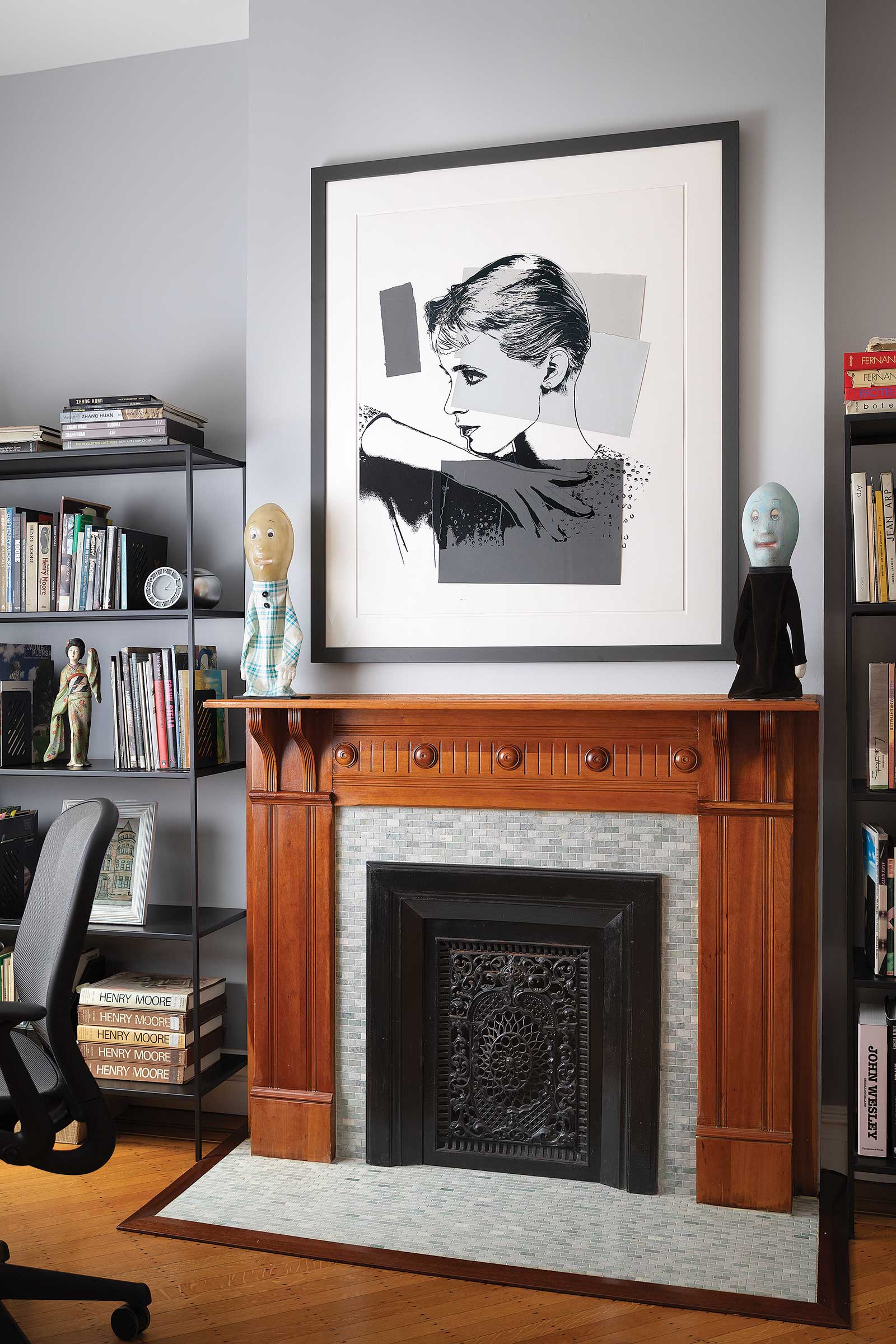 Unidentified Woman (Halston Model), 1982, screenprint and colored graphic art paper, collage on board, by Andy Warhol (1928-1987), hangs above one of the house’s many original fireplaces. The sculptures on the mantle are by Naoki Koide. They are, from left, X, 2003, and Paul, 2003. Both were made from fiberglass, acrylic, cloth and lacquer.
One of her Chadwicks is among the pieces she probably won’t part with. “Art speaks to you,” she says. “I get attached to works that I have had for many years. They have become part of me. It would be sad for me to sell them. I can find similar works on the market for my clients…and I am always buying new art.”
Among the new acquisitions is a multimedia piece by the young Jamaican artist Ebony Patterson. She says, “I find contemporary artists at galleries and museum shows and saw Ebony’s work at the Pérez Art Museum in Miami. I was blown away by the exhibition, tracked down her gallery and bought Bearing Witness. She is a serious young artist and she is going to be important.” Patterson’s complex work speaks of the bling of dancehall culture but also the disenfranchised individuals within it, particularly women. “She seduces with beauty but there is a strong important message underneath,” Heidenberg comments.
Heidenberg also points out Fred Wilson’s Murano glass sculptures that grace a table beneath a humorous painting, Woman in Kitchen, by Fernando Botero. “I have always loved Botero,” she says. “I sold his work from the beginning of my career and I know him personally. He is popular but not always recognized as a serious artist. Perhaps the new documentary Botero by Don Millar will change that.”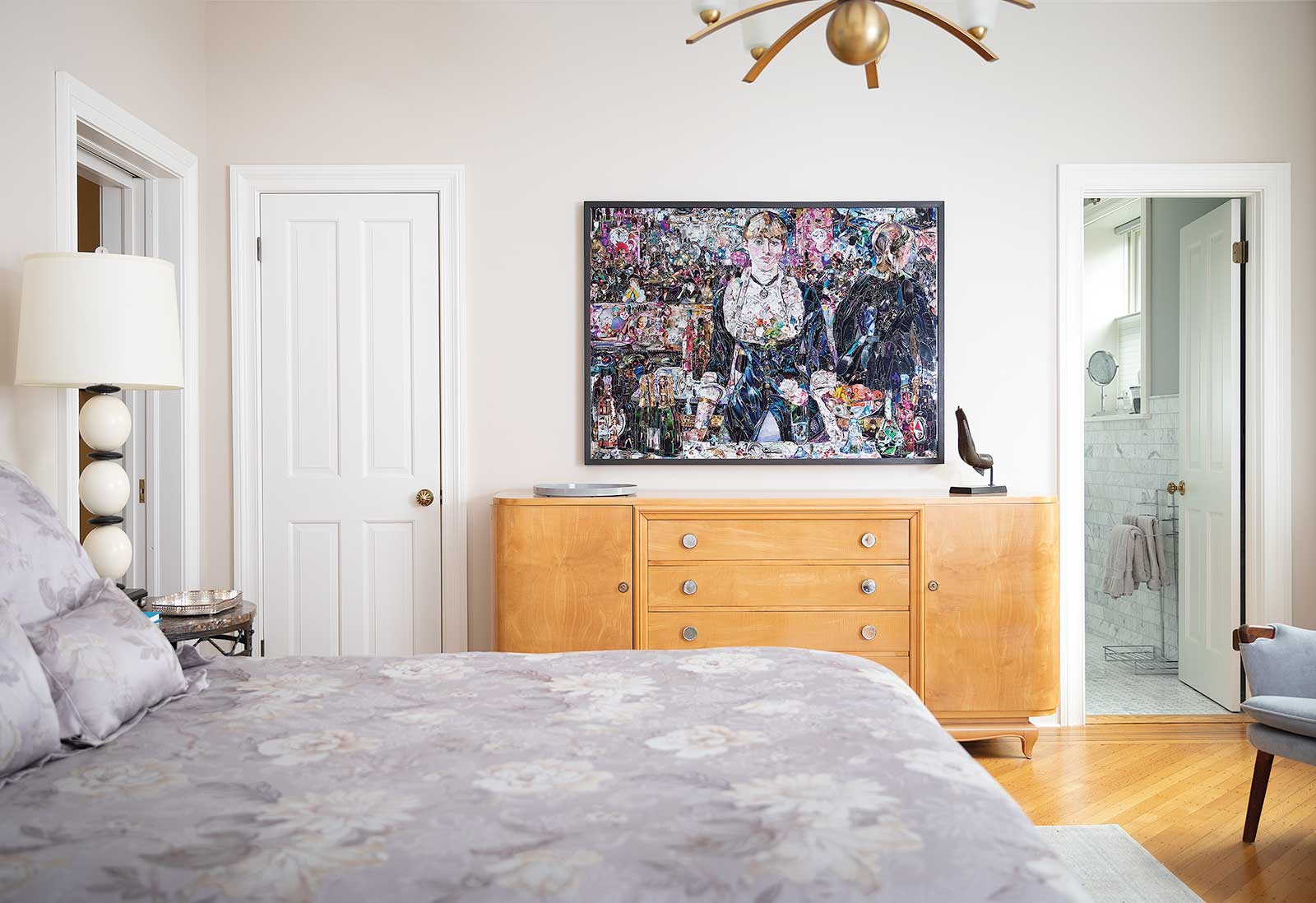 The sycamore sideboard is by Pedroni-Lombard for Maison Jansen, circa 1930-1940. Above it is A Bar at Folies-Bergère, after Edouard Manet, 2012, (Picture of Magazine 2), Digital C Print, by Vik Muniz. The bronze Cambodian hand on the sideboard is 16th century. The armchair is vintage 1940s.
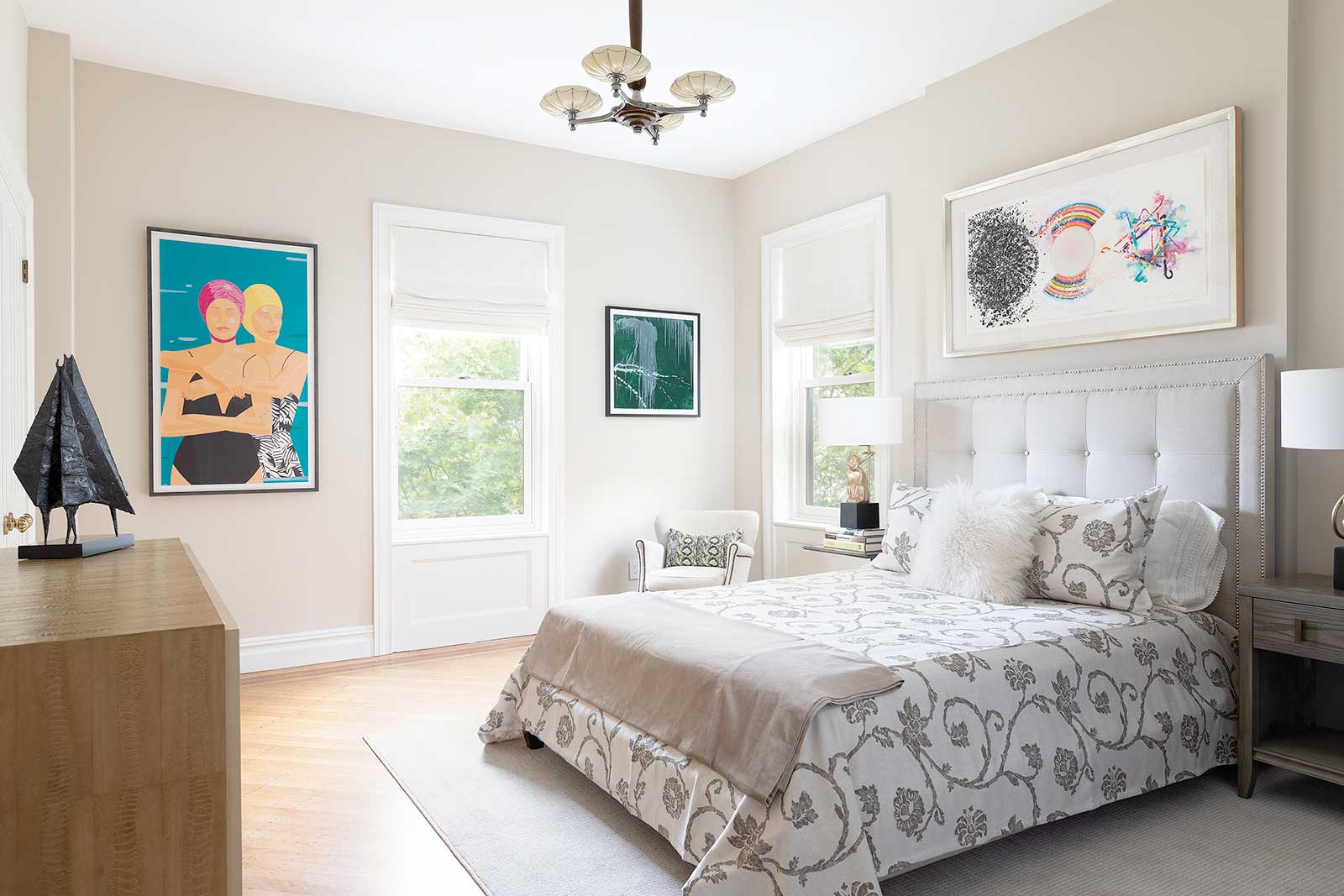 On the left is Alex Katz’s Eleuthra, 1999, screenprint. To the right of the window is Pat Steir’s Waterfall (green), 1996, lithograph. Above the bed is a unique work by James Rosenquist (1933-2017), Untitled, 1977, acrylic, watercolor, ink, brass pin, paper collage, and pastel on fabric on paper. A bronze, Dance X, 1957, by Lynn Chadwick (1914-2003) is on the dresser.
Wilson describes himself as a person with “African, Native American, European and Amerindian” descent. He is also the recipient of John D. and Catherine T. MacArthur Fellowship. In his work, he exposes often hidden biases and ideologies as in his glass sculptures, Shatter. The sculptures address the complex history of Blackamoors, Black African servants in historic Venice and their depiction in often beautiful furniture, objects and jewelry. “By reframing objects and cultural symbols,” Heidenberg notes, “he alters traditional interpretations, encouraging viewers to reconsider social and historical narratives.”
She says, “Art changes your life. I can’t imagine living without it. It opens you to other people and cultures and broadens your outlook on life. My clients are all different in their collecting. I also try to have them acquire things with the correct value. They are all successful business people in various fields. Some of them have gardens and we look for large-scale sculptures to enhance them. Others have large houses and want art but don’t know where to start. We start by looking at lots of works and discover what they personally like.
“I encourage the mixture of periods and styles. I have a Tang Dynasty horse (618-907 CE) on an art deco table,” she continues. “Behind it are Picasso ceramics and paintings by Jim Dine and Eric Fischl. My conviction is that quality is its own thing, no matter when a work is created. Life today is complex and challenging; collecting art with passion is a reflection of our times and keeps us relevant.”
++++
John O’Hern, who has retired after 30 years in the museum business, specifically as the Executive Director and Curator of the Arnot Art Museum, Elmira, N.Y., is the originator of the internationally acclaimed Re-presenting Representation exhibitions which promote realism in its many guises. John was chair of the Artists Panel of the New York State Council on the Arts. He writes for gallery publications around the world, including regular monthly features on Art Market Insights and on Sculpture in Western Art Collector magazine.
Powered by Froala Editor